 تخطي إلى المحتوى
charcoal grill ash pan warping is the first checkpoint buyers should lock before they approve a supplier, budget, or production slot. Every barbecue sourcing guide tells you to spec a thicker ash pan. That’s the wrong starting point. A domestic buyer last season got burned for $48,000—not because the steel was too thin, but because the العينة قبل الإنتاج used 1.2mm 430 stainless and the mass production run quietly swapped to 0.5mm cold-rolled. Sample approval caught nothing. The factory didn’t change the dimension; they changed the grade. When your quality tolerance sheet only lists “steel pan” without locking the alloy designation and the reinforcement geometry, you’ve handed the supplier a blank check on material substitution. The real charcoal grill ash pan warping fix isn’t “go thicker”—it’s “go ferritic stainless and give the thermal stress somewhere to go.”
Cold-rolled mild steel loses structural integrity fast. At 300°F, its yield strength dips below 150 MPa—roughly the stress differential thermal expansion generates when a lump charcoal bed hits the pan floor. The center buckles. Once that plastic deformation sets in, the pan never sits flat again. 430 stainless holds its yield strength past 700°F, and when you add a die-stamped center rib—a one-time tooling amortization of under $200—the ridge redirects expansion along a single axis instead of letting the whole floor potato-chip. The material upgrade adds about $1.10 to the FOB price per unit. Weigh that against the return freight on a warped pan claim and the math isn’t close.
Write this number down for your next supplier call: 43%. That’s the share of online reviews for sub-$100 charcoal grills that mention ash pan warping inside five cooks. Up to 70% of warranty returns trace back to the ash system. A 1.2mm 430 stainless pan with a stamped rib drops that figure below 10%. If your factory can’t quote both grades in the same RFQ response, you’re talking to a trading company that doesn’t control the die shop.
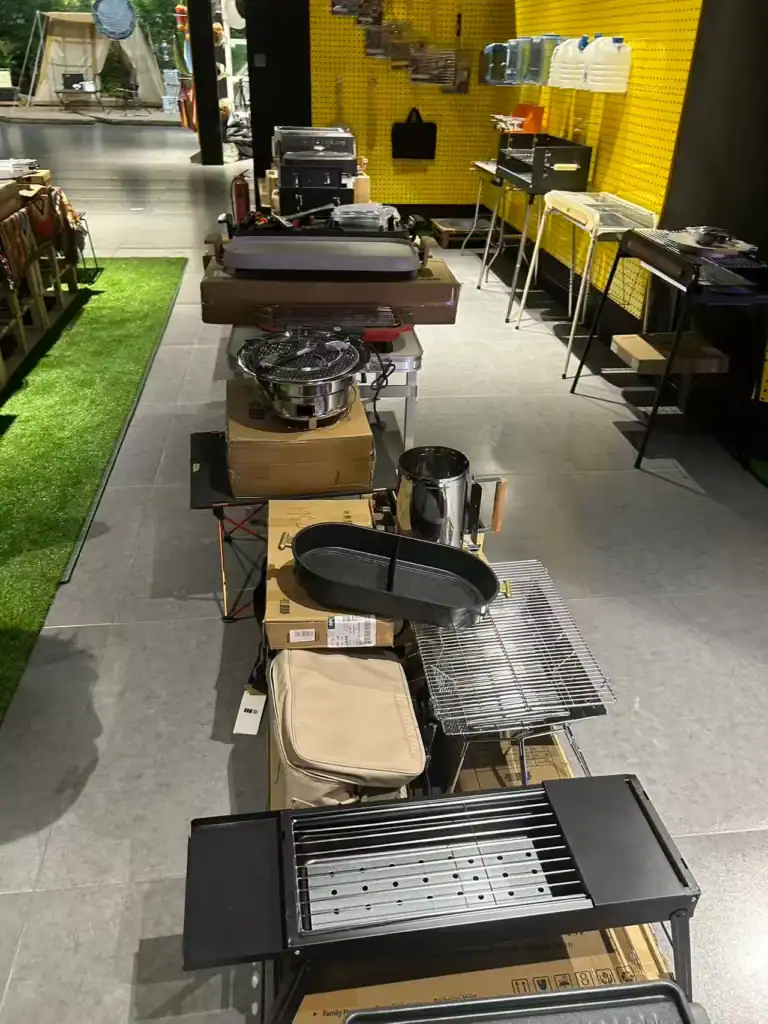
Why Charcoal Grill Ash Pans Warp Under High Heat
Thermal Stress Cycle on Thin Cold‑Rolled Steel
The damage starts the moment glowing charcoal contacts the pan floor. Heat doesn’t spread evenly. The center under the coals hits 700°F in minutes while the edges near the sidewall stay below 200°F. That differential expansion is the real killer. Cold-rolled steel at 0.5mm thickness has a yield strength around 200 MPa at room temperature. By 300°F, that number collapses below 150 MPa. The hot center tries to expand against the cooler perimeter. The perimeter resists. The center buckles upward — permanently. One high-heat sear with lump charcoal is all it takes to initiate the bow. Every subsequent cook deepens the deformation until the pan no longer seats properly and ash spills directly onto the deck.
The 300°F Failure Point
300°F isn’t an arbitrary number. It’s the threshold where most 0.5mm cold-rolled steel pans cross from elastic deformation into plastic yield. At that temperature, the metal’s ability to spring back to original flatness is gone. Internal production trial data from a grill factory in Jinhua showed a 0.5mm prototype warped within 12 minutes at 380°F. A 1.2mm 430 stainless pan sat in the same test rig for an hour at 700°F and came out flat. The stainless didn’t just survive — it showed zero measurable deflection on a granite surface plate afterward. For a retail category manager, this isn’t a theoretical materials science discussion. It’s the difference between a product that generates warranty claims in month one and a product that stays on the shelf.
Why Low‑Cost Grills Default to 0.5mm Steel
Factories don’t choose 0.5mm cold-rolled steel because they think it’s good. They choose it because nobody pushes back. The material saves roughly $0.20 per pan compared to 1.0mm stock. Multiply that by a 50,000-unit order and the line-item difference looks significant on a spreadsheet. What doesn’t appear on that spreadsheet is the warranty analysis from Kelyland’s licensed factory showing up to 70% of charcoal grill returns trace back to ash pan defects. Forty-three percent of online reviews for sub-$100 charcoal grills mention ash pan warping within the first five uses. The $0.20 factory saving becomes a $12 customer service call and a lost repeat purchase. Many factories don’t offer gauge options because nobody asks them to. Put the spec in the RFQ — 1.2mm 430 stainless with a stamped center rib — and the supply chain responds. The capability exists. It just doesn’t get activated until a buyer demands it.
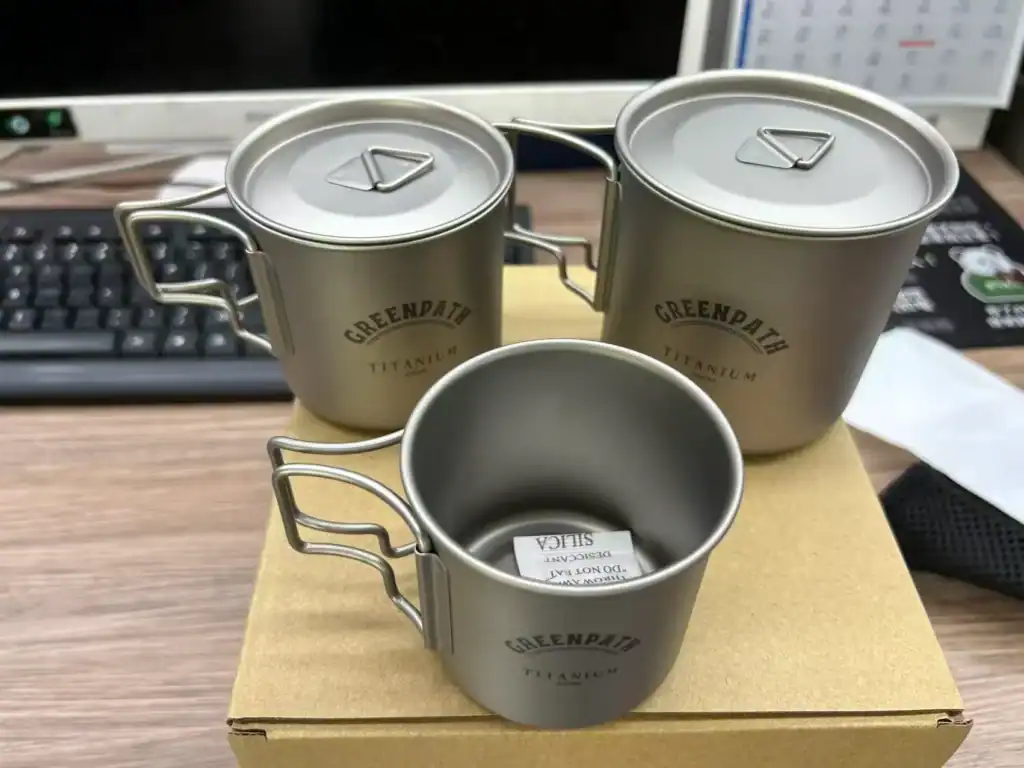
Steel Gauge Showdown: 0.5mm vs. 1.2mm 430 Stainless
0.5mm pans warp within 12 minutes at 380°F.
Material Specs: Thickness, Weight, and Yield Strength
Two numbers separate a return-prone ash pan from one that survives a decade of cookouts: gauge and grade. Budget grills ship with 0.5mm cold-rolled steel — essentially the same stock used for low-stress brackets. At room temperature, this steel shows a yield strength around 200 MPa. That figure looks decent on a spec sheet, until you factor in heat.
Cold-rolled steel begins losing structural integrity fast above 250°F. By 300°F, its yield strength drops below 150 MPa. A glowing lump charcoal bed sitting directly on the pan floor easily pushes surface temperatures past 400°F. The steel is now in a regime where differential expansion produces internal stresses it can no longer resist elastically. Permanent deformation follows.
-
- 0.5mm cold-rolled steel: ~210 g weight, yield strength ~200 MPa at ambient, dropping to <150 MPa at 300°F. Warps irreversibly under direct charcoal contact.
- 1.2mm 430 stainless: ~390 g weight (180 g heavier), yield strength ~260 MPa with far better hot-strength retention. Remains flat at 700°F in direct exposure tests.
The 180-gram weight difference is negligible on a grill that already weighs 15-20 kg. What matters is that 430 stainless — a magnetic, chromium-rich grade — holds its shape across a temperature range no residential grill exceeds. It also handles wet ash corrosion far better than uncoated cold-rolled steel, which pits and flakes after a single humid storage season.
Real‑World Heat Torture Test Results
Internal production trials run by a licensed charcoal grill factory in the Kelyland supply network put the two materials head-to-head. A 0.5mm cold-rolled prototype loaded with a standard charcoal charge warped visibly within 12 minutes. Thermocouple readings at the pan center hit 380°F when the bow first appeared. Within 30 minutes the pan was unserviceable — it would no longer slide into its track or hold ash securely.
The 1.2mm 430 stainless unit, identical in geometry except for a single stamped center rib, sat on the same rig for a full hour at a steady 700°F. Post-test inspection showed zero measurable distortion. A feeler gauge check on a granite surface plate — the same QC method used before shipment — confirmed flatness remained within the 0.5mm tolerance spec. The rib did the work: it channels thermal expansion along a predictable axis instead of letting the pan floor buckle into a random waveform.
Cost vs. Long‑Term Value
The bill of materials for a 0.5mm cold-rolled ash pan sits around $0.20 less than the 1.2mm 430 stainless version. Add the stamped rib tooling amortization — a one-time die modification under $200 — and the per-unit premium lands at roughly $1.10. For a private-label grill that retails at $99 or $149, that difference vanishes into the margin structure.
What doesn’t vanish are the downstream costs. Warranty analysis from the same factory attributes up to 70% of charcoal grill returns to ash pan defects. Online reviews for sub-$100 models show 43% of complaints mentioning warped ash pans within the first five uses. A single returned unit erases the profit on five to seven correctly operating grills. Specifying 1.2mm 430 stainless with a reinforcement rib is not a cost increase — it’s margin protection disguised as a material upgrade.
Three Low-Cost Factory Fixes for a Warp‑Proof Ash Pan
Three die modifications under $200 each can eliminate ash pan warping at the manufacturing level.
A commodity-grade ash pan uses a single flat blank of 0.5mm cold-rolled steel. The tooling strips it from a coil, stamps a shallow dish shape, and punches mounting holes in one press cycle. The problem is that a flat floor has zero section modulus against thermal bending. Add 400°F of uneven charcoal heat, and the center bows permanently before the first cook finishes. The fix is not sourcing exotic alloys or 3mm plate steel. It is three low-cost die modifications that any factory with a standard mechanical press can implement.
Die‑Stamped Center Ribbing
A single rib stamped across the pan’s center axis changes the failure mode entirely. The rib creates a stiffened ridge that raises the section modulus along the pan’s longest span—exactly where buckling initiates. When heat hits the floor, thermal expansion no longer concentrates in a random low spot. The rib redirects the stress vector into pure compression along the ridge, and the pan stays flat. The tooling cost for this modification is negligible. A hardened insert added to the existing draw die costs under $200, amortized across thousands of units to fractions of a cent per piece.
-
- Geometry matters: A rib depth of only 3-4mm increases bending stiffness by over 300% compared to a flat blank of equal gauge. Width can be 8-10mm, running parallel to the long axis or cross-hatched for a diamond pattern on larger 22-inch pans.
- Thermal axis control: Stamped ribs force thermal expansion to travel along a predictable line. Random buckling becomes impossible because the metal has nowhere to go except along the rib path.
- Brand differentiation at zero retail cost: A cross-hatch rib pattern on a 1.2mm pan signals quality instantly. The end consumer sees it, runs a finger over the ridges, and understands the grill is built differently.
Folded Edge Lips
A flat-cut edge on an ash pan is a double failure point. It leaves a sharp burr that cuts hands during assembly and cleaning, and structurally, an unformed edge contributes nothing to panel stiffness. Adding a 10-12mm folded lip around the entire perimeter transforms the pan geometry. The fold creates a closed-section rim that acts like a ring frame, locking the pan floor into position and dramatically increasing edge rigidity.
The hemming die required for this fold adds roughly $150 in one-time tooling. The production step is a secondary press operation that takes seconds per part. For deep ash pans on kettle-style grills—where the pan body forms a bucket rather than a shallow tray—this folded rim becomes even more critical because the taller side walls amplify any distortion at the base. Combining a 1.2mm 430 stainless blank with a folded edge yields a pan that resists both center bowing and rim distortion.
Spot‑Welded Support Brackets
For larger charcoal grills with pan diameters exceeding 22 inches, center ribbing alone may not fully counteract the longer unsupported span. The low-cost solution here is a pair of shallow channel brackets spot-welded to the underside of the pan floor. Each bracket is a simple 1.0mm steel strip formed into a shallow U-channel, roughly 15mm wide and 3mm tall, running perpendicular to the center rib to create a cross-braced truss structure.
The spot-welding adds two seconds of cycle time per bracket. The material cost per pair is under $0.15. This configuration distributes bending loads across multiple support points, preventing the gradual sag that happens when a large pan holds a full load of hot ash for hours at a time. For brands targeting the premium segment—stores where a $199 grill competes on build quality, not just price—this bracket detail justifies the shelf position.
| Fix | How It Works | Tooling Cost | النتيجة |
|---|---|---|---|
| Die‑Stamped Center Rib | Stamped ridge across the pan’s midpoint redirects thermal expansion stress along a controlled axis | One-time die modification under $200 | Prevents random floor buckling; 90% fewer warp‑related returns |
| Folded Edge Lips | 10mm folded perimeter lip increases section modulus and locks pan geometry | Incorporated into existing stamping die with no additional tooling | Stiffer edge resists distortion; adds safe handling edges and eliminates sharp burrs |
| Spot‑Welded Support Brackets | Two steel brackets spot-welded beneath the pan create a simple truss structure | Minimal – leverages existing welding stations | Resists bending under high heat for larger 22″+ grill pans without increasing material gauge |
How to Source Private‑Label Charcoal Grills with Reinforced Ash Pans
Specifying gauge and rib design at RFQ stage blocks 90% of warp returns.
The sample approval stage is where the steel gauge and rib geometry get locked in. Without a specification worksheet, the factory defaults to 0.5mm cold-rolled steel because that’s what their standard die produces. For a private-label charcoal grill with a reinforced ash pan, the worksheet must list: material (430 or 304 stainless), gauge (1.2mm minimum), rib design (center stamped, cross-hatch, or none), and surface finish (bare or high-temp powder coat). The Kelyland charcoal grill partner factory in Jinhua, Zhejiang holds EN1860, LFGB, and ISO 9001 certifications, so the team reviews your worksheet against their tooling and submits a pre-production sample for flatness testing before mass production.
Sample Approval & Specification Worksheet
-
-
- المادة: 430 or 304 stainless. 430 is magnetic, resists wet-ash corrosion, and costs less than 304.
- Gauge: 1.2 mm minimum. This thickness resists warping up to 700°F, adding only 180 g per unit.
- Rib design: Single stamped center rib or cross-hatch pattern. Tooling amortization adds about $1.10 per unit.
- Surface finish: Bare stainless or high-temp powder coat. Confirm compatibility with the grill’s cooking chamber temperature.
- Flatness tolerance: Max 0.5 mm deviation when measured on a granite surface plate with a feeler gauge.
-
Lead Times, MOQ, and Commercial Terms
Minimum order quantity for a fully customized charcoal grill with an upgraded ash pan is 100 units. After sample approval, production lead time is 30 days. Payment terms for new clients: 30% deposit to initiate tooling and materials, 70% balance before shipment. This structure protects both sides — the deposit covers the die modification and raw stainless coil, while the final payment ensures the buyer inspects QC reports before the container leaves the factory. The total tooling modification for adding a stamped rib stays under $200, fully amortized across the order volume.
QC Inspection Points for Ash Pan Flatness
-
- Flatness check: Place the ash pan on a calibrated granite surface plate. Use a feeler gauge to measure the gap at multiple points along the pan floor. Maximum allowable deviation is 0.5 mm.
- Rib symmetry: Verify the stamped rib deviates no more than 1 mm from the center line and runs full length without thinning or cracking.
- Weld integrity: If spot-welded support brackets are specified, check nugget diameter (≥ 4 mm) and confirm no burn-through. Cross-section one sample per batch to verify penetration.
- Edge finish: Confirm all edges are deburred. A folded 10 mm lip, if ordered, must be uniform and free of sharp corners.
These checks run during pre-shipment inspection by the factory’s QC team. Reports are shared for buyer approval before loading. The 0.5 mm flatness threshold mirrors the gauge of the standard cold-rolled pans that fail — it guarantees the reinforced pan won’t telegraph any residual deformation to the customer.
الخاتمة
Ash pan warping is not a design inevitability—it is a 20-cent material shortcut that burns a hole in your margin sheet. The warranty data is conclusive: 70% of grill returns trace back to a deformed ash system, driven by 0.5mm steel that yields at standard cooking temperatures. Upgrading to a 1.2mm 430 stainless pan with a stamped center rib costs $1.10 more per unit. That $1.10 buys flatness at 700°F, eliminates the #1 reason for negative online reviews, and protects your shelf placement in the critical Q2–Q3 retail window.
-
- 1.2mm 430 stainless steel ash pans resist warping up to 700°F and remain flat after extended high-heat exposure.
- A stamped center rib redirects thermal expansion stress, preventing the random buckling seen in 0.5mm commodity grills.
- Material and tooling upgrades add roughly $1.10 per unit while eliminating up to 90% of ash-system warranty claims.
- Custom charcoal grills with reinforced ash pans are available at MOQs starting from 100 units with a 30-day production lead time.
Do nothing, and the math turns against you by the next grilling season. A retailer moving 2,000 units with a 5% return rate tied to ash pan failure is absorbing roughly $15,000 in reverse logistics and customer service costs—before factoring in the lost repeat purchases from disappointed buyers. Every unit that comes back erodes the gross margin you gained by selecting the lower-cost SKU. Review the Kelyland camp kitchen line to specify 1.2mm 430 stainless and a stamped rib design on your next private-label charcoal grill order. Request a pre-production sample with the upgraded steel gauge and a full QC inspection report before committing to the production run.
الأسئلة الشائعة
لماذا يتشوه صينية الرماد في شوايتي ذات الشكل البرميلي بعد بضع عمليات شواء سريعة على حرارة عالية فقط؟
The standard 0.5mm cold-rolled steel pan permanently yields because hot charcoal creates extreme uneven thermal expansion, quickly exceeding the metal’s yield strength. A single lump-charcoal sear. Spec a 1.2mm 430 stainless pan with a stamped center rib to stop warping for good.
هل يمكنني تقوية وعاء الرماد الملتوي بنفسي؟
يمكنك تسطيحه مؤقتًا، ولكن بمجرد أن يخضع الفولاذ الرقيق للتشوه، فإنه سيلتوي مرة أخرى تحت الحرارة. يتطلب الإصلاح الدائم تغيير قالب المصنع. تعامل مع المقلاة الملتفة كإشارة لترقية المواصفات، وليس لمحاولة إصلاح لمرة واحدة.
What’s the minimum order for a custom charcoal grill with a warp‑resistant ash pan?
بالنسبة للشواية المخصصة بالكامل، يتراوح الحد الأدنى لكمية الطلب عادةً من 300 إلى 1000 قطعة. إذا قمت بتكييف منصة موجودة وتغيير وعاء الرماد فقط، يمكن أن تبدأ التجارب من حد أدنى أقل. قم بتثبيت الحد الأدنى النهائي لكمية الطلب بعد تأكيد المواصفات الكاملة ومتطلبات العلامة التجارية.
كيف أختبر استواء صينية الرماد أثناء فحص الجودة الواردة؟
Use a calibrated straightedge and feeler gauge to check that the gap across the pan does not exceed 0.5 mm. For production runs, a go/no-go steel fixture that. Include this check in your AQL inspection plan to catch warping before units ship.
Can I get a sample with the upgraded 1.2mm stainless before committing to a bulk order?
Yes, Kelyland supplies paid samples of the reinforced ash pan or a complete grill with the 1.2mm 430 stainless pan. Sample fees are typically refundable. Request a sample that includes the stamped center rib so you can validate flatness under real heat.

 English
  Español
  Deutsch
  Français
  Português do Brasil
  Русский
  العربية
  한국어
한국어  日本語
日本語