 تخطي إلى المحتوى

A buyer I worked with lost a $50,000 order on inflatable tent seam welding because the pre-production sample looked perfect but the mass production run showed a 3mm weld width variation across the air beams. The tents held air in the factory test bay, but after two weeks of field use in a retail demo program, three beam sections developed slow leaks at the weld edge. That kind of failure doesn’t show up in a quick inflation check — it shows up on a category manager’s return report six months later.
Here’s what that buyer missed: RF weld quality can drift during a long production run because welding electrode temperature changes as the machine runs. Checking only finished tents lets that drift slide. A stronger protocol catches it at the source — inspecting first and last pieces from each welding machine per shift gives you real visibility into process stability before units stack up on the packing line.
Why Seam Welding Is the Structural Core of an Inflatable Tent
نقطة الفشل الأكثر شيوعاً في الخيام القابلة للنفخ هي اللحام بدرجات تردد الراديو (RF) الضعيفة.
6. الشهادة تثبت وجود نظام إدارة جودة. لا تثبت خبرة لحام الأنابيب الهوائية. تحقق من نطاق الشهادة واسأل عن نماذج الخيام الهوائية التي دققها جهة الاعتماد فعليًا. لا تستخدم الخيمة القابلة للنفخ دعسات. بل تعتمد على عوارض هوائية مضغوطة مصنوعة من نسيج مغلف بمطاط البوليفينيل كلوريد أو البولي يوريثان الحراري. تحمل هذه العوارض ضغطاً يتراوح بين 8 إلى 15 رطل لكل بوصة مربعة عند النفخ — وهو ما يكفي لدعم مأوى متعدد الأشخاص في الظروف الريحية. العامل الوحيد الذي يمنع تسرب الهواء هو درز ملحوم يمتد على كامل طول كل عارضة.
كيف تتحمل الدرزات الملحومة الهواء المضغوط
يستخدم لحام ترددات الراديو (RF) الطاقة الكهرومغناطيسية لإحداث اهتزاز في جزيئات النسيج المغلف بالمبلمرات الحرارية، مما يدمج طبقتين في رابطة صلبة واحدة على المستوى الجزيئي. وعلى عكس الخياطة التي تترك ثقوب إبرة تتسرب منها الهواء، يخلق اللحام RF المُضبَط بدقة ختمًا محكماً للهواء تكون قوته مساوية أو أكبر من قوة النسيج الأساسي. تصبح منطقة اللحام العمود الفقري الهيكلي للعارضة — وهو ما يمنع انتفاخ العارضة أو انفجارها تحت الضغط.
مخاطر فشل عوارض الهواء نتيجة ضعف اللحام
عندما تنحرف جودة اللحام بتردد الراديو — وهو ما يحدث بالفعل خلال فترات الإنتاج الطويلة نظراً لتغير درجة حرارة القطب مع تشغيل الماكينة — تكون النتيجة درزًا يبدو ملتحماً لكنه غير مربوط بالكامل على المستوى الجزيئي. تحت تأثير دورات الضغط، يتفكك هذا الدرز الضعيف. تنتفخ العارضة ثم تنفجر. في ظروف الاستخدام الميداني، يعني هذا انهيار الخيمة أثناء الرحلة. أما بالنسبة للمشترى بالتجزئة، فهذا يعني مرتجعات ضمان وتضرر سمعة العلامة التجارية قبل أن تمر المنتج حتى بموسم بيع واحد على الرفوف.
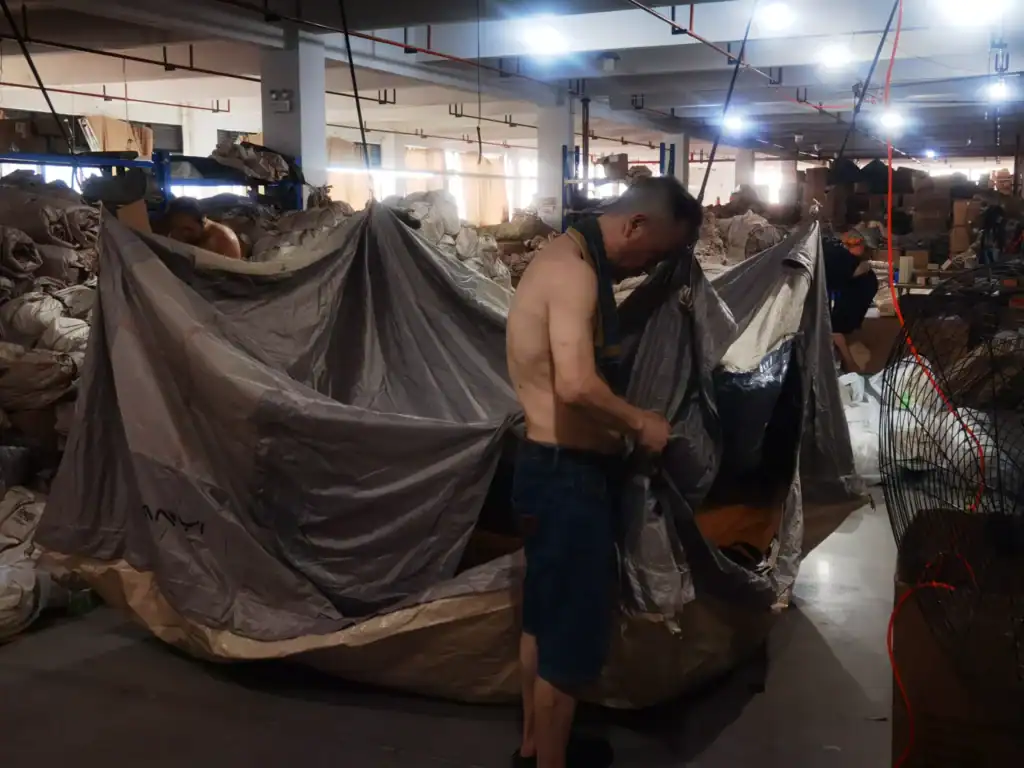
Visual Test Criteria for RF Weld Quality
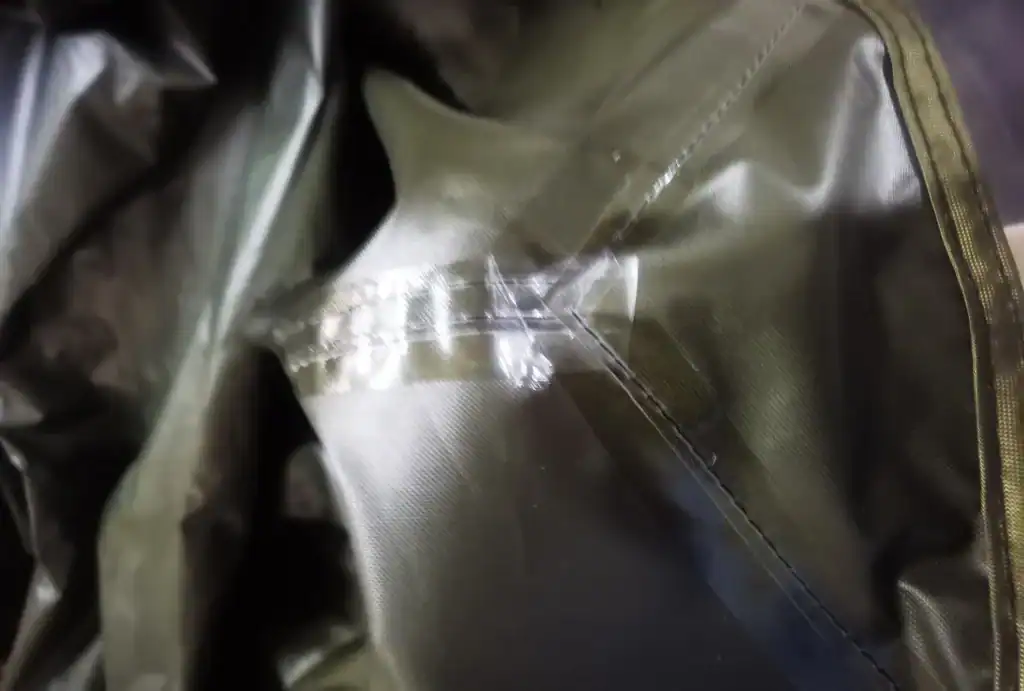
اللحام الجيد بتردد الراديو (RF) يكون شفافاً ومتجانساً.
أول شيء يجب فحصه في أي درز بخيمة قابلة للنفخ هو عرض اللحام. تشترط معظم مواصفات الإنتاج عرض درز متسق يتراوح بين 12 و15 ملم على طول العارضة الهوائية بأكملها. خذ مسطرة وقِس العرض في ثلاث نقاط لكل درز — البداية، المنتصف، والنهاية. إذا تفاوت العرض بأكثر من 2 ملم، فإن ذلك يشير إلى انحراف محاذاة القطب خلال عملية الإنتاج. يخلق هذا عدم الاتساق نقاط ضعف مركز عندها الضغط.
الفقاعات،和白化، ومنطقة الاحتراق
Hold the welded seam up to a bright light or window. A proper RF weld looks slightly translucent — you can see light passing through the fused material evenly. Tiny bubbles trapped inside mean air pockets formed during welding. Those pockets will expand under pressure and burst. White stress marks around the weld edge indicate the PVC or TPU started to burn, which makes that section brittle.
Burnt areas show as yellow-brown discoloration along the seam edge. That happens when the welding electrode stays too long on one spot or runs too hot. The material loses its flexibility there and cracks after a few inflation cycles. If you see any of these signs on more than 5% of seams in a sample lot, reject the batch.
Floor and Wall Seam Fusion
Floor-to-wall seams carry different stress than beam-to-beam connections because they handle lateral load from campers moving inside. Check that both layers are fully fused across the entire overlap zone — no skips, no gaps at corners. Run your fingernail along the seam edge; if it catches on an unfused flap, that section will peel open under foot traffic.
At Kelyland Outdoors’ partner factories in Ningbo and Shaoxing — both ISO 9001:2015 certified — inline inspectors check every welded beam section before assembly into finished tents. They mark each seam with a green dot after passing visual inspection so downstream workers know it cleared QC.
Physical Tests You Can Do On Site
A clean peel at the weld edge means the air beam will fail under pressure.
A visual inspection tells you if a weld looks right, but it won’t tell you if the bond holds under load. That’s where physical tests come in. These three on-site checks take about ten minutes per tent and catch failures that a glance never will.
Hand Peel Test at Weld Edges
Take a sample from the scrap trim left after welding — every RF welding station produces offcuts. Grip the two layers and pull them apart in opposite directions. A good RF weld will tear the fabric before the seam separates. If the weld peels apart cleanly with no fabric tearing, that joint is under-bonded and will open under inflation pressure. The internal production standard used by Kelyland Outdoors’ partner factories requires fabric tear before separation on every first-piece check per shift.
Pressurized Seam Test with Soapy Water
Partially inflate the air beam to about 70% of rated pressure — enough to stress the seams but not risk a blowout during testing. Mix a solution of dish soap and water, then brush it along every welded seam, especially at T-junctions and corners where three weld lines meet. Watch for bubble streams. A steady stream of bubbles means a pinhole leak through an incomplete fusion zone. Mark each leak location with tape; if you find more than three on a single beam section, reject that unit for rework.
Twist Test on Fabric-to-Beam Connections
This test targets the transition point where the welded TPU or PVC beam attaches to the tent body fabric — a common failure zone that visual checks miss. Hold the beam section in one hand and the tent body panel in the other, then twist them in opposite directions by roughly 45 degrees. Listen for cracking sounds and watch for any separation at the weld line. A properly fused connection will flex without delamination. If you hear a crack or see whitening along the weld edge, that joint is brittle from overheating and will fail after repeated inflation cycles.
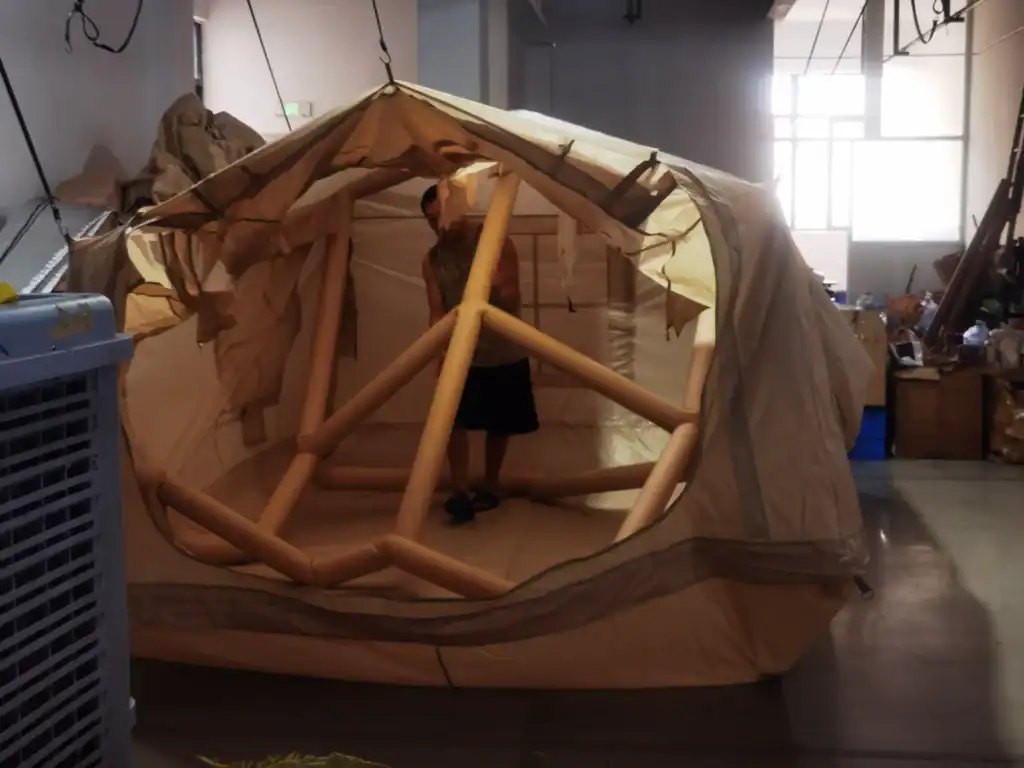
Common RF Weld Defects and Their Causes
RF weld quality drifts during production runs.
A procurement manager at a mid-size outdoor brand once asked me: ‘Why do my خيام قابلة للنفخ hold air in the sample but fail after fifty cycles in the field?’ The answer almost always traces back to one of three RF weld defects. Understanding these failure modes — and knowing how to catch them before the container ships — is the difference between a product that sells and a warranty claim that eats your margin.
Overheating: Melt-Through and Brittle Seams
When the welding electrode runs too hot or dwells too long, the PVC or TPU material degrades at the molecular level. The weld looks translucent at first glance, but close inspection reveals tiny bubbles, white stress marks near the edge, or a rough surface texture. That weld will crack under pressure — not immediately, but after repeated inflation cycles. A good RF weld should look uniformly translucent with no discoloration. If you see any whitening or scorching, flag it.
Underheating: Weak Adhesion That Peels Apart
The opposite problem is just as dangerous. If the temperature is too low or the pressure insufficient, the two layers of material bond only superficially. The seam may pass a quick visual check because there are no burn marks or bubbles. But perform a hand peel test at the weld edge — if you can separate the layers cleanly without tearing the base fabric, that beam will fail under inflation pressure. The rule of thumb: fabric should tear before the weld separates.
Misaligned Electrodes: Inconsistent Weld Width
RF welding relies on precise alignment between the upper electrode and lower anvil. When alignment drifts — often due to machine vibration over a long production run — weld width becomes uneven along the seam. Narrow sections become weak points; wide sections create stress concentrations where cracking initiates. Measure weld width at three points along each beam section using a calibrated gauge. For typical inflatable tent materials, acceptable variation should stay within ±1 mm of the specified width.
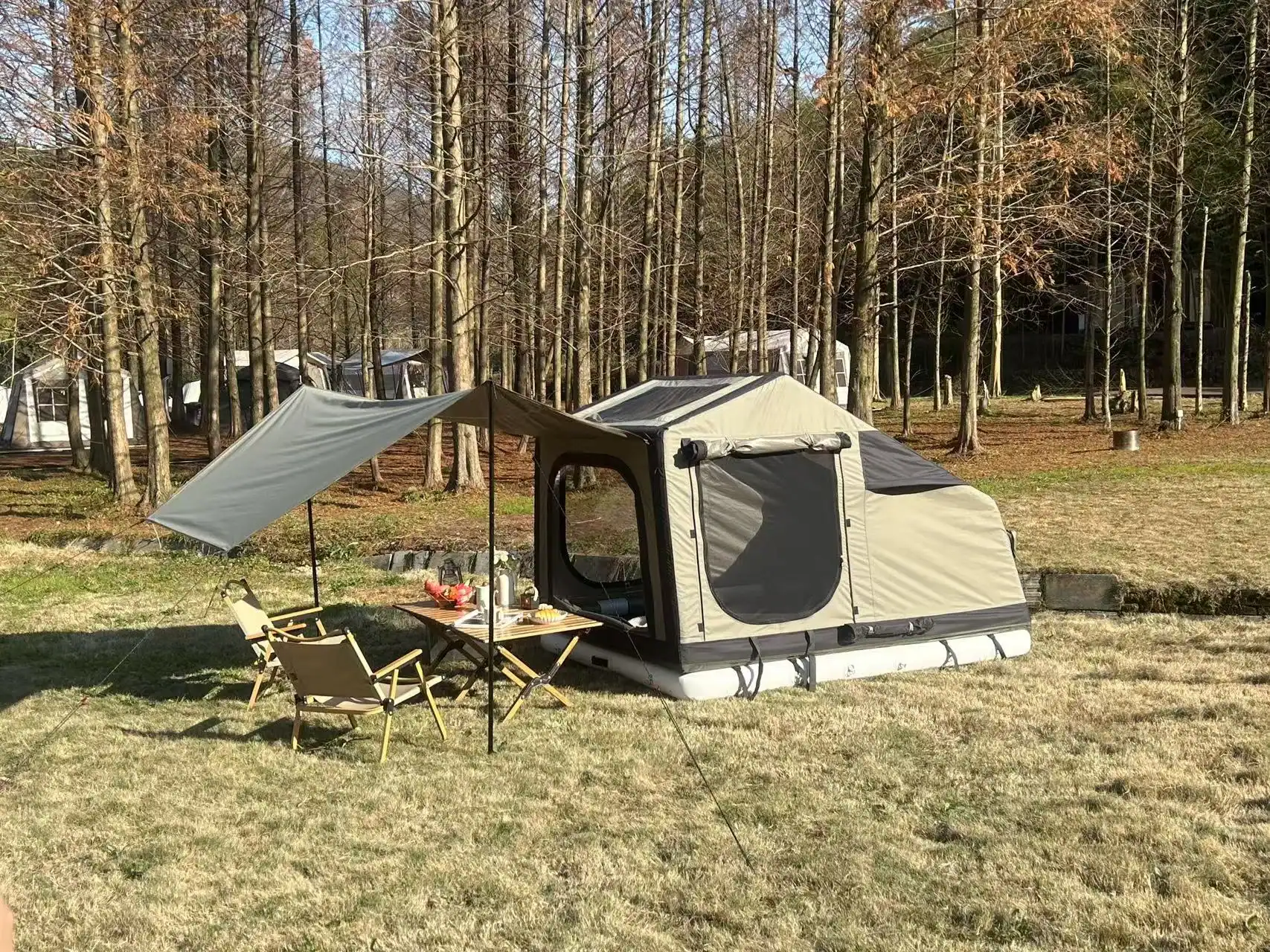
How to Add Weld Checks to Your QC Checklist
RF weld quality drifts as electrodes heat up — catch it early.
Most QC checklists treat weld inspection as a final-stage gate. That misses the real failure pattern. RF weld quality degrades gradually during a long production run because the welding electrode temperature changes as the machine runs. A cold start produces different fusion than a machine that has been running for four hours straight. Checking only finished tents means you catch the symptom, not the drift.
Inline checks on first and last pieces per shift
The strongest protocol is to pull the first piece from each welding machine at shift start and the last piece before shift end. Compare them side by side. If the last piece shows narrower weld width, visible bubbles, or whitening at the seam edge, the electrode needs cleaning or calibration before the next run starts. This catches overheating before it contaminates hundreds of beams.
Mid-production inspection on welded beam sections
Once beam sections are welded but before they are assembled into tent panels, run a mid-production spot check. Select three to five beams from different machines and apply a hand peel test at both ends of each weld seam. If fabric tears before the weld separates, adhesion is solid. If any weld peels apart cleanly without tearing fabric, flag that machine immediately and recheck its settings.
فحص نهائي ما قبل الشحن للوحدات المنتفخة الواقفة
قبل اعتماد الشحنة، يُنفخ عينة عشوائية من الخيام الجاهزة إلى ضغط التشغيل الكامل ويُحتفظ بها لمدة 30 دقيقة. يتم فحص كل درز بماء الصابون — حيث يشير تكون الفقاعات إلى وجود تسربات دقيقة تفوّت الفحص البصري وحده. وهذه هي المرحلة التي تطبق فيها مصانع شركاء Kelyland Outdoors بروتوكولات الـ ISO 9001:2015، مع توثيق نتائج النجاح أو الفشل لكل وحدة مختبرة، ورفق صور لأي دروز يُكتشف فيها عيب.
How Kelyland Outdoors Monitors Welding Quality at Partner Factories
يمكن أن ينحرف جودة اللحام بالترددات الراديوية (RF) أثناء سير الإنتاج نتيجة لتغيّر درجات حرارة الأقطاب.
تقع مصنع خيام التخييم والواقيات المطرية في نينغبو، تشجيانغ — والذي يُعد أحد الشركاء الاستراتيجيين الـ 17 الأساسيين لدى Kelyland Outdoors — ويُنتج الخيام القابلة للنفخ alongside طاقتها الإنتاجية السنوية البالغة 800,000 وحدة. إن هذا الحجم الهائل يعني أن آلات اللحام تعمل لساعات طويلة. وترتفع درجة حرارة القطب مع تكرار دورة تشغيل الجهاز، وإذا لم يُوازِن المشغّل ذلك، فإن منطقة اللحام تصبح أكثر سخونة. والنتيجة: قد تكون القطع الأولى الناتجة عن الخط مثالية، لكن قطع الساعات المتأخرة (مثل الساعة السادسة) قد تظهر عليها الهشاشة أو الانصهار الزائد.
بروتوكول أخذ العينات لكل جولة عمل
يصدّ نظام التحكم في العمليات لدى Kelyland هذا الانحراف من خلال سحب قسم الحزمة الملحومة الأولى والأخيرة من كل جهاز في كل جولة عمل. تخضع كلا العيانتين لفحص موثّق: يُقاس عرض اللحام بمقياس تصاعدي عند ثلاث نقاط على طول الدرز، ويتم إجراء اختبار التقشير على شريط بعرض 20 ملم مقطوع من منطقة اللحام. وإذا أظهرت القطعة الأخيرة انحرافاً يبلغ 0.5 ملم فقط في العرض مقارنة بالقطعة الأولى، يُعاد معايرة الجهاز قبل استئناف الإنتاج.
معايير القبول البصرية والفيزيائية
-
- مظهر اللحام: يجب أن يبدو اللحام الجيد بـ RF شفافاً وموحداً على طول الدرز بالكامل. فتكون الفقاعات الصغيرة، أو علامات الإجهاد البيضاء عند الحواف، أو خشونة السطح، كلها دلائل على السخونة الزائدة التي ستؤدي إلى التشقق تحت ضغط النفخ.
- معيار اختبار التقشير: يقوم فريق مراقبة الجودة بإجراء اختبار تقشير يدوي على كل عينة. إذا تمزق النسيج الأساسي قبل انفصال اللحام، فإن الدرز يُعتبر ناجحاً. أما إذا انفصل اللحام بشكل نظيف تاركاً سطوحاً ملساء على القطعتين، فإن قسم الحزمة يُرفض ويُتبع أصله إلى الجهاز المصنّع لإعادة التصنيع.
توثيق نتائج في تقارير التفتيش
يولّد كل قسم حزمة يتم تفتيشه إدخالاً في تقرير التفتيش الخاص بـ Kelyland، يشمل عرض اللحام (مُسجّل بالملليمتر)، ونتيجة اختبار التقشير (ناجح/فاشل مع ملاحظات)، وأي عيوب بصرية تم رصدها. وتتوفر هذه التقارير للعملاء عند الطلب لأي طلبية. كما تُستخدم البيانات للعودة بالنصح إلى إدارة المصنع: فإذا أظهر جهاز معين أنماطاً من الانحراف عبر دورات عمل متعددة، فإن ذلك يحفّز الصيانة الوقائية قبل أن يتحوّل إلى مشكلة متكررة.
الخاتمة
الفرق بين خيمة تحتفظ بالضغط لموسم كامل وأخرى تفشل في أول ليلة عاصفة يختصر في جودة اللحام بالترددات الراديوية (RF). فإن الرابطة الشفافة والموحدة التي تتمزق النسيج قبل انفصالها هي المعيار المقبول الوحيد. وتمنحك الاختبارات البصرية والفيزيائية الموضحة هنا منهجية قابلة للتكرار لاكتشاف الدورز الضعيفة قبل خروجها من أرض المصنع.
-
- Check first and last piece per welding machine each shift.
- Reject welds with bubbles, whitening, or rough edges.
- Pass only seams where fabric tears before the weld separates.
The final ten percent of quality control is knowing which factories run process checks as standard practice. Kelyland Outdoors integrates weld width measurements and peel adhesion tests into every inspection report from its partner tent factories in Ningbo and Shaoxing. Review their inflatable tent specifications and QC documentation to see how those checks align with your own quality tolerance requirements.
الأسئلة الشائعة
How to get a quote for RF Weld Quality: How to Inspect Inflatable Tent Seams?
تعتمد الإجابة الدقيقة على مواصفات المنتج والكمية وإعداد الطلب. النهج الأكثر أمانًا هو تأكيد الشروط التجارية فقط بعد الانتهاء من ورقة المتطلبات النهائية. يجب مطابقة الاختيار النهائي مع حالة الاستخدام الفعلية وهدف الأداء.
هل يمكنني طلب عينات أولاً؟
تعتمد الإجابة الدقيقة على مواصفات المنتج والكمية وإعداد الطلب. النهج الأكثر أمانًا هو تأكيد الشروط التجارية فقط بعد تثبيت ورقة المتطلبات النهائية. يجب تأكيد توفر العينات وفقًا للمخزون الحالي وخطة الشحن.

 English
 Español
 Deutsch
 Français
 Português do Brasil
 Русский
 العربية
 한국어
 日本語