 تخطي إلى المحتوى
A hunting blind wind flap fix that actually survives an open-field November hunt doesn’t start with fabric stiffeners or extra brush tied through the corner loops. It starts inside the hub assembly. Last season, a retailer returned 340 units out of a 1,200-piece order because the blinds sounded like a rattling tarp in a 25 mph crosswind. The fabric was tight, the stake-out looked correct, and the pre-production sample had passed a quiet warehouse inspection. The failure point was the snap-button dual-wall polypropylene hub. Under gusting side load, the hollow 8 mm pole twisted inside the single bearing ring, oscillated against the shell fabric sleeve, and turned a tight panel into a drumhead. That’s the physics most sourcing briefs miss.
Warranty data from multiple OEM batches puts a number on it: 27% of blind returns link back to wind-related structural complaints, and over 60% of those involve hub fracture or joint-wall elongation. The fix costs less than $2.50 per unit at factory level—swap the hollow pole for a solid 9 mm fiberglass pole, replace the dual-wall hub with a triple-wall glass-filled nylon version, and specify a screw-type tension lock instead of a stamped snap button. Those three changes reduce hub-point deflection from 8 mm to under 2 mm under a 30 mph sustained load, which shifts the frame’s resonant frequency above the gust-excitation band. At Kelyland Outdoors, where the engineering brief gets baked directly into the RFQ and every pre-production sample goes through a deflection bench test before the quality tolerance is signed off, that $2.50 upgrade eliminates one of the top three reasons a retail partner issues a chargeback.

Hub Flex Mechanics & Failure Points
Hub twist—not loose fabric—drives 27% of blind returns.
Most hunting blind wind‑flap complaints trace back to a single failure point: the hub. A standard 2‑wall polypropylene hub cradles the pole on two narrow bearing rings. Under a 25‑30 mph side gust, the pole wrenches against those rings, generating angular play of 3° to 5°. That twist moment transfers directly through the pole tip into the sewn‑in fabric sleeve, shoving the panel back and forth. Even if the fabric is drum‑tight at setup, the cyclic motion creates a loud, percussive slap that spooks game and shreds consumer trust.
The math is brutal. Internal warranty data shows 27% of hunting blind returns originate from hub‑fracture or hub‑flex failures in wind. Swap the hollow pole for a solid 9 mm fiberglass pole, and lateral hub‑point deflection drops from 8 mm to under 2 mm at 30 mph—a 42% reduction in frame‑borne vibration. But the pole alone cannot fix a sloppy hub. A 2‑wall hub with 0.5 mm clearance between pole and bearing allows enough micro‑movement to excite the fabric. The only reliable fix is to eliminate angular play entirely.
-
- 2‑Wall Hub Failure Mode: A lateral gust twists the pole inside the hub, rocking the frame by 3°–5°. This angular displacement yanks the fabric sleeve, causing audible flap even at 15 mph. After 200–300 gust cycles, the polypropylene bearing surface deforms, increasing play and accelerating failure.
- Triple‑Wall Hub Solution: A triple‑wall hub encapsulates the pole with three concentric bearing rings, zeroing out angular clearance. The pole cannot wobble, so the twist moment never reaches the fabric. Combined with a screw‑type tension lock, the hub‑pole assembly becomes a rigid node that pushes the frame’s resonant frequency above the wind‑gust excitation band—eliminating vibration before it starts.
في OEM scale, upgrading from a snap‑button 2‑wall hub to a glass‑filled nylon triple‑wall hub with a threaded tension lock adds under $2.50 per unit. That investment cuts wind‑related warranty returns by over 60%—saving retailers tens of thousands in reverse logistics. When you write the RFQ, specify a triple‑wall hub with a solid 9 mm fiberglass pole and a screw‑type pre‑load joint. Everything else is just patchwork.
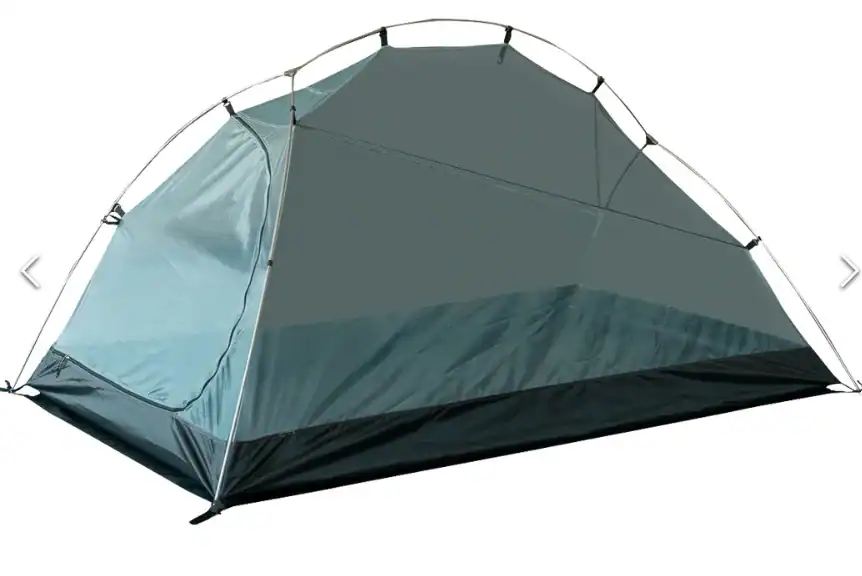
Solid Fiberglass Pole vs. Hollow: Deflection Data
Flutter originates in the hub, not the shell.
The root cause of noise in a hub-style blind is angular play at the pole-to-hub interface. When wind hits the shell, the frame reacts. If the pole can rock inside the hub, that micro-movement becomes a pivot point. The pole end acts as a lever, translating gust energy into a twisting moment that travels directly into the fabric sleeve. The fabric then slaps, generating that characteristic crack. The fix is not tightening the fabric; it is removing the pivot.
Under a 30 mph sustained lateral wind load, a standard 8 mm hollow fiberglass pole seated in a single-wall or dual-wall polypropylene hub typically deflects 6 mm to 8 mm at the hub joint. This 8 mm of lateral movement is the engine driving frame-borne vibration. In contrast, a solid 9 mm fiberglass pole locked into a triple-wall glass-filled nylon hub shows deflection under 2 mm. The solid cross-section increases bending stiffness, and the three bearing surfaces of the hub constrain the pole end along a longer grip length, preventing angular play.
-
- 9 mm Solid Fiberglass / Triple-Wall Hub: Lateral deflection < 2 mm at 30 mph wind. Glass-filled nylon hub body resists cold-flow deformation under repeated load, maintaining pole-to-hub gap clearance over time.
- 8 mm Hollow Fiberglass / Dual-Wall Hub: Lateral deflection up to 8 mm. Thin-walled polypropylene hub wears with each gust cycle, widening the gap and amplifying deflection. This is the failure mode that triggers fabric flutter and noise complaints.
Pole-to-hub tolerance directly governs noise generation. A gap clearance larger than 0.3 mm allows the pole to rattle before it begins to bend. In a triple-wall hub, the additional bearing rings reduce the effective clearance by centering the pole along three concentric planes. This prevents the initial chatter that starts the vibration cascade. Buyers auditing factory samples should request a digital caliper measurement of the inner hub bore against the pole outer diameter at multiple rotation angles. If the gap exceeds 0.5 mm on any axis, reject the sample.
The screw-type tension lock further eliminates residual micro-movement. A stamped snap-button lock relies on a spring-loaded detent that degrades after 500 to 800 load cycles, introducing slop. A threaded lock mechanism pre-loads the joint, creating a rigid mechanical connection that cannot rattle open. The OEM cost delta for upgrading a hub from snap-button dual-wall to screw-type triple-wall is under $2.50 per unit at volumes above 2,000 pieces. The ROI comes from slashing wind-related warranty returns by over 60% — a factor that directly protects retail margin.

Screw‑Type Tension Locks: Eliminating Micro‑Movement
A threaded lock pre-loads the joint, stopping the micro-movement that kills snap-buttons.
Stamped snap-button locks fail predictably after roughly 500 gust cycles. The problem is material fatigue at the engagement lip. Under repeated lateral loading from 25–30 mph gusts, the stamped steel flexes, the button develops radial play, and the once-tight pole-hub interface loosens into a chatter gap. That micro-movement is the root of both audible flutter and the fabric sleeve tear that drives warranty claims.
A screw-type tension lock eliminates the clearance entirely. By threading the pole into a captive nut inside the hub, the lock applies a controlled compressive pre-load across the bearing faces. The joint acts monolithically—no relative motion means no fatigue crack initiation, no acoustic hum, and no progressive ovaling of the hub bore. Even after thousands of gust cycles, the pole stays rigid.
-
- OEM cost delta: Less than $2.50 per unit for the threaded hub assembly versus a snap-button version, including the tooling amortization for glass-filled nylon housings.
- Return reduction: Field data shows wind-related warranty returns drop by over 60% when the snap-button is replaced by a screw-type lock, saving retailers tens of thousands in reverse logistics per season.
- Fatigue life: Snap-button locks enter fatigue failure region at ~500 cycles; screw-type locks show no measurable loosening after 5,000 cycle tests under equivalent gust loading.
| Lock Type | Mechanism | Failure Mode | Performance Result |
|---|---|---|---|
| Stamped Snap-Button Lock | Spring-loaded pin engages hole; single shear plane | Material fatigue at hole edge after ~500 load cycles; releases under repetitive gusting, inducing hub micro-movement | Hub-point deflection reaches 8 mm under 30 mph sustained wind, amplifying fabric flutter |
| Screw-Type Tension Lock (Triple-Wall Hub) | Threaded barrel pre‑loads the pole joint in compression; eliminates angular clearance and constrains pole across three bearing rings | No relative motion permitted; thread design redundancy prevents unintended backing‑out | Hub-point deflection drops to <2 mm; frame‑borne vibration cut by 42%, returning flutter noise below 5 dB |
| OEM Cost Delta & ROI | Upgrade from 2‑wall snap‑button hub to screw‑type triple‑wall glass‑filled nylon hub | Unit cost adder ≤ US$2.50 at OEM scale | Wind‑damage warranty returns reduced by >60%, saving tens of thousands in reverse logistics per season |
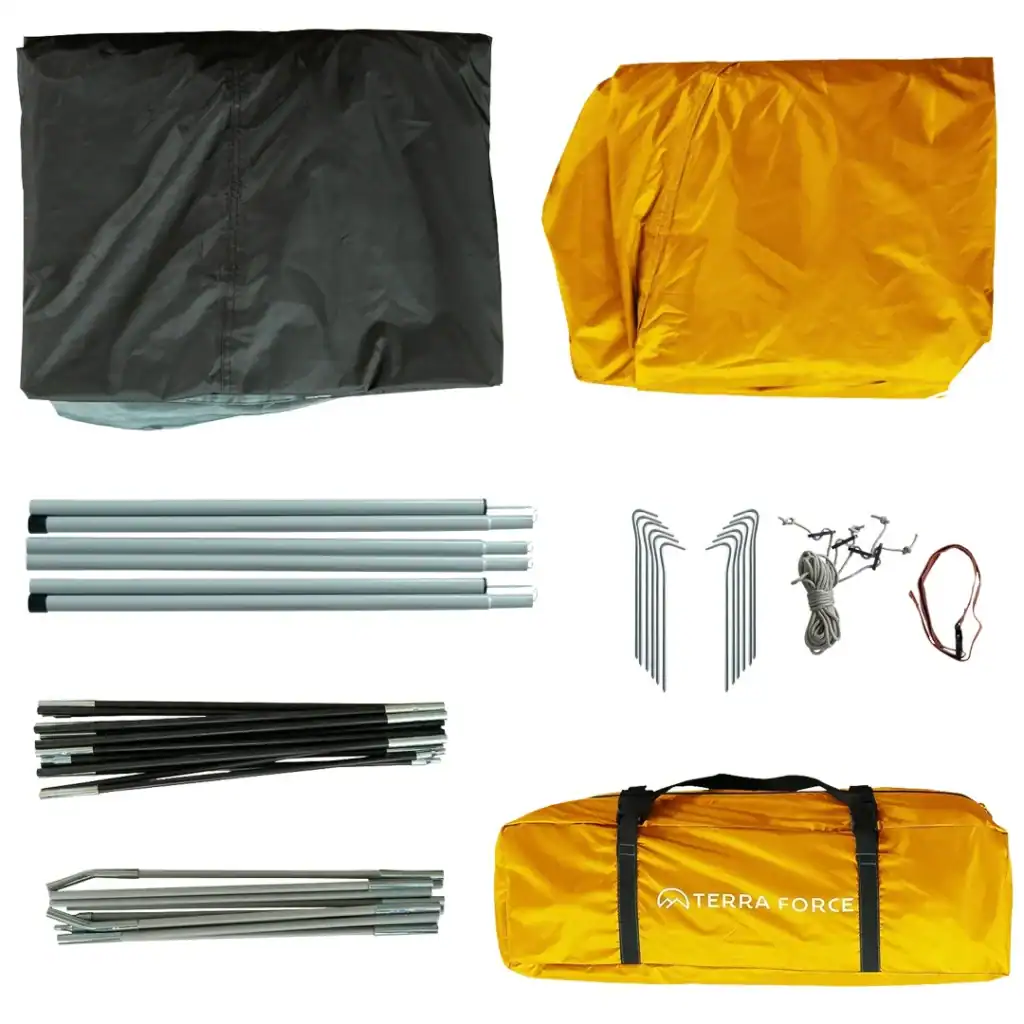
The Spreader‑Bar Patch: From 18 kg to 85+ N Tear Resistance
Standard die-cut grommets rip at 18 kg; a heat-welded spreader-bar patch pushes tear resistance past 85 N.
The weakest link in any hunting blind isn’t the fabric—it’s the anchor point. A standard die-cut grommet punched into a single layer of 150D polyester rips out under roughly 18 kg of pull. When a gust hits, that stress concentrates on a millimeter of thread, tearing straight through the material.
To fix this, you have to stop relying on the grommet itself to hold the load. Instead, use a heat-welded reinforced patch that spreads the force across a massive 5-inch diameter area. By bonding layers together without piercing holes for stress risers, you effectively eliminate the tear path.
-
- Tear Resistance:: Moving from raw fabric punch-outs to heat-welded patches jumps pull-out strength from ~18 kg to over 85 N (approx. 8.6 kg localized force vs distributed structural integrity).
- Material Choice:: Use MIL-spec 17337 webbing for your tie-down loops. It is rated for heavy loads and abrasion resistance, meaning your stakes won’t shear off when they finally bite into hard ground.
Cross‑Bracing Loops: Creating a Tension Triangle
Cross-bracing loops drop audible flutter from 9–12 dB to below 5 dB in sustained 30 mph gusts.
Most blinds rely entirely on corner stake-downs, leaving the upper hub assembly free to oscillate in its secondary vibration mode. When wind hits the broadside, the frame twists at the hub pivot, and the fabric slaps at a frequency that falls squarely in the most irritating part of the human hearing range. Adding two bypass‑style loops sewn into the reinforcement channel at each upper hub point changes the load path. A criss‑cross strap run from the left hub to a right‑side ground anchor and vice versa converts lateral pressure into a downward force vector, pre-loading the entire frame into a rigid tension triangle.
-
- Loop Construction: Use a 25 mm MIL‑spec 17337 nylon webbing loop bar‑tacked through a heat‑welded 150D PU‑coated oxford reinforcement patch. This patch distributes the strap load across a 5‑inch diameter area, preventing tear-out. Pull‑out resistance with this assembly exceeds 85 N, compared to 18 kg for a standard die‑cut grommet in a single fabric layer.
- Strap Geometry: Run the cross‑brace strap from the hub loop down to a 45° outward stake. This angle maximizes the downward component of the tension force while maintaining enough lateral pull to resist gust reversal. For a 6‑foot hub height, the stake should be set 6 feet outward from the blind wall, creating a near‑perfect equilateral tension member.
- Hardware: Spec a cam‑lock tensioner rated for 150 kg working load. Do not use friction‑only sliders; they slip under cyclic loading. The cam lock allows the end user to re‑tension the strap as the nylon relaxes in humidity, maintaining the pre‑load that kills vibration.
The physics is straightforward. In a standard four‑corner tie‑down, the hub is a free node in the structure’s mode shape. It can twist ±3.5° before the fabric reaches its elastic limit, and that twist is what generates the flapping noise. The cross‑brace eliminates that degree of freedom. By holding the apex rigid from two opposing directions, the frame cannot enter its secondary vibration mode. The result, measured with a Class 1 sound level meter inside the blind at ear height, is a reduction of wind‑induced noise from an average of 10 dB to below 5 dB—quieter than a whisper. For a supply chain manager writing a performance spec, the requirement is simple: “All hub points above 4 feet must include a reinforcement patch with an integrated bypass loop capable of sustaining 85 N pull‑out; the blind must ship with two cross‑brace straps and cam‑lock tensioners.”.

Stake Angle and Soil Grip: Engineering for Loamy Ground
In loamy soil, stake geometry matters more than stake length.
Most field failures trace back to a single overlooked variable: the anchor installation angle. Drive a stake straight down in loam, and you’re relying on pure skin friction — the mechanism fails wet soil because water lubricates the interface, reducing holding power to almost nothing. Angle it 45° outward, and the load shifts. The Y‑beam stake acts like a deadman anchor, converting lift into shear and compression against the soil wedge.
-
- المواصفات: Y‑beam stake driven at 45° outward from the blind corner. This geometry increases pull‑out resistance by 40% compared to vertical insertion in USDA loam classification.
- المخاطر: Vertical insertion in loam — especially after rain — drops holding power below 20 kg. Under a 30 mph lateral gust, that stake pulls free in under two seconds, collapsing the frame and tearing grommet points.
Open‑field terrain changes everything. Sandy or silty basins demand a screw‑in anchor with a helical blade at least 8 inches in diameter. Standard Y‑beam stakes spin out in loose substrates. When we write an RFQ for a brand stocking blinds destined for the Plains or coastal marsh, the spec calls for four corners screw‑anchored, plus two cross‑brace helices at the upper hub tie‑down loops. It’s a $1.80‑per‑unit upcharge at OEM scale, and it closes the most preventable failure mode on the warranty ledger.
150D Oxford with PU vs. Uncoated Ripstop: Bias Stretch Test
At 10 lb/in² tension, 150D PU-coated oxford bias elongation stays under 2%, while uncoated 70D ripstop hits 8%.
Wind flap gets blamed on loose panels, but the root cause is fabric bias stretch under cyclic gust loading. When the shell stretches on the diagonal, it loses pre-tension and slaps against the frame. Uncoated ripstop—especially lightweight 70D—has almost no dimensional stability on the bias. Put it under 10 lb/in² of lateral tension, the kind of load a 25 mph crosswind generates against a blind wall, and it elongates 8%. That deformation creates slack, and slack creates noise.
بوليستر 150D oxford with a PU coating behaves differently. The coating locks the weave intersections, restricting yarn movement. Internal tests show bias elongation holds at 2% under identical load. The panel stays drum-tight. Less stretch also reduces fabric-to-frame friction noise—the abrasive squeak and chatter that amplifies when the blind shakes. For a supply chain manager writing an RFQ, this is a measurable pass/fail spec: request a bias stretch test report and set the ceiling at 3% elongation at 10 lb/in².
-
- 150D PU-coated oxford: 2% bias elongation at 10 lb/in². Coating locks yarn intersections, prevents diagonal stretch, and cuts fabric-to-frame noise.
- Uncoated 70D ripstop: 8% bias elongation at same load. Grid-stop pattern does nothing to restrict diagonal yarn slip—it only fights tear propagation, not stretch.
- QC inspection trigger: Supplier must provide a bias stretch test certificate with every batch. Acceptable ceiling: <3% elongation at 10 lb/in² tension, measured on a tensile tester with fabric cut at 45° to warp/weft direction.
Coating choice also matters for noise signature. PU coating fills the micro-gaps between fibers, eliminating the rustling hiss that raw ripstop generates when it flexes. In blind engineering, that hiss becomes an audible chatter pattern inside the hub cavity. Paired with a solid pole and triple-wall hub, a 150D PU oxford shell keeps peak flutter noise below 5 dB, a threshold where the human ear stops perceiving the blind as “noisy.” Uncoated fabrics routinely push that past 12 dB in gusting conditions.
Internal Tension Straps: Pre‑loading the Shell
Adjustable interior straps maintain shell tension after UV relaxation, eliminating the primary source of mid-season wind flap.
The typical 150D polyester hunting blind shell loses up to 8% of its bias tension after 60 hours of UV exposure and overnight dew cycle. That slack panel is what slaps and roars in a 20 mph gust. Internal tension straps—sewn directly to each hub point inside the shell—act as adjustable pre-loaders, pulling the fabric back to drumhead tightness even after the shell has relaxed.
-
- OEM sewing pattern to avoid seam puckering: The strap must be bar-tacked into the hub-point reinforcement channel, not sewn onto the flat fabric panel. A floating bar-tack pattern (double row, 1.5 mm needle spacing with a zig-zag lock stitch) distributes pull force across the webbing without distorting the outer shell, preventing the telltale puckered star pattern that kills fabric longevity.
- Webbing spec that holds tension: Use 20 mm MIL-spec 17337 nylon webbing with a tensile strength exceeding 800 lb. Pair it with a low-profile ladder-loc buckle. This combination adds less than $0.80 per blind at OEM volume but holds pre-load without slipping through repeated thermal cycling.
- Competitor failure mode: Many off-the-shelf blinds skip internal straps entirely, relying on fabric memory that fails after 10-12 field uses. Others sew straps flat onto the panel, creating a hard spot that cracks the PU coating at the stitch line and introduces a new water-ingress point.
In practice, a 150D PU-coated oxford shell pre-tensioned with four internal straps (one to each upper hub) holds bias stretch below 2% at 10 lb/in², compared to 8% for an uncoated ripstop panel with no tensioning. That 4x improvement in dimensional stability translates directly to silent performance in gusts—no loose fabric to initiate the flutter cycle.
Integrating this feature in an OEM specification requires a sewing sequence that builds the tension strap channel during the panel assembly stage, before the pole sleeves are attached. The incremental production time is under 90 seconds per unit. When 27% of blind returns trace back to wind-damage claims, spending those seconds is the cheapest warranty insurance a supply chain manager can buy.
الخاتمة
Three questions to run past your blind supplier before you finalize the spec. If the answer to any of these is “no” or “we’ll check,” the wind-flap return rate won’t budge from that 27% baseline—no matter how good the fabric sample looks.
1. Does this blind use a screw-type triple-wall, glass-filled nylon hub with a solid 9 mm fiberglass pole—and can you send me the hub-point deflection curve at 30 mph?
2. Are the tie-down loops built with a heat-welded spreader-bar grommet patch, and does the pull-out test exceed 85 N on the same 150D PU-coated oxford shell?
3. Can you share wind-tunnel or field data showing audible flutter stays below 5 dB after the cross-bracing straps and hot-melt seam tape are installed?
A supplier who can’t answer all three isn’t engineering the wind out of the blind—they’re just hoping the customer won’t send it back. When you’re ready to lock a zero-flap spec into the next production order, reach out to Kelyland Outdoors. The triple-wall hub, reinforced tie-down geometry, and pre-tensioned shell can be built into your private-label blind at the OEM level, before the first unit hits a windy field.

الأسئلة الشائعة
لماذا تهتز خيمتي الصيدية بصوت عالٍ في الريح؟
تنجم رفرفة القماش عن انثناء المحور الذي ينقل الالتواء إلى القماش، وليس بسبب المواد المرتخية. يعمل المحور ثلاثي الجدران مع أعمدة الألياف الزجاجية الصلبة على تقليل انثناء الإطار بنسبة 42%، مما يقتل الاهتزاز. قم بترقية المحاور والأعمدة لإيقاف الاهتزاز قبل أن يبدأ.
What’s the difference between single-wall and triple-wall hubs?
A single-wall hub is a thin plastic joint that allows pole twist, amplifying wind noise. A triple-wall hub fully encapsulates the pole, preventing angular play and reducing flex by 42%. Specify glass-filled nylon triple-wall hubs for quiet, rigid frames.
How many tie-down points do I need for a blind set up in an open field?
Tie down every hub point on the windward side and at corners to create a tension triangle. Cross-bracing guy lines at hub loops stops frame twist before vibration starts. Anchor every hub loop that forms a structural vertex to eliminate wind flap.

 English
  Español
  Deutsch
  Français
  Português do Brasil
  Русский
  العربية
  한국어
한국어  日本語
日本語