 تخطي إلى المحتوى
حدود وزن العربة القابلة للطي is the first checkpoint buyers should lock before they approve a supplier, budget, or production slot. A buyer placed a $50,000 order for folding wagons based on a pre-production sample that looked perfect. The mass production run arrived with baskets sagging at half the rated load — the fabric denier had been swapped from 900D to 600D without anyone catching it in the approval stage. That gap between what is approved and what ships is where folding wagon weight limits become a real sourcing problem, not just a number on a spec sheet.
Most suppliers advertise static load ratings — the weight a wagon can hold while sitting still on a concrete floor. But your retail customers will drag these things over gravel, grass, and uneven campsite paths. A wagon rated for 200kg static can drop to an effective dynamic capacity of 80-100kg when you actually pull it across rough ground with the same load inside. That distinction matters more than any other single spec when you are positioning SKUs for different price tiers and use cases.
The frame geometry and baseboard material determine whether your return rate stays under control or spikes after the first humid season. MDF baseboards warp after repeated damp loads — PP honeycomb or aluminum inserts add cost but eliminate that failure mode entirely. Steel tube wall thickness below 0.8mm on a heavy duty folding wagon frame will buckle before the fabric basket tears, so ask for that spec directly rather than relying on marketing claims about overall capacity.

How Folding Wagon Load Ratings Are Calculated
A 200kg static rating can drop to 80-100kg dynamic over rough ground.
Most folding wagon spec sheets list one number: the load capacity. What that number actually means depends on whether it was measured with the wagon sitting still or being dragged across a gravel campsite. That distinction determines whether your retail customers get a product that works or one that fails mid-season.
Static vs Dynamic Load: What Sellers Don’t Tell You
Static load testing places weight on a parked wagon — typically with sandbags or steel plates stacked in the basket, measuring how much the frame and fabric hold before failure. The wagon doesn’t move. No bumps, no turns, no uneven ground. This is the easy test, and it produces the highest number.
Dynamic load testing drags or rolls the loaded wagon over a standardized obstacle course — gravel, curbs, grass ruts. The frame twists, the fabric basket stretches against its stitching, and the wheels absorb lateral forces. A wagon that holds 200kg static often fails between 80-100kg dynamic because the stress distribution changes completely.
Frame Specs Behind 50kg, 120kg, and 200kg Wagons
Frame geometry determines real-world load capacity more than any single material spec.
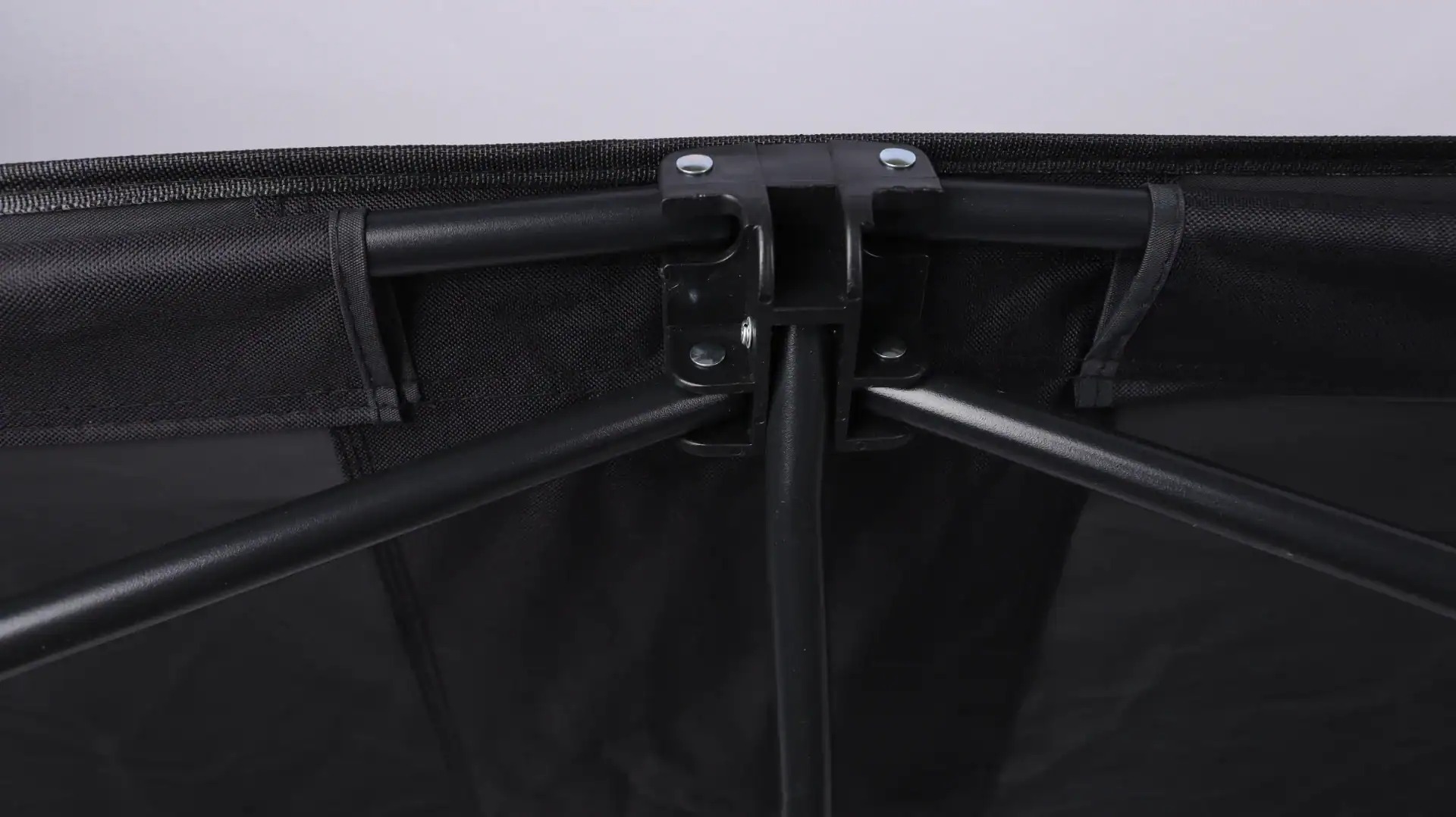
A wagon frame that looks identical in a product photo can differ by 40% in actual strength. The difference comes down to two things: steel tube wall thickness and the geometry of the folding mechanism.
Steel tube wall thickness and frame geometry
Most 50kg wagons use 0.6mm to 0.8mm wall thickness carbon steel tubing. At 120kg, that jumps to 1.0mm–1.2mm. For a true heavy duty folding wagon with a 200kg rating, the tube wall needs to hit at least 1.5mm — and some suppliers drop to 1.2mm on the crossbars while keeping 1.5mm on the main rails.
The geometry matters just as much. A standard X-frame distributes load across two pivot points, but when you exceed 100kg dynamic load, those pivots become stress concentrators. Reinforced X-frames add a third cross brace or use gusset plates at the hinge joint — that single change can increase lateral rigidity by roughly 30% without adding much weight.
Powder-coated carbon steel frames are standard in this category because they balance cost against strength. Aluminum frames exist for lightweight positioning (typically under 15kg wagon weight), but they trade away load ceiling — most aluminum wagons top out around 80-100kg regardless of tube gauge.
Reinforced X-frame and baseboard materials that hold weight
The baseboard is where many wagons fail before the frame does. MDF boards warp after repeated exposure to damp loads — three cycles of wet sand or ice packs and the board loses its flat structure, transferring uneven stress to the fabric basket walls.
Verifying Load Claims Before You Order Samples
A 200kg static rating can drop to 80-100kg dynamic over rough ground.
Most buyers in retail treat the printed load capacity as a hard number. It is not. That 150kg sticker on the side of a folding wagon usually comes from a static test—a sandbag placed in the basket while the wagon sits on a concrete floor. Real-world use means pulling that load over gravel, grass, and uneven campsite terrain. The difference between static and dynamic load is where return rates start climbing.
Destructive test thresholds to ask for
When you are evaluating a supplier for a private label program, do not accept the catalog spec sheet as proof. Ask for three specific test results before committing to sample approval.
- Dynamic load test over simulated terrain: Request a video or third-party report showing the wagon loaded to its rated capacity and pulled 500 meters over a gravel or bumpy surface. A wagon that holds 150kg static often fails at 90-100kg dynamic because the frame joints experience lateral stress that does not exist in a static setup.
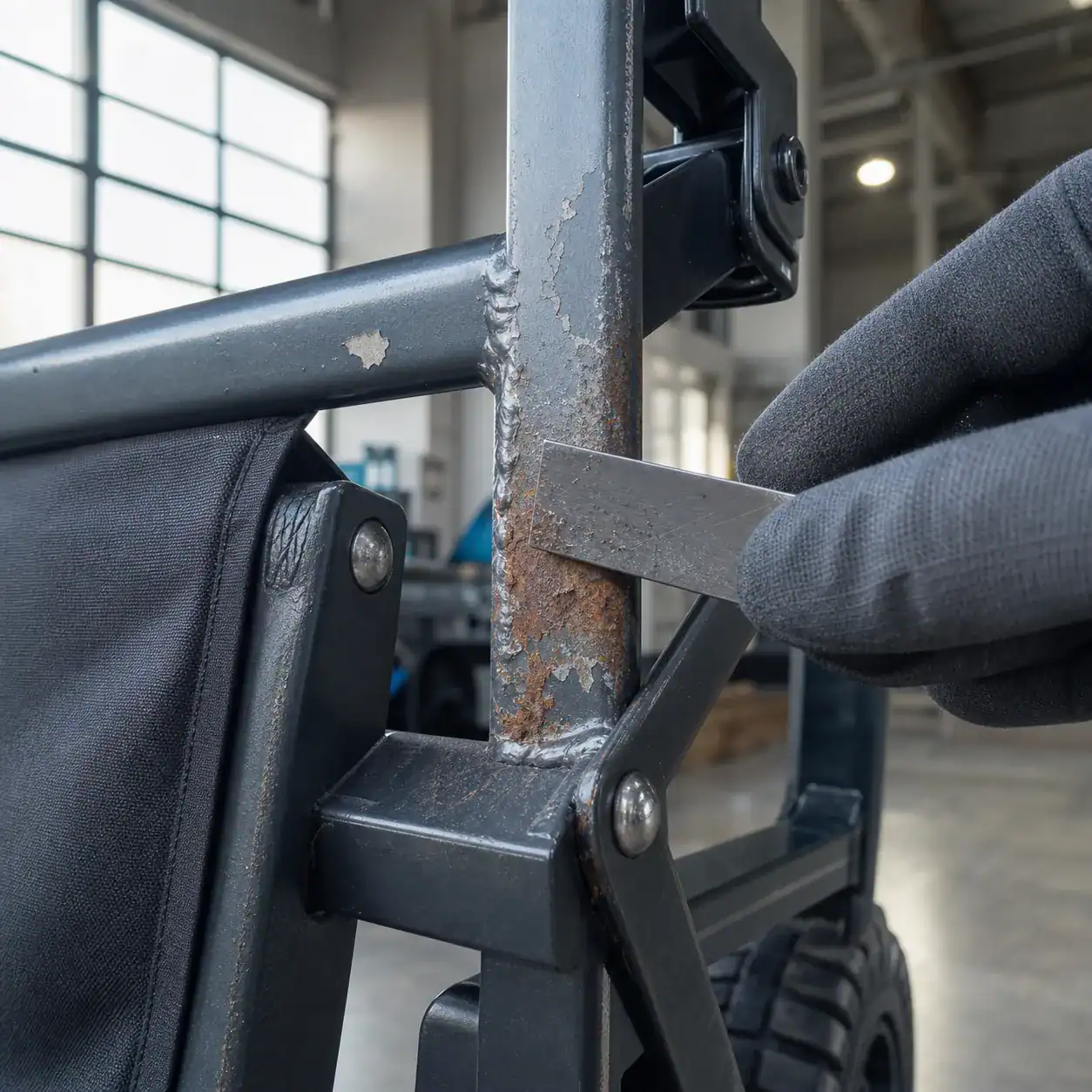
- Frame joint fatigue cycle count: The critical failure point is not the tube itself but the connection points—where the X-frame crossbars meet. Ask for cycle testing data: how many open-close cycles the frame withstands under full rated load. A minimum threshold should be 3,000 cycles without visible deformation.
- Fabric basket tear-out force: “600D vs 900D wagon fabric durability” matters less than how the fabric attaches to the frame. Request a pull-test measurement at the stitch line where basket meets frame rail. Anything under 50 kgf (kilogram-force) of tear-out resistance means returns will spike when customers overload one corner.
- <100kg wagons (entry-level): : Target price-sensitive shoppers who haul light loads like groceries or beach gear. Use powder-coated carbon steel frames with wall thickness around 0.8mm and MDF baseboards. Accept that MDF can warp after repeated damp loads—but at this price point, most customers replace before structural failure occurs.
- >150kg wagons (mid-tier): : These must use PP honeycomb or aluminum insert baseboards instead of MDF to handle heavier loads without sagging. Frame wall thickness should increase to at least 1.0mm steel or switch to aluminum for weight savings without sacrificing strength.
- >200kg wagons (heavy-duty): : Reserve these for commercial-grade SKUs or serious campers hauling coolers, firewood, and gear across rough terrain. Require reinforced X-frame geometry with gusseted joints, double-layer Oxford fabric (900D minimum), and wheels with TPE tires rated for off-road use.
Matching load capacity to retail SKU positioning
“Retail SKU positioning folding wagon capacity” is not just about printing a bigger number on the box. It directly determines your warranty exposure and return rate budget.
الخاتمة
The gap between a 200kg static load rating and what happens when that wagon hits a gravel path is where returns live. Dynamic testing with weighted loads over rough ground reveals the real capacity, which can drop by half. Frame geometry, tube wall thickness, and baseboard material determine whether your SKU survives the first season or generates a warranty claim.
- Dynamic load ratings are often half of advertised static limits.
- MDF baseboards warp under damp loads; PP honeycomb or aluminum hold up.
- 900D double-layer Oxford fabric outlasts 600D in basket failure tests.
Before you place your next sample order for folding wagons, run through the three-point checklist above with your supplier. Ask for their dynamic test protocol, confirm the baseboard material, and verify the steel tube wall thickness on heavy duty folding wagon models rated at 200kg frame specs. Compare those answers against your retail SKU positioning to match capacity claims with real-world use. A quick audit now saves the cost of replacing a batch that fails on delivery.
الأسئلة الشائعة
كيف تحصل على عرض سعر لحدود وزن العربة القابلة للطي: شرح من 50 كجم إلى 200 كجم؟
الإجابة الدقيقة تعتمد على مواصفات المنتج والكمية وإعداد الطلب. الطريقة الأكثر أمانًا هي تأكيد الشروط التجارية فقط بعد تثبيت ورقة المتطلبات النهائية. يجب تأكيد الشروط النهائية وفقًا لمواصفات المنتج الدقيقة وشروط الطلب.
هل يمكنني طلب عينات أولاً؟
تعتمد الإجابة الدقيقة على مواصفات المنتج والكمية وإعداد الطلب. النهج الأكثر أمانًا هو تأكيد الشروط التجارية فقط بعد تثبيت ورقة المتطلبات النهائية. يجب تأكيد توفر العينات وفقًا للمخزون الحالي وخطة الشحن.

 English
  Español
  Deutsch
  Français
  Português do Brasil
  Русский
  العربية
  한국어
한국어  日本語
日本語