 تخطي إلى المحتوى
Subject: tent pole coating types — pre-production vs. mass production mismatch on the Ridge 4 order.
The approved pre-production sample came with a slick bright-red anodized pole set. Mass production arrived with a dull orange-red that looked two seasons old. Same extrusion supplier. Same coating partner. Different batch, different hanging rack. They inserted the hook point right in the middle of the visible pole section instead of hiding it inside the shock-corded joint, so now every pole has a raw aluminum nick staring the customer in the face. QC flagged it at the 60% AQL inspection checkpoint. Rework ate 11 days off the ship window and the factory tried to argue it fell within the quality tolerance for color variance on anodized finishes—which technically, at ΔE 2.5, it did. That’s not a tolerance you want to test at retail.
What gets missed in most sourcing conversations is that FOB pricing for coated poles looks deceptively stable across suppliers, but the spread between processes—powder, anodizing, e-coat—hides real operational risk. The مرحلة الموافقة على العينة. is where you lock down not just the color but the exact racking method, the cure temperature window, and the internal bore coverage. Miss those, and the coating spec on paper means nothing once the container lands in a coastal warehouse.
Why Pole Coating Matters More Than Material Alone
The coating is the first line of defense—get it wrong and the pole material becomes academic.
Walk the production floor of a tent factory in Ningbo. The operator at the anodizing line watches a batch of 7075 aluminum poles lift from the dye tank. Three poles show pale contact marks where the titanium hanging hooks gripped the shaft. A junior line worker ships them as-is. Six months later, a camping retailer in Florida posts a one-star review showing those exact marks, now pitted with white corrosion blooms. The material was right. The coating process failed. For a supply chain manager, specifying 7075 aluminum stops mattering the moment the surface treatment allows moisture to breach the oxide layer.
The Triple Threat: Humidity, UV, and Sweat
Coastal humidity does not just sit on the surface. Salt-laden air penetrates micro-cracks in a chipped powder coat, settles into the gap between coating and substrate, and starts electrochemical corrosion that spreads laterally under paint that still looks intact. Remove a flake of powder coating from a steel pole after one season in a beachside campground and the rust crater underneath is often three times wider than the visible chip. UV operates differently. It attacks the binder resin in polyester powder, causing the surface to chalk, lose gloss, and eventually expose pigment particles. That powdery residue buyers wipe off their hands is the coating sacrificing itself. Sweat adds an acidic pH of 4.5 to 6.0 directly onto grip zones. On an anodized pole, this is manageable. On a poorly sealed powder coat, the acid etches microscopic channels into the film, opening a path to the base metal.
Failure Modes That End Up on a Warranty Report
-
- Flaking: Thermal expansion mismatch between a thick powder coat (60–80 µm) and aluminum substrate. The pole flexes during setup and takedown. The coating cannot follow. Edges lift, moisture creeps under, and delamination accelerates from the perimeter inward. Most common on budget family tents with steel poles stored damp in carry bags.
- Pitting: Localized corrosion driven by chloride ions in coastal air. Pits drill vertically into aluminum, creating cavities that compromise wall thickness at stress points. Anodized poles resist pitting until the oxide layer is breached. Once breached, the pit deepens fast because the surrounding intact anodized layer acts as a cathode, concentrating corrosion current at the tiny exposed anode.
- Galvanic Corrosion: Steel ferrules swaged into aluminum pole sections without an insulating barrier create a battery when moisture bridges the joint. The aluminum sacrifices itself to the steel. The coating on both parts stays intact while the aluminum dissolves from inside the ferrule connection. By the time the pole snaps, the failure looks like a material defect—but the autopsy reveals gray-white aluminum oxide packed inside the joint where two incompatible metals touched in the presence of electrolyte.
| Coating Technology | Key Performance Attribute | Supply Chain Advantage | Recommended Deployment |
|---|---|---|---|
| طلاء البولي يوريثان | Lightweight waterproofing layer with moderate durability | Most cost-effective coating, short processing time, minimal MOQ constraints | Entry-level family tents in temperate climates with moderate humidity |
| طلاء السيليكون | Superior tear strength and UV resistance, does not hydrolyze | Long-term stability reduces warranty claims, extends product lifecycle | Premium backpacking and mountaineering tents exposed to extreme UV radiation |
| طلاء PVC | Heavy-duty abrasion resistance and complete waterproof sealing | High material cost offset by extreme durability, ideal for high-margin specialty products | Truck tarps, heavy-duty tent floors, and industrial-grade outdoor shelters |
| طلاء فضي | Reflective pigment reduces interior heat buildup, blocks visible light | Enhances perceived comfort value without significant structural cost increases | Beach tents, sun shelters, and family camping tents for hot summer markets |
| طلاء أسود | Superior UV block via carbon pigment absorption, minimal light penetration | Targeted premium feature for niche markets, justifies higher retail price points | Hunting blinds, ice fishing shelters, and glamping tents requiring darkness for sleep quality |
طلاء المسحوق
A 60µm powder coat hides frame defects that a 5µm anodized layer exposes instantly.
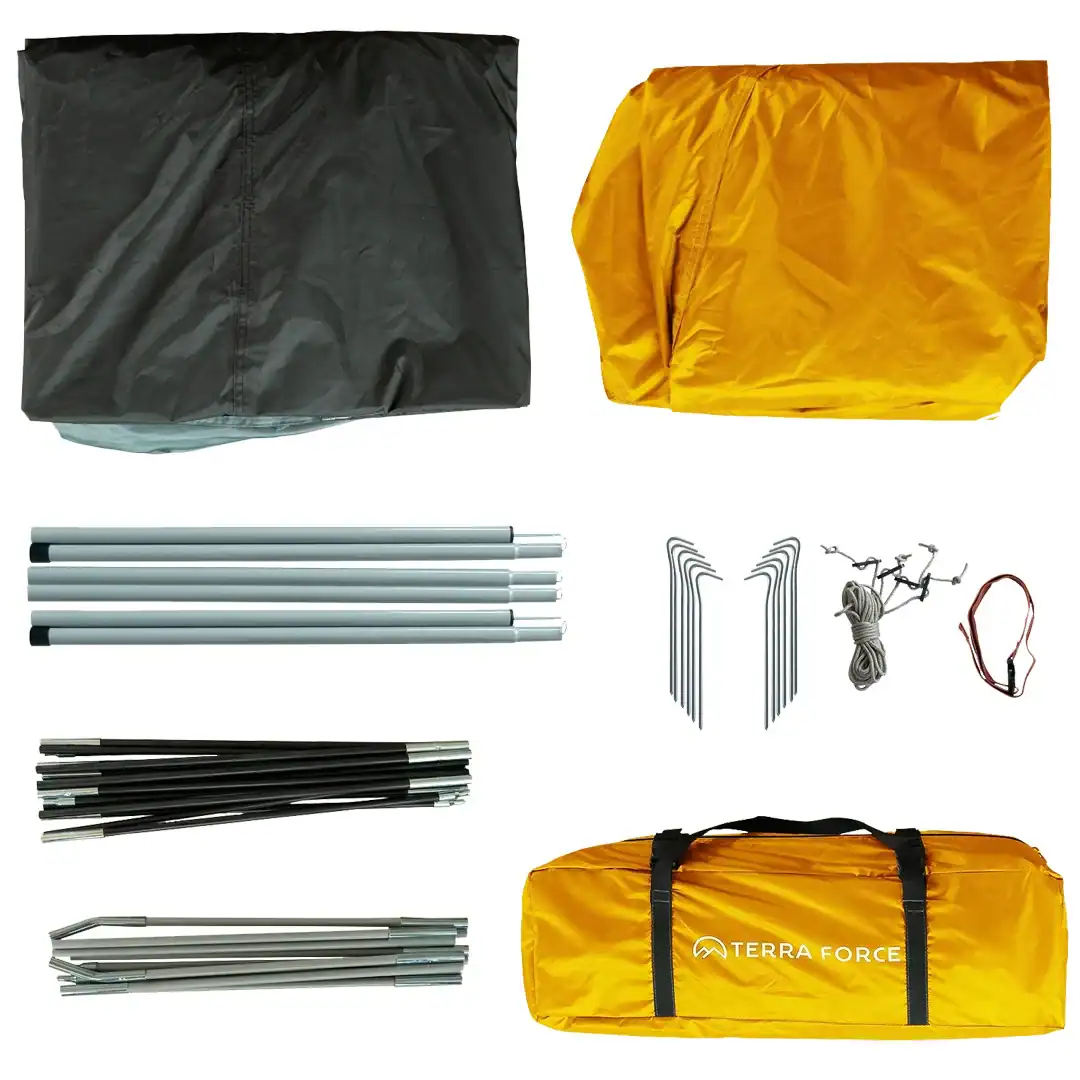
Powder coating starts with an electrostatically charged dry powder—typically polyester or epoxy-polyester hybrid—sprayed onto a grounded metal pole. The part then runs through a curing oven at 180-200°C for 10-20 minutes. The powder melts, flows into a continuous film, and crosslinks into a hard shell 60-80 µm thick. That thickness does two things: it buries minor extrusion scratches and gives the pole a uniform, opaque color coat that can hit nearly any Pantone target a brand spec demands.
Color variety is the biggest commercial draw. A buyer launching a four-color family tent line can match pole finishes to rainfly fabric without switching substrate materials. Cost sits at the low end of the three processes—typically the least expensive surface treatment per linear meter for steel and aluminum alike. Impact resistance is solid too. A 60 µm powder coat absorbs rock strikes and ground contact abrasion better than a 10 µm anodized layer ever will. For entry-level and mid-market tents sold through DIY chains or promotional catalogs, those three factors—color, cost, durability—cover most of the checklist.
Where Powder Coating Fails
Chip vulnerability is the number one field complaint. Once the coating cracks—from a bent pole segment or a dropped frame—moisture creeps under the film edge. Corrosion tunnels laterally beneath the coating, lifting flakes you cannot re-bond. UV exposure compounds the problem. Polyester powders chalk and fade under sustained sunlight. A dark green pole on a family tent deployed in Arizona for six months comes back looking mint-green and powdery to the touch. That is not a manufacturing defect. It is a chemistry limitation the process cannot escape.
Limited flexibility is the hidden supply chain risk. The bake cycle at 180-200°C can warp thin-wall aluminum poles—0.8 mm wall tubing, common in lightweight tent designs—if the factory does not fixture parts properly during cure. A 1° bow over a 4-meter pole length is invisible on the shop floor but causes binding at the shock-cord junction after the end user assembles the tent twice. The Kelyland factory network addresses this with purpose-built curing jigs and post-bake straightness checks before poles ever reach the assembly line.
أفضل حالات الاستخدام
Powder coating belongs on budget family tents sold into dry inland climates. Steel poles get acceptable rust protection at the lowest per-unit cost. Brand colors pop on retail shelves. The trade-off—chalking, chipping, and eventual cosmetic degradation—is priced into the product tier. Buyers specifying powder coat should also verify with the factory that the coating line runs ISO 9001 process control. A 20°C oven temperature drift changes gloss level and adhesion. Without batch-level bake logs, the coating’s lifespan is anyone’s guess.
-
- Spec threshold: Demand 60-80 µm dry film thickness with a cross-hatch adhesion test (ISO 2409) rating of 0 or 1 on the sample submission.
- Risk flag: If a supplier offers powder coating at no upcharge over bare metal, they are skipping pre-treatment. Phosphate wash or sandblasting before powder application is non-negotiable. Skip it, and the coating delaminates in sheets within 12 months of coastal storage.
Anodizing (Aluminum-Specific)
Type III hard anodizing costs 2-3x more than Type II—and for rooftop tents facing salt spray, that premium buys years of extra.
Aluminum tent poles don’t develop the red-orange rust of steel, but they corrode just the same—a chalky white powder called aluminum oxide that pits the surface and seizes telescoping joints. Anodizing converts the aluminum surface itself into a controlled, uniform oxide layer that’s harder than the base metal. Type II sulfuric anodizing builds 5–18 µm of coating, enough for backpacking tents in dry climates. Type III hardcoat pushes that to 25–50 µm, creating a surface tough enough to resist sand abrasion and coastal salt mist.
Corrosion Resistance Without a Separate Coating
Unlike powder coating, which sits on top of the metal as a polymer shell, anodizing grows from the aluminum inward. There’s no boundary layer to delaminate. Salt spray testing on Type III anodized 6061 aluminum poles routinely exceeds 336 hours before visible pitting appears—double what most powder-coated aluminum achieves. For supply chain managers sourcing rooftop tents or beach canopies, that difference means fewer warranty claims from customers in Florida, Southeast Asia, or the Mediterranean.
Color Limitations and Surface Honesty
Anodizing accepts dye during the process, not paint afterward. The color range is smaller than powder coating—expect matte blacks, silvers, dark greys, and a handful of muted earth tones. Bright brand colors are off the table. The finish also reveals rather than hides: extrusion lines, weld marks, and surface scratches remain visible through the anodic layer. A cosmetic blemish that powder coating would bury under 70 µm of polymer sits in plain view on an anodized pole.
-
-
- Contact-point bare spots: Anodizing requires electrical contact via hanging hooks or racks. The point where the hook touches the pole stays uncoated—a pinhead-sized bare aluminum spot. Quality-focused factories hide these marks inside the pole’s joint sleeve where the ferrule overlaps, making them invisible in the assembled tent.
- Color batch variation: Anodizing dyes shift subtly between batches. If your tent uses multiple pole segments, specify same-batch processing in the production agreement. Mixed-batch poles show visible shade differences under sunlight.
- Thin-wall warping risk: Unlike powder coating’s 180–200°C cure that can warp thin-wall aluminum, anodizing runs at near-ambient temperatures. For ultralight backpacking poles with wall thicknesses below 0.8 mm, anodizing eliminates the thermal distortion risk entirely.
-
Where Anodizing Pays Off
Premium backpacking tents and rooftop tents are the strongest case for anodizing. Weight-sensitive designs benefit from the process’s negligible thickness add—zero dimensional change for slip-fit joints. Kelyland’s tent factory partners in Ningbo and Jinhua offer both Type II and Type III anodizing through ISO 9001-certified finishing lines, with sample approval logs confirming contact points are consistently positioned inside ferrule zones.
-
- Choose Type II anodizing if: Your tent sells into dry or temperate regions, weight is the primary concern, and matte silver or black fits the brand colors. Cost premium over raw aluminum is modest.
- Skip anodizing if: Your brand identity depends on a specific bright Pantone color or you need the finish to hide extrusion marks on visible pole sections. Powder coating serves those needs better.
| Anodizing Type | Layer Depth (µm) | المزايا الرئيسية | Key Limitations | أفضل حالات الاستخدام |
|---|---|---|---|---|
| Type II (Decorative/Protective) | 5–15 | Good corrosion resistance; integral finish (no peeling); can be dyed in limited colors; no rust | Cannot hide extrusion lines; narrower color palette; cost above powder coating | Premium backpacking tents, lightweight aluminum poles |
| Type III (Hardcoat) | 15-25 | Superior abrasion and corrosion resistance; hard, non‑rust surface; excellent for salt/humid air | Dark colors only (gray/black); higher cost; slower processing | Rooftop tents, severe coastal environments, heavy‑duty poles |
| Process Detail – Hook Marks | غير متاح | Bare spots from hanging hooks are hidden inside pole joint sleeves by quality‑focused factories | Requires careful process control; sub‑par suppliers leave visible marks | All anodized poles where premium cosmetic finish matters |
E-Coating (Electrophoretic Coating)
E-coating is the only finish that protects the inside of a hollow pole from corrosion.
Most sourcing guides tell you to compare powder coating and anodizing and call it a day. That advice costs real money when you’re shipping steel-frame tents to coastal markets. A glossy powder coat on the outside means nothing if condensation rusts the tube from the inside out. E-coating—electrophoretic coating—solves a problem the other two processes can’t touch.
Immersion beats spray every time
The e-coating process submerges the entire pole frame in a bath of electrically charged paint particles. Current draws the coating into every crevice, weld point, and interior tube wall at a uniform 15–25 µm thickness. Spray-applied powder coating can’t reach inside a hollow pole. Anodizing grows an oxide layer only where the electrolyte contacts—and the inside of a tube sees limited solution flow. For steel frames, this difference determines whether the pole lasts three seasons or three years.
Where e-coating wins and where it falls short
-
- Edge and interior protection: The immersion bath coats sharp edges and internal cavities uniformly. Powder coating pulls away from edges during curing, leaving the thinnest coverage at the exact point most vulnerable to impact and moisture ingress.
- Thin, precise film build: عند سمك 15–25 ميكرومتر، تضيف الطلاء الكهربائي (E-coating) وزناً هامشياً ولا تتعارض مع انزلاق قضبان الخيمة أو ملاءمة الوصلة الأنبوبية. بينما يغيّر الطلاء المسحوق بسمك 60–80 ميكرومتر القطر الخارجي بشكل كافٍ لتسبب تماساً ضيقاً بين أجزاء القضبان المتوافقة بإحكام إذا لم تعوّض المصنع أثناء السحب.
- متوافق مع الصلب والألومنيوم: نفسه حمام الإيبوكسي الكاثودي يعمل على المادتين. تحصل الهياكل المصنوعة من مواد مختلطة — مثل محاور فولاذية مع أرجل ألومنيوم مثلاً — على تشطيب موحد بنعومة واحدة دون متاعب تبديل العمليات التي يتطلبها التأكسيد الكهربائي.
- الحساسية للأشعة فوق البنفسجية: يتشرب طلاء الإيبوكسي القياسي المعالج كهربائياً ويتدهور تحت أشعة الشمس المباشرة. يحتاج إلى طبقة علوية من الطلاء المسحوق البوليستر لضمان مقاومة الأشعة فوق البنفسجية. هذه تكلفة عملية من خطوتين، وليست عائقاً، لكن تخطيها يضمن ظهور مطالبات الضمان في أسواق المناطق المشمسة.
- قيود الألوان: يأتي الطلاء الكهربائي باللون الأسود والرمادي ومجموعة صناعية محدودة. إذا أراد مدير العلامة التجارية قضباناً مطابقة لهوية العلامة حسب دليل بانتهون المخصص، يبقى الطلاء المسحوق الخيار الوحيد على نطاق الإنتاج الضخم.
رهان السوق الساحلي الذي يجدي نفعاً
يواصف موزعو جنوب شرق آسيا والساحل الخليجي الطلاء الكهربائي مع طبقة علوية رقيقة من الطلاء المسحوق كمعيارهم للخيام العائلية الفولاذية. تمر التركيبة باختبار رذاذ الملح لمدة 500 ساعةبنجاح دون ظهور صدأ أحمر على الحواف أو داخل الأنابيب. شُحنت ست حاويات من هياكل الصلب المعالجة كهربائياً إلى سنغافورة خلال موسم الرياح الموسمية الماضي بدون أي مطالبات بالصدأ. في المقابل، سجلت طلبية المشتري السابقة المعالجة بالطلاء المسحوق فقط معدل رفض يبلغ 11% بسبب التآكل الداخلي عند وصلات القضبان. للبيئات شديدة الرطوبة أو أي خيم تحتوي على قضبان فولاذية، تجنب اختصار الطلاء أحادي الطبقة. حدد الطلاء الكهربائي الإيبوكسي الكاثودي مع طبقة علوية واقية من الأشعة فوق البنفسجية، وتدقق في سجلات صيانة حمام الطلاء وسجلات التوصيلية الكهربائية لدى المصنع كجزء من موافقة العينات. إذا لم تكن تلك السجلات متاحة، ابحث عن مورد يطبق نظام تحكم بالمواصفات ISO 9001 على خطوط الطلاء الخاصة به.
يتجلّى ثمن التقصير في مواد التغليف الإلكتروني بسرعة كبيرة. فحاوية واحدة تحتوي على 800 خيمة بإطارات فولاذية تتآكل أقطابها وتُظهر صدأً ناتجاً عنها، كفيلة بأن تثير غرامة استرداد من الموزع تقضي على هوامش الربح في ثلاث حاويات من المنتج السليم. ويبلغ فرق سعر الـ FOB بين الطلاء بالبودرة فقط والتغليف الإلكتروني مضافاً إليه طبقة نهائية، في إطار عائلة قياسية من الخيام، حوالي $1.20–$2.00 لكل وحدة. وعلى طلبية بحجم 3000 وحدة، يصبح هذا البند ما بين $3,600 و$6,000 مقابل خطر غرامة استرداد محتمل يبلغ $45,000. الحساب ليس قريباً من أي ربح.
Supply Chain and Cost Considerations
هنا يبرهن مديرو سلاسل التوريد كفاءتهم الحقيقية، حيث تكون مقادير الحد الأدنى للطلب والملون المخصص وأوقات توصيل الغلاف الفني هي المحك الفعلي.
عتبات الحد الأدنى للطلب: فخ التخصيص اللوني
الأقطاب القياسية باللون الأسود أو الفضي تمر عبر خطوط الإنتاج القائمة بأدنى تكاليف إعداد. أما عند التحول إلى طلاء بودرة مطابق للهواء Pantone أو لون أنوديز محدد، فيضطر المورد فجأة إلى تنظيف خزاناته، وتفريغ الخطوط، أو خلط دفعة جديدة من مسحوق البوليستر. يجب توزيع تكلفة الإعداد هذه على عدد كافٍ من الوحدات لتبريرها. ففي معظم مقاولي الطلاء في تشجيانغ، يُطلب حد أدنى من 500 إلى 1,000 قضيب لبدء جدولة العمل. ودون هذا الحد، ترتفع تكلفة الطلاء لكل قطعة بنسبة 40-60%% — ليس لأن المواد أغلى ثمناً، بل لأن تكلفة توقف الخط والعمل الإضافي للتنظيف تُوزّع على قطع أقل.
ويوجد حد أدنى مشابه في تغليف الألومنيوم بالكهرباء (التحنيذ الكهربائي). فخلايا الصباغة للتحنيذ من النوع الثاني تحتوي على تركيز لوني محدد يستقر بعد معالجة عدة racks من الأجزاء. وتريد لوناً أزرق مطابقاً للكود الست عشري لهويتك؟ يحتاج مركز التحنيذ إلى حجم كافي لتبرير إضافة صبغة مخصصة لحمام مخصص. غالباً ما تضع المحلات هذه العتبة الدنيا عند 800 إلى 1,200 قضيب للون غير قياسي. أما الألوان القياسية — الشفافة، السوداء، والذهبية — فتتنافس الأحواض بينها مع طلبات عملاء آخرين ولا تفرض قيوداً دنيا.
يقع الطلاء الكهربائي (E-coating) في نقطة وسطى. إذ تعالج خلايا الكاثود الطلبات المختلطة في نفس الوقت، لذا لا يتطلب الأمر تخصيص خزان للألوان. موك وينتقل قيد الأداء إلى خط المعالجة المسبقة — حيث تصبح كفاءة تحميل racks أمراً أهم من مطابقة اللون. وتتراوح الحد الأدنى النموذجي لألوان الطلاء الكهربائي المخصصة حول 300 إلى 500 قضيب، ما يجعله الخيار الأكثر ملاءمة للكميات المتوسطة من الأعمال المتخصصة.
تأثير أوقات التوصيل: ما يضيفه كل عملية إلى جدول إنتاجك
تحمل عملية التحنيذ أكبر عبء زمني. فتدويرها الكامل — التنظيف، التآكل الكيميائي، إزالة الرواسب، التحنيذ، الصباغة، والختم — يضيف من 7 إلى 10 أيام عمل إلى الإنتاج القياسي. وأحياناً تتم تسريع الطلبات العاجلة في 5 أيام، لكن ذلك يضمن طبقات أكسيد أدق وتشبعاً لونيًا أقل. فخطوة الختم وحدها تتطلب وقت غمر مضبوطاً؛ وإلا فإن الطبقة المسامية من الأكسيد ستمتص الملوثات خلال أسابيع من الاستخدام الميداني.
يتحرك الطلاء الكهربائي بشكل أسرع. فترسّب الشحنات الكهربائية نفسه يستغرق دقائق لكل rack، بينما يعمل فرن المعالجة بدرجة حرارة 160-180 درجة مئوية لمدة 20 إلى 30 دقيقة. والعقبة الأساسية هي المعالجة المسبقة — إزالة الدهون بالقلوي، والغسيل، والفوسفاتية للصلب أو الكرومية للألومنيوم — والتي تتم في خط ناقل مستمر. ومجموع الوقت المضاف: 3 إلى 5 أيام عمل للدفعة القياسية. وتتعامل العملية مع مواد مختلطة على نفس الخط، ما يعني أن مقاطع أعمدة الخيم من الصلب والألومنيوم يمكن أن تمر في آن واحد دون الحاجة لتغيير الأحواض.
يقسم الطلاء بالبودرة الفرق بينهما. فرش الشحنات الكهروستاتيكية والمعالجة بدرجة حرارة 180-200 درجة مئوية تأخذ نحو 20 دقيقة لكل دورة. لكن تغيير اللون بين الدفعات يلتهم الوقت — حيث يستغرق تفريغ أفرشة الرش، وتبديل مخاريط المسحوق، وتنظيف أنظمة الاستعادة 30 إلى 45 دقيقة لكل تغيير. ونرسم خطة بإضافة 5 إلى 7 أيام عمل لطريقة الطلاء بالبودرة، مع امتصاص الأيام الإضافية عبر تجميع طلبات الألوان المتشابهة معاً.
كيفية اختيار شركاء الطلاء: فلتر ISO 9001
ضمن شبكة Kelyland Outdoors المؤلفة من 17 مصنعاً رئيسياً وأكثر من 200 شريك تصنيع، لا تُضاف مقاولات الطلاء بسهولة. حيث يقيّم فريق التوريد ثلاثة معايير قبل اعتماد متجر المعالجة السطحية. أولاً، إن شهادة ISO 9001:2015 غير قابلة للتفاوض — متطلبات التحكم في العملية تؤثر مباشرة على اتساق الطلاء عبر دفعات الإنتاج. والمحلات التي تجتاز هذا الفلتر تملك إجراءات موثقة لمراقبة كيمياء الأحواض، ورسم خرائط درجات حرارة الأفران، واختبارات التصاق.
ثانياً، يتحقق الفريق من منهجية تحميل racks. فالترتيب الرديء يؤدي إلى نقاط تلامس عارية تظهر فيها الألومنيوم المكشوف للأقطاب المجهزة بالتحنيذ — وهو العيب المرئي الذي تخفيه المحلات الكفؤة داخل أكمام الوصلات. والمحلات التي تحمل الأعمدة أفقياً باستخدام روابط مرنة بين الأقسام تنتج نتائج أنظف من تلك التي تُعلّق الأعمدة عمودياً من خطافات الطرفين. ثالثاً، يتحقق الفريق من سجلات صيانة الأحواض. فأحواض التحنيذ التي لا يتم معايرتها بانتظام لتحديد تركيز الحمض تؤدي إلى سماكة غير متسقة للطبقة الأكسيدية. وبالنسبة لأحواض الطلاء الكهربائي ذات الترشيح الفائق الضعيف، فإنها تترك جسيمات في التشطيب. وهذه ليست فشلًا نظريًا فحسب — بل تظهر في فحص ما قبل الشحن كشريطيات، أو تباين لوني، أو طبقة طلاء ناعمة تفشل اختبار الشريط المتقاطع البسيط.
بالنسبة لـ مدير سلسلة التوريدأثناء بناء قائمة مقارنتك الخاصة بالموردين، يكون المعيار الأساسي لإحضاره إلى اجتماعك القادم بسيطاً: اسأل مورد الطلاء عن عدد الأعمدة التي يعالجها أسبوعياً، والنسبة المئوية من إنتاجه المخصصة للتطبيقات الخارجية. فلا تتوفر لدى الورشة التي تستخدم الألمنيوم المعماري 80% للاستخدام الداخلي الكيمياء المطلوبة في حمام المعالجة لتحقيق مقاومة رذاذ الملح لمدة 500 ساعة. والشريك المناسب يعمل بنسبة لا تقل عن نصف حجم إنتاجه وفق مواصفات الدرجات المخصصة للاستخدام الخارجي، ويمكنه إبراز تقارير اختبارات رذاذ الملح فوراً.
| المعامل | المواصفات | الأثر على سلسلة التوريد |
|---|---|---|
| الحد الأدنى للطلب للألوان المخصصة | 500-1,000 عمود لكل دفعة | يتطلب التزاماً بجدول إنتاج أكبر؛ خطّط للمخزون لتبرير استثمار اللون المخصص. |
| إضافة وقت التصنيع للطبقات بالأكسدة | +7-10 أيام إلى الإنتاج القياسي | يمدّد الدورة الإجمالية؛ ضع ذلك في الحسبان عند جدول التسليم وحجز الشحن البحري. |
| إضافة وقت التصنيع للطلاء بالكهرباء | +3-5 أيام إلى الإنتاج القياسي | إضافة وقت معتدلة؛ يُفضَّل للأطر الفولاذية أو مختصة المواد التي تحتاج حماية من التآكل داخلياً. |
| عملية الطلاء بمسحوق البودرة الحرارية | المعالجة بالفرن عند درجة حرارة 180-200°م؛ لون بانتون مخصص متاح | قد يتشوه الألمنيوم ذو الجدران الرقيقة إذا لم يُثبّت بدقة؛ خبرة المورد وتصميم الثوابت (الفيكسات) عنصران حاسمان. |
| اختيار شريك الطلاء | مرافق معتمدة وفق أيزو 9001؛ تفتيش ميداني | يضمن التحكم في العمليات، واتساق الدفعات، والقدرة على تتبع المنتجات، مما يقلل من مخاطر الأعطال الميدانية. |

Decision Matrix: Which Coating for Which Market?
يعتمد اختيار الطلاء المناسب على مادة الإطار والمناخ ومدى تقبلك لتمديد فترة الإنتاج تصل إلى 7 أيام.
أنماط الفشل الشائعة
يفشل الطلاء عندما ينفصل عن المادة الأساسية. بعد موسم شاق، قد تظهر التقشعات على الأعمدة الفولاذية حيث تسربت الرطوبة عبر خدش مجهرٍ، أو التآكل النقطي على الألومنيوم حيث تآكلت الطبقة اللامعة تحت أنبوبة متوترة. يتغير تحليل التكاليف بسرعة إذا كان شريحة جمهورك المستهدف تتخيّم على المنحدرات الساحلية بدلاً من الصحراء الجافة.
مصفوفة قرار الطلاء
-
-
- الفائز: الطلاء بالغبار (Powder Coating) خيم العائلات ذات الميزانية المحدودة المتجهة نحو تجار التجزئة الكبار. يوفر طبقة البولي إستر الراتنجية بسمك 60-80 ميكرومتر توافقًا واسعًا لألوان بانتون للعلامات التجارية بأقل تكلفة وحدوية. ولا يزال نقطة ضعفها الرئيسية هي الهشاشة. فعمود الطي يمتص صدمات أقل من هيكل الكرسي الصلب، لكن المعالجة الحرارية (180-200 درجة مئوية) قد تسبب 여전히 انحناءً طفيفًا في سبائك الألومنيوم 6061 ذات الجدران الرقيقة إذا لم توفر خط الطلاء تثبيتًا (Jigging) مناسبًا.
- الفائز: أكسدة الألومنيوم (Anodizing) أعمدة الألومنيوم لخيم backpacking الفاخرة أو خيم الأسطح، حيث تقدم طبقة من النوع II بسمك 5-25 ميكرومتر مقاومة للتآكل دون إضافة وزن. يتكامل الطلاء المصنوع بهذه الطريقة مع المعدن الأساسي. ولن يتقشر أبدًا على شكل رقائق، لكن توقع ظهور بقع عارية صغيرة حيث يلامس رف التعليق الأنبوب أثناء الغمس في الحمام الكهروكيميائي. حدد مواصفات الأجزاء بحيث تقع هذه العلامات داخل مفاصل العمود، وليس على الجزء الظاهر منه.
- الفائز: الطلاء الكهروفتي (E-coating) الهياكل الفولاذية أو التصاميم ذات المواد المختلطة الموجهة نحو الأسواق شديدة الرطوبة. يسحب حمام الكهربية الهوائية جسيمات الطلاء المشحونة إلى أعماق الأنابيب المجوفة بسمك منتظم يتراوح بين 15-25 ميكرومتر. إن التغطية الداخلية تلك هي الطريقة الموحيدة والموثوقة لإيقاف الصدأ الذي يبدأ من الجدار الداخلي حيث يتكثف الرطوبة. وأي تركيب لطلاء كهروفتي يحتاج إلى طبقة علوية مستقرة ضد الأشعة فوق البنفسجية للتعرض المباشر لأشعة الشمس.
-
سيناريوهات سلسلة التوريد
-
- اختر الأكسدة (Anodizing) إذا: كان سعر بيع وحدة التحكم (SKU) يتجاوز $280 وتكون وزن المنتج عاملًا مهمًا. تقبل إضافة فترة زمنية lead time تبلغ 7-10 أيام لعملية النوع II في مرافق شركاء معتمدين وفق ISO 9001 بالقرب من جهاز البثق (extruder). والعائد هو finish يتحمل اختبارات رش الملح دون الحاجة إلى primer منفصل.
- اختر الطلاء بالغبار (Powder Coating) إذا: يسمح حجم طلبك بتوزيع تكلفة إعداد اللون المخصص عبر أكثر من 500 عمود. تتيح لك شبكة مكونة من 17 مصنعًا أساسيًا مرونة في السعة، ولكن تأكد من أن الخط يعمل دورة تبريد مسيطرًا عليها لحماية سمك ألواح الألومنيوم.
- اختر الطلاء الكهروفتي (E-coating) إذا: كنت تشحن خيمًا ذات هياكل فولاذية إلى منطقة تتسم بمتوسط رطوبة يبلغ 80%+ خلال أشهر الذروة في التخييم. ضع في الحسبان تكلفة طبقة علوية شفافة مستقرة ضد الأشعة فوق البنفسجية ونافذة معالجة دفعات (batch) تستغرق 3-5 أيام.
الخاتمة
فشل عمود الخيمة نادراً ما يبدأ من الألومنيوم أو الفولاذ نفسه. بل يبدأ من السطح—حيث تأكل الرطوبة، ورش الملح، والإشعاع فوق البنفسجي أي حاجز يقف بين المعدن والبيئة. يحل الطلاء بالغبار، والأكسدة، والطلاء الكهروفتي كل منها أجزاء مختلفة من هذه المعادلة. اختر المطابقة الخاطئة مناخ سوقك، ولن تكون تدير المخزون فحسب، بل تدير استدعاءً للمنتج.
-
- الطلاء بالكهرباء هو العملية الوحيدة التي تغطي بطانات الأنابيب المجوفة بالكامل—وهو شرط لا يقبل المساومة للإطارات الفولاذية في الأسواق الساحلية أو الاستوائية.
- يتحقق الحد الأدنى للطلب (MOQ) الخاص بتلوين البودرة وفق طيف بانتون من 500 إلى 1,000 أنبوب؛ وتوقع تكلفة التثبيت الجيجي إذا كنت تستخدم الألومنيوم ذي الجدران الرقيقة.
- علامات رفود التشطيب بالأكسدة لا مفر منها—تخفي المصانع ذات الجودة العالية هذه العلامات داخل أكمام الوصلات، وليس على الأسطح الظاهرة للأنابيب.
- يوفر التصلب بالأكسدة من النوع الثالث بسمك 25 ميكرومتر أعلى درجات مقاومة التآكل لأنابيب الألومنيوم في فئات الخيام الراقية.
قبل إغلاق دورة الإنتاج القادمة، استخرج مواصفة تشطيب أنابيبك الحالية وقارنها بنمط الفشل الموضح في هذه المقارنة. إذا كانت منتجاتك تُشحن إلى مناطق رطبة أو معرضة للملح وكان الهيكل من الفولاذ، اطلب تقرير اختبار رش الملح لمدة 500 ساعة وفق المواصفة ASTM B117 من مورد التشطيب. لا تقرير، لا موافقة. المواصفة التي تضعها اليوم تحدد ما إذا بدت أنابيب خيمتك جديدة في الموسم الثالث أو بدأت بالتقرح قبل نشر أول تقييم للعميل. تصفح صفحة فئة معدات التخييم والمعدات الخارجية لترى كيفية دمج خيارات تشطيب الأنابيب مع سير عمل التخصيص الكامل للمنتج.
الأسئلة الشائعة
Which coating handles humidity best?
E-coating excels in high-humidity environments because its immersion process ensures uniform coverage inside tubes. However, it needs a UV-resistant topcoat for outdoor use. Specify your climate conditions when requesting a quote.
Is anodizing more expensive than powder coating?
Yes, anodizing costs more, with Type III hard anodizing running 2-3x higher than Type II. Powder coating stays the most budget-friendly option for volume runs. Request a side-by-side cost breakdown for your target volume.
Can powder coating chip easily?
Powder coating can chip under sharp impact, especially on edges. It offers decent impact resistance but lacks the flex of an anodized layer. Consider e-coating if edge protection is critical.
Does anodizing offer many color options?
Anodizing provides a limited color range and cannot hide extrusion lines. Powder coating is the better pick if you need wide color variety. If color variety is your priority, powder coating is the better option.
ما هو الحد الأدنى للطلب (MOQ) للأنابيب الملونة حسب الطلب؟
Custom color batches typically start at 500-1,000 poles, depending on the coating type and factory. Run MOQ checks early to avoid inventory surprises. Confirm MOQ early in the design phase to align with your inventory planning.

 English
  Español
  Deutsch
  Français
  Português do Brasil
  Русский
  العربية
  한국어
한국어  日本語
日本語