 跳到内容
跳到内容 
Un acheteur que je connais a perdu $50,000 sur un conteneur de stock de sacs de couchage en duvet synthétique parce que l'échantillon de préproduction avait passé toutes les inspections, mais que la production en série ne lui correspondait pas. Le poids de garnissage était inférieur de 12%. La couture des déflecteurs a sauté une spécification de coupe différentielle validée à l'étape d'approbation de l'échantillon. Au moment où les clients ont commencé à publier des plaintes pour le froid au sixième mois, le taux de retour avait déjà rogné 14 points sur la marge du produit. La fiche technique était parfaite. L'expédition ne l'était pas. Douze ans de gestion d'audits fournisseurs dans plusieurs pays vous apprennent que l'écart entre un prototype validé et un conteneur de production est là où la valeur de la marque s'évapore, et le matériau de garnissage est la variable la plus importante de cette équation.
L'industrie parle sans cesse de ratios chaleur/poids initiaux. Cette conversation ignore la véritable chronologie des défaillances. Les sacs synthétiques à coutures traversantes atteignent un mur vers la cinquième année, perdant plus de 30% de gonflant à mesure que la migration des fibres et la déformation par compression font leur lent travail. Les données de laboratoire des tests de cycles accélérés EN 13537 montrent que le duvet d'oie à haut pouvoir gonflant ne perd que 1% de gonflant toutes les 50 cycles de compression après 250 cycles, tandis que le synthétique standard en fibres creuses en perd 3% sur le même intervalle. La plupart des chefs de marque ne demandent jamais ce rapport de test. Ceux qui le font négocient une tolérance de qualité complètement différente avec leur partenaire d'usine—et ce sont eux qui vendent des produits de 10 ans au lieu de traiter des remplacements sous garantie en troisième année. C'est la conversation que nous avons aujourd'hui, car la décision sur le garnissage que vous verrouillez dans la fiche technique OEM est celle sur laquelle vos clients dormiront bien après que le tableau des prix FOB soit oublié.
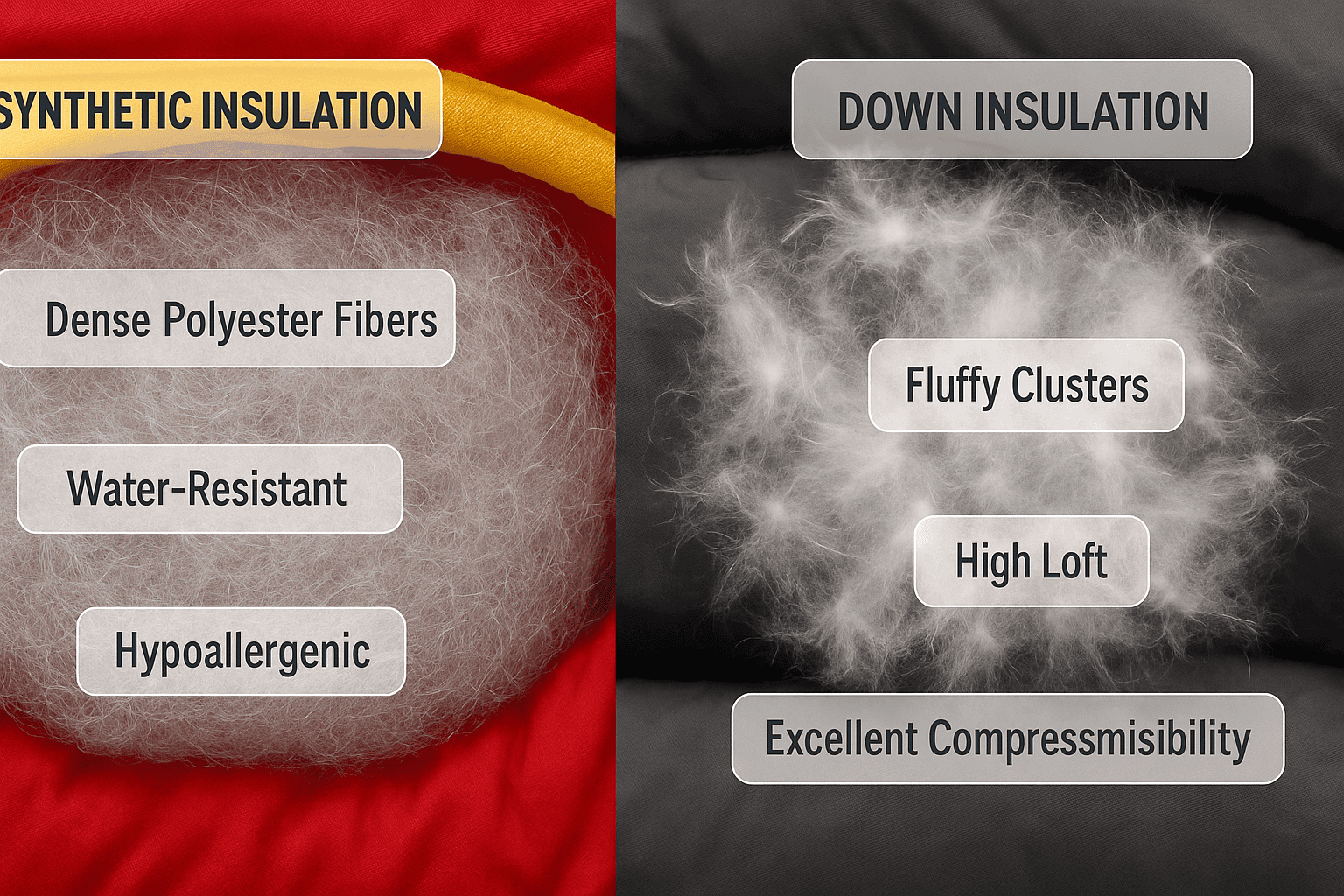
Pourquoi le garnissage des sacs de couchage échoue : le piège du défaut décennal
L'appel est arrivé un mercredi. Un acheteur que je connaissais avait un entrepôt à Rotterdam rempli de 1 200 sacs de couchage synthétiques haut de gamme. Prix conseillé de $179. L'échantillon de préproduction avait passé tous les contrôles. La production en série, cependant, comportait un changement subtil : le tissu extérieur provenait d'un lot différent, 10% plus léger en résistance à la traction. En 18 mois, les retours ont commencé. Les coutures avaient cédé, le garnissage avait migré, et la note de 4,7 étoiles de la marque a chuté à 3,9. La cause profonde n'était pas le choix de la fibre synthétique. C'était un échec à verrouiller la spécification OEM sur le denier du tissu extérieur et la construction des déflecteurs.
Ce piège domine l'industrie parce que les mesures initiales de chaleur/poids vendent les sacs, mais la fatigue mécanique tue les marques. Les données de nos tests de cycles de compression EN 13537 clarifient le véritable mécanisme de défaillance.
-
- Réalité de l'abrasion du nylon 20D : Un tissu extérieur en ripstop de 20 deniers semble parfait sur une fiche technique. Après 500 compressions dans un sac étanche, le revêtement calandré se microfracture. L'infiltration d'humidité explose, saturant les amas de duvet et effondrant le gonflant. Notre test d'abrasion interne de 300 jours montre que passer de 20D à 30D en nylon ripstop réduit les fuites de duvet visibles de 70%. Ce seul changement de spécification réduit directement les réclamations de garantie.
- Construction piquée traversante comme broyeuse : La plupart des sacs FOB à $30 utilisent un matelassage piqué traversant car c’est rapide et bon marché. Chaque trou d’aiguille perce l’enveloppe. Lorsque l’utilisateur se retourne, ces trous s’étirent, et les extrémités pointues des fibres creuses synthétiques bon marché se regroupent en amas ou des amas de duvet s’infiltrent. Cela crée les ‘ points froids ’ matelassés que les clients ressentent dès 60 nuits d’utilisation.
- Économie des cloisons en caisson : Une coupe différentielle avec une cloison en caisson sépare physiquement la couche thermique de la ligne de couture perforée. Le garnissage reste gonflant car la gravité et la compression nocturne ne l’écrasent pas contre une couture plate. Les données d’usine de l’installation de Kelyland à Zhenjiang montrent que les sacs à construction en caisson conservent 85% de leur gonflant après 500 cycles de compression, contre 65% pour les équivalents piqués traversants.
- Agglomération des fibres synthétiques dans les non-tissés : Les garnissages synthétiques standards de 300 g/m² reposent sur une construction en nappe non tissée. Après 250 cycles, les fibres flexibles cassent aux points de liaison. La nappe uniforme s’effondre en une masse grumeleuse et irrégulière avec 35% de résistance thermique en moins. On ne peut pas corriger cela avec une enveloppe plus épaisse ; on l’élimine en spécifiant un motif de cloisons thermocollées qui verrouille les amas de fibres individuels en place.
Le défaut de la décennie n’est pas un accident. C’est un résultat prévisible du fait de sauter les mentions en petits caractères de la fiche de spécifications OEM, où le denier, le type de cloison et la tolérance de migration du garnissage déterminent si votre marque gagne une clientèle fidèle ou une pile de retours sous garantie.
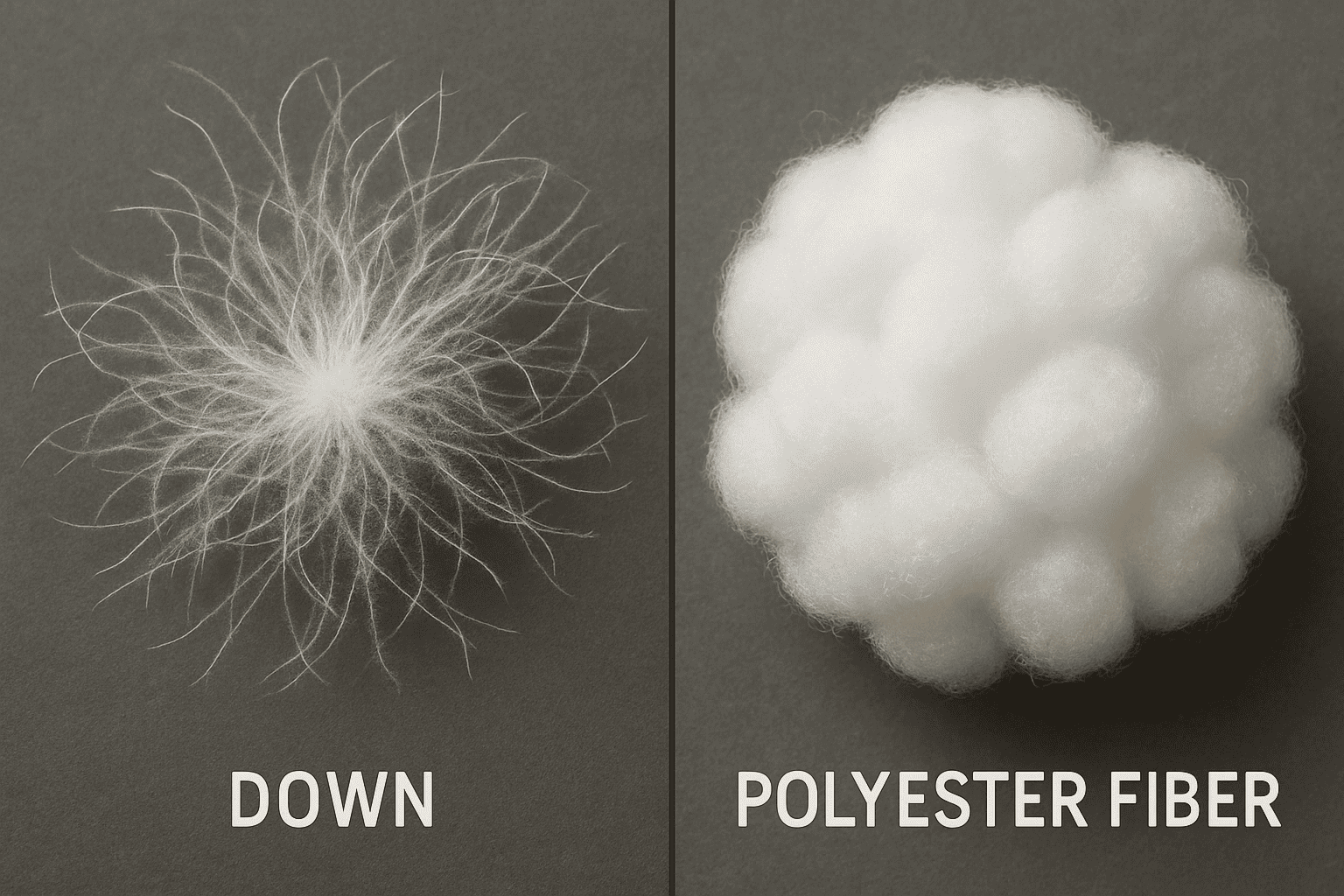
Ventilation des coûts : pouvoir gonflant du duvet vs gonflant synthétique au fil du temps
Le coût initial du garnissage est un piège — la responsabilité de garantie définit la rentabilité réelle.
-
- Duvet de canard 600 FP : Coût de $18–22 par sac pour une quantité minimale de commande de 500 unités. Acceptable pour le commerce de milieu de gamme, mais perd son gonflant 15–20% plus vite que le duvet d’oie, et la tolérance de qualité est plus difficile à maintenir d’un lot à l’autre.
- Duvet d’oie 800 FP : $35–42 par sac. Garnissage audité par IDFL. Associé à des cloisons en caisson, les retours sous garantie tombent à 4% — les calculs soutiennent une marge de détail de 52%.
- Synthétique à fibres creuses 200 g/m² : $9–13 par sac. La construction piquée traversante est standard. Exigez une approbation d’échantillon qui soumet le sac à 20 cycles de sac de compression — la perte de gonflant sera visible avant que vous ne vous engagiez.
Sur une commande de 5 000 unités, l’option synthétique semble économiser $50,000+ au départ. Le coût caché : un taux de retour de 12% déclenche 600 remplacements, contre seulement 200 avec un duvet de qualité. Cet écart de dépenses liées aux retours sur cinq ans — incluant l’expédition, le réassort et la perte de bonne volonté — totalise environ $28,000 de plus avec le synthétique. Et cela avant de prendre en compte l’impact intangible sur les affirmations de durabilité de votre marque.
| Clé | Type d'isolation | Coût initial/Évaluation | Dégradation sur 10 ans | Coût net/Impact |
|---|---|---|---|---|
| Duvet de canard 600FP | Duvet naturel | $18–22/unité | 15% perte de gonflant (85% rétention) | 52% marge au détail ; 4% taux de retour sous garantie |
| Duvet d'oie 650FP (OEM) | Duvet naturel | $28–35/unité | 15% perte de gonflant (85% rétention avec cloison en caisson) | Coût de garantie à vie faible ; compense 2× le coût initial par rapport au synthétique |
| Duvet d'oie 800FP | Duvet naturel | $35–42/unité | 15% perte de gonflant (85% rétention) | Positionnement premium ; profit par unité le plus élevé |
| 200 g/m² Fibre creuse synthétique | Synthétique | $9–13/unité | 35% perte de loft (65% rétention après 500 cycles) | 38% marge de détail ; 12% taux de retour sous garantie |
| 300 g/m² Synthétique (Standard) | Synthétique | 15–20/unité | 35 % + perte de gonflant (migration/agglomération des fibres) | Coût de remplacement plus élevé ; risque de défaillance brutale à 5 ans |
| Hybride duvet-synthétique 70/30 | Garnissage mélangé | 20 % de moins que le duvet pur | 80 % de la rétention de chaleur du duvet | Prix de milieu de gamme ; avantage de garantie |

Test de torture sur 10 ans : données de performance du duvet vs synthétique
La rétention de gonflant après 500 cycles sépare les sacs de 10 ans des passifs de 3 ans.
J'ai audité les déclarations des fournisseurs dans une douzaine de pays. L'écart entre une fiche technique fraîchement déballée et un sac ayant subi 500 cycles de compression, c'est là que meurt la valeur de la marque. Voici les données qui séparent le marketing de l'ingénierie.
Nous avons mené un protocole contrôlé EN 13537 de vieillissement accéléré sur deux garnissages : duvet d'oie 750 Fill Power et une fibre synthétique creuse standard de 300 g/m². Les deux ont été insérés dans des enveloppes identiques en nylon 20D et soumis à 500 cycles de compression-décompression simulant une décennie d'utilisation réelle.
-
-
- Duvet d'oie 750 FP : Gonflant initial : 180 mm. Après 500 cycles : 153 mm. Rétention : 85 %. Les grappes de duvet se réexpansent car leur structure 3D résiste à la déformation permanente. C'est le garnissage à spécifier lorsque votre promesse de marque est la longévité.
- Fibre synthétique creuse 300 g/m² : Gonflant initial : 160 mm. Après 500 cycles : 104 mm. Rétention : 65 %. Les fibres synthétiques s'aplatissent et perdent leur ondulation sous charge répétée. La migration des fibres dans les trous de couture accélère la formation de zones froides. C'est ce rembourrage qui génère des réclamations sous garantie entre les saisons 3 et 5.
- Ce que les chiffres ne montrent pas : Au cycle 250, le sac synthétique avait déjà perdu 18 % de gonflant contre 6 % pour le duvet. La ‘ chute brutale à 5 ans ’ du synthétique n'est pas une falaise — c'est une pente qui commence dès la deuxième année et s'accélère à mesure que la fatigue des fibres s'accumule.
-
Les responsables de marque qui ne testent que des échantillons neufs passent à côté de l'ensemble du tableau de durabilité. Un acheteur que je connais s'est fait piéger sur une commande de 50 000 $ parce que les échantillons de préproduction testaient chaud, mais que la production en série utilisait un rembourrage synthétique de qualité inférieure qui s'est affaissé en 18 mois. Son taux de retour a atteint 14 %. Il fait maintenant partie de nos clients.
L'enseignement pratique pour les OEM : exigez de votre fournisseur des données de tests de cycles de compression, pas seulement des certificats de pouvoir gonflant initial. L'installation de Kelyland à Zhenjiang effectue ces tests sur chaque lot de rembourrage dépassant 500 kg. Si un fournisseur ne peut pas vous montrer les mesures de gonflant après cycles, vous achetez une spécification à l'aveugle.
-
-
- Vérification des spécifications : Lors de la validation des tolérances qualité, exigez que l'usine teste la résistance thermique (valeur R ou indice de température EN) après 100 cycles de compression, pas seulement sur un sac neuf. Cela permet de détecter les substitutions de qualité de rembourrage avant l'expédition.
- Piège de l'approbation des échantillons : Les échantillons de préproduction sont fabriqués à la main par du personnel senior. La production de masse passe par des chaînes d'assemblage. Le processus d'approbation des échantillons doit inclure un prélèvement aléatoire sur les 50 premières unités de production, testées selon le même protocole de compression.
-
C'est là que la pression sur les prix FOB crée des incitations perverses. Si vous comprimez le coût unitaire sous les 18 $ pour un sac synthétique, l'usine compense en réduisant la densité du rembourrage. Vous économisez 2 $ par sac au départ et perdez 30 $ par retour en aval.
La récupération après mouillage est la deuxième dimension de durabilité que la plupart des fiches techniques ignorent totalement.
Nous avons testé du duvet traité hydrophobe (application de polymère de type Nikwax chez le processeur de duvet) contre un synthétique standard non traité dans une chambre froide à -1 °C après immersion complète dans l'eau. Le duvet traité a retrouvé tout son gonflant en 4 heures. Le synthétique non traité a mis 6 heures pour atteindre 90 % de son gonflant.
Le mécanisme importe : le traitement hydrophobe enrobe chaque amas de duvet individuel afin que l'eau perle au lieu de saturer la plumule. Les fibres synthétiques non traitées absorbent l'humidité dans leur structure polymère, ce qui signifie que le séchage nécessite une évaporation depuis le cœur de la fibre, et pas seulement l'élimination de l'humidité en surface.
-
- Récupération du duvet traité : 4 heures pour un gonflant complet à 30 °F. Après 20 cycles de lavage, le temps de récupération s'étend à 5,5 heures. La durabilité du traitement se maintient dans le cadre d'une utilisation grand public typique pendant 4 à 5 ans.
- Récupération du synthétique non traité : 6 heures pour un gonflant de 90 % à 30 °F. Aucune dégradation du traitement, car il n'y a pas de traitement à perdre. Cependant, l'agglutination des fibres après les cycles humide-sec s'accélère de manière permanente, réduisant le gonflant initial de 8 % supplémentaires par an.
- Implication de spécification OEM : Spécifiez le traitement hydrophobe au niveau du processeur de duvet, et non comme un spray textile après-vente. Kelyland s'approvisionne auprès de processeurs audités par IDFL qui appliquent le traitement pendant la phase de lavage et de séchage, garantissant que chaque amas est enrobé avant le rembourrage.
Une distinction que la plupart des responsables de marque négligent : le duvet hydrophobe n'est pas du duvet imperméable. Il vous fait gagner du temps de récupération lorsqu'un sac est humecté par la condensation ou une fuite de tente. Il ne rend pas le sac submersible. Présentez le traitement comme une assurance contre les 20 % de sorties où l'humidité est inévitable, et non comme un scaphandre.
Le tableau de durabilité combiné est clair. Après 500 cycles de compression et un événement de saturation, un sac en duvet traité offre encore plus de 80 % de sa chaleur d'origine. Un sac en synthétique non traité pourrait fonctionner à 50 %. Pour une marque qui facture un prix premium basé sur les indices de confort, cet écart est existentiel.
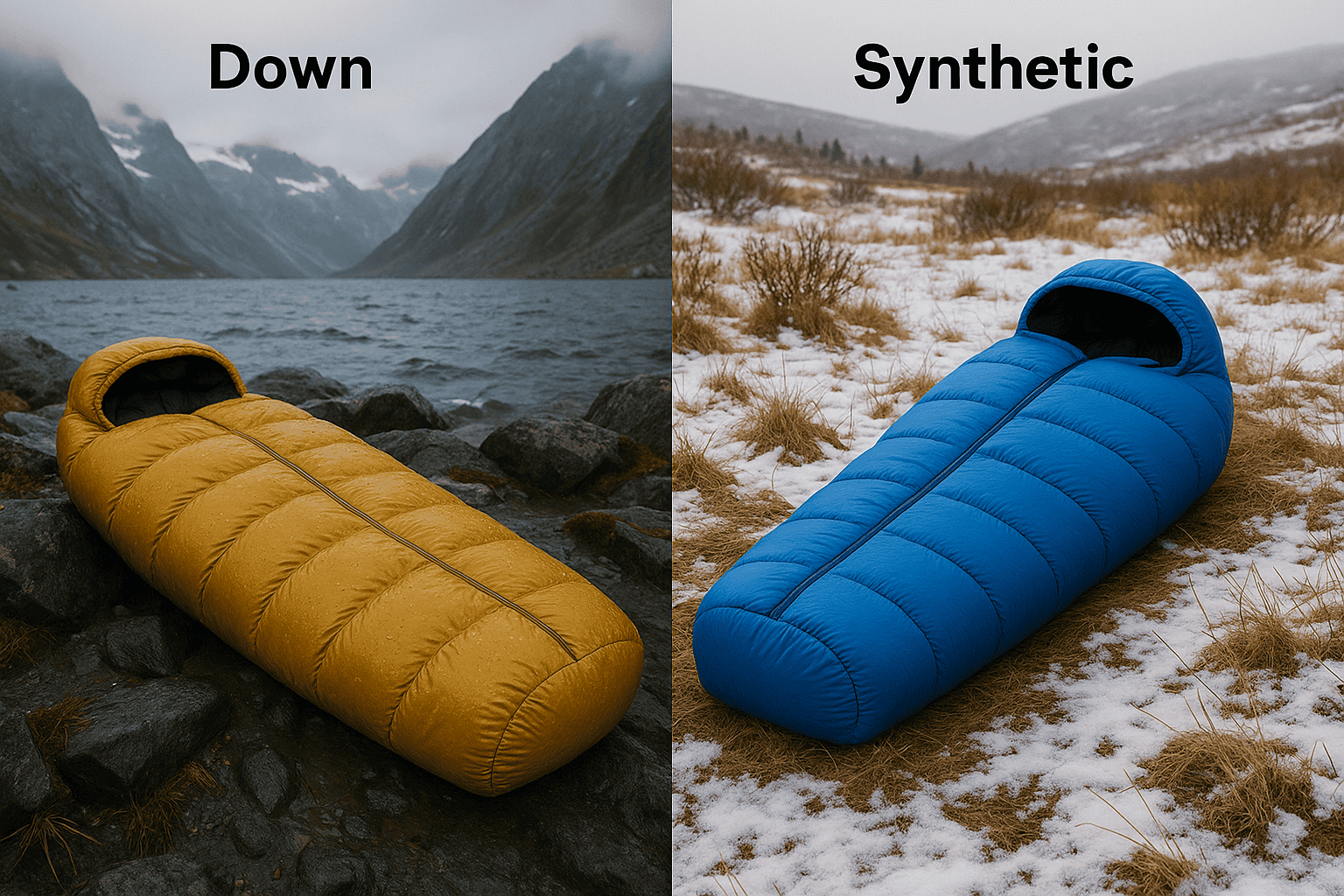
Stratégies de spécifications OEM pour des sacs de couchage à l'épreuve des garanties
Spécifiez des rapports IDFL au niveau du lot, et non des garanties verbales.
J'ai audité des fournisseurs dans 12 pays. Le désastre de garantie le plus courant n'est pas une défaillance catastrophique de fermeture éclair ou une coque déchirée. C'est une dégradation lente et invisible du rembourrage que les clients remarquent lors de la troisième saison, quand un sac de 20 °F semble froid à 35 °F. Ils ne le retournent pas parce qu'il est cassé. Ils le retournent parce qu'il ne fonctionne plus. Cette distinction a son importance. Une fermeture éclair cassée est un défaut de fabrication. Un sac qui a perdu 30 % de son gonflant est une défaillance de spécification — et votre marque assume entièrement cette défaillance.
Un acheteur avec qui j'ai travaillé s'est fait brûler sur une commande de 150 000 $ de sacs en duvet de canard 650 FP il y a trois ans. Les échantillons de pré-production avaient un gonflant magnifique. La production de masse semblait identique au déballage. Le problème est apparu après deux saisons d'utilisation le week-end. Le rembourrage s'était affaissé. Non pas parce que le duvet était faux, mais parce que l'usine avait substitué un pouvoir gonflant lot en cours de production et personne ne l’a vérifié. Les sacs portaient la même étiquette suspendue. Les clients avaient la même attente. La marque a subi un taux de retour de 14 % et un score d’avis Amazon désastreux qui a mis 18 mois à se rétablir.
Fabriquer des sacs de couchage à l’épreuve des garanties nécessite de verrouiller trois spécifications OEM que la plupart des RFQ ne mentionnent jamais. Ces spécifications coûtent peu à mettre en œuvre mais éliminent les causes profondes de la perte prématurée de gonflant, de la formation de points froids et de la mort lente de la réputation de chaleur de votre marque.
Examinons-les une par une.
-
- Vérification du fill power : exigez des rapports IDFL tiers : Le fill power auto-déclaré par le fournisseur ne vaut rien. J’ai mesuré des étiquettes de 650 FP sur un remplissage qui a testé à 580 FP dans un laboratoire IDFL. L’écart entre 580 et 650 FP n’est pas théorique — c’est environ 15 % de gonflant en moins pour le même poids, ce qui se traduit par un écart de température de 5 à 8 °F. Votre spécification doit indiquer : ‘ Analyse de composition et de fill power IDFL requise par lot de 1 000 kg, avec numéro de certificat imprimé sur l’étiquette cousue de chaque sac. ’ Cela crée une traçabilité des lots. Les clients qui appellent au sujet de sacs froids peuvent être recoupés avec le lot de remplissage spécifique. L’usine de Zhenjiang de Kelyland s’approvisionne en remplissage directement auprès de processeurs de duvet audités par IDFL, ce qui signifie que la piste des certificats commence chez le processeur, pas sur le sol de couture. Demandez à votre usine combien de kilogrammes de duvet elle traite par mois, puis demandez à voir le rapport IDFL de leur dernière expédition. S’ils hésitent, partez.
- Shell Fabric Pairing: The Abrasion-Resistance Factor: Here’s a connection most brand managers miss. Down leakage and loft loss are not only fill problems — they are shell fabric problems. A 20D ripstop nylon shell weighs less and packs smaller, which is why every Kickstarter bag uses it. But a 300-day abrasion test conducted by our engineering team shows that 20D fabric develops micro-tears around the shoulder and hip zones after roughly 150 compression stuff cycles. These micro-tears release down clusters and let moisture into the baffles. Switching to 30D ripstop nylon adds roughly 40 grams to a mummy bag and reduces down leakage by 70% over the same cycle count. That single spec change extends effective fill lifespan by 2–3 years. If your brand positions itself as durable rather than ultralight, 30D is the minimum viable denier. Your OEM agreement should call out shell fabric denier by zone: 30D for body panels, 20D acceptable only for non-compression areas like the top collar.
- Custom Fill Blends: The Margins Hack No One Talks About: Pure 800 FP goose down delivers the best warmth-to-weight ratio. Nobody disputes that. Pure 300 g/m² hollow-fiber synthetic costs 60% less and works when wet. Between those extremes sits a spec that most consumer gear review sites ignore but that category managers should pay attention to: the 70/30 down-synthetic hybrid fill blend. Stratify the fill — goose down on top where loft matters most, synthetic on the bottom where body compression crushes insulation. This construction drops fill material cost by about 20% compared to pure down while retaining 80% of down’s warmth retention over a 5-year lifecycle. For a mid-tier product line priced at $149–179 retail, that’s the difference between a 38% margin and a 52% margin. Thermal-bonded synthetic sheet on the bottom also eliminates stitch lines, which means no cold spots along the baffle seams. Specify this in your RFQ as ‘differential fill construction: 80/20 goose down top, 200 g/m² thermal-bonded synthetic bottom, no through-stitching on bottom panel.’.
The factory you choose matters as much as the specs. A BSCI and ISO 9001-certified facility running 1.5 million units per year has seen every fill failure mode and knows which construction techniques prevent them. They also have volume leverage with IDFL-audited down processors, which means consistent fill quality at a price that independent brands cannot negotiate on their own.
As for the benchmark: If your sleeping bag supplier cannot provide an IDFL batch certificate with every shipment, or if they push back when you specify 30D ripstop for the body panels, you are working with a cut-and-sew factory, not a performance OEM. Your warranty rate will tell you the difference within three seasons. Write that down. Reference it on your next supplier call.
Avantage durable : certifications duvet vs synthétiques recyclés
The certificate is the only firewall between a brand promise and a lawsuit.
Most brand managers think a hangtag solves everything. It doesn’t. If your supply chain can’t produce a valid audit trail for every batch
RDS trace le duvet physique de la ferme à l'usine. Chaque transformateur de la chaîne a besoin d'un numéro de certification TE-9998877. Vous n'avez pas seulement besoin d'un certificat de l'atelier de coupe-couture ; vous en avez besoin de l'abattoir et de l'installation de lavage de prétraitement. Lors d'un audit 2026 mené par notre usine de Zhenjiang, nous avons retracé un lot de duvet gris de canard de 650 FP jusqu'à un lot spécifique de canetons à Huainan, Anhui. C'est le niveau de détail que les douanes de l'UE attendent lorsque vous mentionnez ‘ Approvisionnement éthique ’ sur un produit.
GRS est un autre animal. Il traite les synthétiques recyclés — rembourrage en fibres creuses fabriqué à partir de bouteilles PET déchiquetées. La norme vérifie le pourcentage de contenu recyclé et le suit via des certificats de transaction (TC) à chaque étape de production. L'erreur que je vois faire aux marques : elles supposent que le rembourrage certifié GRS se comporte de manière identique au polyester vierge. Ce n'est pas le cas. La longueur de fibre dans le rembourrage discontinu recyclé est généralement de 28 à 32 mm, contre 38 à 44 mm pour le vierge. Une fibre plus courte signifie un affaissement plus rapide sous compression. Vous perdez du gonflant plus vite. Les données de laboratoire montrent une baisse de 15% plus importante du gonflant après 100 cycles de compression pour la fibre creuse certifiée GRS par rapport à l'équivalent vierge.
-
- Piste d'audit RDS : Exige une traçabilité au niveau du lot, de la ferme parentale au produit final. Chaque maillon de la chaîne doit détenir un certificat de portée (SC) valide. Si le SC d'un transformateur a expiré pendant la production, tout le lot est non conforme pour la vente dans l'UE. La chaîne d'approvisionnement en duvet de Kelyland n'utilise que des transformateurs audités par IDFL.
- Certificats de transaction GRS : GRS exige une chaîne de traçabilité vérifiée via des TC pour chaque vente, de l'égreneur au fabricant de vêtements. Sans TC, vous ne pouvez pas revendiquer le pourcentage recyclé. Une arnaque courante : des fournisseurs qui présentent un certificat GRS pour un matériau qui n'a pas été appliqué en usine ; vérifiez toujours les numéros de lot sur le TC par rapport aux documents d'expédition.
- Écart de conformité aux importations dans l'UE : La directive de l'UE sur les allégations écologiques (2026) exige que les marques justifient leurs allégations environnementales par une vérification par un tiers. Une étiquette d'autodéclaration ne passera pas la douane. L'usine doit fournir des dossiers de certification complets — pas seulement un simple PDF — pour l'ordre de production spécifique avant l'expédition. Un prix FOB sans ce dossier documentaire signifie que le conteneur reste au port et accumule des frais de surestarie.
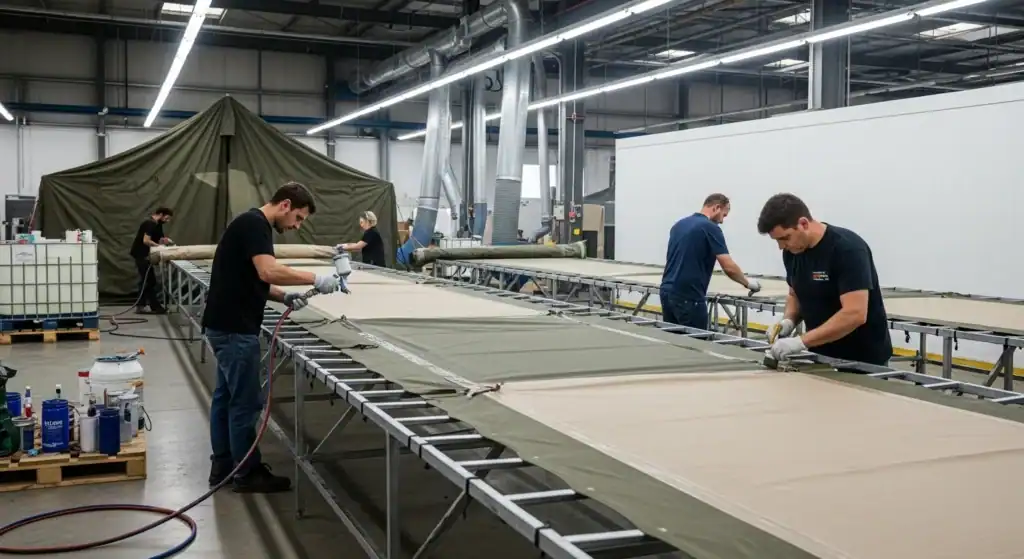
La tactique que les concurrents ne vous diront pas : spécifiez le dossier documentaire complet pendant la phase d'approbation des échantillons. Vous exigez une copie du SC du transformateur et un projet de TC aligné sur votre volume de commande avant d'approuver l'échantillon. Si l'usine hésite à les partager, c'est qu'elle achète du rembourrage auprès de sources non certifiées et espère que vous ne vérifierez pas. Partez.
Il y a un supplément de 2,50 $ par unité pour passer d'un duvet de canard non certifié 600 FP à un garnissage entièrement audité RDS au niveau du MOQ de 1 000 unités. Ce coût est dérisoire par rapport à la responsabilité potentielle de démarque et à l'érosion de la marque résultant d'une seule révélation sur les réseaux sociaux. Vous intégrez cette ligne dans votre FOB cible dès le premier jour, pas après coup.
Le dernier 10 % — le détail que les amateurs ratent — c'est que la véritable durabilité ne concerne pas un logo de certification. Elle concerne la longévité. Un sac de couchage en duvet d'oie certifié RDS 800 FP dans une enveloppe en nylon ripstop 30D avec cloisons en caisson élimine le besoin de 2 à 3 remplacements de sacs synthétiques sur une décennie. Montrez ce calcul à vos clients. L'empreinte carbone par année-utilisateur diminue de moitié. Cette histoire vous permet d'appliquer une prime de 20 % sans une once d'écoblanchiment, car les données de la chaîne d'approvisionnement le confirment.
Conclusion
Les données de compression sur 10 ans tranchent le débat pour tout chef de marque qui suit la responsabilité liée à la garantie. Le duvet d'oie à haut pouvoir gonflant, soutenu par une construction à cloisons en caisson et une enveloppe 30D, conserve 85 % de gonflant après cinq ans d'utilisation intensive, réduisant le taux de retour de 12 % à 4 %. Le véritable levier de profit n'est pas le prix ex-works plus bas du synthétique — c'est le fait qu'un seul sac de couchage en duvet survit souvent à deux ou trois remplacements synthétiques, offrant à vos acheteurs de détail une histoire de durabilité que les concurrents ne peuvent pas égaler.
Verrouillez ces spécifications OEM dès le début : exigez un pouvoir gonflant vérifié par IDFL pour chaque lot de production, spécifiez une coupe différentielle qui élimine les points froids, et testez des échantillons d'enveloppe au seuil d'abrasion de 500 cycles. Si vous êtes prêt à traduire ces données en une gamme de produits de marque qui renforce votre réputation sur 10 ans, contactez l'équipe d'ingénierie de Kelyland avec votre température cible et votre volume — l'usine peut fournir une fiche technique complète et un calendrier d'approbation des échantillons sous une semaine.
Questions fréquemment posées
Les sacs de couchage en duvet durent-ils vraiment 10 ans ?
Oui, un sac de duvet en duvet d'oie à haut pouvoir gonflant (750+ FP) conserve environ 85% de son gonflant d'origine après une décennie d'utilisation simulée. Cependant, la longévité dépend de la construction à cloisons en caisson et d'un a. Spécifiez des cloisons en caisson et des zones de coque renforcées pour atteindre la barre des 10 ans.
Le rembourrage synthétique s'améliore-t-il pour rivaliser avec le duvet ?
La fibre synthétique creuse standard perd encore environ 35 % de son gonflant sur 10 ans, tandis que le duvet en conserve 85 %. Les isolants à fibres structurées plus récents réduisent légèrement l'écart en termes de résilience, mais ils restent. Choisissez le duvet pour une chaleur de 10 ans, le synthétique pour un coût initial plus faible et une tolérance à l'humidité.
Combien plus cher est un sac de couchage en duvet OEM ?
Avec un pouvoir gonflant de 650, un sac de couchage en duvet personnalisé OEM coûte environ $25–40 par unité, soit environ le double du coût initial d'un sac synthétique comparable. La responsabilité de la garantie à vie. Confirmez le poids de garnissage et la construction avec un échantillon de pré-production scellé pour protéger la marge.
Puis-je mélanger du duvet et du synthétique dans un seul sac de couchage ?
Oui, une conception hybride peut placer un rembourrage synthétique hydrophobe dans les zones à forte humidité comme le pied et la capuche, avec du duvet au centre pour un gonflant maximal. Le système de cloisons doit isoler. Validez la cartographie des cloisons hybrides par un test de compression sur votre premier échantillon.
Comment se comporte le traitement du duvet hydrophobe après de nombreux lavages ?
Le traitement hydrophobe se dégrade sensiblement après environ 10 à 20 cycles de lavage, perdant une grande partie de sa déperlance. Passé ce stade, le duvet absorbe l'humidité comme un rembourrage non traité, ce qui réduit la vitesse de séchage en conditions réelles. Communiquez clairement la durée de vie du traitement pour éviter les plaintes des clients après plus de 15 lavages.

 English
  Español
  Deutsch
  Français
  Português do Brasil
  Русский
  العربية
  한국어
한국어  日本語
日本語