 跳到内容
跳到内容 
Le premier vrai test de vos matériaux pour table de camping n'a pas lieu sur une dalle de granit à Yosemite. Il a lieu 90 jours après l'arrivée de votre conteneur, lorsqu'un client publie une photo d'un cadre rouillé dans un avis produit 4 étoiles. Cette unique image — une fissure capillaire sur un plateau en MDF, un joint en acier corrodé — redéfinit toute l'équation de vente de votre saison. Vous avez approuvé l'échantillon de pré-production. La production de masse a passé le Inspection AQL. Mais quelque part entre le port FOB et le terrain de camping du client, la tolérance de qualité des matériaux que vous avez signée a échoué d'une manière qu'aucune fiche technique n'avait prévue.
Un chef de catégorie qui écoule 3 000 tables par saison pense différemment d'un directeur de marque lançant une collection capsule de glamping de 100 unités. Les lattes en aluminium maintiennent des poids d'expédition bas et survivent à l'air salin, mais un cadre en acier soudé à 30 % de coût unitaire inférieur domine toujours le segment d'entrée de gamme. La décision matérielle se divise au niveau de la marque. Ce qui porte aujourd'hui une étiquette premium implique de plus en plus des designs hybrides — par exemple, un cadre en aluminium anodisé associé à un plateau en bambou ou en hêtre — précisément parce que le segment du glamping récompense les produits qui se photographient bien et résistent au gauchissement sur trois zones climatiques. L'usine de Jinhua qui produit un million de tables par an peut combiner ces matériaux sans pousser le FOB unitaire dans un territoire non compétitif, à condition que la spécification du traitement de surface soit verrouillée lors de l'approbation de l'échantillon, et non après.
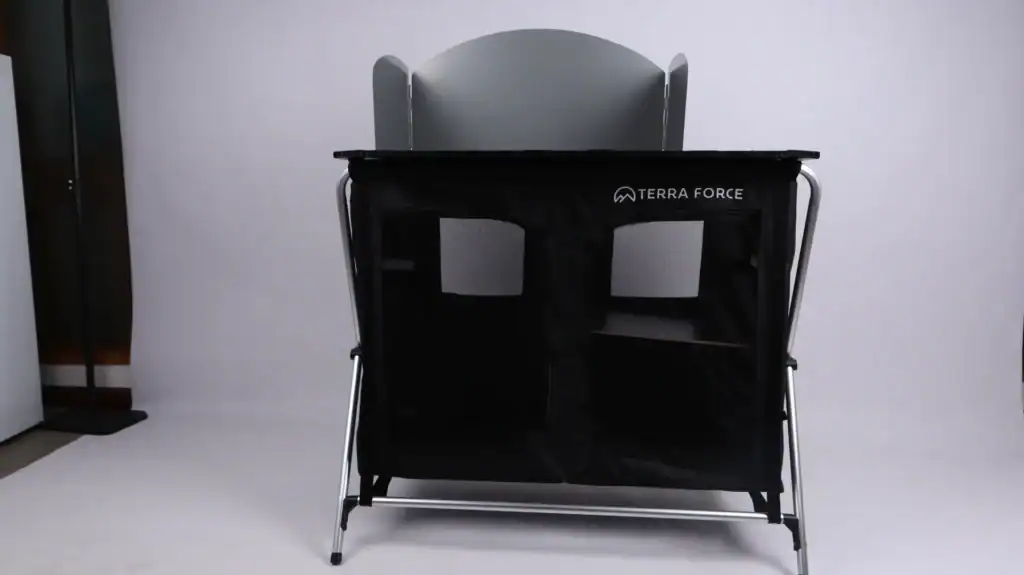
Les plateaux en treillis métallique avec motifs de ventilation découpés au laser sur mesure remplacent silencieusement les panneaux en plastique solide dans les configurations de cuisine extérieure — moins pour l'esthétique, plus parce qu'une surface perforée évacue la chaleur du feu de camp et la pluie plus rapidement que n'importe quel MDF revêtu. Les inserts en tissu Oxford permettent une impression numérique à pleine surface et un MOQ d'entrée de 50 pièces, ce qui explique pourquoi les lancements saisonniers de marques privées reviennent sans cesse aux designs pliables malgré leurs capacités de charge inférieures. Et le panneau MDF sensible au coût ? Améliorez cette surface avec un revêtement mélamine et la résistance à l'humidité augmente suffisamment pour survivre à une saison de camping dans le Pacifique Nord-Ouest, pour une augmentation de coût marginale qui passe à peine inaperçue au détail.
Avant de verrouiller une spécification matérielle pour le prochain cycle de production, posez trois questions à votre fournisseur. Le cadre bénéficie-t-il d'un rapport de test au brouillard salin de 500 heures pour le revêtement, ou repose-t-il sur une inspection visuelle ? Le plateau peut-il être amélioré avec une finition mélamine ou anodisée sans modifier la fourchette de MOQ que vous avez déjà négociée ? La ligne de production partagera-t-elle des photos du premier échantillon de production de masse avant le lancement de l'ensemble du lot, afin que vous puissiez confirmer que la finition du matériau correspond à la référence approuvée ? Un seul “ non ” sur l'un de ces points n'est pas un obstacle rédhibitoire. C'est simplement un signal que la tolérance de qualité que vous pensiez avoir achetée n'est peut-être pas celle que vous recevez réellement.
Matériaux des cadres : Comparaison de la résistance, du poids et du coût
Le choix du matériau du cadre dicte 70% de votre coût unitaire, de la classe d'expédition et de la responsabilité de garantie avant même de choisir le plateau.
J'ai audité des fournisseurs qui expédient des conteneurs de 40 HQ de tables de camping à Rotterdam et Melbourne. Le cadre n'est pas seulement une structure — c'est le principal moteur du coût de fret, du taux de défauts et de la tenue de votre marque après 18 mois dans le garage d'un client. Un responsable de marque qui choisit l'acier pour une gamme de randonnée ou l'aluminium pour une référence de vente au détail économique commet une erreur qui apparaît dans le compte de résultat en deux trimestres.
Dans le cluster d'usines de Jinhua où la plupart des tables de camping de milieu à haut de gamme sont fabriquées, trois matériaux de cadre dominent le volume de production significatif. Voici comment ils se déclinent par rapport à ce que votre canal exige réellement.
-
- Aluminium (alliage 6061 ou 6063, anodisé ou revêtu par poudre) : Un cadre de table pliante de 120 cm x 70 cm en aluminium pèse environ 3,2 à 4,5 kg selon l'épaisseur de la paroi du tube (1,0 mm à 1,5 mm). Par rapport à de l'acier de calibre équivalent, cela représente une réduction de poids de 40 à 50%. En termes de prix FOB, attendez-vous à ce que le cadre seul coûte $2,80 à $5,20 de plus par unité que l'acier. Pour les marques vendant sur Amazon ou dans le commerce de détail spécialisé de niveau REI, ce coût supplémentaire est rentable : un poids volumétrique plus léger réduit le fret maritime par unité en moyenne de $0,90 à $1,60 sur un 40 HQ. Plus important encore, l'aluminium ne se corrode pas lorsque le revêtement par poudre est rayé lors de l'assemblage. Un cadre en acier avec un point de soudure rayé montrera de la rouille dans les 90 jours sur les marchés côtiers comme la Floride, le Royaume-Uni ou l'Asie du Sud-Est. La vraie question n'est pas ‘ l'aluminium en vaut-il la peine ’ — c'est ‘ mon canal valorise-t-il la résistance à la rouille avec un incrément de COGS de $3 à $5. ’ De plus, l'aluminium anodisé accepte la gravure laser pour des marques discrètes sur les pieds, ce que l'acier ne peut pas faire sans exposer le métal brut.
- Acier (acier au carbone Q195 ou Q235, revêtu par poudre) : Soyons directs : l'acier n'est pas inférieur. Certaines des tables de camping de milieu de gamme les plus rentables utilisent de l'acier. Un cadre en acier Q235 avec une épaisseur de paroi de 0,8 mm à 1,2 mm offre une capacité de charge statique que l'aluminium ne peut tout simplement pas égaler au même prix. Une table à cadre en acier de 4 pieds peut supporter 60 kg de charge statique sans fléchir ; l'aluminium nécessite des tubes plus épais et des charnières renforcées pour atteindre ce chiffre, plaçant le coût unitaire dans une catégorie différente. Le compromis est le poids et la vulnérabilité à la corrosion. Notre usine de tables de Jinhua applique un revêtement par poudre à 180-200°C avec un hybride polyester-époxy — la surface est résistante. Mais dès qu'un rivet ou une charnière raye le revêtement, l'humidité atteint l'acier. Pour les marques vendant aux campeurs en voiture et aux utilisateurs de terrains de camping familiaux qui conduisent jusqu'au site, l'acier fonctionne. Pour quiconque commercialise ‘ ultra-léger ’ ou ‘ backcountry ’, c'est un poids mort. C'est aussi là que la tolérance de qualité compte : spécifiez un test d'adhérence du revêtement (quadrillage, ISO 2409) dans votre liste de vérification d'approbation des échantillons de pré-production. Si l'usine ne réussit pas, leur revêtement se délaminera pendant le transport ou les cycles de retour.
- Bois (Hêtre, Noyer ou Bambou — massif, pas de placage) : Le segment du glamping et du lifestyle premium mise à fond sur le bois. Ce n'est pas seulement esthétique — c'est un signal. Un cadre en hêtre avec un plateau de 15 mm d'épaisseur (pesant 8 à 12 kg au total) communique un savoir-faire que le métal peint par poudre ne peut pas égaler. Mais du point de vue d'un directeur des approvisionnements, le bois présente trois risques : le gauchissement dû à l'humidité, la documentation de chaîne de traçabilité FSC pour l'importation dans l'UE, et la fumigation pour l'emballage en bois massif (ISPM 15). J'ai vu une commande de $20K de tables avec dessus en noyer être retenue en douane à Hambourg pendant deux semaines parce que le fournisseur avait utilisé des blocs de bois non traité à l'intérieur de l'emballage. Si vous optez pour le bois, votre contrat doit spécifier la teneur en humidité au moment de l'expédition (8–12% est standard pour le mobilier d'exportation) et exiger explicitement des palettes traitées thermiquement. Côté coût, un cadre en hêtre coûte 2,5 à 3 fois le prix d'un cadre en aluminium. Votre marque doit justifier cela au détail.
| Matériau | Résistance et durabilité | Poids | Coût relatif | Marque et personnalisation |
|---|---|---|---|---|
| Aluminium | Rapport résistance/poids élevé ; résistant à la flexion sous des charges modérées ; naturellement inoxydable et résistant à la corrosion. | Léger (environ 1,5 à 4 kg pour un cadre de table typique) | Moyen à élevé | Anodisation ou revêtement par poudre pour des couleurs personnalisées ; gravure au laser pour les logos ; idéal pour les gammes de produits légers premium. |
| Acier | Capacité de charge maximale ; très durable et résistant aux chocs ; nécessite un revêtement par poudre protecteur pour éviter la rouille. | Lourd (env. 3 – 8 kg pour un cadre comparable) | Faible à moyen (le plus rentable) | Revêtement par poudre en couleurs assorties Pantone ; logos gaufrés ou sérigraphiés ; idéal pour les références économiques et à haute résistance. |
| Bois (Hêtre/Noyer/Bambou) | Bonne résistance statique ; naturellement rigide ; sensible à l'humidité, au gauchissement et aux insectes sauf si traité ou revêtu. | Modéré (varie considérablement selon l'essence de bois et la teneur en humidité) | Élevée (surtout pour le bois dur) | Gravure ou brûlage au laser pour des marques artisanales ; finition vernis clair ou huile ; séduit les segments du glamping et du luxe. |
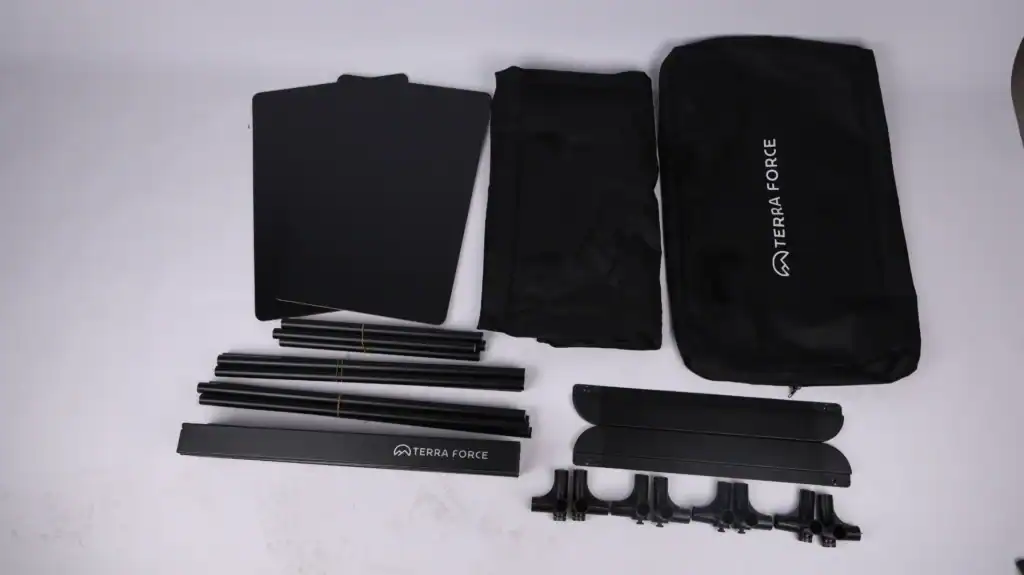
Matériaux des plateaux et surfaces : Équilibre entre fonctionnalité et image de marque
Votre choix de matériau pour le plateau dicte votre marge bénéficiaire, pas seulement votre esthétique.
Le mois dernier, j'ai traversé un entrepôt à Rotterdam où un acheteur regardait une pile de tables de camping retournées. Les plateaux en MDF avaient gonflé après un seul week-end pluvieux dans les Ardennes. Il a perdu sa marge sur cette commande de $40 000. Le matériau que vous spécifiez n'est pas qu'une simple ligne sur une nomenclature ; il déclenche directement des réclamations sous garantie ou des commandes répétées. Trois catégories de surfaces dominent actuellement l'approvisionnement B2B : les métaux perforés pour les équipements de cuisine sûrs, les panneaux techniques pour les gammes économiques, et les inserts textiles pour les supports de marque transportables.
Passons les descriptions génériques de produits. Vous savez déjà à quoi ressemble une table. Ce dont vous avez besoin, c'est d'une logique de décision : quel matériau débloque quel prix de vente au détail, où se produisent les défaillances, et comment personnaliser sans éroder la marge débarquée à 30% que votre acheteur de catégorie exige.
Treillis métallique et aluminium à lattes (Respirant, résistant aux surfaces chaudes).
Les plateaux en aluminium à lattes et en treillis d'acier existent pour une seule raison fonctionnelle que les plateaux stratifiés ne peuvent égaler : la dissipation de la chaleur. Dans les installations de cuisine de camping, une poêle en fonte sortant directement d'un réchaud au butane dépasse 200°C. Un plateau solide en MDF ou en PP emprisonne cette chaleur, brûle et se déforme en quelques secondes. Les surfaces perforées permettent à l'air ambiant de refroidir instantanément la base des ustensiles de cuisson.
Le véritable enjeu B2B ici n'est pas la sécurité — c'est le branding via la géométrie des trous. Les perforations circulaires standard de 5 mm de diamètre sont une commodité. Un groupe sélectionné d'acheteurs spécifie désormais des motifs personnalisés découpés au laser sur l'aluminium à lattes. Pensez à des grilles hexagonales, des logos de marque ou des motifs géométriques qui deviennent instantanément reconnaissables sur Instagram. Cela ajoute environ $1,20 à $2,50 par unité au prix FOB pour une série standard de 1 000 unités, selon la complexité de la découpe. Pour une marque vendant à un prix de détail de $129, c'est un COGS négligeable pour un différenciateur visible que les concurrents ne peuvent pas cloner du jour au lendemain.
La tolérance de qualité est là où cette catégorie devient délicate. Si l'écart entre les lattes dépasse 3 mm, les ustensiles passent à travers — une plainte courante des consommateurs. La norme de production doit spécifier un écart de 2,0 mm à 2,5 mm. J'ai rejeté des échantillons de pré-production entiers à Jinhua parce que l'étalonnage de la découpeuse laser dérivait à 3,2 mm le vendredi après-midi. Votre liste de contrôle d'approbation d'échantillons doit inclure un test de jauge d'écart, pas seulement une validation visuelle.
Panneaux MDF et PP (Économiques, faciles à imprimer).
Les panneaux MDF (panneaux de fibres à densité moyenne) et PP (polypropylène) dominent le marché du mobilier de camping d'entrée de gamme et de milieu de gamme pour une raison : le coût débarqué. Un plateau en MDF de 4 mm sur un cadre en aluminium basique peut atteindre un prix FOB inférieur à $8,00 par unité à 500 unités. Cela permet à un détaillant de débarquer les marchandises à environ $14,00, d'appliquer une marge multiplicateur de 3,5x et de les proposer à $49,00 — le point idéal pour les détaillants de masse.
La vulnérabilité est l'absorption d'humidité. Le MDF brut aspire l'eau par les bords, délamine le noyau et gonfle. Un plateau de table de 70 cm a été observé gonflant de 4,5 mm d'épaisseur après 48 heures d'exposition à une humidité élevée. La solution de contournement est une mise à niveau avec un revêtement mélamine. L'ajout d'un placage de bord en mélamine de 0,15 mm et
Les panneaux PP offrent une résistance inhérente à l'eau sans revêtement, mais ils fléchissent. Une charge de 60 kg sur un plateau PP de 60 cm x 90 cm provoquera un cintrage visible si le panneau a une épaisseur inférieure à 5 mm. Une épaisseur minimale de 6 mm avec des nervures renforcées sous le plateau doit être spécifiée pour les tables évaluées pour une capacité de charge supérieure à 30 kg. Cela ajoute environ $1,50 par unité mais évite la perception de ‘plastique bon marché’ qui tue les avis.
Le marquage sur MDF et PP est simple : l'impression numérique polymérisée aux UV offre une précision Pantone et des graphismes photoréalistes. La limite est la texture. Vous n'obtiendrez jamais une sensation tactile premium sur une impression MDF — c'est lisse, mais ce n'est pas un grain de bois. C'est acceptable pour un prix de $49. C'est inacceptable pour une marque cherchant à imposer $120.
Plateaux de table en tissu Oxford (pliables, graphismes personnalisables).
Les plateaux en tissu Oxford résolvent un problème spécifique de chaîne d'approvisionnement : la flexibilité des quantités minimales de commande et la rapidité saisonnière. Contrairement aux lattes en aluminium nécessitant des filières d'extrusion et des MOQ de 500+ unités pour amortir l'outillage, un insert en tissu Oxford avec cadre pliable démarre à 50 pièces par coloris. Le tissu est découpé, imprimé et cousu — aucun outillage métallique, aucun moule d'injection.
La surface d'impression est le différenciateur. Le 600D Oxford avec support en TPU accepte l'impression numérique à fond perdu, ce qui signifie que votre graphisme s'étend bord à bord sans aucun espace blanc. Une marque peut lancer une collection été avec un imprimé tropical, une collection hiver avec un camouflage neige, et tester les deux avec moins de $2,500 en coût total d'échantillons et de petite série. C'est impossible avec le MDF ou l'aluminium.
Le compromis est la stabilité de charge. Les tables en tissu Oxford plafonnent généralement à 25 kg à 30 kg de charge répartie. Ce ne sont pas des chevaux de trait pour une cocotte en fonte lourde. Ce sont des tables d'appoint, des stations boissons, des panneaux publicitaires de marque sur un camping de festival. Si votre clientèle privilégie la taille compacte à la capacité de charge brute — pensez aux campeurs à moto et aux randonneurs minimalistes — le tissu Oxford est la spécification correcte.
| Matériau | Key Properties | Coût et profil MOQ | Potentiel de personnalisation | Meilleures applications |
|---|---|---|---|---|
| Treillis métallique (acier ou aluminium revêtu par poudrage) | Respirant, sûr pour les surfaces chaudes, excellente dissipation de la chaleur ; résistant à la rouille une fois revêtu ; poids variable (le treillis en aluminium est plus léger) | Gamme moyenne ; MOQ généralement de 300 à 500 unités ; la découpe laser ajoute des coûts d'outillage modestes | Motifs de découpe laser personnalisés pour l'identité de marque ; revêtement par poudrage aux couleurs de la marque ; sérigraphie ou étiquetage de la marque sur le cadre | Tables de cuisine de camping, utilisation sur surfaces chaudes, designs minimalistes à cadre ouvert, installations de glamping haut de gamme |
| Aluminium à lattes (anodisé ou revêtu) | Léger, résistant à la corrosion, excellent rapport résistance/poids ; les lattes permettent la circulation de l'air et réduisent la résistance au vent ; capacité de charge de 30 à 60 kg | Moyen à élevé ; MOQ à partir de 300 unités ; l'anodisation ou le revêtement en poudre ajoute un coût unitaire mais améliore la durabilité | Options de couleur anodisée ; la forme et l'espacement des lamelles peuvent être personnalisés ; gravure laser possible ; combiné avec des cadres en aluminium ou en bois | Tables de camping ultralégères, gammes de marques premium, designs hybrides avec des accents en bois, collections écologiques |
| Panneaux MDF (Bruts ou mélaminés) | Surface d'impression lisse, rentable ; le MDF standard est sensible à l'humidité ; le revêtement mélaminé ajoute une résistance à l'eau et un nettoyage facile avec une légère augmentation des coûts | Coût le plus bas ; MOQ de 100 à 300 unités ; la mise à niveau mélaminée ajoute ~10–15% au coût du panneau mais améliore considérablement l'aptitude à une utilisation en extérieur | Impression numérique ou par transfert thermique à fond perdu ; les panneaux mélaminés offrent une finition brillante et des graphismes éclatants ; options de couleurs pour les chants | Tables de camping d'entrée de gamme à milieu de gamme, tables promotionnelles ou saisonnières de marque, produits hybrides intérieur/extérieur |
| Panneaux PP (polypropylène) | Léger, résistant aux chocs, imperméable, facile à nettoyer ; moins rigide que le MDF mais plus résistant aux intempéries ; peut être texturé ou lisse | Bas à moyen de gamme ; MOQ généralement de 300 unités ; les panneaux moulés par injection peuvent nécessiter un investissement dans le moule pour des formes personnalisées | Étiquetage dans le moule pour des graphismes permanents ; sérigraphie ou impression numérique ; gaufrage personnalisé ; large gamme de couleurs ; options en PP recyclé disponibles pour un éco-branding | Tables de camping familiales, tables de plage, tables d'extérieur tout temps, gammes de produits écologiques |
| Tissu Oxford Inserts de plateau (600D–900D) | Pliable, léger, remplace les panneaux rigides par un tissu tendu ; capacité de charge limitée à 20–30 kg ; construction à double couche offrant de la stabilité ; non adapté aux surfaces chaudes | MOQ le plus bas (à partir de 50 pièces par design) ; rentable pour les petites séries et les marchés de test ; idéal pour les châssis de table enroulables ou pliables | Impression numérique pleine page avec qualité photo ; teinture assortie Pantone ; compatible avec plusieurs méthodes d’impression (sérigraphie, sublimation) ; marquage sur sacs de transport et étiquettes | Tables de randonnée ultralégères, tests de marché en marque blanche, rotations graphiques saisonnières, coffrets exclusifs e-commerce |
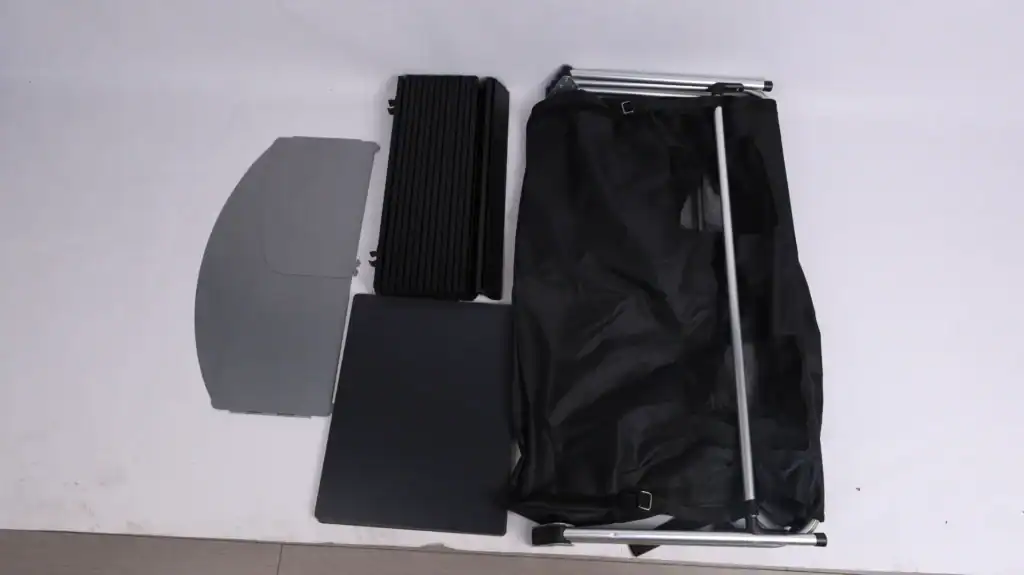
Adéquation des matériaux : aligner les spécifications de la table avec votre niveau de marque et votre prix de vente au détail
L’inadéquation des matériaux est la #1 raison pour laquelle une commande de tables de $50K se transforme en pertes de liquidation.
J’ai audité des usines de fournisseurs dans 12 pays, et l’erreur la plus coûteuse que je vois les chefs de marque commettre est de traiter la sélection des matériaux comme une décision d’ingénierie plutôt que comme une stratégie commerciale. Ce n’en est pas une. Les matériaux que vous retenez déterminent votre coût débarqué, votre exposition à la garantie, votre cube d’emballage et, en fin de compte, le rayon sur lequel votre produit se trouve — Walmart, REI ou un détaillant de glamping haut de gamme. Faites une erreur à l’étape de l’échantillon de préproduction, et aucune broderie de logo ne réparera l’érosion des marges.
Allons à l’essentiel. Pour la planification commerciale 2026, voici comment les combinaisons de matériaux correspondent aux emplacements réels en rayon dans la chaîne d’approvisionnement du mobilier de camping.
-
- Grande distribution d’entrée de gamme (PVP $29-$49) : Châssis en acier avec plateau en MDF ou PP. Cette combinaison se situe en bas de la courbe de coûts. L’usine de Jinhua produisant 1 million de tables par an confirme que l’acier nu avec une peinture poudre de base et du MDF de 3 mm offre un coût de production environ 40% inférieur aux alternatives en aluminium. Les risques sont clairs : le MDF gonfle de manière irréversible s’il est exposé à un sol humide pendant plus de 3 heures. Passez au MDF mélaminé pour un coût supplémentaire de $0.80-$1.20 par unité et vous gagnez une saison de viabilité en usage sur terrasse. Acheteurs, attention — les prix FOB des combos acier/MDF peuvent varier de 12% par trimestre selon les indices de bobines laminées à froid ; verrouillez donc vos devis sur une fenêtre de validité de 30 jours.
- Commerce de détail spécialisé de milieu de gamme (PVP $59-$89) : Aluminium anodisé Châssis avec treillis métallique ou surface en aluminium à lattes. C’est le point idéal pour les marques Amazon et les détaillants de type REI. Le châssis ne rouille pas sur les marchés côtiers — essentiel pour la distribution en Australie et en Floride. La capacité de charge atteint facilement 60 kg, ce qui couvre une configuration de cuisine de camp chargée. La véritable différenciation de marque provient de motifs découpés au laser sur le treillis. L’usine de tables de Jinhua exécute des programmes de découpe laser personnalisés qui transforment une grille générique de dissipation thermique en une signature de marque reconnaissable. Aucun changement de coût d’outillage, simplement l’envoi d’un fichier DXF. Le délai de production reste de 30 à 35 jours.
- Glamping et style de vie premium (PVP $99-$149) : 1. Cadre en aluminium associé au bambou, au hêtre, ou à la combinaison hybride aluminium-bois qui se développe dans le segment du camping de luxe européen. Ce niveau exige une discipline d'approbation des échantillons — le grain du bois, la régularité de la teinte et la qualité de l'assemblage varient considérablement d'un lot à l'autre. L'usine de Kelyland à Jinhua dispose d'une ligne de finition distincte pour les plateaux en bambou et en hêtre, précisément parce que la contamination croisée par la poussière de meulage du métal détruit une surface en bois en quelques heures. À ce niveau de prix, les acheteurs attendent un savoir-faire visible, pas seulement une fonction. Votre cahier des charges de tolérance qualité doit préciser la taille acceptable des nœuds, l'uniformité de la teinte et le nombre de fixations visibles — des détails qui n'apparaissent jamais sur une annonce Alibaba générique.
- 2. Essais en marque privée et lancements saisonniers : 3. Insert de plateau de table en tissu Oxford sur un cadre en aluminium ou en acier. C'est l'option de matériau la plus mal comprise dans la catégorie des tables de camping. Le tissu lui-même est un Oxford double couche 600D-900D avec capacité d'impression numérique plein format. La quantité minimale de commande tombe à 50 pièces par coloris, et le même fichier d'impression peut couvrir les inserts de plateau, le tissu des chaises assorties et les revêtements de chariot pour une ligne visuelle coordonnée. L'équipe de la catégorie mobilier de Ben Wharton en Australie a testé cette approche pour une collection d'été et a écoulé le stock en 6 semaines à compter de la date d'expédition FOB. Risque : l'Oxford imprimé se décolore visiblement après plus de 200 heures d'exposition directe aux UV, alors gérez les attentes dans votre description produit.
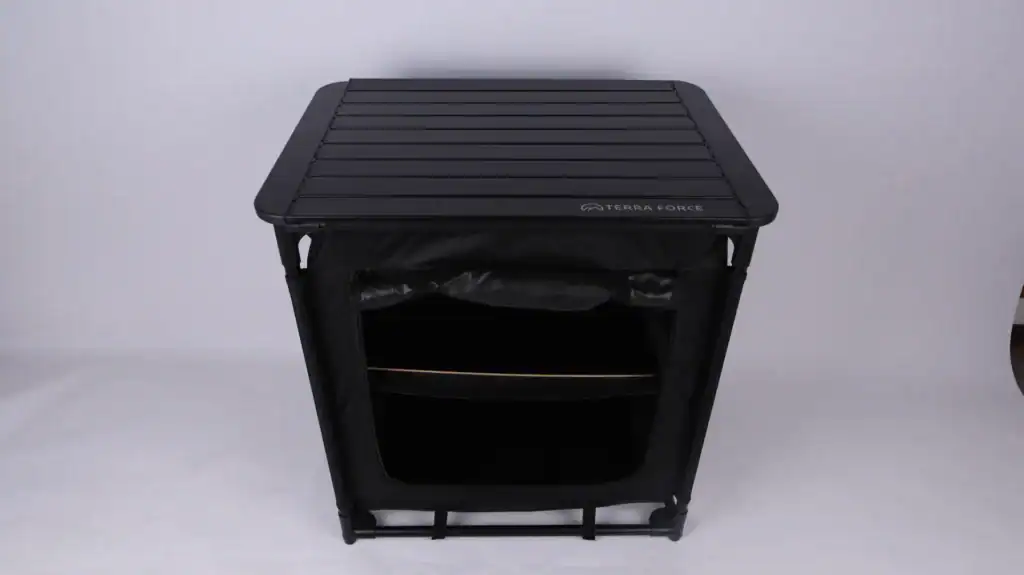
Évitez l'exercice d'alignement des matériaux et voici ce que vous achetez : 18 mois de stock mort occupant les rayonnages de l'entrepôt, un chef de catégorie qui ne prendra pas votre appel la saison prochaine, et un concurrent qui a lu la fiche technique plus attentivement et qui absorbe votre espace en rayon. La différence entre une table qui se vend 4 fois par an et une qui finit en liquidation à $12 l'unité se joue souvent lors d'une séance de revue des matériaux de 45 minutes avant qu'un seul échantillon ne soit découpé. Cette séance ne coûte rien. L'ignorer coûte la marge brute de toute votre série de production.
| Niveau de marque | Combinaison de matériaux | Poids unitaire typique | Prix de vente conseillé | Avantages clés et personnalisation |
|---|---|---|---|---|
| Entrée de gamme / Marché de masse | Cadre en acier + panneau MDF ou PP | 6–9 kg | $25–$45 | Coût unitaire le plus bas, marquage par sérigraphie facile, améliorable avec un revêtement mélaminé pour la résistance à l'humidité |
| Milieu de gamme / Orienté valeur | Cadre en aluminium + plateau en tissu Oxford | 3–5 kg | $40–$70 | Ultra-léger et pliable, MOQ faible (à partir de 50 pièces), impression numérique plein format pour les séries saisonnières en marque privée |
| Spécialiste de gamme moyenne / cuisine de camp | Cadre en aluminium + treillis métallique (acier ou aluminium) | 4 à 6 kg | $55–$85 | Surface dissipant la chaleur idéale pour réchauds, motifs découpés au laser personnalisés pour l'identité de marque, options antirouille |
| Premium / Glamping & Luxe | Cadre en aluminium anodisé + plateau en bois de hêtre/bambou | 5 à 8 kg | $90–$150 | Esthétique recherchée, veinage naturel du bois, gravure laser, design hybride alliant solidité et élégance |
| Uso intensif / Professionnel | Cadre en acier renforcé + plateau en aluminium à lames | 8 à 12 kg | $70–$110 | Capacité de charge maximale (jusqu'à 60 kg et plus), finition laquée par poudrage, idéal pour un usage institutionnel ou en expédition |

Conclusion
Le choix entre l'aluminium, l'acier, le bois et le MDF détermine directement le positionnement tarifaire, la catégorie de poids et la durabilité de votre marque. La fiche technique ici couvre les 90% que les acheteurs comparent habituellement. Les 10% manquants — la différence entre un lancement de produit sans accroc et un rappel — consistent à verrouiller la tolérance exacte des matériaux à l'étape d'approbation des échantillons et à la lier à Conditions de prix FOB, afin de ne pas payer le fret maritime pour des plateaux en acier de 2,5 mm qui arrivent à 2,3 mm.
Avant de vous engager sur une série, demandez à votre partenaire d'approvisionnement un échantillon de pré-production avec une fiche écrite de tolérance de qualité des matériaux — jusqu'à l'épaisseur d'anodisation et le denier du tissu. Comparez les références sur la page produit pour voir ce qui est standard et ce qui est négociable.
Questions fréquemment posées
Quel matériau de cadre de table de camping est le plus léger ?
Les cadres en aluminium sont les plus légers, résistent à la rouille et réduisent le poids d'expédition. Ils sont la norme pour les tables portables haut de gamme, si votre marque cible les utilisateurs qui privilégient la facilité de transport. Optez pour l'aluminium lorsque les économies de poids l'emportent sur le coût brut.
Quel est le meilleur matériau de table pour les plats chauds ?
Les plateaux en treillis métallique ou en aluminium à lamelles supportent sans danger les poêles chaudes et les réchauds de camping. Ils ne brûlent pas et ne se déforment pas, ce qui les rend idéaux pour les installations de cuisine de camp. Choisissez un treillis métallique pour les surfaces résistantes à la chaleur des tables destinées à la cuisson.
Quelle est la surface de table la moins chère pour l'impression personnalisée ?
Les panneaux MDF et PP sont les plus rentables pour des impressions de logos de haute qualité. Ils acceptent facilement l'impression UV directe, gardant votre marque lumineuse et les coûts unitaires bas. Choisissez des panneaux MDF ou PP lorsque la qualité d'impression et le budget sont les plus importants.
Quand devrais-je choisir un cadre en acier plutôt qu'en aluminium ?
Les cadres en acier offrent une résistance et un prix abordable maximum, parfaits pour une utilisation intensive et un prix de gamme économique. Cependant, ils sont plus lourds et nécessitent un revêtement approprié pour éviter la rouille. Optez pour l'acier lorsque la durabilité et le faible coût sont les priorités.

 English
  Español
  Deutsch
  Français
  Português do Brasil
  Русский
  العربية
  한국어
한국어  日本語
日本語