 跳到内容
跳到内容 
inflatable tent manufacturer is the first checkpoint buyers should lock before they approve a supplier, budget, or production slot. Subject: Pre-Production Sample Didn’t Match Mass Production — $50K Order at Risk.
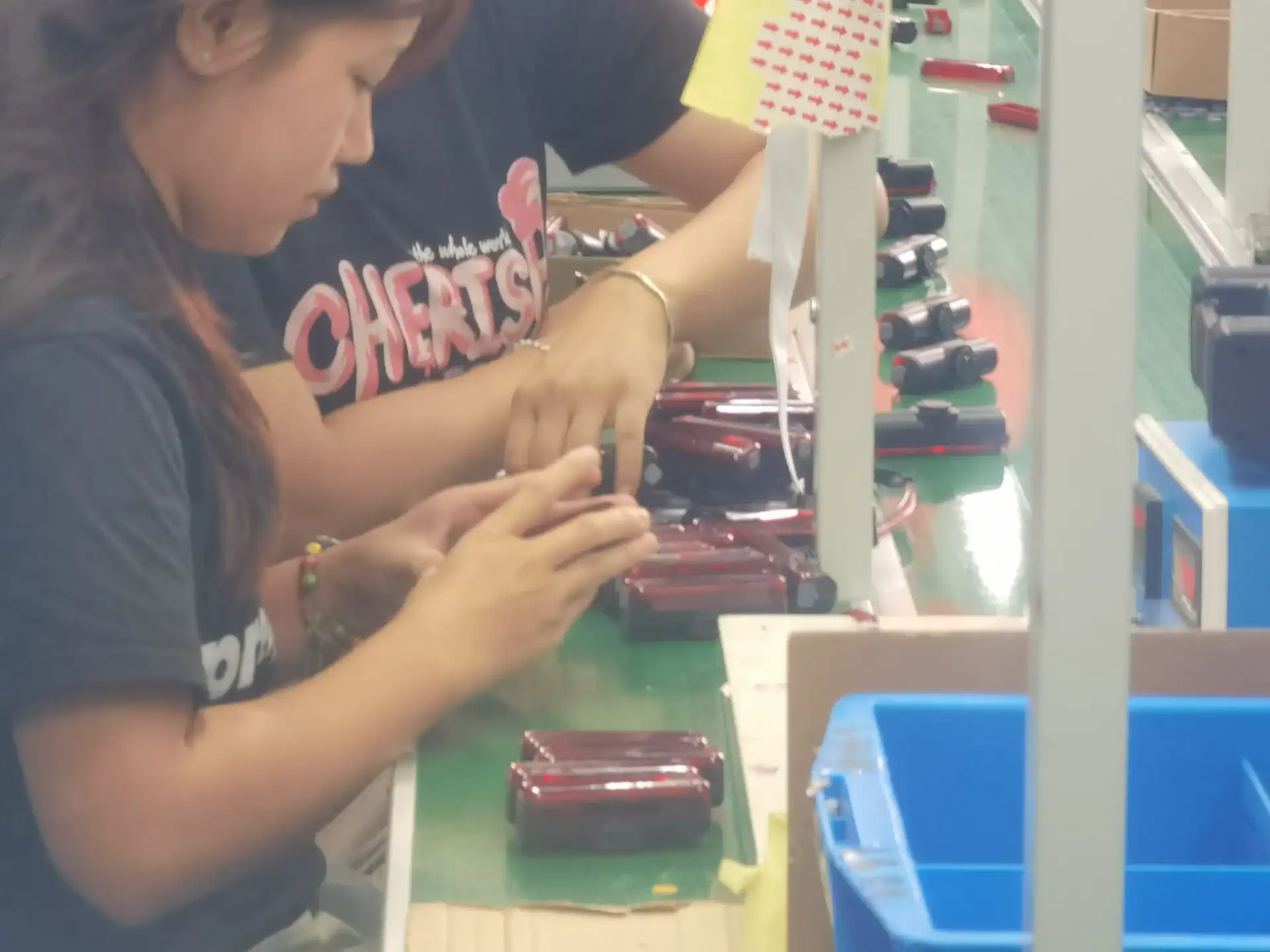
A buyer got burned on a $50,000 order because the pre-production inflatable tent sample looked perfect, but the mass production run had valves that leaked after 15 cycles and RF-welded seams that delaminated by cycle 25. The fabric was fine. The color matched. But the physical components that actually keep air inside the tent — seams, valves, and tubes — failed before the first retail season ended. That’s why an inflatable tent manufacturer audit has to start with those three parts, not with a visual check of the outer shell or a review of FOB pricing.
Most factory audits focus on denier count, print registration, and packaging aesthetics. Those matter for shelf appeal but have nothing to do with whether the tent holds pressure overnight at a campsite in early spring. The data backs this up: roughly nine out of ten returns for inflatable tents trace back to seam separation, valve fatigue, or tube material failure — not the tent fabric itself. A sourcing manager who skips peel-strength specs and valve cycle tests is effectively auditing the wrong components and accepting a warranty claim rate that will trigger retailer conflict within months.
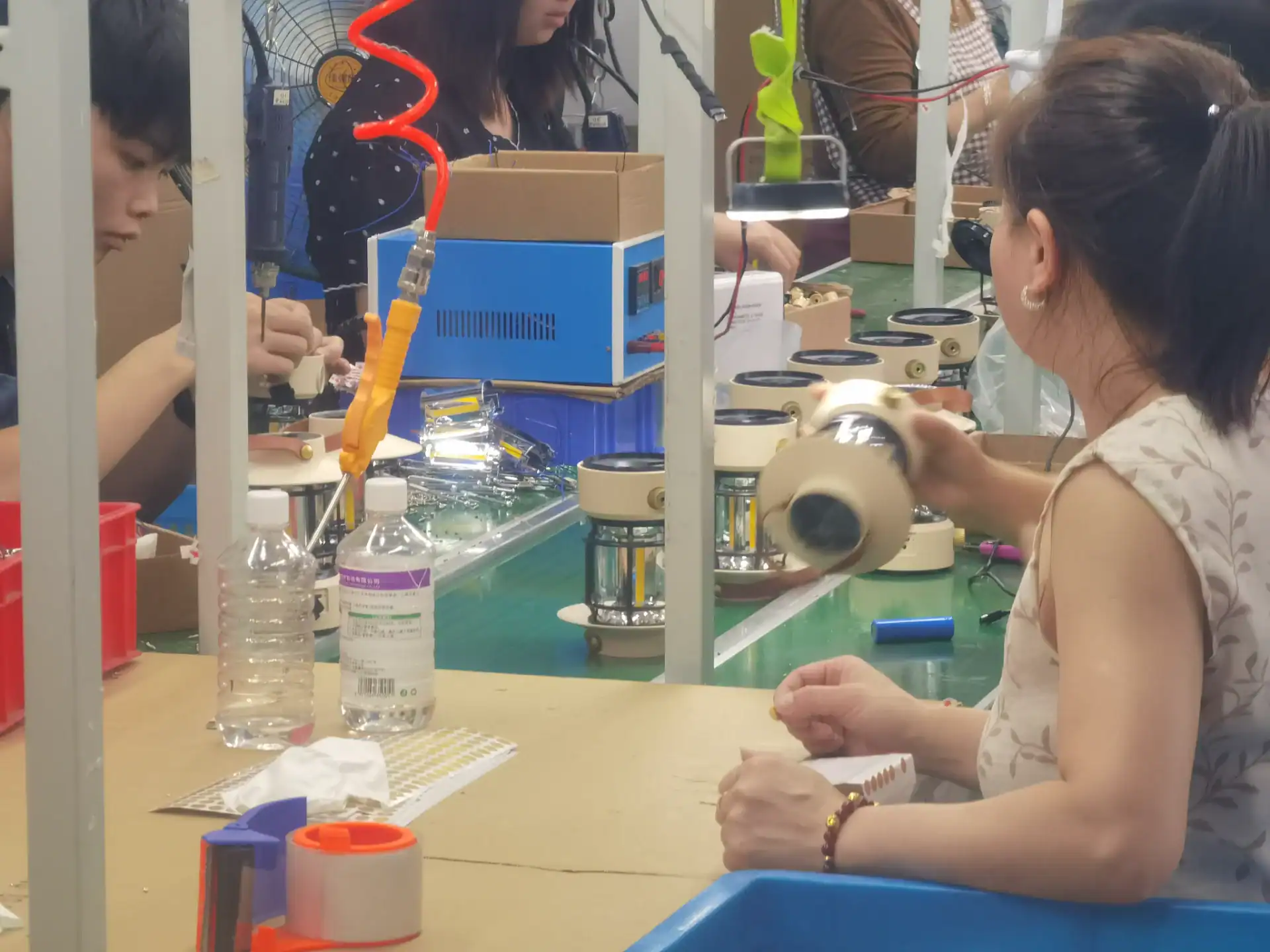
Seam Failures: The Silent Delamination Problem in RF-Welded Tents
A clean weld line can hide a bond that fails after 20 inflation cycles.
RF welding uses high-frequency electromagnetic energy to fuse PVC or TPU layers. The process looks fast and clean on the production floor. But if the temperature, pressure, or cooling time drifts by even a small margin, the molecular bond between layers stays weak. The weld line appears fully fused to the naked eye — and passes a basic visual inspection. After 20–30 inflation cycles, the layers separate at the interface. That is delamination.
Why Delamination Happens in Production
The root cause is almost always process drift. An RF welder running at 80°C instead of 85°C because a thermocouple aged overnight. A pressure roller that lost 0.2 bar over a shift change. A cooling timer set two seconds short to hit a daily output target. Each deviation is small — but cumulative across a batch of 500 tents, it produces consistent weak bonds that survive sample approval and fail in the field.
Seam Peel Strength: The Spec That Separates Factories
Peel strength is measured in newtons per millimeter (N/mm). It tells you how much force it takes to pull the welded layers apart. Quality inflatable tent factories document this number on every production batch — not just on samples sent for pre-production approval.

Valve Failures: How a $0.50 Part Causes Most Air Tent Returns
A $0.50 valve failure generates $15–$30 per-unit warranty cost after shipment.
Le one-way inflation valve is a small molded part that gets flexed, twisted, and stressed at every inflation and deflation cycle. Most factory QC checks valves only for air leakage at rest. That misses the real failure mode: fatigue.
Why a $0.50 Valve Becomes a $30 Warranty Claim
After a few hundred cycles, the valve base separates from the tube wall or the internal flapper tears. The tent still inflates initially, then leaks down overnight. The buyer discovers it in the field, not at pre-shipment inspection.
Replacing that valve after shipment costs $15–$30 per unit when you factor in parts, labor, return freight, and customer service time. A factory that sources the cheapest valve assembly — typically $0.50–$1.20 per unit — is optimizing for BOM cost, not total landed quality.
Valve Cycle Testing: Demand 10,000+ Cycles
A proper valve durability test mounts the assembly to a pneumatic rig and cycles it thousands of times under pressure. The test simulates years of camper use — not just the first weekend.
Kelyland’s partner factories test valve assemblies beyond 10,000 cycles before production approval. That benchmark eliminates the fatigue failures that cause most air tent returns. Any factory that cannot state a cycle-testing number is likely using the cheapest supplier — which is exactly why returns happen.
Air Tube Material: PVC vs. TPU in Factory-Grade Tents
Le air tube material decides how your tent performs in cold weather, how long it lasts, and whether a retailer can fix a puncture or must replace the whole tube. Most buyers spec this by price alone. That math works until the first winter shipment generates a return spike.
PVC vs TPU: Cost, Weight, and Cold-Cracking Tradeoffs
PVC air tubes are the default for low-cost inflatable tents. They weld easily with RF equipment, hold pressure well at room temperature, and keep unit costs down. The tradeoff shows up below freezing. PVC loses flexibility as temperatures drop and becomes brittle at stress points — around zipper cutouts, tube-to-tube junctions, and valve bases. A tent that worked fine in a 20°C warehouse cracks during a -5°C field setup.
TPU tubes cost 30–50% more per meter than PVC. The material stays flexible down to -30°C, resists UV degradation better, and weighs less for the same burst strength. For B2B buyers targeting four-season markets or high-latitude retailers, TPU eliminates the cold-cracking failure mode entirely. The premium is justified by lower warranty claim rates.
A factory audit must verify the actual tube material grade and wall thickness — not just rely on the tent’s finished weight or a supplier’s verbal claim. Request the raw material datasheet and compare it against the approved sample spec. If the supplier cannot provide mill certificates for the tube stock, treat that as a red flag regardless of how clean the assembled tent looks.
Repairability: Field Patching vs Factory Replacement
TPU tubes accept field patches using a standard repair kit — clean the area, apply adhesive, press a patch, wait 10 minutes. This gives retailers an aftersales solution that keeps customers camping instead of filing a return. PVC tubes are harder to bond in cold conditions; most field patch kits fail within hours because PVC adhesives require precise surface prep and curing temperature.
For wholesale buyers this changes two things: warranty strategy and spare-parts planning. If you source PVC-tube tents, budget for full tube replacements on any warranty claim involving punctures or seam separation near inflation points. If you source TPU-tube tents from Kelyland’s partner factories — which produce over 800,000 tent units annually across ISO 9001:2015 certified lines — include repair kits and spare valve assemblies with every bulk order so your retail partners can resolve issues without shipping units back to China.
| Fonctionnalité | PVC | TPU | Impact on B2B Buyer |
|---|---|---|---|
| Material Cost | Lower (baseline) | 30–50% higher than PVC | Higher unit cost vs. lower warranty risk |
| Cold-Weather Performance | Becomes brittle below freezing; prone to cracking | Remains flexible in sub-zero temperatures | TPU required for winter/4-season product lines |
| Réparabilité sur le terrain | Difficult to bond in field; usually requires full tube replacement | Can be patched with a standard repair kit | TPU reduces aftersales spare-part costs and retailer friction |
| Weight & Strength-to-Weight Ratio | Heavier; lower tensile strength per mm thickness | 更轻;更高的抗拉强度允许更薄的壁厚< / TD > | TPU使背包重量更轻,包装体积更小< / TD > |
| < / TD > | < / TD > | < / TD > | < / TD >
< / TBODY >
< / TABLE>
 The Inflation Test: What a Real QC Process Looks Like
Most factory QC stops at a visual check. The tent looks inflated, the seams appear sealed, and the valve holds air for five minutes. That test misses the failures that show up after the container lands. A real pressure hold test is the only way to catch micro-leaks before shipment. Pressure Hold Test: Pass/Fail ThresholdsThe standard inflatable tent tube operates at 8–12 PSI. A proper hold test inflates every tube to its rated pressure, then monitors the drop over a defined period — typically 30 minutes to 2 hours. The pass/fail threshold should be documented in the QC plan: a drop of more than 10% over the hold time means a leak exists somewhere in the system. Ask the factory how they inspect. Some factories test only one sample per batch. Others run 100% of production through a pressure rig. Kelyland’s partner factories inspect every unit or follow a documented AQL sampling plan with clear acceptance numbers. If the factory cannot state their inspection rate and pressure tolerance in writing, treat it as a red flag. Repeated Inflation Cycles: Simulating a SeasonA single inflation test proves nothing about long-term durability. The real failure mode — seam delamination — appears only after repeated stress cycles. Quality fabricant de tentes gonflabless cycle each tent through inflation and deflation dozens of times to simulate a full camping season.  Factory Audit Checklist for Inflatable Tent Manufacturers
The production line audit answers one question: who controls the RF welding and valve assembly? If these operations are outsourced, the factory has no direct oversight of temperature, pressure, or cooling time. That means batch-to-batch delamination risk goes up, and corrective action takes days instead of hours. RF Welding: In-House vs. OutsourcedIn-house RF welding means the factory owns the press, sets the parameters, and logs every batch. The operator can adjust dwell time mid-run if peel strength drifts. Outsourced welding means a third party handles it — you get what they ship, with no process visibility. Kelyland’s partner tent factory in Ningbo operates its own RF welding line with calibrated presses and documented cycle parameters. Valve Assembly: Where Cheap Parts Show UpValve assembly is often treated as low-skill work. Factories that outsource it tend to use the cheapest molded parts — $0.50 per unit — without cycle testing. The result: flapper tears after 200 cycles, base separation after 500. A factory that assembles valves in-house can test every batch on a pneumatic rig to 10,000+ cycles before production approval. 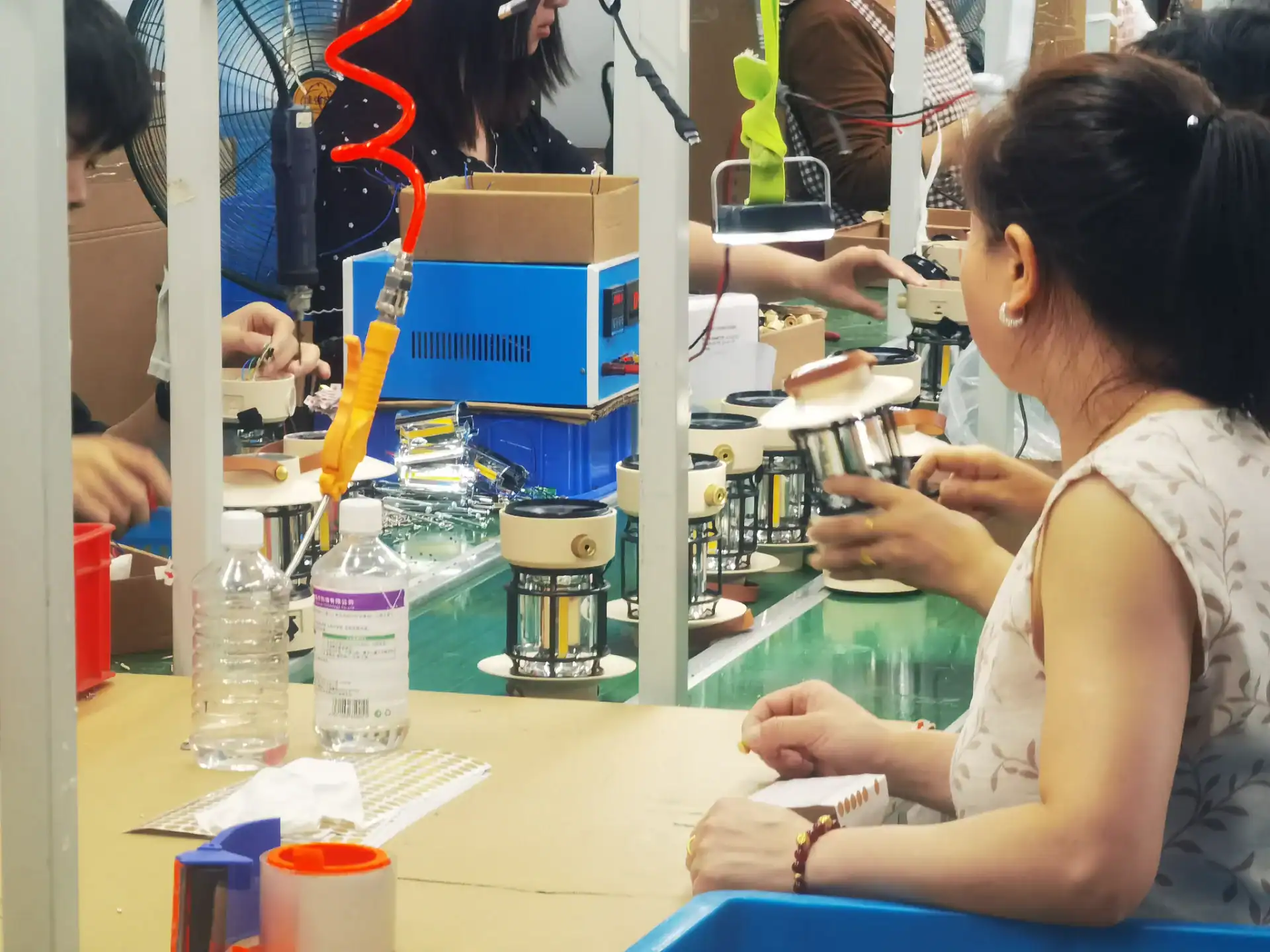 MOQ, Lead Time & Customization: What’s Realistic in OEM/ODM
MOQ Thresholds: 300–1,000 Standard, 50–100 TrialStandard inflatable tent models from ISO 9001:2015-certified factories carry Quantités minimales de commande (QMC) of 300 to 1,000 pieces per design. That range covers the fabric cutting, RF welding setup, and valve assembly tooling costs. Below that threshold, the factory loses margin on material waste and machine changeover time. Trial orders of 50–100 pieces exist for OEM/ODM development, but they require a separate pricing structure. The per-unit cost will be higher—sometimes by 20–40%—because the factory runs a partial production line. Clarify whether the MOQ applies per colorway or per SKU. A four-color tent run at a 300-piece MOQ means a total commitment of 1,200 units. Lead Time: 30–45 Days with Buffer PlanningStandard lead time across Kelyland’s partner network is 30 to 45 days from 7. approbation de l’échantillon. The clock starts when the signed production agreement and deposit clear, not when you first send an inquiry. Custom fabric dyeing adds 7–10 days; custom-molded valve parts add another two weeks if the mold needs fabrication. For seasonal retail launches—think spring sell-in for summer inventory—add two weeks of buffer between sample approval rounds and l'inspection avant expédition. A missed handoff at any step pushes delivery past your warehouse cutoff date. Get penalty clauses written into the agreement for delays beyond the agreed window. Customization: Beyond Colors and Logos‘Custom’ in OEM/ODM inflatable tents means more than Pantone-matched fabric and a printed logo tag. It includes tube material grade (PVC vs TPU), internal beam structure (I-beam vs drop-stitch), valve placement and orientation, inflation port type (twist-lock vs pinch-valve), packaging design, and printed instruction manuals.
(Every customization must be locked down during sample approval to avoid production surprises.) The factory should provide a technical drawing of the valve and seam construction before mass production begins. ConclusionA factory audit that stops at fabric denier and color matching misses the three components that drive 90% of inflatable tent returns. Seam peel strength, valve cycle durability, and tube material grade are the only specs that predict whether a container lands with sellable goods or warranty claims waiting to trigger.
Use this checklist to shortlist inflatable tent manufacturers before you invest in travel or tooling. Request a paid sample from Kelyland’s Ningbo factory and ask for the QC reports on seam peel strength and valve cycle tests — those numbers will tell you more than any factory tour can. Review current pricing and customization options on the product page to see how their ISO-certified supply chain handles your private-label requirements. Questions fréquemment poséesQuel taux de défauts est acceptable pour la production de tentes gonflables ? — Un AQL de 1,0 pour les défauts majeurs et de 4,0 pour les défauts mineurs est une référence courante dans le secteur de l'équipement de plein air ; valve l ?La réponse exacte dépend de la spécification du produit, de la quantité et de la configuration de la commande. L'approche la plus sûre est de confirmer les conditions commerciales uniquement après le verrouillage de la fiche d'exigences finale. Les conditions finales doivent être confirmées en fonction de la spécification exacte du produit et des conditions de commande. Comment fonctionnent les réclamations au titre de la garantie pour les commandes OEM de tentes gonflables ? — Une garantie de 1 à 2 ans devrait couvrir le décollement des coutures, la défaillance des valves et les fuites des tubes, n'est-ce pas, en usine ?La réponse exacte dépend de la spécification du produit, de la quantité et de la configuration de la commande. L'approche la plus sûre est de confirmer les conditions commerciales uniquement après le verrouillage de la fiche d'exigences finale. Les conditions finales doivent être confirmées en fonction de la spécification exacte du produit et des conditions de commande. |

 English
  Español
  Deutsch
  Français
  Português do Brasil
  Русский
  العربية
  한국어
한국어  日本語
日本語