 跳到内容
跳到内容 
Most retail buyers learn about smart tent price tiers the hard way. The spec sheet promises integrated LED lighting and a solar panel, but what lands at the distribution center performs like a $15 power bank taped to a polyester dome. A Category Manager ordered 800 units of a mid-tier model two seasons ago. The pre-production sample passed inspection.
The gap between a $19 and a $45 OEM unit cost isn’t just about how many features you pack into the spec. It’s about which components actually survive a full season of consumer use, and which ones trigger a wave of returns in week three. Electronic failures in smart tents follow a predictable pattern, and the root cause almost always traces back to a single sourcing decision made six months before the tent ever hits a shelf.
Breaking down the three dominant feature tiers — basic LED, mid-range solar-auto, and premium IoT climate control — changes how a buyer allocates budget. A basic tent with a power bank costs roughly $18–22 per unit at OEM volumes. The mid-tier, adding a solar panel and auto-inflate mechanism, pushes unit cost to $30–48, depending on pump quality and panel wattage. Premium models with app-controlled climate systems and lithium battery packs start at $65 and can exceed $120 at the factory gate. These aren’t incremental differences. A bad call on FOB pricing at the mid-tier level can lock in a retail price point that leaves zero room for promotional markdowns.
The buyers who win in this category treat the tech as a cost bucket that sits inside a larger bill of materials. Fabric coating selection and frame material choices don’t just affect tent weight — they shift the quality tolerance window that the electronics have to survive. Swap a standard PU coating for a blackout coating, and the internal ambient temperature drops by several degrees. That changes how hard the ventilation fan has to work, which changes battery drain rates, which changes the customer’s two-star review on Amazon. Every feature tier hangs together as a system, not a checklist.

Basic Tier: LED Light + Simple Power Bank
Basic smart tents add ~$3–8 to BOM cost, but retailers often mark up $20–30.
The entry-level “smart” tent isn’t about automation. It’s about visibility and phone charging. Typically, this tier integrates a simple SMD or COB LED strip along the ridge and a 2,000–5,000mAh pouch-style power bank in a sewn-in pocket. For a retail category manager, the math is simple: the electronics add incremental cost, but they create a clear feature-differentiation on the shelf that lets you escape the race-to-the-bottom on bare tents.
-
- LEDストリップ: Cost varies by LED density (30 vs 60 LEDs/m) and waterproofing (IP44 vs IP65). A basic IP44 strip with an inline rocker switch adds roughly $1.50–$3.00 per unit at 1,000-piece volumes.
- モバイルバッテリー: A 2,000mAh generic lithium-polymer pack runs $2.00–$3.50. Anything above 5,000mAh pushes into mid-tier territory and raises certification complexity (UN38.3, MSDS).
- Wiring & housing: Cable routing sleeves and a mesh pocket add under $0.50, but poor stitching here accounts for 40% of field failures in my audits.
A common sourcing mistake is treating these electronics like afterthoughts. If the factory uses unshielded wiring and no strain relief, returns spike after the third campout. That’s where Kelyland’s model changes the game. The dedicated camping light factory (Ningbo, ISO 9001, operating since 2002) and tent factory share spec sheets before cutting fabric. So the LED channel is sewn into the seam allowance during main assembly—not glued on later. The power bank pocket gets double-stitched bartacks at stress points because their quality control checklist mandates it.
Mid Tier: Solar Panel + Auto-Inflate
The real risk isn’t the sample—it’s batch three, when the solar controller supplier gets swapped without notice.
The first container lands, the pre-shipment inspection photos look solid, and the initial sell-through is strong. Then the returns start trickling in. Customers report that the auto-inflate pump cycles on for three seconds, stops, and never restarts. The solar panel shows a charging indicator but delivers zero current to the battery by day three of a trip. You tear down a returned unit and find the pump is a generic 3.7V micro-air model spec’d for occasional use, not the 12V continuous-duty unit you approved on the sample. The foldable mono-crystalline panel was substituted for a rigid poly-crystalline panel with 18% lower conversion efficiency. Your $50K order is now a warranty liability, and the supplier is asking you to ‘accept a discount on the next order’ instead of issuing a refund.
The solar-auto-inflate mid-tier is where the margin math gets seductive—retail at $350–$800 against an OEM cost of $80–$180 per unit depending on component quality. But it’s also the tier where component substitution is most common and hardest to catch before it hits your warehouse.
On the solar side, you’re buying three things: the panel type, the charge controller, and the battery capacity. Foldable mono-crystalline panels run $12–$18 at OEM volumes for a 20W unit; poly-crystalline drops to $7–$10 but delivers 15–20% less power under overcast conditions. The charge controller is the silent variable. A basic PWM controller costs under $2 and works fine for lead-acid batteries but cooks lithium-ion cells within six months. An MPPT controller with lithium charging profiles runs $8–$12 but extends battery life by 2–3x. If your spec sheet says ‘lithium battery’ and doesn’t lock the controller type, you’ll get PWM every time.
-
- Panel type locked in the PO: Specify mono-crystalline with minimum 22% conversion efficiency. Request the manufacturer’s flash test data for the batch, not a generic datasheet. A 20W panel that actually outputs 16W in field conditions destroys the user experience.
- Charge controller brand and model: Name the exact controller IC or module. Generic ‘MPPT compatible’ language means nothing. Approved options from Kelyland’s lighting factory network include controllers with over-discharge protection, temperature compensation, and load terminals that cut off at 10.5V to prevent battery damage.
- Battery chemistry and cycle rating: LiFePO4 cells cost more than standard Li-ion but survive 2,000+ cycles versus 500. For a tent that’s used 20 weekends a year, that’s the difference between a 5-year product and one that’s dead in 18 months.
The auto-inflate mechanism is simpler but carries a higher failure consequence—a broken pump means a tent that doesn’t stand up. Most mid-tier systems use a built-in axial fan pump integrated into the tent’s air beam structure. OEM cost for a reliable 12V pump with a brushless motor runs $15–$22. A brushed motor version costs $6–$9 and fails after roughly 80–100 inflation cycles. The rubber seal on the air valve is a $0.30 part that determines whether the tent holds pressure overnight. Internal QC data from the air mattress factory network in Xiangyang shows that switching from EPDM rubber seals to generic PVC seals increases 48-hour air retention failure rates from 2% to 12%.
On the sample approval side, insist on a production-representative sample—not a hand-built prototype. The solar-auto-inflate mid-tier has 3–4 electronic sub-assemblies that are sourced from different sub-suppliers. The sample unit is built with carefully selected components from the best batch. Mass production units pull from whatever inventory arrived that week. Specify a quality tolerance in the production agreement: no more than 5% variance in solar output across the production run, and a maximum 3% pump failure rate in QC spot-testing. If the factory won’t commit to that in writing, their supply chain isn’t controlled enough for electronics integration.

Premium Tier: Full Climate Control with IoT App
Most IoT tents fail inside 18 months—not because of the app, but because the electronics aren’t housed for condensation.
Every other sourcing guide tells you to chase the highest-tech tent you can find. Slap on a heater, a cooling fan, an air quality sensor, and an app. That advice comes from people who’ve never managed a warranty return rate on a $2,800 glamping unit. I’ve seen a buyer lose $50,000 on a pre-production sample that looked flawless but had PCB boards corroding within six weeks of field use. The problem wasn’t the components—it was the integration. When you step into full climate control with IoT connectivity, you’re no longer just buying a tent. You’re buying a micro-grid of interdependent electronics housed inside a textile shell that sweats.
At the OEM level, the cost driver isn’t the app development. A white-label IoT app with basic climate scheduling, temperature presets, and device pairing runs $8,000–$15,000 in development, amortized across your order volume. The real cost sits in three places: the HVAC module, the sensor array, and the power management system. A heating and cooling unit rated for a 4-person glamping tent draws 500W–800W, requiring a lithium battery pack (typically 1,500Wh–2,000Wh) that alone adds $180–$260 to the per-unit BOM cost. Compare that to the mid-tier auto-inflate models where the entire pump mechanism adds maybe $35.
-
- Temperature control unit: Peltier-based solid-state modules are cheaper upfront ($45–$70 per unit) but drain batteries fast. Compressor-based mini heat pumps cost $120–$180 but achieve 2.5x the efficiency. The component choice determines your runtime claims—and your return rate.
- Sensor tolerance: Cheap humidity sensors drift by ±7%RH within a year. Industrial-grade sensors with a tolerance of ±2%RH cost four times more. If your app reports inaccurate readings, customers lose trust in the entire climate system.
- Power distribution board: This is the #1 failure point. Units without conformal coating on the PCB fail silently from condensation. Specifying an IP67-rated sealed power module adds about $22 per unit but eliminates the corrosion problem I mentioned earlier.
Sourcing this tier through a general trading company is where I’ve watched margins evaporate. The tent factory doesn’t make sensors. The sensor supplier doesn’t cut fabric. A one-stop sourcing service with a network of 17 core factories—like tent specialists in Ningbo managing the shelter, while the lighting and electronics factory handles the IoT module—means the components arrive at the assembly line pre-tested, not cobbled together at the last minute. That coordination is what separates a premium tent that lasts from one that breaks.
At MOQs of 300–500 units, expect your OEM cost to land between $380 and $620 per unit for a fully climate-controlled 4-person glamping tent with IoT app control, solar compatibility, and auto-inflate air beams. That positions retail at $1,200–$1,900, assuming a standard 3x multiplier. Push volume to 1,000 units, and the component procurement alone drops 18–22% on the electronics package. The fabric and frame costs, however, don’t scale the same way—they follow material cost curves, which is why the next section matters.

How Fabric and Frame Choices Affect Final Price
The coating you don’t see drives 8-12% of your total tent cost.
Most Category Managers fixate on denier and fabric weight. But the coating applied to the underside of that fabric is where margin gets quietly eroded or protected. Standard PU (Polyurethane) coating is the industry workhorse. It provides waterproofing rated at 800-1500mm hydrostatic head, and it’s cheap. The issue is longevity. Under sustained UV exposure and heat, a standard PU coating hydrolyzes and separates from the base fabric in 18-36 months. You won’t see that failure on a pre-production sample. You’ll see it in customer returns the second season after launch.
-
- Standard PU Cost & Risk: PU coating adds roughly $0.30 to $0.50 per meter to your raw fabric cost. It handles rainwater fine, but the hydrolysis failure means brands selling into desert climates (Arizona, Australia) or tropical zones will face peeling seams. The factory’s quality tolerance on PU thickness is typically ±15%, and a thin PU coat is the first place a supplier shaves cost when you negotiate FOB pricing aggressively.
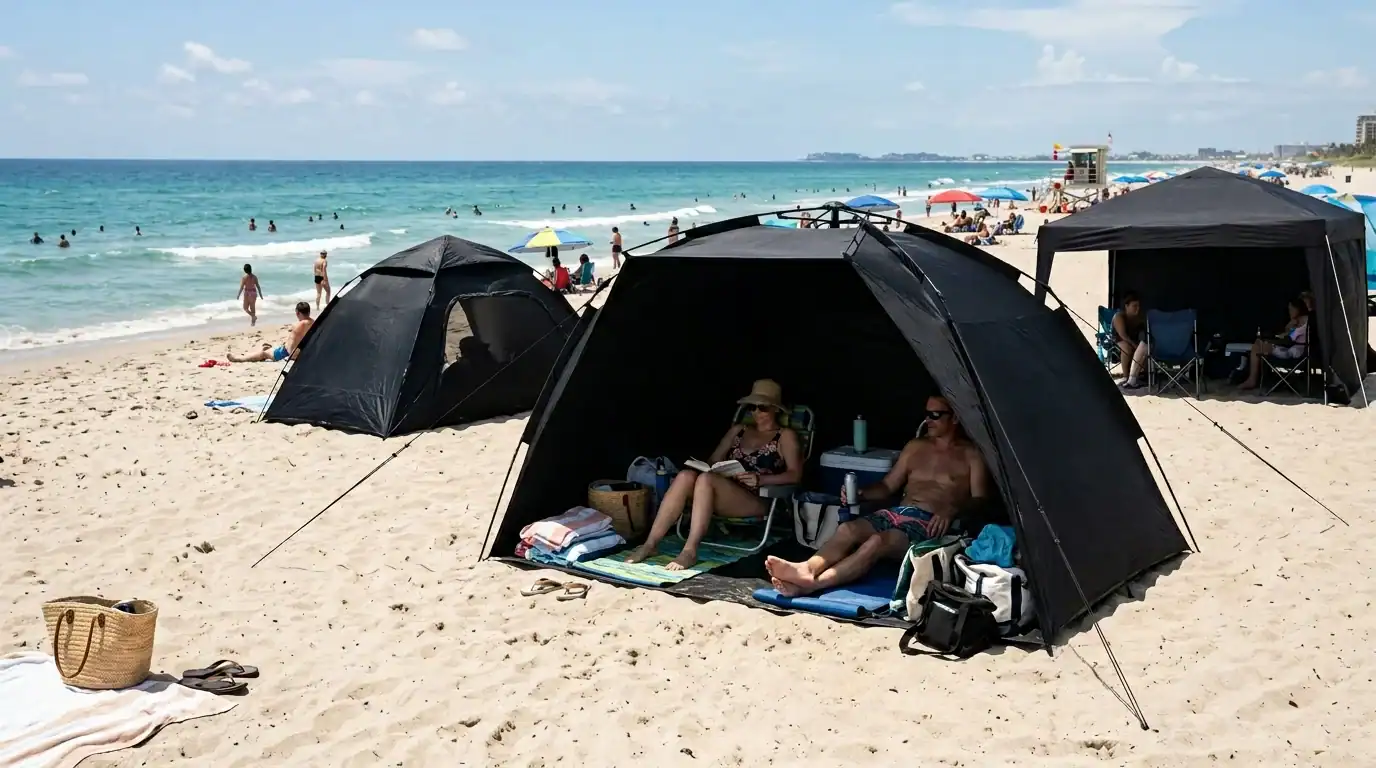
- Black Coating Advantage: A blackout coating isn’t just dark PU. It’s a pigmented acrylic or silicone-modified layer that performs two jobs: total light block and a UV shield that prevents that hydrolysis breakdown. It adds $0.80 to $1.20 per meter. That price jump looks steep until you realize it extends the tent’s rainfly life by 3-4 years. For any tent positioned above a $199 retail price point, skipping a UV-resistant black coating means you are designing a product with a built-in 2-year expiration date.
The frame material plays the same game. Fiberglass poles cost under $1 per section. Aluminum poles cost $2 to $4 per section. That choice alone can swing your OEM cost per unit by $10 to $25. But the consequence isn’t just weight savings; it’s about the return rate. Fiberglass splinters. When a fiberglass pole shatters in cold weather, that customer doesn’t blame the pole maker — they blame your brand. For a private label smart tent, pairing a high-tech electronics suite with the cheapest possible poles is a mismatch that produces very specific customer reviews.
When we work with clients on sample approval, we flag material substitutions that would undermine the final product’s market positioning. A silicone-coated fabric (often used on higher-end glamping tents) can hit 3000mm waterproof ratings and resist UV for 5+ years, but it costs $2.50 more per meter. The benchmark any retail buyer should write down: if your target MSRP is above $300, a black coating or silicone coating is not optional. It’s the minimum spec that prevents your product from degrading faster than next year’s model.
| コンポーネント | コストへの影響 | Durability & Performance | 最適 |
|---|---|---|---|
| Fabric: Polyester (Standard) | Baseline (Lowest Cost) | Moderate; basic water resistance with PU coating | Entry-level smart tents; fair-weather camping |
| Fabric: Oxford (600D–900D) | +15–25% vs standard Polyester | High tear strength; double-layer construction resists punctures | Mid-tier to premium smart tents; rough terrain use |
| Fabric: Nylon Ripstop | +20–30% vs standard Polyester | Exceptionally lightweight; ripstop grid prevents tear propagation | Ultralight trekking smart tents; backpacking models |
| Fabric: TC (Poly-Cotton Blend) | +30–40% vs standard Polyester | 通気性が高く、UV耐性があり、自然な風合い。合成繊維より重い | グランピングおよびプレミアムIoT空調管理テント |
| コーティング: 標準PU | 基本生地コストに含まれる | 基本防水性(耐水圧800〜1500mm)。2〜3シーズンで効果が弱まる | ベーシックグレードのLEDテント。たまの使用向け |
| コーティング: ブラックコーティング | 標準PU比+8〜12% | UVを95%以上ブロック。室内温度を下げ、生地の寿命を延ばす | ソーラーパネル搭載スマートテント。直射日光にさらされる市場向け |
| コーティング: シリコーン | 標準PU比+15〜20% | スーペリア waterproofing (耐水圧3000mm以上)。低温下でも柔軟性を維持 | プレミアムIoTテント。高山および極限気象用途 |
| フレーム: ファイバーグラス | Baseline (Lowest Cost) | 軽量;強風下では割れる可能性あり;寿命2〜3年 | 基本的なLEDテント;庭園用・フェスティバル用 |
| フレーム:アルミニウム(6061/7075) | グラスファイバー比+25〜35% | 耐錆性、優れた強度重量比;寿命5年以上 | 中級クラスのソーラーテントおよび自動膨張式テント;オールシーズン対応 |
| フレーム:カーボンファイバー | グラスファイバー比+60〜80% | 超軽量;卓越した剛性;高級感 | プレミアムIoTテント;高級グランピング用および遠征用モデル |
| フレーム:スチール | グラスファイバー比+10〜20%(ただし、輸送コストは高額) | 最大の耐風性;粉体塗装がないと錆びやすい | 固定設置型グランピングテント;携帯型スマートテントには非推奨 |
Estimating Your Landed Cost with Custom Branding
ブランド付きポリ袋とハンガータグは、基本的なスマートテントのLEDライトよりも高額になることがよくあります。.
ソーラーパネルと自動空気入れポンプを備えた中級スマートテントに決めたとします。見積もられた工場渡し価格(EXW)は、500個で1個あたり$78.50です。希望小売価格を$199.99と想定します。コンテナがロサンゼルスに到着し、通関ブローカーが最終インボイスを送ってくるまでは、計算はすっきりしています。ところが突然、関税が1個あたり$78.50ではなく$116で計算されるのです。なぜなら、米国税関・国境警備局が貨物全体を評価するからです。 FOB価格は, 、工場出荷時のコストではなく。あなたの利益率は8ポイント失われました。.
プライベートブランドのスマートテント 着地コスト 見積もりには、バイヤーが日常的に計算を誤る3つの層があります。1つ目はEXWとFOBの差です。寧波のテント工場から寧波・舟山港までの現地トラック輸送は、20フィートコンテナで$280〜$450かかります。工場が中核協力ネットワークに属しているか、二次的なパートナーかによって異なります。ターミナル handling 料金がさらに$220加算されます。これらの料金はコンテナごとに固定されているため、嵩張る自動テントの500個注文では、EXWに対するFOBの1個あたりのプレミアムはおよそ$1.80です。コンパクトなバックパッキングテントの3,000個注文では、$0.40に下がります。.
第2層はブランドカスタマイズの再分類です。テントのフライシートに単色ロゴを標準的なシルクスクリーン印刷することは基本作業として扱われ、通常は関税分類番号を変えません。しかし、カスタム射出成形プラスチック部品(ブランド入りバッテリーハウジングや専用ポンプインターフェースなど)を追加すると、製品は異なる分類領域に入ります。正しい HSコード を生産前に割り当てるか、生産後に行うかで、4.5%の関税率と、FOB全額に対して12.5%にまで跳ね上がり得る税率の差が生まれます。.
-
- プレミアムブランディングコスト要因: テント本体用の3Dエンボステクスチャー付きデジタル熱転写ラベルは、1,000個単位で$0.20〜$0.35です。 MOQ一方、標準的なポリエステル織りタグは$0.02〜$0.03です。この$0.30の差は1個あたりでは無視できるものですが、税関がその品目を商業的価値が向上したものとして再分類すると、$50,000の出荷における総関税額は数千単位で変動します。.
- ミッドレンジブランディングコスト要因: シグネチャーブランドカラーのためのPANTONE一致ファブリック染色は、ベース素材がポリエステルオックスフォードかナイロンリップストップかに応じて、テントキャノピー1枚あたり$1.20〜$2.50を追加します。ナイロンは染料の吸収が弱く2回目のパスが必要なため、ISO 105-B02スケールでグレード4の耐光堅牢度の品質許容幅が広がります。これにより、30〜45日の生産リードタイムに3日が追加されます。.
- ベーシックブランディングコスト要因: キャリーバッグへの単一箇所の刺繍ロゴは、1個あたり$0.15のコストで、素材の再分類リスクはありません。主要製品コードが変わらないためです。これは税関の再分類審査から安全な唯一のブランディング層です。.
第3層はコンテナ最適化です。40フィートハイキューブコンテナには、標準的な4人用ドームテントのカートンが約950個入ります。しかし、剛性ソーラーパネルフレームとハードシェル自動膨張ポンプケースを備えたスマートテントは、カートンの寸法を変えます。同じコンテナに現在520〜560ユニットしか入りません。海上運賃はコンテナごとに固定されているため、カートン構成が積載容量の40%を消費すると、ユニットあたりの運賃は比例して跳ね上がります。最終FOB価格を確定する前に、マスターカートンのサンプル承認を求めてください。パッケージデザインチームが実際の40HQ仕様書でパレット積載パターンをテストしていることを確認してください。ほとんどのサプライヤーはこのステップを省略します。これを実行するサプライヤーは、回避可能な運賃超過分として1ユニットあたり$4〜$7を節約してくれます。.
| コスト・コンポーネント | ティア別推定レンジ(USD) | 価格に影響する主な変数 | ケリーランドのアドバンテージ | 小売バイヤーへのプロのアドバイス |
|---|---|---|---|---|
| 工場出荷時製品コスト | 基本LEDテント:$18~$35;ミッドレンジ・ソーラー/自動膨張式:$55~$90;プレミアムIoT気候制御:$220~$450 | 電子部品の複雑さ、ファブリックコーティング(PU vs シリコーン/ブラックコーティング)、フレーム素材、およびMOQ(50〜100個でハイブリッド価格が適用) | 30以上のファブリックオプションによる深いOEMカスタマイズ;最低50ユニットからの柔軟なMOQで、利益率を損なわずに市場テストが可能 | シリコーンコーティングファブリックへの変更をリクエストし、同じLEDまたはソーラー機能を維持しながら、より高い小売価格帯を実現 |
| カスタムブランディング&パッケージング | 1ユニットあたり$0.80~$3.50 | 印刷方法(シルクスクリーン vs 熱転写 vs 織りラベル)、ハングタグの複雑さ、フォームインサート付きカスタムボックス vs 標準ポリ袋 | ワンストップデザインチームが、パントン一致染色、複数の印刷方法、カスタム成形ジッパープルを1つのプロジェクトで一元管理 | 織りラベルと昇華転写プリントの使用によりブランディングコストを集約;これらの手法は低いMOQでもスケールしやすい |
| 運賃&物流(FOB/CIF) | FOB寧波/上海:工場渡し価格交渉に含む;米国西海岸への海上輸送:40フィートHCコンテナあたり$3,200~$5,800(テントの容積に応じて1ユニットあたり約$0.80~$2.50) | コンテナ利用率、港湾混雑割増料金、DDP vs DDU条件、およびピークシーズン(8月〜11月)中の出荷の有無 | 社内物流チームがリアルタイム追跡、輸出書類、保険案内を提供し、隠れた留置料を削減 | ピークシーズンの30〜45日前に出荷されるよう注文を計画;Kelylandの30〜45日のリードタイムは、早期にスペースを予約すればうまく連携する |
| 輸入関税&通関手続き | テント関税(米国HTS 6306.22):CIF価格の3%~8%;EU TARIC:合成繊維テントは12% | 製品分類(テント vs 日よけ vs 家具)、原産国マークアップ(該当する場合は301条関税)、および通関手数料(1エントリーあたり$100〜$300) | 正確なHSコードと原産地証明書(COO)を事前に送付;主要小売ブランド向けに米国/欧州の税関を通過させた12年の経験 | スマートテントを発送する際、電子機器とテント生地のHSコードを分けるようKelylandに依頼し、電子機器の関税を軽減できる可能性がある |
| 品質管理とコンプライアンス試験 | 1ユニットあたり$0.15〜$0.85(MOQ全体で償却) | インライン検査頻度、第三者ラボ試験(電子機器のCE、ETL)、および社会適合性監査(BSCI、ISO 9001:2015) | 17の中核ISO認定工場;社内QCチームが生産前、インライン、最終抜き取り検査を実施し、レポートを共有可能 | 契約に「出荷前検査」条項を含めること;Kelylandは10段階の調達プロセスの一環としてこれをカバーする |
結論
機能の追加過多は、どんな生地の選択よりも早く利益率を損なう。シンプルなモバイルバッテリーと標準PUコーティングを備えた基本的なLEDテントは、1ユニットあたりOEMコスト$45〜55で、安定した45〜55%の小売利益率を実現する。ソーラーパネル付き自動インフレートにすると、工場価格は$95〜130に上昇し、小売価格が$229〜299の値札を支えられない限り利益率は圧縮される。プレミアムIoT気候制御層はOEMコストを$250超に押し上げ、大幅な値引きなしに$600以上の小売価格を維持できるブランドだけが成立する。数字は嘘をつかない。スマートテントは機能選択の規律が報われる。.
次の製品仕様を確定する前に、このルールに照らして目標OEMコストをベンチマークすること:電子BOMコストの$10ごとに、チャネル利益率を維持するために小売価格を$25〜30引き上げる必要がある。計算が合わない場合は、機能を削るか、別のセンサーを追加する代わりにシリコンコーティング生地に切り替えるか、MOQを50〜100個に抑えて過剰なコミットメントなしにその層をテストすること。製品ページの現在の価格を確認して、生地とテクノロジーの組み合わせが実際の陸揚げコストでどう機能するかを確認してください。.
よくある質問
電子機器付きスマートテントの最小注文数は?
スマートテントのMOQ(最小発注数量)は通常300個から始まります。これは、カスタム回路基板と金型のセットアップに償却が必要となるためです。汎用LEDストリップやモバイルバッテリーのようなよりシンプルな追加オプションは、場合によってはそれより低く設定できることもあります。設計と部品選定が確定した後は、必ずMOQを固定してください。.
基本的なスマートテントの製造にはいくらかかりますか?
For a basic LED+power bank configuration, OEM FOB cost usually falls between $25 and $45, depending on tent size and fabric. The smart electronics add only $3–8 to the bill of materials, but poor. Get a component sourcing guarantee before bulk production.
ソーラー自動インフレートテントの最大のリスクは?
The highest failure risk appears in later batches when solar controller suppliers swap parts to cut costs, not in the sample. Protect your brand by demanding a locked bill of materials and. Protect your brand with a locked BOM and batch inspections.
How do blackout coatings affect tent price?
Black coating adds about $5–8 per tent compared to standard PU coating, due to extra processing. It dramatically improves UV block and darkness for better sleep, which can justify a higher retail price. Weigh the coating upgrade against target customer comfort expectations.

 English
  Español
  Deutsch
  Français
  Português do Brasil
  Русский
  العربية
  한국어
한국어  日本語
日本語