 跳到内容
跳到内容 
プライベートラベル折りたたみワゴンケースは、バイヤーがサプライヤー、予算、生産枠を承認する前に最初に確認すべきチェックポイントです。仕様書の写真と実際のコンテナ積載とのギャップにより、ある米国バイヤーは$50Kのワゴン注文で損害を被りました。彼らは900Dオックスフォード生地のボディ、カスタム染色パネル、粉体塗装フレームを承認していました。配送センターに届いたのは600D生地、薄いプリント、異なるブレーキアセンブリでした。その注文は小売で販売不可能でした。このプライベートラベル折りたたみワゴンケーススタディは、全く異なる結果を記録しています。地域のAce Hardwareバイヤーと同等の規模で運営する中規模の米国小売業者が、Kelyland Outdoorsと協力して2モデルのワゴンラインを立ち上げ、6ヶ月で15,000台を販売し、40%のマージンを達成しました。.
何が違いを生んだのでしょうか?3つの要因です。第一に、Kelylandが事前にBSCI監査コンプライアンスを処理したため、コンプライアンスの遅延なく製品が小売店の棚に直接並びました。第二に、カスタム生地プリントには初回生産ランでMOQ費用がかからず、これは珍しい譲歩で、バイヤーが過剰在庫のリスクを負わずに独自のカラーバリエーションをテストできました。第三に、サンプル承認プロセスで大量生産前にホイールとブレーキの不一致を発見しました。3週間で3回の反復により、小売業者の内部品質許容テストを初回で通過したホイールタイプが確定しました。.
これらは一般的な調達の成功ではありません。コンテナが間違って届くまで、ほとんどのバイヤーが問い合わせることを考えない運用上の詳細です。FOB上海価格には、カスタムフレームの粉体塗装、ハンドルの射出成形ロゴプレート、そして 小売棚用に設計されたパッケージが含まれていました—倉庫のラック用ではありません。次にサプライヤーと通話する際、このケースから1つのベンチマークを書き留めてください:設計から出荷までのサイクルが45日というのは現実的です。見込みパートナーが同様のプロジェクトに60日以上を見積もる場合、その追加時間は通常、サンプル承認と生産スケジュールを社内で完全に処理していないことを意味します。そのギャップは後で、季節の機会を逃したり、品質チェックを急いだりすることで顕在化します。.

フェーズ1:需要収集とデザイン
ターゲット小売価格が99ドル未満の場合、設計の反復を始める前に、FOB価格を45ドル未満に固定する必要があります。.
クライアントは明確な問題を抱えて会話に臨みました。棚に並ぶ折りたたみワゴンはどれも同じに見えるという問題です。同じ赤と黒の600Dオックスフォード生地、同じシルバーの炭素鋼フレーム、同じ汎用ホイール。このカテゴリーは価格競争の底なし沼と化しており、小売バイヤー調査では、顧客はコモディティではなくブランドらしいワゴンに12~15%多く支払う意思があることが示されていました。.
ターゲット価格帯は小売価格79.99ドルでした。つまり、上海FOBコストを1台あたり約42ドルに抑え、運送費、関税、流通費を差し引いた後も40%のマージンを確保する必要がありました。この数字がその後のすべての素材の決定を左右しました。手抜きをするためではなく、顧客が実際に価値を認識する部分に優先順位を付けるよう迫られたからです。.
多くの小売業者が見落としているのは、需要収集段階におけるブランド・アイデンティティはムードボードではないということです。それは厳しい制約条件のセットです。どの小売棚に置かれるか、隣接する製品はどのような外観か、開封体験で何を伝える必要があるか。クライアントのブランドは、海岸を思わせる落ち着いたパレット、例えば流木グレーやくすんだネイビーを志向しており、市場の80%が既製品で提供する標準的な明るい赤のフレーム粉体塗装は即座に却下されました。.
-
- フレーム色: 炭素鋼フレームには、カスタムのマットチャコール粉体塗装(RAL 7021に合わせた)を開発しました。標準色は無料ですが、初回発注1,000台でのカスタムRALマッチングには通常、300ドルのセットアップ料金がかかります。これはパートナーシップ条件の一環として免除し、クライアントの初期費用負担を軽減しました。.
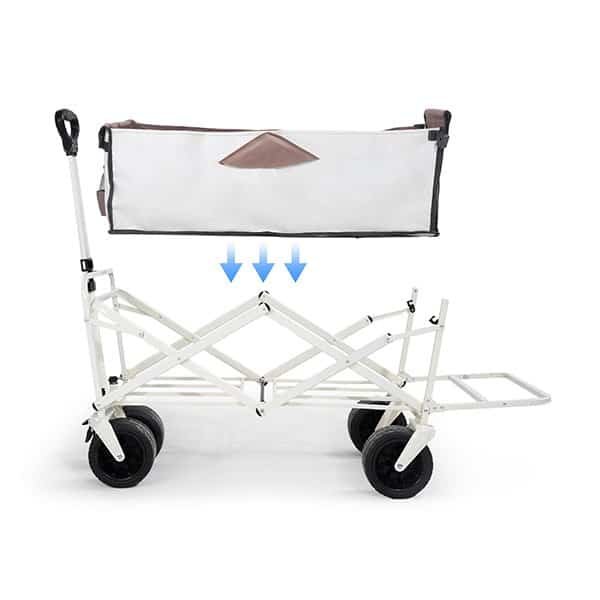
- ファブリックパターン: ワゴンのボディには900D二重層オックスフォードを使用し、カスタムのトーンオンジオメトリックプリントを施しました。ロゴではなく、視覚的な知的財産として機能する反復パターンです。これはロータリースクリーン印刷で実行され、デジタル熱転写よりも摩耗に強く、組み立て時の縫い目ずれを防ぐため、1メートルあたり2mm以下のパターンずれという品質許容差を設定しました。.
- ホイールの美観: ホイールハブの色をフレームの粉体塗装に合わせ、TPEタイヤコンパウンドには微妙なブルーの着色を指定しました。これは些細に聞こえますが、製品写真がウェブサイトのグリッド上で5つの競合製品と並んだ際に際立つ、そういった細部なのです。.
共同設計プロセスは単一のプレゼンテーションではありませんでした。それは10日間にわたる3回の迅速なラウンドでした。最初に色の分割とパターンのスケールを示すデジタルレンダリング、次に実際のプリント試し刷りが施された物理的なファブリックスウォッチ、最後に複雑なチューブベンドにパウダーコートが均一に硬化したことを確認するための完全に組み立てられたフレームセクションです。各ステップは、バイヤーが想像したものと工場が納品するものとの間の潜在的なミスマッチを排除しました。これこそが真のマージン保護が存在する場所です—サプライヤーを絞ることではなく、陸揚げコストを食いつぶす手直しを排除することにあります。.
フェーズ2:プロトタイピングとサンプリング
3回のイテレーションは標準であり、例外ではありません—1回を省略すれば、コンテナ一杯の商品を賭けることになります。.
ほとんどの初回バイヤーは、1回のサンプルラウンドで完璧に仕上がると想定します。それは決してありません。このプロジェクトでは、クライアントは2つのSKUを必要としていました。標準的なシングル折りたたみワゴンと、頑丈なダブルデッカーです。どちらも共通のシャーシを共有していましたが、ホイール径、トレッドコンパウンド、ブレーキ機構が異なっていました。最初のプロトタイプは、クライアントの社内過酷テスト中に、砂利で欠けるPVCタイヤブロックで戻ってきました。その失敗は、3年間の混合地形での摩耗を48時間で再現するように設定された金華のパートナー工場のテストヤードで記録されました。ホイールとアクスルの隙間の品質公差は±0.3mmに設定されていましたが、最初のサンプルは負荷下で0.5mmにずれ、静的検査では見えない横方向のぐらつきを引き起こしましたが、80kgのギアを積載すると明らかになりました。.
-
- イテレーション1: サイドロックブレーキ付きPVCホイール。トレッドの欠けと、15%の傾斜コンクリート斜面での制動力不足により不合格。サイドロック機構は作動に23kgのペダル力を必要とし、平均的なユーザーには許容できませんでした。.
- イテレーション2: 工場は、アルミハブにEVAフォーム充填PUタイヤに切り替え、ジョギングストローラーのエンジニアリングに着想を得たデュアルドラムブレーキシステムと組み合わせました。ブレーキ作動力は8kgに低下しました。しかし、ブレーキケーブルの配線経路が平らに折りたたむ機構に干渉し、ピンチポイントを生み出しました。サンプル承認は一時停止されました。.
- イテレーション3: ブレーキケーブルを内側のチューブチャンネルに移設し、耐摩耗性のためにナイロン被覆ステンレスワイヤーを使用。タイヤは48時間の走行後、2mm未満のトレッド損失で砂利テストに合格しました。ホイールとアクスルの隙間は、パイロットバッチから抜き取った30サンプルユニット全体で0.25mmを維持しました。クライアントは3番目のサンプルを承認し、承認された仕様は量産のための固定品質公差ベースラインとなりました。.
3週間の承認期間が守られたのは、各イテレーションが構造化されたフィードバックループを引き起こしたからです。48時間の加速テスト、当日のビデオ記録、そして次の裁断・縫製やツーリング調整の前の24時間のエンジニアリングレビューです。宅配のターンアラウンドは4日を超えませんでした。その規律はスピードではなく、曖昧さを排除することでした。すべての拒否には、「品質を改善してください」ではなく、具体的なエンジニアリング修正が伴いました。サンプル承認ログに署名されるまでに、クライアントは完全に検証されたBOMと、最終的な素材選択を反映した確定FOB上海価格を持っていました。これは、サンプリング後に再交渉が必要となる一般的な見積もりではありませんでした。.
フェーズ3:量産と品質管理
1 SKUあたり500ユニットは需要ではなく、利益率を守るためのてこです。.
ほとんどのサプライヤーは1,000ユニットのMOQを提示し、譲歩不可と装います。それは交渉上の姿勢であり、生産上の制約ではありません。このプロジェクトでは、工場の標準MOQは、900D素材を使用したカスタムプリント折りたたみワゴンに対して1SKUあたり800ユニットでした。 オックスフォード生地 そして粉体塗装されたスチールフレーム。クライアントは2つのSKU(標準モデルと、アップグレードされたTPEタイヤとフットブレーキを備えたヘビーデューティーバージョン)を必要としていました。各800ユニットの場合、前払いの現金支出はシーズンのオープン・トゥ・バイ予算の22%を消費していたでしょう。それは1ユニットも棚に並ぶ前に利益率を殺してしまいます。.
本当の議論は、工場が500ユニットを生産できるかどうかではありません。より少ないロットを彼らの時間に見合うものにするために、あなたが何を彼らに与えるかです。ここでは、妥協案は統合された材料発注でした。両方のSKUは同じ600Dオックスフォードボディ生地を共有し、フレームのゲージとホイールアセンブリだけが異なりました。両方のSKUのパターンを1回の生地生産で印刷することに同意することで、工場の材料廃棄物は十分に減少し、受け入れる 1SKUあたり500ユニット 追加料金なしで。クライアントはまた、最初の生産バッチに対して4%の品質許容差を受け入れました。つまり、最大4%のユニットが、軽微な外観のばらつき(糸の色の違い、印刷位置の2mm以内のずれ)があっても、拒否の対象にならないことを意味します。その許容差は印刷されたソフトグッズでは標準であり、生産管理者に余裕を与えました。これら2つの譲歩—生地のバッチ化と文書化された許容差—が、1,000ユニットのMOQを500に変えるのです。.
-
- 生地のバッチ化: ベース素材を共有する複数のSKUを1回の生産工程にまとめ、セットアップの無駄を減らし、SKUあたりの数量を少なくすることを正当化します。.
- 品質許容差の合意: 生産前に、許容可能な外観のばらつきの閾値(例:印刷位置、糸の張り)を文書で定義します。これにより、主観的な拒否を防ぎ、小ロットにおける工場の利益率を保護します。.
- FOB価格調整: 本注文において、工場出し条件ではなく上海FOB条件を採用することで、工場がトラック統合を管理できるようになりました。彼らが得たわずかな運賃マージンが、少量生産を補填しました。.
このフェーズの後半は、アマチュア調達が崩れるところです:小売りのコンプライアンス文書。顧客のワゴンは、すべてのソフトラインおよび混合素材のハードグッズにBSCI監査認証を要求する全国チェーン店の棚に並ぶ予定でした。有効なBSCIレポートがないと、コンテナは配送センターで滞留し、1パレット1日あたり$500のチャージバックが発生し始めます。.
金华の折りたたみワゴン工場は、 ISO 9001:2015 CE認証を保有していましたが、注文開始時に有効なBSCI監査がありませんでした。これはよくあることです。多くの工場は、小売り契約の間にBSCIを失効させます。なぜなら、監査には$3,500~$5,000の費用がかかり、2年後に期限切れとなるからです。調達チームは、公認機関を通じて第三者BSCI監査を調整し、監査範囲は労働時間、安全プロトコル、環境管理をカバーしました。工場はB評価で合格し、小売業者のベンダーコンプライアンスポータルを満たしました。監査報告書は最初の生産開始の10日前に提出されたため、スケジュールの遅れは生じませんでした。.
これを読んでいる小売りのカテゴリーマネージャーへ:サプライヤーの既存の認証が、バイヤーのコンプライアンスリストに一致するとは決して想定しないでください。実際の証明書PDFを早期に要求してください—サンプル承認の際に、POが発行された後ではなく。監査が必要な場合、新しいBSCIまたはSMETA監査のために3〜4週間と$4,000の予算を組んでください。このプロジェクトでは、そのコストを調達サービスを通じて吸収しましたが、工場との関係を直接管理している場合、それはあなたが負担する項目です。.

フェーズ4:物流と通関
物流をマスターすることで、40%のマージン目標達成への道が開けます。.
$50,000の注文は、税関の倉庫に置かれるまで損失にはなりません。プライベートラベルの折りたたみワゴンラインを立ち上げる米国の小売業者にとって、利益のある立ち上げと在庫の滞留在庫の大惨事の差は、物流の処理にかかっています。私たちは上海FOBから直接海上貨物を調整し、約20日でロサンゼルスに届く確立された航路を利用しています。この予測可能な輸送期間により、バイヤーは数ヶ月前に棚スペースやマーケティングキャンペーンを計画できます。.
通関手続きは、アマチュア調達代理店がミスを犯すところです。必要なすべての輸出書類—商業送り状、梱包リスト、 BSCI監査コンプライアンス—を事前に準備することで。 書類—当社は国境通過をスムーズにします。複雑な国際コンプライアンス要件に対してエンドツーエンドのガイダンスを提供し、季節の小売リリースを狂わせる可能性のある予期せぬ関税や遅延を防止します。.
-
- 海上貨物のタイムライン: FOB上海からロサンゼルス港まで約20日で、正確な小売カレンダーへの統合が可能です。.
- 書類準備: 輸出書類は事前に完全に準備され、税関の保留やデマレージ料金を防ぎます。.
- コンプライアンス確認: “「BSCI認証折りたたみワゴンサプライヤー」のステータスは、出荷前に確認され、主要な米国の小売チェーンを満たします。.

結果
15,000ユニットが180日間で、継続的な40%マージンで販売されました—これは運ではなく、設計されたサプライチェーンによるものです。.
2つのSKUからなるワゴンラインは3月に発売され、最初の生産ロットは8月までに完売しました。15,000ユニットで、消化率は3ヶ月以内に再注文の議論を引き起こしました—6ヶ月ではありません。そのような速度はハードラインのアウトドアでは稀であり、大幅な値引きから来たものではありません。小売価格は堅調に維持され、店頭で直接比較できる商品がない製品に支えられていました。カスタム生地印刷と独自のフレームカラーにより、顧客がスマートフォンを取り出して同じワゴンをオンラインで$20安く見つけることはできませんでした。.
その価格決定力が40%マージンを保護しました。$149.99の値札から逆算します: FOB上海 最初の注文では、カスタム印刷があっても1ユニットあたり$55を十分に下回り、SKUあたり500個の初期トライアルに対してMOQペナルティは課されませんでした。海上貨物、米国税関通関、倉庫への運搬は、1ユニットあたり合計で約$18追加されました。残りは小売計算ですが、重要な数値はランディングコスト比率です。小売価格の49%未満に留まりました。中国からのほとんどの輸入ワゴンは、ブローカー費用、パレット化、および避けられない品質不合格控除を考慮すると、小売価格の60%に近くなります。これはここでは発生しませんでした。.
-
- 1ユニットあたりのランディングコスト: 約$73(FOB + 運賃 + 関税)、$149.99の小売価格に対して。隠れたコンプライアンス費用はなく、BSCI認証は工場で処理され、依頼者が雇う必要のある第三者監査人によるものではありません。.
- 在庫回転率: フルコンテナは4週間以内にDCを通過しました。値下げも、オフプライスチャネルへの転送もありませんでした。在庫効率だけで、カテゴリレベルのマージンに2〜3ポイント追加されました。.
- 再注文ウィンドウ: 3ヶ月。再注文は夏のピーク前に来て、クライアントはさらに3,000ユニットに対して7%低いFOBを交渉できました。その2回目の生産は、小売価格に触れることなく、マージンを42%超に押し上げました。.
品質許容範囲はサンプル承認時に設定され、生地の色堅牢度で±5%、溶接ポイントで±2mmでした。これらは、小売のQA監査人が厳しいが実施可能と指摘する数値です。工場はそれを達成しました。港で保留されたユニットやDC入荷時に拒否されたユニットはゼロでした。バックエンドのクレジットやRMA処理でマージンを食いつぶす典型的な2〜3%の不良率と比較してください。そのノイズを回避することが、紙上の良好なマージンをP&Lラインでの実際の利益に変えるのです。.
小売カテゴリマネージャーにとっての教訓は、単に40%の見出しだけではありません。マージンが持続可能であり、コスト削減ではなく製品差別化に基づいて構築され、再注文サイクルが通常の6〜9ヶ月から3ヶ月に短縮されたことです。それは、サプライヤーのインフラが一度限りの購入ではなく、プラノグラムの拡張をサポートできるというシグナルです。.
結論
このケースの小売業者は、6ヶ月以内に15,000ユニットに対して40%のマージンを確保し、90日目に到着した再注文はまだ考慮していません。次回のワゴンプログラムでサンプル反復フェーズをスキップすると、小売シーズンが3ヶ月経過した時点で、ホイールハブが固着したり生地が色あせたりするユニットのコンテナを抱え込むリスクがあります。それは$75,000〜$120,000の死に筋在庫が流通センターに眠り、競合他社の差別化されたSKUがあなたが占有する予定だった棚スペースを奪うことになります。.
下の製品ページを確認して、デザインからFOB出荷まで45日でこのプログラムを納品した同じ工場ネットワークに対して、独自のカスタムワゴン仕様をマッピングし始めてください。.
よくある質問
プライベートラベルのワゴンに必要なMOQはいくらでしたか?
米国の小売業者は、SKUあたり500台を交渉し、工場の効率性と管理可能な試作運用とのバランスをとった。MOQはカスタマイズの複雑さに応じて変動する可能性がある。材料とフレームのカスタマイズを確定した後、MOQを確定すること。.
サンプリングプロセスにはどのくらいの時間がかかりましたか?
この小売業者は、3回のサンプル改良を経て3週間で承認を得ました。これは特注ワゴンとしては現実的なペースです。改良を1回省略すると、現場での不具合が発生するリスクがあります。承認の抜けを防ぐため、サンプリングに3~4週間の予算を組んでください。.
そのワゴンはどの品質基準を満たしていましたか?
この製品は、BSCI監査を受け、ISO 9001認証を取得した工場で生産され、小売り対応のコンプライアンスを保証しています。現地検査報告書もご用意しております。PO発行前に最新のBSCIおよびISO報告書を請求してください。.
生産リードタイムはどれくらいでしたか?
標準生産サイクルは30~45日で、これはケーススタディのタイムラインでも確認されています。この期間は発注数量や部品の入手状況により変動します。安全のために、注文から米国への納品までに60日の余裕を持たせてください。.
物流と通関はどのように処理されましたか?
出荷はFOB上海で行われ、20日間の海上輸送でLAに向かい、Kelylandが通関手続きのガイダンスを提供しました。彼らは輸出書類を管理するので、書類で詰まることはありません。早期にFOB条件と米国側のブローカーの責任を確認してください。.

 English
  Español
  Deutsch
  Français
  Português do Brasil
  Русский
  العربية
  한국어
한국어  日本語
日本語