...

テント工場の生産能力計算:リードタイム対MOQ

読書時間: 9分  |  単語数 2359

Tent factory capacity directly determines whether you achieve peak-season sell-through rates or face catastrophic stockouts that destroy margins and brand reputation. For retail category managers, the operational pain point is stark: balancing tight lead times against restrictive minimum order quantities (MOQs) without sacrificing quality consistency. Miscalculate this equation, and you risk either empty shelves during your most profitable quarter or warehouses choked with overstocked tents that slash inventory turnover and invite hidden carrying costs.

This guide delivers a definitive technical standard operating procedure for decoding tent factory capacity dynamics. We’ll dissect the mathematical relationship between production lead times and MOQ thresholds, providing you with calculable formulas to assess true manufacturing throughput, quantify order optimization sweet spots, and build resilient inventory models. By mastering these calculations, you’ll transform seasonal planning from reactive guesswork into a data-driven strategy that protects margins, secures supply continuity, and aligns factory output with real-world demand curves.

Tent Factory Capacity Variables

Factory capacity claims typically assume single-shift operations, but production can increase 40-60% with second shifts during peak seasons.

Factory Size

Professional tent manufacturing facilities range from 5,000-20,000 square meters. Our core production network spans three specialized factories: a Camping Tent & Tarp facility in Ningbo (800,000 units annually), a Glamping Tent factory in Shaoxing (300,000 units), and a Roof Top Tent plant in Jinhua (500,000 units). Combined capacity reaches 1.6 million tents yearly.

Sewing Machine Capacity

Each production line houses 40-60 high-speed industrial sewing machines. Standard models achieve output of 500-1,000 units daily per line. The limiting factor isn’t machine count but specialized labor availability. When waterproof coatings are involved, production rates decrease by 25-30% due to required drying time between operations.

Workforce Configurations

Peak season capacity increases by 40-60% when factories implement second shifts, though labor costs rise 15-20%. The critical bottleneck is seam sealing specialists. Waterproofing operations require specifically trained workers and controlled drying space, often limiting daily output by 30-40% regardless of sewing capacity available. Multi-stage quality control adds 5-7 days to lead time but reduces defect rates from 8-12% to under 2%.

Tent Complexity Effects

A 20% increase in tent complexity can reduce production speed by 50% while raising costs by 35%. Basic 3-season tents with simple pole structures move through production 3x faster than specialized designs with multiple rooms or advanced ventilation systems. Material choices affect capacity significantly – 70D ripstop nylon processes 25% faster than heavier canvas materials, while silicone-coated fabrics require 15% more handling time than PU-coated alternatives due to their delicate nature.

Seasonal Demand Patterns

Retail buyers should order 4-6 months before their selling season begins. Material pre-positioning can reduce lead times by 15-20% but requires 60-90 days of demand forecasting and typically increases material costs by 15-25%. Most factories operate at 70-80% capacity during off-peak months (August-November) and reach 100-120% with overtime during Q1-Q2 production surges. Without seasonal planning, retailers face either 30-45 day delays or 15-25% price premiums for rush orders during peak manufacturing periods.

MOQ Structures for Tent Manufacturing

Tent lead times range 30-60 days based on type complexity, waterproofing processes, and customization levels, with material availability acting as the hidden accelerator or bottleneck.

Lead Times by Tent Category

Production timelines vary dramatically by tent architecture due to specialized labor and material requirements:

  • Pop-up/Automatic: 30-35 days (simplest construction, minimal seams)
  • Trekking/Beach: 35-40 days (moderate complexity, standard coatings)
  • Roof Top/Tailgate: 45-55 days (reinforced stitching, mounting hardware integration)
  • Glamping (Bell/Yurts): 50-60 days (specialized fabrics, structural poles, extended seam sealing)

Complexity-driven differences account for 300% production speed variations – a rooftop tent requires triple the labor hours of a pop-up model. Factories running second shifts during peak season (March-May) gain 40-60% capacity but incur 15-20% labor premiums.

Waterproofing Processes Time

Seam sealing is the industry’s hidden bottleneck, consuming disproportionate time despite minimal labor content:

  • Taped Seams: 3-5 days (automated taping + 24hr drying)
  • Liquid Seam Sealer: 5-7 days (manual application + 48hr curing in humidity-controlled rooms)
  • Silicone Coating: 7-10 days (multi-layer application + UV stabilization)

Waterproofing facilities constrain output by 30-40% compared to sewing capacity. A 20,000 sqm factory producing 8,000 tents monthly still requires 2,500 sqm dedicated drying space with dehumidifiers – skipping this step risks seam failures in field conditions.

Custom Printing Time

Brand customization adds linear time penalties based on technique complexity:

  • Silk-Screen (simple logos): +3 days (requires color separation screens)
  • Digital Printing: +5-7 days (higher resolution but slower throughput)
  • Fabric Dyeing: +7-10 days (Pantone matching + batch consistency testing)

Multi-color artwork increases lead time exponentially – a 3-color logo requires three separate printing/drying cycles. Rush orders incur 25-50% surcharges and risk color variations between batches.

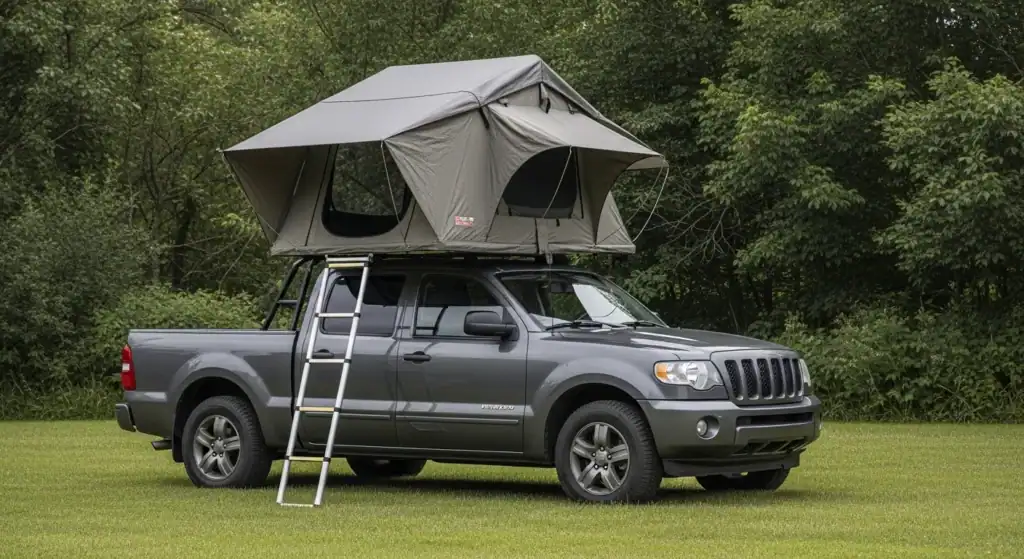
A gray truck with a rooftop tent set up for camping, with a ladder leaning against the truck.
A gray truck equipped with a rooftop tent for outdoor adventures.

Quality Assurance Time

Multi-stage inspection is non-negotiable for retail standards but directly impacts production velocity:

  • Material Inspection: +1 day (tensile strength/coating adhesion tests)
  • In-Process Checkpoints: +3 days (seam strength, pole fitting, zipper operation)
  • Final Inspection: +1-2 days (ISO 5912 compliance + random drop testing)

This 5-7 day QA investment reduces defect rates from 8-12% (industry average) to under 2%, preventing retail returns that erode margins by 15-30% per incident. Skipping QA accelerates production but guarantees 1-in-10 tents failing field conditions.

Material Availability Effects on Lead Time

Raw material access determines baseline production speed – shortages create cascade delays:

  • Standard Materials: 30-35 days (70D ripstop nylon readily available)
  • Specialty Fabrics: +10-15 days (silicone-coated 40D requires 8-week mill orders)
  • Material Pre-Positioning: 15-20% faster (requires 60-90 day forecast commitment)

Pre-positioning reduces lead times but demands premium material costs (15-25% above spot pricing) and carries inventory risk. Ordering without forecasting during peak season extends lead times by 50-100% as factories queue competing orders.

テントタイプ Complexity Level Base Lead Time (Days) Adjustment Range (Days) Estimated Total Lead Time (Days)
ポップアップ 低い 30 0-5 30-35
Automatic ミディアム 30 5-15 35-45
Inflatable 高い 30 10-20 40-50
Roof Top 高い 30 10-20 40-50
Tailgate ミディアム 30 5-15 35-45
Trekking ミディアム 30 5-15 35-45
グランピング 高い 30 10-20 40-50
ビーチ 低い 30 0-5 30-35
Hunting Blinds ミディアム 30 5-15 35-45
Ice Fishing ミディアム 30 5-15 35-45

Streamline Your OEM Manufacturing.
Learn about our end-to-end OEM process, factory vetting, and international sourcing for outdoor brands.

Explore Our Services →

CTAイメージ

Balancing Seasonal Demand with Factory Capacity

High-quality tent factories run at 70-80% capacity during Q1 but spike to 120-140% during peak season, forcing strategic planning 6 months ahead.

Aligning Seasonality with Production Schedules

Tent production cycles operate in direct opposition to retail selling seasons. Most manufacturers build inventory during Q1-Q2 for Northern Hemisphere summer camping demand, creating a critical capacity crunch from February through May. Most retail category managers don’t realize that their competitors’ orders in January directly impact their factory’s ability to deliver April orders.

  • Peak Production Window: February-May accounts for 55-65% of annual tent production volume across all quality tiers.
  • Capacity Utilization: Quality factories operate at 70-80% capacity October-January, spiking to 120-140% February-May with shift extensions and weekend production.
  • Production Bottleneck: Waterproofing seam sealing limits daily output by 30-40%, not sewing capacity. Each waterproofing bay processes 120-150 tents daily versus 300+ sewing capacity.

When you receive a 45-day lead time quote in March, it includes 8-12 days of queue time for waterproofing stations that are operating at maximum capacity. This bottleneck explains why orders placed in January sail through production in 30 days while identical orders in May take 55 days, even with factory overtime.

Advance Planning Window

Most tent manufacturers claim standard lead times of 30-45 days, but this applies only to off-peak periods. For spring/summer delivery, the effective planning window extends to 4-6 months before your selling season. The most successful retailers don’t just place orders early—they secure production slots by December for next season’s products.

  • Order Timing Premium: December-January orders typically receive 15-20% production priority versus March-April orders for the same delivery date.
  • Material Pre-Positioning: Requires 60-90 days of demand forecasting and adds 15-25% to material costs but reduces lead times by 15-20%.
  • Peak Season Penalty: Orders placed after March 1 typically incur 10-15% rush fees for June delivery, with MOQ requirements increasing by 25-40%.

The hidden advantage of early ordering extends beyond simple capacity reservation. When you commit in December, your factory can bulk-order specialized materials (like 70D ripstop nylon with 3000mm hydrostatic head rating) at 18-22% lower cost than same materials purchased during peak season shortages.

Rooftop tent setup on a vehicle with a ladder, in a scenic outdoor setting with trees and mountains at sunset
A rooftop tent setup for camping, offering a cozy outdoor experience in nature.

Factory Capacity Allocation Data

Factory capacity claims require careful interpretation. A 20,000 square meter facility advertising “10,000 tents monthly capacity” is likely basing this on single-shift operations during off-peak months with simple tent designs. The true operational capacity during your critical selling season requires a different calculation.

  • Base Capacity: A 20,000 sqm facility with 60 sewing machines produces 7,000-8,000 basic tents monthly on single shifts.
  • Complexity Impact: Multi-room tents with 3000mm+ waterproof ratings reduce production speed by up to 300% versus basic single-pole designs.
  • Shift Extension Impact: Adding a second shift increases capacity by 40-60% at a 15-20% labor cost premium during peak season.
  • Quality Control Impact: Multi-stage QC adds 5-7 days to lead time but reduces defect rates from 8-12% to under 2%, critical for retail brand protection.

What manufacturers rarely disclose: their “capacity” figures typically exclude the 2-3 week factory shutdown for Chinese New Year (late January-early February), which coincides exactly with when you need to place peak season orders. Savvy retailers build this 20% capacity gap into their planning rather than discovering it when orders are already overdue.

Early Order Placement Effects

Early order placement creates a cascading series of competitive advantages beyond simply securing production time. When you commit orders 4-6 months in advance, you’re not just buying capacity—you’re buying factory prioritization, material cost savings, and quality assurance that late-order competitors cannot access.

  • Material Cost Advantage: Early orders lock in material costs 12-18% below peak season pricing when fabric shortages drive up costs by 25-30%.
  • Quality Control Priority: Early-placed production batches receive 40-50% more QC inspection time versus rushed orders, directly reducing retail return rates.
  • MOQ Flexibility: Factory partners often reduce MOQ requirements by 25-35% for clients who provide 6-month order projections versus last-minute requests.

The strategic value of early ordering compounds when calculating inventory carrying costs. While inventory sitting in your warehouse for 3-4 months before selling season creates carrying costs of 2-4% monthly, this expense is typically dwarfed by the 15-25% cost premium and higher defect rates associated with rush orders that arrive late for peak selling windows.

結論

Strategic tent factory capacity planning directly impacts your ability to balance quality consistency, competitive pricing, and seasonal readiness. By understanding how MOQ thresholds (100-500 units) interact with lead time variables (30-45 days) and material pre-positioning tradeoffs, you can mitigate hidden costs, reduce defect rates below 2%, and prevent stockouts that erode margins and brand reputation. This data-driven approach transforms production complexities into actionable inventory advantages.

For tailored capacity analysis leveraging flexible manufacturing networks and multi-stage quality assurance, contact our sourcing specialists to explore production scenarios aligned with your retail cycle requirements.

よくある質問

What’s the difference between MOQ & EOQ for tents?

MOQ (Minimum Order Quantity) refers to the smallest quantity of tents a client can order from Kelyland Outdoors, which ranges from 50-100 pieces for specific items to 300-1,000 pieces for standard models, ensuring production efficiency. EOQ (Economic Order Quantity) is a calculation that determines the optimal order size that minimizes total inventory costs, balancing ordering expenses with storage costs, which Kelyland’s account managers can help clients determine based on their specific needs. While MOQ represents a factory’s production minimum requirement, EOQ is a client-specific financial calculation that optimizes procurement economics over time.

How to calculate lead time for tent manufacturing?

Lead time for tent manufacturing at Kelyland Outdoors is calculated based on a standard production window of 30-45 days from order confirmation to shipment, encompassing material sourcing, production, quality control, and packaging phases. The calculation factors in several variables including order timing, product complexity, quantity ordered, and level of customization required, with more complex customizations potentially extending the timeline beyond the standard window. Our operations team provides precise lead time calculations during the project planning phase, ensuring accurate scheduling for our B2B clients’ inventory management and product launch strategies.

How do seasonal demands affect tent production capacity?

Seasonal demands significantly impact tent production capacity, with peak camping seasons in North America and Europe creating higher order volumes that Kelyland Outdoors manages through its network of 17 core strategic factories and over 200 manufacturing partners. This extensive factory network, including specialized facilities in Ningbo, Shaoxing, and Jinhua with annual tent production capacities of 300,000-800,000 units, allows for flexible production scheduling to accommodate seasonal fluctuations. Our robust supply chain infrastructure and advanced planning capabilities enable us to scale production up or down according to seasonal demands while maintaining the standard 30-45 day lead time for our global B2B clients.

What factors determine tent factory MOQ requirements?

Tent factory MOQ requirements at Kelyland Outdoors are determined by several key factors including material costs, production setup requirements, customization complexity, and factory production capabilities, with MOQs ranging from 50-100 pieces for specific items to 300-1,000 pieces for standard tent models. The type of tent significantly influences MOQ, with more complex products like our specialized Glamping or Roof Top Tents typically having higher minimum quantities due to specialized manufacturing processes. Additionally, customization levels impact MOQ requirements, with extensive OEM/ODM modifications such as fabric dyeing, custom printing, or specialized frame materials often requiring larger order quantities to justify production setup costs and ensure economic viability for our manufacturing partners.

How does tent material selection impact production lead time?

Tent material selection significantly impacts production lead time at Kelyland Outdoors, as specialized materials like custom-dyed fabrics, proprietary coatings such as Black Coating for superior UV block, or premium frame materials like Carbon Fiber and PVC/TPU Air Tubes may require extended procurement or specialized manufacturing processes. The choice between standard materials like Polyester or Oxford versus premium options such as Silicone-coated Nylon or specialized frame materials can add 5-15 days to our standard 30-45 day production timeline, depending on material availability and customization complexity. Our experienced team provides material selection guidance that balances performance requirements with production scheduling, ensuring optimal lead times while meeting client specifications for their private-label tent products.

シェアする

著者写真

こんにちは、ケリーランドアウトドアーズの創設者、ハンケです。12年以上にわたり、グローバルビジネス向けにキャンプギアをカスタマイズしてきました。あなたのアウトドアの成功の新しい章を始めるために、今すぐ私にご連絡ください。

リンク・ウィズ・ミー >>

トーク・ウィズ・ミー

即時見積もり