 콘텐츠로 건너뛰기
에어 텐트 PSI는 바이어가 공급업체, 예산, 또는 생산 슬롯을 승인하기 전에 확정해야 할 첫 번째 체크포인트입니다. $50,000 규모의 에어 텐트 주문이 9월에 창고에 도착했습니다. 10월까지 리테일 카테고리 매니저는 붕괴 불만 12건을 기록했습니다. 공장은 사용자 과실을 탓했고, 최종 고객은 제품을 탓했습니다. 실제 문제는? 광저우 쇼룸에서 22°C에서 형태를 유지하던 양산 전 샘플이 바이에른의 캠프장에서 8°C에서 무너진 것이었습니다. 그 차이는 약 1.4 PSI였고, 이는 정상적인 저온 압력 손실 범위에 충분히 들어가지만, 단단한 빔을 처지는 위험 요소로 바꾸기에는 충분했습니다.
샘플 승인과 양산 성능 사이의 그 간극에 대부분의 소싱 실수가 존재합니다. 나쁜 소재나 조잡한 봉제가 문제가 아닙니다. 그런 것들은 QC 검사 중에 쉽게 잡아낼 수 있습니다. 숨은 위험은 온도 범위에 따른 압력 거동이며, 대부분의 바이어는 컨테이너 물량을 확정하기 전에 이를 테스트하지 않습니다.
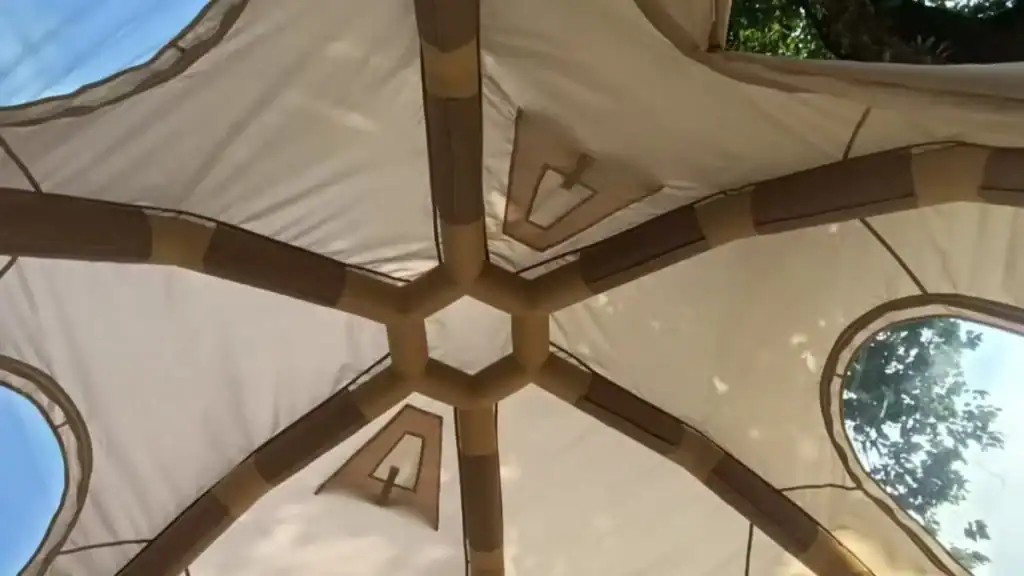
왜 당신의 에어 텐트는 밤에 처지는가
‘누출’ 불만 10건 중 9건은 추운 밤의 압력 손실이지 구멍이 아닙니다.
당신은 해질녘에 에어 텐트를 설치하고, 빔을 정격 PSI까지 펌핑한 뒤 밤새 지퍼를 잠급니다. 새벽 3시가 되면 한 빔이 약해졌습니다. 측벽이 안쪽으로 처집니다. 첫 번째 본능은 구멍입니다. 대부분의 경우 그 본능은 틀렸습니다.
저온 압력 손실 vs. 실제 누출
공기는 온도가 내려가면 수축합니다. 일반적인 10°C 야간 온도 변화는 내부 빔 압력을 약 1 PSI 감소시킵니다. 그 단 1 PSI의 감소는 10 PSI에서 제대로 팽창된 TPU 빔을 9 PSI의 처지는 빔으로 바꾸며, 구조가 손상된 것처럼 보이게 만들기에 충분합니다.
실제 누출은 다르게 행동합니다. 온도와 관계없이 지속적으로 압력이 빠집니다. 해질녘에 빔에 표시를 하고 일출에 다시 확인하면, 누출은 온도만으로 설명되는 것 이상으로 꾸준한 감소를 보여줍니다. A 추운 밤의 압력 손실은 기온이 이른 아침에 평준화되면 안정됩니다.
압력-온도 계산, 단순화
그 관계는 실질적으로 이상 기체 법칙을 따릅니다. 주변 온도가 10°C 내려갈 때마다 빔 압력이 1 PSI 내려간다고 예상하세요. 25°C 저녁 공기에서 12 PSI로 팽창된 텐트는 새벽에 기온이 15°C에 도달하면 대략 11 PSI로 읽힐 것입니다.
그 계산은 보증 청구에 중요합니다. 고객이 무너진 빔을 보고했는데 온도 변화를 기록하지 않고 최종 압력 수치만 확인한다면, 정상적인 물리 현상과 결함 있는 실밥을 구분할 수 없습니다.
TPU/PVC 저온 특성
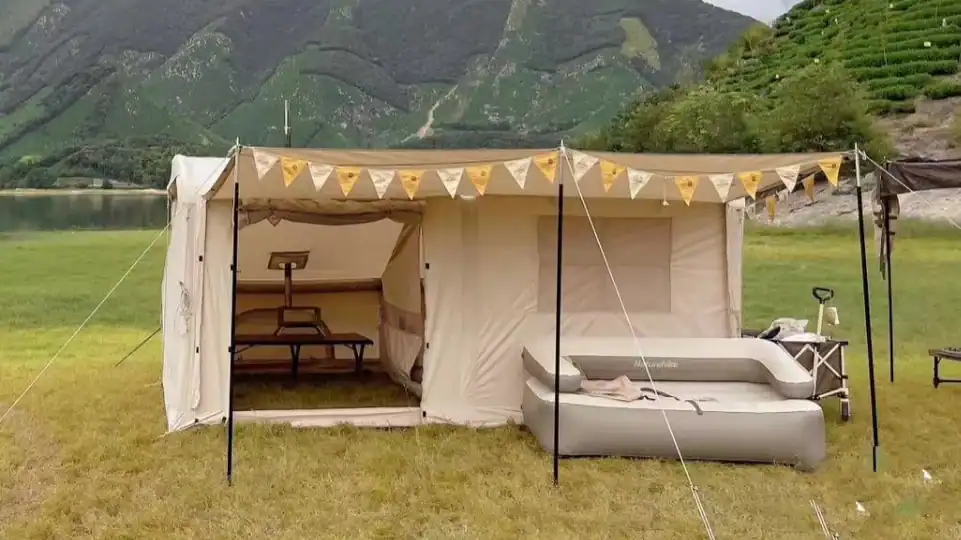
빔 유형별 에어 텐트 PSI 사양
PSI 사양은 빔 재질에 따라 다릅니다 — 추측하지 마십시오.
빔 재질이 작동 압력 범위를 결정합니다. TPU 빔은 더 가볍고 8–12 PSI에서 작동합니다. PVC 코팅 빔은 더 무겁고 15–18 PSI에서 작동합니다. 이 둘은 서로 호환되지 않습니다. TPU 빔을 18 PSI로 팽창시키면 이음매 파손 위험이 있으며, PVC 빔을 8 PSI로 작동하면 하중 상태에서 처집니다.
빔 재질별 PSI 비교
-
- 250g TPU(경량): 작동 범위: 8–10 PSI. 파열 테스트: 정격 압력의 1.5배(12–15 PSI). 무게가 내구성보다 더 중요한 1~2인용 백패킹 텐트에 가장 적합합니다.
- 400g TPU(표준): 작동 범위: 10–12 PSI. 파열 테스트: 정격 압력의 1.5배(15–18 PSI). 4인용 가족 텐트에 일반적으로 사용됩니다. Kelyland의 에어 텐트 라인업은 대부분의 중급 모델에 이 사양을 사용합니다.
- 650g PVC 코팅(헤비듀티): 작동 범위: 15–18 PSI. 파열 테스트: 정격 압력의 1.5배(22–27 PSI). 글램핑 텐트 및 이벤트 셸터에 사용됩니다. 더 높은 벽 두께는 재료 피로 없이 반복적인 팽창 사이클을 견딥니다.
빔 유형을 혼용할 때의 위험은 실재합니다. 한 바이어가 4인용 가족 텐트에 PVC 빔을 조달하면서 샘플 승인 양식에는 TPU의 10 PSI를 지정했습니다. 공장은 사양대로 제작했지만 빔은 가벼운 비 하중에서 처졌습니다. 압력 허용 오차의 차이는 이론적인 문제가 아닙니다. 이는 텐트가 서 있는 것과 프레임이 무너지는 것의 차이입니다.
공장 QC가 정격 PSI를 설정하는 방법
정격 PSI는 매뉴얼에서 가져온 것이 아닙니다. 이는 다음을 통해 결정됩니다 파열 테스트:공장에서는 빔이 파손될 때까지 공기를 주입한 다음 작동 PSI를 해당 파손 지점의 60~65%로 설정합니다. Kelyland의 17개 핵심 공장 네트워크는 모든 빔 유형에 대해 이 프로토콜을 따릅니다. 각 배치는 출하 전에 정격 압력의 1.5배로 테스트됩니다. 빔이 1.5배에서 파손되면 전체 배치가 플래그 지정되고 재테스트됩니다.
The printed PSI number on the valve is not decorative. It’s a factory-set target that ensures beam consistency across the production run. If the valve says 10 PSI, the beam was tested to 15 PSI before leaving the line. A sagging beam in the field means someone ignored that number — either under-inflated at setup or the pump gauge was off by 2+ PSI.
Batch Pressure-Drop Reports for Importers
Importers should request a 24-hour pressure-drop report before approving mass production. The test is simple: inflate a sample beam to rated PSI, let it sit for 24 hours at 20°C, and measure the remaining pressure. A drop of 0.5 PSI or less is normal. A drop of 1 PSI or more indicates valve seepage or material porosity — both will escalate into overnight sagging in the field.
Kelyland’s inflatable tent factory provides these reports on request. The QC team logs each beam’s starting PSI, ending PSI, ambient temperature, and humidity during the test. The reports are matched to batch numbers so you can trace a specific complaint back to the production week. This is not standard across all suppliers — most will offer a single sample test and call it good. For a seasonal buy of 500+ units, batch-level data is the only way to confirm that QC consistency holds across the run.
The cost of skipping this step is predictable. A buyer who approved a 1,000-unit order based on a single sample test found that 12% of the beams dropped pressure overnight at 5°C. The factory blamed cold weather. The buyer absorbed the return costs. A batch pressure-drop report would have flagged the material porosity issue before the container shipped.
How to Inflate Air Beams Correctly (Pumps and Valves)
A gauge-less pump is the fastest way to burst an inflatable tent beam.
Most field failures in inflatable tents trace back to one thing: the pump. Not the beam, not the fabric — the pump. A buyer sources a tent with TPU 빔 rated for 10 PSI, hands it to an end user who grabs a high-volume electric pump with no pressure cutoff, and the beam blows at 18 PSI. That’s a 보증 청구가 that should never have happened.
Manual vs. Rechargeable vs. Electric Pumps
Manual pumps (hand or foot) give you tactile feedback — you feel resistance as pressure builds. They’re slow, but safe. Rechargeable pumps with a built-in gauge let you set a target PSI and stop automatically. That’s the sweet spot for most glamping tents and family camping models.
Electric pumps without gauges are dangerous. They push high volume fast, and if the operator walks away for two minutes, the beam exceeds rated pressure. The factory burst test threshold is 1.5x rated PSI — so a TPU beam rated at 10 PSI bursts around 15 PSI. An unregulated electric pump hits that in seconds.
고유량 밸브 vs. 나사식 밸브
밸브 유형에 따라 펌프 호환성이 결정됩니다. 고유량 밸브(보스턴 또는 군용 스타일이라고도 함)는 PVC 코팅 빔에 흔히 사용되는데, 큰 공기량을 빠르게 이동시키기 때문입니다. 15–18 PSI가 필요한 튼튼한 글램핑 텐트에 유용합니다.
나사식 밸브(TPU 에어 매트리스에 있는 것과 같은)는 더 단단히 밀봉되지만 호환 어댑터가 필요합니다. 혼용하면 연결부에서 천천히 새거나 전혀 밀봉되지 않습니다. Kelyland에서 공급하는 모든 에어 텐트에는 목표 PSI와 호환 펌프 유형을 모두 명시하는 밸브 표시가 있습니다.
추운 날씨에서 게이지 없는 펌프의 위험
추운 날씨는 게이지 없는 펌프 사용의 위험을 가중시킵니다. 20°C에서 단단하다고 느껴지는 정도로 공기를 주입한 후, 밤새 온도가 5°C로 떨어지면 압력은 10°C당 약 1 PSI 감소합니다.
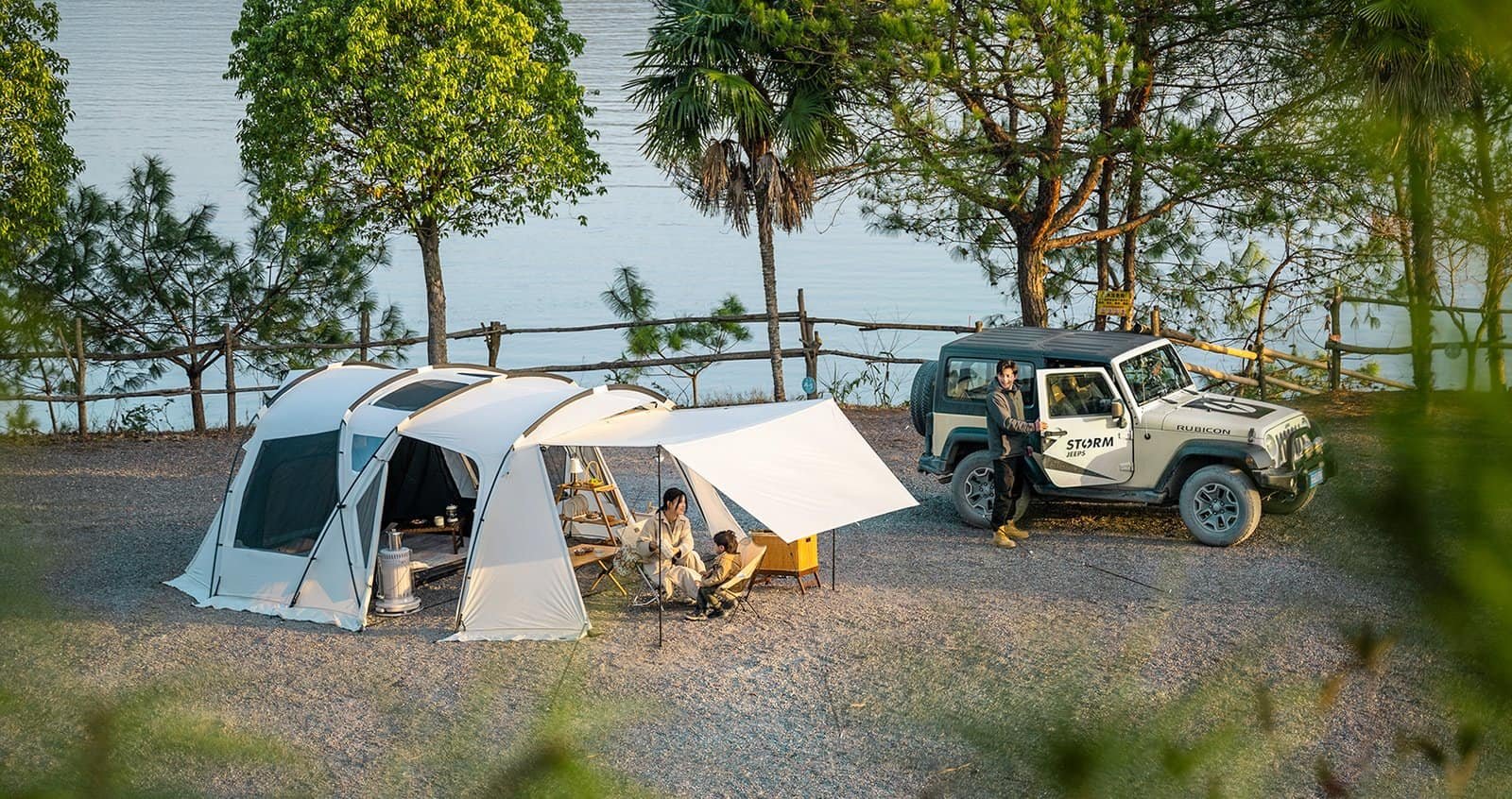
현장 트러블슈팅: 누출인가 아니면 단순한 추위인가?
‘누출’ 불만 10건 중 9건은 추운 밤의 압력 손실이지 구멍이 아닙니다.
중형 아웃도어 체인의 소매 카테고리 관리자는 야간 처짐에 대한 현장 보고 3건이 접수된 후 $50K 에어 텐트 주문을 불량으로 분류한 적이 있습니다.
4단계 누수 vs. 저온 진단
보증 청구를 제기하거나 배치를 거부하기 전에 처진 빔에 대해 다음 4단계 점검을 수행하십시오. 첫째, 엄지손가락으로 빔을 누르십시오. 부드럽게 느껴지지만 형태가 단단히 유지된다면 구멍이 난 것이 아니라 공기압이 부족한 것입니다. 둘째, 캡을 제거한 상태에서 밸브에 귀를 기울이십시오. 쉿하는 소리가 없으면 능동적 누출 경로가 없다는 뜻입니다. 셋째, 모든 이음매와 밸브 베이스에 비눗물 용액을 분사하십시오. 거품이 나타나면 천공 위치를 확인해 줍니다. 넷째, 경험칙을 사용하여 팽창 PSI 목표치에서 야간 온도 강하를 차감하십시오. 대략 10°C 강하당 약 1 PSI가 손실됩니다.
결론
한랭 야간 압력 손실은 천공이 아니라 붕괴 컴플레인의 대부분을 차지합니다. 10°C 온도 강하가 약 1 PSI 손실을 의미한다는 것을 이해하는 바이어는 유령 같은 누수를 쫓는 것을 멈추고 대량 주문이 선적되기 전에 올바른 질문을 하기 시작할 수 있습니다.
-
- TPU 빔은 8~12 PSI로 작동하고, PVC 코팅 빔은 15~18 PSI로 작동합니다.
- 정격 압력의 1.5배에서 공장 파열 시험을 실시하는 것이 최소 기준입니다.
- 밸브에 인쇄된 PSI는 배치 QC 목표치이지 장식이 아닙니다.
다음에 공급업체를 평가할 때 샘플 승인 전에 두 가지 문서를 요청하십시오: 정격 압력에서의 배치 파열 시험 보고서와 통제된 온도 주기에 걸쳐 기록된 압력 강하 수치. 이 두 숫자는 어떤 화려한 카탈로그 페이지보다 현장 신뢰성에 대해 더 많은 것을 알려줍니다. 공장이 이를 공유하기를 주저한다면 이미 답을 얻은 것입니다. Kelyland Outdoors의 에어 텐트 소싱 페이지에서 빔 재질 사양과 QC 프로토콜을 검토하여 ISO 인증 공급업체가 생산부터 선적 전 검사까지 압력 안정성을 어떻게 문서화하는지 확인하십시오.
자주 묻는 질문
에어 텐트는 몇 PSI를 사용해야 하나요?
TPU 빔은 일반적으로 8~12 PSI, PVC 코팅 빔은 15~18 PSI로 작동합니다. 밸브 표시는 공장에서 설정한 배치 일관성 목표치이므로 항상 따르십시오. 팽창 전에 밸브 라벨을 확인하십시오.
텐트가 밤새 공기가 빠지는 이유는 무엇인가요?
찬 공기는 수축하여 온도가 10°C 내려갈 때마다 약 1 PSI의 압력이 떨어집니다. 밸브 스며나옴이 더해지면 누수와 유사한 0.5~1 PSI 손실이 발생합니다. 추운 밤을 보낸 후에는 천공을 의심하기 전에 압력을 보충하십시오.
에어 텐트를 과도하게 팽창시킬 수 있나요?
네. 파열 압력은 보통 정격 PSI의 1.5배이며, 과팽창은 이음매 파손의 주요 원인입니다. 안전을 위해 압력 게이지가 있는 펌프를 사용하십시오.
에어 텐트에 아무 에어 펌프나 사용할 수 있나요?
아니요. 밸브 유형과 정격 PSI에 맞는 펌프를 선택하세요. 게이지가 없는 펌프는 과팽창 및 빔 파열 위험이 있기 때문입니다. 구매 또는 배송 전에 펌프 호환성을 확인하세요.
겨울에 텐트를 팽창시킨 채로 두어도 되나요?
겨울에는 공기를 빼고 밸브를 연 상태로 실내에 보관하세요.

 English
  Español
  Deutsch
  Français
  Português do Brasil
  Русский
  العربية
  한국어
한국어  日本語
日本語