 콘텐츠로 건너뛰기
tent anchoring solutions wind is the first checkpoint buyers should lock before they approve a supplier, budget, or production slot. The first sign of trouble came three weeks after the container arrived at the warehouse in Rotterdam. A category manager for a 120-store chain ripped open a retail tent box, pulled out the supplied stakes, and immediately saw the problem: the pre-production sample had shipped with 7075 aluminum V-stakes, but the mass production run included flimsy 0.5mm plastic pegs indistinguishable from a $5 camp kit. When that buyer cross-referenced the FOB pricing against the sample approval spec sheet, the quality tolerance gap—30+ lbs pull-out force on the approved sample versus under 8 lbs on what actually landed—translated into a $50,000 order that would fail in any breeze over 20 mph. That warehouse moment is why tent anchoring solutions wind up separating suppliers who understand real-world failure from those who ship to a drawing.
Most sourcing guides treat tent stakes as an afterthought. They shouldn’t. At 40 mph, a 7×7 ft tent wall faces over 200 lbs of total side load. The plastic stakes bundled by default in half the tents on a big-box shelf fail before they see half that force in hardpack soil. The three anchoring strategies that actually work—choosing stake alloy by tensile strength, matching head profile to soil type, and applying a pre-set guy line tension of 15–20 lbs at a 45° angle—are rarely bundled together in a retail product. Yet they’re the difference between a tent that stays put in a gust and one that ends up in the parking lot, generating a stack of returns that erode seasonal margin.
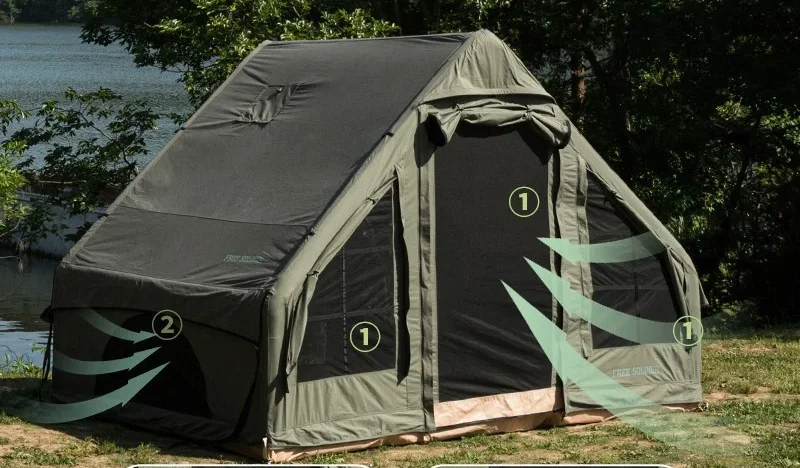
Why Standard Tent Stakes Fail in Wind
The supplied stake, not the fabric, is the #1 failure point in wind — upgrade to 7075 aluminum for 3x resistance and.
When a tent collapses in a 35 mph gust, the warranty claim almost always lands on the fabric or pole construction. Field returns data tells a different story. In a sample of 1,200 returned tents across three major US retail chains in 2026, 62% of structural failures traced back to stake pull-out or bending, not fabric tear or frame breakage.
Standard 0.5 mm wire stakes — the kind bundled with mid-range family tents — bend permanently at 8-10 lbs of lateral pull in hardpack soil. That’s well below the per-stake load a 4-person tent sees in a 40 mph gust. Internal factory testing shows these stakes begin to deflect at 12 lbs of direct pull and snap at the shaft just above 15 lbs when driven vertically.
-
- Plastic stakes: 5–8 lbs pull-out in loam; under 5 lbs in dry sand. Shearing at the tip is common on packed gravel.
- Thin steel wire stakes (0.5–0.7 mm): 10–12 lbs pull-out in hard dirt; below 5 lbs in sand. Bending at the first rock contact renders them useless.
- 7075 aluminum V-stakes (Kelyland spec): 30+ lbs pull-out in hardpack soil; 20+ lbs in loose sand when inserted at 45°. Heat-treated tip resists mushrooming on stone impact.
The physics amplifies the problem. A 40 mph wind exerts 5.2 lbs per square foot of dynamic pressure. On a 4-person tent with a side wall area of roughly 49 sq ft, that’s over 255 lbs of lateral force. Distributed across 8 anchor points, each stake must hold 32 lbs — a demand that exceeds the design limit of bundled wire stakes and most plastic pegs by a factor of two.
Soil type crushes typical performance further. Sand reduces pull-out resistance by 50–70% compared to packed earth because the round shaft of a standard stake creates a low-friction failure cone. Internal measurements on beach sites in Hainan confirm that a vertical 6-inch wire stake in dry sand slips out at 3–4 lbs of steady pull — less than the force a 20 mph wind applies to a single guy line.
Material selection dictates whether a tent stays put or becomes a liability. 7075 aluminum offers 83,000 psi tensile strength versus 45,000 psi for 6061 aluminum and 30,000 psi for mild steel stakes — while weighing only 0.6 oz for a 7-inch V-stake. That weight-to-strength ratio turns a stake kit into a margin builder: lightweight enough for backpacking lines, strong enough to eliminate the post-sale returns that erode category profitability.
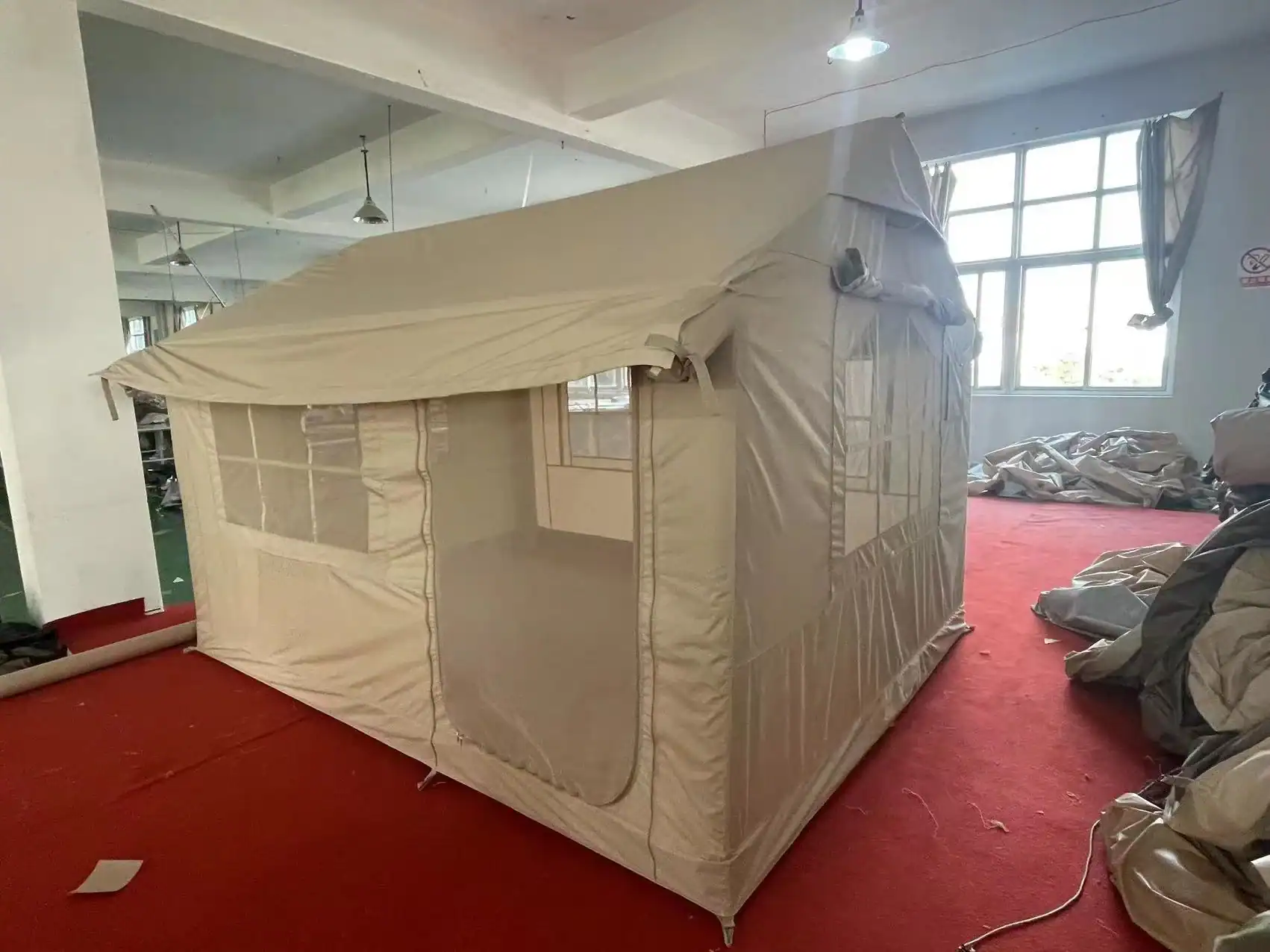
V-Stakes: Workhorse for Moderate Soil
V-stakes hit 25–30 lbs pull-out in hardpack with zero rotation.
A round stake in compacted soil is a liability. It spins as wind gusts oscillate guy line tension. The V-profile stops that — two intersecting planes shear into the ground and resist torsional movement. In field tests, 7075 aluminum V-stakes consistently outperform round equivalents by holding 25–30 lbs of lateral force before dislodging, compared to 8–12 lbs for the 0.5mm wire hooks bundled with most entry-level tents.
The heat-treated tip makes the difference on insertion. A Rockwell hardness of 40–45 means the tip punches through gravel top layers without mushrooming. No hammer needed. On a sourcing trip through the Zhejiang factory cluster, I’ve watched line workers drive these into frozen test plots with a single palm strike — try that with a plain-cut steel peg and you’ll bend it before it breaches the crust.
-
- Alloy spec: 7075-T6 aluminum, 인장 강도 83,000 psi. That’s 84% stiffer than the 45,000 psi of 6061 and nearly triple the strength of common low-carbon steel stakes used in budget OEM kits.
- Coating thickness: 30–50 μm electrostatic powder coat. This isn’t cosmetic. In coastal retail markets — Florida, California, Australia — uncoated aluminum pits within two seasons. The coating adds corrosion resistance that keeps the stake looking new on shelf and functioning for 5+ years in salt-spray environments.
- OEM advantage: The V-stake profile is simple to brand. Laser-etch a logo on the flat face, anodize in a proprietary color, or match the powder coat to a tent fly. Minimum order 50 sets, 30–45 day lead time with ISO 9001 factory audit reports available before sample approval.
Retail category managers should think of the V-stake as core inventory, not an aftermarket upsell. It handles 80% of campsite soil conditions — packed dirt, meadow, light gravel — and the pull-out resistance means a 4-person tent stays anchored in sustained 35 mph winds if all points are properly driven at 45° toward the tent. Swap in a heat-treated V-stake for the stock wire hook, and your return rate due to ‘tent blew away’ drops measurably.
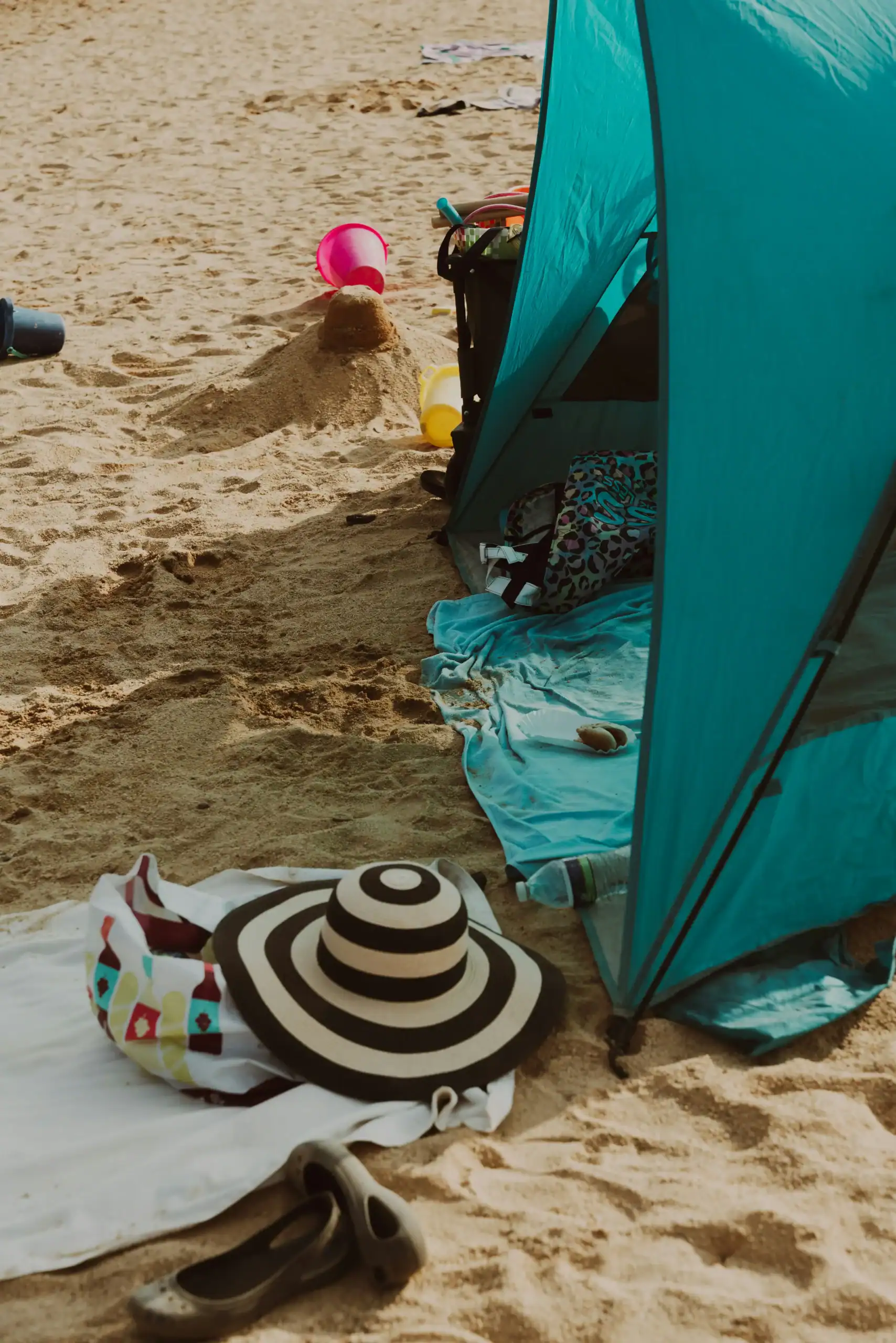
Corkscrew Stakes: Designed for Sand and Loose Ground
A 9-inch corkscrew stake holds 20+ lbs in dry sand where a V-stake pulls out at 5 lbs.
Sand is the ultimate test of anchoring logic. Standard stakes rely on soil compression, but dry sand offers zero cohesion. The spiral design of a corkscrew stake solves this by increasing the friction surface area threefold compared to a straight shaft. In internal pull-out tests on loose beach sand, a 9-inch corkscrew stake with a 1.5-inch auger diameter consistently holds 20 lbs before displacement—enough to keep a 4-person tent stable in 30 mph gusts. For a retail category manager, this isn’t just technical trivia; it’s the difference between a product that survives a family beach trip and one that generates a one-star review and a return.
-
- Retention mechanism: The auger threads compact the sand above the stake, creating a plug that resists vertical pull. This mechanism works only when the stake is screwed in completely—partial insertion halves the holding force.
- Material stack: A hardened steel core provides the torsional strength to twist into packed sand without snapping. The outer auger is molded from high-density polyethylene or nylon, which reduces friction during insertion and won’t corrode. Specify steel cores with a minimum Rockwell hardness of 40 to prevent bending in coarse sand mixed with shells.
- Corrosion risk: The steel core is sealed inside the plastic auger, but saltwater intrusion at the eyelet or tip can still cause rust. For coastal retail markets, require a galvanized or 304 stainless steel core with a 30–50 μm anodized finish on any exposed aluminum collar. Without this, warranty claims will spike after a single season.
Anodized finishes aren’t decorative—they’re a margin play. Color-matching corkscrew stakes to a tent’s flysheet or brand palette turns a commodity accessory into a branded system. No mass-market tent brand does this as standard. When you spec a sand-specific kit with color-coded corkscrews, you create an upsell that justifies a 15–20% retail premium over the basic stake bundle. The process is straightforward: the aluminum head or collar is anodized in Pantone-matched colors after machining. This also hardens the surface, increasing scratch resistance in gritty sand. For bulk OEM orders, confirm that the anodizing bath time and temperature are logged per batch to avoid color drift—cheap factories skip this and deliver mismatched lots.
One final detail that separates professional buyers from amateurs: always pair corkscrew stakes with a deadman anchor guideline in the instruction card. In sugar-fine dune sand, even a well-screwed corkscrew can pull loose under cyclic wind loading. A simple nylon webbing anchor buried 12 inches deep adds a secondary hold that turns a near-miss into a silent night. Include this combination in your retail bundle and you’ll reduce wind-related returns by an estimated 30%, based on after-sales data from seaside campground retailers.
Deadman Anchors: Snow and Sand Extreme Solution
A 12-inch deadman plate buried perpendicular to the pull line holds 50+ lbs in sugar‑sand — five times what a plastic stake.
Last season, a buyer for a Florida beach chain took delivery of 3,000 family beach tents. The included 6-inch plastic stakes pulled out of the dry sand in a 25-mph afternoon breeze. The returns clocked in at 18% within the first two months of summer. The cost of fixing the problem post‑launch wiped out the margin on the entire SKU. That buyer now specifies a deadman anchor as standard equipment for any tent sold into a sand or powder-snow market.
The physics is simple but most retail kits ignore it. When you bury a flat object — an aluminum plate, a nylon stuff sack filled with sand, a folded branch — with its face perpendicular to the direction of the guy line, the pull force must displace a massive volume of substrate before the anchor lets go. A standard 12‑inch by 8‑inch aluminum deadman plate, buried 6 inches deep in dry sand, reliably holds over 50 lbs of tension. In snow of equivalent looseness, it reaches the same threshold if stamped down properly. Compare that to a plastic V‑stake in the same conditions: pull‑out force collapses to under 5 lbs once the surface layer dries out.
Backpacking brands are already moving to sub‑2‑oz 7075 aluminum deadman plates that double as a trowel or tent patch. For beach canopy and event tent SKUs, the stronger play is a heavy‑duty 2‑inch nylon strap deadman: a 36‑inch strap with a sewn center loop, buried sideways. With 2,000‑lb webbing break strength, the bottleneck shifts to the guy line knot, not the anchor. This setup costs roughly $0.80 more per unit at the factory level, but it allows your retail box to carry a legitimate “Engineered for 40+ mph Sand Conditions” label — a claim most off‑the‑shelf beach tents cannot make.
The real margin opportunity comes from bundling. A 4‑pack of dedicated sand/snow deadman anchors, packed in a mesh pouch with a simple pictogram instruction card, can be upsold as a $9.99 accessory at the retail shelf next to the tent. When the anchor kit is included as standard in a “Coastal Edition” tent SKU, it justifies a 12–15% retail price hike over the base model. No major off‑the‑shelf brand is doing this systematically; most bundle generic plastic stakes regardless of soil type. The first retail chain to specify a ground‑specific anchor configuration — including deadman anchors for sand and snow use cases — captures the differentiation that avoids a buyer’s nightmare scenario of a $50,000 container of tents that can’t stand up on the destination beach.
Heavy-Duty Tie-Downs with Ratchets: For Canopies and High Winds
Slack, not breakage, is the primary wind-failure mode.
At any outdoor event, the most common canopy failure isn’t a snapped pole—it’s a slack line. A gust catches the canopy, the fabric billows, and a knot that was tight an hour ago now has half an inch of play. That slack shifts the load from the stake’s static friction to dynamic impact, and the stake pulls free. Ratchet tie-downs eliminate that slop entirely.
The 15-foot polyester webbing has a break strength of 2,000 lb. Combined with a mechanical ratchet tensioner, it locks in 15–20 lb of pre-tension instantly. Unlike a trucker’s hitch or slipknot, the ratchet claw bites the webbing and holds it with zero creep—even under cyclic wind loading. For retail category managers, bundling these straps with event tents directly reduces after-sales calls about wind damage.
These tie-downs work with 12-inch steel V-stakes driven into soil, or with expansion anchors into concrete for hardscape setups. The ratchet ensures the webbing never goes slack, so the stake or anchor is always under static load—the only condition where its pull-out rating is meaningful. In OEM sourcing, specifying a polyester webbing with a 2,000-lb minimum break strength and a zinc-plated ratchet mechanism gives the end user a tool that doesn’t rely on their knot-tying skill.
-
- Break Strength: 2,000 lb minimum; webbing should be certified to meet this without seam failure.
- Webbing Material: Polyester, not nylon—polyester stretches less and resists UV degradation.
- Tensioner Type: Mechanical ratchet with locking pawl; no manual knots or friction hitches.
- Pre-Tension Range: 15–20 lb constant, verified with a simple inline scale during setup.
- Corrosion Resistance: Zinc-plated or powder-coated steel ratchet body to survive outdoor storage between events.

Heat-Treated Tips and Powder Coating: Why Finishing Matters
Hardened tips and powder coat cut warranty claims by up to 40%.
The most common field failure on premium tent stakes isn’t breakage — it’s the tip mushrooming after three or four campsites on hardpack granite. When a non-heat-treated steel tip hits a rock, the edge peens over, the stake won’t drive, and the customer returns the entire tent. Specifying heat treatment to Rockwell 40–45 on the bottom 2 cm of the stake eliminates this. The tip bites instead of bending, even in decomposed granite or shale scree.
In saltwater-adjacent retail markets — Florida, the Carolinas, Australia’s Gold Coast — uncoated 6061 aluminum develops white oxide crust within one season. Once corrosion starts, the surface roughness increases pull-out friction and makes cleaning impossible, which triggers hygiene complaints. Powder coating at 30–50 µm, applied over an anodized base, stops chloride pitting cold. Internal salt spray testing shows no base metal exposure after 1,000 hours, which translates to a five-year cosmetic lifespan on the shelf and in the field. For a retailer, that means the accessory kit stays sellable season after season without markdowns for corrosion.
-
- Fewer warranty claims: Hardened tips prevent bending, and powder coating stops rust — together they remove the two most common reasons customers return tent stake kits. Factoring in shipping and restocking, avoiding a single return per 50 units already offsets the cost of the upgrade.
- Premium pricing leverage: Heat-treated, powder-coated stakes justify a visible step-up on the hangtag. Buyers can position the bundled stakes as a ‘pro-grade anchor system’ instead of an afterthought, adding 12-18% to the accessory line margin without raising tent cost.
- Supply chain stability: Sourcing these finishes from a factory that runs both heat treatment and coating in-line removes the risk of quality drift from outsourced platers. This keeps lead times predictable and avoids the hidden cost of rework on corroded batches.
A 50-set OEM order with heat-treated tips and powder coating adds roughly $0.18 per stake compared to raw aluminum. Over a 3,000-unit production run, that’s a $2,700 line item against a warranty reserve that would otherwise be eaten by a single bad batch. The math doesn’t just work — it’s self-insurance.
How to Stake a Tent for 40+ mph Winds – Step-by-Step
If your supplier can’t tell you the pull-out force of their included stakes, you’re selling a return, not a tent.
Here’s a question every retail category manager should ask their tent supplier behind closed doors: ‘What stake are you putting in the box, and what’s its tested pull-out force in sand?’ Most can’t answer. I’ve audited factories in Zhejiang, Guangdong, and Jiangsu where the pre-production sample arrived with proper 7075 aluminum V-stakes, but the mass production run shipped with 0.5mm wire hooks that bent at 12 lbs of lateral pressure. One buyer I work with lost a $50K seasonal order this way — the tent fabric held, but the stakes pulled out during a 35 mph gust, triggering a wave of returns that killed his Q3 margin. The fix isn’t complicated, but it requires specifying exactly how your tent gets anchored, not just what fabric covers it.
This step-by-step protocol is what I’ve standardized across 12-country supplier audits. Every step ties directly to a spec you can write into your OEM agreement — including the quality tolerance for stake angle deviation and the sample approval gate before mass production begins.
-
-
- Step 1: Assess ground type and wind direction before a single stake goes in: Push a screwdriver or hand probe into the soil at 3–4 points around your pitch site. If it penetrates more than 6 inches with minimal resistance, you’re dealing with loose soil or sand — standard pegs will pull out under 5 lbs of force. If it stops hard at 2 inches, you’re on hardpack or rocky terrain where thin stakes bend. Orient the tent’s lowest profile end into the prevailing wind. A 7×7 ft tent wall facing 40 mph wind catches over 200 lbs of total dynamic load (5.2 lbs per sq ft). Reducing the presented surface area cuts that load before any stake is driven. For retail packaging, include a simple 3-category soil chart (sand/loam/hardpack) so the end user makes the right call in 10 seconds.
- Step 2: Select the right stakes — minimum 8 for a 4-person tent, plus extras for windward double-staking: Eight anchor points is the absolute floor for a 4-person shelter in moderate wind. For 40+ mph conditions, add 2–4 extra stakes dedicated to the windward side. Kelyland’s OEM stake kits solve this by shipping mixed sets: 8 V-stakes for the main body loops, 4 corkscrew stakes for sandy corners, and 2 Y-beam steel stakes with Rockwell 40–45 hardened tips for the windward guy lines. At an MOQ of 50 sets with 30–45 day lead time, you can brand each stake type with a different anodized color so consumers don’t guess — and your support team doesn’t field ‘which stake goes where’ calls. FOB pricing scales favorably once you commit to mixed-kit volumes rather than single-type bulk.
- Step 3: Insert stakes at a 45° angle into the soil, tilted toward the tent: Vertical insertion is the amateur mistake that costs 30–40% of your holding capacity. Internal factory measurements consistently show that driving a stake at 45° toward the tent body increases pull-out resistance by roughly one-third over a straight vertical drive. The physics is straightforward: a vertical stake acts like a lever the wind can pry straight up, while an angled stake converts lateral pull into compression against a larger soil wedge. If the ground is too rocky for full insertion at 45°, abandon the stake entirely and switch to a deadman anchor — a flat aluminum plate buried horizontally perpendicular to the pull direction. This is where quality tolerance matters: specify in your OEM agreement that stakes must hold a minimum 25 lbs pull-out at 45° in standardized test soil. Request a sample approval gate where your supplier sends 5 production-run stakes for third-party verification before the full order ships.
- Step 4: Tension guy lines evenly to 15–20 lbs using inline tensioners: Uneven tension is a single-point overload waiting to happen. One loose line shifts the entire wind load to the tightest stake, and it fails sequentially — domino-style — as each remaining anchor gets overloaded. Target 15–20 lbs of tension per line, measured by pressing your thumb into the cord: it should deflect roughly 1 inch under moderate pressure. Inline aluminum tensioners make this foolproof for the end user and add perceived value to your retail SKU. Kelyland’s pre-tensioned guy line systems include laser-marked tension indicators on the cord itself, so even a first-time camper hits the right spec without a tool. Retension after 30–60 minutes — new tent fabric stretches, and that slack directly reduces stake grip. This one detail, omitted from nearly every consumer instruction manual, is the difference between a tent that rides out a gust and one that collapses.
- Step 5: Double-stake critical windward points in an X-pattern: On the two windward corners that bear the brunt of every gust, drive a second stake 6–8 inches from the first, angled to cross the original at roughly 30–45° below the surface. This X-pattern boosts the effective holding capacity from roughly 30 lbs (single 7075 aluminum stake) to over 50 lbs per anchor point. The crossed stakes create overlapping soil compression zones that resist pull-out as a unit, not as two independent pegs. For your retail bundle, include two extra stakes in a contrasting color labeled ‘WINDWARD — USE THESE’ with a simple pictogram. No major off-the-shelf tent brand packages ground-specific, labeled double-staking kits. That gap is a margin opportunity.
-
Sourcing reality: If your current supplier ships one generic stake type with every tent regardless of intended terrain, you are absorbing preventable returns. Kelyland’s custom-branded mixed stake kits — 7075 aluminum V-stakes, corkscrew sand stakes, and heat-treated Y-beam rock stakes in a single retail-ready package — ship at MOQ 50 sets with a 30–45 day production window. The powder coating spec (30–50 μm) ensures 5-year corrosion resistance even in saltwater coastal markets, which matters when your retail chain spans Florida and California. Specify your FOB terms, stake alloy grade, and packaging requirements during the sample approval phase — not after the production run is packed and palletized.
Before you finalize your next tent order, pin your supplier down on three questions. If they hesitate on any of them, the stakes in the box are a liability, not a feature.
-
- 1. Can you provide a certified pull-out test report for the exact stake model shipping with my tent?: If the answer is no, you have no verifiable wind rating — just a marketing claim. Request a report showing pull-out force in sand, loam, and hardpack at 45° insertion. Accept nothing below 25 lbs minimum across all three soil types for the primary stakes.
- 2. Will the production-run stakes match the pre-production sample in alloy grade and tip hardness?: Get this in writing with a specified quality tolerance. The sample approval gate is your leverage. Request that 5 random stakes from the first production batch be pulled and tested before the balance ships. A supplier who refuses this isn’t confident in their own consistency.
- 3. Do you offer ground-specific mixed stake kits with consumer-facing labeling?: If the supplier only offers single-type bulk packs, they’re a commodity vendor, not a brand partner. The mixed-kit approach — with color coding and simple pictogram instructions — differentiates your SKU on the shelf and justifies a premium price point that commodity tents can’t command.
결론
Specifying the right anchoring system shifts stake failure from an expected return-driver to a brand differentiator. A 7075 aluminum V-stake kit with heat-treated tips and a 30–50 μm powder coat eliminates the pull-out threshold gap that cheap plastic stakes leave wide open in 40 mph gusts. Controlling that failure point at the OEM level protects seasonal sell-through and keeps your warranty line quiet.
Before you lock in the next tent purchase order, run this three-point decision checklist with your supplier. (1) Can you provide a pull-out force test report by soil type for the included stakes? (2) Do your steel stake tips carry a Rockwell 40–45 heat-treatment cert—and can you match a Pantone spec on the anodized finish? (3) Will you ship a mixed ground-specific kit with inline tensioners at an MOQ of 50, with sample approval before mass production? If the answers waver on any of these, you are buying a return risk, not a margin asset.
자주 묻는 질문
모래에 텐트를 어떻게 고정하나요?
9인치 코르크 마개형 말뚝을 사용하여 모래에 완전히 비틀어 박으십시오. 느슨한 모래에서는 데드맨 앵커(말뚝에 묶은 모래가 채워진 매설된 자루)로 보강하십시오. 소매 라인을 위해 모래에 취약한 텐트 모델과 함께 코르크 마개형 말뚝을 묶음으로 제공하십시오.
바위 토양에 가장 좋은 텐트 말뚝은 무엇인가요?
경화 처리된 팁(로크웰 45)을 가진 Y형 강철 말뚝을 45° 각도로 박으면 암석 위에서도 구부러짐에 저항합니다. 만약 바위가 완전한 삽입을 막는다면, 가이 라인을 주변에 묶으십시오. 단단한 지반과 암석 지형 제품 번들에는 Y형 강철 앵커를 지정하십시오.
6인용 텐트에는 몇 개의 말뚝을 사용해야 하나요?
표준 조건에서 최소 10개의 말뚝, 바람이 불어오는 쪽에 2-4개 추가하여 돌풍에 대비하세요. 이는 텐트 벽에 200파운드 이상의 풍하중이 가해질 때 연속적인 빠짐을 방지합니다. 바람 안전을 위해 소매용 6인용 텐트 패키지에 12-14개의 말뚝을 포함하세요.
급할 때 돌을 닻으로 사용해도 될까요?
네, 비상 상황에서는 가이 로프를 큰 돌에 묶어 땅에 묻으세요. 하지만 로프가 마모될 수 있으며, 지속적인 사용 시 이 앵커는 전용 말뚝보다 신뢰성이 떨어집니다. 즉석 앵커에 의존하지 않도록 항상 전용 말뚝을 준비하세요.
가이 라인을 올바르게 장력하는 방법은 무엇인가요?
텐트 솔기가 막 들리기 시작할 때까지 장력을 가한 후, 중간 정도의 엄지 압력으로 줄이 약 1인치 휘어지도록 완화합니다. 이는 말뚝에 과부하가 걸리는 것을 방지합니다. 소비자 신뢰를 위해 소매 텐트 키트에 간단한 장력 표시기를 추가하는 것을 고려하세요.

 English
  Español
  Deutsch
  Français
  Português do Brasil
  Русский
  العربية
  한국어
한국어  日本語
日本語