 콘텐츠로 건너뛰기
Run the inflatable tent vs pole tent wind comparison on a coastal campsite in Western Australia and the difference stops being theoretical. On Day 1 the order is placed, on Day 14 the pre-production sample arrives, and on Day 45 the container lands — then a 50 km/h gust hits the field test tent. The pole model folds at the ferrule with a sound nobody hears inside the sleeve; the air model sags over three minutes, giving the test team time to brace the windward beam. That is not a marketing distinction. That is a structural failure-mode difference between 7075 aluminum poles at 8.5–9.5mm diameter and 3-layer TPU air tubes inflated to 4–6 PSI.
For a procurement manager adding tents to a 프라이빗 라벨 라인, the real question is not which one feels sturdier in the showroom. It is which failure your warranty desk can absorb. A snapped pole set costs $30–60 to replace and can take up to 90 days for OEM restocking; a punctured TPU tube patches with a $4 kit in 10–15 minutes, usually by the customer. Kelyland’s QC pressure-hold data backs this up: a TPU beam at 5 PSI retains roughly 96% pressure over eight hours, and headroom only collapses 30–40cm once internal pressure drops below 2 PSI. That predictable decay curve is why air-frame tents shift the burden from parts replacement to customer-service labor — and why the weight penalty of roughly 0.8kg per 3-person model needs to be weighed against the per-claim cost difference, not just the shipping bill.
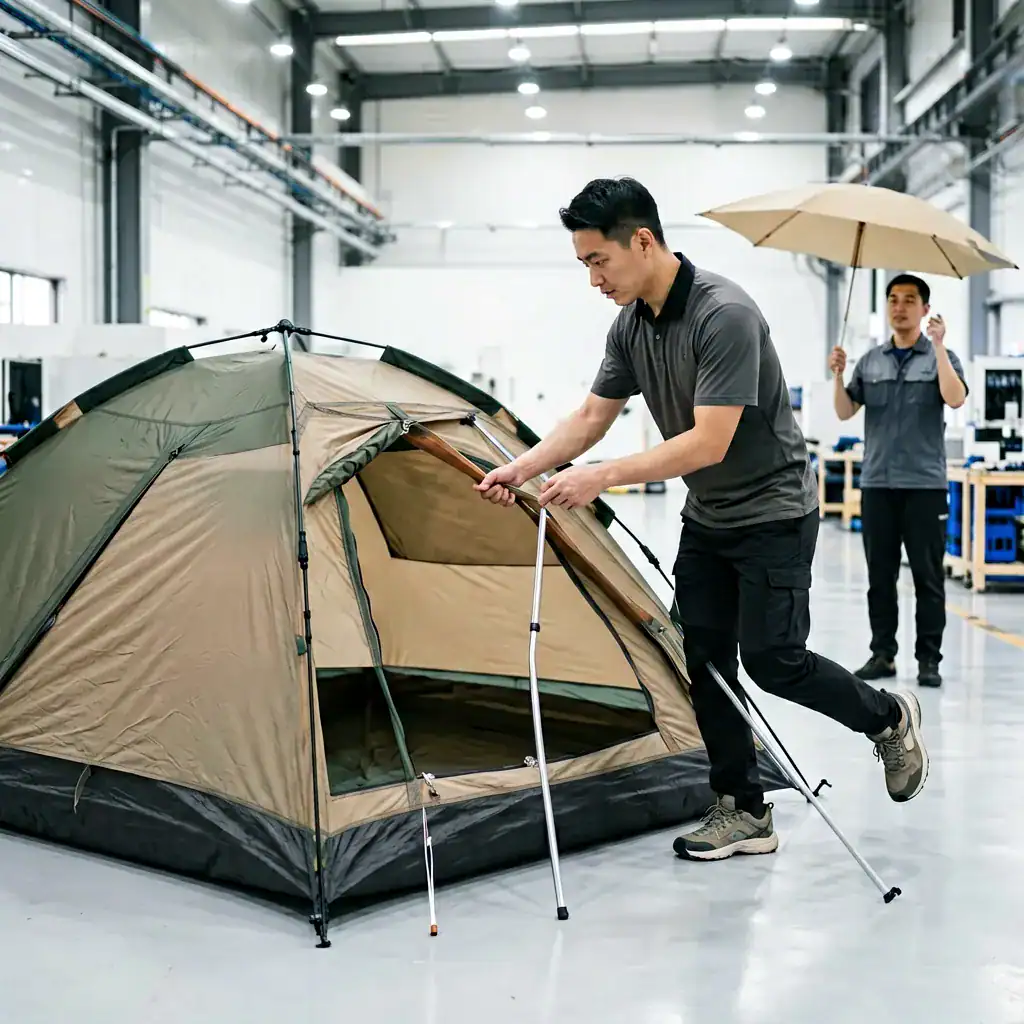
Failure Mode: Aluminum Poles vs TPU Air Tubes
Pole tents fail in milliseconds.
The manufacturing difference between an aluminum-pole tent and an air-frame tent comes down to how each structure fails. Pole tents snap without warning. Air tents sag with time to react. That distinction drives every warranty number in this comparison.
Aluminum Poles: Stress, Microfracture, Sudden Snap
A 7075 aluminum pole with an 8.5–9.5mm diameter looks bulletproof during setup. Inside the fabric sleeve, the ferrule junction takes repeated flexing. After 3,000–5,000 flex cycles, microfractures form where the pole segments join. In a 45–50 km/h gust, the ferrule buckles and the tent edge collapses instantly. The occupant gets no noise, no warning — just a broken pole in the middle of the night.
TPU Air Tubes: Gradual Deflation Instead of a Crash
A three-layer TPU air tube is structurally different. At 16–20cm in diameter and inflated to 4–6 PSI, it behaves as a continuous arch. Wind load transfers along the full curve, not through a metal joint. Seam structures in this configuration survive more than 10,000 pressure cycles. Puncture damage produces a slow bleed, not an immediate snap. The tent loses height progressively, giving the user time to secure it or exit.
Factory QC Data and the Warranty Divide
Kelyland’s inflatable-tent QC line pressure-holds beams at 5 PSI and logs the decay. A sound beam retains about 96% pressure over an eight-hour hold. That 4% loss is the difference between a unit that ships and one that leaks. Below roughly 2 PSI, the geometry gives up: headroom drops 30–40cm, and the tent stops functioning as shelter.
Compare the repair path. A snapped OEM pole set costs $30–60 to replace and can take up to 90 days to restock from overseas. A punctured TPU tube patches with a $4 kit in 10–15 minutes. The first is a warranty claim against inventory. The second is customer-service hand-holding. For a brand forecasting return rates, the failure mode determines which department absorbs the cost.
-
- Wind behavior: Pole tent: 7075 aluminum pole snaps at the ferrule in 45–50 km/h gusts. Air tent: TPU beam flexes and sheds live loads; a puncture causes gradual deflation.
- Flex endurance: Pole tent: aluminum ferrules buckle after 3,000–5,000 flex cycles. Air tent: TPU seams survive 10,000+ pressure cycles.
- 현장 수리: Pole tent: replace the full pole set, $30–60, up to 90-day lead time. Air tent: $4 patch kit, 10–15 minutes.
Why Competitors Publish No Blowdown Data
Most spec sheets call both systems ‘stable’ and stop. No pressure-decay curves, no flex-cycle counts, no blowdown data. Without that data, a buyer cannot estimate seasonal return rates or set service budgets. Kelyland includes blowdown curves and pressure-loss results in its OEM technical packs, so the private-label decision rests on measured behavior instead of marketing language.
Weight, Pack Size, and Setup Time
Pole packs smaller.
Start with the packed unit, because that is what freight quotes and warehouse slots actually see. A 3-person pole tent lands around 2.6 kg with a packed length near 45 cm; an equivalent air-frame tent runs roughly 3.4 kg and 55 cm in the same accessory-free configuration. For bulk tent shipping, that per-unit weight gap changes how many cartons sit on a pallet.
FOB pricing rarely exposes this. Quotes are per unit, while the cost of occupying cubic volume hits at container stuffing. A longer packed bag can push a carton to a different layer height or cut the number of units along the container’s length. That is where the pole tent’s compact advantage turns into landed-cost savings.
Setup Time: Strokes vs Poles
Inflation runs 60-90 full strokes with a manual pump, or 1-2 minutes with an electric blower. Pole assembly for the same 3-person tent takes 5-7 minutes with a modern clip-and-sleeve system. The labor inversion matters more than most category managers assume: air frames move effort from bending and threading to pumping, which is faster for glamping operators resetting multiple units before check-in and easier for less mobile campers.
Scaling Laws for Larger Tents
At 6-8 person sizes the comparison flips. Air-frame construction replaces three or four heavy sectional poles with a set of laminated TPU beams, and frame weight drops by up to 35% versus steel-pole designs. That is why the glamping segment in Kelyland’s lineup leans on air tubes: the strength-to-weight ratio improves exactly where manual handling hurts most.
During sample approval, ask for packed length measured with the production carry bag, not the prototype bag. Kelyland’s Ningbo tent factory, which holds CE, BSCI, and ISO 9001 certifications, records packed dimensions as part of its pre-shipment quality checks. If a supplier can’t state packed weight and length on the approved sample, the final batch will drift — and you’ll discover it after the container lands.
-
- 다음과 같은 경우 폴을 선택하세요: your range prioritizes compact pack size, low per-unit shipping weight, and simple spare-part logistics.
- 다음과 같은 경우 에어를 선택하세요: your target is 6-8 person family tents, glamping, or any program where setup speed and one-person assembly drive the purchase.
| Metric | Pole Tent (7075 Aluminum) | Air-Frame Tent (TPU Beams) | Sourcing / Logistics Impact |
|---|---|---|---|
| Packed Weight (3-Person Model) | ≈2.6 kg with 45 cm packed length | ≈3.4 kg with 55 cm packed length | Air frame is ~30% heavier and ~22% longer per unit — directly reduces units per pallet. |
| 설정 시간 | 5–7 min with clip-and-sleeve pole assembly | 3–4 min manual (60–90 pump strokes) or 1–2 min with electric blower | Faster inflation reduces retail demo labor and customer setup complaints. |
| 6~8인용 기준 프레임 중량 | 강철/알루미늄 telescoping 폴대는 중량을 크게 증가시킵니다 | 중공 TPU 적층 빔은 프레임 중량을 최대 35%까지 절감합니다 | 대형 글램핑 텐트는 에어 프레임의 중량 패널티를 완화합니다. |
| 포장 상자 치수 | 압축 시 약 45cm 길이 | 압축 시 약 55cm 길이 | 22%는 박스가 길어 팔레트 적재 밀도가 낮아집니다. 창고 입방미터 계획을 명확히 설정하세요. |
| 컨테이너 활용도 | 40피트 컨테이너당 단위 적재 수량 증가 | 긴 포장 치수로 인한 단위 적재 수량 감소 | 컨테이너당 적재 중량 및도입 비용에 직접 영향을 미치므로, 벌크 텐트 운송에서 매우 중요합니다. |
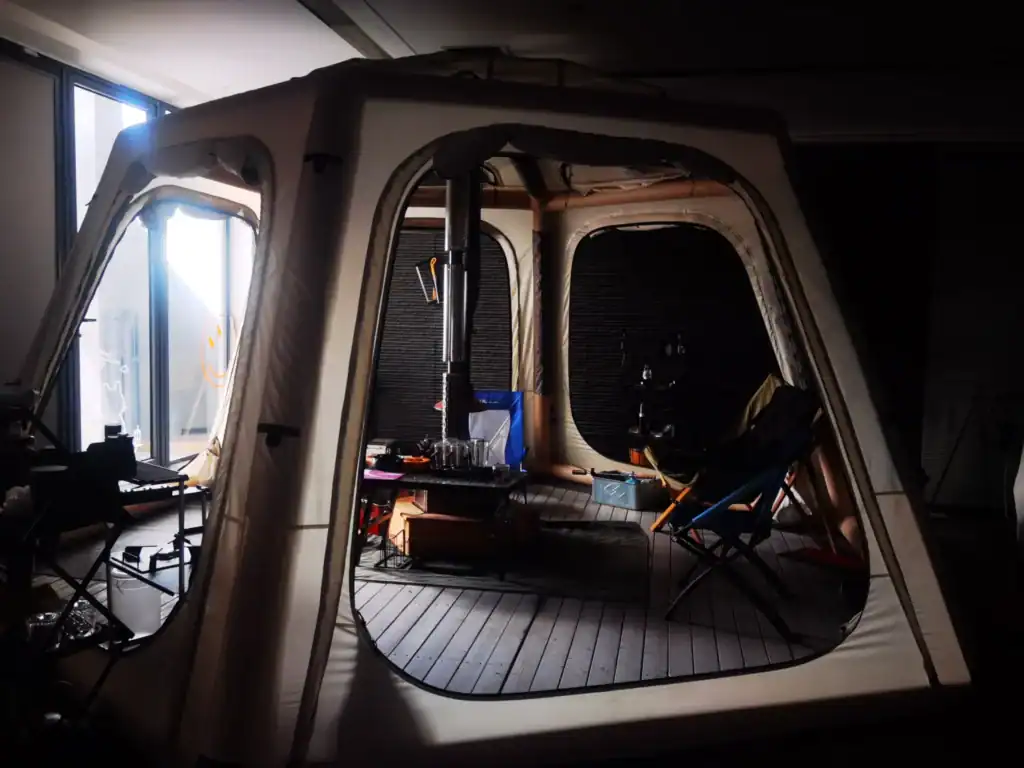
Equipment Logistics Impact on Bulk Orders
30%의 중량 부담과 22%의 길이 부담은 단 één개라도 판매하기 전 컨테이너 적산 방식을 결정합니다.
3인용 폴 텐트는 약 2.6kg에 압축 길이 45cm로 포장됩니다. 동일한 사양의 에어프레임 제품은 약 3.4kg, 압축 길이 55cm입니다. 바로 이 차이 — 30%가 더 무겁고, 22%가 박스 안에서 더 깁니다 — 팔레트 한 개에 들어가는 박스 수, 40피트 컨테이너에 실리는 팔레트 수, 그리고 창고 라쿤 단위당 차지하는 적치 공간을 직접 결정합니다.
창고 입방미터와 계절별 재고 보충
두 번째로 고통이 드러나는 곳이 바로 창고 입방미터입니다. 폴 텐트는 빽빽이 쌓여 유통업체가 랙 선반마다 더 많은 SKU 수량을 확보할 수 있습니다. 반면 에어프레임 텐트는 단위당 입방미터를 더 많이 차지합니다. 영국 또는 유럽 바이어가 1월 봄 재고 물량을 준비한 뒤 3월에 재주문하는 경우, 이때 추가로 소모되는 입방미터가 창고가 가장 가득 찼을 때 정확히 완충 공간으로 작용합니다.
호주 바이어는 다른 캘린더를 따르지만 결국 같은 벽에 부딪힙니다. 역계절 재고 보충은 신규 에어프레임 제품이 입고될 때 이전 제품의 나머지 물량이 아직 창고에 남아 있는 상황입니다. 30%는 무겁고 22%는 긴 패키지가 전환期の 피크 시점에 도착합니다. 이 시점은 이미 창고 유연성이 사라진 순간입니다.
공급업체 측의 대응 방안
물류 관련 논의는 대부분의 바이어가 예상하는 것보다 훨씬 이전 단계에서 시작되어야 합니다. Kelyland의 표준 프로세스에는 수출 서류 및 통관 가이드가 포함된 10단계 워크플로우가 포함되어 있어 컨테이너 적재 후 통관 문제가 발생하는 것을 방지합니다. 선적 전 검사는 컨테이너 출하 전 텐트 생산 라인에서 진행되므로, 박스나 라벨 불일치가 발생해도 아직 수정 가능한 시기에 잡습니다.
공급업체 네트워크도 여기서 중요합니다. 17개의 핵심 공장 및 200개 이상의 제조 파트너를 보유한 Kelyland는 바이어가 폴 텐트와 공기rame 텐트 새로운 기술에 대한 새로운 공장을 온보딩하는 대신 동일한 소싱 팀을 통해. 이는 신규 파트너를 계승할 때 발생하는 전형적인 위험을 제거합니다. 컨테이너 계획 실수.
-
- 컨테이너 활용도: 폴 텐트는 3인용 단위당 약 45cm 및 2.6kg으로 포장되어 40ft 컨테이너 당 더 많은 단위를 적재합니다. | 공기rame 텐트는 약 55cm 및 3.4kg으로 포장되어 컨테이너 당 단위 수가 줄어들고 단위당 부피 운송비가 상승합니다.
- 창고 체적: 폴 텐트는 더 밀집하게 적재되어 계절별 SKU 깊이를 더 깊게 할 수 있습니다. | 공기rame 텐트는 단위당 더 많은 체적을 차지하여 EU/영국 봄 스테이징 및 호주 크리스마스 전 기간 중 버퍼 공간을 줄입니다.
- 계절별 보충: 폴 텐트는 작은_footprint로 인한 긴긴 재주문 사이클에 적합합니다. | 공기rame 텐트는 동일한 물류센터에서 더 이른 선적 스케줄링과更大的 레저브 팔레트 위치가 필요합니다.
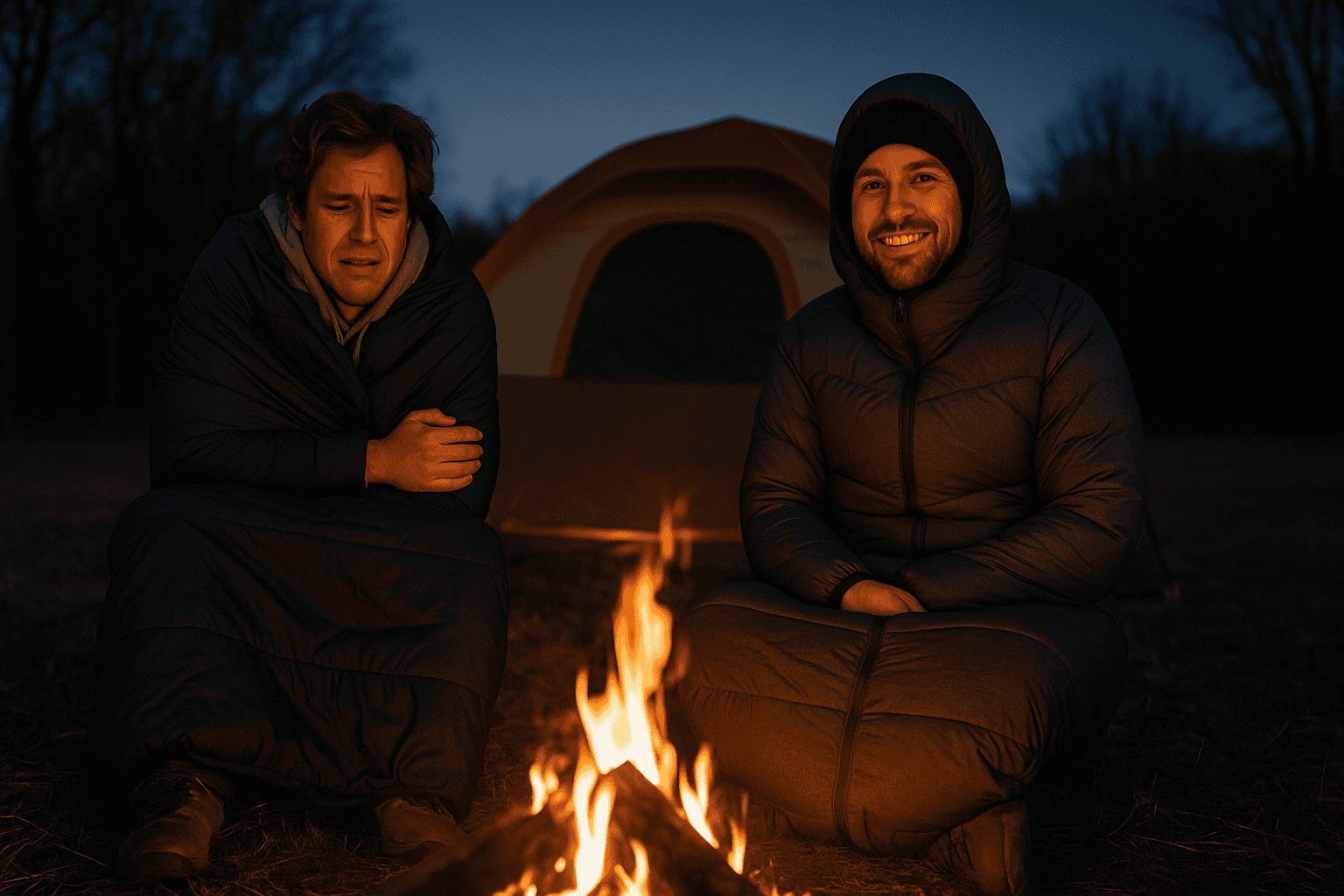
Cost Analysis: Warranty Liability Comparison
폴 텐트는 한 번의 강풍에도 무너집니다.
보증 비용은 텐트의 가격 문제가 아닙니다. 고객 문의 후 발생하는 고장 사건의 비용 문제입니다. 7075 알루미늄 폴이 부서진 경우, 피해는 전면적입니다: 세트 교체 비용은 $30–60이며, OEM 고유 폴 기하학은 납기일을 90일을 초과하도록 연장시킬 수 있습니다.
찔린 TPU 에어 튜브 패치 비용은 $4–8이며, 고객은 10–15분이 소요됩니다. 기술자 불필요. 교체 재고 불필요. 같은 폭풍우이지만, 사후 고객 지원 부담은 완전히 다릅니다.
고장별 비용 분석
폴대 고장은 교체 세트를 재고로 보유해야 하고, 결합 확인을 관리하며, 왕복 운임도 지불해야 합니다. 에어튜브 파열은 고객에게 패치 키트와 짧은 설명서를 발송합니다. 하나는 보증 부품을 담당하는 부서로 연결되고, 다른 하나는 처리 비용이 거의 제로인 고객 서비스 인박스로 연결됩니다.
-
-
- 부러진 알루미늄 폴대 세트: 사고당 $30–60 및 재장착 및 결합 확인을 위한 기술자 인건비. OEM 폴대 세트 교체에는 최대 90일이 소요될 수 있습니다.
- 찢어진 TPU 튜브: $4–8 패치 키트, 기술자 인건비 불필요. 패치가 경화될 때 현장 수리는 10~15분이 소요됩니다.
- 전체 빔 교체: 공급업체의 납기 시간을 포함한 제품당 $35–70. 이는 에어 텐트의 구조적 고장에 해당하는 사례로, 발생 빈도는 낮지만 패치보다 해결에 시간이 더 걸립니다.
-
고장 원인이 당신의 책임 소재에 미치는 영향
폴 텐트는 예고 없이 45–50km/h의 돌풍에서 페룰이 부러집니다. 고객은 당일 보증 클레임을 제기합니다. 반면 에어 텐트는 몇 분 동안 서서히 압력이 빠져나가기 때문에, 고객이 텐트를 고정하거나 대피할 시간을 얻습니다. 비교 검토 시 침낭을서비스 가능성 있는 제품이 매번 손익 계정에 유리한argument를 이깁니다.
켈리랜드 공장 QC 압력 유지 테스트 엄격한 품질 관용을 적용합니다. 5 PSI 상태의 TPU 튜브는 8시간 동안 약 96% 압력을 유지하며, 압력이 2 PSI 이하로 떨어지면 내부 높이는 30–40cm만 감소합니다. 이러한 예측 가능한 감소가 뜸금수리가 구조적 교체가 아닌 현장 수리인 이유입니다.
샘플 승인 후 폴 기하학이 고정되면, 교체용 폴 세트는 맞춤형 부품이 되어 재고 유지 비용이 높고 quickly obsolete 되기 쉽습니다. Kelyland와 같은 네트워크(17개 핵심 전략 공장, 대부분 ISO 9001:2015 인증)를 통해 소싱하는 프라이빗 레이블 브랜드는 모든 박스에 $4 패치 키트를 함께 포장하여 지역별 교체 폴 창고를 아예 건너뛸 수 있습니다.
-
- 에어 프레임 선택 시 고려사항: 반품률이 민감하고, 고객 대상이 비전문가이며, 서비스 기술자나 부품 물류 없이 보증 이벤트를 해결하려는 경우.
- 폴 텐트가 적합한 경우: 포장 후 중량을 최적화해야 하며 — 3인용 폴 텐트는 약 2.6kg, 에어는 약 3.4kg — 판매 채널이 공급업체 지원 없이 폴 세트 교체를 처리할 수 있는 경우.
| 고장 유형 | Replacement Part Cost | Technician Time | Average Processing Days | Warranty Cost per Claim |
|---|---|---|---|---|
| Snapped aluminum pole set | $30–60 per set | Restringing + fitment confirmation required | Same-day if stocked locally | ~$60 |
| Punctured TPU tube patch kit | $4–8 per kit | None — customer self-repair | Immediate via digital instruction sheet | ~$4 |
| Full beam replacement bundle | $35–70 per piece + shipping | None — plug-and-play beam swap | 7–45 days depending on stock and freight | $70–100+ |
결론
Choosing between an inflatable tent and a pole tent is not about peak wind ratings; it’s about how each frame fails and what that costs your after-sales team. Pole tents snap at the ferrule without warning, while TPU air beams deflate gradually enough to patch on-site. The frame system you put your logo on determines whether you replace parts or manage customer service.
-
- Do you have TPU pressure decay data? A quality beam at 5 PSI retains about 96% pressure over eight hours.
- Will you warranty aluminum ferrules past 5,000 flex cycles? Pole sets fail at the joint, driving $30–60 warranty claims.
- Can a customer patch a punctured TPU tube in 10–15 minutes with a $4 kit? Replacement poles take up to 90 days.
- Does your wind rating compare failure modes? Pole tents snap at 45–50 km/h; air frames deflate slowly.
Before speccing the next shelter line, compare supplier test packs the way you compare fabric swatches. Request the inflatable tent samples and the EU customs checklist from Kelyland’s 17 core factories, then decide which failure mode your warranty desk can actually service.
자주 묻는 질문
강풍 상태에서 어떤 텐트가 더 안전합니까?
고체급 풍속에 강건한 풍향을 유지하기 위해 인플레이터블 TPU 텐트는 공기압을 서서히 빼내어 occupants이 반응할 시간을 주는 반면, 폴 텐트는 갑작스럽게 붕괴됩니다. 품질 좋은 TPU 에어 빔을 적정 공기압으로inflate할 때만 이 장점이 살아납니다. 주문 전 반드시 TPU 튜브 사양과 권장 PSI 기준을 확인하세요.
보증 비용 차이는 무엇입니까?
폴대가 끊어진 세트는incident당 $30–60으로 교체하는 반면, 찔린 TPU 튜브는 약 $4 수준으로 패치 가능합니다. inflatable 제품의 더 큰 숨겨진 비용은 고객 서비스 작업 및 수리입니다. inflatable 텐트를 선택할 경우 수리 작업 비용을 예산에 포함시키세요.
폴 텐트는 바람에 어떻게 파손되나요?
알루미늄 폴 대는 반복적인 구부림 후 페룰 결합부에서 끊어지며, 텐트 가장자리가 순간적으로 붕괴됩니다. 균열은 종종 폴 내피 내부에서 발생해 설치 시 보이지 않으므로, 페룰 검사를 품질 관리 체크리스트에 반드시 포함하세요.
폭풍우에 폴 텐트가 무너지는 풍속은?
알루미늄 폴트 텐트는 일반적으로 초속 40km 이상의 돌풍에서 미세 균열이 형성되기 시작하며, 초속 48km 돌풍 하중에서 주로 실패합니다. 반면 TPU 에어 튜브는 5 PSI 상태에서 약 8시간 동안 96% 압력을 유지합니다. 이러한 수치를 제품 사양서 작성 시 활용하시기 바랍니다.
풍경 지역 시장을 위해 어떤 텐트를 조달해야 할까요?
Source inflatable TPU tents for windy coastal markets if you can support repair logistics, but choose pole tents if packed size and lowest upfront cost matter more. The real decision is warranty cost. Match the failure mode to your after-sales service capacity.

 English
  Español
  Deutsch
  Français
  Português do Brasil
  Русский
  العربية
  한국어
한국어  日本語
日本語