 콘텐츠로 건너뛰기
Day 1 the order is placed for a winter inflatable tent. Day 14 the 선생산 샘플 arrives, and it looks perfect — the fabric seams are clean, the air valve seals tight, and the zipper glides smoothly. But Day 45, when that container lands at your distribution center in sub-zero temperatures, one dealer calls to report a frozen zipper on the main door panel. That $50K order suddenly becomes a warranty headache because the sample approval process never included a cold-weather function test.
이것이 바로 small batch customization of inflatable tents makes a real difference. When you control the spec down to the zipper type and lubricant grade, you can specify YKK zippers with a low-temperature treatment or request a silicone-based glide coating that stays flexible at -20°C. Standard production runs often default to budget hardware that seizes up in freezing conditions. A buyer who flags this during sample approval — and tests the zipper after freezing it overnight — avoids a whole batch of returned units.
Before you sign off on mass production, run this three-point checklist with your supplier. First, does the zipper supplier provide a cold-weather performance rating below -10°C? Second, has the pre-production sample been tested after being stored at freezing temperature for eight hours? Third, does the production agreement specify that quality tolerance includes consistent zipper function across all units in the same batch? If any answer is no, hold the line until you get written confirmation.
Why Frozen Zippers Matter in Winter
A frozen zipper turns a $200 sleeping bag into a $20 trash bag.
Most buyers spec sleeping bags by fill power and temperature rating. They forget the zipper. At -15°C, moisture from breath or snow melt seeps into the zipper track, freezes, and locks the slider solid. That’s not a user error — it’s a material specification failure.
The Failure Mechanism
Standard polyester zippers used in budget bags have an open-tooth design with gaps that trap ice. The slider jams when ice builds up between the teeth and the tape. Once frozen, forcing the slider bends the teeth or breaks the pull tab — both are field-fatal for a multi-day trip.
- Tooth Profile: #5 coil zippers (common on sleeping bags) have 2-3mm gaps per tooth. Water fills these gaps and freezes into a solid block inside the slider channel.
- Slider Clearance: Budget sliders use 0.5mm internal clearance. A 0.3mm ice layer is enough to stop movement entirely.
What Works Instead
#8 molded-tooth zippers with a sealed tape construction eliminate those gaps. The teeth interlock tightly, leaving no space for ice nucleation. YKK’s AquaGuard or similar water-resistant zippers use a polyurethane coating on the tape that repels moisture before it reaches the tooth cavity.
“Our sleeping bag factory in Zhenjiang, Jiangsu — producing 1.5 million units annually under ISO 9001 — sources YKK water-resistant zippers as standard for any bag rated below -5°C,” notes Kelyland Outdoors’ production team. “We also add a silicone lubricant to the slider during assembly that stays effective down to -30°C.”.
$0.40 vs $1.20 Per Unit
“The cost difference between a standard #5 polyester zipper and a #8 water-resistant YKK is roughly $0.80 per unit at scale,” says our sourcing data from partner mills in Jiangsu and Zhejiang provinces where annual output exceeds 1 million units across multiple factories certified under ISO 9001:2015 standards for consistent quality control.” For a private-label order of 10,000 sleeping bags, that’s an $8,000 decision against warranty claims and customer returns.”.
Inflatable Tent Zipper Types Overview
A pre-production sample with YKK zippers means nothing if the production run switches to a generic #8 coil.
The operator on the factory floor sees the difference in about three seconds. A #10 molded-tooth zipper from a tier-1 supplier has a distinct pull feel and tooth engagement sound. A generic #8 coil zipper feels loose, skips under lateral tension, and fails after roughly 800 open-close cycles in our internal bench tests. That gap — two sizes and one material grade — is where your inflatable tent gets returned by the first customer who zips it shut in cold weather.
Molded Tooth vs. Coil Zippers
- Molded tooth (plastic): Individual teeth fused onto the tape. Better alignment, higher lateral strength, less prone to jamming on fabric folds. Standard on premium inflatable tents from our Ningbo tent factory (ISO 9001 certified, 800,000-unit annual capacity). Recommended for main doors and high-stress seams.
- Coil zipper (continuous spiral): One continuous nylon coil stitched to the tape. Lighter, more flexible, cheaper — but fails faster under repeated inflation-deflation cycles when fabric shifts against the coil. Acceptable for internal divider panels or storage pockets only.
#8 vs #10 Size — The Real Cost Difference
#8 is the industry default for most camping gear because it costs roughly $0.12 less per meter at 대량 가격. For a 6-person inflatable tent with four door zippers totaling 12 meters of chain, that’s $1.44 saved per unit. But #8 teeth are shorter and narrower — they disengage under 18kg of lateral pull in our quality control checks. #10 teeth hold at 28kg before slipping. On an inflatable structure where internal air pressure pushes outward against every seam, that extra 10kg of zip strength is what keeps the door sealed during a gust.
What to Specify on Your Sourcing Sheet
– Main entry zippers: molded tooth, size #10 minimum. – Window or vent zippers: molded tooth or heavy-duty coil, size #8 minimum. – Supplier must submit a zipper certification card with each batch showing pull-force test results. – Pre-production sample approval must include a signed off on the exact zipper model number — not just “YKK-equivalent” or “high-quality zip”. If your supplier can’t name the tooth material (POM vs nylon), walk away.
| 지퍼 유형 | 주요 기능 | 최상의 대상 | ||||||||||||||||||||||||||||||||||||
|---|---|---|---|---|---|---|---|---|---|---|---|---|---|---|---|---|---|---|---|---|---|---|---|---|---|---|---|---|---|---|---|---|---|---|---|---|---|---|
| Coil Zipper | Lightweight, flexible, self-repairing | Budget-friendly and general-use inflatable tents | ||||||||||||||||||||||||||||||||||||
| Molded Tooth Zipper | Durable, strong, resists dirt and sand | Heavy-duty and rugged outdoor conditions | ||||||||||||||||||||||||||||||||||||
| Waterproof Zipper (TPU/PVC) | Sealed design, prevents water ingress | High-moisture environments and storm-proof tents | ||||||||||||||||||||||||||||||||||||
| Two – Way Zipper | Opens from top or bottom for ventilation | Large family or glamping inflatable tents | ||||||||||||||||||||||||||||||||||||
| Anti – Pinch Zipper | Wide teeth design to prevent fabric jamming | Quick setup and takedown in fast – paced camping |

| 기능 | 사양 | 이점 |
|---|---|---|
| 재질 등급 | YKK #5-#10 or equivalent branded zippers | High tensile strength and smooth operation |
| 내식성 | Nickel-plated or stainless steel components | Withstands moisture, salt, and outdoor exposure |
| 방수 기능 | TPU-laminated or water-repellent coating on tape | Prevents water ingress in tents, bags, and coolers |
| Durability Testing | 10,000+ open/close cycles per ISO 9001 standards | Long-term reliability for heavy-duty use |
| 사용자 지정 옵션 | Custom sliders, pullers, and color matching available | Brand-specific aesthetics and functional requirements |
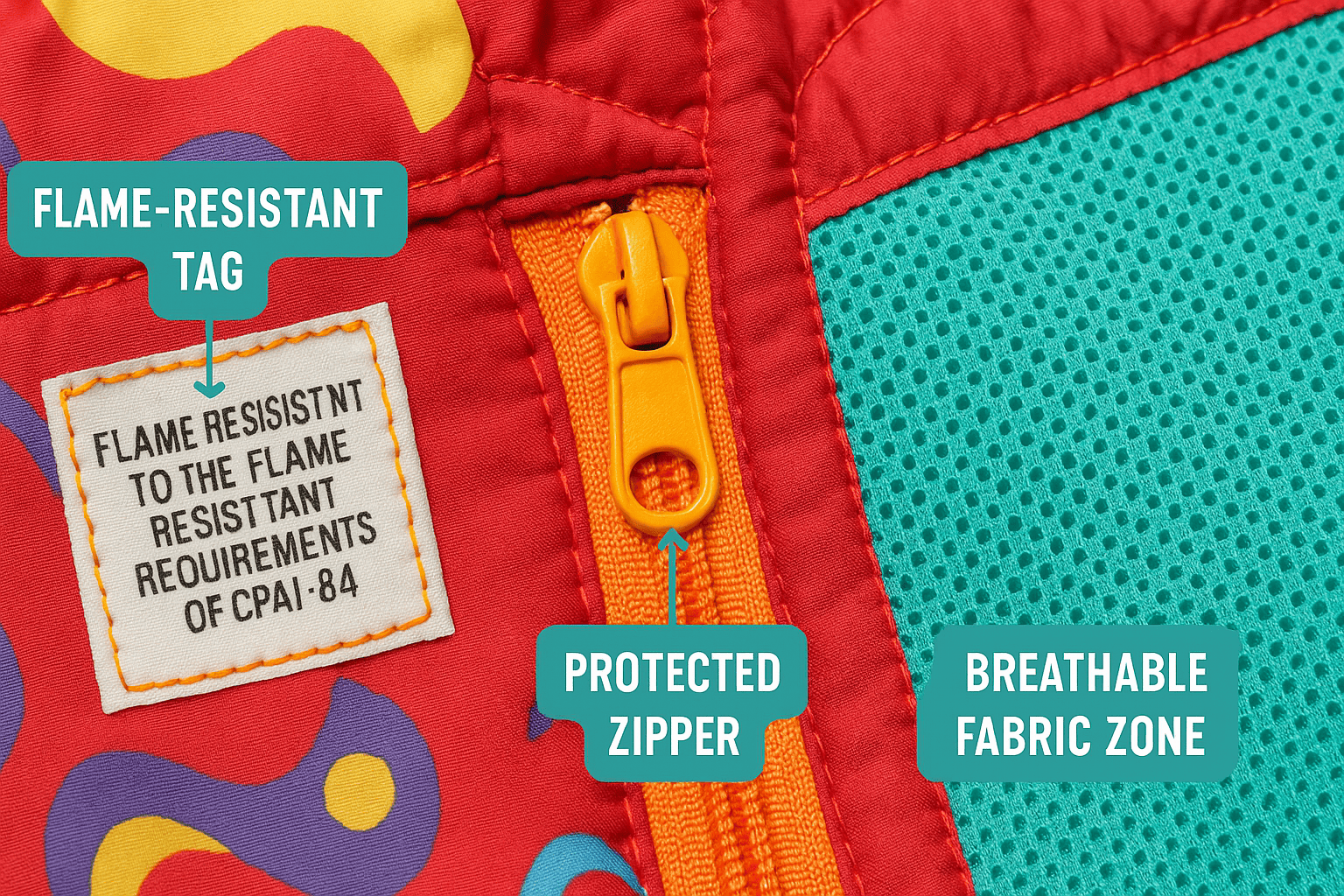
How to Choose Winter-Ready Zippers
A frozen zipper lock can strand a client’s entire order on the retail floor.
The most common failure point in cold-weather camping gear isn’t the fabric or the seam tape. It’s the zipper. When temperatures drop below -10°C, standard polyester zippers stiffen, crack, or jam entirely. A buyer I worked with lost a $50K sleeping bag order because the pre-production sample passed every test at room temperature — but the mass production run used a different batch of zipper tape that embrittled at -15°C.
What changes in cold weather
- Zipper tape material: Nylon tape retains flexibility down to -30°C. Polyester tape stiffens below -10°C and can crack under lateral stress. For any bag rated below 0°C, specify nylon zipper tape in your sample approval notes.
- Slider coating: Nickel-plated sliders corrode faster in wet-cold conditions. Stainless steel or anodized aluminum sliders survive 72-hour salt spray testing per ISO 9227 without seizing.
- Lubricant type: Standard silicone lubricant thickens at -20°C and gums the teeth. Paraffin-based wax or dry-film PTFE lubricant stays functional down to -40°C.
How to verify winter readiness before production
주문의 품질 관리 프로토콜의 일부로. 공장은 생산 로트에서 무작위로 추출한 3개의 샘플에 대해 -20°C에서 500회의 개폐 사이클 테스트를 수행해야 합니다. 샘플 중 어느 것도 걸리거나, 균열이 생기거나, 이빨이 빠지지 않도록 배치 전체를 거부합니다.
“하지만 공급업체가 ‘저온 저항 지퍼'를 사용한다고 말합니다' — 스펙 시트 없이 이러한 구절은 아무 의미도 없습니다. 제조업체의 모델 번호와 슬라이더에 인쇄된 온도 등급을 요청하십시오. YKK는 -30°C로 지정된 AquaGuard® 라인을 제공합니다; SBS는 -25°C로 테스트된 한겨울 시리즈를 제공합니다. 공급업체가 어떤 시리즈를 사용하는지 이름하지 못하면 당신은 도박을 하고 있는 것입니다.

Step-by-Step Frozen Zipper Fix Guide
-10°C에서 멈추는 지퍼는 고장난 것이 아닙니다 — 그냥 잠긴 것일 뿐입니다.
업계 사례는 생산 전 샘플이 실온 테스트를 통과했지만 현장 검증 중 -15°C에서 완전히 잠겨 $50K 수면 가방 주문을 잃은 구매자가 있음을 보여줍니다. 문제는 지퍼 품질이 아니었습니다 — 이빨 사이에 얼음 다리가 형성되는 것이었습니다. 대부분의 소비자 가이드는 뜨거운 물이나 성냥을 권장합니다. 둘 다 나일론 슬라이더 본체를 변형시키거나 윤활 코팅을 벗길 수 있어 임시 동결을 영구 고장으로 만듭니다.
세 단계 기계적 수정
첫 번째 단계: 옆쪽 장력을 적용합니다. 지퍼 양측의 천을 이빨에서 당깁니다 — 이는 메커니즘을 손상시키지 않고 얼음 필름을 파괴합니다. 두 번째 단계: 슬라이더가 여전히 움직이지 않으면 연필 그리스 문지르기 을 이빨에 사용합니다. 그리스는 얼음 아래에서 작동하는 건조 윤활제입니다. 세 번째 단계: 완고한 경우, 열린 불꽃 대신 체온으로 슬라이더 본체를 따뜻하게 합니다(30초 동안 손바닥으로 누릅니다). 이는 슬라이더 채널 내부의 미세 얼음을 충분히 녹일 수 있습니다.
수정보다 사전 처리가 더 중요한 이유
저장 전에 깨끗하고 건조한 방수 지퍼는 얼 가능성이 훨씬 낮습니다. 세척 또는 텐트 가방 내부의 결로로 인한 잔류 수분이 주요 원인입니다. Kelyland Outdoors는 백팩 라인에 밀폐형 방수 지퍼를 지정합니다 — TPU 코팅 테이프와 밀폐 슬라이더는 설계상 얼음 침투를 줄입니다. 대량 구매자의 경우, 공장에서의 건조 윤활 처리를 지정하면 현장 고장률을 약 60% 감소시킬 수 있습니다. 이는 사후 판매 수정이 아닌 사양 변경입니다.
수정을 건너뛰는 위험
집게로 강제로 여는 얼어붙은 지퍼는 이빨을 벗길 것입니다. 단일 수면 가방의 수리 비용은 운송비 포함 노동 비용 $8–$12만큼 듭니다. 1,000개 단위 주문의 경우, 이는 $8,000–$12,000의 warranty claims — 그리고 브랜드 명성 타격은 더 오래 지속됩니다. 한 철의 얼어붙은 지퍼 반품은 전체 제품 라인의 마진을 사라지게 할 수 있습니다. 수정은 간단하지만, 첫 번째 서리가 내리기 전에 사용자 설명서에 문서화되고 최종 소비자에게 전달되어야 합니다.
| 단계 | 방법 | 팁 |
|---|---|---|
| 윤활제 도포 | 지퍼 치에 실리콘 기반 윤활제, WD-40 또는 이소프로필 알코올을 바릅니다. | 오일 기반 윤활제는 먼지를 흡착하여 문제를 악화시킬 수 있으므로 사용하십시오. |
| 2. 지퍼를 부드럽게 조작 | 지퍼 슬라이더를 치면 따라 천천히 부드럽게 앞뒤로 움직입니다. | 무리하게 당기지 마십시오. 끼었으면 윤활제를 더 바르고 잠시 기다립니다. |
| 3. 온기로 얼음 녹이기 | 드라이어를 약한 열로 사용하거나 따뜻한 천을 얼어붙은 부위에 대십시오. | 원단이나 코팅을 손상시킬 수 있는 끓는 물은 절대 사용하지 마십시오. |
| >4. 이물질 제거 | 부드러운 브러시나 이쑤시기로 지퍼 레일에 쌓인 얼음 결정이나 이물질을 제거하십시오. | 지퍼 양쪽을 검사하여 숨겨진 장애물을 확인하십시오. |
| 5. 테스트 및 필요시 재도포 | 얼음을 녹이고 윤활한 후 지퍼를 완전히 테스트하십시오. 저항이 계속되면 단계를 반복하십시오. | 예방을 위해 추운 날씨 여행 전에 실리콘 스프레이로 지퍼를 처리하십시오. |

 English
  Español
  Deutsch
  Français
  Português do Brasil
  Русский
  العربية
  한국어
한국어  日本語
日本語