 콘텐츠로 건너뛰기
Sourcing beach tents from overseas factories is a direct path to either market success or costly product recalls, hinging entirely on materials and compliance. A single container of pop-up tents with weak memory-steel wire frames can lead to mass returns and permanent brand damage. Ignoring specific regulations like the Consumer Product Safety Commission (CPC) for baby products doesn’t just risk a fine; it means your entire shipment could be rejected at the port, turning potential profit into a total loss.
이 guide serves as a technical pre-production checklist for sourcing professionals. We will go straight into the critical factory-floor decisions, comparing high-carbon memory steel against cheaper alternatives for the pop-up frame. We’ll also break down the branding choice between vibrant digital prints and durable silk screening for your logos. Finally, we will cover the non-negotiable compliance standards for CPC and REACH, MOQ thresholds for custom colors, and specifications for creating retail-ready PDQ packaging.
The Wire: Why is High-Carbon Memory Steel Non-Negotiable?
The term “High-Carbon Memory Steel” is a frequent point of confusion, often conflating industrial-grade material with the flexible spring steel actually used in reliable pop-up tent frames.
Mismatch in Material Definition
In the B2B sourcing world, precision matters. The term “high-carbon memory steel” doesn’t exist as a standard industrial classification. Instead, it’s a marketing phrase that merges two distinct material categories. High-carbon steel is known for its hardness and is used in applications like cutting tools and industrial machinery where rigidity is key. Shape-memory alloys, or “memory steel,” are specialized materials (like Nitinol) that return to a pre-set form when heated. Neither of these accurately describes the wire used in pop-up beach tents, which is typically a flexible, coated spring steel engineered for high elasticity and fatigue resistance.
| Material Specification | Primary Property | Common Application |
|---|---|---|
| “High-Carbon Memory Steel” | Vague (Marketing Term) | Used in consumer product descriptions |
| Coated Spring Steel | High Elasticity / Shape Retention | Actual material for pop-up tent frames |
| Industrial High-Carbon Steel | Hardness & Abrasion Resistance | Cutting tools, machinery parts |
Lack of Application Data for Beach Tents
There is no credible engineering or manufacturing data that supports using true high-carbon steel for beach tent frames. The material properties are fundamentally wrong for the application. A tent frame must withstand repeated flexing, twisting, and folding without snapping or permanently deforming. Industrial high-carbon steel is too brittle for this. Instead, manufacturers rely on materials like coated spring steel or flexible fiberglass poles. These materials possess the high yield strength needed to “spring” back into shape, which is the core functional requirement for any pop-up product.
Absence of Sourcing or Industry Context
Attempting to source “high-carbon memory steel” for a tent product would immediately signal a lack of technical knowledge to a supplier. Professional buyers and product developers do not use this term. Instead, they provide precise technical specifications, such as “3mm diameter galvanized spring steel wire” or “5mm pultruded fiberglass rod.” Discussions with factories center on these verifiable specs, which dictate cost, durability, and performance. Focusing on real material standards ensures you are sourcing a reliable product, not just a marketing claim.

Branding: Digital Print vs. Silk Screen for Logos?
The choice between silk screen and digital printing is a strategic one driven by order volume and design complexity, not by one technology being superior to the other.
When branding outdoor gear like beach tents, the printing method directly impacts your logo’s durability, visual appeal, and unit cost. The two dominant technologies in the market, silk screen and digital printing, serve very different commercial needs. Understanding their core strengths is essential for making a sound sourcing decision.
Silk Screen Printing: Durability for High-Volume Orders
Silk screen printing is the industry workhorse for any serious production run, especially for quantities of 100 units or more. This method applies thick layers of ink through a mesh screen directly onto the tent fabric. The result is a physically robust and vibrant logo that stands up to sun, salt, and abrasion. The initial setup costs for creating the screens make it less economical for small jobs, but the cost-per-unit drops significantly as volume increases, making it the only practical choice for bulk orders.
- Offers superior durability, making it ideal for gear exposed to the elements.
- Produces vivid, opaque colors that stand out on various fabrics.
- Cost per unit decreases significantly with larger order volumes.
Digital Printing: Flexibility for Complex, Small-Batch Designs
Digital printing, often dye-sublimation on polyester fabrics, is the go-to solution for speed and design complexity. It functions much like an office printer, directly applying ink to the material without needing screens. This allows for the reproduction of photographic-quality images, intricate gradients, and logos with an unlimited number of colors. It’s the perfect method for small batches, prototypes, or customized jobs under the 100-unit threshold where silk screen setup costs would be prohibitive.
- Enables unlimited color possibilities and high-fidelity graphic reproduction.
- Allows for fast production and easy design changes for customized products.
- The best choice for small orders or when each item requires a unique design.
Which Method Fits Your Needs?
Neither method is better; they simply solve different problems. Your decision hinges on four key factors: order volume, logo complexity, budget, and required turnaround time. A clear understanding of these variables will point directly to the right technology for your project.
| 기능 | Silk Screen Printing | 디지털 인쇄 |
|---|---|---|
| 모범 사용 사례 | High-volume orders (100+ units) with simple, bold logos (1-4 colors). | Small-batch orders (<100 units) or complex, multi-color/photographic designs. |
| 내구성 | Excellent. Thick ink layer is highly resistant to abrasion and UV exposure. | Good. Ink is infused into fabric fibers, offering strong fade resistance. |
| Cost Structure | High initial setup cost, but very low cost-per-unit on large runs. | No setup cost, but a higher, flat cost-per-unit regardless of volume. |
| Color & Complexity | Best for solid, opaque colors. Limited by the number of screens required. | Unlimited color and gradient possibilities. Ideal for high-fidelity graphics. |
Use silk screen for large production runs to get the best blend of longevity and cost-effectiveness. Use digital printing for detailed artwork, custom one-offs, or small test orders. This balances your budget, timeline, and the visual complexity of your brand identity.
Source Durable, Custom Tents for Your Brand

Selling outdoor gear globally requires mastering two distinct regulatory landscapes: CPC for children’s product safety in the United States and REACH for chemical substance control across the European Union.
Entering major international markets isn’t just about logistics and marketing; it’s about rigorous product compliance. Failure to meet regional safety and chemical standards can result in seized shipments, hefty fines, and permanent damage to a brand’s reputation. Navigating these complex rulesets is a critical step in the sourcing process, not an afterthought.
Understanding CPC (Children’s Product Certificate) Requirements
For any brand targeting the United States with products designed for children under 12, a Children’s Product Certificate (CPC) is mandatory. This isn’t a suggestion—it’s federal law. The CPC is a formal document, backed by third-party lab testing, that certifies a product complies with all applicable safety rules enforced by the Consumer Product Safety Commission (CPSC). Items like kids’ camping chairs, small play tents, or baby beach shelters fall squarely under these regulations.
We manage this entire process by coordinating with accredited labs to conduct the necessary physical and chemical tests. From there, we prepare the formal documentation required for a smooth customs clearance and to satisfy US retail partners, who will not stock products without a valid CPC.
The European Union’s REACH (Registration, Evaluation, Authorisation and Restriction of Chemicals) regulation is one of the most comprehensive chemical safety frameworks in the world. It affects every product sold in the EU, including outdoor equipment where dyes, waterproof coatings, and plastic components are scrutinized for restricted substances. Compliance means ensuring that every material in a product, from tent fabric to zipper pulls, does not contain harmful chemicals above the legal threshold.
Our approach is proactive. We work directly with our supply chain to source and verify materials that meet REACH standards from the start. This prevents costly production halts, customs rejections, and the risk of a forced product recall when entering the European market.
| Attribute | CPC (Children’s Product Certificate) | REACH |
|---|---|---|
| Geographic Scope | United States Market | European Union (EU) Market |
| Primary Focus | Safety of products for children (under 12) | Control of chemical substances in all products |
| Core Requirement | Third-party lab testing and formal certification | Compliance with a list of restricted substances (SVHC) |
| Documentation | Formal CPC document required for import | Declaration of Conformity, technical files |
A Partnership Approach to Global Standards
Different markets have unique rules for quality, safety, and labeling that go beyond CPC and REACH. As a sourcing partner, we build international compliance directly into our service model. We provide clear guidance on the specific regulations impacting your target markets, whether in North America, Europe, or Australia. These checks are not a final hurdle but an integrated part of material sourcing and quality control. We manage the necessary testing and export paperwork, ensuring your product is built correctly from the beginning and moves through customs without delays.
MOQs: How to Start with Custom Colors (500 vs 1000)?
Minimum Order Quantities are dictated by a simple factory constraint: custom Pantone colors require large fabric dye lots, while using in-stock fabric allows for significantly smaller, more flexible production runs.
The High-Volume Standard: 500-1000+ Units for Full Customization
To manufacture a product with a unique Pantone color, the Minimum Order Quantity (MOQ) almost always starts at 500 to 1,000 units. This isn’t a factory-imposed sales tactic; it’s a direct reflection of the fabric supplier’s requirements. They need large minimum orders to justify the cost and effort of running a custom color dye lot, which makes producing smaller batches of a unique color financially impractical.
- Custom fabric dyeing dictates the entire production run because it requires a significant upfront material purchase from the mill.
- Ordering 1,000 units or more typically secures better per-unit pricing and guarantees consistent color matching across the entire batch.
- This path is best for established brands with predictable sales data or those launching a core product line where color consistency is critical.
The Low-Volume Option: 50-300 Units with In-Stock Colors
For businesses that need smaller quantities, a more flexible route is available. By selecting from a supplier’s existing inventory of standard fabric colors, you can often negotiate MOQs as low as 50 to 100 units. This “Startup Support” model, as we call it, bypasses the most expensive and time-consuming part of the process: custom dyeing.
- This approach uses readily available materials, directly reducing both the cost and the minimum production commitment.
- While the base fabric color is standard, you still retain full control over logos, branding prints, and custom packaging.
- It’s an effective strategy for testing new designs in the market, fulfilling smaller B2B orders, or for new brands needing to manage inventory risk.
How Product Complexity Influences MOQs
Your final MOQ is shaped by the entire product’s bill of materials, not just the fabric color. Tents or other gear requiring custom-molded plastic parts, unique zippers, or specialized metal components will often have different minimums than simpler products built from standard materials. Each custom component has its own supply chain and its own MOQ.
- Products with unique molded components may carry a separate, higher MOQ for those parts alone. For example, the MOQ for a custom zipper pull could be 5,000 units, even if your tent order is only for 500.
- Simpler gear like basic tarps or standard-design chairs offers the greatest flexibility for low-volume orders because they use off-the-shelf components.
- A smart tactic is to combine several different products into one larger purchase order, which can help meet overall factory production requirements.
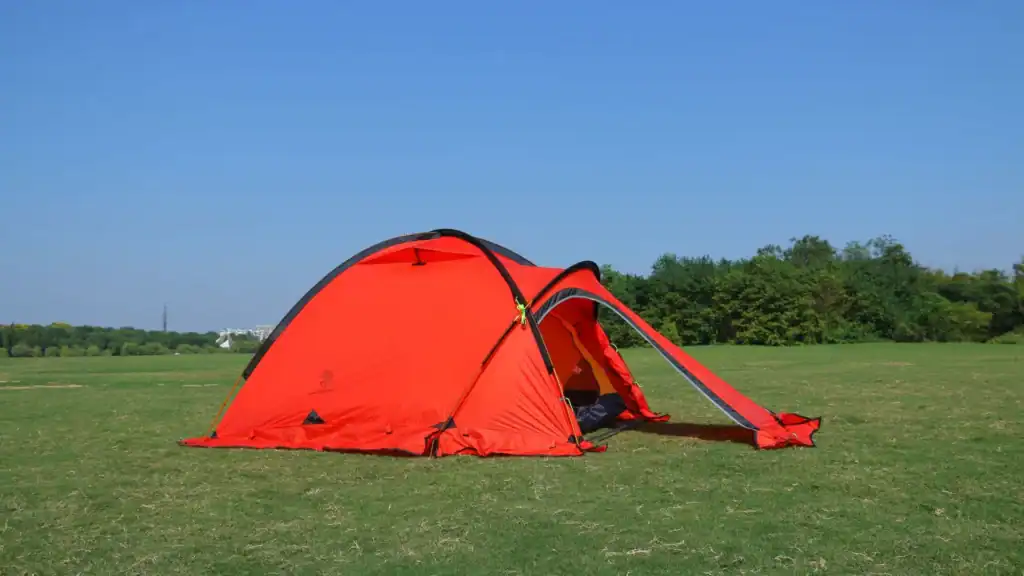
Kelyland Outdoors’ high-quality camping tent setup in nature.
Retail Ready: Designing PDQ Packaging for Shelves?
Effective Product Display Quickly (PDQ) packaging is a core part of modern retail strategy, directly influencing on-shelf sales velocity by simplifying stocking and improving the customer shopping experience.
With most purchasing decisions made directly at the shelf, packaging has evolved from a simple container to a critical sales tool. A well-designed PDQ display arrives at the retailer ready to be placed on the floor with minimal labor, ensuring products are presented consistently and attractively. This approach streamlines the supply chain and enhances brand presence in a crowded retail environment.
Key Performance Criteria for On-Shelf Success
At Kelyland Outdoors, we design packaging based on five industry-standard criteria established by the Institute of Grocery Distribution. This framework ensures our products are easy for store staff to handle and compelling for customers. The focus is on making the product simple to identify, open, and restock, which reduces friction from the warehouse to the shopping cart.
- Identification: Clear, bold branding and product information are visible from a distance, allowing shoppers and staff to locate the item quickly.
- Easy Opening: Perforated sections and intuitive tear-away points allow staff to set up displays quickly and safely, without needing box cutters or other tools.
- Simple Replenishment: The packaging structure is engineered for fast and efficient restocking, minimizing shelf downtime.
- Shopping Experience: The design provides an unobstructed view and easy access to the products, encouraging customers to grab and go.
- Disposal: We use recyclable materials like corrugated cardboard, making it straightforward for retailers to break down and dispose of the packaging after use.
Sustainable Materials and Efficient Design
Our packaging strategy centers on using minimal, recyclable materials to meet modern retail sustainability standards. We prioritize corrugated cardboard and other easily recycled options. Structural designs are engineered to minimize material waste without sacrificing strength. This approach not only aligns with corporate environmental goals but also helps reduce our clients’ shipping costs by optimizing for flat-packing to decrease freight volume.
Balancing Protection and the Shopper Experience
Every PDQ design undergoes structural analysis to ensure it protects the outdoor gear during transit and in-store handling. We test packaging in simulated retail environments to confirm its durability under real-world conditions like stacking and frequent customer interaction. The final packaging must be strong enough to withstand the entire supply chain, yet simple enough for customers to shop from without frustration. This balance ensures the product arrives intact and remains accessible to the shopper until the point of sale.
결론
Sourcing a successful beach tent line depends on getting the core components right. High-carbon memory steel provides the structural integrity customers expect, while the choice between digital and screen printing defines your brand’s visual impact. Navigating CPC and REACH compliance from the start ensures your products are ready for competitive global markets.
When you’re ready to develop a custom beach tent, our team can guide you through these material and compliance decisions. Contact us to review your project specifications or to request a sample for quality verification.
자주 묻는 질문
What is the standard Minimum Order Quantity (MOQ) for custom printed beach tents?
The standard MOQ for fully custom printed beach tents is typically between 500 and 1,000 units. This quantity allows for cost-effective material sourcing and efficient production setup. For simpler designs or repeat orders, some manufacturers might offer a lower MOQ, potentially around 300 units, but this often comes at a higher per-unit cost.
How do you ensure the pop-up wire frame retains its shape after shipping?
We ensure frame integrity through a combination of material selection and rigorous quality control. The pop-up frames are constructed from high-carbon, heat-treated spring steel, which has excellent shape-memory properties. Before shipping, a sample from each production batch undergoes a series of compression and release tests to verify that the frame consistently returns to its original shape without distortion or fatigue.
Can you provide CPC certification for baby beach tents destined for the US market?
Yes, absolutely. Providing a Children’s Product Certificate (CPC) is a standard and mandatory requirement for any baby or children’s products sold in the US market. We facilitate third-party laboratory testing to ensure the tent complies with all applicable CPSC safety standards, including material composition, structural integrity, and flammability. The final CPC is issued based on these successful test reports.
What printing method is best for full-color custom designs on tent fabric?
For full-color, photographic-quality custom designs, dye-sublimation printing is the superior method. This process infuses the ink directly into the polyester fabric fibers, resulting in a vibrant, permanent print that will not crack, peel, or fade over time. It allows for unlimited colors and complex gradients, making it ideal for detailed branding and intricate patterns across the entire tent surface.
Do you offer retail-ready PDQ display packaging for supermarket chains?
Yes, we specialize in providing retail-ready packaging solutions, including PDQ (Product Display Quickly) and other Shelf-Ready Packaging (SRP) formats. We can design and produce custom corrugated displays that are optimized for easy setup in major supermarket chains and retail environments. Our team works with your branding and the retailer’s specific guidelines to ensure the packaging is both protective and effective at the point of sale.
How can I verify the quality of the silver coating before placing a bulk order?
You can verify the quality of the silver coating through two key methods. First, we provide pre-production samples for your physical inspection, allowing you to assess the coating’s uniformity, adhesion, and overall finish. Second, and more importantly, we supply a formal third-party lab test report that certifies the fabric’s Ultraviolet Protection Factor (UPF) rating, typically UPF 50+, which provides quantitative proof of the coating’s performance.

 English
  Español
  Deutsch
  Français
  Português do Brasil
  Русский
  العربية
  한국어
한국어  日本語
日本語