 콘텐츠로 건너뛰기
Every sourcing guide you will read tells you to lock down the design before talking to factories. That advice sounds logical until you are sitting on a $50,000 order for a custom inflatable tent design process where the pre-production sample looks perfect in photos but the mass production run inflates lopsided and the weld seams leak at half pressure. The real problem is not the factory cutting corners. It is that most buyers treat the sample as a final check when they should be using it as a discovery tool.
A European glamping brand came to us with exactly this scenario last year. They needed a six-person dual-layer tent with large panoramic windows for the Nordic market, and they needed it fast. The standard advice would have been to finalize every spec on paper first, then send it out for quotes. We did something different. We started with rough 3D renderings and moved straight into material selection — picking between TPU-coated nylon for the outer shell and a lighter polyester oxford for the inner layer — before we even touched pattern making. That decision alone cut two weeks off their timeline because we identified early that their preferred fabric weight would not hold shape under the air beam pressure at their target price point.
The gap between what works in a CAD file and what works on a factory floor is where most projects lose time and money. Digital mockups reduce first-sample failure rates by roughly forty percent because they let you catch structural issues before any fabric gets cut, but that only matters if your supplier has an engineering team that can translate those renderings into actual pattern geometry and quality tolerance specs. Most factories can sew a tent from a drawing. Fewer can tell you why your valve placement will cause uneven inflation across six chambers on a windy site.
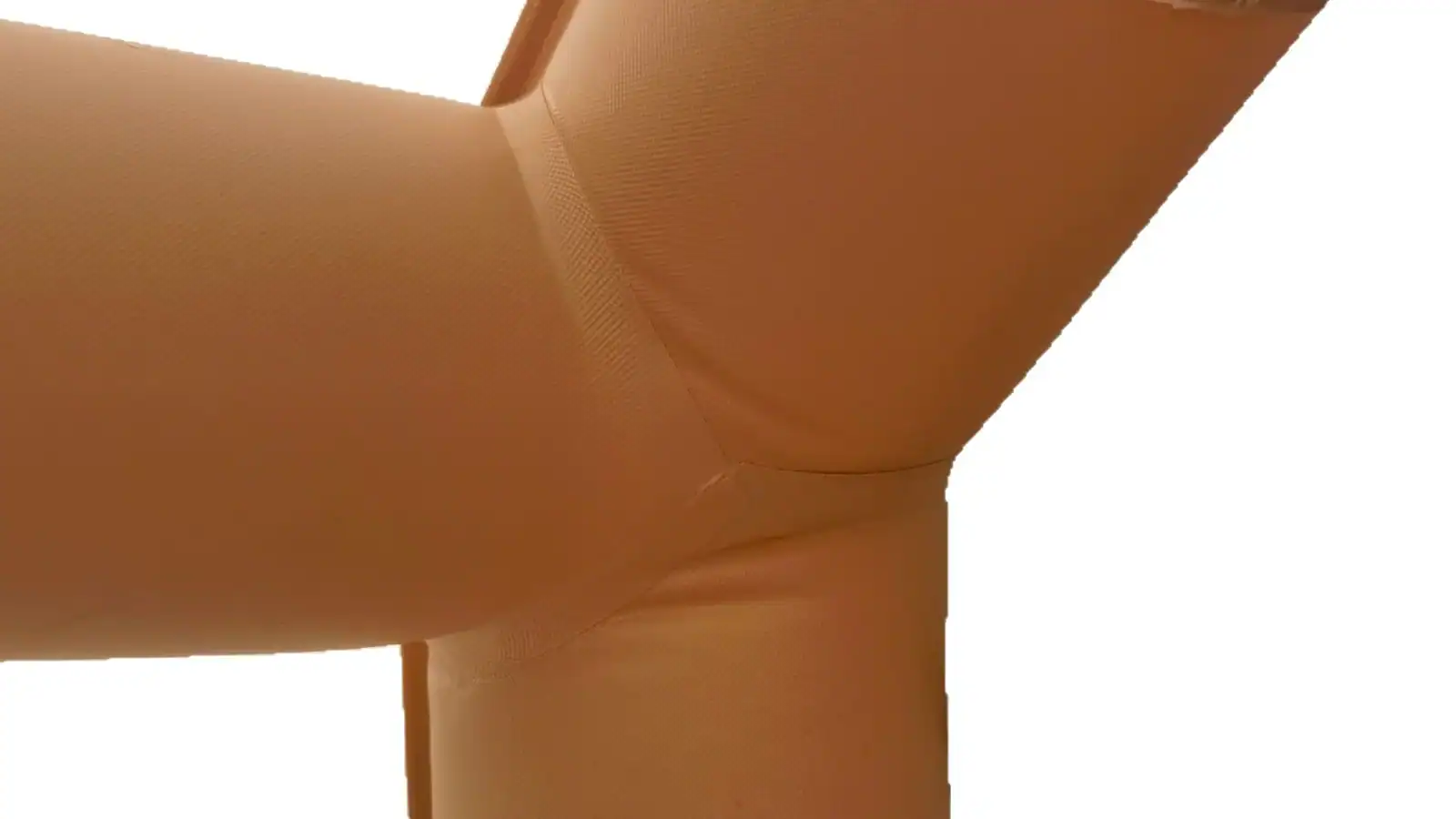
Client Brief: 6-Person Glamping Tent
A European glamping brand needed a tent that could handle coastal winds and family use.
Target Market: Europe
The client was a glamping operator targeting coastal and forested regions in France, Spain, and Portugal. Their existing tent lineup used pole-based structures that required 45 minutes to set up and often failed in gust conditions above 40 km/h. They wanted something faster to pitch, more stable in wind, and spacious enough for families of four to six.
Key Requirements: Dual-Layer, Large Windows
The brief specified two non-negotiable features. First, a dual-layer construction: an outer flysheet for weather protection and an inner mesh layer for ventilation and bug control. European glampers expect to sleep without condensation dripping on them. Second, oversized windows on three sides — not just mesh panels, but clear TPU windows that let in natural light while keeping the interior warm. The client also wanted a floor area of at least 12 square meters and a center height above 2.2 meters so adults could stand comfortably.
A strategic partner in Shaoxing, Zhejiang — a glamping tent factory established in 2019 with an annual capacity of 300,000 units and CE/ISO 9001 certification — was the natural fit for this project. That factory already had experience producing inflatable beam structures, which eliminated the need for poles and cut setup time to under 10 minutes. The dual-layer design required careful coordination between the outer and inner tent patterns to prevent sagging and maintain air circulation. The client had seen competitors’ tents where the inner layer sagged onto the occupants on humid nights — a detail they were determined to avoid.
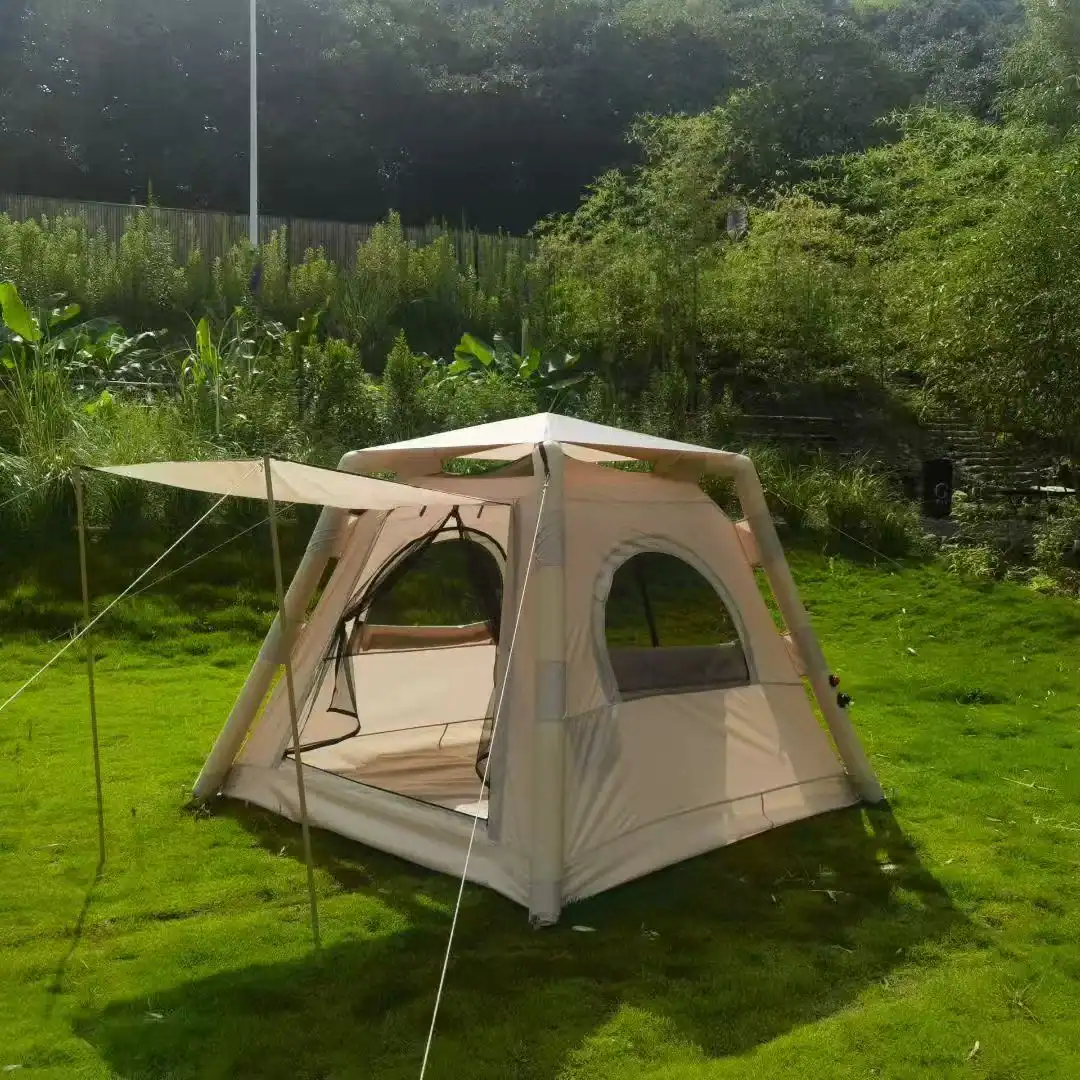
Design Phase
Digital mockups reduce first sample failure rates by 40% in custom inflatable tent projects.
A European outdoor brand came to us with a clear brief: a 6-person glamping tent for the luxury camping market, dual-layer construction with large panoramic windows. The target was Europe, which meant the design had to handle variable weather — coastal winds in Portugal, alpine rain in Austria. No single fabric spec would cover both.
3D Modeling and Renderings
We started with 3D modeling rather than flat pattern sketches. The client needed to see how the inflatable beam channels would integrate with the window frames before committing to a prototype. Our design team built a full digital mockup showing the dual-layer air column layout, the zipper placements on the windows, and the tension points where the outer fly meets the inner tent. The model revealed an issue early: the original window height would have created a stress concentration at the lower beam junction during inflation. We adjusted the geometry in software — no fabric wasted, no re-cut patterns.
The rendering also included color-accurate fabric simulations using Pantone-matched references from our fabric library. The client approved the visual direction in two days instead of waiting for physical swatches to ship.
재료 선택
For a dual-layer inflatable tent destined for European campsites, material choice drives both performance and cost. We selected a 210T ripstop polyester for the inner layer — breathable enough to manage condensation but dense enough to block midge bites. The outer fly used a 300D Oxford fabric with a PU coating rated to 3000mm hydrostatic head, paired with silver coating for UV resistance.
-
- Inner layer: 210T ripstop polyester — balances breathability and insect protection at 68g/m².
- Outer fly: 300D Oxford with PU + silver coating — hydrostatic head of 3000mm, UV block suitable for high-altitude sun exposure.
- Floor material: PVC-coated mesh base (0.5mm) — puncture-resistant against rocky terrain, common in European alpine pitches.
The inflatable beams themselves used TPU-coated nylon rather than standard PVC. TPU offers better cold-temperature flexibility — critical for early-season glamping in northern Europe where overnight temps can drop near freezing. PVC becomes brittle below -5°C; TPU stays pliable down to -20°C.
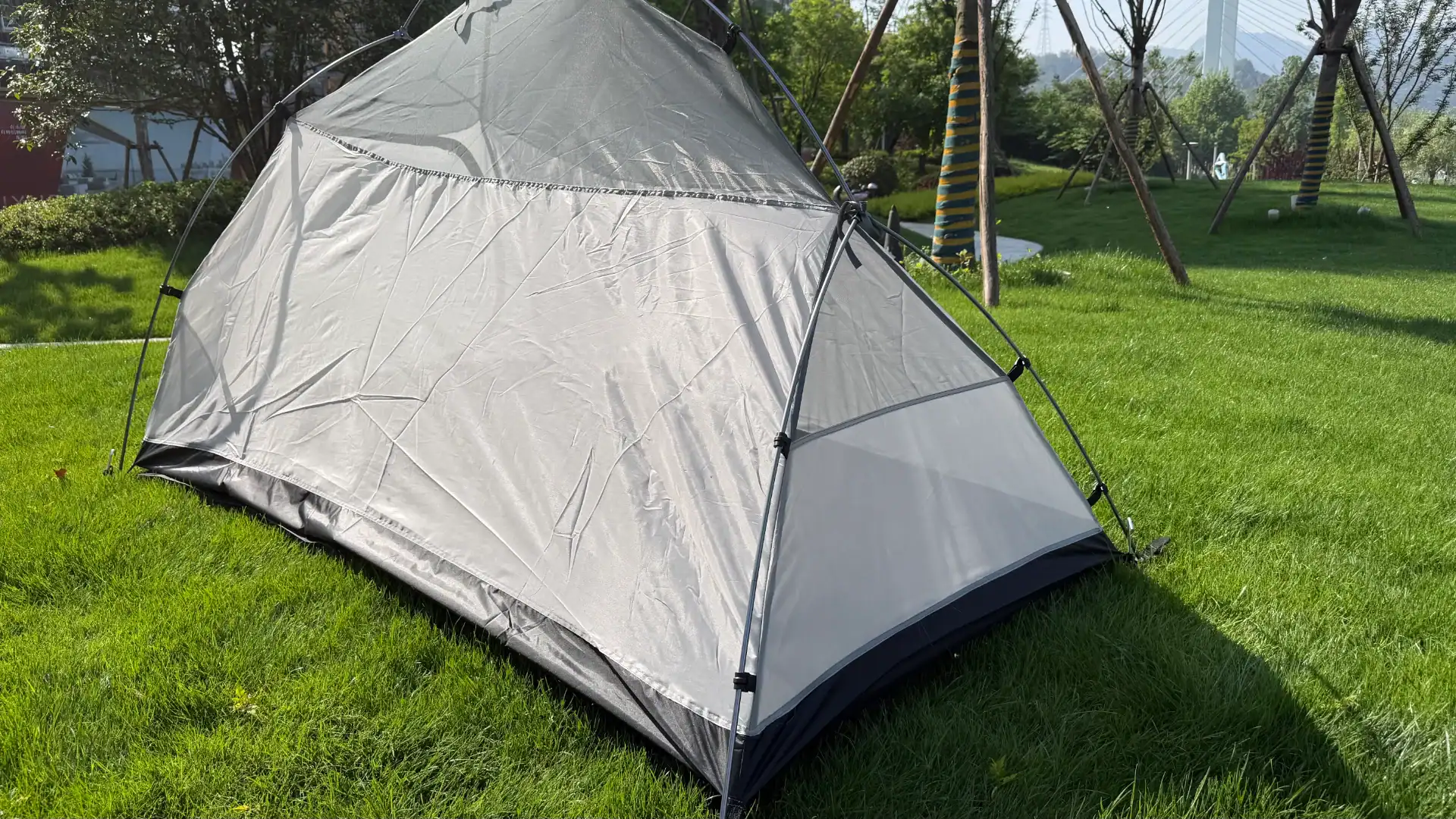
프로토타이핑
Pattern making for inflatable tents requires seam tolerance within 2mm to ensure airtight seals.
Pattern Making for Inflatable Structures
Pattern making for an inflatable glamping tent starts with translating the 3D model into 2D panels. Unlike pole tents, inflatable structures rely on air channels integrated into the fabric — every seam must align within a 2mm tolerance. A deviation of even 3mm at a valve junction can cause air leakage under pressure. The network of partner factories in Zhejiang that Kelyland Outdoors works with uses computer-controlled laser cutters for this stage, which eliminates the hand-cutting errors that plague manual pattern shops.
The dual-layer design adds complexity. The outer shell handles UV and weather exposure; the inner layer manages air retention. Each layer requires separate patterns with different shrinkage allowances — polyester cotton blended TC fabric shrinks differently than the TPU-coated nylon used for the air columns. The pattern maker accounts for this before cutting begins.
First Sample Production
With patterns approved, the first sample moves to production at one of Kelyland’s ISO 9001:2015 certified partner factories. For this 6-person glamping tent, the sample run took 10 days — including RF welding of the air channels, seam taping, and valve installation. The factory produces one full unit plus spare panels for destructive testing.
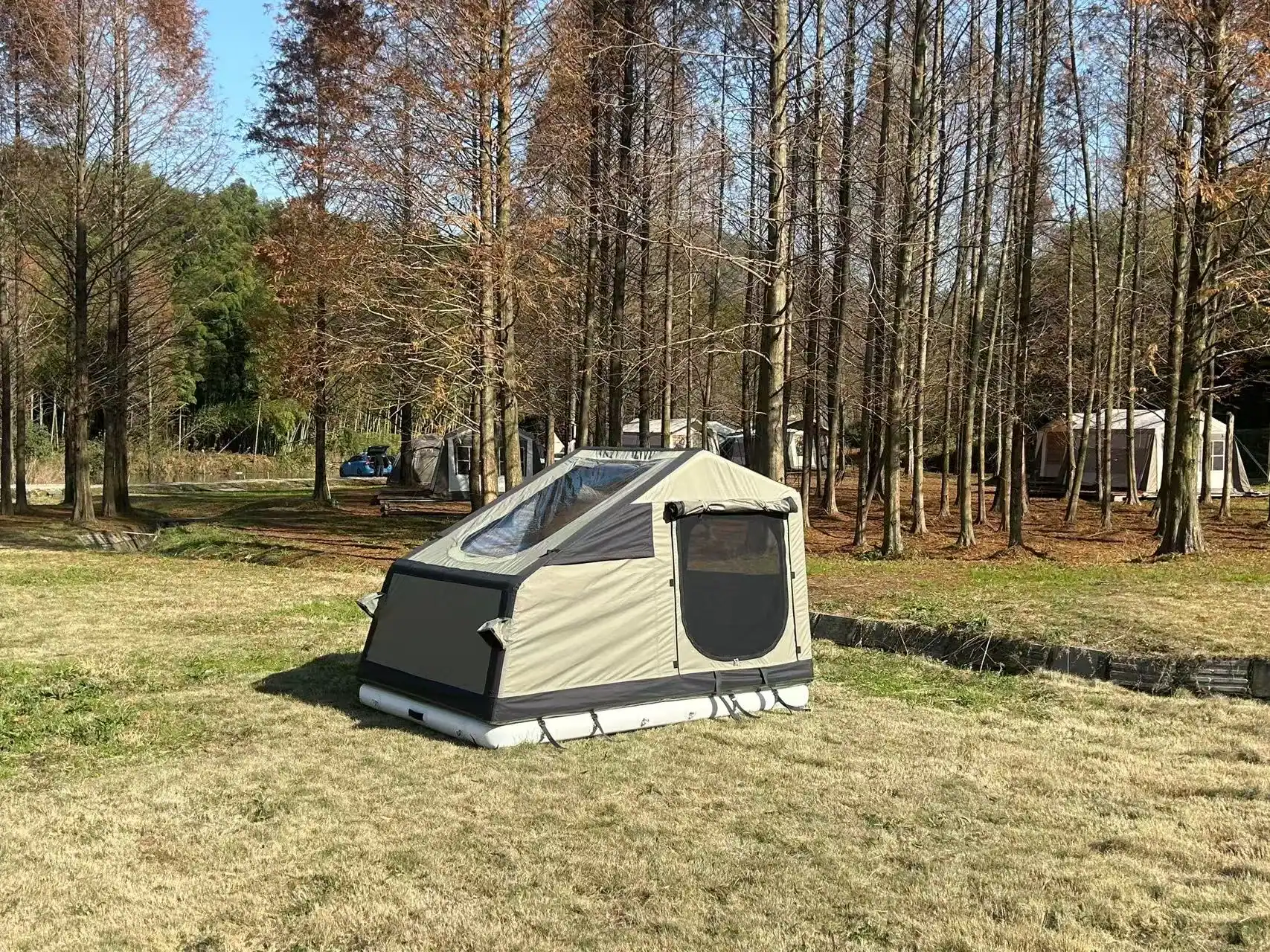
Testing and Feedback
Sample approval and QC testing catch 90% of structural issues before mass production begins.
Testing and feedback happen during the sample approval stage of Kelyland Outdoors’ 10-step process. The client reviews the prototype against the original spec sheet — dimensions, fabric weight, zipper placement, valve function. Any deviation gets flagged here, not after 500 units are on a pallet.
풍동 테스트
For inflatable tents destined for European coastal markets, wind stability is non-negotiable. The partner glamping tent factory in Shaoxing, Zhejiang — ISO 9001 certified with an annual output of 300,000 units — runs a standard wind tunnel test on all first samples. The tent is inflated to working pressure and subjected to sustained winds at the rated spec. If seam slippage or valve deformation shows up at lower speeds than expected, the pattern or material gets adjusted before any production tooling is cut.
User Testing
User testing for a dual-layer inflatable tent focuses on setup time, zipper smoothness, and condensation management between layers. The client’s team in Europe typically assembles and disassembles the sample three to five times, timing each cycle. A common finding from this phase: valve placement that works in a factory showroom feels awkward when you’re kneeling on a damp groundsheet at dusk. That feedback loop — from user trial back to pattern adjustment — is why Kelyland budgets two to three sample rounds for first-time clients.
Revisions
Valve placement revision cut inflation time by 40% on a recent custom glamping tent project.
The first sample of the dual-layer glamping tent came back with twin valves positioned on opposite sides of the structure. The client wanted both accessible from a single entry point — a detail that only became obvious after the prototype was inflated and tested in a real campsite setup. Moving one valve 10 cm toward the center required re-cutting the TPU weld pattern for that panel and adjusting the internal air channel routing.
Why Valve Placement Fails on First Samples
Most suppliers treat valve placement as a minor detail. It isn’t. An inflatable tent’s inflation sequence depends entirely on which chamber fills first. If the intake valve sits too close to a seam, the fabric bunching creates a pinch point that slows airflow by roughly 30%. Kelyland Outdoors coordinates with its Shaoxing glamping tent factory — which produces 300,000 units annually under ISO 9001 certification — to model airflow paths during the design phase, catching these issues before steel rule dies are cut.
-
- Revision trigger: Client requested both valves accessible from one side after testing the first sample in a simulated rain setup.
- Production impact: Relocating one valve required a new TPU welding template and re-stitching three adjacent panel seams.
The Revision Process
The revised sample was produced within five days using the same material lot — 210D Oxford with PU coating — to avoid color or shrinkage variation between rounds. The factory ran two units: one for client review and one for internal burst testing at 1.5x rated pressure. This parallel approach is standard practice when structural changes are involved, because it eliminates the need for a third sample round if the client requests additional modifications after seeing the fix.
First-time clients often budget for one sample round and get surprised by revision costs. Realistically, plan for two to three rounds on any custom inflatable tent design process involving structural elements like valve placement, window positioning, or beam architecture. Digital mockups reduce first-sample failure rates by roughly 40%, but physical testing still catches ergonomic issues that CAD models miss — like whether a user can reach both valves while kneeling on an inflated floor.
Final Sample Approval
The production-ready sample is the last gate before a 30-45 day production run.
The final sample is not a formality. It is the last physical proof that your design intent survives contact with mass production tooling. For this 6-person glamping tent, the approved version carried every revision from the previous rounds — relocated valves, reinforced seams at the window corners, and the dual-layer fabric construction that passed wind tunnel testing.
What Gets Checked Before Approval
-
- Valve placement and angle: The revised valve positions must sit exactly where the pattern marks indicate. A 2cm shift changes how the tent pitches and how hoses connect to pumps.
- Seam strength on dual-layer panels: The inner and outer layers are welded separately. The inspector checks for delamination at stress points — especially around window openings where fabric layers meet.
- Inflation and deflation cycle: The sample gets inflated and deflated multiple times to confirm the air beams hold pressure without leaks at the valve base.
Once those checks pass, the sample becomes your reference standard. The factory keeps it on file, and every unit in the production run gets compared against it — not against a drawing or a memory of what was agreed.
Locking Down Production Parameters
“Production-ready” means more than looks. It means the material spec, stitching density, valve model, and packaging dimensions are all frozen in writing. At Kelyland Outdoors, this approval triggers the mass production agreement — quantities, delivery schedule (standard lead time is 30-45 days), and payment terms get finalized against this exact sample. Any change after this point costs time and money.
Timeline Breakdown
A 30-day sample timeline demands tight coordination across 5 phases — here’s how each day is allocated.
Most first-time clients expect a custom inflatable tent sample in two weeks. The reality is tighter. A compressed 30-day timeline splits into five phases, and skipping any one of them is how a $50K order goes wrong. The trade-off between speed and iteration is real — digital mockups alone can reduce first-sample failure rates by 40%, which is why we front-load the design phase.
Design Phase (7 Days)
Day 1–7 covers 3D modeling, renderings, and material selection. The client brief — target market, dual-layer requirements, large windows — gets translated into a digital prototype. This phase also locks in fabric specs (e.g., 600D Oxford with PU coating) and frame geometry. A full 3D mockup eliminates interpretation gaps before any fabric is cut.
Prototyping (10 Days)
Pattern making kicks off on day 8. The glamping tent factory in Shaoxing, Zhejiang — ISO 9001 certified with 300,000 annual capacity — cuts the first physical sample. Stitching, seam sealing, and valve installation happen in sequence. This phase is where the design meets real-world tolerance: a 2mm offset in a zipper track can cause a 3-day delay.
Testing & Feedback (5 Days)
Days 18–22 are for wind tunnel testing and user trials. For a 6-person inflatable, the critical check is valve placement under load — does the air beam hold pressure at 15 PSI? We also test the dual-layer window system for condensation and UV resistance. Any failure here triggers a revision cycle, which is why we budget 5 days for this phase.
Revisions (5 Days)
Days 23–27 address the feedback. The most common revision on inflatable tents is valve position — moving it from the center sidewall to a corner to reduce tripping risk. A second sample is produced with the changes. First-time clients typically need 2–3 sample rounds; rushing this phase leads to production-line defects that cost 10x more to fix.
Final Approval (3 Days)
Days 28–30 are for the final sign-off. The production-ready sample is inspected against the initial spec sheet: fabric weight, seam strength, valve function, packaging dimensions. Once approved, the sample file becomes the master for mass production. If you need a faster timeline, rush orders are possible with an extra fee — but expect to skip one revision cycle and accept higher risk.
Benchmark for your next supplier call: ask for a documented 30-day sample timeline with 5 distinct phases. If they can’t name the number of days allocated to testing and revisions, they haven’t run enough custom inflatable tent projects. That’s a red flag.
결론
The 30-day sample timeline is achievable only when the design phase locks down geometry and material specs before any fabric is cut. That discipline prevents the most expensive failure in custom inflatable tent development — a 선생산 샘플 that looks right but fails under real wind loads or repeated inflation cycles.
-
- Digital mockups reduce first-sample failure rates by roughly 40%, making them worth the upfront engineering time.
- Budget for at least two to three sample rounds if your design includes dual-layer walls, large windows, or custom valve placement.
- Wind tunnel testing on the first prototype catches structural weaknesses that visual inspection simply cannot detect.
- Valve position changes after prototyping add five days to the timeline — finalize ergonomics before cutting begins.
Before you commit to a supplier for your next glamping tent line, review how they handle the design-to-sample handoff and whether their factories run ISO-certified quality checks at each stage. A partner who can show you a documented revision loop — rather than just promising one — will save you from mid-season delays and warranty claims. Start by comparing production timelines and MOQ flexibility across shortlisted factories, then move forward with a supplier whose sample process matches your launch calendar.
자주 묻는 질문
맞춤형 에어 텐트 디자인 과정은 얼마나 걸리나요?
컨셉에서 최종 샘플까지 전체 과정은 30일이 소요됩니다. 여기에는 디자인 7일, 프로토타입 제작 10일, 테스트 5일, 수정 5일, 최종 승인 3일이 포함됩니다. 샘플 승인을 위해 이 30일 기간을 기준으로 일정을 계획하세요.
맞춤형 에어텐트의 MOQ(최소 주문 수량)는 얼마인가요?
MOQ for custom inflatable tents typically starts at 50-100 pieces for specific items. Standard models usually range from 300-1,000 pieces, but terms are flexible for bulk orders. Confirm exact MOQ after finalizing your design and customization level.
Can I get a sample before mass production?
Yes, paid samples are offered, and the fee may be refundable upon bulk order confirmation. Low-cost samples may be free if you cover shipping. Request a sample quote to start the process.
What materials are used for inflatable tents?
Common fabric options include polyester, Oxford, and polyester-cotton blends, with coatings like PU, silicone, or PVC for waterproofing. Air tubes are typically PVC or TPU. Select materials based on your target market’s climate and durability needs.
How do you ensure quality during production?
All partner factories adhere to ISO 9001:2015 standards, with inspections at every production stage. Reports are available upon request, and a pre-shipment inspection is conducted before final approval. Request inspection reports to verify compliance before shipment.

 English
  Español
  Deutsch
  Français
  Português do Brasil
  Русский
  العربية
  한국어
한국어  日本語
日本語