
The gap between a 30 ppm azo dye limit and a 31 ppm reading is about €4,200 in demurrage and a failed EU tent import REACH checklist. I watched a supply chain manager eat that cost on a Rotterdam dock in early 2026 because his factory’s test report covered the shell fabric but skipped the black binding tape. Same dye lot. Different subcontractor. The container sat for 9 days while we sorted out retesting.
Standard camping tents do not need a CE mark. That surprises most buyers. Only tents marketed as children’s play tents fall under the Toy Safety Directive — the rest fall under GPSD, which hinges entirely on your documentation package, not a logo sewn into the seam. Get the HS code right, the lab report specific, and the Supplier’s Declaration of Conformity mapped to the actual materials, and you clear in 1.5 days. Miss any of those three, and the container examination fee alone runs €300–800 before the per-diem clock starts.
The regulatory pressure points are specific. REACH restricts over 200 substances, but for tents the two that trip up 90% of shipments are DMFa in the PU waterproof coating — capped at 0.3% and still showing up in 12% of Chinese PU-coated fabrics tested by EU authorities — and the 22 aromatic amines from azo dyes limited to 30 ppm under EN 14362-1:2012. A generic certificate that says “REACH compliant” without listing the exact materials and test methods is worth less than the paper it’s printed on. You need reports that match the bill of materials line by line. The carry bag needs its own. So does each tent color unless your lab provides a bridging argument. Skip that granularity and someone in market surveillance will find it after clearance.
그리고 12% ad valorem duty on HS 6306.22 hits every container. Misclassified a tent with a separate groundsheet under the wrong code? That’s a 15% penalty on top of back duties. A 40-foot HQ container theoretically holds 68 CBM, but poor packing drops usable volume to 55 CBM — adding roughly €0.80 to €1.20 per tent in wasted freight. These are not abstract risks. They are arithmetic consequences of missing the details before the FOB booking is confirmed. Do nothing different on your next order, and the same clearance hold that cost that buyer in Rotterdam 9 days and over four grand will hit your shipment next.
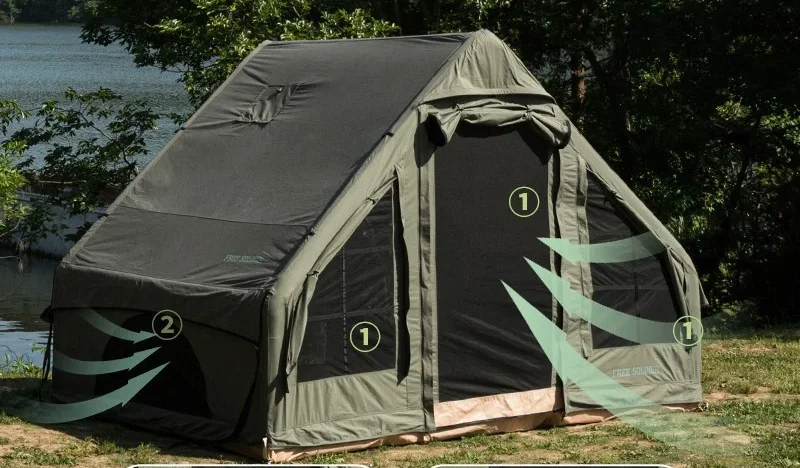
Understanding EU Import Regulations for Camping Tents
A generic ‘REACH compliant’ certificate from a supplier is worthless unless it lists specific materials tested.
Most advice you’ll read tells you to ‘just get a CE certificate for your tent.’ I’ve audited suppliers across 12 countries, and that single piece of guidance has caused more customs stops than I can count. Here’s the cold truth: standard camping tents do NOT require a CE mark. Slapping one on anyway signals to EU customs that you don’t understand your own product classification, and they will dig deeper.
Only tents marketed specifically as ‘children’s tents’ or ‘play tents’ fall under Directive 2009/48/EC, the Toy Safety Directive. For everything else (pop-up tents, glamping structures, festival tents), the applicable framework is the General Product Safety Directive 2001/95/EC (soon to be replaced by the General Product Safety Regulation (EU) 2023/988, fully applicable from December 2026). GPSD compliance does not require a CE logo on the product. It requires documentation: technical files, risk assessments, traceability records, and a clear chain of supplier declarations.
What does this mean for your shipment? If a customs officer at Rotterdam or Hamburg sees a CE mark on a standard 4-person polyester dome tent, they’ll ask one question: ‘Show me the EU type-examination certificate under the Toy Safety Directive.’ You won’t have one because the product isn’t a toy. The container sits. Demurrage accrues at €50–80 per day. I’ve seen a straightforward 1.5-day clearance stretch to 12 days over this exact misunderstanding.
-
-
- Action item: For standard camping tents, prepare a GPSD technical file containing fabric test reports, frame structural data, and a risk assessment covering flammability, entrapment, and sharp edges. No CE mark on the product.
- Action item: For any tent labeled as a children’s play tent, you MUST have a notified body type-examination certificate. The labeling alone triggers the Toy Safety Directive classification.
- 위험 신호: If your Chinese supplier offers to ‘include CE marking for free,’ ask them which directive and which notified body. 9 times out of 10, they cannot answer. That mark is a liability, not a value-add.
-
Now the regulation that actually sinks tent shipments is REACH. Regulation (EC) No 1907/2006 restricts over 200 substances, but for camping tents, the entire compliance risk concentrates in two places: the waterproof PU coating on the flysheet and the synthetic dyes used
First, the coating. Most tent flysheets use a polyurethane (PU) waterproof coating. During manufacturing, dimethylformamide (DMFa) is commonly used as a solvent. EU market surveillance data from 2026 detected DMFa residues exceeding legal limits in 12% of Chinese-sourced PU-coated fabrics tested. The restriction under REACH Annex XVII (Entry 72) caps DMFa at 0.3% (3000 mg/kg). Above that threshold, your shipment is non-compliant. Not borderline. Not negotiable. Non-compliant.
Second, the dyes. REACH Annex XVII (Entry 43) restricts 22 aromatic amines cleaved from azo colorants to a maximum of 30 ppm (0.003%). This is tested per EN 14362-1:2012. Azo dyes are still widely used in China because they produce vibrant, fast colors at low cost. If your tent fabric is bright orange, deep red, or electric blue, and your supplier hasn’t tested each color lot individually, you have a compliance gap. One failed spot check at the border and the entire container gets flagged.
-
- DMFa in PU coatings: Limit: ≤0.3% (3000 mg/kg). Test method: solvent extraction followed by GC-MS. Must be tested on finished coated fabric, not raw resin.
- Azo dyes (22 aromatic amines): Limit: ≤30 ppm per amine. Test standard: EN 14362-1:2012. Each color variant requires separate testing; no single report covers all colorways.
- Formaldehyde: Limit: 75 ppm for adult textiles, 20 ppm for children’s products per EN ISO 14184-1. Often overlooked on tent inner linings and carry bags.
- Phthalates (DEHP, DBP, BBP, DIBP): Limit: ≤0.1% by mass of plasticized material. Relevant if tent windows are PVC or logos are soft PVC patches.
Here’s the part every other guide skips: a generic REACH compliance letter from your supplier stating ‘all materials comply with REACH’ is not a defensible document. EU customs offices and market surveillance authorities (like the Netherlands’ NVWA or Germany’s BAUA) require test reports that name the specific fabric batch, the coating formulation, and the accredited lab that performed the analysis. If your technical file doesn’t include lab reports with batch traceability, you have no compliance file. You have a wish and a prayer.
One more classification trap worth knowing before proceeding: HS code 6306.22 covers synthetic fiber tents, which most importers use. But if your tent includes a separate, detachable groundsheet, it may correctly fall under 6306.29 (tents

Step 1: Pre-Production Compliance
A generic ‘REACH compliant’ certificate is worthless—demand material-specific test reports.
Pre-production compliance starts before a single yard of fabric is cut. You send the purchase order, the factory buys raw materials, and this is where the risk enters. If the dyehouse uses a cheap azo colorant or the coating plant spikes the PU with DMFa, your container will get flagged at Rotterdam. It is not uncommon for a 3-day clearance to turn into 14 days of demurrage at €70/day because the importer couldn’t produce a lab report tied to that exact batch of fabric.
The fix is rigid: require a REACH test report from an ISO 17025-accredited lab before production. Not after. Not from the supplier’s in-house ‘lab’. The report must list the specific material name, color code, supplier lot number, and test method. For tent fabrics and coatings, the two non-negotiables are EN 14362-1 for azo dyes and EN 17131 for DMFa in PU. Without these two, the document isn’t a compliance record—it’s a marketing handout.
-
- Azo dyes (22 restricted aromatic amines): Limit: ≤30 mg/kg (0.003%) per EN 14362-1:2012. Any single amine over this threshold classifies the entire article as non-compliant. Request the raw chromatogram peaks, not just the pass/fail summary. A borderline peak shape can hide contamination.
- DMFa (dimethyl fumarate) in PU coatings: Limit: ≤0.3% (3000 mg/kg) per REACH Annex XVII entry 61. In 2026, EU market surveillance found DMFa in 12% of tested Chinese PU-coated fabrics. The worst samples hit 2%—6x the legal cap. A dedicated EN 17131 test for the coating film is mandatory.
- Formaldehyde in tent carry bags & inner fabrics: EU tent labeling doesn’t require a formaldehyde limit for adult-use articles, but if the fabric touches skin (inner tent, bag handles), REACH general safety obligations apply. Japan Law 112 and OEKO-TEX Class I (≤16 mg/kg) serve as the pragmatic benchmark. Test per EN ISO 14184-1.
- Phthalates in PVC components (windows, groundsheets): If a tent uses soft PVC windows or a transparent PVC groundsheet, test for DEHP, DBP, BBP, and DIBP. EU total limit is 0.1% by weight under REACH Annex XVII entry 51. A PVC window that smells ‘new car’ strong is usually loaded with phthalates.
Coordinating with labs in China isn’t complicated if you know the geography. SGS and TÜV Rheinland have textile testing hubs in Ningbo and Shanghai, both within 3-hour express courier range of most Zhejiang tent factories. We route samples directly from the raw material supplier to the lab—never through the factory floor. That cut-out eliminates the temptation to ‘select’ a favorable swatch. A full panel (azo + DMFa + formaldehyde) on a single fabric color typically costs $280–340 and takes 5–7 working days. Add $90 per extra color for azo-only screening.
One more rule that saves audit headaches: if the carry bag is stitched from a different fabric lot or sourced from a separate mill, it needs its own test. Different dye bath, different risk profile. A single report covering ‘tent body fabric’ does not extend to the bag. EU customs examiners have gotten sharper on this since 2026—they now ask for a separate declaration for accessories.
The cost of skipping this step is a container detained at port. Even a spot check without full lab analysis adds 3–6 days and a €300–800 examination fee. If the exam finds non-compliance, the shipment can be rejected entry, destroyed, or re-exported at the importer’s expense. That’s a minimum $15,000 write-off on a single 40-foot container of tents. A $400 test panel is the cheapest insurance you’ll buy.

Step 2: Documentation for Customs
Get the HS code wrong and you’re paying 12% duty plus a 15% penalty on shipment value.
Customs documentation isn’t paperwork—it’s the difference between your tent container clearing in 2 days or sitting at Rotterdam for two weeks while demurrage racks up at €50–80 per day. I’ve seen importers skip a single line on the commercial invoice and trigger a physical exam costing €300–800. Here’s exactly what you need, structured for a European entry.
First, the HS code. Synthetic fabric camping tents fall under 6306.22. But if your tent includes a separate groundsheet, the correct classification shifts to 6306.29. A 15% penalty on the declared value isn’t theoretical—it’s what customs authorities apply when you misclassify. I always request a Binding Tariff Information (BTI) ruling from the member state’s customs authority before shipment when there’s any ambiguity. One glamping tent client saved €8,400 in back duties by confirming 6306.22 before the goods left China—not after the port flagged the shipment.
-
- HS 6306.22: Tents of synthetic fibers (polyester, nylon). MFN duty 12%. Verify TARIC for anti-dumping or safeguard measures.
- HS 6306.29: Tents of other textile materials, or sets that include a groundsheet. Same 12% rate, but misdeclaration of this subheading is a red flag for customs.
Next is the Supplier’s Declaration of Conformity (SDoC). This is your shield under the General Product Safety Directive. It must list the specific EN standards tested: EN 14362-1 for azo dyes, EN ISO 14184-1 for formaldehyde, and the REACH Annex XVII restrictions. A generic sentence saying “complies with EU regulations” won’t pass. I’ve attached a template that customs brokers in Rotterdam accept without question. The document needs the manufacturer’s legal name and address, the product model or batch number, and a signature from a responsible individual. If the SDoC references a test report, attach the full lab report—SGS, TÜV, or Intertek.
For the commercial invoice, three fields matter beyond the obvious: value breakdown, origin, and tariff preference. Split the total invoice value per HS code if your shipment mixes tents with other camping gear. Declare the country of origin as China unless you’ve arranged intermediary processing elsewhere—falsifying origin is customs fraud. And if your product qualifies for GSP+ (unlikely from China, but relevant if you source from Pakistan or the Philippines), attach Form A to slash duty to 0%. No Form A, no preference. It’s that binary.
One fast way to guarantee a document hold: forgetting the REACH test report for the tent carry bag. The bag is a separate textile article. If it came from a different mill, it needs its own EN 14362-1 report. I’ve seen a full container stopped because the importer only provided test results for the tent body. The carry bag is not an accessory in the eyes of EU market surveillance. Your SDoC must explicitly cover the carry bag, or you’re inviting a stop-sale notice after clearance.

Step 3: Shipping and Logistics
FOB shifts import risk onto you the moment the container leaves Ningbo.
Incoterms are not just a line item on a purchase order. They define exactly where your financial liability for a lost, damaged, or detained shipment begins and ends.
-
-
- FOB (Free On Board): Supplier clears export customs in China. You take all risk and cost from the moment goods are loaded onto the vessel at the port of origin. You choose and pay your own freight forwarder. Best for experienced importers who want total control over freight costs and customs brokerage.
- DAP (Delivered at Place): Supplier pays freight and insurance to a named destination (e.g., your EU warehouse). You handle import clearance, duties, and VAT. The risk of loss during transit sits with the supplier, but customs clearance delays are your problem. Avoid using DAP if your destination country has unpredictable border inspection regimes.
- DDP (관세 지급 인도): Supplier assumes maximum obligation: all transport, insurance, import clearance, duties, and VAT. From a customs perspective, the foreign supplier becomes the importer of record. This can trigger mandatory VAT registration obligations in the destination country. If the supplier undervalues the goods to save you duty, your company name is on the packing list—and you are the one EU authorities will pursue for back taxes.
-
A practical middle ground for first-time tent importers from a China-based factory is negotiating the supplier to handle the ocean freight but let your own broker clear the goods in the EU. This keeps you in full control of the declaration accuracy on the HS code 6306.22 and the declared value, which the 12% ad valorem duty rate makes extremely sensitive to audit.
Pallet optimization is the silent margin killer in tent logistics. A standard 40-foot high cube container offers 68 cubic meters of space. I regularly audit shipments where only 55 CBM is actually utilized because tent packages are treated as fixed boxes, not load-building components. When you’re paying ocean freight per container, not per CBM, wasting 13 CBM means you’re shipping air. For a mid-range camping tent, the landed cost penalty from poor palletization alone ranges from €0.80 to €1.20 per unit. Over a 5,000-piece order, you’ve left €4,000 to €6,000 in the ocean.
-
-
- Package Dimensions: Specify the master carton dimensions in the purchase order to within 2cm tolerance. A carton 3cm taller than planned, multiplied across 600 cartons, can force an additional pallet row, eating floor space.
- Pallet Pattern: Demand a palletization diagram from the factory before mass packing begins. A column-stacked pattern avoids carton overhang, which causes crushing and wasted CBM. Interlocking patterns save space but risk product damage if cartons aren’t engineered for the load.
- Load Stability: Polyester tent flysheets are slippery. Shrink-wrap alone fails during ocean transit. Require edge protectors and strapping for every pallet. One collapsed pallet at the rear of a container can domino into a 20% damage rate on arrival.
- Container Utilization: If your order doesn’t fill a full container, consolidate with another buyer or switch to LCL (Less than Container Load). LCL pricing is per CBM, so pallet waste directly inflates freight cost. Run a utilization calculation: total carton volume / container volume. Below 85% utilization on FCL, an LCL quote is often cheaper.
-
EU port clearance is predictable if your documentation matches the physical cargo. With a complete set of documents—commercial invoice, packing list, REACH test report, SDoC, and correct HS code—customs release at Rotterdam takes 2 to 3 working days on average. That’s the benchmark. When a shipment is flagged for a physical examination, budget an additional 3 to 6 days. The examination itself carries a direct cost of €300 to €800, paid to the terminal operator, not including any demurrage that accumulates while you wait.
-
- Demurrage: Charged by the shipping line for holding the container at the terminal beyond the free days (typically 3 to 7 calendar days after discharge). Rates run €50 to €80 per container per day. A 10-day customs hold triggered by a missing azo dye report can cost €350 to €560 in demurrage alone, plus the per-diem storage fees at the terminal.
- Customs Inspection: A physical examination of camping tents usually targets undervaluation or misclassification. Inspectors will open cartons to verify fabric composition against the declared HS code. If the tent body is claimed as 6306.22 (synthetic) but testing reveals a cotton-blend groundsheet that should have been declared under 6306.29, the entire shipment may be reassessed at a higher rate, with a 15% penalty on the underpaid duty.
- VAT on Import: Your freight forwarder will require a VAT deferment account or direct payment before releasing the goods. Budget for the VAT amount as a cash flow item—it’s recoverable on your next periodic VAT return, but you must float the cash for up to six to eight weeks in some member states. The VAT is calculated on the CIF value plus the 12% duty, so a €50,000 CIF shipment carries a €6,000 duty charge and roughly €11,200 in VAT at 20% before a single tent reaches your warehouse.
- Post-Clearance Audit: EU customs authorities have up to three years to review declarations. Keep your full set of clearance documents, including the supplier’s REACH test reports, on file for at least five years. A post-clearance audit can demand back duties plus interest if they determine the declared value was not arms-length or the classification was incorrect.

Real-World Pitfalls and How to Avoid Them
Missing one REACH test page can cost you €400/day in demurrage.
I watched a 40-foot container of 4-season tents sit at Rotterdam’s ECT Delta terminal for nine days last season. The importer—a German retail chain—had a full set of documents: commercial invoice, packing list, bill of lading. What they didn’t have was a material-specific REACH annex for the PU-coated flysheet. The lab report covered the base polyester fabric but omitted the coating. Dutch customs flagged the shipment for a physical exam and document review. The clearance timeline stretched from the standard 1.5 days to nine working days. At €65 per day demurrage, plus a €500 examination fee, that single gap in paperwork cost the buyer just under €1,100 in direct port charges, never mind the stock-out at three stores.
-
- REACH Annex XVII test reports (EN 14362-1, EN 14362-3): Must cover every textile component—flysheet, inner tent, groundsheet, and carry bag—with azo amines ≤30 ppm. If the fabric lot changed mid-production, you need a new report for that lot. A generic “REACH compliant” certificate from the supplier won’t pass.
- Supplier’s Declaration of Conformity (SDoC): References GPSD compliance, lists the HS code (6306.22 or 6306.29), and names the EU responsible economic operator. Dutch and German inspectors check for a real person or entity inside the EU—no PO box addresses.
- Full commercial invoice with per-model value breakdown: Customs uses this to apply the 12% MFN duty or zero-rate under GSP+/Form A. If you lump all SKUs under one line, they’ll default to the highest rate. For mixed containers, always break out tent models, groundsheets, and accessory bags separately.
- Bill of lading and packing list aligned with physical count: Random inspections often start with a count mismatch. If your packing list says 500 units but the container has 503 because the factory added 3 free samples, you’ve just triggered a full audit.
When the inspection call comes—and it does, roughly 5–10% of tent shipments get pulled at major EU ports—you have at most 48 hours to produce these documents electronically. The importer of record (you or your DDP agent) must respond. If the paperwork lands late, demurrage resets from day one of the hold, and storage fees compound. I’ve seen importers lose a 12% duty savings because they couldn’t prove GSP+ origin within the customs window. Don’t let that be your shipment.
Post-Clearance: Ongoing Compliance
Compliance isn’t a clearance event—it’s a live document trail that expires the moment raw material sources change.
I’ve seen a shipment clear Rotterdam in 1.5 days, only for the brand to get hit with a market surveillance notice six months later. A German authority had pulled a tent off a retail shelf, tested the PU coating, and found DMFa at 0.45%—over the 0.3% limit. The fine was €28,000. The root cause? The factory had switched polyester fabric suppliers between the first and third production runs without triggering a new REACH test. The original certificate was still on file—and it was worthless.
Post-clearance compliance separates suppliers who understand EU liability from those who just push boxes across the water. The General Product Safety Directive (GPSD) places the burden squarely on the importer of record. If your brand name is on the label, you are the ‘producer’ under EU law—even if you never touched a sewing machine. Market surveillance authorities in member states conduct random sampling, and they don’t need a reason. They can pull a single tent from a retailer in Lyon and demand a full REACH dossier within 10 working days.
-
- Fabric Mill Change = Certificate Reset: When a factory shifts from one polyester supplier to another, the dye lot and coating chemistry are different. The 22 aromatic amines regulated under REACH Annex XVII (EN 14362-1:2012) are not generic to ‘polyester’—they are specific to the colorant batch. A new mill means new azo precursors. The standard we enforce with our 17 core factories is that ANY change in Tier-2 textile suppliers triggers a mandatory re-test of the finished fabric before cutting begins. No exceptions.
- Market Surveillance vs. Customs: Customs stops shipments at the border. Market surveillance attacks products already on shelves. Under the EU Market Surveillance Regulation (2019/1020), authorities can conduct unannounced inspections and demand technical documentation within 10–15 days. If you can’t produce a valid REACH test report matching the exact production lot on the shelf, the product gets pulled from the entire EU market. That’s not a demurrage charge—that’s a brand recall that destroys retailer relationships.
The practical workflow that keeps you safe is a traceability log tied to every purchase order. When Kelyland manages a tent program, we maintain a material register that links each production batch to a specific fabric mill and coating supplier. If Mill A runs out of 210D Oxford polyester and the factory wants to substitute Mill B, the register flags it before cutting. We don’t negotiate—we halt production, pull a sample from Mill B’s lot, and run a full EN 14362-1 azo screen plus a DMFa quantification on the PU coating. The 3–5 extra days costs less than a single EU recall.
One benchmark to lock in: request that every REACH certificate from your supplier includes the test lab’s accreditation code (ISO 17025), the exact material description tested, and the production date range it covers. If a certificate says ‘Polyester Fabric’ without specifying the mill, the denier, and the coating type, it’s not a compliance document—it’s a placeholder that will fail a surveillance audit. Budget €350–500 per color family per textile component for proper testing. This is not a cost; it’s your insurance premium against a 12% duty penalty and a full product withdrawal.
결론
The difference between a container that clears Rotterdam in 1.5 days and one that sits racking up €80/day in demurrage for two weeks comes down to three documents and a lab report. If the PU coating on your tent fabric exceeds 0.3% DMFa, or a single azo dye breaks the 30 ppm threshold, the shipment doesn’t just get delayed—it gets red-flagged. Future consignments from that supplier face heightened scrutiny. The 12% duty on HS 6306.22 is the cost of doing business. The 15% penalty for misclassifying a tent with a separate groundsheet under the wrong code is an unforced error that no supply chain manager should ever have to explain to a CFO.
Before you approve the next purchase order, run this three-point checklist with your supplier. One: Does the REACH test report list every fabric color variant and the carry bag as separate line items, each with its own azo and formaldehyde result under EN 14362-1? Two: If the tent includes a groundsheet, has the freight forwarder confirmed in writing that HS code 6306.29 applies—and does the commercial invoice reflect this with the correct value breakdown? Three: Under your current Incoterm, who owns the customs examination fee if the shipment gets pulled for a physical inspection at the port of entry? A supplier that answers all three with documented evidence rather than assurances is one that has already absorbed the cost of compliance into their quality tolerance system. Those are the suppliers worth building a multi-season product line around. Review Kelyland’s EU-compliant tent range to see how REACH documentation and pre-shipment inspection reports are integrated into every production run, not treated as an afterthought.
자주 묻는 질문
텐트 운반 가방에 대해 별도의 REACH 테스트가 필요한가요?
예, 운반 가방은 별도의 물품이며 텐트 본체와 다른 재료, 코팅 또는 착색제를 사용할 수 있기 때문입니다. 그룹화는 가방과 텐트가 동일한 재료임이 입증된 경우에만 가능합니다. 재료 동등성이 입증될 때까지 각 구성 요소를 독립적인 물품으로 취급하십시오.
내 텐트에 방충제가 처리되어 있다면 어떨까요? 살생물제품 규정이 적용되나요?
Yes, the Biocidal Products Regulation (BPR) applies as soon as the tent is treated with an insect repellent for a biocidal effect. The active substance must be approved, and the. Supplier must provide BPR approval data for the repellent treatment before shipment.
Can one REACH test cover different tent colors?
Typically no, because different dyes and pigment formulations introduce distinct chemical profiles. A single test may only cover variants using the exact same dye lot and base fabric. Plan for a color-specific test or a risk assessment document for each dye variant.
How much are EU import duties on tents in 2026?
Synthetic tents under HS code 6306.22 generally carry a 12% duty rate. Rates for cotton or other materials can differ, so always confirm the correct code. Verify the final duty rate with an up-to-date EU TARIC lookup for your exact HS code.
What HS code should I use for a glamping tent?
Use 6306.29 if the glamping tent is made of cotton or canvas, or 6306.22 for synthetic materials. Glamping tents often fall under 6306.29 due. Match the dominant fabric by weight to the code, and request a Binding Tariff Information ruling if uncertain.

 English
  Español
  Deutsch
  Français
  Português do Brasil
  Русский
  العربية
  한국어
한국어  日本語
日本語