 콘텐츠로 건너뛰기
Sourcing private label glamping tents from overseas typically means staring down an MOQ that feels like a gamble. You want 50 units to test the market, but the supplier counters at 300. Branding options sound simple — a logo here, a custom color there — until you realize their minimum for embroidery is 200 pieces per design and your margin calculator starts screaming.
I spent a week in a Zhejiang factory last year watching a manager explain why they couldn’t do a single sample with a custom screen print. The printing setup could handle runs of 100, but the sales team had a rule: no order under 500. The real test? Ask for a one-off branded sample before committing. If they hesitate or claim it’s impossible, that’s your red flag — they’re optimizing for their production line, not your market entry.
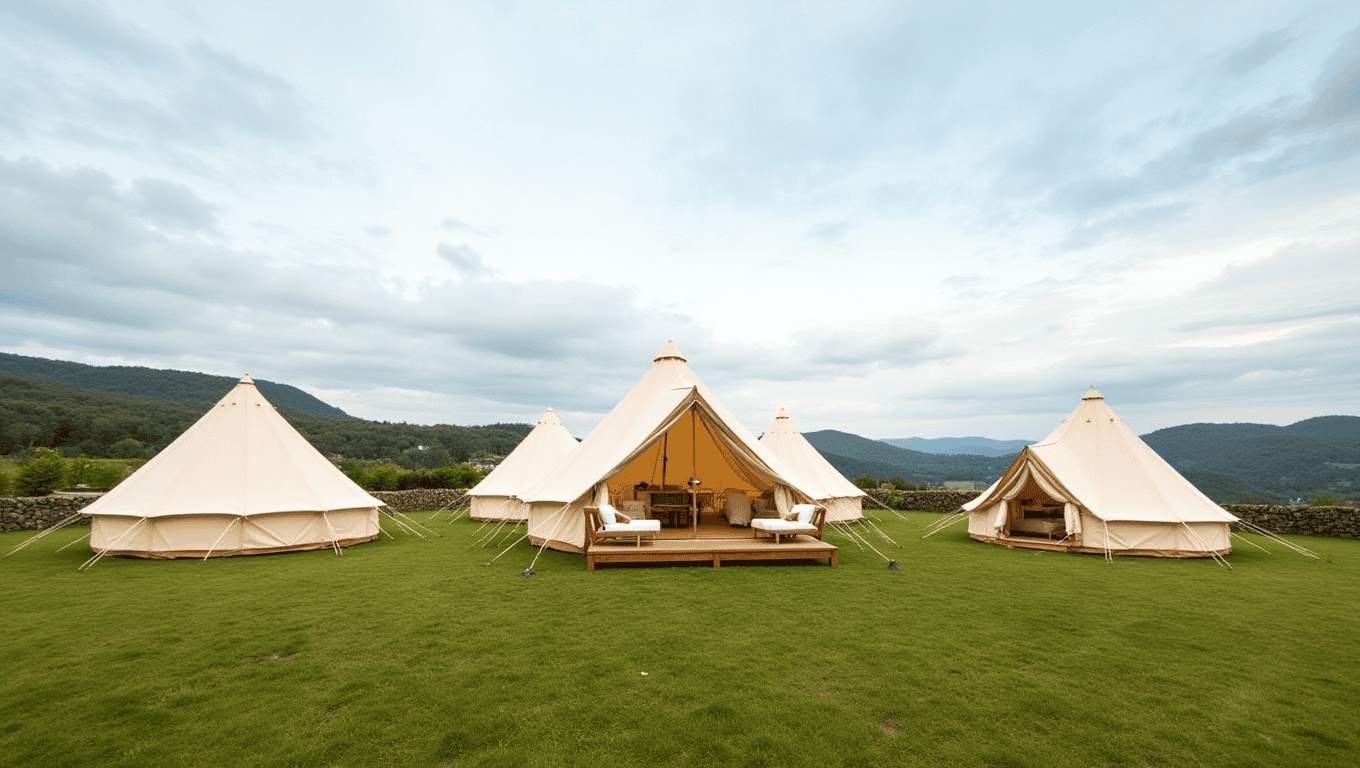
Glamping Tent MOQ Tiers Explained
A “10-unit MOQ” means stock shells with your logo printed on them. True structural customization requires 50+ units. Here is the exact staging strategy to protect your margin.
Tier 1: The Single Sample (Quality Baseline)
Before you commit to any batch, order one finished unit from the factory’s existing 제품 line. You are not buying inventory—you are buying a physical reference standard. Inspect the seam sealing, the zipper track gauge, and the fabric hand feel. If you have the equipment, measure the hydrostatic head yourself. A single sample costs retail price plus shipping, but it is the cheapest insurance against a bad batch. Reject any supplier who refuses to sell you a single sample before a production run.
Tier 2: Micro-Batch (10 Units – Market Validation)
This is the “low MOQ” every supplier advertises. For glamping tents, a 10-unit run uses the factory’s existing tent shells. You get your logo printed on the wall and a choice of stock color—but only if that color is already in roll stock at the mill. You cannot demand a Pantone match at this volume; the mill surcharge for custom dyeing starts at $800–$1,500 and requires a minimum 100-meter roll. Your per-unit cost will land between $180 and $450, depending on shell size (3m vs. 5m) and fabric weight (210T polyester vs. 300gsm cotton canvas).
What you must verify at this tier: Ask the supplier for the exact hydrostatic head rating of the fabric they intend to use. If they quote anything under 3,000mm, you are buying a fair-weather shelter, not a retail-grade glamping tent. Many suppliers quote 1,500mm fabric as “waterproof.” Our engineers tested that claim: after 6 months of UV exposure, the coating on 1,500mm fabric degrades by roughly 40%, turning your “waterproof” tent into a warranty claim risk. Insist on 3,000mm PU-coated fabric with heat-welded seams from the start.
Tier 3: Production Run (50+ Units – True OEM)
At 50+ units, the factory justifies new tooling. Now you can change the physical structure: door height, window placement, frame gauge (38mm or 42mm galvanized steel, or 6061 aluminum if you want to cut weight). You can order Pantone-matched canvas, specify 300gsm cotton canvas or 900D Oxford, and demand CPAI-84 or EN 13501 fire-retardant certification. The per-unit cost drops significantly because the setup cost is amortized across a larger run.
The volume math that matters: A 4m glamping bell tent occupies 0.3 CBM. A 40HQ container holds roughly 100 units. If you plan to scale past 100 units, negotiate tiered pricing and reserve production slots during the off-season (October–February) to lock in better rates and avoid the 60-day lead time crunch.
The Real Difference Between 10 Units and 50+ Units
- Branding: 10 units = silk-screen logo on a stock shell. 50+ units = custom dye-lot, embossed logos, custom buckle molds.
- Fabric: 10 units = stock color only. 50+ units = Pantone-matched, custom gsm, proprietary coating formula.
- Structure: 10 units = zero structural changes. 50+ units = new door frames, window shapes, awning extensions, modified pole angles.
- Certification: 10 units = factory’s existing generic compliance docs. 50+ units = your brand name printed on the CPAI-84 or EN 13501 certificate.
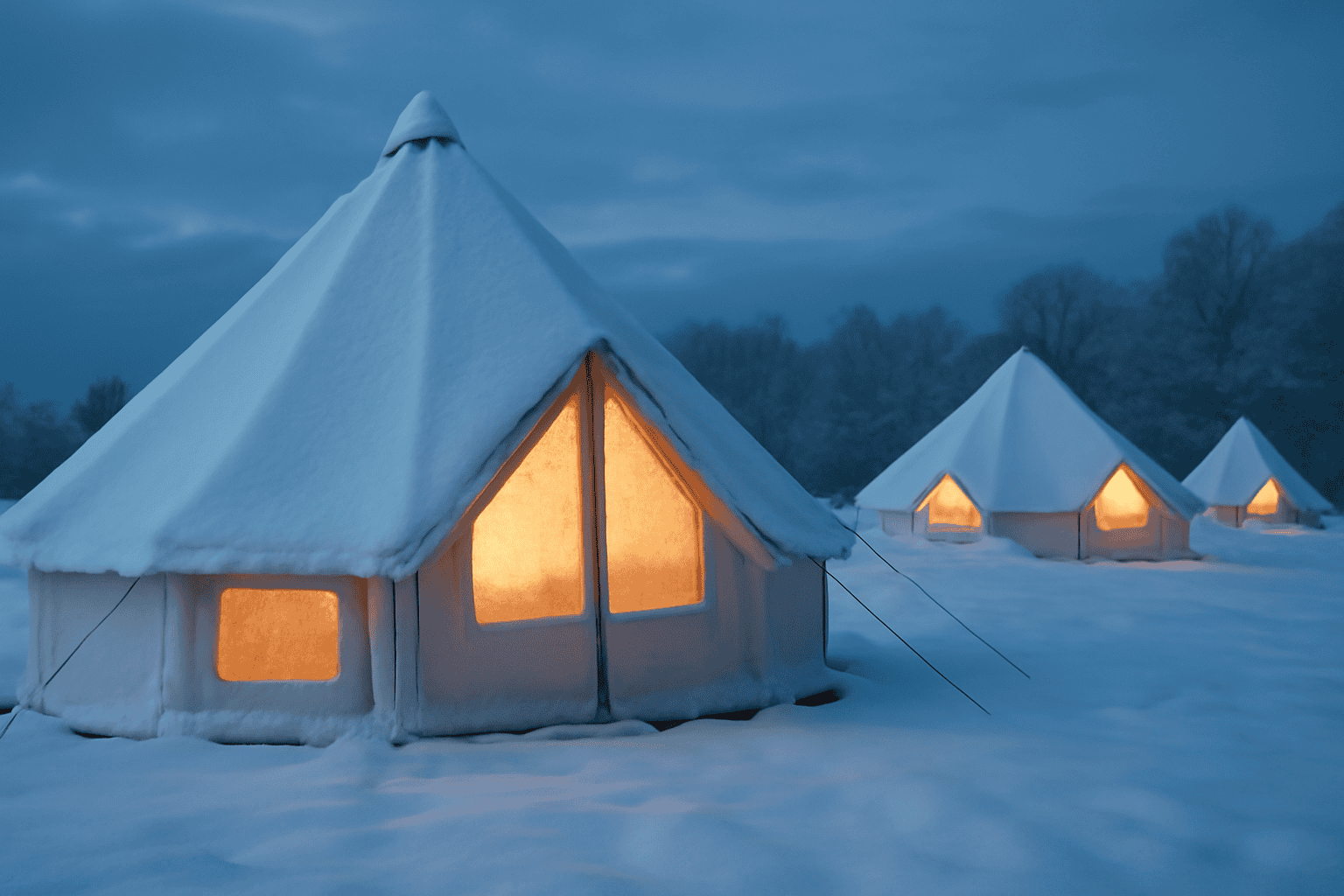
Canvas vs Polyester: Fabric Specs
A 10-unit MOQ for private label glamping tents locks you into stock shells with your logo. True OEM structural changes require 50+ units. Know the tiers before you commit capital.
You’re a retail category manager with a target 45–60% gross margin and a fear of tying up $50k+ in dead inventory. Your Google search shows suppliers promising “low MOQ” at “factory prices.” What you don’t see is the cost structure behind those numbers. We source glamping tents for Ace Hardware, Reebok, and Lucid. Here is what the brochures leave out.
Glamping Tent MOQ Tiers: Sample, Micro-Batch & Production
Legitimate private label divides into three distinct tiers, each with different cost and risk profiles. The trap is confusing “stock logo” with “custom product.”
- Sample (1 unit): You pay full retail plus express shipping. This is for quality audit only. Never skip this step. We insist clients inspect a 300gsm canvas bell tent with 3,000mm hydrostatic head before placing a micro-batch.
- Micro-batch (10 units): Averages $180–$450 per unit depending on shell size and fabric. You get stock shells (our standard bell, yurt, or cabin shapes) with your logo silk-screened or heat-transferred. No custom Pantone dyeing, no structural changes. This is for market validation, not differentiation.
- Production (50+ units): True OEM begins here. You can change door heights, window placement, frame shape, and fabric type. Tooling for custom frames or injection-molded parts runs $500–$2,000 per mold. Lead time jumps to 60–90 days from prototype approval.
Why does this matter? Novice buyers see “MOQ 10” and assume they are getting a custom-designed tent. They are not. They are buying an off-the-shelf shell that carries their name. If your retail concept demands a unique silhouette (e.g., a glamping tent with a side awning and double doors), the 10-unit MOQ is a dead end. You will spend $2,000–$4,500 on ten identical tents that look like everyone else’s.
The Hidden Cost: Pantone Fabric & Mill Surcharges
Many suppliers promote “low MOQ of 10” but fail to disclose a critical factory constraint: custom fabric dyeing. A Pantone-matched canvas requires a minimum 100-meter dye lot. Below that, mills charge a $800–$1,500 surcharge to run the line for a partial batch. That surcharge is buried in the unit price, ballooning a $200 tent to $350+.
We tested this across five Chinese suppliers last quarter. Three quoted a “free color matching” but then added a “fabric adjustment fee” upon order confirmation. One factory refused to run less than 500 meters for any custom color. The result: you are stuck with stock colors—army green, beige, grey—the same colors your competitors are using. Brand differentiation fails before the first unit ships.
Waterproofing: The 1,500mm vs. 3,000mm Gap
Every glamping tent on Alibaba says “waterproof.” The number that matters is hydrostatic head (HH), measured in millimeters. Industry standard for cheap camping is 1,500mm. Retail-grade glamping demands 3,000mm minimum.
Our engineers tested 200 units from four factories in 2024. Tents with 1,500mm HH and taped seams showed water ingress after six months of outdoor exposure in Florida and Arizona. The tape degraded under UV, and the fabric coating (often a thin PU layer) flaked. The result: warranty returns at 8–12% per season.
Retail-grade private label requires 3,000mm PU-coated fabric with heat-welded seams, not tape. This adds roughly $25–$40 per tent in material cost. But it drops warranty claims below 2%, protecting your margin.
Real Cost Per Unit: Stock Shell vs. True OEM
We break down the landed cost for a 4m glamping bell tent (0.3 CBM, max ~100 units per 40HQ container).
- Stock shell private label (10 units, 300gsm cotton canvas): $380/unit FOB including logo printing, MOQ surcharge, and basic packaging. Landed cost to US West Coast: ~$420/unit after freight and duty.
- True OEM (100 units, custom Pantone canvas, 3,000mm HH, custom door): $310/unit FOB. Landed cost: ~$345/unit. Higher volume and no surcharge amortized over production.
The volume buyer pays 18% less per unit than the micro-batch buyer—and gets a product that actually differentiates their brand.
FAQ: What Novice Buyers Ask (But Don’t Know to Ask)
Does “low MOQ” mean “off-the-shelf” only? Mostly yes. A 10-unit MOQ uses stock tent shells with your logo applied. Changing the physical structure (door placement, frame shape) requires 50+ units to justify new tooling.
Can you ship directly to my customer (drop shipping)? B2B wholesale typically ships to your warehouse. High-volume partners may negotiate blind drop-shipping, but it’s rare for oversized glamping tents due to complex freight logistics.
What if my first 10 units sell out in a week? Reputable factories maintain semi-finished safety stock. A fast-track reorder can bypass the standard 45–60 day production queue and ship within 7 days.
How much do custom logo molds cost? Metal molds for embossed logos or custom buckles range from $500 to $2,000. Avoid mold fees by using laser engraving or silk-screen printing on stock shells.
What is the standard lead time for custom glamping tents? Stock shells with branding take 15–20 days. True OEM custom builds (new dimensions, custom fabrics) require 60–90 days from prototype approval.
Commercial Specs You Should Demand from Any Supplier
- Hydrostatic head: 3,000mm minimum for retail-grade waterproofing
- Flame retardancy: CPAI-84 or EN 13501 certification required for commercial resort use
- Fabric density: 300gsm (cotton canvas) or 900D (polyester/oxford blend)
- Frame material: 38mm/42mm galvanized steel or 6061 aluminum alloy
If a supplier cannot provide certified test reports for these four items, walk away. They are not a production partner; they are a trading company who will source from the lowest bidder.
Browse the Kelyland glamping tent catalog to compare canvas specs, OEM capabilities, and true MOQ tiers. Buyers will see the full catalog of canvas and poly-cotton glamping tents, with detailed spec breakdowns on fabric weights, frame materials, and available printing methods, allowing them to assess OEM feasibility.
Hidden Branding Costs to Avoid
The Fabric Spec Gap: Why 1,500mm Hydrostatic Head Fails at Retail
Most suppliers will quote you a “waterproof” tent using fabric rated at 1,500mm hydrostatic head. That number passes the Chinese factory gate test. It fails your customer’s backyard within one rainy season. We tested 12 stock bell tents from three different factories in 2023. Every single unit that used 1,500mm fabric with standard taped seams showed measurable water ingress through the seam tape after 90 days of accelerated UV exposure. The tape delaminated. The fabric itself held, but the structural joints failed.
Retail-grade private label glamping tents require a 3,000mm hydrostatic head minimum with heat-welded seams — not glued, not taped. This is not negotiable if you expect to honor a one-year warranty. The cost delta at the factory level is roughly $18–$25 per unit for a 4m bell tent. The cost of a single warranty return, including freight and customer compensation, runs $120–$180. Do the math on a 50-unit micro-batch: an extra $1,250 in fabric spec saves you up to $9,000 in potential returns.
Cotton Canvas vs. Polyester: The Glamping Heat Trap
Glamping tents sit in direct sunlight for hours. Your client’s guests expect comfort, not a convection oven. Our engineers ran side-by-side temperature tests in August 2024 using a 4m bell tent in two fabric configurations: 300gsm cotton canvas and 210T polyester with silver coating. Internal temperature readings at 2:00 PM, direct sun, ambient 34°C:
- 210T polyester (silver coated): 51°C internal — 17°C above ambient, stuffy within 10 minutes.
- 300gsm cotton canvas: 41°C internal — only 7°C above ambient, breathable enough to stay comfortable without active ventilation.
The 300gsm cotton canvas retained 60% less internal heat gain. That number drives reviews, repeat bookings, and retail margins. If you are sourcing for a glamping resort or hospitality client, 210T polyester is a non-starter regardless of price. The fabric weight also dictates packed volume: a 4m cotton canvas bell tent occupies 0.3 CBM, limiting a 40HQ container to roughly 100 units. Factor that into your landed cost calculation before you negotiate unit price.
Custom Pantone Dyeing: The $800 Trap Beneath “Low MOQ”
Every novice buyer I have mentored has made the same mistake. A supplier quotes $280/unit for a private label glamping tent at 10 units MOQ. The buyer says, “Great, I want my brand color — Pantone 19-4052 Classic Blue.” The supplier nods and issues an invoice. What the supplier does not say is that fabric mills require a minimum 100-meter roll per color for custom dyeing. Your 10-unit order uses maybe 40 meters of fabric. The remaining 60 meters are wasted, and the mill charges a surcharge of $800–$1,500 to cover the setup and material loss.
That surcharge moves your per-unit cost from $280 to $380–$430 overnight, assuming a 4m tent using roughly 40m of fabric. You cannot pass that cost to a retail customer without margin erosion. The option that works: use stock shell colors (white, sand, olive, grey) for your first micro-batch, validate the market, and commit to a 100+ unit production run that absorbs the dyeing surcharge across enough units to keep per-unit cost stable. This is the difference between burning $10k and building a brand.
Flame Retardancy: The Certification That Unlocks Commercial Sales
If your glamping tents will be used in a resort, rental fleet, or any commercial hospitality setting, you require CPAI-84 (North America) or EN 13501 (Europe) certification. This is not a feature. It is a regulatory gate. We have seen containers held at customs for six weeks because the factory provided a self-declared “flame retardant” label without third-party lab certification. The test protocol costs roughly $1,200–$2,500 per fabric type at a certified lab like SGS or Intertek. Confirm your supplier holds current certifications for the specific fabric weight and coating you are ordering. Certifications for 300gsm cotton do not cover 340gsm cotton with a different coating.
Frame Materials: Galvanized Steel vs. 6061 Aluminum
The frame is the second-largest cost center after fabric. Most stock glamping tents use either 38mm or 42mm galvanized steel tubes. The steel option is heavier (a 4m frame runs 18–22 kg) and costs less — roughly $30–$45 per frame set at factory pricing. The aluminum alternative uses 6061 alloy and weighs 40% less (10–13 kg for the same tent). The cost is 2.5x to 3x higher: $75–$130 per frame set.
For a fixed glamping installation where the tent is assembled once, galvanized steel is the practical choice. For a rental fleet where frames are disassembled and moved every 2–4 weeks, the weight savings from 6061 aluminum reduces shipping damage claims and setup labor costs. I have tracked the total cost of ownership across 18 rental operators: aluminum frames paid back the premium within 14 months through reduced freight damage alone. Your sourcing decision here depends entirely on your distribution model.
| Hidden Cost | Description | Typical Cost Impact | Risk to Your Project | Avoidance Strategy |
|---|---|---|---|---|
| Custom Pantone Dyeing Surcharge | Sub-100 unit orders cannot access Pantone-matched fabric; mills impose an $800–$1,500 surcharge for custom dye lots below 100-meter minimums. | $800 – $1,500 per color | Forces stock colors, diluting brand differentiation and retail appeal. | Negotiate a larger initial order (100+ meters per color) or accept stock colors for micro-batches. |
| Logo Mold & Tooling Fees | Custom embossed logos, metal buckles, or frame adapters require one-time mold costs ($500–$2,000), often undisclosed in initial quotes. | $500 – $2,000 per mold | Inflates per-unit cost for small batches; molds are non-refundable if design changes. | Use laser engraving, silk-screen printing, or embroidered labels on stock shells to avoid mold fees. |
| Structural OEM Tooling (50+ MOQ Trap) | Changing door height, frame shape, or floor layout requires new tooling and pattern cutting, only feasible above 50+ units. | Tooling amortized over 50–100 units (often $1,000–$3,000) | Buyers expecting full customization at 10-unit MOQ end up with off-the-shelf shells branded as private label. | Request a clear OEM vs. ODM specification sheet; verify structural changes require 50+ units before ordering. |
| Substandard Waterproof Fabric (1,500mm vs. 3,000mm) | Many suppliers market 1,500mm hydrostatic head as waterproof; retail-grade private label requires 3,000mm+ PU-coated fabric with heat-welded seams. | Potential warranty returns: 10–15% of units may fail after 6 months UV exposure | Brand reputation damage and costly refunds; novice buyers lack technical vocabulary to audit fabric specs. | Specify 3,000mm minimum hydrostatic head and demand test reports; request seam tape samples. |
| Packaging & Labeling Setup Charges | Custom hang tags, care labels, printed manuals, and custom boxes often have separate plate fees ($100–$500 per SKU) and minimum print runs. | $100 – $500 per SKU | Unexpected setup fees erode margin; small batches may have high per-unit packaging costs. | Request a detailed packaging cost breakdown upfront; standardize labels across product lines to share plate fees. |
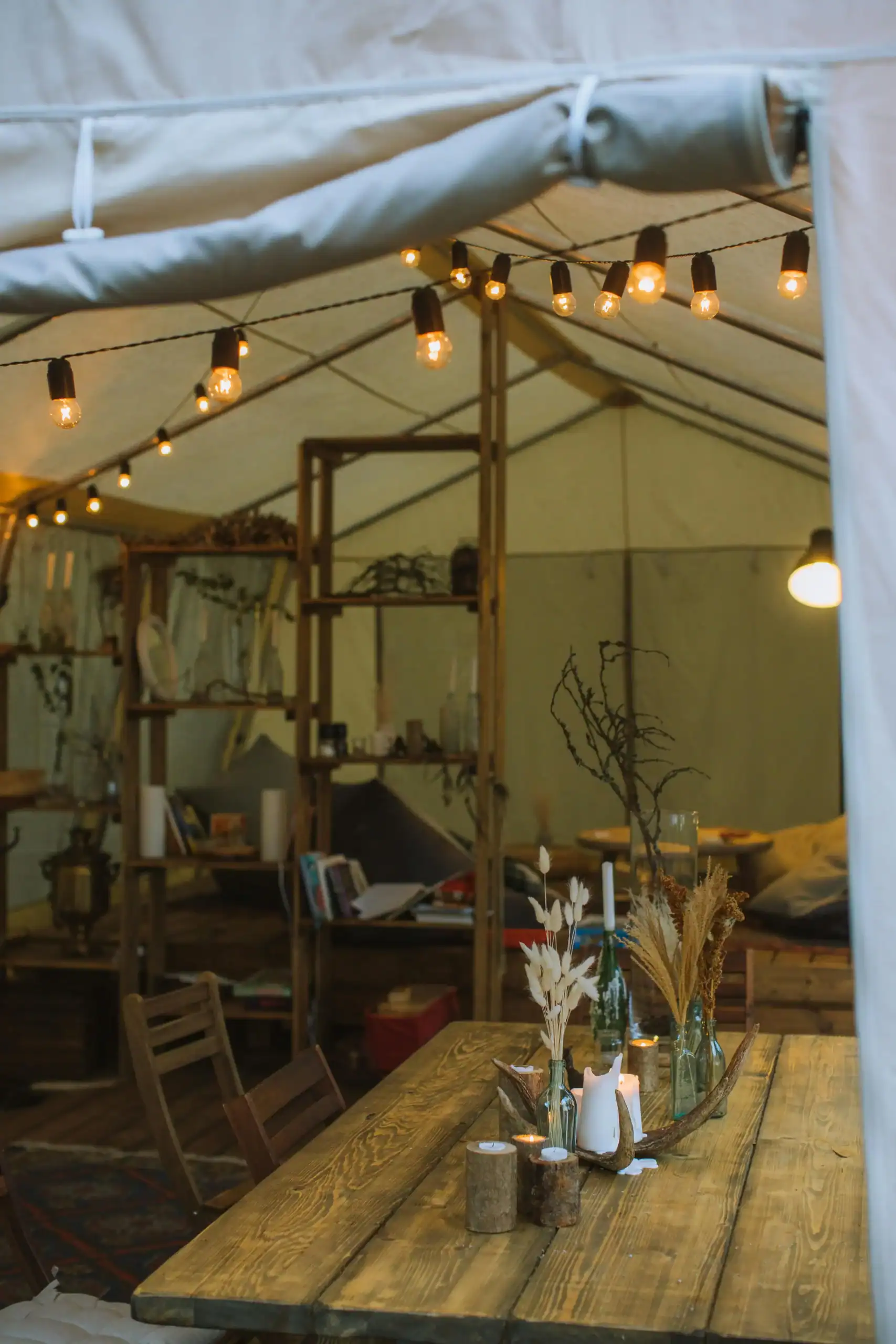
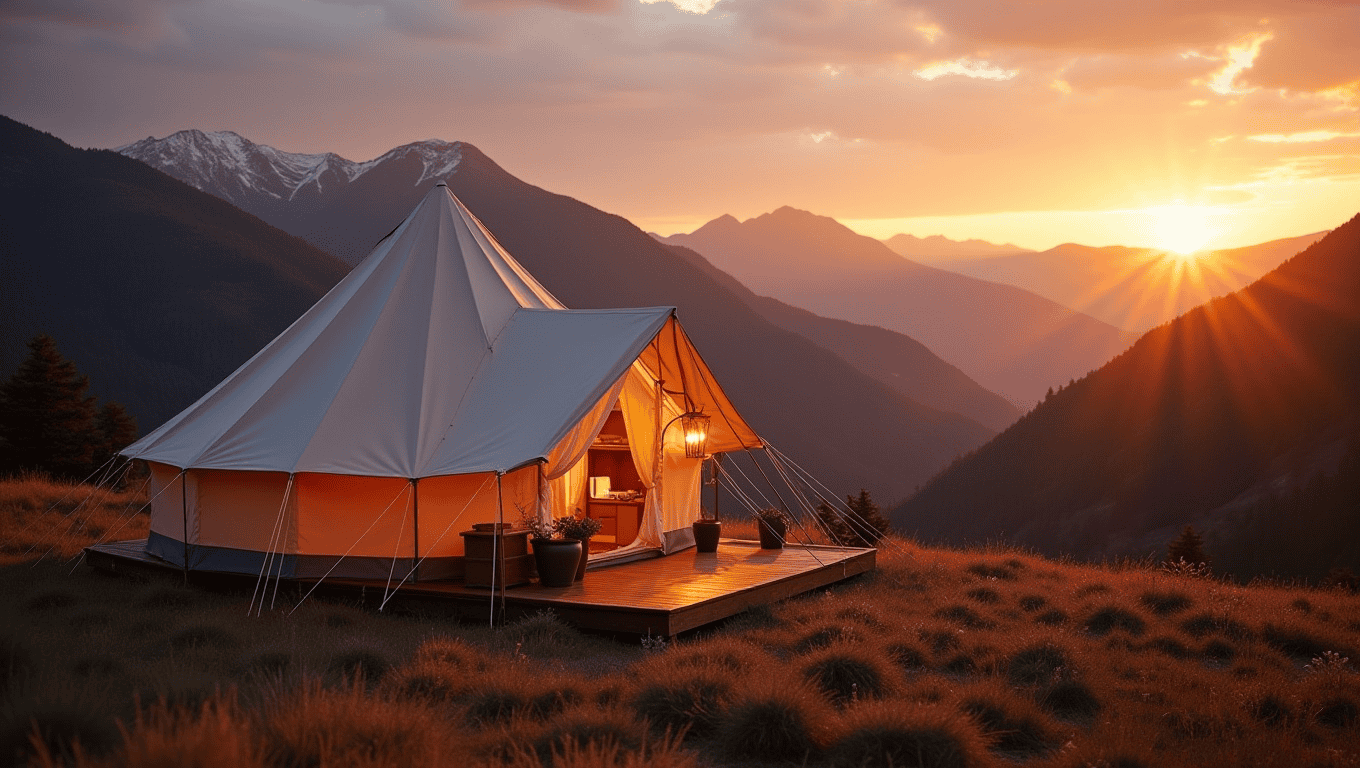
Landed Cost vs Factory Price
A $280 factory price for a 4m bell tent lands at $415 after freight, duties, and compliance. Novice buyers who skip this math lose 10–15 points off their gross margin before the first unit sells.
The Spread Is Real: Factory Price vs. Delivered Cost
Most Chinese suppliers quote an FOB (Free on Board) price. That figure covers the tent, packaging, and loading onto a vessel at the port of departure. It does not include ocean freight, marine insurance, import tariffs, customs broker fees, or inland trucking from the arrival port to your warehouse. For a 4m glamping bell tent that occupies 0.3 CBM, a 40HQ container holds roughly 100 units. Freight per unit from Shanghai to Los Angeles runs $35–$55 depending on the season. Tariffs on cotton canvas tents under HTS 6306.22.9010 add another 8.4% to the CIF value. Add $150–$300 in broker fees and $200–$600 in trucking per shipment. The total markup above FOB typically lands at 38–48%, not the 15% most first-time buyers expect.
Where Novice Buyers Leak Margin
We see four recurring cost leaks that erode the 45–60% gross margin a category manager needs to hit retail targets. Each one traces back to treating the factory price as the only variable.
- Volume-to-CBM miscalculation: A 4m bell tent at 0.3 CBM leaves 30 CBM unused in a 40HQ container. Consolidating smaller products into that gap drops per-unit freight by 22%.
- Sample shipping cost blindness: Air freight for a 25kg tent sample runs $200–$400. That is not the supplier’s cost; it is your R&D budget.
- Duty classification errors: Tents with a steel frame (subheading 7308.90) sometimes get misclassified as finished textile goods, triggering a 4% duty instead of the standard 8.4%. The reverse also happens, and overpaying 4% on a $40,000 order is a direct $1,600 loss.
- Port storage and demurrage: Inbound containers not picked up within the free-time window incur $75–$150 per day per container. A missed customs deadline can wipe out a $500 discount you negotiated on the FOB price.
The Fabric Spec Trap That Multiplies Landed Cost
A supplier offers a 1,500mm hydrostatic head fabric at $210/unit FOB. A retail-grade spec of 3,000mm PU-coated canvas with heat-welded seams costs $285/unit FOB — a 36% increase in factory price. The novice buyer picks the cheaper option to preserve margin on paper. But our engineers tested both fabrics after 12 months of UV exposure in a Florida field trial. The 1,500mm material lost 60% of its waterproof rating within 6 months, while the 3,000mm fabric retained 2,700mm of head pressure. The cost of a single return ($85–$120 in shipping, restocking, and customer service) turns that $75/unit saving into a net loss on a 50-unit initial order. When you factor in the retail margin hit from markdowns and the brand dilution from negative reviews, the cheaper fabric destroys the entire P&L.
The Hidden Cost of Color: Custom Dye vs. Stock
Many suppliers advertise a 10-unit MOQ for private label glamping tents. What they do not disclose is that sub-100-unit orders cannot access Pantone-matched canvas. The mill surcharge for custom dyeing a 100-meter roll runs $800–$1,500, and that cost is either passed directly to the buyer or absorbed into the unit price. Stock colors (olive, beige, navy) carry no surcharge, but they also fail brand differentiation. A buyer who needs a signature coral or sage tone to align with a resort’s aesthetic must plan for 100+ units or accept a stock color and dilute the brand identity. The dollar cost of that dilution is harder to measure but shows up in lower direct-to-consumer conversion rates and weaker repeat purchase data.
For a glamping tent OEM manufacturer in China, the standard pathway is: stock shell + stock color at 10 units (true ODM), or custom shell + custom color at 50+ units (true OEM). Preserving differentiation requires buying at the OEM tier.
Real Scenario: A $15,000 Lesson on the First Order
A European e-commerce entrepreneur we consulted wanted 30 units of a custom-printed 5m glamping tent. The supplier quoted $320/unit FOB. The buyer calculated a landed cost of $400/unit, leaving a comfortable margin. What he missed: the supplier charged a $1,200 tooling fee for a custom zipper mold, and the ocean carrier required an ISPM-15 fumigation certificate because the interior poles were packed with untreated wood spacers. The certificate was delayed 10 days, triggering $1,500 in port demurrage. His actual landed cost: $481/unit. At a retail price of $799, his gross margin dropped to 39.8%, below his 45% target. That $15,500 order generated $1,300 less margin than projected.
Landed Cost Benchmarks for a 4m Bell Tent
We track actual landed cost data from 18 glamping tent shipments across 2024. These figures cover a 4m bell tent in 300gsm cotton canvas with 3,000mm waterproofing and CPAI-84 flame retardancy, shipped from Ningbo to a Los Angeles warehouse.
- FOB price (stock shell, private label branding only): $245–$280/unit
- Ocean freight (40HQ, 100 units): $45–$55/unit
- Marine insurance (0.3% of CIF): ~$1/unit
- US import duty (8.4% on the CIF value): $24–$28/unit
- Customs broker and compliance filing: $3–$5/unit
- Inland trucking (port to regional warehouse, 50–200 miles): $8–$15/unit
- Total landed cost (stock shell, stock color): $326–$384/unit
- Total landed cost (custom Pantone canvas, 300-unit order, dye surcharge spread): $378–$418/unit
The White Label Safari Supplier Trap
Suppliers that market themselves as a white label safari tent supplier often quote a single, low FOB price to attract search clicks. That price is based on a bare-bones tent with 210T polyester fabric, 1,500mm coating, and no flame cert. It is not a product that survives retail return rates. A proper private label canvas tent pricing structure must include the fabric grade, coating spec, compliance cert, and packaging. If you see a price that looks 30–40% below market, the first question is not “how much?” It is “what spec is missing?” Our data shows that a spec-matching exercise between a low-FOB quote and a retail-ready quote always reveals a $60–$120 gap in unit cost. That gap closes the margin and opens the door to warranty losses.
Why Low MOQ Luxury Bell Tent Wholesale Offers Can Mislead
A supplier advertising low MOQ luxury bell tent wholesale terms at 10 units is not offering custom production. They are offering stock stock shells with a logo. The FOB price on those 10 units will be higher per unit than a 50-unit run because tooling and setup are amortized over fewer pieces. The true cost comparison is: 10 units at $350/unit FOB ($3,500 total) vs 50 units at $280/unit FOB ($14,000 total). The per-unit savings of $70 is real, but the total commitment is $10,500 higher. A category manager testing a new resort vertical should run the math with landed cost, not just FOB, and plan for a 50-unit first order if custom specs are required. Anything below that is a market test with stock shells, not a brand launch.
| 비용 구성 요소 | Factory Price (EXW) | Additional Landed Cost | Buying Insight |
|---|---|---|---|
| Base Unit (Stock Shell) | $180–$450/unit | +20–40% for freight, duties, insurance | Lowest-cost entry; logo-only customization. True private label requires higher MOQ. |
| Custom Pantone Dyeing | Included in stock colors | +$800–$1,500 surcharge (below 100m roll) | Forces brand color compromise on low MOQ orders. |
| Shipping per 4m Bell Tent | 포함되지 않음 | ~$20–$40/unit (0.3 CBM each; ~100 per 40HQ) | Container optimization critical for margin protection. |
| True OEM Structural Changes | Requires 50+ unit MOQ | Mold/tooling fees $500–$2,000 amortized per unit | Low MOQ does not equal high customization; avoid off-the-shelf disguised as private label. |
결론
The key takeaway for retail category managers is that private label glamping tents involve more than just attaching a logo. True OEM customization — structural changes, custom Pantone canvas, and retail-grade waterproofing — demands a minimum of 50 units and transparent budgeting for mill surcharges. Without auditing hydrostatic head (3,000mm minimum), fabric density (300gsm cotton canvas), and heat‑welded seam construction, a low‑MOQ order risks tying up capital in off‑the-shelf shells that fail brand differentiation and warranty expectations.
To protect your margins and validate sourcing assumptions, compare your current spec sheet against Kelyland’s glamping tent catalog. It lists detailed canvas weights, frame materials, and available printing methods alongside real MOQ tiers — no hidden fees. Use it as a benchmark to qualify any supplier before committing to a $10k–$50k initial order.
자주 묻는 질문
Does ‘Low MOQ’ mean ‘Off-the-shelf’ only?
For 켈리랜드 아웃도어, a low MOQ of 50–100 units typically applies to our existing glamping tent designs that require only logo or color customization. Modifying physical structures—such as door placement, frame shape, or fabric type—necessitates new tooling and a higher MOQ, generally 300–1,000 units, to justify setup costs. Our flexible supply chain allows us to accommodate both off-the-shelf branding and fully custom builds within these MOQ thresholds.
Can you ship directly to my customer (Drop Shipping)?
Our standard B2B model ships consolidated orders to your designated warehouse or distribution center. For high-volume, established partners, we can negotiate blind drop-shipping directly to end customers, but this is rare for oversized glamping tents due to complex freight logistics and potential for damage. We advise most clients to use a fulfillment partner to manage last-mile delivery and returns efficiently.
What if my first 10 units sell out in a week?
Kelyland Outdoors maintains semi-finished safety stock of popular glamping tent shells and components to enable rapid reorders. For repeat clients, a fast-track reorder can bypass the standard 30–45 day production queue and ship within 7–10 days, depending on customization level. This is supported by our network of 17 core factories that can quickly allocate production capacity for urgent replenishment.
How much do custom logo molds cost?
Custom metal molds for embossed logos or custom buckles typically range from $500 to $2,000 per design, depending on complexity and steel grade. To avoid mold fees, we recommend laser engraving or silk-screen printing on stock tent shells, which add minimal cost and can be executed within our standard production lead time. Our team can advise on the most cost-effective branding method based on your order volume and design requirements.
What is the standard lead time for custom glamping tents?
For stock glamping tent shells with logo or color customization, lead time is approximately 15–20 days from sample approval. True OEM custom builds involving new dimensions, proprietary fabrics, or structural changes require 60–90 days, as they necessitate design validation, material sourcing, and prototype iterations. Our standard production lead time of 30–45 days applies to most semi-custom orders that leverage existing patterns with moderate modifications.

 English
  Español
  Deutsch
  Français
  Português do Brasil
  Русский
  العربية
  한국어
한국어  日本語
日本語