 콘텐츠로 건너뛰기
smart tent vs automatic tent is the first checkpoint buyers should lock before they approve a supplier, budget, or production slot. Day 1 the order is placed. Day 14 the pre-production sample arrives, and the hub-and-pole mechanism snaps open with a satisfying click. Day 45 the container lands, and the first retail customer reports a cracked hub socket on the second use. That gap between the approved sample and the mass production run is where the 스마트 텐트 vs 자동 텐트 decision actually gets made — not in the FOB pricing spreadsheet, but in the physical components that look identical in a photo and fail differently in the field.
Calling a tent “smart” doesn’t tell you which engineering family you’re buying. Factories build two distinct architectures under that label: pre-bent fiberglass hub-and-pole systems that spring open in one to three minutes, and inflatable air-beam structures that need a pump but stand up to 풍하중을 that would snap fiberglass. Both eliminate the 10-15 minute pole-threading ritual of a classic manual tent. Both introduce their own failure points, and those differences matter more to a private-label buyer than any marketing term printed on the box.
For a sourcing decision, the “smart” label tells you nothing about durability. Ask instead about the hub socket material, the pole diameter, and the seam tape spec before you approve a sample. The answers separate a tent line that survives a season from one that generates warranty claims.
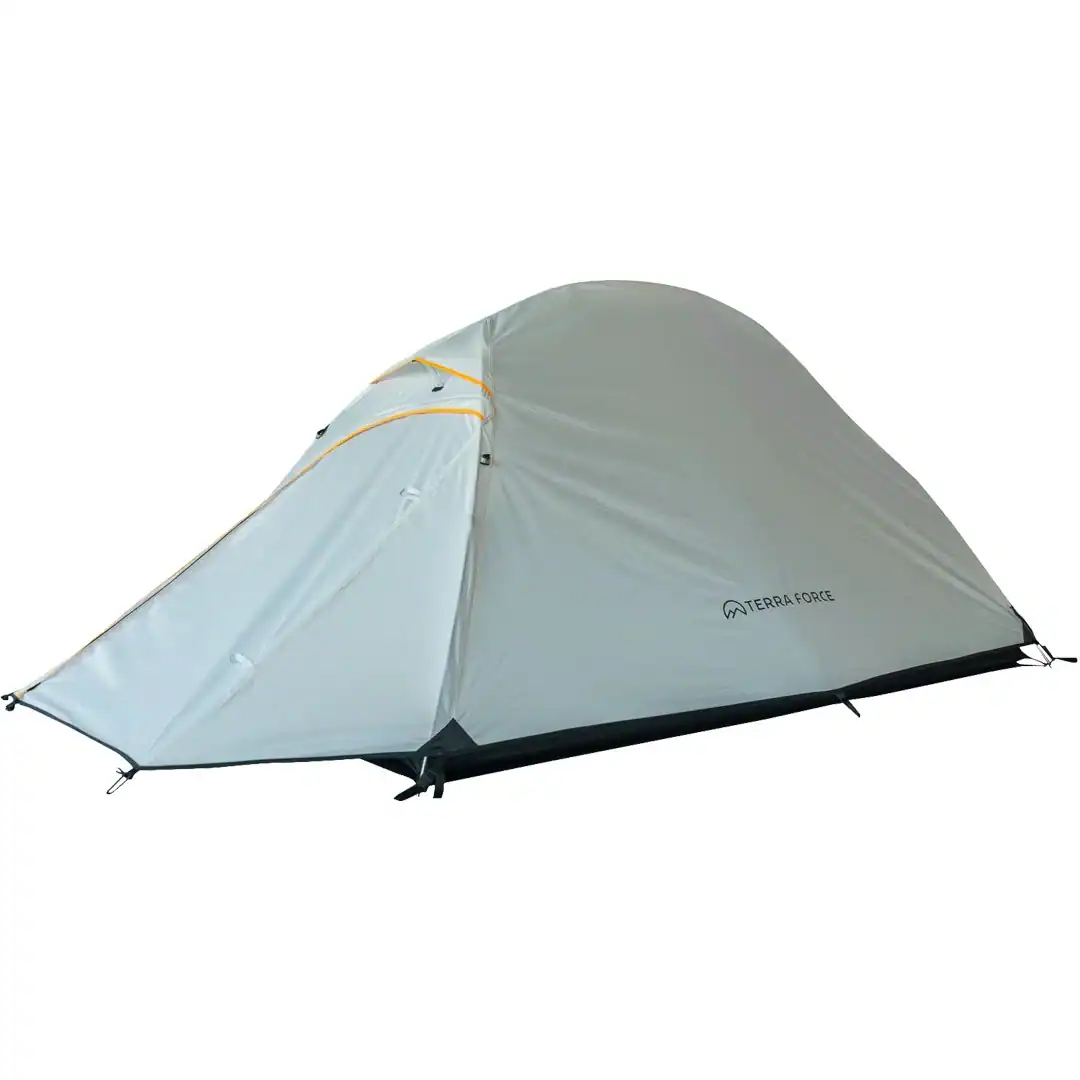
What ‘Smart Tent’ Actually Means in a Factory
No chips, no sensors — ‘smart’ is factory shorthand for a tent that erects itself.
The Fiberglass Hub-and-Pole Mechanism
Most ‘automatic,’ ‘pop-up,’ or ‘instant’ tents share one mechanism: pre-bent fiberglass poles, typically 7–9.5 mm in diameter, connected by plastic hubs and sewn into the tent body. Release the carry bag and the spring tension pops the frame open. Pull the center hub and twist to collapse. Different brands, different names — the engineering family is the same.
-
-
- 프레임 재질: Pre-bent fiberglass poles at 7–9.5 mm diameter, joined by plastic hub sockets.
- Setup speed: 1–3 minutes with no pump; the carry bag acts as the compression mechanism.
- Failure profile: Cracked hub sockets, misaligned pole sleeves, fiberglass legs splintering when twisted, and fabric bunching at fold points.
-
The TPU/PVC Air-Beam System
Inflatable ‘smart’ tents replace every rigid pole with continuous welded air beams — PVC for budget tiers, TPU for better durability. Beams run 10–15 cm in diameter and typically need 8–12 psi to hold shape. With no hinges or hard joints, gusts bend the whole structure instead of snapping a pole. The weakness shifts to air retention: valve stems, welded seams, and ground punctures.
-
- Structural behaviour: Uniform flex under gust loads; TPU compound holds pressure longer than PVC but costs more.
- Leak risk: Valve stem–beam joint is the most common warranty claim; seam separation can trace back to welding temperature drift.
- 현장 수리: A patch kit and pump are mandatory accessories — know how to use both before selling the tent.
Why ‘Smart’ Is Marketing Language
Neither architecture has a sensor, a chip, or a battery. ‘Smart’ simply signals reduced setup time. For a buyer, that label hides the real trade-off: which failure mode can your customers handle — replacing a cracked hub or patching a punctured beam? Ask the factory for the exact pole diameter, hub material, and seam tape spec before you approve a sample.
The Kelyland network runs 17 core strategic factories under ISO 9001:2015, and its Ningbo tent and tarp facility alone pushes 800,000 units a year. Production-level QC checks stitching alignment, pole seating, and fabric tear strength before shipment. That data matters more than the word ‘smart’ when you’re choosing a private-label tent line.
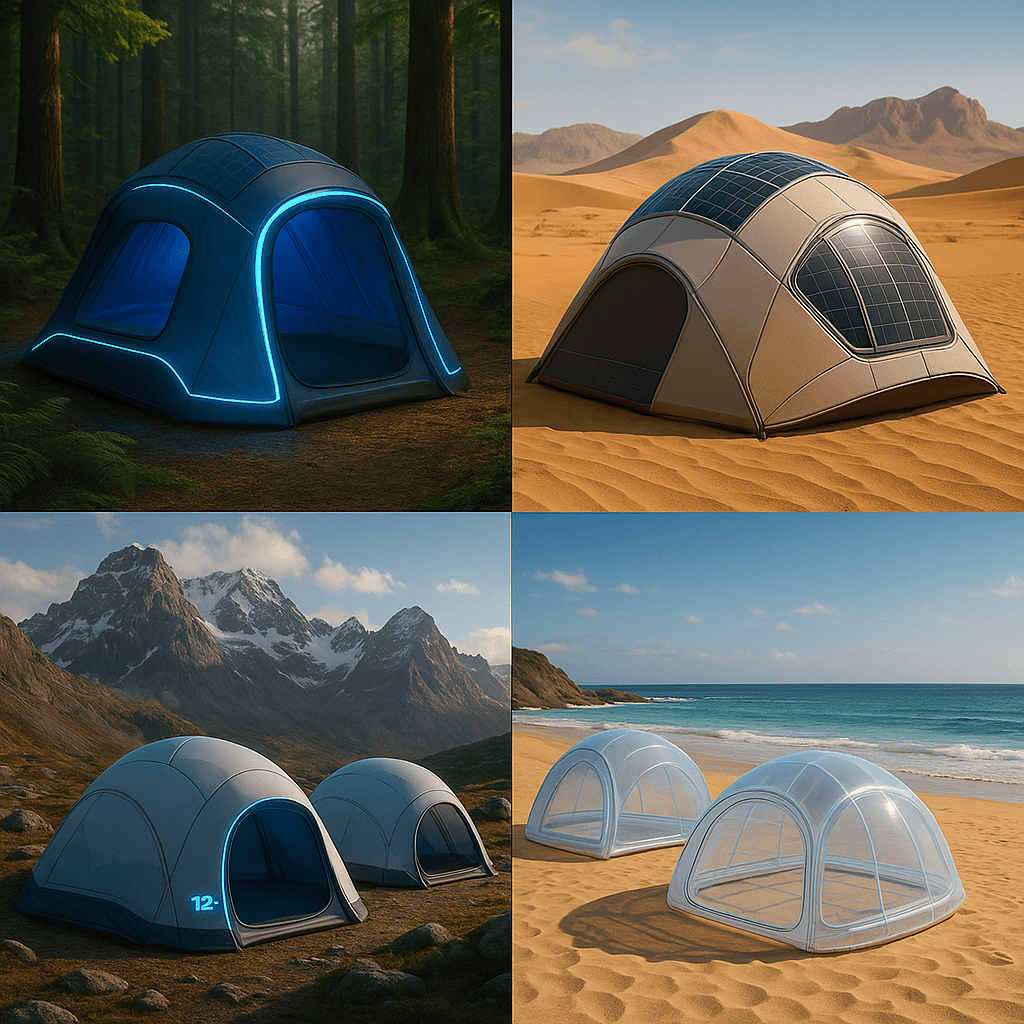
Automatic Tent: 3 Physical Failure Points a Buyer Must Inspect
Three failure points decide whether an automatic tent survives a season or dies in week three.
The pre-production sample always looks right. That is the trap. The automatic tent looks flawless in the showroom, the order ships, and the first warranty photos arrive within weeks — cracked hubs, misaligned pole sleeves, and fabric pulling loose at the fold points. With 800,000 tents and tarps moving through the core factory in Ningbo each year, these three failure points account for most automatic-tent returns. Learn them before you approve a sample.
Hub Socket Cracking Under Load
Every automatic tent uses a plastic hub that locks pre-bent fiberglass poles — typically 7–9.5 mm diameter — into position. That hub takes the full mechanical load each time the tent springs open and again when someone forces it closed. The standard failure happens when a camper jams the tent back into its carry bag in a hurry. The socket cracks, and the next setup leaves the pole leg bowing sideways.
Pole Sleeve Abrasion Over Time
The fabric channel holding each fiberglass pole flexes at exactly the same seam line every time the tent folds. That constant rubbing wears the coating off first, then attacks the weave. Give it enough cycles and the sleeve splits at that crease — the pole starts pressing against the outer wall and eventually punches through.
The inspection takes ten minutes. Set the tent up and break it down three times, then turn every pole sleeve inside out. Look for loose threads, exposed weave, or white coating dust along the seam line. White dust is the tell — it means the PU or silver coating is abrading and the fabric underneath is already compromised.
Fabric Pull at Fold Points
Stress creases form where the tent body bunches against the folded pole assembly — usually along door seams and floor seams near the hubs. Every setup and teardown pulls at those same creases. Under heavy UV exposure, the coating degrades faster at the stressed points, and the fabric delaminates after roughly twenty uses.
Verify the fabric tear strength spec, then ask whether the factory tests it on folded samples or flat material. Flat tests miss this failure. The quality control process at ISO 9001:2015-certified partner factories should include checking stitching alignment, seat-testing the poles in their hubs, and measuring tear strength on the actual fold points before pre-shipment inspection.
-
- Stitching alignment: Seams on pole sleeves and hub attachments must run parallel with no fabric bunching or skipped stitches.
- Pole seating test: Each fiberglass leg must click fully into its hub socket and hold firm under a lateral push.
- Fabric tear strength: Demand the data for the coated fabric — not the greige cloth — tested at the fold points.

Inflatable Tent: Why Air Beams Beat Fiberglass – and Where They Leak
From a structural standpoint, air beams win in wind. Automatic hub-and-pole tents win on price. If you’re choosing between the two for a private-label line, the real question is return-rate tolerance and where your customers actually camp.
Structural Tolerance Against Wind Load
Afiberglass pole is a rigid lever. When a gust hits an automatic tent, the pole transfers that force straight into the plastic hub socket. Exceed the flex limit and the fiberglass splinters — cracked hub sockets and twisted pole legs are the most common failures seen on returned automatic tents.
An air beam has no rigid hinge points. The full 10–15 cm TPU/PVC tube compresses and flexes uniformly, which lets the shelter absorb gust loads up to roughly 60 mph without snapping. That difference explains why inflatable tents are the default choice for exposed coastal and alpine campsites.
Material choice affects long-term reliability too. TPU holds pressure longer than PVC — in a 24-hour hold test, TPU pressure loss stays under 5%. PVC is cheaper to weld, but it loses air faster, which shows up as “tent deflated overnight” complaints in your review stream.
Three Common Air Leak Points
-
- Valve stem–beam joint: The most common leak. The bond between the valve stem and the air beam fails slowly, and the customer assumes the tent is defective. Ask for double-sealing: a hot-pressed rubber gasket plus adhesive cement at the joint.
- Welded seam separation: Heat press temperature drift of ±5°C during production can leave the weld peelable by hand. Request the weld peel test records for the batch, not a generic quality certificate.
- Ground puncture: Sharp gravel and roots will eventually pierce any beam. Include two patch kits per sales unit — brands that skip this turn a $5 repair into a full refund.
At one of Kelyland’s core tent factories in Ningbo, QC covers stitching, mechanisms, and overall compliance at every production stage, with reports available on request. If a supplier hesitates to share batch-level QC records before sample approval, treat that as a red flag.
Choose air beams if your customers camp in exposed, windy sites and you want fewer structural returns. Choose automatic hub tents if the priority is the lowest unit cost and a fast-pitch story, and you accept that cracked hubs and broken pole segments will be part of your after-sales volume.
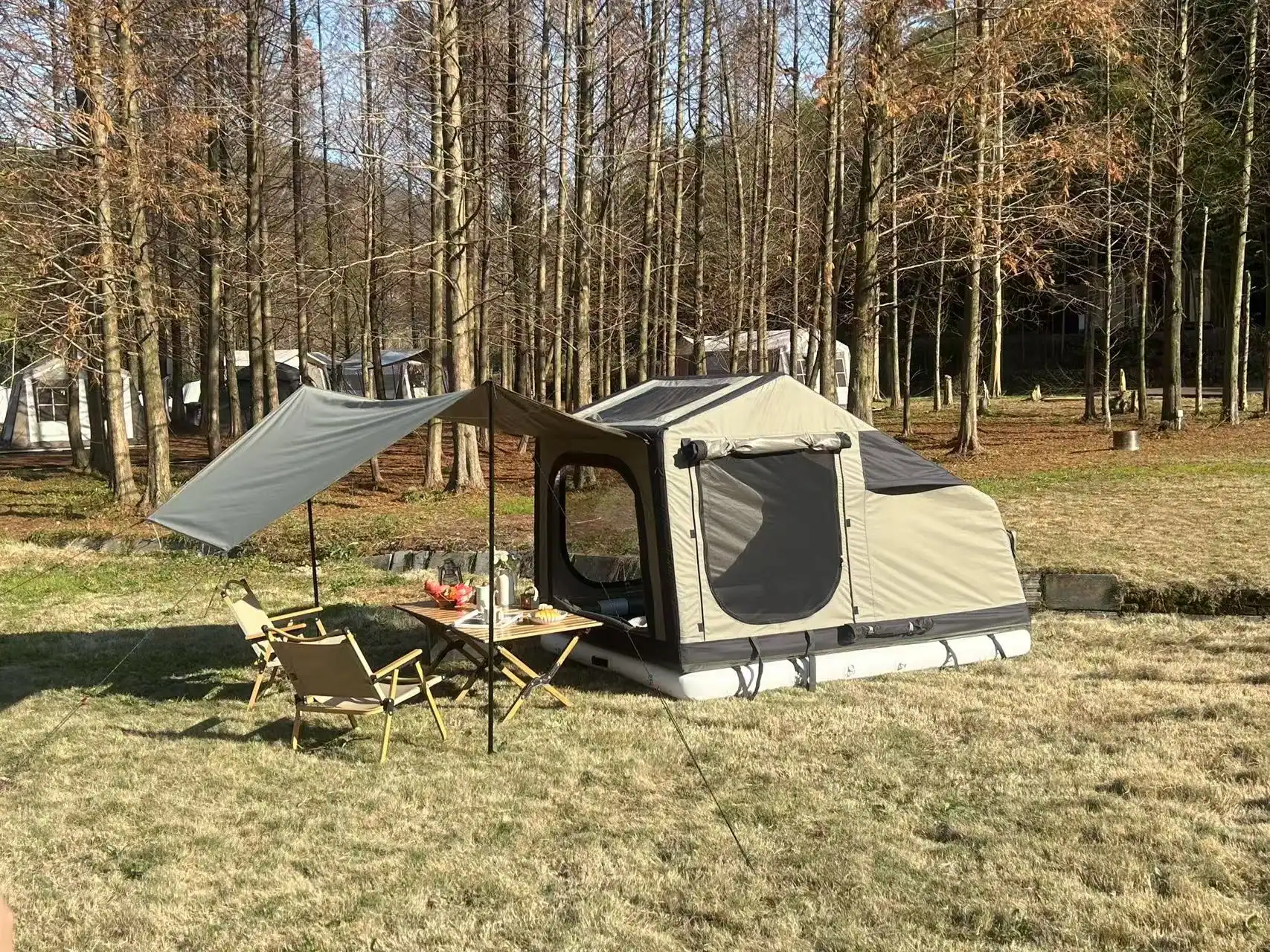
결론
The real difference between a smart tent and an automatic tent comes down to frame architecture, not marketing language. Hub-and-pole automatic tents pitch in 1-3 minutes but fail at cracked hub sockets and fiberglass legs when corners are cut on material grades. Air-beam tents handle wind better and shift the risk to valve leaks, welded seams, and punctures, which makes the repair kit part of your QC review.
-
- Automatic tents pitch in 1-3 minutes; the hub socket and fiberglass pole assembly is the main failure point.
- Inflatable tents use 10-15 cm TPU or PVC air beams and handle wind better than fiberglass.
- Ask for pole diameter, hub material, seam tape spec, and weld peel test records before sample approval.
- Standard lead time runs 30-45 days, with minimum order quantities starting at 50-100 pieces for some custom tents.
Before you approve a private-label run, request the factory tent spec sheet and QC checklist. Ask for sample approval first, confirm minimum order quantities, and verify that the factory can document weld peel tests, pole seating, and fabric tear checks. Then review Kelyland’s private-label inflatable tent page to compare hub-and-pole automatic tents against air-beam models on spec before you commit.

자주 묻는 질문
스마트 텐트와 자동 텐트의 차이점은 무엇인가요?
스마트 텐트는 빠른 설치 텐트를 포괄하는 마케팅 용어이며, 공장에서는 허브와 폴 자동 텐트와 인플레이터블 에어빔 텐트라는 두 가지 계열로 생산합니다. 물리적 차이는 플라스틱 허브가 달린 섬유유리 폴 versus 지속적이고 일체형인 TPU/PVC 에어 빔에 있습니다. 스마트라는 용어보다는 프레임 시스템을 명확히 명시해야 합니다.
어떤 텐트 종류가 반품률이 낮습니까?
자동 허브 및 폴 텐트는 일반적으로 허브 소켓이 균열을 일으키는 1차 고장 지점으로 인해 반품률이 높습니다. 인플레이터블 텐트는 이러한 기계적 고장은 피하지만 대신 구멍과 미충전 위험으로 리스크가 이동합니다. 프라이빗 라벨 제품을 출시하기 전에는 두 가지 고장 지점을 모두 점검해야 합니다.
자동 텐트와 에어텐트는 얼마나 빠르게 설치하나요?
최소 1~3분이면 설치할 수 있으므로 속도가 결정적 요소는 아닙니다. 자동 텐트는 가방에서 꺼내면 곧바로 펴지고, 인플레이터블 텐트는 펌프로 약 8~12분 정도가 필요합니다. 설치 시간보다는 내구성과 유지보수 비용을 비교하세요.
What is the MOQ for custom smart tents?
Kelyland can run custom tent MOQs as low as 50 to 100 pieces for select items, with standard lead time of 30 to 45 days. The exact MOQ depends on frame type. Send your spec sheet to confirm pricing and lead time.
Which tent is better for windy conditions?
Inflatable air-beam tents perform better in even wind because the beams flex under load without a rigid hinge point. Automatic hub-and-pole tents lose strength at the plastic hub connections. Buy inflatable if your market camps in exposed, high-wind sites.

 English
  Español
  Deutsch
  Français
  Português do Brasil
  Русский
  العربية
  한국어
한국어  日本語
日本語