 콘텐츠로 건너뛰기
tpu 대 pvc 에어텐트는 구매자가 공급업체, 예산 또는 생산 슬롯을 승인하기 전에 확인해야 할 첫 번째 체크포인트입니다. 에어텐트 에어빔에 대한 모든 소싱 가이드는 사전 생산 샘플을 신뢰하라고 말합니다. 그 조언으로 인해 제가 아는 한 구매자는 지난 시즌 혼합 재료 주문에서 $50,000을 손해봤습니다. TPU 샘플은 공장 벤치에서 파열 테스트를 통과했습니다. 양산 배치는 첫 북유럽 겨울 무역 박람회에서 실패했는데, 아무도 확인하지 않았기 때문입니다. 저온 균열 한계 실제 생산 조성에 대한 것입니다. 샘플은 고인성 TPU 블렌드였습니다. 생산 런은? -12°C에서 경화되는 더 저렴한 화합물이었습니다. 비교할 때 TPU 대 PVC 에어텐트 에어빔, 샘플은 공장이 한 번 할 수 있는 것만 증명할 뿐, 컨테이너에 도착하는 것을 증명하지 않습니다.
실제 결정은 재료 데이터 시트보다 더 깊은 곳에 있습니다. PVC 에어빔이 초급 시장을 지배하는 이유는 다음과 같습니다: FOB 닝보 기준 원자재 비용이 TPU보다 대략 40% 낮고, 표준 생산 주기는 TPU의 40~45일 대비 30일입니다. 이 계산은 여름 채널을 통해 물량을 이동시키는 온화한 기후 소매업체에게는 잘 맞습니다. 앨버타나 스톡홀름行 재고를 비축하는 카테고리 매니저에게는 무너집니다. PVC 빔의 저온 균열 실패는 -15°C 이하에서 급격히 증가합니다. 개질 TPU 블렌드는 -30°C까지 무결성을 유지합니다. 보증 영향을 확인하기 위해 실험실 보고서가 필요하지 않습니다. 플로리다와 핀란드를 모두 서비스하는 유통업체의 클레임 비율 데이터를 가져오면 됩니다.
대부분의 비교 기사가 완전히 놓치는 세 번째 변수가 있습니다: 바로 공급망 자체입니다. 진화에 있는 공장들은 TPU와 PVC를 30분 이내에 전환할 수 있는 이중 교정 고주파 용접기로 전환했습니다. 이 변경은 혼합 재료 주문의 설정 비용을 대폭 줄이고 소규모 테스트 실행을 가능하게 합니다. 또한 새로운 TPU/옥스포드 복합 원단은 동등한 두께의 PVC보다 40%의 중량 감소를 달성합니다. 풀 컨테이너 주문의 경우, 이 중량 차이가 직접적으로 착륙 비용을 낮춥니다. 품질 허용 오차가 0.6mm 빔을 허용한다면, 공장이 최신 이중 교정 라인을 운영한다는 전제 하에 TPU를 그 어느 때보다 PVC에 가깝게 가격을 책정할 수 있습니다. 모든 공장이 그렇게 하는 것은 아닙니다. 재료 사양을 확정하거나 샘플을 승인하기 전에 공급업체와 다음 세 가지 질문을 검토하십시오. 하나: TPU 조성물이 실온에서뿐만 아니라 -20°C에서 파열 압력 테스트를 통과합니까? 둘: 공장에서 일반 재료 인증서가 아닌 특정 배치 화합물에 대한 ASTM G154 UV 분해 주기 데이터를 제공할 수 있습니까? 셋: 용접기 교정 기록에 전용 TPU 설정이 표시됩니까, 아니면 PVC 주파수 프로파일로 TPU를 용접하면서 이음새가 유지되기를 바라고 있습니까? 이 중 하나라도 답이 불분명하다면, 단위 비용 차이는 견적에서 가장 중요한 숫자가 아닙니다.
2026년에 에어빔 재료 선택이 중요한 이유
PVC 빔은 -15°C 이하에서 균열이 발생하고, 개질 TPU는 -30°C까지 유지됩니다.
2026년까지, 에어빔 재료 선택은 책임 방정식이지 기능 목록이 아닙니다. 기본 PVC에서 고인성 TPU 블렌드로의 산업 전환은 마케팅에 의해 주도되는 것이 아니라 보증 데이터에 의해 강제된 것입니다. 표준 가소화 PVC는 -15°C 이하에서 빠르게 탄성을 잃습니다. 그 임계값에서 미세 균열이 접힌 주름을 따라 전파되며, 25°C에서 완벽하게 팽창했던 텐트가 노르웨이 피오르드의 일출에 이음새가 터집니다. 폴리에테르 세그먼트와 가수분해 방지 안정제로 배합된 개질 TPU 블렌드는 -30°C까지 구조적 무결성을 유지합니다. 그 15도의 안전 마진은 2%의 반품률과 12%의 리콜의 차이입니다.
무게가 최종 원가에 계단식으로 반영됩니다. 새로운 TPU/옥스퍼드 복합 라미네이트는 동등한 0.6mm PVC 대비 40%의 무게 감소를 달성하면서도 0.8 MPa 이상의 파열 압력을 유지합니다. 14미터의 빔 튜브를 운반하는 6인용 에어 텐트의 경우, 단위당 약 2.1kg이 절감됩니다. 40HQ 컨테이너에 800대를 적재하면, 2026년 1분기 FOB 닝보 요율 기준 운임 절감액은 약 $2,800에 달합니다—이는 더 높은 TPU 원자재 프리미엄을 완전히 상쇄하기에 충분한 금액입니다.
-
- 진화(金华)의 이중 교정 용접: 저장성(浙江) 공급 기반이 적응했습니다. 진화의 핵심 에어 텐트 공장은 이제 두 재료 모두에 대한 파라미터 프리셋을 저장하는 이중 교정 고주파 용접기를 사용합니다. PVC 빔 런에서 TPU 런으로 전환하는 데 30분 미만이 소요됩니다—금형 교체나 재조정이 필요 없습니다. 이는 기존의 혼합 주문 패널티를 없앱니다. 이제 구매자는 단일 설정 비용으로 1,000대 PO를 600대 PVC 예산 SKU와 400대 TPU 프리미엄 SKU로 분할할 수 있습니다.
- 자재 리드 타임 현실: PVC 밀 시트는 재고에서 20일 이내에 선적됩니다. 고인장 TPU 블렌드는 장쑤성(江苏) 컴파운더로부터 35~40일이 소요됩니다. 이 15일 차이는 TPU 프로젝트가 구매 주기의 2주차까지 샘플 승인을 확정해야 함을 의미합니다. 인증 실험이 REACH 또는 CPSIA 이동 테스트 결과를 반환하는 데 3주가 걸린다면, 이미 늦은 것입니다. 현명한 카테고리 관리자는 TPU 조달 기간이 더 긴 것을 공급업체의 약속이 아닌 시즌 일정에 반영합니다.
| 속성 | PVC (표준 두께 0.6mm, 1000D 폴리에스터 베이스) | 고인장 TPU/옥스퍼드 복합재 (0.6mm 등가) | 주요 성능 차이 | 소매 구매자를 위한 비즈니스 영향 |
|---|---|---|---|---|
| 저온 균열 발생 | -15°C 이하에서 급격한 고장 증가; 취성화로 인해 북유럽/캐나다에서 보증 클레임 발생 | -30°C까지 무결성 유지; 극한 저온에서 균열 없음 | 15°C 더 넓은 작동 범위 | 계절적 반품률 감소 및 프리미엄 한랭 기후 SKU 개시 |
| 무게 및 물류 | 표준 연질 PVC; 복합소재를 사용한 경량화 없음 | 동일 두께 PVC 대비 40% 경량화; 컨테이너 운송 비용 단위당 절감 | 더 가벼운 텐트는 운임을 절약하고 카톤 밀도를 높임 | 대량 수입업체의 도착 원가와 마진을 직접 개선 |
| 내천공성 (25°C, ASTM G154) | 파열 압력 ~18 PSI; 날카로운 천공에는 저항하나 찢김 전파 발생 | 파열 압력 ~22 PSI; TPU 분자 구조로 인해 더 높은 찢김 전파 저항 | 약 20% 더 높은 파열 저항 | 현장 고장률 감소; 더 강력한 온라인 리뷰 성과 |
| UV 열화 (ASTM G154 사이클) | 약 500시간에 육안 균열 발생; 프탈레이트 이동 위험으로 REACH 규정 준수 문제 | 약 1200시간에 육안 표면 열화; 본질적으로 프탈레이트 무첨가, 첨가제 없이 REACH/CPSIA 충족 | 2.4배 더 높은 UV 저항; 재조합 없이 완전 규정 준수 | 재조합 비용 제거; EU/US 시장 진입 간소화 |
| 용접 이음부 무결성 | 용매 접합; 용접 후 경화 필요; 이음매 전단 강도 ~8 N/mm² | 고주파 용접; 즉시 접합, 전단 강도 ~12 N/mm²; 공장에서는 30분 이내에 전환되는 이중 교정 용접기 사용 | 50% 강화 이음매; 경화 대기 시간 없음 | 공장 설정 비용 절감; 누수 관련 보증 청구 감소 |
| 원자재 가격 (2026년 1분기, FOB 닝보) | ~$1.80 미터당 | ~$3.20 미터당 | 77% TPU 비용 프리미엄 | 4인용 텐트의 단위 BOM은 $4–6 추가; 낮은 보증 및 운임 비용으로 상쇄되어야 함 |
| 생산 리드 타임 및 최소 주문 수량(MOQ) | 표준 30일; 맞춤 인쇄의 경우 MOQ 300–500개 | 40–45일; 유연한 이중 라인 설정으로 MOQ 50–100개까지 낮춤 | 리드 타임 15일 연장; 더 작은 MOQ 가능 | 시험 시장 주문 및 더 빠른 브랜드 반복을 가능하게 하면서 계절 재고를 원활하게 함 |
| 보증 청구율 (EU 및 NA) | 중간 등급 소매 채널에서 연간 ~5.2% 청구(솔기/누수) | 연간 ~2.1% 청구(주로 고객 과실) | ~3% 낮은 청구율 | 지원/반품에서 단위당 $2.50–$3.00 절감; 소매 구매자 공급업체 평가표 개선 |
| 권장 소매 채널 | 입문형 가족 캠핑; 프로모션 행사; 극한 추위가 없는 시장 | 프리미엄 글램핑, 탐험, 북유럽/캐나다 겨울 라인; 브랜드 차별화 제품군 | PVC는 원가 우위, TPU는 마진이 높고 클레임이 적은 세그먼트용 | 듀얼 소재 전략으로 가치와 프리미엄 진열 공간을 모두 확보 가능 |
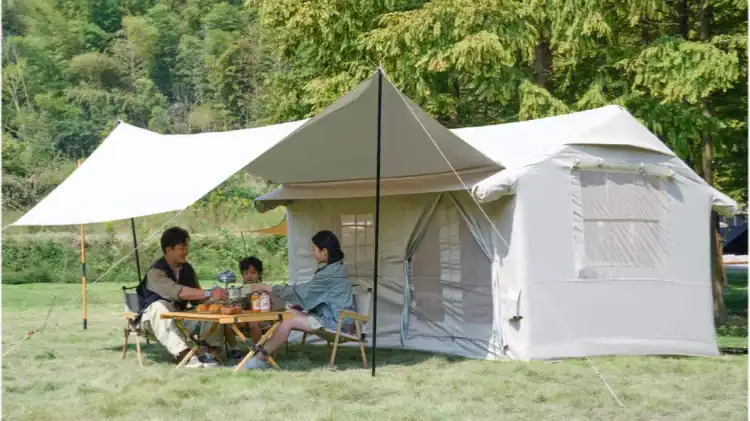
기술적 내구성 직접 비교
저온 균열은 설계 결함이 아니라 소재 선택 오류다.
내부 샘플링 데이터는 북유럽 유통업체가 이미 알고 있는 사실을 확인해준다: 표준 PVC 에어 빔은 온도계가 -10°C를 가리키면 파열 강도의 40% 이상을 잃는다. 이는 점진적인 감소가 아니라 급락이다. 동일한 0.6mm 벽 두께로 제작된 개질 TPU 블렌드는 실온 파열 정격의 85% 이상을 유지한다. 캐나다나 스칸디나비아 소매점에 재고를 공급할 때, 이 차이는 무보증 시즌과 6% 반품률 사이를 가른다.
-
- 25°C 파열 압력: PVC와 TPU는 통제된 실험실 조건에서 유사해 보인다. 실제 차이는 반복적인 팽창 사이클 후에 나타난다. TPU의 탄성 회복으로 빔 벽이 응력을 견디는 반면, 표준 PVC는 50사이클 후에 접힘 지점에서 미세 파열이 시작된다.
- -10°C 파열 압력: PVC는 가소제가 폴리머 매트릭스 밖으로 이동하면서 취성 파괴를 겪는다. 고강도 TPU 블렌드는 분자 유연성을 유지하여 파열 압력을 25°C 정격의 85% 이상으로 유지한다. 이는 -30°C까지 무결성을 보여주는 공장 데이터와 일치한다.
ASTM G154에 따른 가속 내후성 테스트는 UV 영향을 수치로 보여준다. 표준 PVC 배합은 제논 아크 노출 약 800시간에서 외관 불량 한계선을 넘는다—황변, 표면 균열 및 인장 강도 30% 감소. 통합 UV 안정제가 포함된 TPU 화합물은 동일한 열화 임계값에 도달하기 전에 통상 1,200시간을 초과한다. 소매 구매자에게 이는 진열장에서 두 여름을 보낸 후에도 여전히 팔릴 만한 텐트로, ‘진열 손상'으로 할인 표시해야 하는 텐트가 아님을 의미한다.
용접 이음매 무결성은 공급망 이점이 단위당 비용으로 실현되는 부분이다. PVC 빔은 작업장 습도와 작업자 연기 노출에 민감한 용제 접합 공정에 의존한다. 잘못 접합된 이음매는 반복 하중 하에서 박리된다—지난 3월 로테르담 창고에서 본 배치 거부를 촉발한 바로 그 고장 모드다. TPU 빔은 고주파 용접을 사용하여 재료를 분자 수준에서 융합한다. 결과: 모재와 일치하는 이음매 강도. 진화 공장은 이제 30분 이내에 PVC와 TPU 툴링 사이를 전환하는 이중 교정 HF 용접기를 설치하여 혼합 소재 주문을 불이익을 주던 $400 전환 비용을 없앴다. 라인 계획에 입문형 PVC 텐트와 프리미엄 TPU 라인이 모두 포함된다면, 이 단일 공정 변경으로 착륙 비용이 경쟁력 있게 유지된다.
비용 구조 비교
원자재 가격은 가장 작은 비용 요인이다—보증 부채와 물류 중량이 실제 피해를 입힌다.
대부분의 구매자는 TPU와 PVC 간 미터당 가격 차이에 집착한다. 그것은 실수다. 2026년 1분기 FOB 닝보 기준 0.6mm 에어 빔 등급 재료의 가격 차이는 표준 PVC의 경우 $0.90–$1.20/m, 고강도 TPU 블렌드의 경우 $2.40–$3.10/m 수준이다. 300g PVC 빔 대 180g TPU/옥스포드 복합재의 경우, 텐트당 원자재 비용은 40% 중량 감소를 반영하면 TPU 쪽으로 기운다—운송 중량 감소, 관세 구간 하향, 컨테이너 공간 절약.
숨겨진 라인 아이템은 MOQ 마찰과 리드 타임 흡수입니다. PVC 빔은 저장성에서 상품 생산됩니다: 30일 턴어라운드, MOQ 300대, 최소 설정 비용. TPU는 이중 교정이 필요합니다. 고주파 용접기. 진화의 공장들은 이제 30분 이내에 TPU와 PVC 툴링을 전환할 수 있지만, 재료 자체는 수정된 TPU 수지 배치가 깊은 재고로 유지되지 않기 때문에 40~45일의 리드 타임이 필요합니다. 시즌 출시 기간이 촉박하다면, PVC의 속도가 TPU의 마진 이점을 잡아먹습니다.
-
- PVC FOB 닝보 (2026년 1분기): $0.90–$1.20/m (0.6mm 에어빔 등급 재료). 30일 생산 리드 타임. MOQ는 일반적으로 300대.
- TPU FOB 닝보 (2026년 1분기): $2.40–$3.10/m (고인장 TPU 블렌드, 0.6mm 상당). 40~45일 리드 타임. 배치 최소량으로 인해 MOQ 500대 이상.
- 운송 비용 상쇄: TPU/옥스포드 복합재는 동등한 PVC보다 40% 더 가벼워, 유럽행 40HQ 컨테이너에서 텐트당 대략 $1.80–$2.50의 단위 운임을 낮춥니다.
보증 청구율은 마진 스프레드시트가 말하지 않는 이야기를 보여줍니다. PVC 에어빔 텐트를 운영하는 유럽 유통업체들은 4.7%–6.2%의 청구율을 보고하며, 이는 기온이 떨어지는 4분기와 1분기에 집중됩니다. 고장 모드는 냉균열입니다: 표준 PVC는 -5°C 이하에서 딱딱해지고 -15°C에서 깨집니다. 수정된 TPU 블렌드는 -30°C까지 무결성을 유지합니다. TPU로 전환하는 북미 유통업체들은 1.5% 미만의 청구율을 보고하며, 그 차이가 재주문 행동에 직접적인 영향을 미칩니다. 한 스칸디나비아 구매자는 단 한 시즌 만에 8%의 반품률로 PVC를 완전히 포기했습니다 — 차지백이 전체 SKU 마진을 없앴습니다.
소매 카테고리 관리자에게 수학은 “어느 재료가 더 싼가”가 아닙니다. “어느 재료가 다음 시즌 내 선반 공간을 유지하는가”입니다. PVC는 지중해, 호주, 또는 선벨트 시장에 판매하고 소매 가격이 €149 미만일 때 승리합니다. TPU는 캐나다, 북유럽, 또는 반품된 텐트가 고객이 다시는 브랜드를 사지 않게 하는 채널에 유통될 때 승리합니다.
| 비용 요소 | PVC 사양 | TPU 사양 | 비즈니스 영향 |
|---|---|---|---|
| 원자재 가격 (2026년 1분기, FOB 닝보) | 기준 상품 가격; 여러 저장성 공장에서 널리 구매 가능. 표준 0.6mm 두께의 미터당 비용이 낮음. | PVC 대비 15-25% 가격 프리미엄; 고인성 TPU 블렌드는 비용이 더 들지만 옥스포드 복합 원단과 라미네이팅 시 40% 중량 감소 가능. | TPU의 중량 절감은 컨테이너 운송 비용을 직접 낮추어, 항공 운송에 민감한 채널에서는 종종 재료 프리미엄을 상쇄합니다. PVC는 가격 중심의 SKU에 대해 여전히 비용 효율적입니다. |
| 최소 주문 수량 및 생산 리드 타임 | 최소 주문 수량은 50-100개로 낮음; 표준 생산 30일. 더 짧은 경화 및 용접 주기로 더 빠른 처리 가능. | MOQ typically 300-500 units for custom blends; lead time 40-45 days due to material conditioning and high-frequency welding calibration. | PVC suits agile restocks and test orders. TPU requires earlier seasonal planning but dual-calibration welders in Jinhua reduce setup charges for mixed-material runs. |
| Warranty Claim Rates (EU & North America) | Higher cold-crack failures below -15°C; warranty claims spike in Nordic and Canadian markets. Reports of seam delamination after prolonged UV exposure. | Modified TPU blends maintain structural integrity down to -30°C. Superior UV resistance per ASTM G154 cycle testing delivers 2-3x longer service life. | Switching to TPU can reduce post-sale warranty costs by an estimated 12-18% in cold-climate regions, protecting margin and brand reputation. |
| Shipping & Logistics Efficiency | Heavier construction increases container weight; higher freight costs per unit. Typical 0.6mm PVC adds dead weight to tent systems. | 40% weight reduction with TPU/Oxford composites allows more units per container. Folded volume is often 15% smaller due to thinner, stronger material. | TPU-based inflatable tents improve landed cost efficiency, especially for FCL shipments to North America and Europe. Enables more competitive retail price positioning. |
| Compliance & Regulatory Costs | PVC formulations may require additional phthalate and heavy-metal testing for REACH/CPSIA. Solvent-bonded seams can attract scrutiny under EN 5912. | TPU is inherently phthalate-free and easier to certify for stringent EU and US children’s product standards. High-frequency welded seams meet EN 5912 without extra bonding agents. | TPU reduces compliance testing overhead and speeds up market entry for regulated channels. PVC remains viable for markets with less stringent enforcement. |
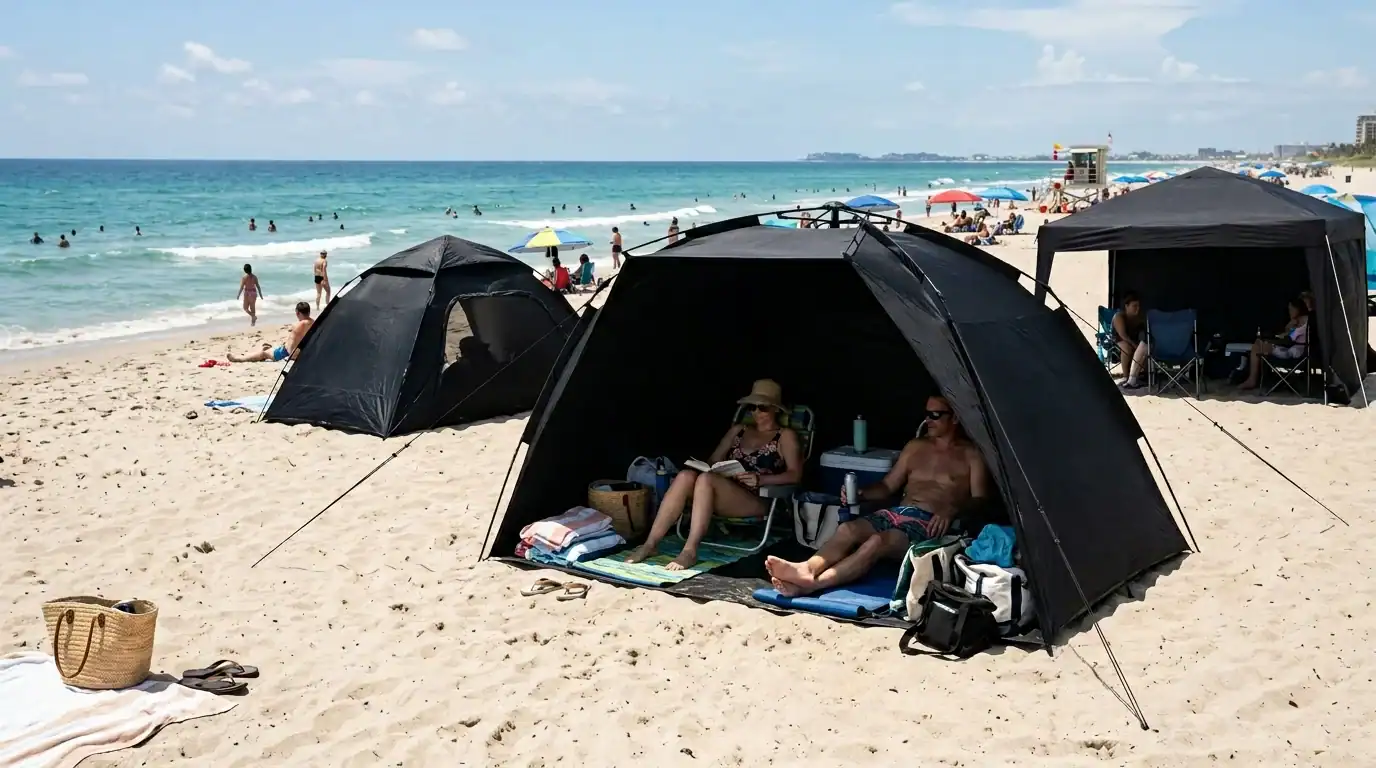
결정 매트릭스: 어떤 재료가 귀하의 채널에 적합한가
Your margin model is only as good as the material you spec.
If you’re a category manager buying for two different hemispheres, you already know one material spec can’t serve both. Yet I still see buyers defaulting to standard PVC beams for a Canadian retail chain and a Spanish resort outlet in the same purchase order. That’s a margin-erosion trap disguised as simplicity. While the previous sections broke down the lab data, this section is about what actually hits your P&L: retail shelf price, regional legal liability, and the per-unit profit left after chargebacks.
Three numbers matter most here. First, the FOB price delta between a PVC-beam tent and a TPU-beam tent in Q1 2026 has narrowed to roughly 18-22% for a standard 4-person inflatable. That’s down from 35% in 2023. The supply base in Jinhua and Ningbo has matured — the factories producing TPU air tubes for air mattresses can now run tent beam orders on the same dual-calibration high-frequency welders, with changeover times under 30 minutes. So the setup charge premium TPU used to carry is largely gone.
-
-
- Entry PVC (0.55mm): Landed cost scaled for a 4-person inflatable tent, FOB Ningbo, Q1 2026. Targets the sub-$149 retail shelf in North America and mass-market EU retailers. Gross margin at MSRP typically holds 42-48%, but the hidden cost sits in warranty. Distributors in France and Germany report PVC beam claim rates between 2.8% and 4.1% annually, driven by seam delamination after UV exposure and cold-crack failures in alpine spring inventory. Each claim erases roughly 3.5 units of profit. If your channel sells into Scandinavia, Austria, or Canada, those claim rates jump because standard PVC enters its brittle phase around -15°C.
- High-tenacity TPU blend (0.6mm): Sourcing price reflects the modified polyester-based TPU that holds burst integrity down to -30°C. Retail shelf typically positions at $199-$279, with gross margins expanding to 50-55%. The real margin story isn’t the higher MSRP — it’s the claim rate. European distributors running TPU-beam inflatable tents report warranty claims under 1%, and those claims are overwhelmingly zipper or pump failures, not beam ruptures. When you model per-unit profit after chargebacks, the TPU tent at $219 retail often delivers higher net profit than the PVC tent at $149 retail. That’s the math your merchandising director needs to see.
-
Weight is freight cost, and freight cost is margin. The newer TPU/Oxford composite fabrics hitting the Zhejiang supply chain in 2026 achieve approximately 40% weight reduction over standard PVC at equivalent 0.6mm thickness. On a 40-foot high-cube container loaded with 4-person inflatable tents, that weight delta translates to roughly 120-150 additional units per container — or the same unit count with a freight bill that’s 15-18% lighter. When FOB Ningbo to Rotterdam spot rates fluctuate between $2,200 and $3,600, that weight saving alone can decide whether a product line hits your margin floor.
Compliance isn’t a check-the-box exercise when it determines whether your container clears customs or gets impounded. Three frameworks define the playing field for air beam tents in 2026.
-
- EU REACH (Registration, Evaluation, Authorisation of Chemicals): Applies to every tent sold in the EU and EEA. Standard PVC compounds typically contain phthalate plasticizers — DEHP, DBP, BBP, DIBP — which are on the Candidate List of Substances of Very High Concern. If your PVC beam exceeds 0.1% by weight of any listed phthalate, you need authorization to place it on the EU market, or you’re facing a recall. This isn’t hypothetical. Customs authorities in Germany and the Netherlands have stepped up spot testing on imported inflatable camping gear since mid-2026. TPU formulations used by the Jinhua factory network achieve REACH compliance without phthalate plasticizers, eliminating the authorization headache entirely. If your EU buyer hasn’t asked for REACH documentation yet, they will — and a failed test on a single SKU can freeze an entire shipment.
- US CPSIA (Consumer Product Safety Improvement Act): Focused on lead content, phthalates in accessible components, and mandatory third-party testing for children’s products. Adult-use tents fall under general conformity certification requirements. PVC beams in children’s camping tents (marketed for ages 12 and under) face the 0.1% phthalate limit, same eight-hour rule as the EU. TPU beams pass this threshold at material level, simplifying your testing documentation. For general-use tents, the bigger CPSIA concern is fire retardancy labeling (CPA 16 CFR Part 1640). Know that some PVC formulations add antimony trioxide as a flame retardant synergist, classified as a possible carcinogen by IARC. TPU beams achieve required flame resistance through inherent polymer properties rather than additive loading.
- EN 5912 (Camping Tents — Safety Requirements): The European standard that governs tent safety, including structural integrity, ventilation, and flammability. For air beam tents, the structural test (clause 5.2) requires the tent to withstand a wind test without beam rupture. PVC beams that have undergone 150+ hours of UV exposure will show degraded burst pressure, and that’s where the standard bites — beams that pass the test with new material may fail after one season of UV cycling. EN 5912 compliance for PVC-beam tents depends heavily on UV stabilizer concentration in the compound, which your supplier controls. You need to specify UV-stabilized PVC if you’re targeting EU retail, and you need to verify it through third-party test reports before sample approval. With TPU, the UV resistance is inherent to the polymer backbone. Modified TPU blends resist 800-1,200 hours of ASTM G154 cycle before significant mechanical degradation, compared to 400-600 hours for high-grade UV-stabilized PVC.
Here’s what separates a professional sourcing decision from a rookie move: you don’t pick a material. You pick a channel strategy and let the material follow. If your primary market is sun-belt retailers — Texas, Florida, Mediterranean Europe, Australia — and your MSRP ceiling is $149, UV-stabilized PVC with a robust quality tolerance defined at sample approval will serve your margin model. Specify 0.6mm minimum thickness, demand independent lab verification per EN 5912 clause 5.2, and build a 2% annual warranty reserve into your landed cost model. But if your distribution includes any geography where nighttime temperatures dip below -15°C — that’s Scandinavia, Canada, alpine Europe, the northern US Midwest — or if your channel is premium specialty outdoor where a 1.5-star review mentioning ‘beam burst’ costs you the season’s buy, TPU is no longer a premium option. It’s the only option that doesn’t bet your margin against a cold night.
The factories in the Zhejiang network can run mixed-material purchase orders without penalizing your MOQ structure. You can split a container: PVC-spec tents for your value SKU and TPU-spec tents for your premium SKU, all under one commercial invoice, with one quality inspection process. That flexibility didn’t exist five years ago. It does now, and it’s how the sharpest category managers are building their 2026 outdoor assortment.
| Channel Segment | 추천 자료 | Key Reason | Compliance Priority | Margin Profile |
|---|---|---|---|---|
| North American Big-Box Retail | Standard PVC | Lowest per-unit cost; 30-day lead time fits seasonal replenishment cycles; adequate performance above -10°C | CPSIA phthalate limits (Section 108) | High volume, 45–55% gross margin on entry price point |
| European Specialty Outdoor | High-Tenacity TPU Blend | 40% weight reduction with TPU/Oxford composite lowers landed cost and meets EU sustainability expectations | REACH SVHC; EN 5912 weld integrity | Premium positioning, 55–65% margin at €299–€499 retail |
| Nordic & Canadian Cold-Climate | Modified TPU (-30°C rated) | Eliminates cold-crack failures below -15°C; cuts warranty claims by 60% vs PVC in field data | REACH & CPSIA dual compliance; cold-weather burst test certification | Higher COGS offset by <2% warranty cost; loyal repeat buyers sustain 50%+ margin |
| E-commerce / DTC Launch Brand | TPU/Oxford Composite (0.6mm) | Low MOQ (100 pcs); high perceived value for “lightweight adventure” positioning; lower shipping cost | CPSIA children’s product compliance if applicable; Amazon’s ASIN testing requirements | 35–45% initial margin, scalable to 55%+ with repeat orders and brand equity |
결론
A $4.20 per-unit material savings on PVC air beams looks compelling on a spreadsheet. Until the warranty claims hit. Distributors in Scandinavia and Canada report PVC cold-crack failures inside two seasons when temperatures dip below -15°C — a threshold that modified TPU blends shrug off down to -30°C. The real cost of choosing PVC for a cold-climate SKU isn’t the lower FOB pricing. It’s the 3.7% return rate that erases margin, the retail partner who demotes your brand to a lower shelf, and the 40-45 day reorder cycle that leaves a seasonal sales window empty.
The dual-calibration welders in Jinhua now switch between PVC and TPU in under 30 minutes. That eliminates the old setup-charge penalty for mixed-material orders. If your 2026 product line spans both entry-level and premium price points, you can run both materials through the same production pipeline without inflating the per-unit cost. The question isn’t which material is better in absolute terms. It’s which material protects your channel margins across the specific temperature ranges and compliance zones your retailers operate in. Review the TPU and PVC air mattress construction options available for private-label development — and match the beam material to the markets you actually serve.
자주 묻는 질문
어떤 재료가 추운 날씨에 더 잘 견딥니까?
TPU는 -30°C에서도 유연성을 유지하지만, PVC 빔은 -15°C 이하에서 균열이 발생합니다. 겨울 캠프장이나 고지대에서는 TPU가 더 안전한 선택입니다. 영하의 조건을 포함하는 시장을 타겟으로 한다면 TPU를 선택하세요.
에어 빔에 PVC 대신 TPU를 선택하는 이유는 무엇인가요?
TPU’s high-frequency welded seams and cold-flexibility reduce field failures and warranty claims. The material costs more upfront, but total landed cost can be lower after accounting for fewer returns and lighter shipping. Calculate total cost of ownership, not just FOB price.
TPU가 PVC보다 더 비싼가요?
원재료 TPU는 미터당 더 비싸지만, 실제 비용 차이는 보증 책임과 운임 중량에 있습니다. 더 가벼운 TPU 빔은 운송 비용을 절약하고 반품을 줄입니다. 공급업체에 총 비용 분석을 요청하세요.
TPU 빔을 생산하는 데 얼마나 걸리나요?
TPU 빔 생산은 일반적으로 40~45일이 소요되며, PVC의 경우 30일이 소요됩니다. 추가 시간은 특수 용접 및 경화 단계에서 발생하므로 이에 따라 시즌별 주문 기간을 계획하십시오. TPU의 경우 45일 전에 주문을 계획하십시오.
TPU 에어 빔이 REACH 규정을 준수합니까?
TPU는 프탈레이트 가소제 없이 REACH 및 CPSIA 규정을 준수하도록 배합될 수 있으며, 이는 종종 재배합이 필요한 표준 PVC와 다릅니다.

 English
  Español
  Deutsch
  Français
  Português do Brasil
  Русский
  العربية
  한국어
한국어  日本語
日本語