 跳到内容
跳到内容 
inflatable tent won t fit is the first checkpoint buyers should lock before they approve a supplier, budget, or production slot. Every other article on this problem starts with the same advice: buy a bigger bag. That is wrong. A larger stuff sack just masks the real issue, and for a brand manager sourcing private-label inflatable tents, it creates a spec you cannot control across production batches. The actual fix lives in how the air beams are handled before the tent ever touches the carry bag.
I have watched buyers burn through a $50,000 order because the предпроизводственный образец passed sample approval but the mass production run packed out 3 inches wider than the factory video showed. The difference was not in the fabric or the beam material — it was in residual trapped air and a beam-stacking sequence that nobody wrote into the RFQ. The carry bag drawstring is sized for vacuum-compressed factory output, not field hand-rolling. That gap between a 20-30% tighter factory pack and what happens at a campsite is where returns and negative reviews live.
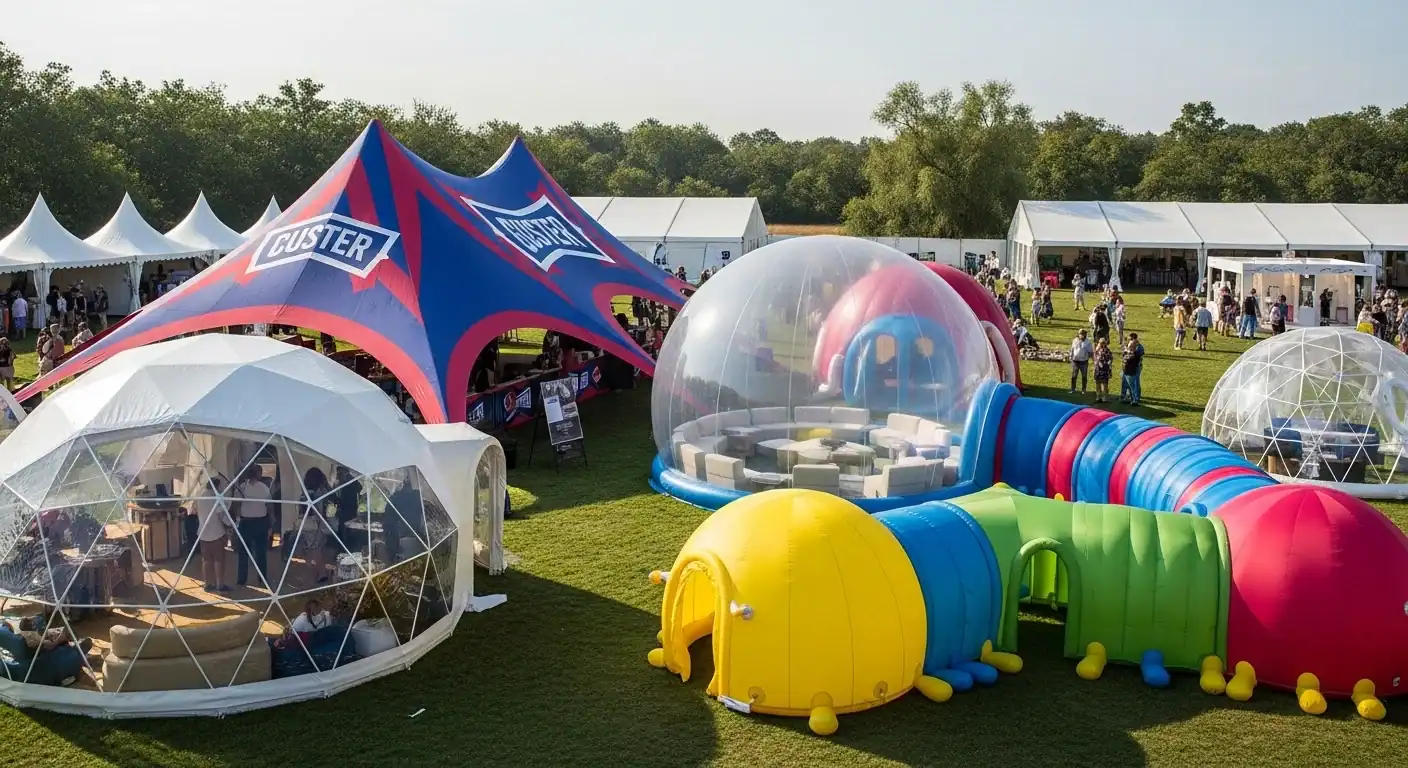
Why Inflatable Tents Fight Their Stuff Sack
Trapped air in the end beam alone adds 2–3 inches to the rolled diameter.
Air beams hold residual pressure even after the main valve opens. High-volume vault ceilings create a large flat panel that must roll cleanly, but that panel traps a thin layer of air against the fabric if you rush the fold. The result is an extra 2–3 inches of packed diameter — exactly the gap between a snug fit and a drawstring that won’t close.
Stock stuff sacks are sized for factory vacuum-compressed tents, which squeeze volume 20–30% tighter than any hand-rolling method. That means your carry bag is likely correct for the tent under ideal conditions, but field packing never reaches those conditions unless you deliberately remove every pocket of residual air.
TPU vs PVC Beam Stiffness
Beam material choice directly affects how tightly you can roll. TPU beams are lighter, stay flexible in cold weather, and spring back quickly after compression. PVC beams are stiffer, cheaper, and thicker — which makes the packed roll longer and harder to cinch down.
Below 5°C, PVC stiffens noticeably and increases packed diameter by roughly one size increment. A bag that fits at room temperature may fail at a frosty trailhead. TPU maintains its bend characteristics down to about -20°C, so it rolls consistently across temperature ranges.
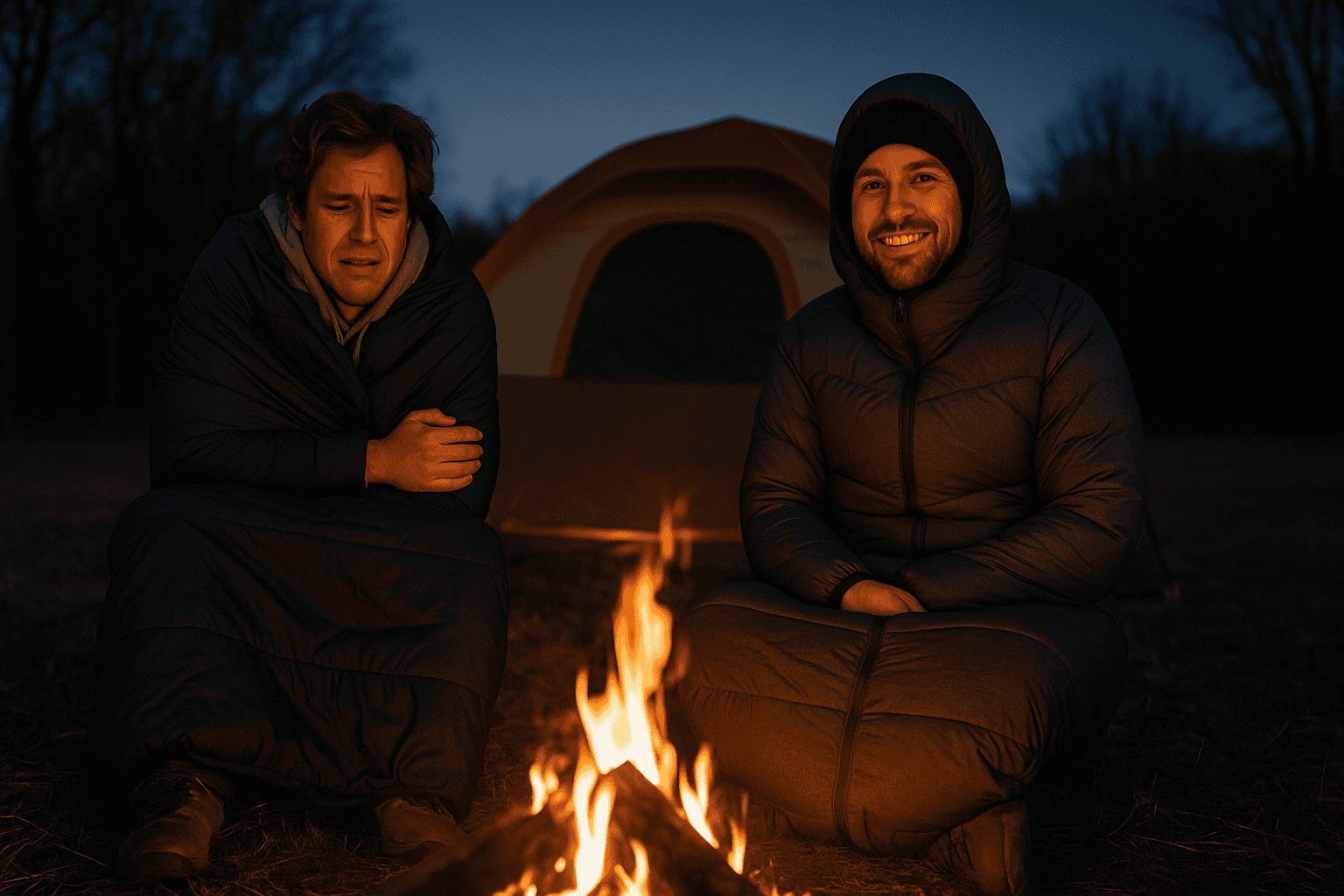
5 Roll-and-Pack Fixes for Field Use
Rolling from the center outward traps air in the last beam and adds 2–3 inches to packed diameter.
Most people grab the tent body, fold it in half, and start rolling from the middle. That sequence pushes air toward both ends simultaneously. The far end beam holds that air because there is no open valve on that side. The result is a stiff, oversized roll that fights the stuff sack.
Fix 1: Create Negative Pressure Before Folding
Use the reverse pump function or press the deflate valve to suck residual air out, then open all safety valves. This mimics factory vacuum packing and removes the last 20–30% of trapped air.
Fix 2: Zipper the Tent Closed
Clip and zipper the tent shut so fabric does not snag on zipper pulls or the tent floor. A sealed body keeps the roll clean and prevents bunching inside the sack.
Fix 3: Stack the End Beams First — Factory Beam-Stack Method
Lay the tent valve-side up. Fold the two end beams inward toward the center beam, then roll toward the center. Do not roll from the center outward; that traps air in the last beam and costs 2–3 inches of packed diameter. This is the exact method factory packing lines use and is the biggest insight amateurs miss.
Fix 4: Roll From Foot End Toward Valve End
Roll in one continuous pass from the foot end toward the valve end so air escapes in a single direction. Flatten the fabric with a knee every turn to push air out. Field estimate: 3–5 minutes pack-down for a 3-beam tent.
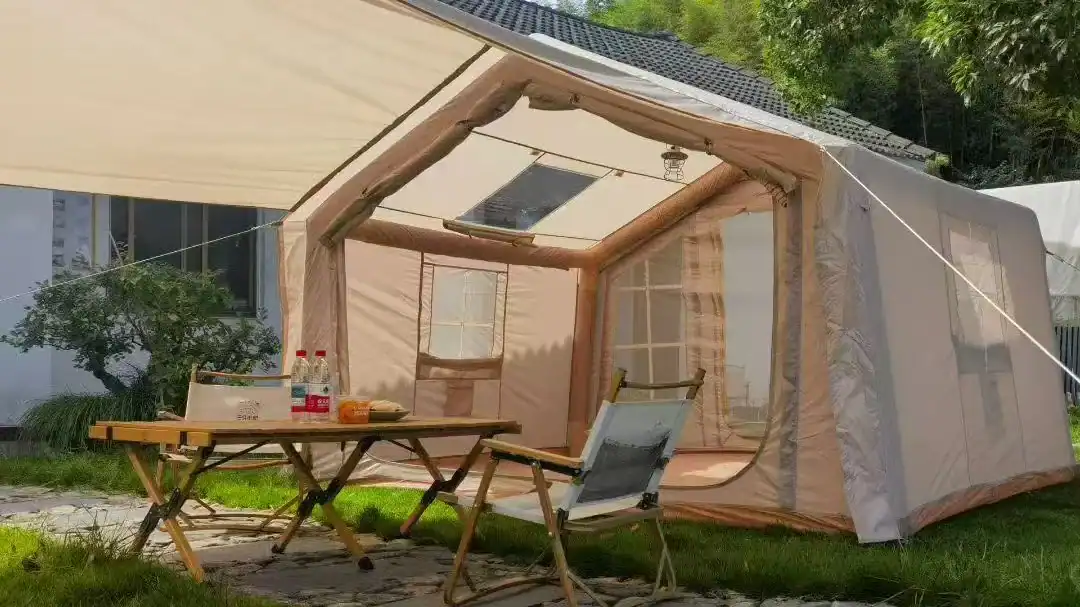
How to Store Inflatable Tents So Beams Last
Store at atmospheric pressure in a ventilated bin at 10-25°C.
Most inflatable tent damage happens during storage, not use. Leave a TPU beam compressed under a car seat through a hot summer and the plasticizer migrates. The weld line becomes brittle. Next season, that beam cracks at the fold point. The fix is straightforward: understand the material limits and follow a cold-weather protocol.
Temperature Limits for TPU and PVC Beams
TPU air beams typically operate from -20°C to 60°C at 0.8-1.2 bar. That range covers most field conditions. Storage is different. Compressed TPU stored above 40°C accelerates plasticizer migration — the material loses flexibility and the weld seam weakens over time. PVC beams behave worse below 5°C; they stiffen noticeably and risk micro-cracking below -10°C.
Сайт safe storage band for both materials is 10-25°C. A garage attic in July hits 50°C easily. A car trunk in Arizona summer exceeds that. Store tents in a climate-controlled space or a basement corner that stays within range.
Long-Term Compression and Valve Protection
Do not store an inflatable tent stuffed tight inside its carry bag for months on end. Permanent compression creases form at the folded points of TPU welds, especially if the bend radius drops below 5 cm — the minimum the factory floor uses to prevent weld fatigue.
Keep valves closed during storage to protect internal seals from dust and humidity, but keep the beam at atmospheric pressure, never inflated. Extended inflation at high pressure stresses the seam bonds unnecessarily, and temperature swings can over-pressurize the beam beyond its rated limit.
-
- Storage position: Loose in a ventilated bin, not stuffed inside a duffel or under other gear.
- Re-roll schedule: Every 3 months to redistribute compression points and prevent permanent set.
- Valve state: Closed (seals protected) but beam fully deflated to atmospheric pressure.
Winter Storage Protocol
Before winter storage, deflate completely using reverse pump mode or by pressing the deflate valve while opening all safety valves — this removes residual air that could condense moisture inside the beam cavity.
Store loose in a dry ventilated bin away from direct sunlight. UV exposure degrades TPU coating faster when the structure is deflated because there’s no surface tension protecting it. Avoid concrete floors that wick moisture; place the bin on a shelf or pallet.
For brand teams sourcing private-label inflatable tents, this preventive care directly reduces won’t-fit complaints and cracked-beam returns in year two of ownership — exactly when most warranty claims surface.
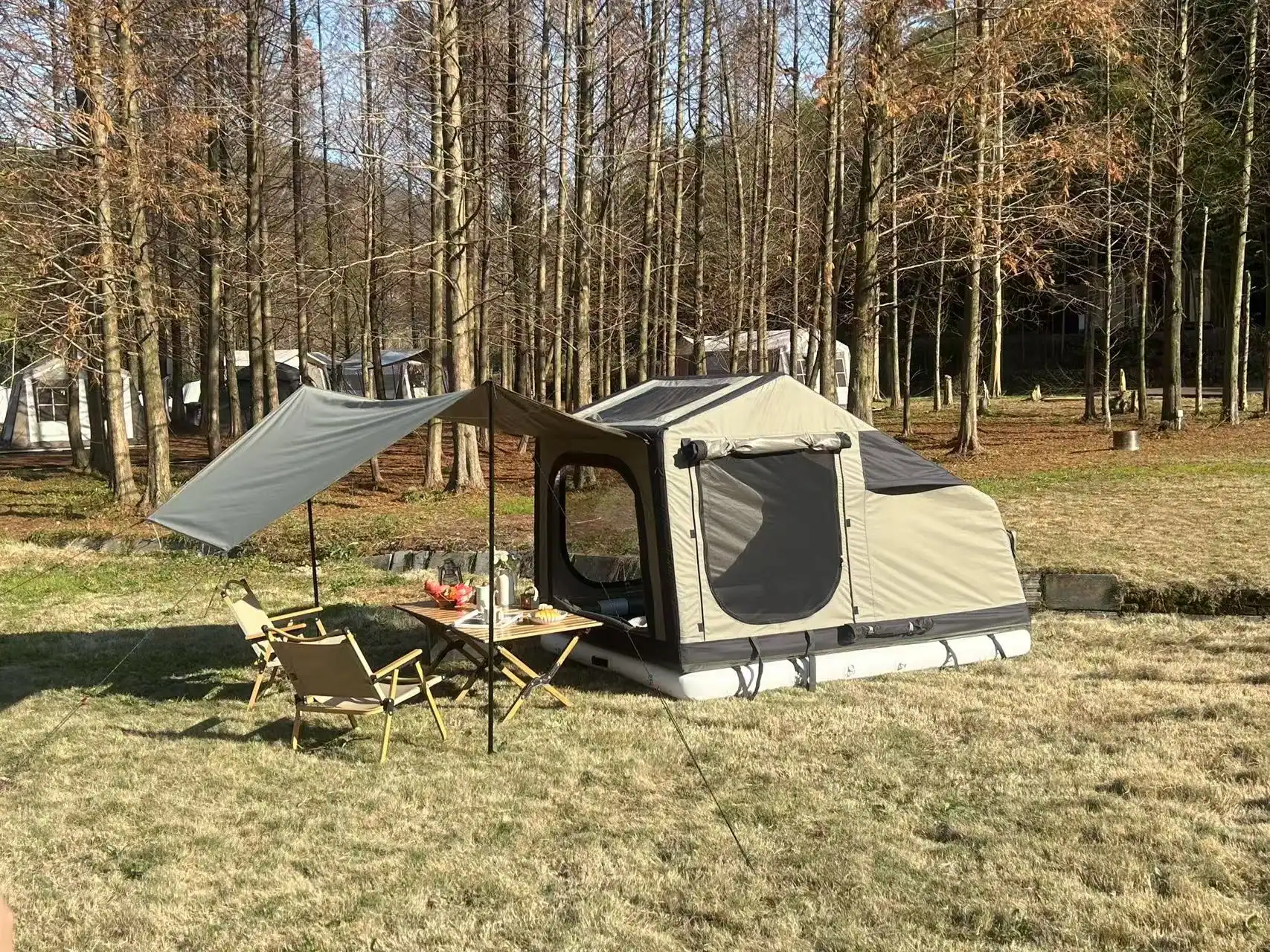
What to Say to Your Factory When Sizing a Carry Bag
Spec the carry bag against the field roll, not the vacuum-packed sample, and most won’t-fit returns disappear.
Most won’t-fit complaints trace back to a carry bag speced against vacuum-packed factory output. Buyers hand-roll the tent in the field, hit a 2-3 inch diameter gap, and blame the bag. The real defect sits in the RFQ. Fix the spec, and the negative review disappears.
RFQ Checklist for Carry Bags
-
- Размеры в упакованном виде: Request the packed diameter after vacuum compression, the rolled length, and the deflated beam diameter. These three numbers define the minimum bag volume; a spec that only lists fabric weight tells you nothing.
- Compression strap: Require a 4-point compression strap. Stock drawstrings are sized for factory vacuum-packed tents, which run 20-30% tighter than hand-rolling. The strap closes that gap before the drawstring does.
- Pack-down video: Ask to see a pack-down from the actual production batch, not a lab sample. Production fabric has a different hand-feel, and the packed dimensions change when the weave or coating differs from the prototype.
MOQ and Lead Time Benchmarks
Custom inflatable tent programs start at 50-100 pieces per SKU with a 30-45 day lead time from sample approval. Those are the operating figures across 17 core strategic factories and 200-plus manufacturing partners, most ISO 9001:2015 certified. Use them as your negotiation baseline.
Packaging Inspection and Validation
Put a trial pack-down of 5% of the batch into the pre-shipment inspection checklist. A bag matched to a prototype can fail on production fabric. If the won’t-fit problem surfaces before loading, you adjust the bag. After loading, you fund the return freight.
The factory will meet whatever tolerance you write into the RFQ. The question is whether you wrote it from a vacuum-packed sample or from the roll your customer will produce on the campsite. That choice decides whether the сумка для переноски becomes a return reason or a brand asset.
Заключение
The won’t-fit problem is rarely a defective bag. In most cases, it’s residual air trapped by the wrong folding order, combined with a carry bag speced for factory vacuum compression that can’t match hand-rolling volume. Apply the beam-stack method and a 4-point strap, and the field failure disappears.
-
- Roll from foot end to valve end in one pass to expel all residual air.
- Use a compression strap to close the gap between hand-rolled and vacuum-packed volume.
- Spec carry bags at factory vacuum dimensions plus a buffer for field packing behavior.
For brand teams, this is a spec decision that hits your return rate directly. When you send an RFQ, demand trial pack-downs on production fabric — not prototype samples — and validate against a packed diameter benchmark of no more than the bag’s internal circumference minus two inches. Review Kelyland’s inflatable tent manufacturing page to see how OEM programs handle bag sizing, compression straps, and pre-shipment QC validation before container loading.
Часто задаваемые вопросы
Стоит ли складывать или сворачивать надувную палатку?
Скатывайте, никогда не складывайте. Складывание TPU-воздушной балки создаёт плотный залом и со временем ослабляет сварной шов.
How do I deflate an inflatable tent fast?
Use reverse pump mode or press the deflate valve to create negative pressure, then open all safety valves. Open valves in sequence from farthest to nearest for maximum airflow. Finish by pressing flat with your knees.
Can I store an inflatable tent inflated?
No. Extended inflation at high pressure weakens beam seams, and temperature swings over-pressurize the beam. Never store compressed below -10°C.
Why won’t my inflatable tent fit in its bag?
Three causes: residual trapped air, wrong beam folding order, and a bag speced for vacuum-packed factory output. Apply negative pressure before rolling and roll from the foot end toward. Final terms should be confirmed against the exact product specification and order conditions.
What temperature can TPU air beams handle?
Most TPU air beams are rated from -20°C to 60°C at 0.8-1.2 bar operating pressure. Avoid storing compressed below -10°C as material stiffness increases packed diameter noticeably. Check your specific model’s rating before winter use.

 English
  Español
  Deutsch
  Français
  Português do Brasil
  Русский
  العربية
  한국어
한국어  日本語
日本語