 跳到内容
跳到内容 
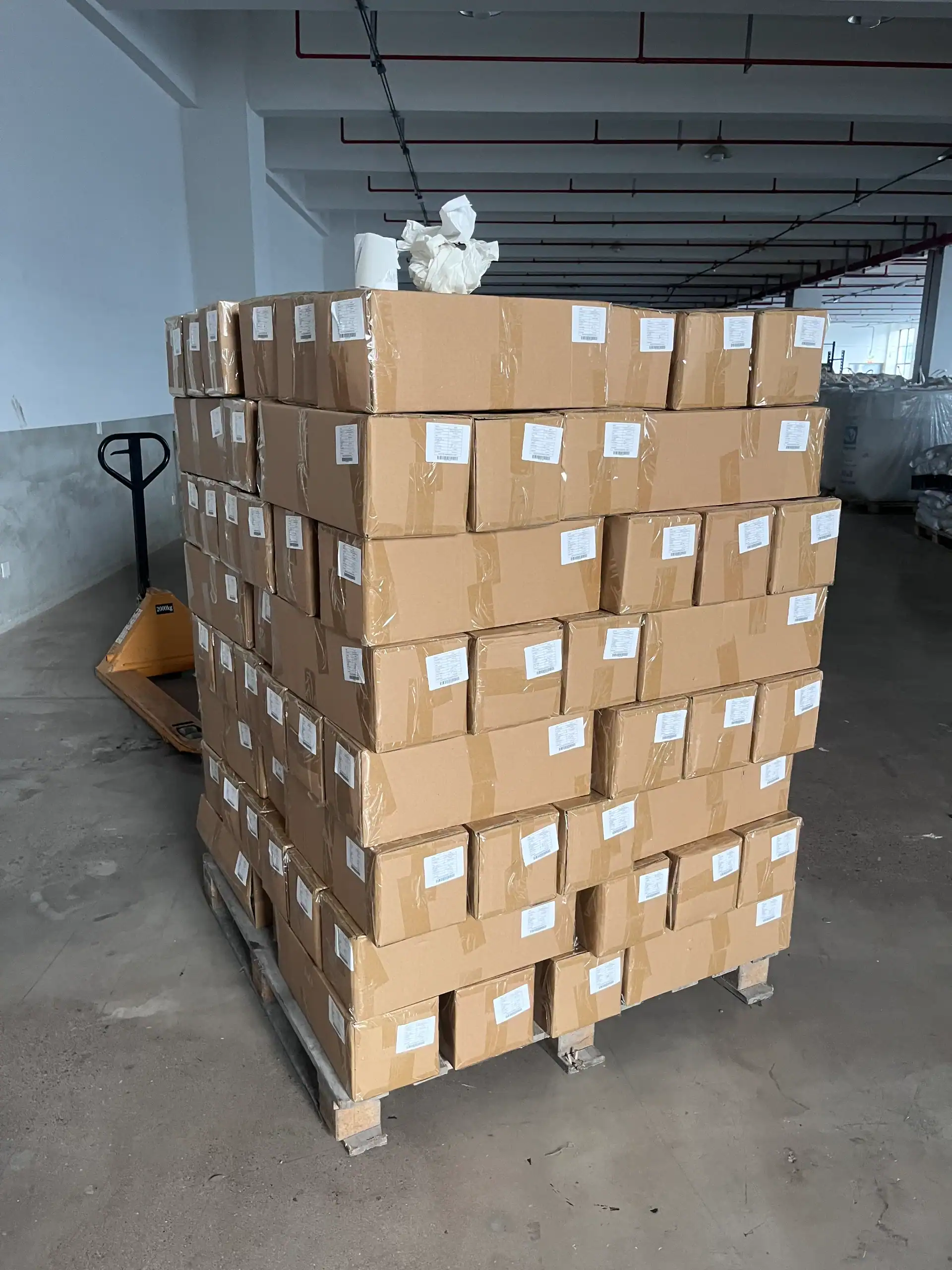
cpsia folding wagon requirements is the first checkpoint buyers should lock before they approve a supplier, budget, or production slot. Every sourcing guide tells you to get the sample approved first. That advice is fine for fit and finish, but it misses the real gatekeeper for US retail shelves: CPSIA compliance. I’ve seen a buyer lose a $50K folding wagon order because the pre-production sample matched perfectly, yet the mass production run triggered a CPSC hold at customs. The difference? The plastic wheel hubs in the bulk shipment used a different PVC compound that exceeded phthalate limits. Sample approval never caught it because nobody asked for a material composition report upfront.
The CPSIA folding wagon requirements aren’t just about lead paint or sharp edges. For a category manager bringing in utility carts from China, the classification trap is the first thing to understand. If your wagon has cartoon prints on the fabric or a seat height under 15 inches, CPSC may classify it as a children’s product — which triggers mandatory third-party testing and a Children’s Product Certificate. Even wagons labeled “adult use” can get flagged if the packaging shows kids playing with it. Ace Hardware buyers I work with require that certificate regardless of labeling if there’s any child-appeal in the design.
Skip this step and you’re looking at a container stuck at port, storage fees piling up after day five, and a re-testing bill that eats your margin on that batch. A proper children’s product determination folding wagon CPSC assessment upfront costs maybe two hours of spec review and one lab quote — versus losing six weeks of shelf time and paying $3,000 in demurrage.
Is a Folding Wagon a Children’s Product Under CPSIA?
The CPSC looks at how a wagon is marketed, not just how it’s built.
The Consumer Product Safety Commission (CPSC) defines a children’s product primarily by its intended use. If a folding wagon is designed or marketed primarily for children 12 or younger, it falls under the Children’s Product Safety Act (CPSIA). That classification triggers mandatory third-party testing for lead and phthalates, plus a Children’s Product Certificate (CPC). Most camping wagons are sold as general utility carts for gear hauling. But the line blurs fast.
What triggers the children’s product classification
Three factors drive the CPSC determination: the manufacturer’s stated intent, the product’s physical design, and how reasonable consumers perceive it. A wagon with a 150 kg load capacity, powder-coated carbon steel frame, and 600D Oxford fabric is clearly built for adult use hauling camping gear. That same wagon becomes ambiguous if you add cartoon prints on the fabric or size it small enough that a child can operate it independently.
Retail buyers should watch for this trap: packaging that shows children using the wagon, even if the spec sheet says ‘adult utility cart.’ Ace Hardware and similar retailers have flagged shipments where the box art featured kids sitting inside the cargo area. The CPSC considers packaging and marketing collateral as evidence of intended use.
The real-world risk for category managers
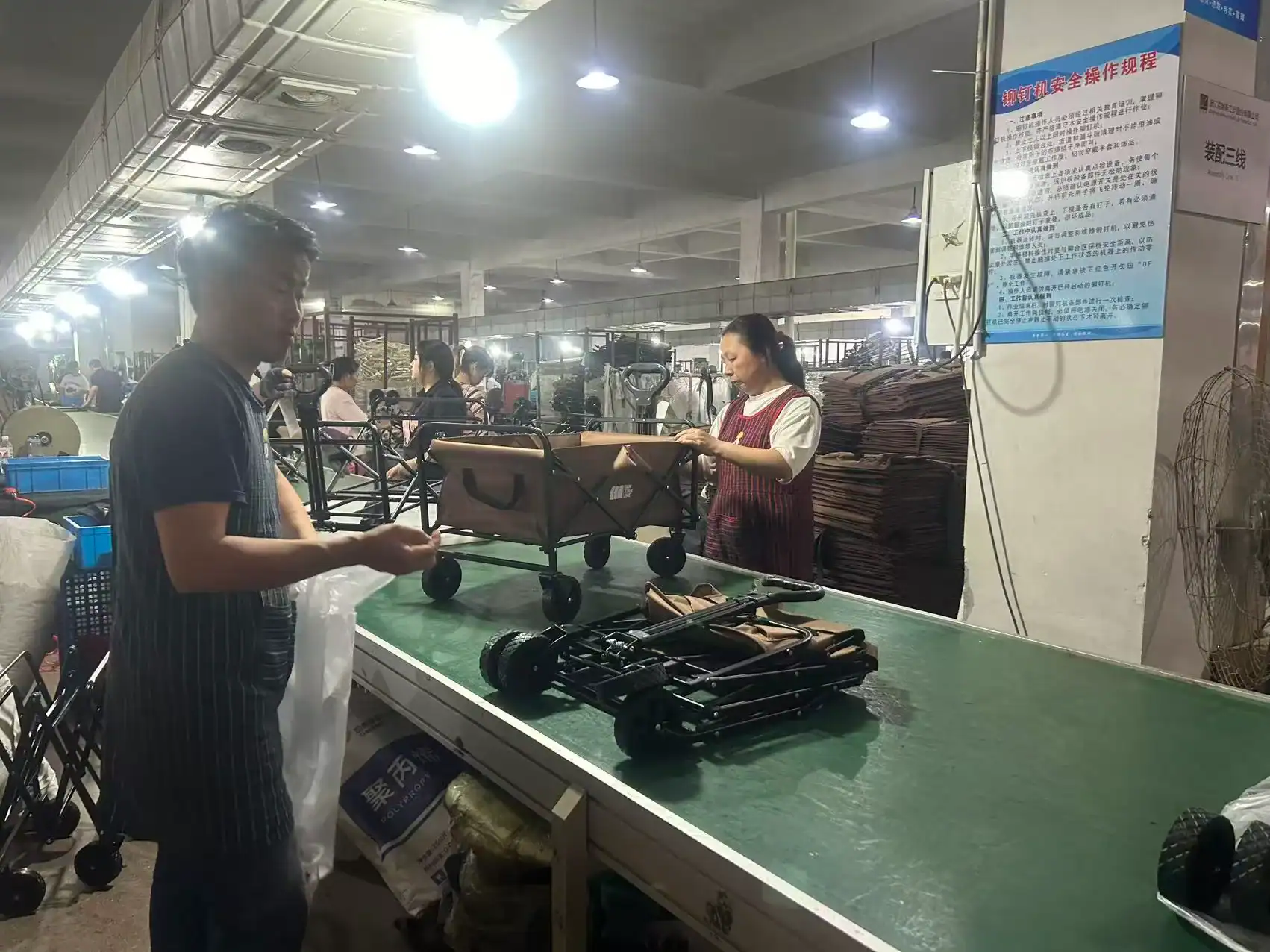
Ship a folding wagon classified as general use but later deemed a children’s product at customs or retail dock audit, and you face full shipment rejection. No CPC certificate means no entry. The factory network behind Kelyland Outdoors’ folding wagon production — which manufactures over 1 million units annually from Jinhua, Zhejiang under ISO 9001 — builds wagons with load ratings up to 200 kg for heavy-duty models. Those specs clearly signal adult use. But if your brand adds child-appeal elements like bright primary colors on the fabric or small handle heights under 60 cm, you shift into children’s product territory.
CPSIA Lead and Phthalate Limits for Wagons
Plastic wheel hubs and handle grips are the most common phthalate failure points.
The CPSIA sets two hard limits that apply to any folding wagon sold in the U.S. market. First, total lead content in any accessible part of the product cannot exceed 100 parts per million (ppm). Second, the eight specified phthalates — DEHP, DBP, BBP, DINP, DIBP, DnHP, DPENP, and DCHP — must each stay below 0.1% (1,000 ppm) in all plastic components if the wagon qualifies as a children’s product.
100 ppm Lead Limit in Accessible Parts
The 100 ppm threshold applies to any component a child can touch during normal use or reasonably foreseeable abuse. For a folding wagon, that includes the fabric basket walls, powder-coated steel frame surfaces, plastic wheel hubs, handle grips, hinge covers, and even the printed labels on the side panels.
Lead typically shows up in three places: PVC stabilizers used in fabric coatings or plastic parts, pigments in colored Oxford fabric or printed graphics (especially reds and yellows), and metal alloys used for rivets or fasteners that contain trace lead content. A single out-of-spec rivet can fail the entire batch.
The testing protocol requires X-ray fluorescence (XRF) screening followed by acid digestion per CPSC method CPSC-CH-E1002-08 for confirmation. If any accessible part exceeds 100 ppm total lead after correction for substrate — meaning you cannot subtract a paint layer from a metal substrate — that unit fails.
0.1% Eight Phthalates in Plastic Components
Phthalate restrictions only activate when CPSC classifies the wagon as a children’s product. The trigger is not about marketing language alone. If your wagon has cartoon-style prints on the fabric (dinosaurs, unicorns), measures under 90 cm in height with a seat area sized for a child under age 12, or ships with packaging showing children playing with it — CPSC considers it intended for children.
When that classification applies, every plastic component must be tested for all eight regulated phthalates using CPSC method CH-C1001-09.3 (solvent extraction followed by GC-MS analysis). Each of the eight phthalates must stay under 0.1%. That means DEHP at 0.09% passes; DEHP at 0.11% fails — there is no combined limit or averaging across compounds.
- High-Risk Components: PVC wheel tires (especially soft rubber-like compounds), TPE/TPR handle grips painted with glossy finishes.
- Moderate-Risk Components: PP baseboards (rarely problematic unless recycled resin is used), powder-coated steel frames (phthalates not present).
- Low-Risk Components: Oxford fabric without PVC backing (typically phthalate-free), aluminum structural tubes.
Suppliers who use virgin PP resin and avoid PVC-based soft plastics generally pass phthalate screening without issue. The danger comes from cost-cutting substitutions: recycled plastics often carry legacy phthalates from previous lifecycles.
Third-Party Lab Testing and CPC Requirements
Only CPSC-accepted labs can issue valid test reports for CPSIA compliance.
The Consumer Product Safety Commission requires that all third-party testing for children’s products be performed by a laboratory that has been specifically accepted by the CPSC. This is not a generic ISO 17025 accreditation — the lab must appear on the CPSC’s published list of accepted laboratories for the specific testing protocol in question. For folding wagons, that typically means testing to ASTM F2057 (if classified as a children’s product) or to the lead and phthalate content limits under 16 CFR Part 1303 and 16 CFR Part 1307.
How to Verify a Lab’s CPSC Acceptance
The CPSC maintains a searchable database on its website where you can check whether a specific lab is accepted for a given test method. Do not rely on the lab’s own marketing materials — suppliers have been known to present test reports from labs that claimed acceptance but were not on the official list. Customs will reject those reports, and your container sits at port while you scramble to re-test.
- Check method match:: The lab must be accepted for the exact test method your product requires (e.g., CPSC-CH-E1002-08 for lead content). A lab accepted for toy testing may not be accepted for folding wagon components.
- Confirm scope:: Some labs are accepted only for specific materials or product categories. A general consumer goods acceptance does not automatically cover camping gear with fabric, metal frames, and plastic wheels.
What Goes Into a Valid CPC
The Children’s Product Certificate (CPC) is the document that ties everything together. It must cite the specific CPSC-accepted lab report, identify the manufacturer and importer, list all applicable rules (lead content, phthalates, tracking label requirements), and include date and place of manufacture. Missing any of these elements is grounds for detention by U.S. Customs and Border Protection or refusal by retailers like Ace Hardware.
For adult-labeled folding wagons that still require a General Certificate of Conformity (GCC), the same rigor applies to documentation — but the testing burden is lighter because lead and phthalate testing may not be mandatory if the wagon clearly falls outside children’s product classification. The key is having your supplier produce material declarations from raw material mills so your third-party lab can perform verification testing on representative samples rather than every single production unit.
Working With Your Supplier on Lab Coordination
Kelyland Outdoors coordinates directly with multiple CPSC-accepted labs in China to streamline this process. The partner factories — including the folding wagon facility in Jinhua, Zhejiang which produces over 1 million units annually — maintain material traceability records that allow for pulling representative samples for pre-production testing before mass production begins. This eliminates surprises when the final CPC needs to be issued against production lot samples.
Tracking Labels and GCC Documentation
A tracking label is the difference between a cleared shipment and a customs hold.
Even if your folding wagon qualifies as a general-use product under CPSIA, you still need two things on every unit: a permanent tracking label and a General Certificate of Conformity (GCC). The CPSC requires both for any product subject to an applicable rule or ban — which includes the lead content limit at 100 ppm and the phthalate limits for accessible plastic parts.
What Must Be on the Label
- Manufacturer or importer name: The entity that produced or imported the wagon. If you’re branding it under your own label, your company name goes here.
- Location and date of production: “Made in China” plus the month and year of manufacture. Some importers add the specific factory code to trace defects back to a production run.
- Batch or lot number: A unique identifier that ties each wagon to its production batch. Without this, a recall becomes a guessing game across all inventory.
- “Suffocation hazard” warning for bags: If the wagon ships in a plastic bag or with plastic упаковочную, CPSC requires a printed warning per 16 CFR Part 1307.
- Who signs it: The importer of record in the U.S. signs the GCC. If you’re importing through Kelyland Outdoors, we provide the factory test data; your compliance officer certifies the document.
- What it references: List each CPSC regulation (e.g., 16 CFR Part 1303 for lead, Part 1308 for phthalates) and attach the supporting test report from a CPSC-accepted lab.
- Retailer expectations: Big-box retailers like Ace Hardware often request a copy of your GCC before accepting delivery. Ship without one — they may reject pallets at receiving.
The label must be permanent — not a sticker that peels off in transit. Most factories use heat-transfer labels, embossed tags, or direct-print onto the fabric. Kelyland Outdoors’ folding wagon factory in Jinhua applies durable woven labels stitched into the frame sleeve, ensuring compliance even after years of outdoor use.
The GCC: Your Compliance Declaration
The GCC is not optional. It’s a self-issued document stating that your folding wagon meets all applicable CPSC requirements — lead content, phthalate limits, and any other relevant rules like ASTM F1561 for outdoor furniture frames if applicable. You must issue it based on “a reasonable testing program” or third-party test results.
Common Mistakes That Delay Customs Clearance
Missing location codes on labels is one of the most common errors flagged by CBP during entry review. Another is using adhesive paper labels that fall off during ocean transit — by week three at sea, half are unreadable. A third mistake: issuing a GCC but failing to include all applicable regulations because you assumed only lead limits applied.
For non-children’s products specifically, many importers skip phthalate documentation entirely, assuming it only applies to toys. Wrong. Any plastic component on an adult-labeled folding wagon still falls under Section 108 of CPSIA if it contains accessible plastic parts like wheel hubs or handle grips.
Заключение
The difference between a smooth customs clearance and a shipment held at port often comes down to one document: the GCC or CPC. Most of the compliance work—lead limits, phthalate testing, tracking labels—is handled upstream by the factory. But the classification decision is yours alone.
- Cartoon prints or child-sized dimensions trigger children’s product rules.
- Plastic components must pass the eight-phthalate limit at 0.1%.
- A GCC covers adult wagons; a CPC requires third-party lab reports.
The last detail that separates professionals from amateurs is the material spec sheet itself. When your supplier documents which plastic grades are used in the wheels, handle grips, and baseboard clips, you can map each component against CPSIA limits before production starts. That proactive step eliminates surprises during pre-shipment inspection. Review your folding wagon spec sheets against these requirements before locking sample approval—it saves weeks of rework later.
Часто задаваемые вопросы
Is a folding wagon a children’s product under CPSIA?
A folding wagon is generally not a children’s product if it is marketed for general utility or outdoor use, not for children under 12. The CPSC determines this based on the. Confirm your marketing and labeling avoid targeting children to stay compliant.
Каковы пределы содержания свинца и фталатов по CPSIA для повозок?
Для складной тележки, классифицируемой как товар общего назначения, доступные части должны содержать менее 100 ppm свинца, а пластиковые компоненты — менее 0,1% восьми указанных фталатов. Пластиковое колесо. Сначала протестируйте эти компоненты высокого риска, чтобы избежать дорогостоящих сбоев.
Нужны ли мне сторонние лабораторные испытания и CPC для складной тележки?
Yes, if your wagon is classified as a children’s product, you need a Children’s Product Certificate (CPC) based on testing from a CPSC-accepted lab. For general use wagons, a General. Work with a CPSC-accepted lab to ensure your test reports are valid.
Какие маркировочные этикетки и документация требуются для складных тележек?
All folding wagons sold in the US must have a permanent tracking label with the manufacturer, date, and batch information. For non-children’s products, a General Certificate of Conformity (GCC) is. Ensure your label is durable and legible for the product’s expected lifespan.
Может ли Kelyland Outdoors помочь с соблюдением требований CPSIA для складных тележек?
Да, Kelyland Outdoors управляет всем процессом sourcing, включая контроль качества и экспортное сопровождение, и может координировать работу со своими сертифицированными по ISO 9001:2015 предприятиями-партнёрами, чтобы гарантировать вашу.

 English
  Español
  Deutsch
  Français
  Português do Brasil
  Русский
  العربية
  한국어
한국어  日本語
日本語