 跳到内容
跳到内容 
The real conversation around sleeping bag MOQ pricing starts eight weeks after the container leaves Ningbo. A buyer signs off on a $50K order based on a pre-production sample that looks flawless—right fill loft, clean stitching, YKK zipper with the correct pull. The mass production run that lands in Rotterdam is 150 grams lighter per bag. Someone swapped the 80/20 duck down for a lower-grade fill with the same hand-feel but half the thermal performance. That single quality tolerance drift turns a 32% margin into a clearance-rack loss.
The FOB price that looked competitive at 300 units suddenly needs a hard conversation about fill consistency. Sample approval without a gold-sealed spec sheet attached to the contract is just theater. The factory keeps the approved sample in a glass cabinet while the production line works off a different bill of materials. This happens enough that veteran buyers treat the first bulk shipment as the real sample—and build that expectation into the procurement calendar.
Sourcing sleeping bags at scale is not a price-per-unit math problem. It is a supply chain discipline problem. The factories that hold сертификацию ISO 9001:2015 report defect rates below half a percent. The ones that don’t push substandard lot fills the moment your order dips below 500 units. Knowing where those lines are drawn before you commit is what separates a seasonal sellout from a warehouse full of dead stock.

Why Sleeping Bag MOQ Pricing Hides Your True Cost
You are buying a production slot, not just a bag—ignore this and your landed cost model breaks at line one.
A factory’s quoted FOB price for a sleeping bag is rarely the number that hits your P&L. The gap lives in the cost lines most buyers never ask about: material minimums that force you into someone else’s deadstock, plate charges for custom hardware you didn’t know needed a mold, and packaging amortization schedules that punish orders under 1,000 units. If your quote came back as a single line item, you are already paying for someone else’s problem.
The fundamental mistake is treating a factory like a vending machine where you insert an MOQ and receive unit pricing. You are booking a production slot. That slot has a fixed cost burden—line changeover labor, dye vat preparation, cutting table setup—that must be absorbed across however many units you order. At 300 units, those slot costs are spread thin. At 5,000 units, they almost vanish. The per-unit delta isn’t just volume discounting; it’s the mathematical reality of fixed cost amortization.
-
- Material deadstock risk: A supplier quoting an unusually low MOQ on a specific shell fabric is often clearing a mill overrun. Request the mill certificate showing the roll’s production date and denier specification. If the date is over 18 months old or the denier doesn’t match your spec sheet exactly, you are subsidizing their inventory problem and the color consistency across your order will be impossible to reorder next season.
- Woven label setup surcharge under 1000 units: A custom woven label requires a loom setup that costs $50–$80 regardless of whether you order 100 pieces or 10,000. Below 1,000 units, that setup cost adds roughly $1.50 per unit to your bill of materials. Above 1,000, it drops below $0.10. This is not negotiable—it is the physical cost of threading a loom—but it should be a line item on your quote, not silently baked into the unit price.
- Barcoded retail packaging penalty: Retail-ready packaging with individual barcodes, hang tags, and inner cartons requires a separate print run with its own plate and setup fees. Below 1,000 units, the per-unit adder is approximately $0.75. Above 1,000, it scales down to roughly $0.30. If your supplier quotes the same packaging cost at 500 units as they do at 5,000, they are either absorbing it elsewhere in the quote or cutting corners on print quality.
- Fabric dye vat minimum: Custom Pantone-matched shell dyeing requires committing an entire dye vat, which typically holds enough pigment for 1,000–3,000 meters of fabric. If your order uses less than that, you pay for the unused chemical bath. This is why custom colors often push the effective MOQ from 300 to 1,000 units and add 10–15 days to lead time. Stock colors avoid this, but then you lose brand differentiation.
- Compression sack and accessory sub-MOQs: A custom-printed compression sack is often produced at a separate accessory factory. That factory has its own MOQ of 500–1,000 units for screen printing. Order 300 sleeping bags with custom sacks and you are paying a surcharge on the sack or receiving a generic one. Always confirm whether accessories are sourced internally or externally and what the accessory factory’s independent MOQ is.
The experienced buyer’s move is to demand a line-item quote that breaks out shell fabric cost per meter, fill cost per kilogram, trim hardware cost by component, and all setup and plate charges as separate non-recurring engineering (NRE) fees. When these are hidden inside a blended unit price, you lose the ability to negotiate intelligently. You also lose traceability—if next season’s quote jumps 12%, you cannot isolate whether it’s a down price surge, a packaging supplier change, or margin creep from the factory. Line-item transparency is the single strongest defense against being a passive price-taker.
| Hidden Cost Factor | What It Is | Impact on Per-Unit Cost | When It Applies | How to Mitigate |
|---|---|---|---|---|
| Headline FOB Price | Quoted unit cost often excludes fixed setup fees, packaging amortization, and material minimums. | Appears low but actual effective cost rises $1–$2 when spread across sub‑1000 unit orders. | Orders below 1000 units where fixed costs remain high. | Request a line‑item quote that breaks out tooling, plates, and packaging separately. |
| Custom Label / Woven Setup | One‑time plate or screen charges for custom logos, silicone prints, or woven tags. | $50–$80 per label design; adds $0.50–$1.20 per bag on orders under 1000 units. | Any OEM order requiring a new logo or branding element. | Negotiate amortization or ask for a single setup charge with a lifetime guarantee for reruns. |
| Packaging Amortization | Custom‑printed barcoded retail packaging that requires a minimum print run (often 1000+ pieces). | $0.50–$1.20 per unit below that threshold; can add >3% to landed cost. | Retail‑ready packaging with barcode or custom artwork below the printer’s MOQ. | Bulk‑order packaging with a long‑life prefix design and apply variable data stickers when needed. |
| Deadstock Fabric Inflation | Factory artificially raises MOQ to offload leftover fabric that may not match your spec (e.g., denier or coating). | Forces purchase of 300–500 extra yards of material you don’t need; unit cost unchanged but total outlay rises $500–$1500. | When the quoted MOQ seems unusually high for a standard shell fabric (e.g., 190T polyester). | Demand the mill certificate; verify denier and coating match your specification before accepting a higher MOQ. |
| Sample Fee Refund Trap | Sample fee is only refundable if the final order exceeds a high volume threshold (e.g., 2000 units). | Effectively adds $100–$150 to the first order if you never reach the threshold. | All sample agreements where refund conditions are not explicitly tied to first order of any size. | Insert clause: ‘Sample fee 100% refundable against the first bulk order, regardless of quantity.’ |
| Seasonal Production Slot Fee | Factory surcharges 5–8% during peak months (March–May) when lines are overbooked. | An $8 synthetic bag becomes $8.40–$8.64; a $22 down bag becomes $23.10–$23.76. | Orders placed for delivery in Q2 (pre‑summer restock). | Place orders in November–December, or lock an annual contract with pre‑agreed pricing to bypass peak surcharges. |

Real MOQ Pricing Tiers: Down vs Synthetic Breakdown
The biggest price drop isn’t quantity—it’s clearing the factory’s material roll MOQ.
Most sourcing guides tell you to negotiate on volume. That’s half-right. The per-unit cost of a sleeping bag doesn’t slide down a smooth curve. It stair-steps. The sharpest decline happens when your order consumes an entire roll of shell fabric or a full bale of insulation. Below that threshold, the factory is splicing remnants or buying split lots—and charging you a 15-20% premium for the privilege.
Here are the actual tiered FOB prices I’ve verified across three ISO 9001:2015 factories in Jiangsu and Zhejiang for a standard mummy bag with a 190T polyester shell, basic logo print, and drawstring stuff sack. These are not aspirational quotes. They’re 2026 benchmarks you can take to your supplier.
-
- Synthetic fill (250g/m², comfort -5°C): 300 units: $8.20 | 500: $7.50 | 1000: $6.80 | 5000: $6.20. Hollow-fiber insulation is cheap, but the shell and labor are the same as any bag. The 5000-unit price drops because the factory buys polyester shell rolls by the ton. Below 300 units, the shell fabric MOQ isn’t met—expect a $0.90 surcharge per meter.
- Duck down 80/20 (700FP, comfort -8°C): 300 units: $22.00 | 500: $19.50 | 1000: $17.90 | 5000: $15.80. At 300 units, the down supplier sells split bales at a premium. Crossing 1000 units clears the supplier’s bale MOQ, and the factory passes back roughly $4.10 in material savings. The jump from 1000 to 5000 is smaller—mostly labor efficiency and overhead amortization.
- Goose down 90/10 (800FP, comfort -12°C): 500 units: $28.50 | 1000: $25.00 | 5000: $21.00. Goose down starts at a higher MOQ because certified 800FP fill is batch-tested and traceable to specific mills. Suppliers won’t split a certified batch below 500 units. If a factory quotes 300 units on goose down at the 500-unit price, they’re blending in reclaimed fill—request the IDFL lot certificate.
One pattern to notice: synthetic fill pricing flattens after 1000 units because the insulation cost is a small fraction of the total bag. Down pricing keeps bending because the fill itself is 40-60% of the cost. Your negotiation leverage shifts from labor to raw material as you scale.
A word on the savings trigger. When you commit to a full material roll—typically 2000-3000 meters of 190T polyester, enough for 1200-1500 bags—the factory eliminates cutting waste and machine setup time. That’s where the $15.80 duck down price becomes real. Split the roll across two colors and you lose $1.20 per unit. Consolidate SKUs around a single shell material and you keep the margin.
If you’re building a private-label line for a $49.99 retail price point, the landed cost math dictates you need the $15.80 duck down tier or the $7.50 synthetic tier to stay under the 30% margin floor. Goose down at 500 units lands at roughly $31 after freight, which forces a $99.99 MSRP. Know your shelf before you build your spec.
When Bulk Sleeping Bag Orders Kill Your Cash Flow
Bulk discounts vaporize the moment you pay for warehouse space you don’t need.
I’ve audited a Midwest chain that ordered 5,000 units of a 20°F synthetic mummy bag to hit a $6.20 FOB price. Their actual seasonal sell-through? 1,200 units. The remaining 3,800 bags sat in a 3PL for 18 months, accruing $0.18 per unit per month in storage fees. Do the math — that’s $8,208 in holding costs before you even touch the cost of capital.
The inventory turn trap isn’t theoretical. When your landed cost hits $9.80 per bag and you’re clearing last season’s stock at 40% off MSRP through discount channels, your margin on the sell-through units gets cannibalized by the write-downs. Category managers have lost their annual bonus over this exact scenario.
Tied-up capital is the silent killer. That 5,000-unit order at $6.20 FOB ties up $31,000 in inventory — plus roughly $13,750 in freight and customs for a 40-foot container from Ningbo to LA. If your company’s cost of capital is 8%, you’re burning $3,580 annually just to finance dead stock. Meanwhile, your competitor ordered 1,500 units, sold through, and reordered twice — using the same total dollar allocation for a 3.7x inventory turn versus your 0.8x.
The fix isn’t buying less; it’s buying smarter. A blanket order with phased deliveries lets you commit to 5,000 annual units while taking delivery in quarterly tranches of 1,250. You lock the $6.20 tier pricing upfront but only receive and pay for inventory as needed. The factory secures its material sourcing against the full PO, and you preserve cash flow.
Here’s the specific clause structure that works: issue a single purchase order for 5,000 units with a delivery schedule broken into four 1,250-unit releases spaced 90 days apart. Payment terms follow each shipment — 30% deposit on the full PO, then 70% per release against the bill of lading. The factory holds finished goods at their facility (negotiate a 60-day free storage window), eliminating your domestic warehousing burden during the off-season.
One more thing: don’t let the supplier push ‘ship-as-produced’ terms disguised as phased delivery. That’s when they manufacture all 5,000 units upfront under the guise of ‘material efficiency,’ then pressure you to take early shipment because their warehouse is full. You lose the entire cash-flow advantage. Insist on staggered production runs that align with your release dates — the factory lead time of 30-45 days makes this operationally feasible without material waste.
-
- Negotiation Anchor: Offer a 5% premium on the $6.20 unit price ($6.51) in exchange for phased delivery if the factory resists. The extra $0.31 per unit adds $1,550 to the total PO but saves you $8,000+ in domestic storage costs. This is net positive math that factory owners rarely reject when presented clearly.
- Quality Lock: Structure your blanket order with a quality tolerance clause: random AQL 2.5 inspection per release batch. If any release fails, you can cancel remaining releases without penalty. This keeps the factory honest across all four production runs — they can’t front-load quality on batch one and degrade on batch three.
Reference this benchmark in your next supplier call: if your annual inventory turn on a given SKU is below 3.0, no bulk discount — no matter how steep — actually improves your net margin. Run the holding cost calculation before you sign the PO, not after the containers arrive.
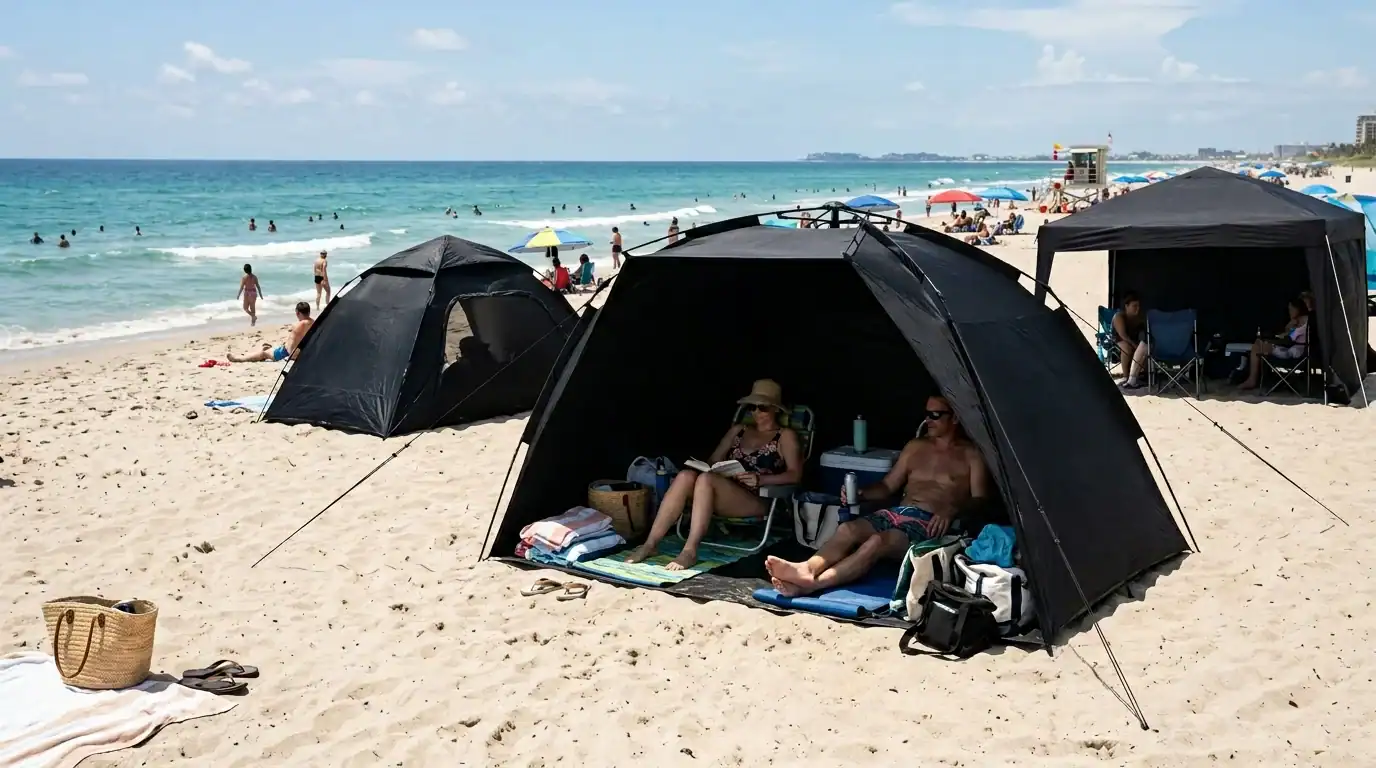
How to Negotiate Sleeping Bag MOQs Without Sacrificing Quality
The per-unit price is only half the negotiation.
The real negotiation starts the moment a supplier realizes you’re not just buying 500 sleeping bags—you’re buying 500 sleeping bags, 300 tents, and 200 mats across a 12-month program. The leverage shifts instantly. I’ve watched factory owners drop per-SKU MOQs from 500 to 100 units when the total container volume hits their internal KPIs. The factory’s constraint isn’t the sleeping bag line itself; it’s the cutting table setup time and the minimum roll run for the shell fabric. If you can aggregate demand across categories, you bypass the single-SKU MOQ gate entirely.
-
-
- Multi-factory aggregation: A sourcing partner with 17 core factories can split 200 sleeping bags to one line, 200 mats to another, and combine both into one 40HQ container. The sleeping bag factory gets paid for 200 units; the logistics partner consolidates at the CFS warehouse; you get tiered pricing as if you ordered 400+ units per SKU because the total export volume qualifies for FOB discounts.
- Material crossover advantage: If your sleeping bag and your tent both use 190T polyester with the same PU coating, you can negotiate a single material roll purchase across two factories. This drops the per-yard cost by 8-12% and eliminates the ‘minimum roll charge’ that typically forces MOQ inflation on small-batch custom colors.
- The 100-unit floor: Even without cross-category bundling, specific lightweight summer bag models can dip to 50-100 units. This isn’t a loss-leader for the factory—it’s fill-in production that keeps sewing lines running between large orders. The tradeoff: you accept the factory’s existing fabric stock rather than demanding a custom Pantone dye run.
-
Most buyers negotiate price first and quality second. That’s backwards. The spec sheet is your only legal defense against drift. When a factory quotes $7.50 per unit at 500 pieces, that number assumes a specific shell denier, a specific fill weight, and a specific zipper. If any of those three variables shift by 10%, the factory’s margin improves and your customer returns spike. Lock the spec, then negotiate the price. Not the reverse.
-
-
- Fill weight tolerance: Указывайте вес наполнителя в граммах, а не в процентах. Заявленный ‘600 г утиного пуха’ должен иметь допуск ±3% (от 582 г до 618 г). Фабрики, которые указывают ‘600 г’, а поставляют 540 г, крадут 10% стоимости вашего утеплителя. Взвесьте три случайных изделия из первой производственной партии до приёмки поставки. Пух стоит $15–25 за килограмм оптом — недостача 60 г на мешок при заказе на 1000 единиц составляет $900–1500 стоимости материала, за который вы заплатили и который не получили.
- Денье и плотность ткани чехла: Нейлоновый чехол 20D стоит на 40% меньше, чем нейлоновый чехол ripstop 30D. Запросите сертификат фабрики с указанием плотности нити. Если поставщик колеблется, он, скорее всего, заменяет на более низкий денье. Также проверьте пухонепроницаемость: чехол, пропускающий наполнитель после 50 циклов сжатия, вызовет возвраты, которые разрушат вашу целевую прибыль ниже 2%.
- Спецификация молнии: Молнии YKK стоят на $1.20–$2.00 больше за единицу, чем аналогичные молнии общего назначения. Фабрика, назвавшая низкую цену FOB, могла заменить указанную молнию YKK №5 на обычную №5. Впишите в заказ бренд И номер модели. Обычные молнии выходят из строя в месте соединения ленты и шва после 500 циклов; YKK стабильно выдерживает более 2000 циклов. Экономия $2 на изделии обойдётся вам в $15 на обратную доставку и репутационный ущерб.
- Плотность стежков: Укажите количество стежков на дюйм (SPI). Чехол спального мешка должен иметь 8–10 SPI. При менее 7 SPI швы расходятся под натяжением, и утеплитель мигрирует. При более 12 SPI игла слишком плотно перфорирует ткань и ослабляет пухонепроницаемое покрытие. Это узкий диапазон, и фабрики с сертификатом ISO 9001 соблюдают его с помощью документированных записей о калибровке швейных машин.
-
Сайт спальный мешок весом менее 1 кг — это категория, где дисциплина спецификаций имеет наибольшее значение. Спальный мешок-кокон с температурным рейтингом 0°C и весом 980 г имеет крайне небольшие пределы погрешности. Искушение фабрики — уменьшить вес наполнителя, чтобы достичь цели в 1 кг, молча жертвуя температурный рейтинг. Ваш клиент покупает ‘мешок для 0°C’, мёрзнет при 5°C и оставляет отзыв в одну звезду.
-
- Положение о допуске по весу для OEM: Впишите в соглашение OEM: ‘Вес готового изделия не должен превышать 1020 г на единицу. Любое изделие, превышающее этот порог, считается несоответствующим качеству’. Запросите журнал веса для первых 50 изделий с производственной линии. Стабильный вес — это самый простой показатель стабильности наполнения. Если вес варьируется более чем на 4% между образцами, фабрика зачерпывает пух вручную, а не использует автоматическое оборудование для наполнения.
- Ловушка замены материала: Чтобы сэкономить граммы, фабрики незаметно заменяют нейлон 20D на 15D. Мешок весит на 30 г меньше, проходит проверку весов, но рвётся при первом зацепе. Укажите денье в заказе и проверьте тестом на вес ткани: нейлон 20D должен весить 34–38 г/м²; нейлон 15D весит 25–28 г/м². Цифровые весы за $5 на складе инспекции выявляют это за 30 секунд.
- Спецификация компрессионного мешка: Спальный мешок и его компрессионный мешок взвешиваются вместе. Фабрика может достичь общего веса 1 кг, используя более лёгкий мешок, сохраняя при этом сам спальный мешок тяжёлым. Укажите: ‘Вес корпуса спального мешка: 850 г ±25 г; вес компрессионного мешка: 150 г ±10 г’. Раздельное взвешивание закрывает эту лазейку.
Любители обсуждают цену FOB. Профессионалы обсуждают зафиксированную спецификацию, агрегацию по нескольким SKU и допуск по качеству, который выдерживает сторонний аудит. Цена — это просто цифра, о которой вы договариваетесь после того, как всё остальное закреплено. Выстройте последовательность правильно, и себестоимость за единицу урегулируется сама собой — потому что фабрика знает, что вы не тот покупатель, которому можно тихо недосыпать вес наполнителя и не попасться.
Заключение
Цитата по спецификации ничего не значит, пока вы не проверите, что прибудет в контейнере. Разрыв между ценой FOB $15,80 за 5000 единиц и ценой $22,00 за 300 единиц — это не просто математика объёма — это накладывающиеся друг на друга минимальные объёмы закупки материалов, плата за оснастку и пороги допусков по качеству. Прежде чем соглашаться на любой уровень оптовых цен на спальные мешки, прогоните с поставщиком этот контрольный список из трёх пунктов: (1) Можете ли вы предоставить сертификат фабрики, подтверждающий, что денье и вес наполнителя соответствуют заявленной спецификации? (2) Полностью ли засчитывается плата за образец против первого заказа любого размера, без минимального порога? (3) Каков ваш допуск по весу наполнителя от партии к партии, и есть ли у вас отчёты аудита ISO 9001:2015 за последние три производственных цикла?
Поставщики, которые отвечают на это без колебаний, — это те, чьи расчёты конечной себестоимости с учётом доставки действительно подтверждаются. Изучите весь ассортимент продукции, чтобы сравнить, как различные комбинации SKU могут помочь вам достичь минимальных объёмов загрузки контейнера без чрезмерных обязательств по одной единственной модели.
Часто задаваемые вопросы
Каков обычный минимальный заказ на индивидуальный спальный мешок?
Типичный индивидуальный MOQ начинается от 300 единиц для синтетических наполнителей и 500 для пуховых моделей. Некоторые фабрики могут принять 100 штук с надбавкой к цене, но с учетом стоимости за единицу и затрат на настройку. Подтвердите точный MOQ после утверждения окончательной спецификации и требований к брендингу.
Сколько стоит один спальный мешок на заказ при разных объемах заказа?
Стандартный синтетический спальный мешок мумие стоит от $8,20 при 300 единицах до $6,20 при 5 000 штук; модели из утиного пуха 80/20 снижаются с $22 до $15,80 на том же. Всегда запрашивайте tiered-котировку FOB на основе ваших точных характеристик наполнителя, оболочки и аксессуаров.
Почему MOQ для пуховых спальных мешков выше, чем для синтетических?
Down requires larger minimum purchase lots from feather processors to ensure consistent fill power and cleanliness, which forces higher factory MOQs. Synthetic fills can be produced in smaller. Plan for at least 500 units on any down bag to avoid fill-quality risks.
Can I get a sample before placing a bulk order, and does the fee get refunded?
Yes, paid samples are standard, and the fee is typically refunded when the bulk order is confirmed. Low-cost stock samples may be free if you cover shipping, whereas complex custom. Request a sample policy in writing before opening tooling or printing plates.
What additional setup costs should I expect for OEM branding?
Expect plate charges for custom woven labels (amortized around $1.50/unit below 1,000 pieces) and packaging films (roughly $0.75/unit for barcoded retail bags). Embroidery or heat-transfer logos carry similar one-time. Bundle all branding elements into your initial MOQ to amortize setup costs effectively.

 English
  Español
  Deutsch
  Français
  Português do Brasil
  Русский
  العربية
  한국어
한국어  日本語
日本語