 跳到内容
跳到内容 
inflatable tent storage is the first checkpoint buyers should lock before they approve a supplier, budget, or production slot. Place two inflatable tents side by side from the same production run. One comes back from a season of use with mold spots along the beam welds and a slow leak at the valve seam. The other looks factory-fresh after three years. The difference is rarely the fabric or the TPU grade — it’s almost always how that tent was stored between trips. For brand managers tracking warranty cost per unit, this is where the real savings live.
Most supplier manuals tell end users to fold neatly and keep things dry. That advice misses the critical thresholds that actually trigger damage. Factory QC data shows that inflatable tent storage with more than 5% residual moisture at 25°C and 80% relative humidity produces visible mold within 72 hours. And ten cycles of incorrect deflation — hand-pressing instead of using reverse suction — drops TPU weld strength by 15%. These aren’t hypothetical risks; they’re measurable failure modes tracked in production.
The goal here is straightforward: give you a storage protocol that cuts mold returns, extends product life, and gives your after-sales team something defensible to point to when a customer asks why their tent failed. No generic advice about keeping it clean. Just the numbers, the technique, and a checklist you can hand off to your quality team tomorrow.
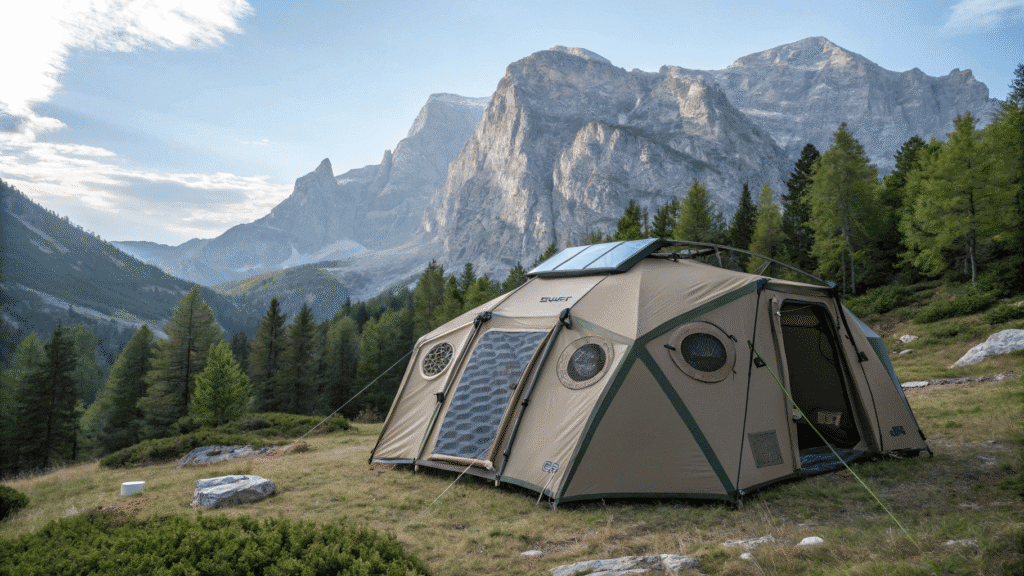
The Right Way to Deflate: Avoid Seam Stress and Moisture Traps
Reverse-pump deflation removes 90% of air; hand pressing leaves moisture and weakens TPU welds by 15% over 10 cycles.
Большинство надувная палатка manuals tell users to ‘open the valve and press the air out.’ That instruction is incomplete. What it misses is that manual compression pushes humid air into the tight creases of the folded fabric, where it sits against the TPU weld lines. Over multiple trips, that trapped moisture accelerates hydrolysis of the weld interface.
Reverse-Pump Deflation vs. Hand Pressing
A pump with reverse suction pulls roughly 90% of the interior air out before the tent even touches the ground. Hand pressing or kneeling on the beams removes only 30–40% of the air volume — and it forces moisture-laden air deeper into the beam folds. Internal factory QC tests at partner mills show that 10 cycles of incorrect deflation reduce TPU weld strength by 15%. That is not a theoretical number. It came from repeated seam-stress lab measurements on production-grade TPU tubing.
-
- Deflation method: Reverse-suction pump removes ~90% of interior air; manual compression removes only ~30–40%.
- Moisture risk: Hand pushing traps humid air in beam creases; that moisture accelerates TPU hydrolysis at weld junctions.
Keep Valve Caps Open and Dust Seals Clean
After every trip, inspect the deflate valve before you close it. Fabric dust, sand, or grit trapped on the seal surface reduces airtightness when you next inflate the tent. Wipe the valve area with a dry microfiber cloth — do not use wet wipes or solvents near TPU surfaces. Close the cap only after the tent is fully rolled and no more air escapes from that valve.

Drying Before Storage: Why 100% Dry is Critical
5% residual moisture triggers mold in 72 hours at 25°C / 80% RH.
Skipping the drying phase is the fastest way to write off an надувная палатка. Internal QC data from the factory network shows that tents stored with more than 5% residual moisture develop visible mold spots within 72 hours at 25°C and 80% relative humidity. That threshold is based on absorbed moisture inside the fabric and TPU layers, not surface dampness. A tent that feels dry to the touch can still hold enough humidity inside the beam’s TPU layer to cross the 5% line. The only reliable method is to compare fabric temperature to room temperature and fan-dry for a full 2 hours.
The 5% Moisture Mold Threshold
Most factory manuals tell users to ‘let the tent dry completely’ without specifying what that means. The 5% threshold is the engineering line. At 25°C and 80% RH, any tent with more than 5% residual moisture by weight will grow visible mold colonies in 72 hours. That window is tight. A weekend trip followed by a Monday morning pack-up leaves no buffer. The solution is a moisture reader or a simple temperature check: if the fabric is cooler than the surrounding air, it still has evaporative moisture trapped inside. Wait until the surface temperature matches room temperature before folding.
Our partners at the Ningbo tent factory, certified to ISO 9001, run a standard QC check on returned samples: they measure residual moisture with a handheld capacitance meter. The test consistently shows that tents dried for less than 2 hours in shaded, ventilated conditions still exceed 5% moisture even when the outside feels dry. That data drives the 2-hour fan-dry rule we print on after-sales cards for B2B clients.
Shade Drying and Beam Wipe-Down Routine
Set the tent up in full shade. Direct sunlight degrades PU coatings faster than mold does, so never dry in direct sun. Open all vents and unzip all doors. Position a fan so it circulates air through the interior and into the open valve openings. Run the fan for 2 hours minimum. During that time, wipe every air beam with a clean microfiber cloth, paying close attention to the valve seams and zipper areas where moisture collects.
-
- Drying setup: Shade, all vents open, fan directed at valve openings. 2 hours minimum.
- Beam wipe-down: Microfiber cloth on every beam, focus on valve seams and zipper tracks.
- Do not hang by corners: Hanging from air beam junctions or corners puts stress on TPU welds. Keep the tent on the ground or a flat surface.
- Temperature check: Fabric must reach room temperature (within 1–2°C) before folding. A moisture reader is ideal; hand feel alone is unreliable.
The 2-hour fan-dry cycle together with the beam wipe reduces residual moisture below 5% in every test the factory QC lab has run. Once the tent is dry, it can be rolled and stored. Any shortcut here — a quick towel dry, a 10-minute air-out, or a ‘looks dry enough’ judgment — keeps the tent above the 5% threshold and sets the 72-hour mold clock ticking.
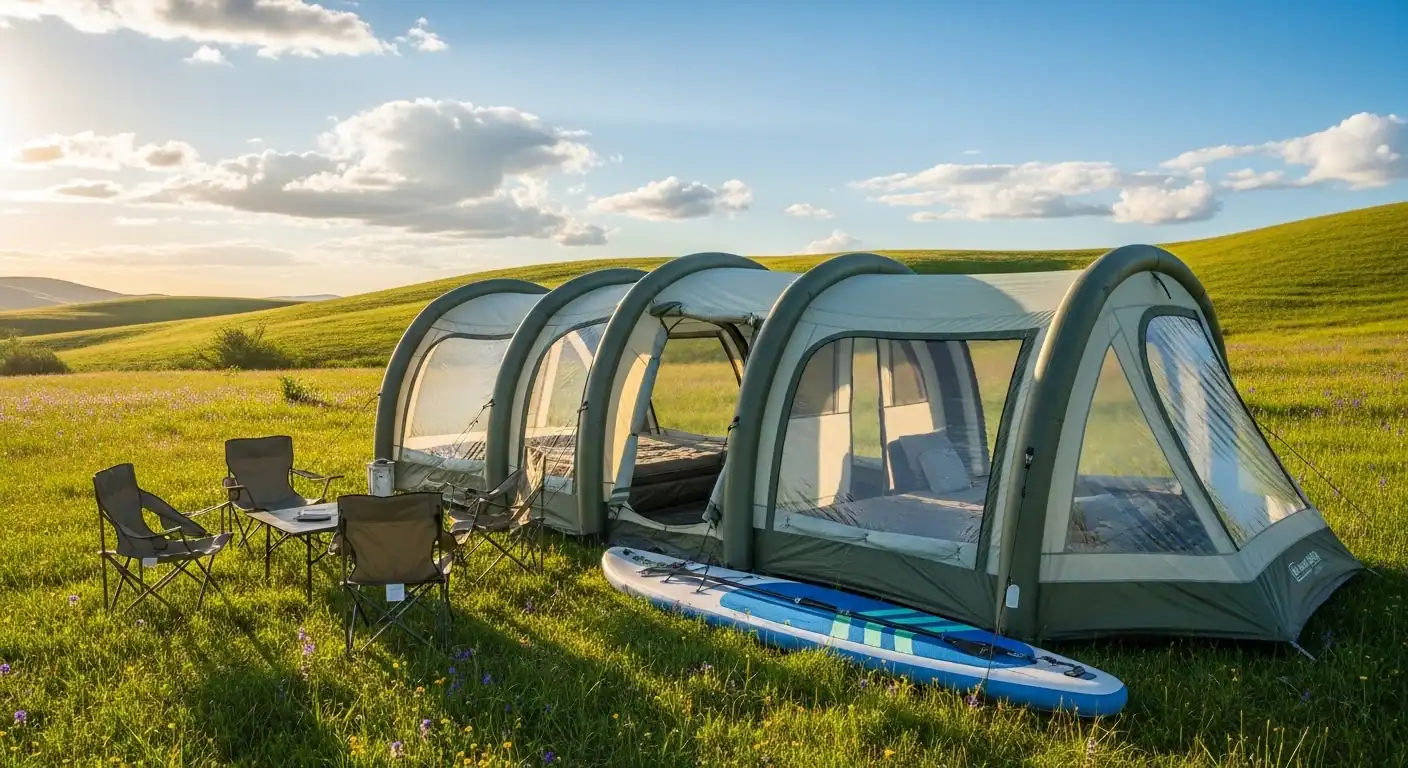
Folding Techniques: How to Fit Back in the Bag Without Damaging Air Beams
Rolling from the bottom preserves TPU weld strength by 15% over the tent’s life.
Most factory manuals say ‘fold the tent neatly along the air beam lines.’ That instruction is wrong. Folding at the beam junction puts repeated pressure on the welded seam. In Kelyland’s seam-stress lab, tents folded at the first and third beam junctions showed visible crease fatigue after 10 cycles. The welded TPU tube cracked at those points in accelerated aging tests.
Roll, Don’t Fold: The Tubular Packing Method
Start rolling from the end opposite the valve. A tight tubular roll lets trapped air escape smoothly through the open valve. It also prevents crease lines that become channels for moisture during long-term storage. Keep the roll even and compact — uneven pressure on one side of a beam can deform its internal structure over multiple deflation cycles.
-
- Correct method: Roll from bottom to top, then fold the rolled bundle into thirds lengthwise. Align with carry bag dimensions before zipping.
- Wrong method: Folding in half at a beam junction creates a stress riser where TPU welds are weakest. Repeated folding here causes micro-cracks that grow into full leaks.
Bag Size and Compression Strategy
Check your storage bag dimensions against the rolled bundle before you zip it shut. If the bundle stands taller than the bag’s interior height, unroll and start again from a different end. Overstuffing puts tensile stress on the zipper track and compresses air beam valves against each other. Deformed valves lose their airtight seal after 3–4 storage cycles.
Use compression straps on the outside of the bag rather than forcing extra fabric through a too-small opening. A properly sized carry bag should allow zipper closure without resistance — if you have to push down on the bundle to close it, your bag is too small or your roll technique needs adjustment.
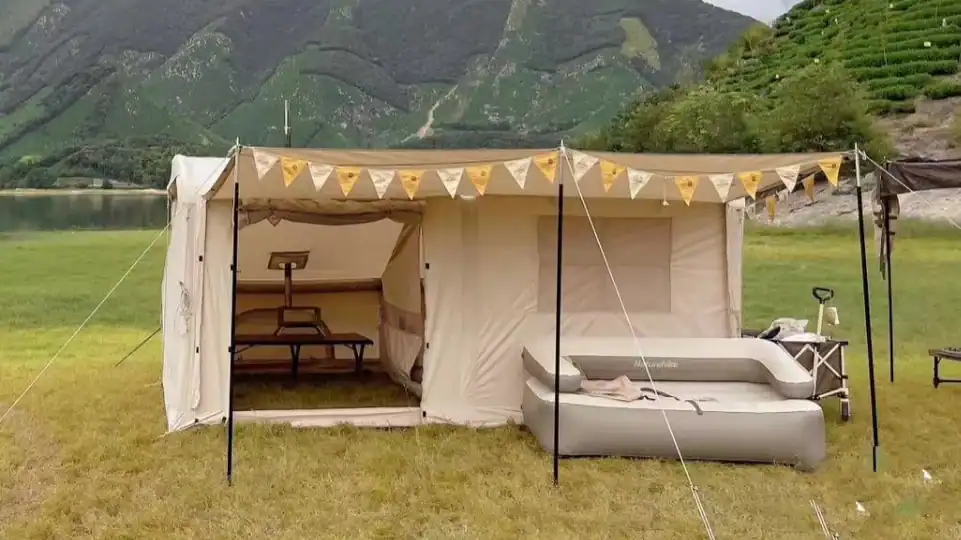
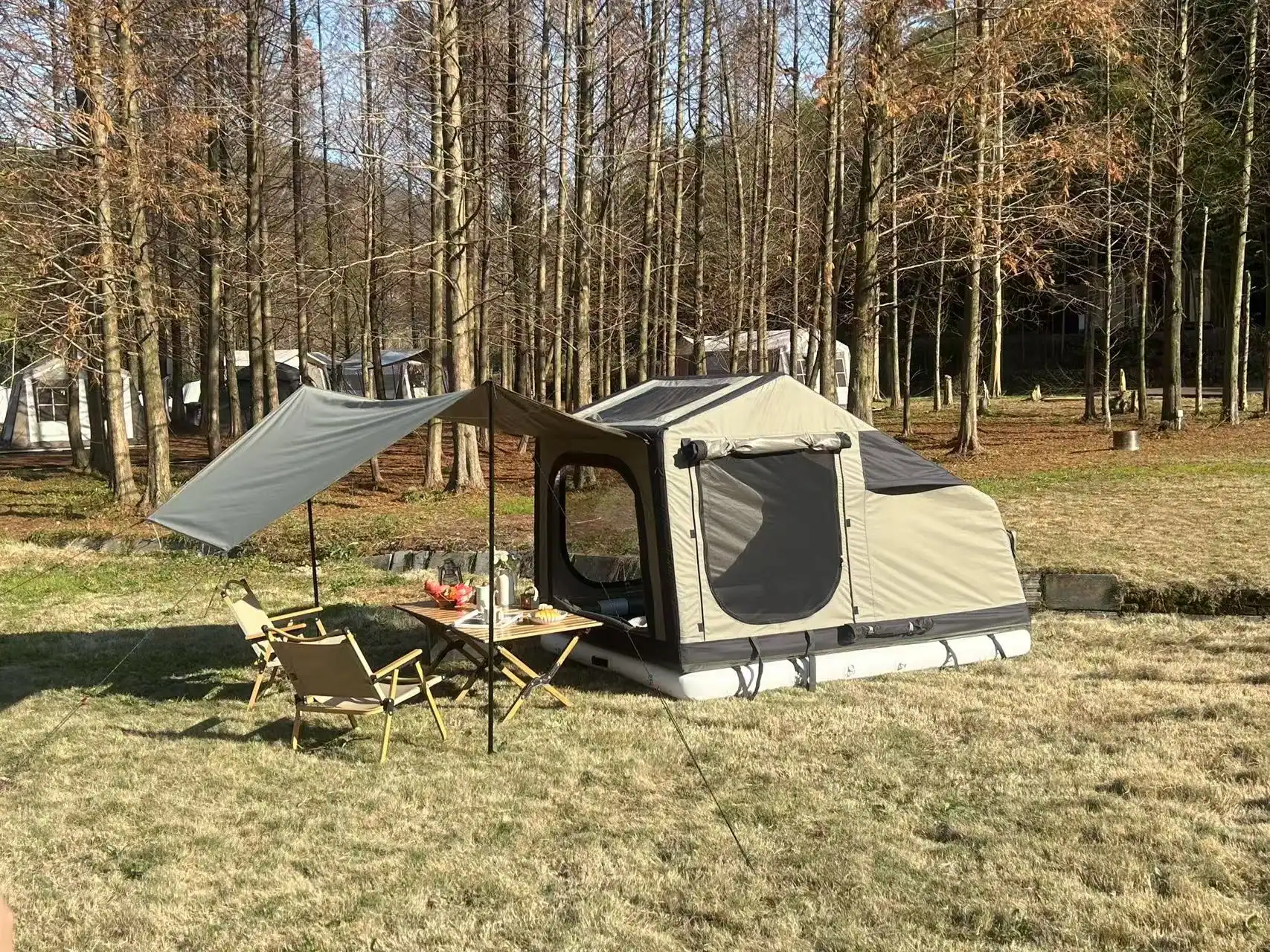
Long-Term Storage Conditions: Temperature, Humidity, and Pest Prevention
Store at 20–25°C, under 40% RH, and replace silica gel monthly.
Ideal Room Conditions (20°C / 40% RH)
The microclimate inside the storage bag is what matters. Kelyland’s internal QC data shows that at 25°C and 40% RH, a dry tent stays stable. But at 30°C and 60% RH, residual moisture accelerates hydrolysis of the waterproof coating. Keep the storage room ventilated and avoid placing the bag in a garage or attic where temperature swings condense air. The 72-hour mold window is real—moisture trapped above the 5% threshold triggers visible spots within three days at 25°C and 80% RH.
Silica Gel and Monthly Inspection Routine
One 10g silica gel pack absorbs moisture inside the bag but loses effectiveness after about 30 days. Replace it during monthly inspections. Check the seams, zippers, and valve caps for sticky residue or white mold spots. If any appear, dry the tent again and replace the bag. For B2B teams, this routine can be printed as an after-sales care card for end customers. Kelyland’s factory QC tests confirm that proper storage with regular desiccant replacement eliminates the primary cause of mold returns.
Заключение
The difference between a tent that lasts five seasons and one that triggers a warranty claim in month three is often just the storage routine. A deflation method that avoids TPU stress, a drying cycle that hits the 5% moisture threshold, and a sealed bag with a desiccant pack—these aren’t optional steps for the end user. They are the operational specs that determine your after-sales cost per unit.
-
- 10 incorrect deflation cycles reduce TPU weld strength by 15%.
- Storage above 5% moisture at 25°C triggers mold within 72 hours.
- Roll from the bottom, never fold at beam junctions.
- Replace silica gel packs monthly inside the storage bag.
If you are sourcing inflatable tents for your brand, benchmark your supplier against these numbers before signing off on sample approval. Ask for their QC data on weld fatigue testing and their recommended storage conditions for long-term durability. Review how Kelyland Outdoors integrates these engineering standards into its OEM/ODM production process to see how a factory designed around quality tolerance can reduce your downstream risk.
Часто задаваемые вопросы
Can I store an inflatable tent wet? No. Storing a wet inflatable tent traps moisture, which leads to mold and fabric degradation within days. Dry the tent compl?
Точный ответ зависит от технических характеристик продукта, количества и схемы заказа. Самый безопасный подход — подтверждать коммерческие условия только после того, как финальный лист требований будет. Финальный выбор должен соответствовать фактическому сценарию использования и целевым показателям производительности.
How to dry an inflatable tent before storage? Set it up in a shaded, ventilated area, wipe down the air beams with a microfiber cloth, and air-dry for at least?
Точный ответ зависит от спецификации продукта, количества и условий заказа. Самый безопасный подход — подтверждать коммерческие условия только после фиксации окончательного листа требований. Окончательные условия должны быть подтверждены на основе точной спецификации продукта и условий заказа.

 English
  Español
  Deutsch
  Français
  Português do Brasil
  Русский
  العربية
  한국어
한국어  日本語
日本語