 跳到内容
跳到内容 
pop up beach tent is the first checkpoint buyers should lock before they approve a supplier, budget, or production slot. “How many sand cycles did you run on the hub before you approved the sample?” The supplier paused. “We tested the fabric for UV and waterproofing,” he said. “The frame was fine in the showroom.” That exchange explains why a buyer who signed off on a $50K order ended up with a pop-up beach tent that wouldn’t fold after three trips to the shore. The pre-production sample matched perfectly — indoors, on a clean concrete floor. The mass production run matched the sample too. Neither matched a beach.
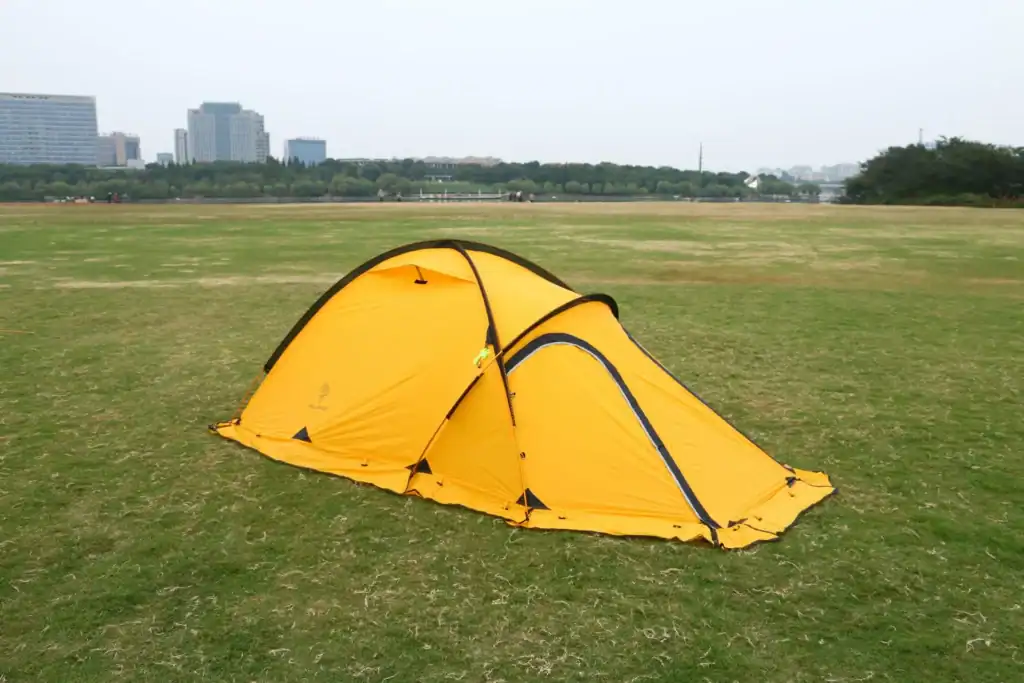
Breakage #1: The sand-jammed hub — why the fold stops folding
Open hubs with nylon washers fail after 3-4 beach trips; sealed hubs with acetal washers pass 100+ sand cycles.
Every low-cost pop-up beach tent uses an open hub with an exposed locking button or ring. Windblown sand and wet grit work into that joint, mix with salt moisture, and form an abrasive paste. The paste grinds down the nylon washers. After three or four beach trips, fold resistance climbs from a light click to a hard stop.
The 20-second field test buyers should run
-
- Setup: Apply beach sand to every hinge point and the locking ring.
- Cycle check: Complete 20 open-close cycles; feel for stiffness or grinding.
- Pass mark: Reject any sample that cannot finish 100 sand-cycle folds without jamming.
Nylon washers absorb water and swell, which accelerates the grinding. Acetal (POM) washers are self-lubricating, dimensionally stable, and resist salt water. Swapping the washer material costs cents per hub. Combined with a sealed hub and 304 stainless steel hinge pins, the upgrade adds roughly $1.80 to landed cost — and internal production data shows it can cut pop-up beach tent return rates by up to 40%.
This is why the sand-cycle test belongs in the pre-production sample review, not the returns desk. Kelyland’s ISO 9001:2015-certified partner factories run the test with beach sand applied to every hinge point, logging resistance after each 25 cycles of the 100-cycle protocol. Buyers should request that report before approving mass production.
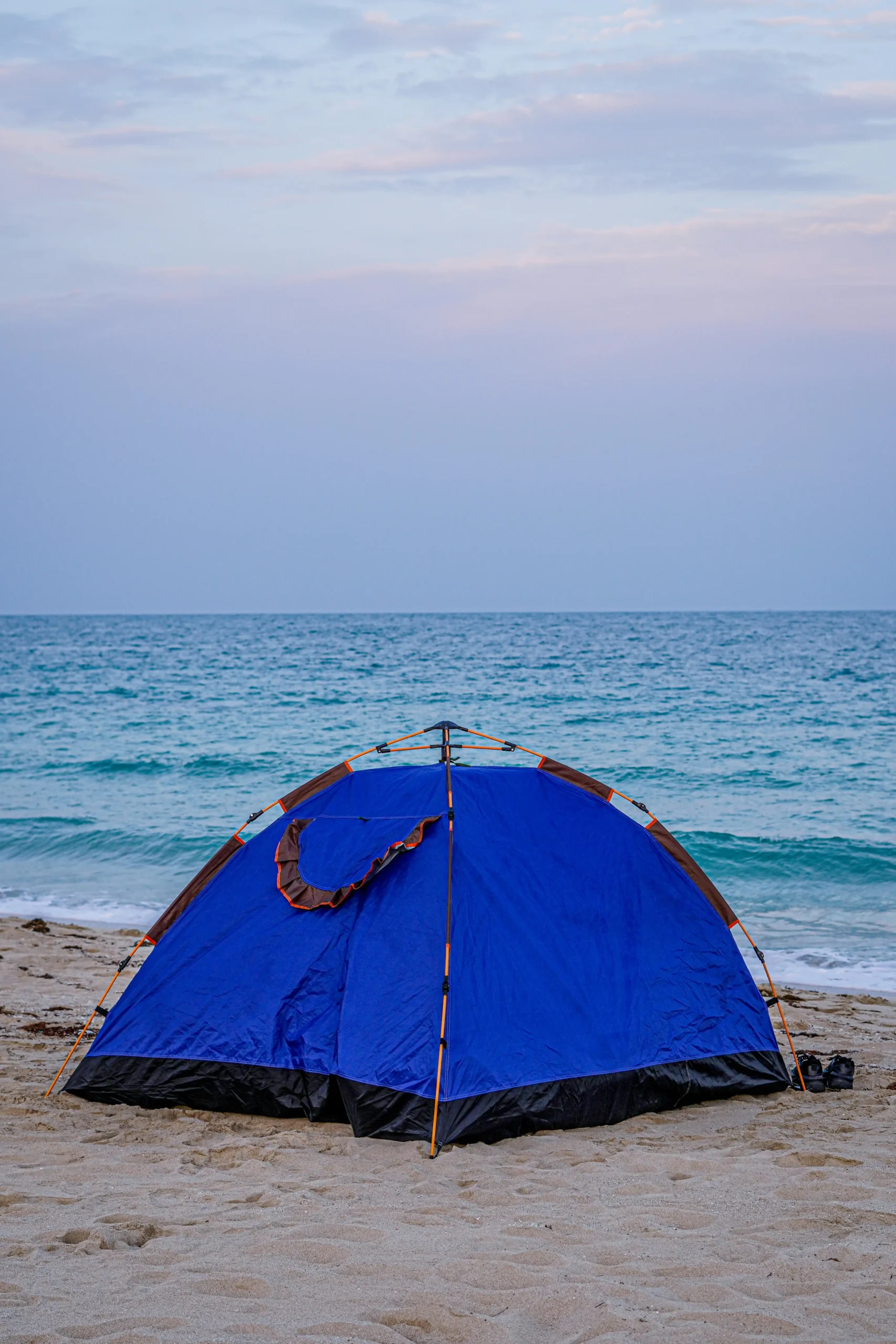
Breakage #2: Fiberglass splinter wounds and flex-fatigue
A splintered fiberglass pole is a safety incident waiting on the next fold.
Budget pop-up beach tents ship with 7–9 mm fiberglass poles because the per-unit cost beats every other frame material. That saving evaporates when UV degrades the resin, salt spray works into the fibers, and repeated bending splinters the stress points. A sand-jammed hub makes it worse: the user pushes harder, the pole flexes past its limit, and the weakest section snaps — often leaving sharp fibers that cut hands. The failure is public, sudden, and memorable.
Why 7–9 mm fiberglass fails on sand
Fiberglass is acceptable in a tent that goes up on grass and comes down on grass. Beach conditions are a different test. Direct sun embrittles the resin. Salt and grit work into the weave. Every fold loads the same points, and when the hub mechanism resists, the pole absorbs torsional force it was never designed to carry. Two seasons is a realistic lifespan before splintering starts — too short for any brand running a multi-year product program.
The 11 mm aluminum upgrade math
Moving to 11 mm aluminum poles adds weight and raises frame COGS, but it removes the splinter complaint category entirely. Aluminum bends under overload; fiberglass shatters. When a hub jams, aluminum means “stiff fold” while fiberglass means “splinter through the tent wall.” For a brand that stays on fiberglass, the minimum spec is braided anti-splinter sleeves on every pole section and plastic-jacketed hub connections — cheap containment when a pole does break.
-
- Fiberglass (7–9 mm): Low cost, but UV embrittlement and sand grinding cause splintering within two seasons. Acceptable only with anti-splinter sleeves.
- Aluminum (11 mm): Higher COGS and weight, but survives repeated sand-cycle folds and coastal UV exposure without shattering.
The Kelyland core tent factory in Ningbo runs ISO 9001:2015 and CE-certified lines, producing 800,000 tents a year. Frame options quoted for OEM/ODM projects include both fiberglass and aluminum, and the pre-shipment inspection checklist covers mechanism function. That means a buyer can request pole-inspection records alongside the fabric test reports — the documentation a category manager wants when a warranty claim lands on a frame failure.
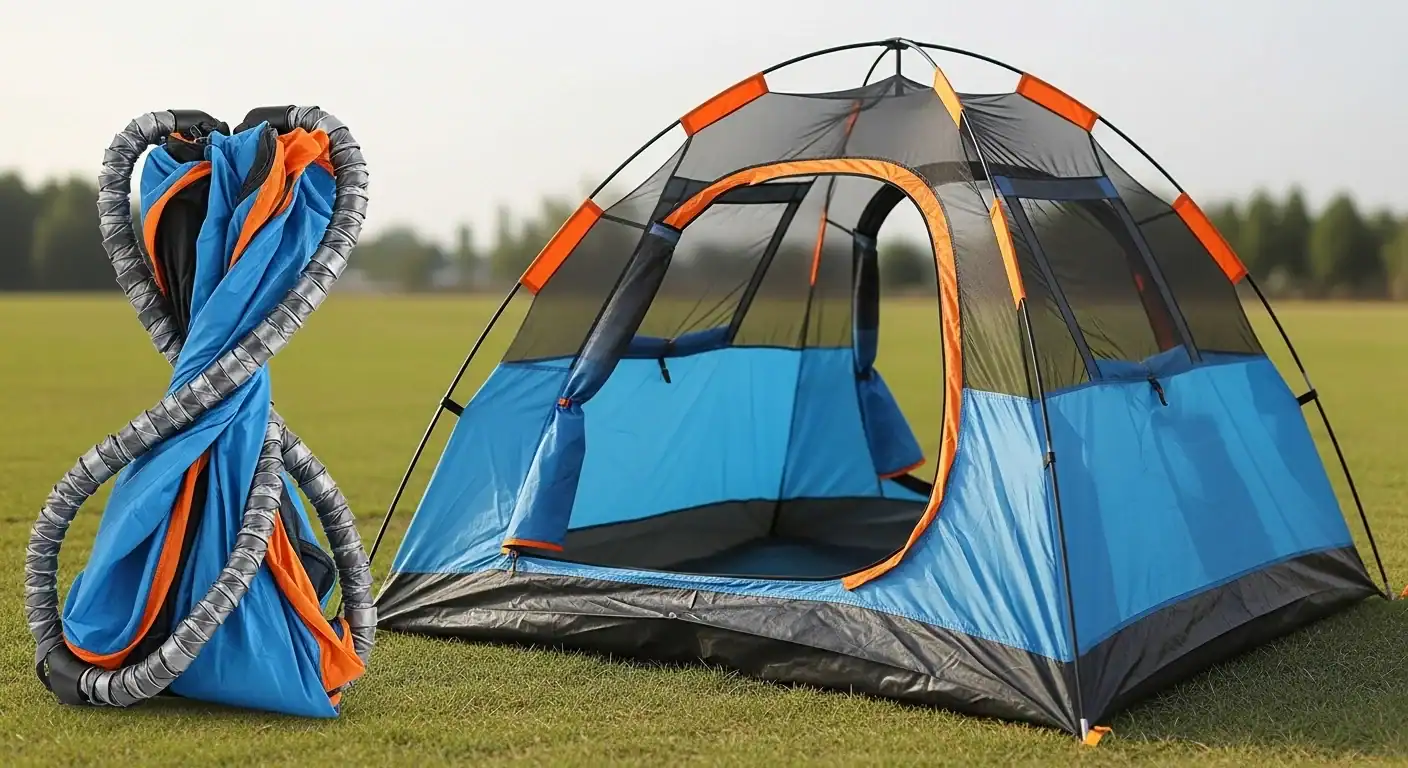
Breakage #3: Rusted hinge pins after one seaside season
Zinc-plated pins fail within one seaside season.
Zinc-plated hinge pins are the first component to fail on a beach tent. Salt spray corrodes the plating, sand abrades the exposed steel, and the hub turns gritty within one seaside season. The lock binds, fold resistance spikes, and the frame seizes. That is the return. That is the negative review.
Salt spray vs. zinc-plated steel
Every rotating joint should carry 304 stainless steel hinge pins. Not zinc-plated carbon steel. Not coated alloy with a marketing name. 304-grade survives a 72-hour salt spray test. Kelyland’s network of 17 core strategic factories and 200+ manufacturing partners — most ISO 9001:2015 certified — runs QC inspections on mechanisms at every production stage. Salt spray results go into the pre-shipment report.
Acetal washers outlast nylon
Nylon washers absorb water and swell. Inside a hub packed with wet sand, that swelling accelerates the grinding that locks the fold. Acetal (POM) washers are self-lubricating, dimensionally stable, and saltwater-resistant. The cost difference is a few cents per hub. Combine it with 304 pins and a sealed hub, and the total upgrade runs about $1.80 added COGS per tent.
-
- Hinge pin spec: 304 stainless steel on every rotating joint, not zinc-plated steel.
- Washer spec: Acetal (POM) instead of nylon — no water absorption, no swelling.
- Test spec: 72-hour salt spray on hinge pins and washers, documented in QC reports.
- Cost impact: About $1.80 COGS for the full sealed-hub, stainless-pin, acetal-washer upgrade.
- Return math: One avoided return ($15–$30) covers the upgrade across roughly ten units.

Breakage #4: The elastic cord snap — when the whole frame collapses
A snapped shock cord collapses the entire hub-and-spoke frame — and most beach tents ship without a spare.
Shock cord is the cheapest component in a pop-up beach tent frame and the one that kills the whole product when it breaks. That cord pulls every pole into tension. Snap it, and the poles go slack, the hub loses its geometry, and the tent becomes an unusable pile of fabric and fiberglass. No consumer can repair that on the beach.
Why the cord snaps after one season
Repeated bending does most of the damage. Each fold stretches the cord around the hub, and UV exposure breaks down the rubber over time. Sand adds fold resistance, so the user pushes harder — the extra force snaps a cord already weakened by flex fatigue. This is why the “pop up beach tent won’t fold” complaint shows up after the first summer.
What to spec and what to ship in the box
Require UV-stabilized elastic cord rated for at least 5,000 flex cycles. Demand a 72-hour UV exposure report from the factory, not a sales sheet. That report shows measurable tensile retention after accelerated sunlight aging, and it separates suppliers who actually test from suppliers who guess.
-
- Cord spec: UV-stabilized elastic cord rated for at least 5,000 flex cycles with no visible fraying or tensile loss.
- UV test report: 72-hour accelerated UV exposure data showing tensile retention, shared before production approval.
- Spare hub-and-cord kit: Adds under $2 per unit at factory cost and turns a total frame collapse into a five-minute field repair.
Kelyland’s partner factory in Ningbo, certified to CE, BSCI, and ISO 9001, runs a 100-cycle sand-fold test on every hub-and-spoke model. The shock cord is inspected at fixed intervals for fraying and tension loss, and the results go into the QC report. If a supplier can’t produce that document, the cord is unverified.
A returned beach tent costs $15–$30 in freight, restocking, and lost margin. A spare kit costs under $2 at factory level. Skip the kit and those pennies of savings become a chargeback every time a cord snaps. Add it, and you kill the most common field failure before your brand takes the blame.
Breakage #5: Wind flip — why cheap anchors fail in coastal gusts
A beach tent is a shade sail with a floor.
The 35 mph wind rating often quoted for engineered pop-up canopies comes from heavy steel frames and deep foot plates. A hub-and-spoke beach tent shares none of that. Low-slung polyester panels act like sails once a gust gets under the eave, so the whole structure lifts at 15–20 mph when the stakes are 12 cm plastic pins and the corners have no extra tie-downs.
Most suppliers test fabric waterproofing and UV, then call it windworthy. That is not a wind test. Demand anchor hardware and a wind-rating engineering report, not a marketing line.
Anchor specifications that hold on sand
-
- Pre-attached sandbag pockets: Sewn into the lower seams, not clip-on bags that customers lose. Each pocket should hold at least 4–5 kg of sand.
- Four guy-out points with webbing: One per corner, with high-visibility webbing that allows 20 cm+ stakes at a 45° angle. Two points is insufficient in coastal gusts.
- Stakes at least 20 cm long: Budget tents ship with 12 cm stakes. Dry sand cannot hold them. Spec 20 cm steel or aluminum sand stakes with a wide head.
- Wind-rating engineering test report: Ask for the test protocol that produced the number. If the supplier cannot produce one, treat the rating as fiction.
A sourcing partner with ISO 9001-certified factories can produce these anchor features without tooling changes, and low MOQs of 50–100 pieces let you validate the upgrade on a pilot run before committing to a full container. That is how you turn a beach tent wind flip from a season-ending return driver into a spec you control.
Why sealed hubs and acetal washers are the smart cheap upgrade
A $1.80 sealed-hub upgrade removes the most common beach tent return trigger.
Most return dollars on pop-up beach tents trace back to one part: the open hub. Sand works into the joint, grinds the nylon washers, and after a few trips the frame locks up. The customer does not repair it. They return it.
The $1.80 COGS decision
Sealed hubs with 304 stainless steel hinge pins and acetal washers add roughly $1.80 to landed cost. A single returned unit runs $15–$30 once freight, restocking, and lost margin are counted. One avoided return per ten units pays for the upgrade across the entire order.
-
- Sealed hub: Keeps sand out of the pivot point, where most jams start.
- 304 stainless hinge pins: Resist salt corrosion far longer than zinc-plated steel.
- Acetal washers: Dimensionally stable in water, unlike nylon, which swells and grinds.
The 40% return reduction benchmark
Sand-cycle folding tests — 100 open-close cycles with beach sand applied to hinge points — show that sealed-hub construction can cut beach tent returns by up to 40%. On 10,000 units with a 6% return rate, that is roughly 240 fewer returns and several thousand dollars of recovered margin each season.
The fix is straightforward to spec. Kelyland’s partner factories run 72-hour salt spray tests on hinge pins and washers and document sand-cycle results before shipment, and select items carry MOQs as low as 50–100 pieces. That makes a pilot batch realistic before you commit to full production.
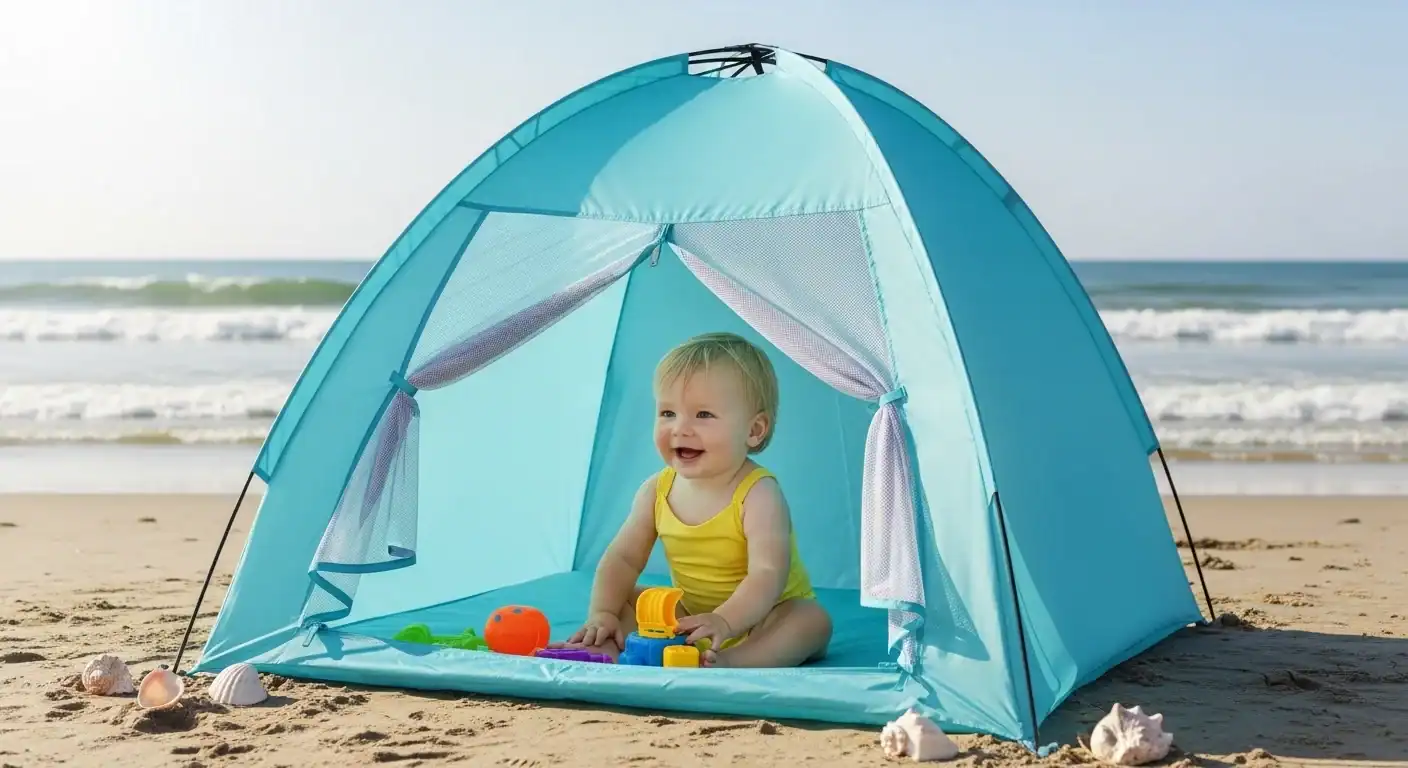
What to spec when importing pop-up beach tents for your brand
Sealed hubs, stainless pins, and acetal washers add ~$1.80 per unit and cut beach tent returns by up to 40%.
Большинство import spec sheets for pop-up beach tents cover fabric denier, coating, and UV rating. Rarely do they cover the hub — the mechanical joint that decides whether the tent survives a season. That gap is why buyers approve beautiful samples, then watch return rates climb after the summer rush.
Eight specs that prevent beach-frame failure
-
-
- Sealed hub: Keeps sand and salt moisture out of the folding joint. An open hub collects grit, mixes it with water, and grinds the mechanism into a hard stop.
- 304 stainless steel hinge pins: Zinc-plated pins corrode in salt spray, bind the hub, and seize the frame. Stainless removes that failure entirely.
- Acetal (POM) washers: Nylon washers absorb water, swell, and grind faster when sand enters. Acetal is self-lubricating and dimensionally stable in salt air.
- 11 mm aluminum or anti-splinter fiberglass poles: Budget 7–9 mm fiberglass splinters under UV and repeated bending. Aluminum, or fiberglass with a braided anti-splinter sleeve, removes the shard hazard.
- UV-stabilized shock cord: Standard elastic cord fatigues fast when sand adds fold resistance. UV-stabilized cord keeps the frame under tension for the life of the tent.
- Anchor kit: Sandbag pockets, four guy-out points, and stakes at least 20 cm long. Without anchors, a beach tent flips at 15–20 mph gusts.
-
Two factory tests to write into the contract
-
- 72-hour salt spray test: Hinge pins and washers sit in salt spray for 72 hours. Any corrosion on the hardware fails the spec.
- 100-cycle sand-fold test: Beach sand is applied to every hinge point, then the tent opens and closes 100 times. The hub must not jam or stiffen.
Most low-cost suppliers never run these tests. Their QC stops at fabric waterproofing and UV checks; the hub gets a visual inspection and nothing else. Kelyland’s network of 17 core factories, most ISO 9001:2015 certified, doesn’t stop there. Factory QC applies beach sand to every hinge point and completes 100 open-close cycles, logging resistance after every 25 cycles.
MOQ, lead time, and sampling protocol
Kelyland works with MOQs as low as 50–100 pieces on select items, with standard production lead times of 30–45 days. Order a paid sample first — the fee is potentially refundable at bulk order confirmation. Then run the sand-cycle test on that sample’s hub before approving mass production.
The upgrade math makes the spec an easy sell: sealed hubs, stainless pins, and acetal washers add about $1.80 per unit. One avoided return saves $15–$30 in freight and restocking. The sealed-hub spec pays for itself after one prevented return in every ten units.
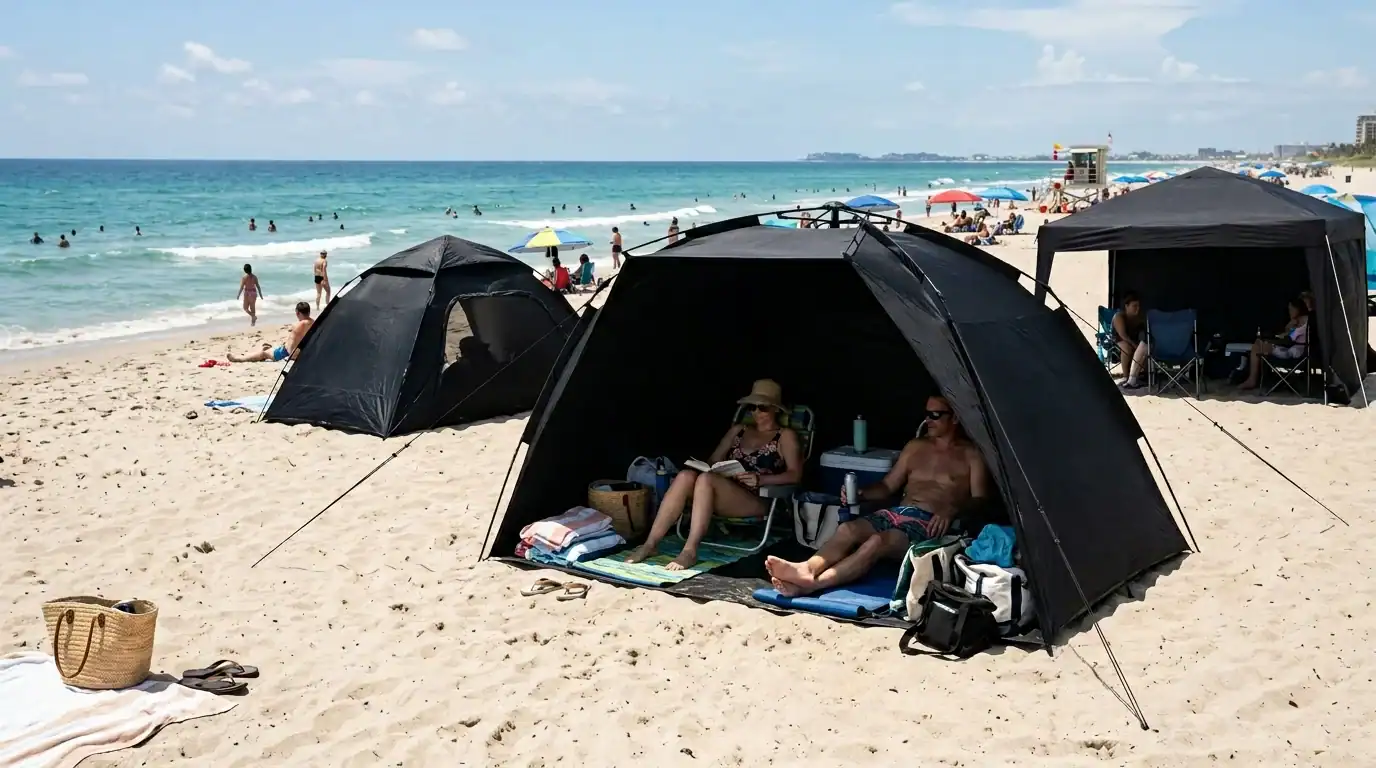
How Kelyland tests beach tents for sand, salt, and UV
Sealed hubs and 304 stainless pins pass 100 sand cycles and 72 salt-spray hours before a unit ships.
Most suppliers test the fabric: waterproofing, UV fade, seam strength. The mechanism that fails on a beach — the hub-and-spoke fold — gets no test. Kelyland’s QC treats the folding system as the primary failure point.
Sand-cycle folding test
Factory QC applies beach sand to every hinge point, then completes 100 open-close cycles. Every 25 cycles, inspectors check the hub, washers, hinge pins, and shock cord. Resistance gets logged in the inspection report, not just marked pass or fail. Buyers receive that report before shipment.
This test exists because sand works into open hubs, mixes with salt moisture, and grinds nylon washers into paste. A sealed hub with acetal washers and 304 stainless steel hinge pins passes 100 cycles. Open nylon hubs rarely reach 50.
Salt spray and UV exposure
Hinge pins and washers go through a 72-hour salt spray test. Fabric and elastic shock cord go through UV exposure, measuring color fade, tensile loss, and cracking. One test targets the metal joint; the other targets the materials holding tension.
Pre-shipment inspection checklist
-
- Hub lock function: Every hub opens and locks cleanly, three times, with no grit sound.
- Fold smoothness: Full fold sequence runs even; no resistance spike at a single pole.
- Stitch integrity: Seam tension checked at canopy stress points and webbing junctions.
- Anchor attachment strength: Tug-test webbing loops, sandbag pockets, and stake loops — loose anchors fail at 15 mph.
- Packaging and photo proof: Confirm carton sizing and poly-bag protection, then ask for video of the sand-cycle test on the production sample.
Kelyland’s 17 core strategic factories run these checks under ISO 9001:2015, and the inspection report is shared before shipment approval. That report is the only ‘trust us’ that matters when importing beach tents from China.
Заключение
Pick the frame before you pick the fabric. A pop-up beach tent’s return rate comes down to three components that rarely appear on a standard spec sheet: the hub seal, the hinge pin alloy, and the washer material. Put all three in writing, then verify them on a production sample before you commit to a bulk order.
-
- Ask for sealed hubs with acetal washers and 304 stainless steel hinge pins on every rotating joint.
- Demand a 100-cycle sand-fold test report before approving the pre-production sample.
- Confirm hinge pins pass a 72-hour salt spray test, not just fabric and UV checks.
- The $1.80 sealed-hub upgrade offsets the $15–$30 cost of a returned unit.
Put those three questions to your supplier in writing, then request a sand-tested sample from Kelyland’s beach tent line. Run the 100-cycle fold test on the actual hub, compare the inspection report to your spec sheet, and use a 50–100 piece trial run to benchmark return rates before the season window closes.
Часто задаваемые вопросы
Why do pop up beach tents jam?
Sand grinds the nylon washers in the hub and locks the folding mechanism after a few beach trips. Sealed hubs with acetal washers and stainless steel hinge pins avoid this. Spec sealed hubs before approving samples.
What should buyers test before ordering pop up tents?
Run 20 sand-cycle folds on the hub and reject any sample that cannot complete 100 without jamming. Most suppliers only test fabric and UV, not the frame under sand. Demand sand-cycle test results in writing.
How much does fixing frame jams cost?
Upgrading to sealed hubs adds about $1.80 per tent, while a returned unit costs $15 to $30. The upgrade is cheaper than freight, restocking, and lost margin. Price the upgrade against your return rate.
Why do fiberglass poles splinter?
Fiberglass poles flex-fatigue and splinter after repeated beach folds, creating safety hazards. Aluminum or carbon fiber frames cost more but reduce splintering and breakage. Choose pole material based on your target market.
How long before pop up tent hinges rust?
Zinc-plated hinge pins can rust within one seaside season. Stainless steel pins are the practical fix for coastal use. Require stainless steel pins in your spec sheet.

 English
  Español
  Deutsch
  Français
  Português do Brasil
  Русский
  العربية
  한국어
한국어  日本語
日本語