 跳到内容
跳到内容 
pvc vs pu wagon fabric is the first checkpoint buyers should lock before they approve a supplier, budget, or production slot. The operator at the coating line knows the difference between PVC and PU wagon fabric before the roll ever reaches the cutting table. They see it in how the film lays down on the 600D polyester base, in the tackiness of the finish, in the smell of the solvent. The buyer on a sales call only sees a swatch under fluorescent lighting—and maybe a quote that hides the real spec. That gap in perception is exactly how a $50,000 order goes sideways when the pre-production sample passes sample approval but the mass production run fails the waterproofing test after three months on a retailer’s shelf.
Here’s what the lab data actually separates. PU coatings feel more fabric-like, and premium brands usually prefer that hand feel, but PU loses гидростатический напор after 2-3 years if the wagon sits in humid storage—hydrolysis breaks down the polymer chain. PVC holds up better against moisture intrusion and resists plasticizer migration, yet it turns stiff below -10°C, which matters for tailgate season in northern markets. Some factories layer a thin PVC inner film with a PU outer print layer to get the aesthetics of one and the water resistance of the other, but that hybrid approach changes the fabric weight and the price per yard. The benchmark you should write down before your next разговор с поставщиком. Если фабрика колеблется хотя бы по одному из трех пунктов — уходите.: for a 600D Oxford wagon body, demand a coated гидростатический напор of at least 3000mm for PVC and 1500mm for PU, and ask for the 500-hour QUV aging report to confirm UV stability—if the factory hesitates on either number, treat that as a red flag.
Coating Chemistry and How It Fails
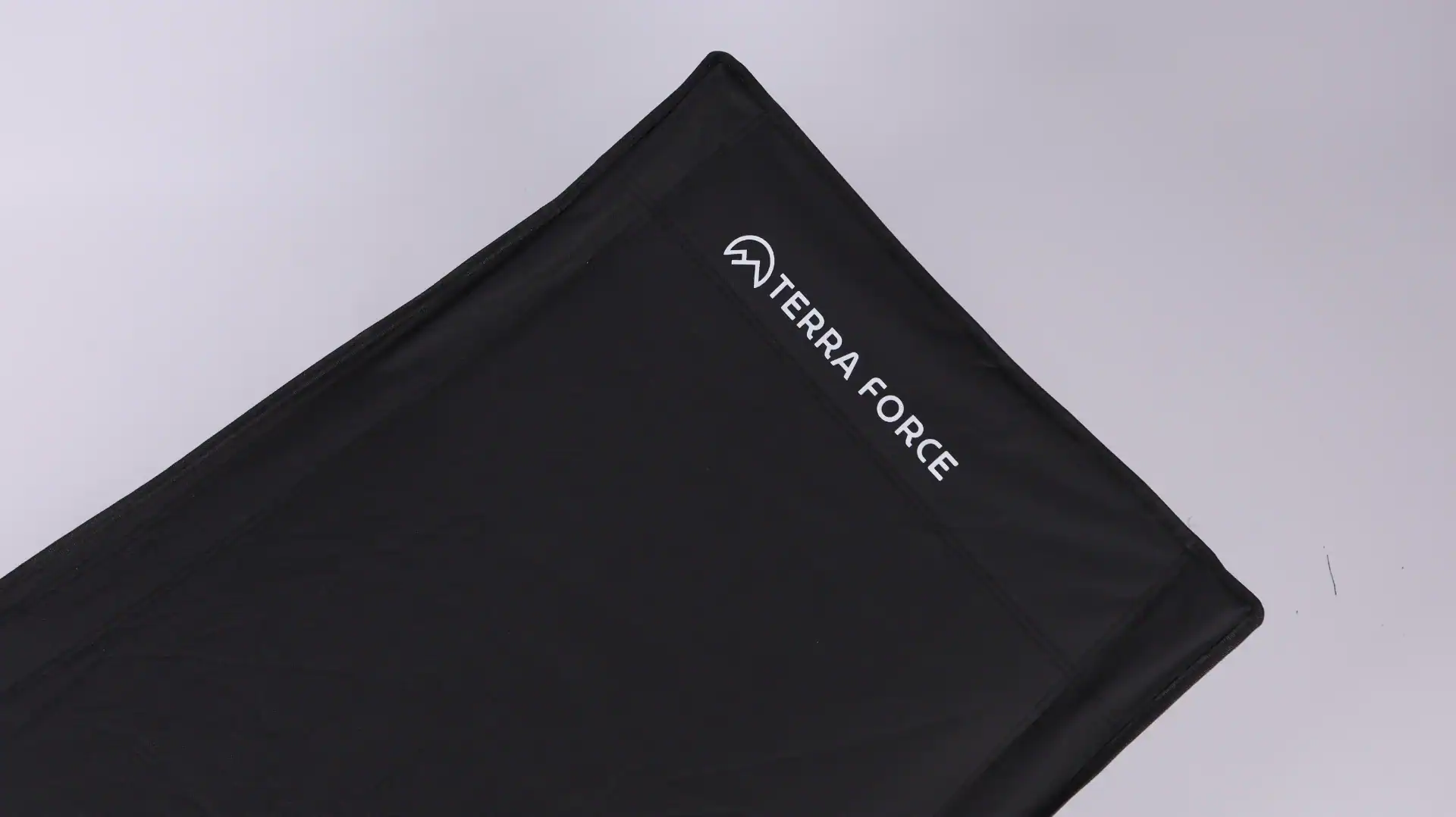
Silver-coated PU photographs better.
Большинство wagon fabric decisions get made at sample approval: a swatch, a water-beading photo, a price. That misses the two failure modes that cost retailers in year one. Hydrolysis in PU and plasticizer migration in PVC are chemical processes, not manufacturing defects, so no pre-shipment inspection catches them. If your supplier cannot explain how they test for either, treat that as a quality tolerance problem, not a paperwork gap.
Hydrolysis Risk in PU Coatings
PU coatings are the reason many premium wagons feel more fabric-like and take vibrant prints cleanly. The weakness is hydrolysis. Under humid heat, water molecules break the polyurethane chain, and the coating loses its original hydrostatic head over time. That is why a PU-coated wagon stored damp in a stuff sack can show wet-through on the side panels months before the rest of the wagon wears out.
The most common spec in this category is silver-coated PU on 600D Oxford. It passes UV photo tests at lower cost than a full PVC laminate, which is why Amazon FBA beach wagon sellers default to it. The trade-off shows up when the wagon is folded away wet. A damp stuff sack creates a hot, humid pocket that accelerates hydrolysis — the exact condition that leads to delamination and leaks.
- Trigger: Wet storage in a stuff sack, high-humidity warehouses, and repeated salt-moisture exposure.
- Красный флаг: Supplier cannot show hydrolysis-resistance data or a humidity-aging test for PU-coated Oxford.
- Water resistance: Higher than PU in humid storage; PVC holds its barrier properties longer.
- Trade-off: Stiffens below -10°C, and plasticizer migration can cause surface tack and crease-line cracking.
- Choose PU if: Your line is beach wagons, buyers accept a dry-before-storage instruction, and print quality drives the purchase.
- Choose PVC if: The wagon will face cold tailgate use, humid storage, or repeated wet loading, and fewer waterproofing returns matter more than hand feel.
Plasticizer Migration in PVC Coatings
PVC-coated Oxford takes the opposite trade-off. The coating is inherently waterproof, which is why PVC is common on wagon floors and heavy-duty side walls. But PVC gets flexibility from plasticizers, and those plasticizers do not stay put. Plasticizer migration is why PVC-coated Oxford feels different after a hot season: the surface turns slightly tacky, the fabric stiffens, and fold lines start to crack.
Cold weather makes the cracking visible. A PVC-coated wagon that folds easily in a 25°C warehouse gets stiff below -10°C. Load it into a tailgate on a cold morning, and the crease at the fold point is exactly where the coating cracks. That is the January return customers blame on cheap materials, even though the fabric passed factory QC.
There is a middle route. Some factories inside Kelyland’s 17-factory strategic network — most of them ISO 9001:2015 certified — laminate a thin PVC inner film for waterproofing and print the outer face in PU. You get the surface feel consumers like and the water resistance PVC is known for. It costs more than straight silver-coated PU, which is why most suppliers only offer it on request.
Waterproofing and UV Test Benchmarks
Waterproofing numbers tell you how a fabric passes QC.
A 600D polyester wagon fabric ships with a coating spec on the certificate, but that number only matters if it holds up after a season of beach sand, parking-lot sun, and damp garage storage. For private-label programs, two lab metrics separate a sellable wagon from a return magnet: hydrostatic head and QUV aging. Here is how PVC and PU coatings compare on both — and where each one lies about its performance.
Hydrostatic Head Values by Coating
Hydrostatic head measures the water pressure a fabric resists before leaking through. For PU-coated Oxford, the typical spec ranges from 1,000 mm to 3,000 mm depending on coating thickness and base fabric. PVC-coated Oxford starts around 3,000 mm and can exceed 10,000 mm, which is why PVC dominates heavy-duty outdoor applications like truck tarps and roof-top tents.
But the initial number is only half the story. PU’s molecular structure contains ester bonds that hydrolyze — they break down when exposed to moisture and heat over time. Store a PU-coated wagon folded damp in a stuff sack for a few months and hydrostatic head drops measurably. Industry experience puts the visible failure at 2-3 years in humid environments. The fabric will look fine until a rainy tailgate exposes the delamination.
- Fresh PU coating: 1,500-3,000 mm hydrostatic head on standard 600D Oxford. Passes a bucket test and an initial QC inspection.
- Aged PU coating: After repeated humid storage cycles, head values can fall below 1,000 mm, leading to wet seams and fabric-face leakage on the second season.
- PVC coating: Initial head values of 5,000-10,000 mm on the same base fabric. Resistance to hydrolysis keeps values stable for a longer service life.
- Hybrid construction: Some factories apply a thin PVC inner film with a PU outer print layer to get the fabric feel of PU and the water resistance of PVC.
- PVC after 500 hours: Minimal color shift, no surface cracking when formulated with UV stabilizers. Common spec on wagons sold in Australia and the southwestern U.S.
- PU after 500 hours: Visible fade and micro-cracking, especially in dark colors. Acceptable for beach wagons sold as throwaway seasonal items.
- Silver-coated PU: Passes a photo test after 500 hours because the silver layer hides fading. Fails if stored wet — the coating separates within weeks.
- Hybrid construction: The PVC inner layer maintains waterproofing while the PU outer layer handles printing. UV damage is limited to the aesthetic layer.
- Choose PVC if: Your channel includes mass retail, coastal markets, or climates with high humidity and intense sun. The hydrolysis resistance alone justifies the added weight.
- Choose PU if: You are launching an Amazon FBA beach wagon at a competitive price point and can ship with a dry-before-storage instruction card.
- Ask your supplier for: A 500-hour QUV report and hydrostatic head certificates for both coated fabrics before sample approval. The data takes two weeks to generate, but it saves you a season of returns.
500-Hour QUV Aging Results
QUV accelerated weathering machines simulate years of sunlight, rain, and humidity in a few hundred hours. A 500-hour QUV test is the industry benchmark for comparing UV stability between coatings. The results split cleanly along chemistry lines.
PVC formulations with UV stabilizers hold color and flexibility well through 500 hours. The coating layer resists chalking, which is that white powder you see on cheap vinyl products. PU, by comparison, degrades faster under UV. Prolonged exposure breaks the polymer bonds, causing color fade and surface cracking on the printed layer. The degradation accelerates if the wagon fabric includes silver coating, which reflects heat but separates from the base fabric after extended UV exposure.
For brand managers running seasonal retail programs, the decision comes down to position. PVC-coated Oxford adds weight and feels less fabric-like, but it survives storage and UV. PU-coated Oxford feels premium and photographs well, but it assumes the customer will dry the wagon before packing it away — and many will not.
Choosing a Coating by Use Case
Pick the coating by the worst storage condition, not the best beach photo.
Beach fleets should run PVC. Cold-weather tailgate programs should run PU. If you need both, spec the PVC-inner, PU-outer hybrid before sample approval — that is the only construction that survives both environments.
Beach Salt and Sand Abrasion
A beach wagon spends its life around wet sand, salt spray, and damp trunks. On 600D polyester wagon fabric, the coating is the only layer between water and the base fabric. Sand grinds into the basket during loading, and salt residue stays behind when the wagon dries. The coating at wheel wells and bottom corners takes the worst of it.
PU coatings feel softer and more fabric-like, which is why premium brands spec them. But PU breaks down through hydrolysis when it stays humid. Two to three seasons of damp storage can strip a PU-coated wagon of most of its гидростатический напор — and the fabric surface can still look fine while the waterproofing is gone.
- Abrasion resistance: PVC film forms a thicker, tougher barrier and holds up against sand better than thin PU film, which abrades through at pressure points.
- Humid storage: PVC does not hydrolyze. PU chains break down in humid heat, cutting water resistance before the damage is visible.
- FBA shortcut: For Amazon FBA beach wagons, silver-coated PU is common because it passes packshot UV photo tests at lower cost — but it fails when customers store it wet in the stuff sack.
- Cold flexibility: PU keeps working below freezing. PVC film stiffens and cracks at fold lines.
- Crease stress: Repeated folding in the same spot plus cold equals coating failure for PVC.
- Choose PVC if: Beach, water, or humid-storage environments dominate. Accept that the fabric gets stiff below -10°C.
- Choose PU if: Cold-climate tailgating and a premium hand feel matter more than wet-storage durability. Or ask for the hybrid PVC/PU film.
- Lock specs in writing: Request coating thickness plus hydrolysis and cold-crack test results during утверждения образца. A supplier who hesitates on paper specs will fight the return later.
Cold-Weather Tailgate Durability
Tailgating is a different failure mode. A wagon folded in a cold garage overnight, then snapped open in a parking lot, puts extreme stress on fold creases. PVC coatings stiffen below -10°C and crack along those lines. The crack starts small; water works in on the next use and delaminates the coating from the fabric.
Wagon fabric folds in the same spot every time, which makes creases permanent stress points. PU stays more pliable in freezing temperatures and survives the fold/unfold cycle without cracking. That is the main reason cold-climate programs favor PU despite its weaker wet-storage behavior.
Factories that know this trade-off sometimes run a hybrid construction: a thin PVC inner film for water resistance plus a PU outer layer for print and hand feel. The folding wagon factory in Kelyland’s partner network — a Jinhua, Zhejiang operation certified to ISO 9001 — runs 600D to 900D double-layer Oxford with silver, PU, or PVC coatings, and can spec the hybrid film on request. Custom coating specs are part of the утверждения образца step, and runs start around 50-100 pieces.

Заключение
Fabric coating choice decides whether a folding wagon sails through the season or becomes a post-delivery complaint. PU delivers the premium hand feel and passes photographic UV checks at lower cost, but humid warehouse storage triggers hydrolysis that erodes hydrostatic head after 2-3 years. PVC holds its water barrier longer yet stiffens below -10°C, which undercuts cold-weather tailgate durability.
- PU coatings feel fabric-like but lose hydrostatic head after 2-3 years in humid storage due to hydrolysis.
- PVC resists water longer but turns stiff below -10°C, making it a poor fit for cold-weather tailgate use.
- A thin PVC inner film with a PU outer layer combines PU aesthetics with PVC water resistance.
- Silver-coated PU passes UV photo checks for beach wagons but fails if stored wet in a stuff sack.
Before you lock a wagon spec for 2026, ask your factory for the hydrostatic head test report and the 500-hour QUV aging record — coating names alone don’t predict behavior in a humid warehouse or beach parking lot. Match the coating to the retail season your program targets, and request wet-storage testing if your packaging seals moisture in. The sourcing team at Kelyland can help you compare current fabric options against your expected return window.
Часто задаваемые вопросы
Какое тканевое покрытие вагона более водонепроницаемое?
Ткань для тентов с ПВХ-покрытием обычно обеспечивает более высокие показатели гидростатического напора, чем ПУ, при том же весе ткани, поэтому это более простой путь к гарантированным водонепроницаемым характеристикам. ПУ может соответствовать этому показателю. Запросите данные испытаний на гидростатический напор и гидролиз перед окончательным утверждением спецификации.
Что приводит к выходу из строя ткани PU-вагона?
ПУ-покрытие выходит из строя в основном из-за гидролиза — тепло и влага разрушают полимерную связь, вызывая расслоение и шелушение. Риск наиболее высок, когда вагоны хранятся влажными или в сырых складах, и не только. Если ваш рынок влажный, требуйте гидролизостойкую марку ПУ.
Как ПВХ-покрытие выдерживает испытания на УФ-излучение?
Ткань с ПВХ-покрытием обычно лучше держится, чем ПУ, в 500-часовых испытаниях на старение в камере QUV, потому что более толстая плёнка и система пластификаторов дольше противостоят ультрафиолетовому разрушению. Но некачественная рецептура ПВХ может мелиться и. Запросите отчёт о 500-часовых испытаниях QUV для конкретной рецептуры ПВХ.
Какое тканевое покрытие лучше всего подходит для пляжных тележек?
Ткань с ПВХ-покрытием — более прочный выбор для пляжного использования, поскольку её более тяжёлая плёнка лучше сопротивляется истиранию солёной водой и песком, чем ПУ. ПУ может быть легче и гибче, но песок. Укажите проклеенные швы и более тяжёлую ПВХ-плёнку для SKU пляжных тележек.
Какая ткань для фургона лучше всего подходит для холодной погоды?
Ткань с ПВХ-покрытием более надежна при использовании в откидных бортах в холодную погоду, поскольку ПУ имеет тенденцию затвердевать и растрескиваться после многократного складывания при отрицательных температурах. Состав ПВХ с высоким содержанием пластификатора сохраняет гибкость там, где стандартное ПУ-покрытие её теряет. Проверьте характеристики гибкости на холоде при вашей целевой низкой температуре.

 English
  Español
  Deutsch
  Français
  Português do Brasil
  Русский
  العربية
  한국어
한국어  日本語
日本語