 跳到内容
跳到内容 
A buyer I know lost $50,000 on a container of down synthetic sleeping bag inventory because the pre-production sample passed every inspection, but the mass production run didn’t match it. The fill weight was 12% short. The baffle stitching skipped a differential cut spec that was signed off at the sample approval stage. By the time customers started posting cold-weather complaints in month six, the return rate had already carved 14 points off the product margin. The spec sheet was perfect. The shipment was not. Twelve years of managing supplier audits across multiple countries teaches you that the gap between a signed-off prototype and a production container is where brand equity evaporates, and fill material is the single largest variable in that equation.
The industry talks endlessly about initial warmth-to-weight ratios. That conversation ignores the real failure timeline. Stitched-through synthetic bags hit a cliff around year five, losing over 30% loft as fiber migration and compression set do their slow work. Lab data from EN 13537 accelerated cycle testing shows high-fill-power goose down losing just 1% loft per 50 compression cycles after 250 cycles, while standard hollow-fiber synthetic loses 3% over the same interval. Most brand managers never ask for that test report. The ones who do negotiate a completely different quality tolerance with their factory partner—and they’re the ones selling 10-year products instead of processing warranty replacements in year three. That’s the conversation we’re having today, because the fill decision you lock into the OEM spec sheet is the one your customers will be sleeping on long after the FOB pricing spreadsheet is forgotten.
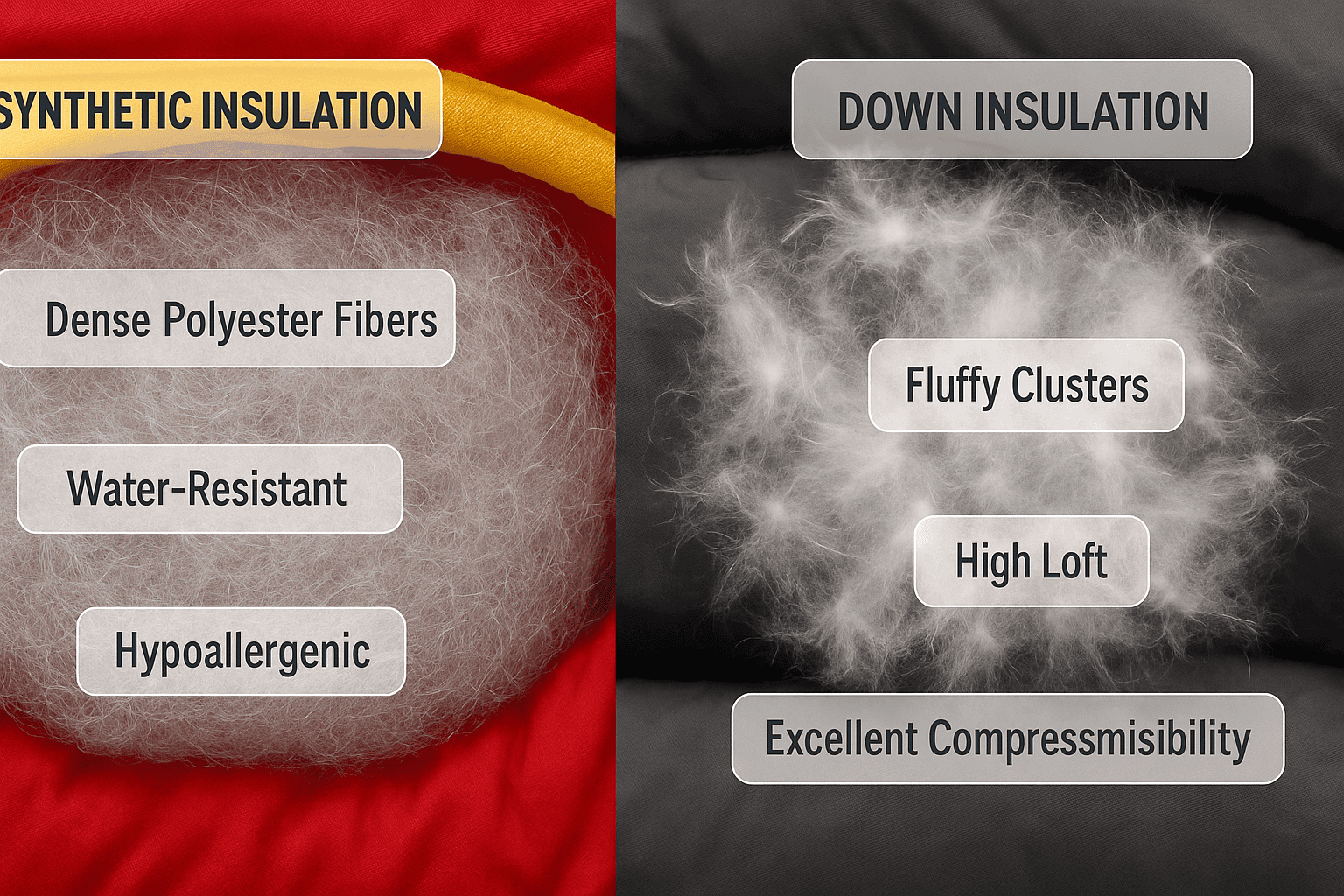
Why Sleeping Bag Fill Fails: The Decade Defect Trap
The call came on a Wednesday. A buyer I knew had a warehouse in Rotterdam stacked with 1,200 premium synthetic sleeping bags. MSRP of $179. The pre-production sample passed every check. The mass production run, however, had a subtle change: the shell fabric was sourced from a different lot, 10% lighter in tensile strength. Within 18 months, the returns started. The stitching had ripped, the fill had migrated, and the brand’s 4.7-star rating tanked to 3.9. The root cause wasn’t the synthetic fiber choice. It was a failure to lock the OEM spec on shell denier and baffle construction.
This trap dominates the industry because initial warmth-to-weight metrics sell bags, but mechanical fatigue kills brands. The data from our EN 13537 compressed-cycle tests clarifies the real failure mechanism.
-
- 20D Nylon Abrasion Reality: A 20-denier ripstop shell looks great on a spec sheet. After 500 compression stuffs into a dry sack, the Calendered coating microfractures. Moisture ingress skyrockets, soaking the down clusters and collapsing loft. Our internal 300-day abrasion test shows upgrading from 20D to 30D ripstop nylon reduces visible down leakage by 70%. This single spec change cuts warranty claims directly.
- Stitch-Through Construction as a Grinder: Most $30 FOB bags use stitch-through quilting because it’s fast and cheap. Every needle hole punctures the shell. As the user tosses, those holes stretch, and the sharp ends of cheap hollow-fiber synthetic gel into clumps or down clusters sneak through. This creates the quilted ‘cold spots’ customers feel within 60 nights of use.
- Box-Wall Baffle Economics: A differential cut with a box-wall baffle physically separates the thermal layer from the punctured sewing line. The fill stays lofted because gravity and nightly compression aren’t crushing it against a flat seam. Factory data from Kelyland’s Zhenjiang facility shows that bags with box-wall construction retain 85% of their loft after 500 compression cycles, versus 65% for stitched-through equivalents.
- Synthetic Fiber Clumping in Non-Wovens: Standard 300 g/m² synthetic fills rely on a non-woven sheet construction. After 250 cycles, the flexible fibers snap at the bonding points. The uniform sheet collapses into a lumpy, uneven mass with 35% less thermal resistance. You can’t fix this with a thicker shell; you eliminate it by specifying a thermal-bonded baffle pattern that locks individual fiber clusters in place.
The decade defect isn’t an accident. It’s a predictable outcome of skipping the fine print in the OEM specification sheet, where denier, baffle type, and fill migration tolerance determine whether your brand earns a loyal following or a pile of warranty returns.
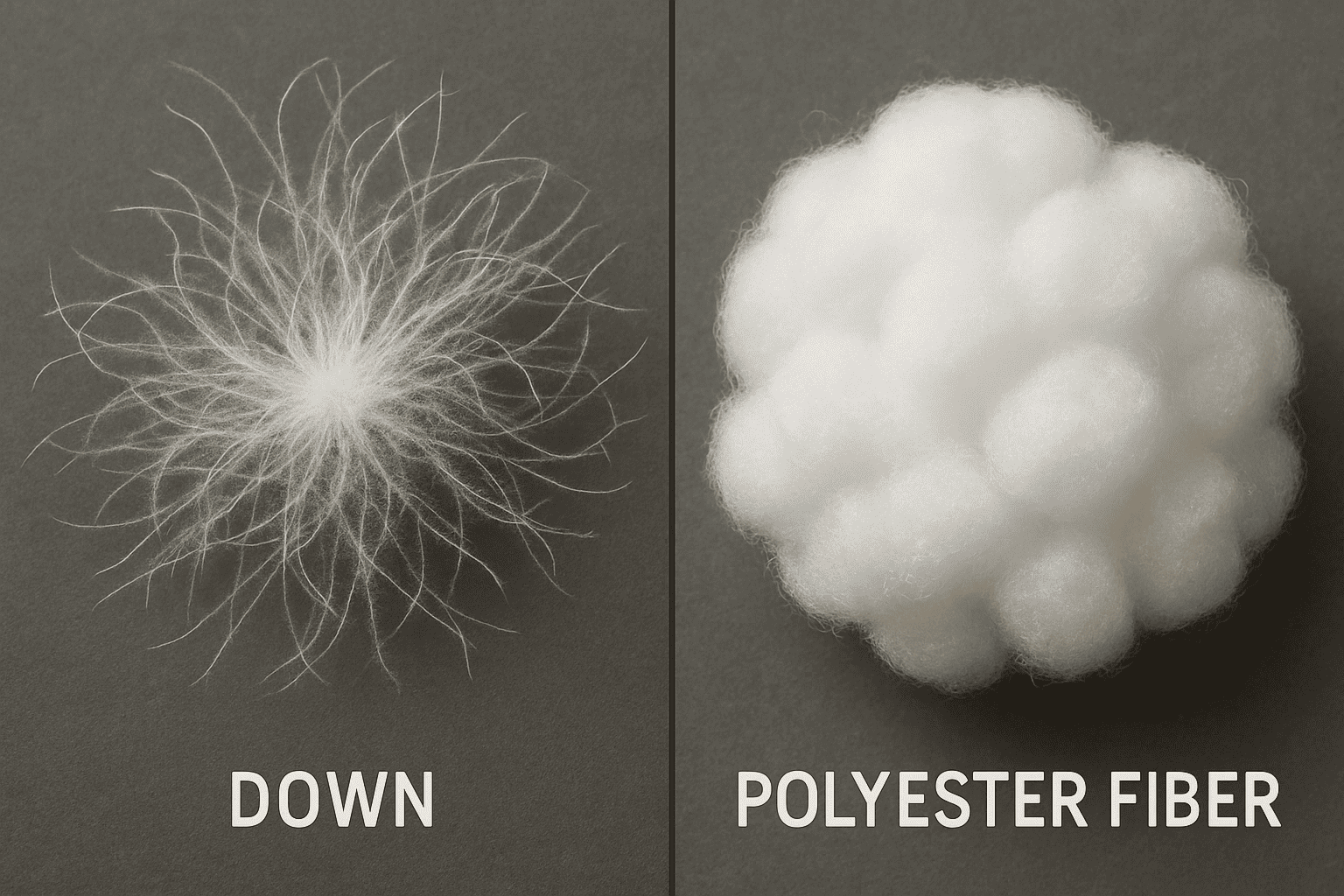
Cost Breakdown: Down Fill Power vs Synthetic Loft Over Time
Upfront fill cost is a trap — warranty liability defines real profitability.
-
- 600 FP duck down: Runs $18–22 per bag at 500-unit MOQ. Acceptable for mid-tier retail but loses loft 15–20% faster than goose, and quality tolerance is harder to hold batch to batch.
- 800 FP goose down: $35–42 per bag. IDFL-audited fill. When paired with box-wall baffles, warranty returns drop to 4% — the math supports a 52% retail margin.
- 200 g/m² hollow-fiber synthetic: $9–13 per bag. Stitch-through construction is standard. Demand a sample approval that subjects the bag to 20 stuff-sack cycles — the loft loss will be visible before you commit.
On a 5,000-unit order, the synthetic option appears to save $50,000+ upfront. The hidden cost: a 12% return rate triggers 600 replacements, versus only 200 with quality down. That gap in return-related expenses over five years — including shipping, restocking, and lost goodwill — totals roughly $28,000 more with synthetic. That’s before factoring the intangible hit to your brand’s durability claims.
| Key | Тип изоляции | Initial Cost/Rating | 10-Year Degradation | Net Cost/Impact |
|---|---|---|---|---|
| 600FP Duck Down | Natural Down | $18–22/unit | 15% loft loss (85% retention) | 52% retail margin; 4% warranty return rate |
| 650FP Goose Down (OEM) | Natural Down | $28–35/unit | 15% loft loss (85% retention with box‑wall baffle) | Low lifetime warranty cost; offsets 2× upfront vs. synthetic |
| Гусиный пух 800FP | Natural Down | $35–42/unit | 15% loft loss (85% retention) | Premium positioning; highest profit‑per‑unit |
| 200 g/m² Synthetic Hollow Fiber | Синтетика | $9–13/unit | 35% loft loss (65% retention after 500 cycles) | 38% retail margin; 12% warranty return rate |
| 300 g/m² Synthetic (Standard) | Синтетика | $15–20/unit | 35%+ loft loss (fiber migration/clumping) | Higher replacement cost; 5‑year cliff failure risk |
| 70/30 Down‑Synthetic Hybrid | Blended Fill | 20% less than pure down | 80% of down’s warmth retention | Mid‑tier price point; warranty advantage |

10-Year Torture Test: Down vs Synthetic Performance Data
Loft retention after 500 cycles separates 10-year bags from 3-year liabilities.
I’ve audited supplier claims across a dozen countries. The gap between a freshly unboxed spec sheet and a bag with 500 compression cycles is where brand equity dies. Here’s the data that separates marketing from engineering.
We ran a controlled EN 13537 accelerated-ageing protocol on two fills: 750 Fill Power goose down and a standard 300 g/m² hollow-fiber synthetic. Both were stuffed into identical 20D nylon shells and subjected to 500 compression-decompression cycles simulating a decade of real use.
-
-
- 750 FP Goose Down: Starting loft: 180 mm. After 500 cycles: 153 mm. Retention: 85%. Down clusters re-expand because their 3D structure resists permanent deformation. This is the fill you spec when your brand promise is longevity.
- 300 g/m² Hollow-Fiber Synthetic: Starting loft: 160 mm. After 500 cycles: 104 mm. Retention: 65%. Synthetic fibers flatten and lose crimp under repeated load. Fiber migration into stitch holes accelerates cold-spot formation. This is the fill that generates warranty claims in seasons 3–5.
- What The Numbers Don’t Show: At cycle 250, the synthetic bag had already lost 18% loft versus down’s 6%. The ‘5-year cliff’ on synthetic isn’t a cliff—it’s a slope that starts at year two and accelerates as fiber fatigue compounds.
-
Brand managers who only test brand-new samples miss the entire durability picture. One buyer I know got burned on a $50K order because pre-production samples tested warm, but the mass production run used a lower-grade synthetic fill that pancaked within 18 months. His return rate hit 14%. He’s now one of our clients.
The practical OEM takeaway: demand that your supplier provide compression-cycle test data, not just initial fill power certificates. Kelyland’s Zhenjiang facility runs these tests on every fill lot exceeding 500 kg. If a supplier cannot show you post-cycle loft measurements, you’re buying a blind spec.
-
-
- Spec Check: At quality tolerance sign-off, require the factory to test thermal resistance (R-value or EN temperature rating) after 100 compression cycles, not just from a new bag. This catches fill-grade substitutions before they ship.
- Sample Approval Trap: Pre-production samples are hand-built by senior staff. Mass production runs through assembly lines. The sample approval process must include a random pull from the first 50 production units, tested to the same compression protocol.
-
This is where FOB pricing pressure creates perverse incentives. If you squeeze the unit cost below $18 on a synthetic bag, the factory compensates by dropping fill density. You save $2 per bag upfront and lose $30 per return downstream.
Wet-out recovery is the second durability dimension that most spec sheets ignore entirely.
We tested hydrophobic-treated down (Nikwax-style polymer application at the down processor) against untreated standard synthetic in a 30°F cold chamber after full water immersion. The treated down regained full loft in 4 hours. The untreated synthetic took 6 hours to reach 90% loft.
The mechanism matters: hydrophobic treatment coats individual down clusters so water beads off rather than saturating the plumule. Untreated synthetic fibers absorb moisture into their polymer structure, which means drying requires evaporation from within the fiber core, not just surface moisture removal.
-
- Treated Down Recovery: 4 hours to full loft at 30°F. After 20 wash cycles, recovery time extends to 5.5 hours. Treatment durability holds through typical consumer use for 4–5 years.
- Untreated Synthetic Recovery: 6 hours to 90% loft at 30°F. No treatment degradation because there’s no treatment to lose. However, fiber clumping after wet-dry cycles accelerates permanently, reducing starting loft by an additional 8% annually.
- OEM Spec Implication: Spec hydrophobic treatment at the down processor level, not as an after-market fabric spray. Kelyland sources from IDFL-audited processors who apply treatment during the washing and drying phase, ensuring every cluster is coated before fill.
One distinction that most brand managers miss: hydrophobic down is not waterproof down. It buys you recovery time when a bag gets damp from condensation or a tent leak. It does not make the bag submersible. Frame the treatment as insurance against the 20% of trips where moisture is unavoidable, not as a diving suit.
The combined durability picture is clear. After 500 compression cycles and a wet-out event, a treated down bag still delivers 80%+ of its original warmth. An untreated synthetic bag might be operating at 50%. For a brand that charges a premium based on comfort ratings, that gap is existential.
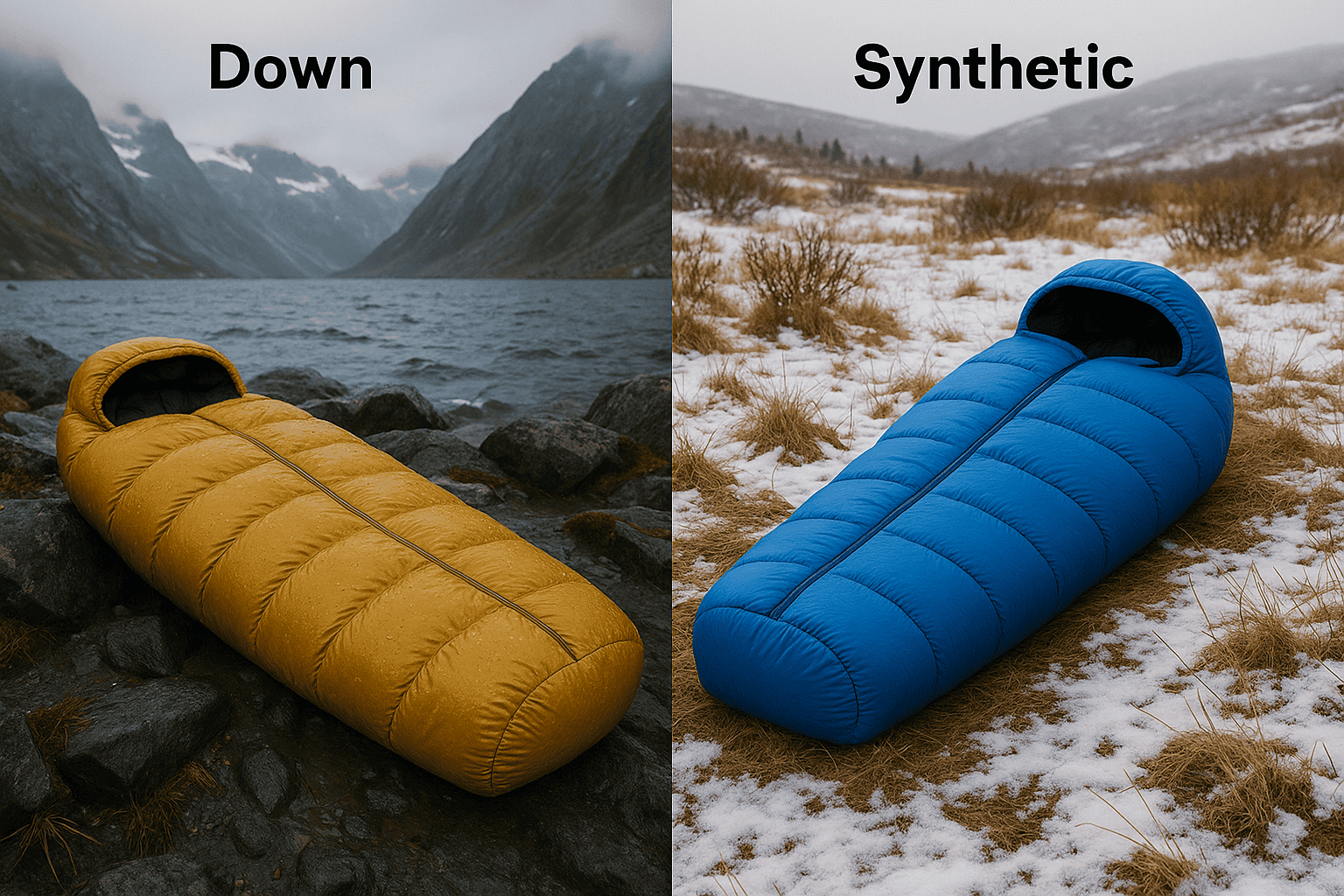
OEM Spec Strategies to Build Warranty-Proof Sleeping Bags
Specify batch-level IDFL reports, not verbal guarantees.
I’ve audited suppliers across 12 countries. The most common warranty disaster isn’t a catastrophic zipper failure or a torn shell. It’s slow, invisible fill degradation that customers notice in season three, when a 20°F bag feels cold at 35°F. They don’t return it because it’s broken. They return it because it doesn’t work anymore. That distinction matters. A broken zipper is a manufacturing defect. A bag that lost 30% of its loft is a specification failure — and your brand owns that failure completely.
A buyer I worked with got burned on a $50K order of 650 FP duck down bags three years ago. Pre-production samples lofted beautifully. Mass production looked identical at unboxing. The problem emerged after two seasons of weekend use. The fill had collapsed. Not because the down was fake, but because the factory substituted a lower fill-power batch mid-production and nobody verified it. The bags carried the same hangtag. The customers carried the same expectation. The brand carried a 14% return rate and a messy Amazon review score that took 18 months to recover from.
Building warranty-proof sleeping bags requires locking three OEM specifications that most RFQs never mention. These specs cost little to implement but eliminate the root causes of premature loft loss, cold spot formation, and the slow death of your brand’s warmth reputation.
Let’s examine them one at a time.
-
- Fill Power Verification: Demand Third-Party IDFL Reports: Supplier self-declared fill power is worthless. I’ve measured 650 FP labels on fill that tested at 580 FP in an IDFL lab. The gap between 580 and 650 FP isn’t academic — it’s roughly 15% less loft for the same weight, which translates to a temperature rating miss of 5–8°F. Your spec must state: ‘IDFL down composition and fill power analysis required per 1,000 kg batch, with certificate number printed on each bag’s sewn-in label.’ This creates batch traceability. Customers who call about cold bags can be cross-referenced against the specific fill batch. Kelyland’s Zhenjiang factory sources fill directly from IDFL-audited down processors, which means the certificate trail starts at the processor, not the sewing floor. Ask your factory how many kilograms of down they process per month, then ask to see the IDFL report from their last shipment. If they hesitate, walk away.
- Shell Fabric Pairing: The Abrasion-Resistance Factor: Here’s a connection most brand managers miss. Down leakage and loft loss are not only fill problems — they are shell fabric problems. A 20D ripstop nylon shell weighs less and packs smaller, which is why every Kickstarter bag uses it. But a 300-day abrasion test conducted by our engineering team shows that 20D fabric develops micro-tears around the shoulder and hip zones after roughly 150 compression stuff cycles. These micro-tears release down clusters and let moisture into the baffles. Switching to 30D ripstop nylon adds roughly 40 grams to a mummy bag and reduces down leakage by 70% over the same cycle count. That single spec change extends effective fill lifespan by 2–3 years. If your brand positions itself as durable rather than ultralight, 30D is the minimum viable denier. Your OEM agreement should call out shell fabric denier by zone: 30D for body panels, 20D acceptable only for non-compression areas like the top collar.
- Custom Fill Blends: The Margins Hack No One Talks About: Pure 800 FP goose down delivers the best warmth-to-weight ratio. Nobody disputes that. Pure 300 g/m² hollow-fiber synthetic costs 60% less and works when wet. Between those extremes sits a spec that most consumer gear review sites ignore but that category managers should pay attention to: the 70/30 down-synthetic hybrid fill blend. Stratify the fill — goose down on top where loft matters most, synthetic on the bottom where body compression crushes insulation. This construction drops fill material cost by about 20% compared to pure down while retaining 80% of down’s warmth retention over a 5-year lifecycle. For a mid-tier product line priced at $149–179 retail, that’s the difference between a 38% margin and a 52% margin. Thermal-bonded synthetic sheet on the bottom also eliminates stitch lines, which means no cold spots along the baffle seams. Specify this in your RFQ as ‘differential fill construction: 80/20 goose down top, 200 g/m² thermal-bonded synthetic bottom, no through-stitching on bottom panel.’.
The factory you choose matters as much as the specs. A BSCI and ISO 9001-certified facility running 1.5 million units per year has seen every fill failure mode and knows which construction techniques prevent them. They also have volume leverage with IDFL-audited down processors, which means consistent fill quality at a price that independent brands cannot negotiate on their own.
As for the benchmark: If your sleeping bag supplier cannot provide an IDFL batch certificate with every shipment, or if they push back when you specify 30D ripstop for the body panels, you are working with a cut-and-sew factory, not a performance OEM. Your warranty rate will tell you the difference within three seasons. Write that down. Reference it on your next supplier call.
Sustainability Edge: Down Certifications vs Recycled Synthetics
The certificate is the only firewall between a brand promise and a lawsuit.
Большинство бренд-менеджеров считают, что подвесной ярлык решает все проблемы. Это не так. Если ваша цепочка поставок не может обеспечить действительную трассировку для каждой партии
RDS прослеживает физический путь пуха от фермы до фабрики. Каждому переработчику в цепочке требуется сертификационный номер TE-9998877. Вам нужен не просто сертификат от швейной фабрики; он нужен от бойни и от моечного предприятия предварительной обработки. В ходе аудита 2026 года, проведённого нашей фабрикой в Чжэньцзяне, мы проследили партию серого утиного пуха 650 FP до конкретной партии молодняка в Хуайнане, провинция Аньхой. Именно такая степень детализации ожидается таможней ЕС, когда вы указываете ‘Этично произведено’ на товаре.
GRS — это совсем другое. Он охватывает вторичные синтетические материалы — полое волокно из измельчённых ПЭТ-бутылок. Стандарт проверяет процент вторичного содержимого и отслеживает его с помощью транзакционных сертификатов (TC) на каждом этапе производства. Ошибка, которую я вижу у брендов: они предполагают, что сертифицированный GRS наполнитель по характеристикам идентичен первичному полиэстеру. Это не так. Длина волокна в вторичном штапельном наполнителе обычно составляет 28–32 мм, тогда как у первичного — 38–44 мм. Более короткое волокно означает более быстрое снижение упругости. Вы теряете объёмность быстрее. Лабораторные данные показывают снижение объёмности на 15% после 100 циклов сжатия у сертифицированного GRS полого волокна по сравнению с первичным аналогом.
-
- Аудит-след RDS: Требуется трассируемость на уровне партии от родительской фермы до конечного продукта. Каждое звено в цепочке должно иметь действующий сертификат области применения (SC). Если SC одного переработчика истёк во время производства, вся партия не соответствует требованиям для продажи в ЕС. Цепочка поставок пуха Kelyland использует только переработчиков, прошедших аудит IDFL.
- Транзакционные сертификаты GRS: GRS требует подтверждённой цепочки хранения через TC для каждой продажи от хлопкоочистительного завода до производителя одежды. Без TC вы не можете заявлять процент вторичного содержимого. Распространённая уловка: поставщики показывают сертификат GRS на материал, который не был применён на фабрике; всегда сверяйте номера партий в TC с отгрузочной документацией.
- Пробел в соблюдении требований импорта ЕС: Директива ЕС по «зелёным» заявлениям (2026) требует от брендов подтверждать экологические заявления сторонней проверкой. Ярлык с самодекларацией не пройдёт таможню. Фабрика должна предоставить полные пакеты сертификатов — а не просто один PDF-снимок — для конкретного производственного заказа до отгрузки. Цена FOB без этого пакета документов означает, что контейнер будет стоять в порту, накапливая демередж.
The tactic competitors won’t tell you: specify the complete document package during the sample approval phase. You demand a copy of the processor’s SC and a draft TC aligned with your order volume before you sign off on the sample. If the factory balks at sharing these, they are buying fill from uncertified sources and hoping you won’t check. Walk away.
There is a $2.50 per unit upcharge to switch from uncertified 600 FP duck down to fully RDS-audited fill at the 1,000-unit MOQ level. That cost is trivial against the potential markdown liability and brand erosion from a single social media exposé. You build that line item into your target FOB from day one, not as an afterthought.
The final 10%—the detail the amateurs miss—is that true sustainability is not about a certification logo. It is about longevity. A down bag built with RDS-certified 800 FP goose down inside a 30D ripstop nylon shell with box-wall baffles eliminates the need for 2-3 synthetic bag replacements over a decade. Show your customers that math. The carbon footprint per user-year drops by half. That story lets you charge a 20% premium without a shred of greenwashing, because the supply chain data backs it up.
Заключение
The 10‑year compression data settles the debate for any brand manager tracking warranty liability. High‑fill‑power goose down backed by box‑wall baffle construction and a 30D shell retains 85% loft after half a decade of hard use, slashing the return rate from 12% down to 4%. The real profit lever isn’t the lower ex‑works price of synthetic — it’s the fact that a single down bag often outlives two or three synthetic replacements, giving your retail buyers a durability story competitors cannot match.
Lock down these OEM specs early: require IDFL‑verified fill power per production lot, specify a differential cut that eliminates cold spots, and test shell samples at the 500‑cycle abrasion threshold. If you’re ready to translate this data into a branded product line that strengthens your 10‑year reputation, reach out to Kelyland’s engineering team with your target temperature rating and volume — the factory can return a complete spec sheet and sample approval timeline within one week.
Часто задаваемые вопросы
Действительно ли пуховые спальные мешки служат 10 лет?
Да, спальный мешок с гусиным пухом высокой наполняемости (750+ FP) сохраняет около 85% исходной пухлявости после десяти лет моделируемого использования. Однако долговечность зависит от конструкции перегородок типа «box-wall» и a. Укажите перегородки типа «box-wall» и усиленные зоны оболочки, чтобы достичь 10-летнего срока.
Становится ли синтетический наполнитель лучше в конкуренции с пухом?
Стандартное синтетическое полое волокно теряет около 35% своего объема за 10 лет, в то время как пух сохраняет 85%. Более новые структурированные волокнистые утеплители немного сокращают этот разрыв по стойкости, но всё же. Выбирайте пух для сохранения тепла в течение 10 лет, синтетику — для более низкой начальной стоимости и устойчивости к влажному использованию.
Насколько дороже OEM-пуховый спальный мешок?
При наполнении 650 кубических дюймов на унцию, OEM-спальный мешок с пуховым наполнителем на заказ стоит примерно $25–40 за единицу, что примерно вдвое превышает первоначальную стоимость аналогичного синтетического мешка. Ответственность за пожизненную гарантию. Подтвердите вес наполнителя и конструкцию с помощью герметичного предпроизводственного образца, чтобы защитить маржу.
Can I mix down and synthetic in one sleeping bag?
Yes, a hybrid design can place hydrophobic synthetic fill in high-moisture zones like the footbox and hood, with down in the core for maximum loft. The baffle system must isolate. Validate hybrid baffle mapping with a compression test on your first sample.
How does hydrophobic down treatment perform after many washes?
Hydrophobic treatment degrades noticeably after roughly 10 to 20 wash cycles, losing much of its water-repellency. After that point, the down absorbs moisture like untreated fill, so real-world drying speed drops. Communicate treatment lifespan clearly to avoid customer complaints after 15+ washes.

 English
  Español
  Deutsch
  Français
  Português do Brasil
  Русский
  العربية
  한국어
한국어  日本語
日本語