 跳到内容
跳到内容 
Спецификационный лист с полным соответствием стандартам безопасности раскладных кроватей ничего не стоит напечатать. Разрыв между этим документом и 40-футовым контейнером, прибывающим в Роттердам или Лонг-Бич, — это то место, где большинство менеджеров цепочек поставок обжигаются. Один руководитель закупок европейской розничной сети узнал это на заказе в $50 000 — предсерийный образец выдерживал номинальную нагрузку 150 кг, но серийная партия начала складываться при 130 кг. Ткань порвалась в местах швов. Каркас погнулся. Единственное, что совпало с утвержденным образцом, — это цвет оксфордской ткани.
Основной причиной была не замена материала. Фабрика использовала правильную спецификацию. Что они пропустили, так это проверку допусков по качеству на толщину стенки стальной трубы. Отклонение в 0,2 мм — едва заметное глазу — снизило структурную целостность ниже требований EN 581-2 и ASTM F1169-19. Эта деталь никогда не проявляется в переговорах о цене FOB. Она всплывает только во время стороннего лабораторного теста с фотографиями установки, который покупатель не запрашивал, пока груз уже не был в море. Правильное оформление документации до этапа утверждения образца — это единственный шаг, который отделяет чистую таможенную очистку от склада, полного неликвидного товара.
Почему сертификаты безопасности кроватей влияют на вашу ответственность
1. Большинство советов гласят: ‘Получите сертификат’, — но сертификат без полного отчёта об испытаниях — это ловушка, ведущая к ответственности.
2. Покупатель потерял заказ на 50 000 фунтов стерлингов, потому что его предсерийный образец казался прочным, как скала, но партия массового производства разрушилась под нагрузкой в 120 кг. Завод заменил толщину стенок труб рамы с 1,5 мм на 1,1 мм.
3. Когда вы храните товар, не соответствующий обязательным стандартам безопасности, ответственность распространяется каскадно. 4. Страхование гражданской ответственности за качество продукции 5. обычно исключает покрытие товаров, не соответствующих обязательным стандартам рынка сбыта. Если поступит иск от пострадавшего потребителя, вы будете оплачивать судебные издержки и компенсации из своего кармана. В ЕС одно уведомление об отзыве RAPEX может заставить вас одновременно изъять продукт у нескольких розничных продавцов, что приведёт к штрафам, предусмотренным в ваших соглашениях о поставках.
6. Розничные покупатели знают об этом. Прежде чем подписать заказ на поставку, они не просто просматривают логотип CE или PDF-файл с надписью ‘EN 581 — пройдено’. Они запрашивают полный отчёт об испытаниях, выданный аккредитованной лабораторией 7. ISO 17025 — TÜV, SGS, Intertek, — включая фотографии настройки и исходные данные для испытания статической нагрузкой 1,5-кратной номинальной ёмкости в течение 30 минут. В легитимном отчёте EN 581 указаны точная лаборатория, дата и подробные критерии успеха/неудачи для каждого подтеста, а не односложное резюме. Покупатели также проверяют оценку полного отчёта аудита BSCI завода. Оценка «B» без серьёзных нарушений, касающихся нулевой терпимости, является минимумом, который принимают многие импортёры в ЕС; один сертификат ничего не значит.9. Запросите отчёт аудита BSCI или SMETA уровня аудита:.
-
- 10. Требуйте полный отчёт, а не страницу сертификата. Завод, использующий схему «Showroom B», покажет сертификат, но не сможет предоставить подробные выводы о несоответствиях. Требуйте полный отчет, а не страницу сертификата. Завод, работающий по схеме ‘Showroom B’, покажет сертификат, но не сможет предоставить подробные результаты о несоответствиях.
- Проверьте испытательную лабораторию и фото документацию: Отчет по EN 581 или ASTM F1169 без логотипа лаборатории, фотографий испытательного стенда и временной метки часто указывает на переработанный или отредактированный документ. Легитимные отчеты показывают продукт точно таким, каким он был отобран.
- Проверьте коэффициент нагрузочных испытаний: ASTM F1169 требует 2-кратной заявленной грузоподъемности без структурного разрушения. Многие бюджетные фабрики тестируют только до 1,5-кратной, потому что их рамы имеют недостаточные размеры. Настаивайте на 2-кратном испытании и проверяйте сырые данные на наличие прогибов или трещин.
- Требуйте изъятие производственного образца перед отгрузкой: Розничные покупатели часто требуют опломбированный, засвидетельствованный образец, изъятый из первой производственной партии и отправленный в стороннюю лабораторию для выборочной проверки на воспламеняемость (EN 1021-1/2 или 16 CFR 1632) и тяжелые металлы в покрытии рамы в соответствии с California Prop 65.
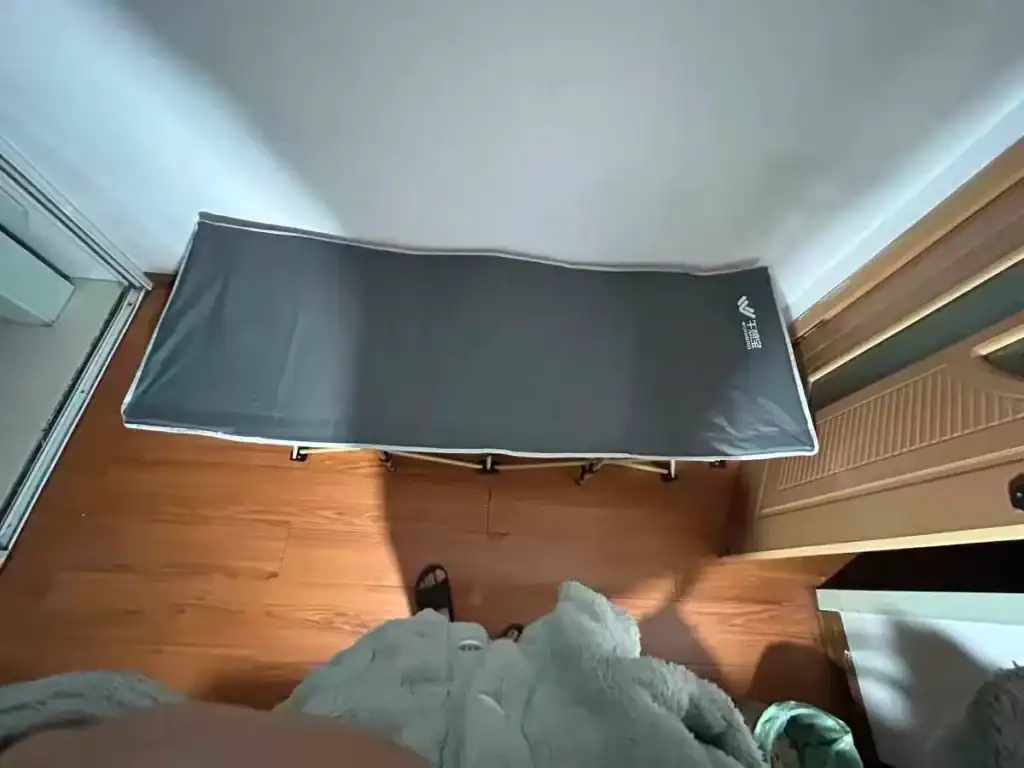
Требования рынка ЕС
Походная кроватка, прошедшая EN 581, не просто ‘безопасна’ — это ваша юридическая защита от возвратов со стороны ритейлеров ЕС.
Вот сценарий, который я видел разрушающим отношения с поставщиками: Покупатель получает заказ на €50 000 на тяжелые кровати от немецкой торговой сети. Предпроизводственный образец выглядел надежно. А массовое производство? Сварные швы рамы начали трескаться под статической нагрузкой в течение трех месяцев. Ритейлер снял весь SKU, потребовал возмещения стоимости отзыва и расторг соглашение с поставщиком. Коренная причина заключалась не в недобросовестности — а в том, что фабрика тестировала образец при 1,3-кратной номинальной нагрузке в течение 15 минут вместо требования EN 581-2: 1,5-кратной в течение 30 минут. Эти недостающие минуты и килограммы представляют собой разницу между контейнером, проходящим таможню Роттердама, и тем, который банкротит линейку продуктов.
Требования рынка ЕС к походным кроватям действуют по модели многоуровневой ответственности. Общий регламент безопасности продукции (GPSR) образует правовую основу. EN 581-2 является гармонизированным стандартом, дающим ‘презумпцию соответствия’ — то есть, если ваша кроватка ему соответствует, регуляторы предполагают, что вы выполнили требования GPSR. Без него вам придется доказывать соответствие с нуля, если явится орган рыночного надзора.
Стандарт EN 581-2 охватывает уличную мебель для сидения и лежания. Для походных кроватей он определяет конструкционную целостность, устойчивость и долговечность при предполагаемом использовании. Режим испытаний — это не рекомендация, а базовая линия, на которую будут ссылаться розничные продавцы при аудите вашего технического файла.
Испытание на выдерживание нагрузки — это спецификация, которая отделяет товарные кровати от тех, что выдерживают многолетнюю розничную продажу. EN 581-2 предписывает приложить нагрузку в 1,5 раза превышающую заявленную производителем грузоподъемность и удерживать её в течение 30 минут. Не 15 минут. Не 20. Рама, соединения и тканевое основание должны не иметь структурных повреждений, недопустимой остаточной деформации или потери функции после снятия нагрузки. Я проводил аудит на фабриках, где ‘испытания’ заключались в том, что два работника стояли на кровати несколько секунд. Это не испытание — это страховой случай в ожидании. Для кроватей с заявленной грузоподъемностью 150 кг вам нужен калиброванный испытательный стенд, прикладывающий 225 кг равномерно в течение полных полчаса. Запросите фотографии испытательной установки в отчете. Легитимный отчет по испытаниям EN 581 от лабораторий, таких как TÜV Rheinland, SGS или Intertek, будет включать изображения установки с отметками времени, показывающие размещение груза, а не просто одностраничный сертификат.
Воспламеняемость ткани — это то, где импортеры попадают впросак, потому что они предполагают, что маркировка CE покрывает все. Это не так. Для походных кроватей тканевое основание и любые прикрепленные подушки подпадают под EN 1021, который состоит из двух частей, которые вам нужно знать назубок: EN 1021-1 охватывает воспламенение от тлеющей сигареты, а EN 1021-2 охватывает воспламенение, эквивалентное пламени спички. В сигаретном тесте зажженная сигарета прикладывается к ткани на заданное время. В тесте спички используется пламя бутана. Ткань может пройти часть 1 и с треском провалить часть 2. Полиэстеровый оксфорд с определенными задними покрытиями может плавиться и капать горящими остатками — что является автоматическим провалом в тесте спички. Если ваша кровать использует накладной матрас или встроенную подушку, применяются обе части. Не позволяйте поставщику утверждать ‘это огнестойкий’, не указав, какой стандарт, и не показав вам лабораторный отчет.
Социальное соответствие — это требование, которое менеджеры по закупкам упускают из виду, пока партия не будет задержана. Импортеры из ЕС сталкиваются с растущим давлением в соответствии с немецким Законом о проверке цепочки поставок и предстоящей Директивой ЕС по корпоративной устойчивости (CSDDD). Крупные розничные продавцы, такие как Decathlon, Intersport и Globetrotter, теперь требуют подтверждения социального аудита как условия включения в список поставщиков. BSCI и SMETA — две доминирующие системы аудита. Вот ловушка: некоторые фабрики представляют ‘сертификат’ BSCI без полного отчета об аудите. Сам по себе сертификат ничего не стоит — он не показывает оценку. Настаивайте на полном отчете BSCI с оценкой A или B. Фабрики, работающие ниже уровня B, обычно нарушают документацию по рабочему времени, оплату сверхурочных или имеют пробелы в охране труда и технике безопасности в сварочных и режущих цехах. ‘Showroom B’ операция — когда фабрика представляет соответствующую требованиям приемную, скрывая нарушения трудового законодательства в задних мастерских — будет раскрыта, если сравнить количество сотрудников в отчете по аудиту с записями о производственной мощности. Если фабрика, производящая 50 000 кроватей в год, показывает только 15 работников в аудите, математика не сходится.
-
- Опорные точки EN 581-2: Проверьте, что в отчете об испытаниях указан точный номер вашей модели и заявленная грузоподъемность. Общая ‘сертификация семейства’, охватывающая ряд моделей без индивидуальной документации по нагрузке, не удовлетворит технический аудит розничного продавца. Запросите Декларацию характеристик (DoP), которая связывает знак CE с конкретными результатами испытаний EN 581-2.
- Проверка нагрузочного теста: В отчете должно быть указано, что нагрузка 1,5x от номинальной выдерживалась в течение 30 непрерывных минут без разрушения сварных швов, изгиба ножек, превышающего 5% от первоначального пролета, и начала разрыва ткани по строчкам. Если в отчете указана меньшая продолжительность или меньший множитель, кровать не соответствует EN 581-2, независимо от того, что утверждает поставщик.
- Документация по воспламеняемости: Для любой кровати с текстильными поверхностями требуйте отдельные отчеты EN 1021-1 и EN 1021-2. Комбинированный отчет приемлем только в том случае, если оба метода испытаний явно указаны с индивидуальными результатами. Прохождение сигаретного теста без прохождения теста спички означает, что ткань не подходит для розничной продажи в ЕС.
- Аудит социального соответствия: Запросите полный отчет аудита BSCI или SMETA 4-Pillar, датированный последними 12 месяцами. SMETA 4-Pillar охватывает трудовые отношения, здоровье и безопасность, окружающую среду и деловую этику. Аудит 2-Pillar является неполным для регистрации у розничных продавцов ЕС. Проверьте, что область аудита включает вашу категорию продукции — аудит фабрики по пошиву одежды не подтверждает соответствие предприятия по производству кемпинговой мебели.
Пропустите этот пакет документации — и затраты быстро растут. Без действующего протокола испытаний EN 581 ваша кроватка может быть задержана на таможне ЕС в рамках процедур рыночного надзора. Это €2 500–€5 000 за задержание и тестирование на каждый артикул. Без аудита BSCI крупные розничные продавцы сразу отклоняют вашу заявку поставщика — вы теряете целый сезон продаж. Одна несоответствующая партия из 1 000 единиц с себестоимостью €35 каждая — это не просто списание €35 000. Добавьте возвратные платежи розничных продавцов за логистику отзыва, негативные рейтинги ODR на таких платформах, как Amazon EU, и безвозвратную потерю отношений с покупателем. Документация стоит несколько сотен евро upfront. Её отсутствие стоит вам доступа на европейский рынок.
Требования рынка США
ASTM F1169 — это не рекомендация, это несущая стена между прошедшей таможню партией и складом, полным ответственности.
Я видел, как контейнер с 800 кроватками был заблокирован в Лонг-Бич, потому что протокол испытаний фабрики показал коэффициент нагрузки 1,5x. В заказе на поставку указывалось соответствие ASTM F1169-19. Этот стандарт требует выдерживать 2-кратную заявленную грузоподъемность без структурных разрушений — деформация рамы, обрушение ножек или разрыв ткани считаются отказом. Фабрика в Цзиньхуа провела собственное внутреннее испытание при 1,5x и назвала его ‘пройденным’. Это стоило импортеру $12 000 за простой, проваленную инспекцию розничного продавца и 90-дневную задержку, пока мы искали соответствующие замены.
Вот что действительно важно при поставке кемпинговых кроваток на рынок США. Не теория. То, что появляется в отчетах о корректирующих действиях.
ASTM F1169-19: Правило 2x, которое никто не объясняет.
Этот стандарт охватывает структурную целостность для недетских кроваток и портативных кроватей. Метод испытания прикладывает статическую нагрузку в 2x от заявленной максимальной грузоподъемности производителя в течение 30 минут. Если ваша кроватка рассчитана на 250 кг — обычно для тяжелых моделей со стальными рамами — испытательный стенд нагружает её 500 кг. После снятия нагрузки кроватка не должна иметь видимых трещин, разъединения швов и постоянной деформации более 10 мм.
-
-
- Материал рамы имеет значение: Алюминиевые рамы на сверхлегких кроватках достигают предела быстрее, чем стальные. Алюминиевая трубка 7075 с толщиной стенки 1,2 мм изгибается под статической нагрузкой 400 кг — мы видели это на испытательных стендах Intertek. Стальные рамы с толщиной стенки 1,5 мм и правильной сваркой с усилением проходят последовательно.
- The Report You Need: Request the full ASTM F1169 test report from a CPSC-accepted lab — not the factory’s internal QC worksheet. Look for lab logos (SGS, Bureau Veritas, Intertek), dated photos of the setup with weights visible, and a clear pass/fail criteria section. A one-page summary letter is not enough.
-
16 CFR Part 1632 and 1633: Flammability That Catches Importers Off Guard.
Most supply chain managers assume flammability only applies to tents. Wrong. Cots with any textile surface — Oxford fabric, nylon mesh, padded sleeping surfaces — fall under 16 CFR Part 1632 (cigarette ignition) and potentially 1633 (open flame) if the cot includes a mattress component. The distinction trips up buyers every season.
-
-
- 1632 Compliance: Requires that a lit cigarette placed on the fabric surface does not ignite the material. Most 600D Oxford with a PU coating passes this without additional treatment. But once you add padding or a built-in mattress, you’re in different territory.
- 1633 Trigger: Applies if the cot is sold with a mattress component or marketed as a ‘sleeping system.’ This involves a full-scale open flame test with a 30-minute burn period. Budget factories skip this entirely because the test costs $2,000-$3,000 per SKU.
-
CPSIA Tracking Labels: The $5 Fix That Saves $50,000 Headaches.
Every camping cot sold in the US must carry a permanent tracking label under CPSIA Section 103. This isn’t optional. The label needs the manufacturer name, location and date of production, and a batch or lot number. An entire
-
-
- Third-Party Testing: CPSIA also mandates third-party testing from a CPSC-accepted lab for children’s products. If your cot is marketed for family camping or includes a ‘kids’ size, you need a Children’s Product Certificate (CPC) backed by lab results for lead content, phthalates, and mechanical hazards.
- Прослеживаемость партий: The tracking label must connect to your internal records. If a defect is found in batch KL2026-COT-003, you need to trace it back to the exact production date, fabric lot, and frame supplier. Without this, a recall means recalling everything.
-
California Proposition 65: The Frame Coating Problem.
Steel frames get powder-coated. Aluminum frames get anodized. Both processes can involve chemicals on California’s Prop 65 list — lead, cadmium, and phthalates are the most common. The risk isn’t the coating itself. It’s the pre-treatment chemicals used in cheaper factories to speed up the production line.
If your cot ships to a California retailer without a Prop 65 warning label — and a third-party test shows detectable levels above the safe harbor limit — the penalty starts at $2,500 per violation per day. A cot with 4 frame components counts as 4 violations. Do the math on a 500-unit shipment.
-
-
- What to Request: Ask for lab test results showing lead content below 100 ppm and cadmium below 75 ppm on all coated metal components. If the factory can’t produce this, factor in the cost of adding a Prop 65 warning label to every unit — or switch to a supplier who pre-tests their coatings.
- Paint and Plating: Cheap chrome plating on steel leg hinges is a known lead source. We’ve flagged zinc-alloy rivets with 300+ ppm lead from unvetted sub-suppliers. Request a full bill of materials down to the fastener level.
-
Decision Checklist for Your Next US-Bound Cot Order.
-
- 1. Can your supplier provide a dated ASTM F1169 report from a CPSC-accepted lab showing a 2x load test — with photos?: If they hand you an in-house QC sheet or a report from a lab you’ve never heard of, the answer is no. Walk away or budget for your own testing before shipment.
- 2. Do your tracking labels include batch codes, production dates, and factory location — sewn in, not hung on?: Pull a random sample from your next pre-shipment inspection. If the label peels off, the shipment is non-compliant. Full stop.
- 3. Have you tested frame coatings for lead and cadmium within the last 12 months?: Metal finishing suppliers change their chemical baths constantly. A clean test from 2026 doesn’t guarantee a clean shipment in 2026. Make batch-level Prop 65 screening part of your QC protocol.
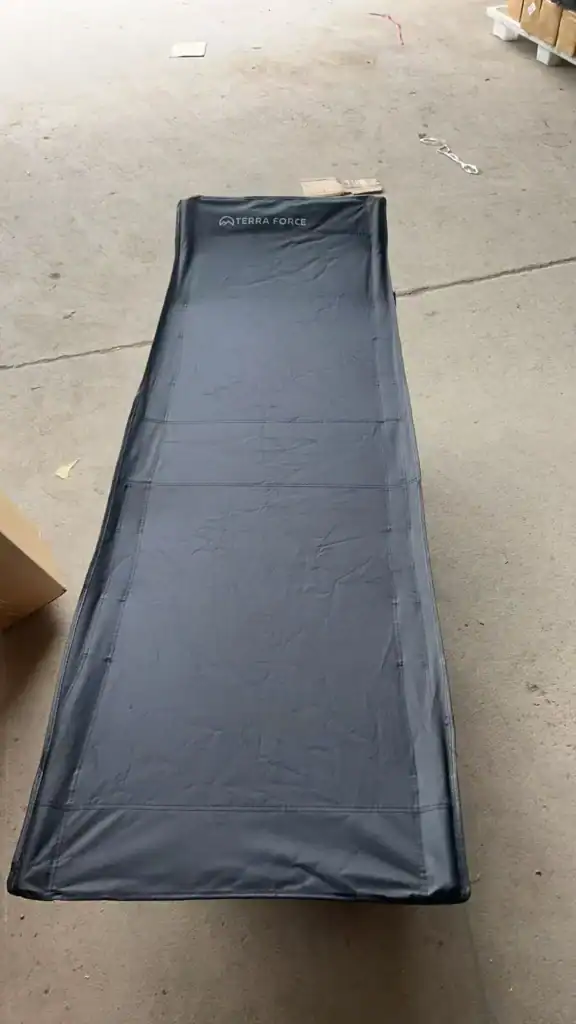
Требования рынка Австралии
Australian regulators enforce sticker placement down to the font size—wrong label layout means an entire shipment is quarantined.
Australian compliance operates on a liability chain that pushes responsibility firmly onto the importer. When a folding cot collapses in a suburban Melbourne backyard, the retailer points to the distributor, the distributor points to you, and you’d better have the test reports to stop the blame chain cold. Three standards form the non-negotiable tripwire for camping cots and canopy accessories: AS/NZS 4798 for stability, the mandatory information standard for folding cots, and UV resistance validation under AS 4399.
-
- AS/NZS 4798: Domestic Furniture Stability: This standard evaluates the cot’s resistance to tipping, horizontal force, and structural fatigue under repeated dynamic loading. A key pass/fail clause: the cot must not tip when a 20 kg horizontal force is applied at the top rail in any direction. Cheap high-back designs often fail here because the center of gravity shifts outside the leg footprint under load—a problem invisible on a CAD file but brutally obvious once the lab weights swing.
- Mandatory Product Information Standard (Folding Cots): Enforced by the ACCC under Australian Consumer Law, this standard dictates exact wording, font size, and placement for permanent warning labels. The label must state height and weight limitations, assembly instructions, and the phrase ‘WARNING: Do not leave child unattended’. Non-compliance triggers a mandatory recall with zero tolerance—no grace period, no labeling rectification in-country.
- UV Resistance Testing (AS 4399:2006): For canopy materials—whether 150D Oxford with PU coating or Textilene mesh—Australian market reality demands a UPF (Ultraviolet Protection Factor) rating of at least 50+ to claim ‘excellent’ sun protection. Fabrics degrade visibly after 200–400 hours of accelerated QUV weathering if the UV stabilizer percentage falls below 0.3% by weight. Request the actual QUV chamber cycle data, not just the UPF certificate; a UPF 50+ rating on day zero means nothing if the fabric loses 60% of its tensile strength after one summer season.
The enforcement gap in Australia is smaller than most buyers think. The ACCC conducts periodic retail sweeps and cross-references supplier declarations. A shipment landing without AS/NZS 4798 test reports backed by an accredited lab (NATA, IAS, or ILAC MRA signatory) gets flagged by Australian Border Force for assessment bond—tying up your container and eating margin at $300–$500 per day of warehousing delay.
One telltale sign of a report that won’t hold up under scrutiny: no photographs of the loaded test setup. A legitimate AS/NZS 4798 or AS 4399 report from a NATA-accredited lab includes timestamped images showing the weight application points and the UV sample placement. Reports that only contain a cover letter and a pass/fail table are usually repurposed from another model number—a shortcut that costs you the whole shipment when the Australian retailer’s quality team spots the mismatch.
For the 10% that separates professionals from hobby importers: never accept a test report where the product description field reads ‘camping cot, various sizes’. The laboratory’s scope of accreditation must list the exact SKU, fabric batch code, and frame material alloy. Cross-check the batch code against your pre-production sample approval record. If the lab report batch doesn’t match what’s in the container, you have zero defense against a section 65 undertaking from the ACCC.
Документация, которую вы должны получить от фабрики
A real EN 581 report includes lab setup photos—not just a pass/fail statement.
-
- Test Reports (The Raw Data): You need EN 581-2 load test data specifically for cots—not generic outdoor chairs. Verify the lab name (TÜV, SGS, Intertek) is printed on the header. An ASTM F1169 report must explicitly state that the cot withstood 2x the stated weight limit without structural failure or permanent deformation. If the report only graphs deflection to 1.5x, that cot enters the US market with a massive liability gap. Reject it until they retest to the full 2x threshold.
- BSCI Full Audit (Not Just the Wall Certificate): The ‘Showroom B’ scheme is real. A factory buys a single certificate to hang in the lobby, but the production dormitory you never see operates under a different entity. Demand the ‘BSCI Full Audit Report’ with the ‘A’ or ‘B’ grade. Scrutinize the legal entity name on the report—it must match the company name on your Purchase Order exactly.
- Declaration of Conformity (DoC): This must be signed by a named individual at the factory, not a generic stamp. It should list the specific standard (e.g., EN 581-2:2015), the product SKU, and the batch number. A DoC that just says ‘CE Compliant’ without referencing a batch is worthless for customs.
- CPSIA Tracking Labels (For the US): Your final invoice docs must include a photo of the CPSIA tracking label as applied to the retail packaging or product. It must show the manufacturer name, location (city & province), and production date/batch code. A label that only lists ‘Made in China’ without a traceable factory name fails 16 CFR 1130 requirements.
- California Prop 65 Warning (Frame Coatings): If the cot frame is steel with a powder coat or anodized aluminum, request a lab report screening for lead in surface coatings and phthalates in plastic connectors. Without this, a private lawsuit in California can cost you $10k+ in settlement fees even if the product is safe.
I keep a running list of factories that have tried to pass off edited PDFs. The first red flag: a report issued in 2026 showing a test date from 2022. Dates must align with the product’s development cycle, not the factory’s archive. Always cross-check the certificate number on the issuing lab’s public portal—Intertek and SGS both offer online verification tools, and if the certificate ID doesn’t populate a result within 30 seconds, you have a fake EN 581 test report on your hands.
Before you schedule the pre-shipment inspection (PSI), your factory should send you three things without hesitation. First, the internal QC inspection report from the final random sampling—this is their own pass/fail before the third-party inspector arrives. Second, photos of the load test setup with digital timestamps showing the weight plates and the 30-minute duration clock. Third, a signed copy of the packaging artwork with the compliance logos, CPSIA labels, and country-of-origin marks in the correct fonts and sizes. If they push back on these, delay the PSI.
A final point on commercial terms: write into the purchase agreement that the factory bears the cost of all re-testing if an independent inspector finds a structural failure during PSI. Disputes have arisen where a batch of 500 cots failed the AS/NZS 4798 stability test at port, and the importer ate $4,200 in storage and re-shipping costs because the contract only covered unit replacement from the factory. Separate the documentation cost from the failure cost, and make the factory accountable for both.
Включение соответствия требованиям в ваш контракт на закупку
Contracts without compliance teeth are just purchase orders.
A $50K order of camping cots was held at Long Beach for six weeks because the fabric didn’t match the flammability certificate filed with CBP. The importer paid $8,700 in dem
When you negotiate ценообразование FOB, you’re also negotiating where risk transfers. But standard pro-forma invoices don’t address what happens when a batch fails a spot check at the consolidation warehouse. You need language that survives past the container loading date.
Three specific contract mechanisms separate professional sourcing operations from amateurs: liability assignment clauses, testing protocols with defined consequences, and non-compliant shipment handling procedures that spell out who pays for what, within what timeframe.
Sample Clauses for Compliance Liability.
The most common mistake is accepting a supplier’s generic ‘quality guarantee’ paragraph. Those clauses typically reference ‘industry standards’ without naming a single one. If EN 581-2 or ASTM F1169-19 isn’t printed in the contract body, it doesn’t exist legally when a dispute hits arbitration.
A proper compliance liability clause does three things. First, it names the exact standard and revision year—EN 581-2:2015, not just ‘EN 581.’ Second, it ties the standard to a specific component or performance requirement: ‘Frame and fabric assembly shall withstand 1.5x rated load for 30 minutes per EN 581-2 Section 6.2 with no joint separation exceeding 2mm.’ Third, it assigns financial responsibility for third-party re-testing if the pre-shipment inspection raises a flag.
-
-
- Documentation Warranty: Supplier warrants that all test reports, certificates, and Declarations of Conformity are authentic, issued by an ISO 17025-accredited lab, and match the production batch by date and lot number. Fake or expired documents trigger full refund plus 15% penalty for replacement sourcing costs.
- Material Substitution Penalty: If any fabric, coating, or frame coating differs from the approved sample without written buyer authorization, supplier bears 100% of return freight, destruction costs, and the unit price difference for expedited replacement production—even if the substitute ‘technically passes’ the lab test.
- Regulatory Change Clause: If a target market updates a mandatory standard between PO signing and shipment, and the update renders the current production non-compliant, both parties split the retrofit cost 50/50. Without this clause, the buyer absorbs 100% of the loss under most international trade conventions.
-
The 15% penalty figure isn’t arbitrary. It covers the margin erosion you’ll face buying replacement inventory on short notice from a secondary supplier at premium pricing. Seasoned supply chain managers build this into the contract template before the first PO is ever cut.
Batch Testing vs. Shipment Spot-Checking.
Factories love to present a single lab report from a prototype and call it done. That report proves exactly one thing: that one unit, built under the engineer’s supervision, passed on that specific day. It tells you nothing about what happens on production day 17 when the line supervisor is behind schedule and the fabric tension on the cutting machine drifts.
Batch testing and shipment spot-checking serve different functions, and your contract needs both. Batch testing verifies that production tooling and materials are set correctly at the start of a run. Spot-checking catches drift mid-production and during final packing.
-
-
- Batch Testing Protocol: Pull 3 random units from the first 100 off the line. Send one to a third-party lab for the full standard battery (load, flammability, sharp edges, pinch points). Keep two as sealed reference samples. No mass production proceeds past 500 units until the lab report clears. This costs roughly $400-600 per test and saves $15,000+ in rework if tooling is wrong.
- Inline Spot-Check Cadence: AQL 2.5 Level II sampling every 500 units during production, focused on the failure modes that hurt most: weld integrity, fabric seam strength, and locking mechanism function. These don’t need a lab—a calibrated pull gauge and a checklist work. Flag 3 consecutive failed samples and the line stops for root cause analysis at supplier expense.
- Pre-Shipment Final Random: AQL 1.5 Level II sampling from packed, sealed cartons 48 hours before container loading. This catches warehouse handling damage and last-minute material substitutions that happen when the factory runs out of the approved fabric and ‘borrows’ from another customer’s order. I’ve caught this twice in three years.
-
The contract needs to specify who selects the third-party lab. If the factory picks the lab, they’ll default to the one that’s friendliest to their pass rates. Insert language requiring the buyer to approve the lab from a pre-agreed list of three ISO 17025-accredited options. Intertek, SGS, and Bureau Veritas are the standard shortlist for camping cot testing across all three major markets.
Handling Non-Compliant Shipments.
A non-compliant shipment is already in your supply chain before you know about it. The container is on the water or sitting in a warehouse. The decisions you make in the first 72 hours determine whether this is a $3,000 problem or a $30,000 one.
The contract must define three categories of non-compliance with distinct remedies. Not all failures are equal, and treating a labeling error the same as a structural failure wastes money and burns factory relationships unnecessarily.
-
- Category A: Critical Safety Failure: Frame collapse under load testing, fabric flammability exceeding legal limits, toxic coating materials exceeding Prop 65 thresholds. Remedy: Full refund within 15 business days of lab report issuance. Supplier pays all return freight or destruction costs. Supplier covers 20% of order value as liquidated damages for lost sales window. Zero tolerance—no rework offer accepted on critical failures.
- Category B: Specification Deviation: Fabric color outside Pantone tolerance, frame wall thickness 0.2mm under spec, stitch count below approved sample density. Remedy: 8-12% price reduction if product remains sellable. If not sellable, supplier pays for local rework or arranges return shipment within 30 days. No replacement order placed until root cause report is delivered and reviewed.
- Category C: Documentation or Labeling Error: Missing CPSIA tracking label, incorrect country of origin marking, carton markings don’t match packing list. Remedy: Supplier pays direct costs to print and apply corrective labels at destination warehouse—typically $0.15-0.40 per unit labor plus label stock. No chargebacks if corrected before retail distribution. Repeat offense on next order bumps it to Category B.
The timeline matters more than the penalty amount. A factory that drags out a refund negotiation for 90 days costs you more in working capital than a larger penalty paid in 10 days. Insert a clause: ‘Supplier shall respond to non-compliance notice within 5 business days and remit agreed remedy amount within 15 business days of acceptance. Delays beyond 15 business days accrue 1.5% monthly interest on the outstanding amount.’.
One final point that most sourcing guides miss: always require the factory to hold the non-compliant inventory for 60 days after your claim is filed. If you destroy it immediately and the factory later disputes the lab findings, you’ve destroyed the evidence. A sealed reference sample from the failed batch, retained by the third-party lab, is your insurance policy if the dispute escalates beyond email.
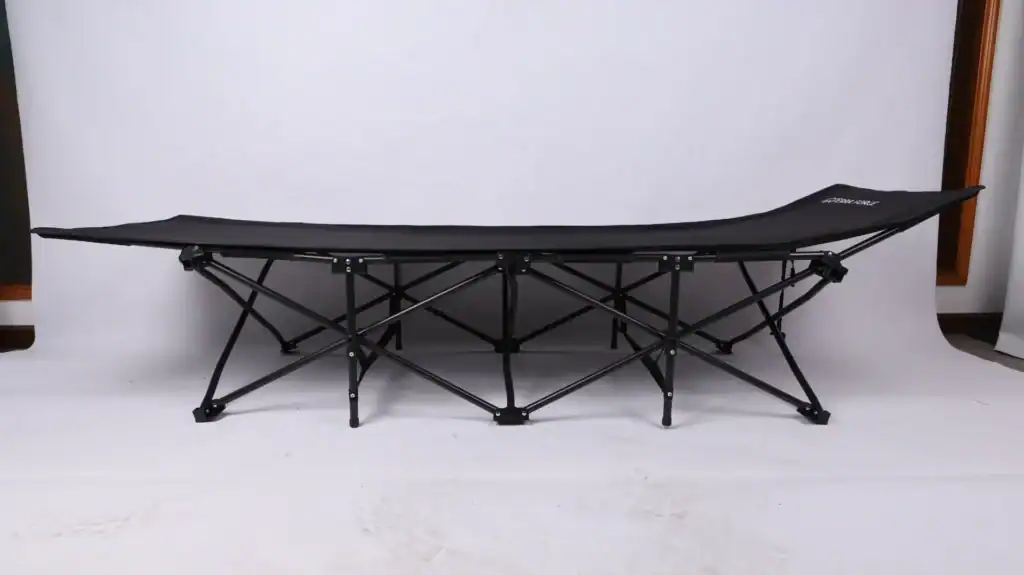
Заключение
A camping cot order built without verified EN 581 or ASTM F1169 documentation is a shipment that lands in port, sits in customs, and racks up demurrage at $150–$400 per day. The lab test gap between 1.5x and 2x load tolerance isn’t a rounding error—it determines whether your retailer accepts the container or flags a chargeback that wipes out the margin on a 1,200-unit lot. Fabric that flunks EN 1021-1 ignites the same liability chain whether the factory “tested in-house” or not. Sample approval alone doesn’t catch this; only a third-party report with setup photos and a named lab does.
If the next pre-shipment inspection folder doesn’t include a BSCI Full Audit showing an A/B grade, or the FOB terms don’t pin quality tolerance to the exact standard clause, the risk clock starts ticking. Ask for the report packet now—TÜV, SGS, or Intertek—and align batch testing frequency with your contract before the factory cuts the next lot.
Часто задаваемые вопросы
Какой стандарт EN применяется к походным кроватям?
EN 581-2 регламентирует механическую безопасность походных кроватей, ключевое испытание заключается в нагрузке кровати в 1,5 раза от номинальной емкости в течение 30 минут. Добавьте EN 1021-1 или EN 1021-2 для воспламеняемости ткани в зависимости от вашего.
Всегда ли розничные продавцы в США требуют ASTM F1169?
Most major US retailers require ASTM F1169-19 compliance as a baseline for cots. You’ll also need 16 CFR Part 1632/1633 flammability tests and a CPSIA tracking label. Verify exact requirements with the buyer before tooling begins.
Как я могу определить поддельный тестовый отчет от завода?
Check that the test report references a traceable accredited lab, is dated within one year, and includes clear product identifiers matching your order. Cross-reference the lab’s website or call them directly. Insist on verifiable lab credentials before you approve shipping.
Какое положение о соблюдении нормативных требований должно быть включено в мой договор на закупку?
Включите пункт, возлагающий на завод ответственность за все расходы, если партия не пройдет независимую выборочную проверку на соответствие согласованным стандартам. Уточните, что тестирование партий охватывает каждую производственную партию и несоответствующую продукцию. Убедитесь, что ваш контракт определяет, что происходит при несоответствии партии.

 English
  Español
  Deutsch
  Français
  Português do Brasil
  Русский
  العربية
  한국어
한국어  日本語
日本語