 跳到内容
跳到内容 
Inflatable tent valve leak repair usually starts with the wrong suspect. Field guides point at the valve core and O-ring, and those parts do cause roughly 80% of leaks — but a buyer who lost a $50K order found the real culprit in the HF weld around the valve flange. The pre-production sample passed every check; the mass production run leaked after three folding cycles. The weld measured 18 mm instead of the 20 mm spec from sample approval, a quality tolerance gap no replacement core will fix.
Field repair and factory QC are two different problems. The five-step procedure handles the 80% of leaks caused by debris, dried O-rings, and loose cores. The RFQ specs — 20 mm minimum flange weld width, 100-cycle fold test with zero pressure drop, pressure-decay test report per batch — stop a recurring weld defect before it reaches your warehouse. Visual inspection misses micro-cracks. Demand the test data.
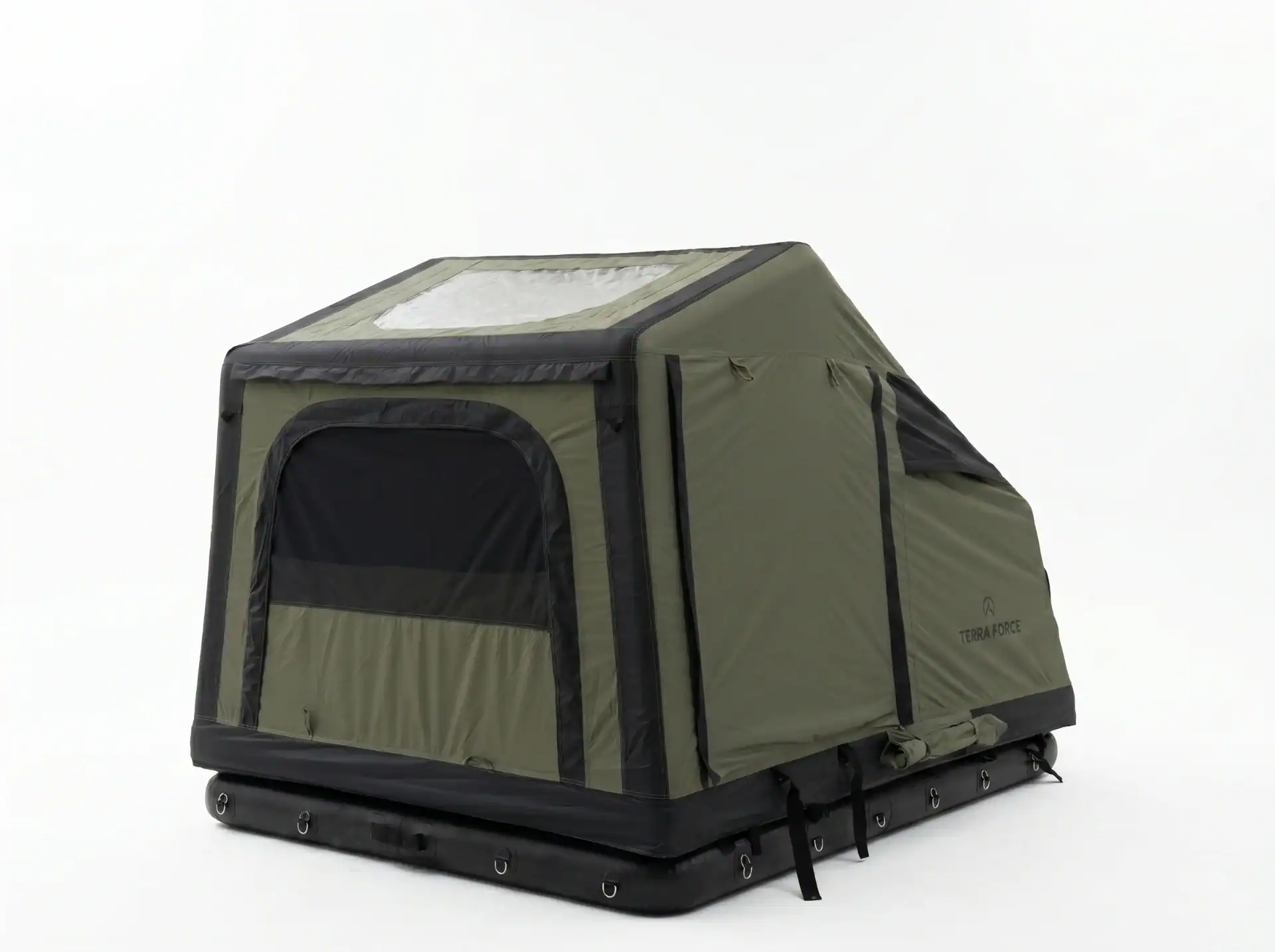
Why Inflatable Tent Valves Leak: Weld, O-ring, and Thread Failures
80% of field valve leaks are fixed by cleaning or replacing the O-ring.
An inflatable tent that loses air at the valve is usually not suffering from a failed valve core. Around 80% of field leaks are resolved by cleaning or replacing the O-ring. The remaining 20% come from micro-cracks in the high-frequency (HF) weld around the valve flange — a defect that visual inspection often misses.
The Real Culprit: Micro-Cracks in the HF Weld
Sharp creases at the valve flange, created when the tent is folded into its stuff sack, stress the HF weld and produce hairline cracks. These cracks leak slowly and get worse with every setup. A soap test at 1.5x rated working pressure exposes them; a simple visual check does not.
This is a factory defect, not a field wear issue. At Kelyland’s core tent factory in Ningbo, the standard is a minimum 20 mm flange weld width and a 100-cycle fold test with zero pressure drop before shipment. Few consumer brands advertise that spec, but it determines whether valves survive stuffing, shipping, and repeated setup.
Valve Core Failures: Debris, O-Rings, and Stripped Threads
Sand and debris foul the one-way core, the O-ring dries out and cracks, and pump-hose threads strip from cross-threading. Each failure shows a different leak signature. Before ordering a new valve, clean the seat with isopropyl alcohol and replace the O-ring — that single step fixes most intermittent leaks.
Valve Type Comparison: Halkey-Roberts vs Bayonet vs Screw-In
-
- Halkey-Roberts: Worn O-ring or debris behind the core. Field serviceable — clean and replace the core or O-ring.
- Bayonet: Cracked collar or loose locking fit. Replace the core if the collar is intact; a cracked collar needs a flange repair.
- Screw-in: Stripped pump-hose threads. Serviceable only if the flange weld is still sound; otherwise the beam must go back to the factory.
Distinguishing these failures matters for after-sales routing. A supply-chain manager can ship O-rings and cores to the field and resolve 80% of complaints. Cracked flanges and delaminated collars need factory HF welding — no field kit will hold.

How to Repair an Inflatable Tent Valve: 5-Step Field Procedure
An O-ring swap fixes 80% of valve leaks.
Most inflatable tent valve leaks are not a failed valve core. Sand gets behind the one-way core, the O-ring dries out, or the HF weld around the valve flange develops hairline cracks from sharp folds during storage. The fix depends on which one you have. Halkey-Roberts and bayonet-style valves share the same field repair path.
The 5-Step Field Repair Sequence
-
- Step 1: Deflate completely and isolate the beam.: Let all pressure out before doing anything. Trapped air twists the valve seat and makes the core hard to remove. In a multi-beam tent, mark the leaking valve so you don’t test the wrong beam.
- Step 2: Remove the valve core and inspect the flange weld.: Use a valve tool or needle-nose pliers to unscrew the core. Under bright light, check the flange weld for hairline cracks radiating from the edge. A cracked flange weld will not hold a new O-ring; stop and plan for a beam replacement.
- Step 3: Clean the valve seat with isopropyl alcohol.: Wipe the seat with 99% isopropyl alcohol on a lint-free cloth. Remove sand, oils, and old sealant. Then let it dry completely before reassembly. A clean seat is the cheapest fix for an intermittent leak.
- Step 4: Replace or grease the O-ring; avoid overtightening.: Swap in the exact-size O-ring for that valve model, or apply a thin film of silicone grease if the old ring still has its shape. Seat the core firmly. Overtightening strips the threads and turns a $2 repair into a $40 problem.
- Step 5: Re-inflate to 80% and soap-test.: Inflate to about 80% of working pressure and brush soapy water around the valve. Bubbles show the exact leak point. If bubbles form at the flange weld, stop. No field sealant will fix a failed HF weld.
Adhesive Collar Repairs: The 24-Hour Rule
A loose collar can sometimes be saved with adhesive, but only if the flange weld itself is sound. The mistake most owners make is inflating too soon. Pressurized air pushes into the uncured bond line, separates the adhesive, and the repair fails within hours. Wait 24 hours, then run the same soap test before trusting it.
Kelyland Outdoors’ partner factories soap-test every inflatable tent valve at 1.5x rated working pressure before shipment, and the ISO 9001:2015 quality system documents inspection results at every production stage. That level of QC is why a field O-ring replacement performs as expected. Without it, the real failure mode—a cracked flange weld—gets shipped to your customers.
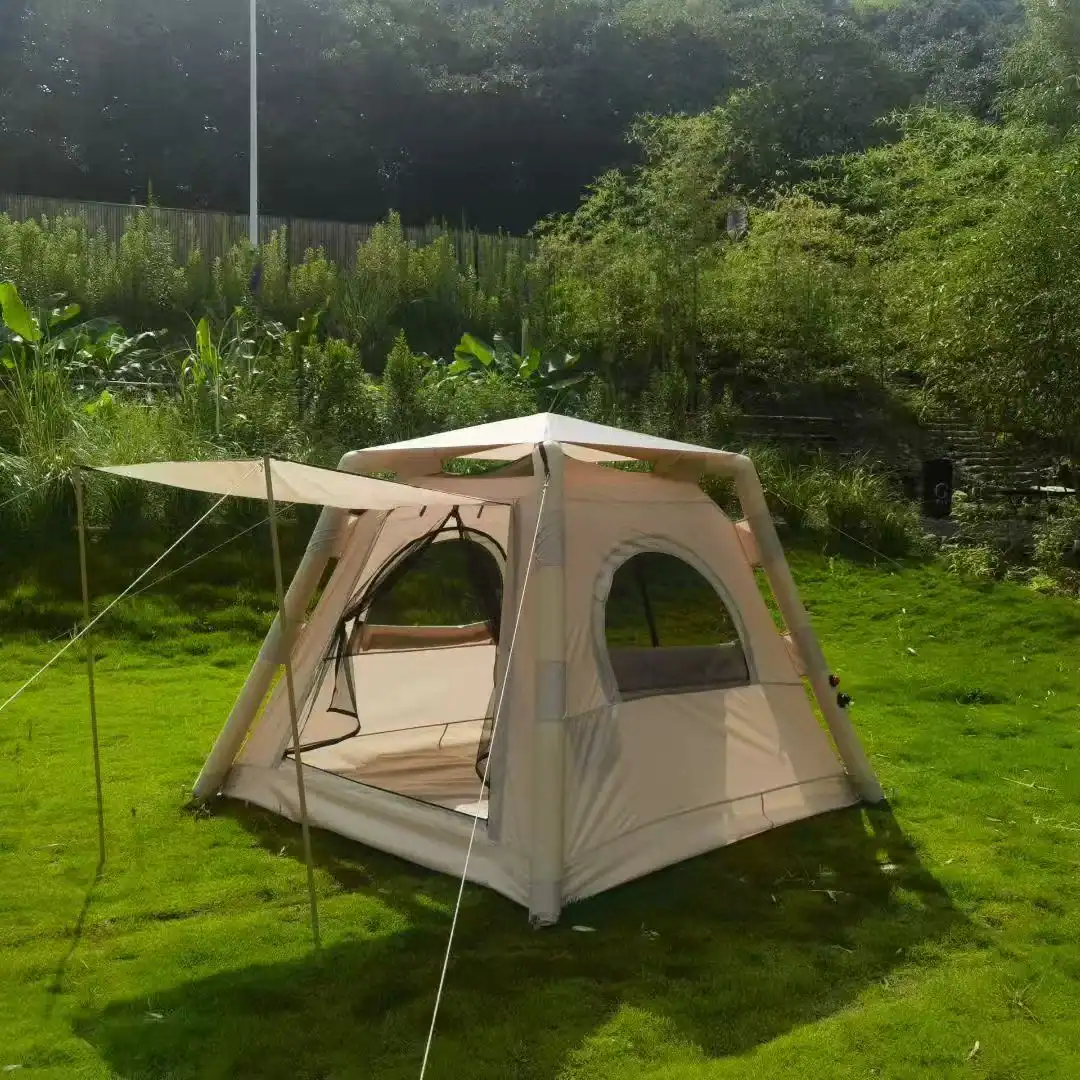
Valve Replacement: Cutting, HF Welding, and When to Return to Factory
A cracked flange weld cannot be fixed in the field.
Hairline cracks radiating from the valve flange, fabric delamination around the collar, or a collar that spins freely inside the beam all point to the same conclusion: the air-beam structure is compromised. An O-ring swap or a new valve core will not stop these leaks because the failure sits in the weld itself, not the valve mechanism.
Field Repair vs Valve Core vs Factory HF Weld
-
-
- Clean and replace O-ring: Resolves about 80% of field leaks when the flange weld is sound. A correctly sized O-ring can last years.
- Replace valve core: Works for a damaged core or stripped threads, but only if the collar weld still holds pressure. Verify with a soap test before relying on it.
- Factory HF weld: Required for a cracked flange, delamination, or a spinning collar. This means cutting out the old flange, welding a new one, and pressure-testing the beam.
-
When the flange weld fails, the only lasting fix is to cut the old valve assembly out, weld a new flange into the beam film, and run a pressure-decay test. A visual inspection will not catch the micro-cracks that caused the leak — they open under pressure and close when deflated. This is why a factory QC soap-test at 1.5x rated working pressure is not a luxury; it is the acceptance threshold.
RFQ Specs to Prevent Recurrence
-
- Weld width: Specify a minimum 20 mm flange weld width. Narrower welds crack when the tent is folded into its carry bag.
- Fold test: Require a 100-cycle fold test with zero pressure drop. This simulates storage, shipping, and repeated setup.
- QC evidence: Demand a pressure-decay test report per batch, not a visual check. The report proves every valve held pressure before packing.
Kelyland Outdoors coordinates production across 17 core strategic factories and over 200 manufacturing partners, most holding ISO 9001:2015 certification. Write the 20 mm weld width, 100-cycle fold test, and 1.5x pressure soap-test into the OEM/ODM agreement before sample approval, and valve leaks stop being an after-sales issue.
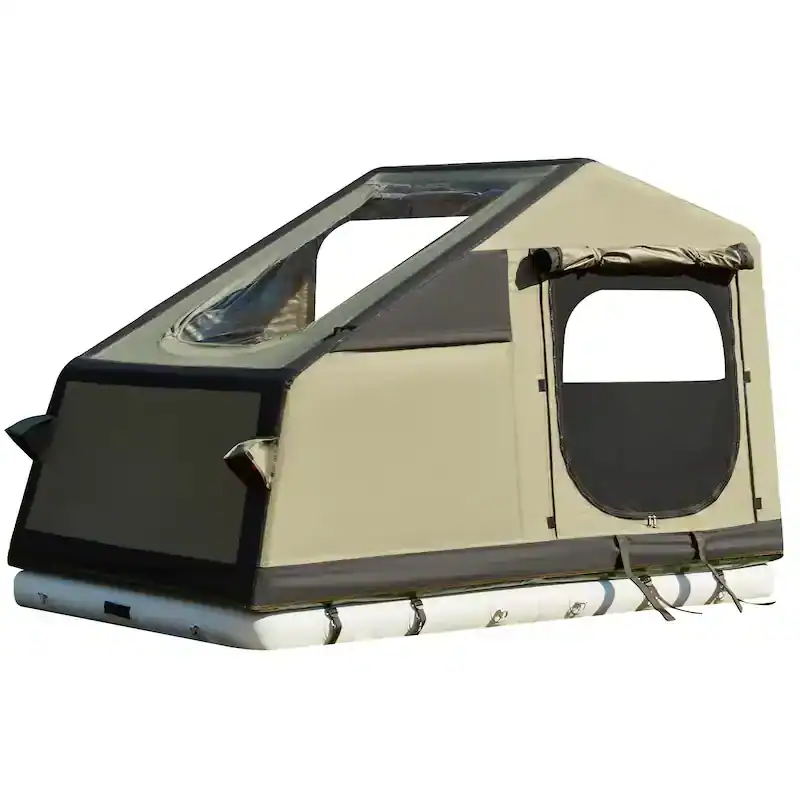
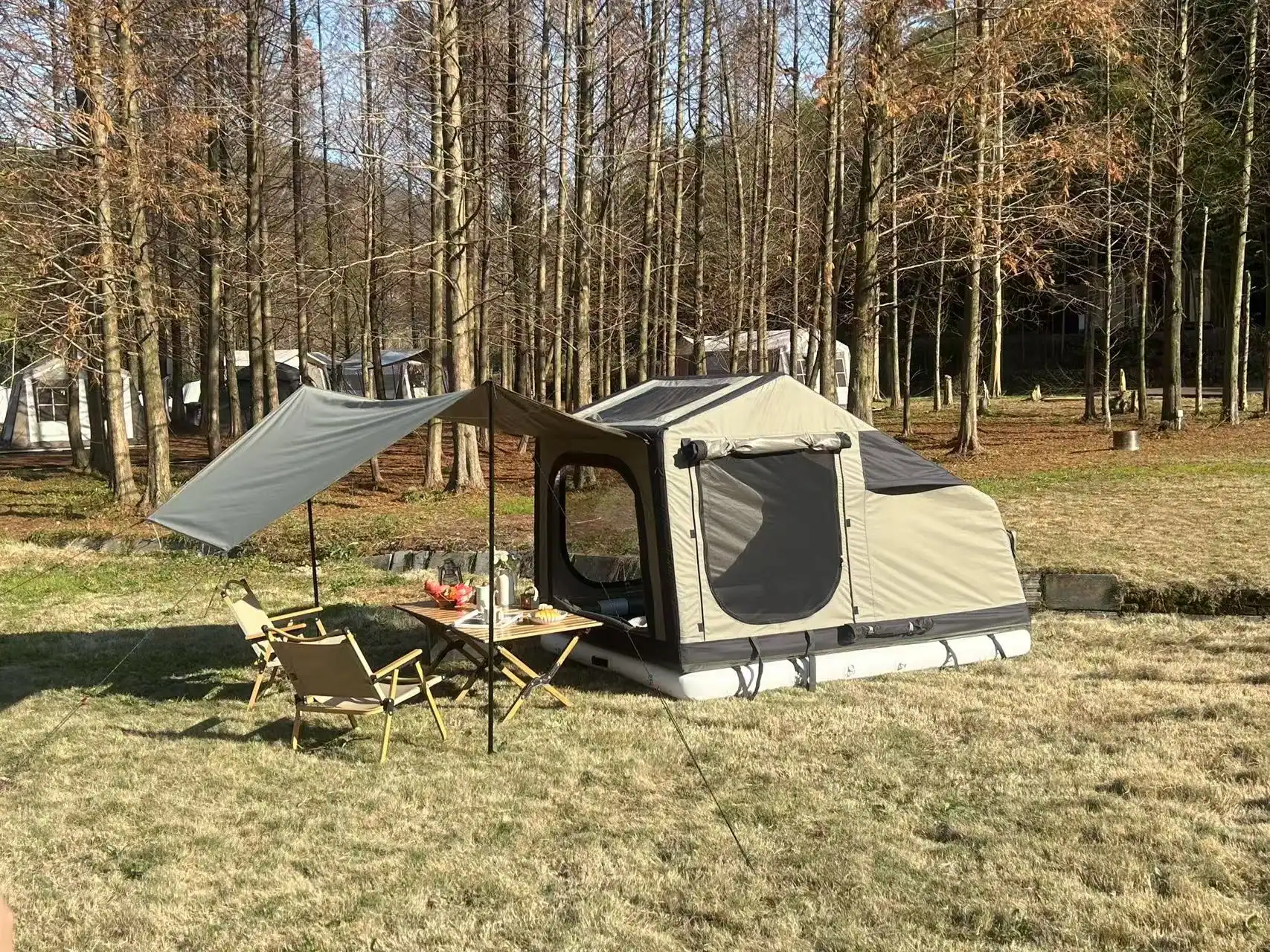
Sourcing Inflatable Tents with Leak-Proof Valves: RFQ Specs
Visual inspection misses micro-cracks.
An inflatable tent valve RFQ isn’t about the valve core. It’s about the flange weld. A 20 mm minimum weld width and a 100-cycle fold test with zero pressure drop are the thresholds that separate valves that survive shipping from valves that fail in the field.
RFQ Checklist: 5 Valve Specs to Write Into the Contract
-
- Flange material: Must equal the beam film. Mismatched TPU compounds expand at different rates under heat, and the weld shears in transit.
- Weld width: Minimum 20 mm at the flange-to-beam junction. Narrower welds tear out under repeated inflation cycles.
- Fold test: 100-cycle fold test with zero pressure drop. Simulates stuffing into a carry bag and repeated setup — where micro-cracks start.
- Spare valve kit: Shipped with every order. Field replacement without cutting the beam requires a matched core, O-ring, and collar.
- Test report: Pressure-decay test report for every batch. A sample report proves nothing; batch-level records prove the process held.
That last point is where suppliers get vague. Visual inspection catches gross defects, but micro-cracks only open under air pressure. A pressure-decay test report documents that every beam held pressure for the specified duration, not just the one the salesperson picked out. This is the difference between a factory that tests and a factory that claims.
Factory QC Evidence to Demand
Ask for the pressure-decay test report before you approve the batch. The factory should also soap-test every valve at 1.5x rated working pressure before packing. If a supplier says ‘we do 100% visual inspection,’ that is not the same standard. It misses the hairline cracks that appear after tents are folded and stuffed for shipping.
Supplier Selection: Verify HF Welding First
HF welding capability is the first filter. A factory that only sews or glues flanges cannot deliver the 20 mm weld width you’re specifying — and it won’t admit that in the first call. Confirm HF welding capability, TPU/PVC material compatibility, and the valve supply chain before discussing price. Then negotiate minimum order quantities and lead time.
Kelyland’s network includes a camping tent factory in Ningbo producing 800,000 units a year with CE, BSCI, and ISO 9001 certification, plus an air mattress facility in Xiangyang running 2.5 million units annually. Custom inflatable tents start at 50-100 pieces with a standard 30-45 day production window. Lock the valve design early; that timeline assumes no rework.
Заключение
Skipping the RFQ specs doesn’t reduce cost — it defers it. A cracked flange weld missed at the 1.5x pressure test surfaces later as a field leak, and the repair bill runs far beyond the $20 O-ring fix. The 30-45 day production window does not pause while you chase missing test reports; every week of indecision pushes delivery closer to the retail season.
-
- An O-ring swap fixes 80% of field valve leaks, but only when the flange weld is sound.
- Demand a pressure-decay test report and 1.5x soap-test evidence before approving a batch.
- Write a 20 mm minimum weld width and 100-cycle fold test into the RFQ.
- Field repairs won’t stop a cracked flange weld; that failure needs factory HF welding.
Review your current valve spec sheet against these benchmarks before you lock the next production order. If a supplier cannot provide a pressure-decay test report or a spare valve kit at the quoted minimum order, that risk transfers straight to your bottom line. Ask Kelyland for an inflatable tent sample with a 1.5x pressure-tested valve flange and a custom quotation that includes spare valve kits.
Часто задаваемые вопросы
Почему моя надувная палатка теряет воздух в клапане?
A worn O-ring, debris, or a cracked flange weld is the usual fault. Start by inspecting the O-ring and cleaning the valve seat before considering a factory repair. If the flange is cracked, stop field repairs and contact the factory.
Can I replace an inflatable tent valve without cutting the beam?
Only the core and seal are serviceable in the field; a bad flange needs factory welding. If the flange is intact, you can swap the core or O-ring without cutting the beam. Cracked flanges require factory HF welding, not a DIY cut.
What type of valve do inflatable tents use?
Most use Halkey-Roberts or bayonet-style one-way valves with a threaded pump collar. Screw-in valves are less common but appear on some premium TPU beams. Check the collar type before ordering spare parts.
How long does a valve repair last?
An O-ring replacement can last years; a glue-in collar repair should be pressure-tested before trusting it. A proper O-ring swap restores the valve to near-new condition. Pressure-test after any repair before relying on it in the field.
How do I locate a slow valve leak on an inflatable tent?
Inflate to 80% pressure and brush soapy water around the valve; bubbles identify the exact leak point. For a very slow leak, add a drop of soap solution directly on the. Mark the leak point before disassembly so you don’t miss it.

 English
  Español
  Deutsch
  Français
  Português do Brasil
  Русский
  العربية
  한국어
한국어  日本語
日本語