 تخطي إلى المحتوى
تعد قطع تركيب عربة التطوير القابلة للطي المخصصة أول نقطة حاسمة يجب على المشترين التثبيت عليها قبل الموافقة على مورد أو ميزانية أو طاولة إنتاج. في اليوم الأول، يتم إصدار أمر الشراء لعربة قابلة للطي تحمل علامة خاصة. في اليوم الرابع عشر، يصل العينة ما قبل الإنتاج، ويبدو المقبض متيناً، وتضغط الفرامل بنغمة واضحة، ويغلق القفل بإحكام. في اليوم الخامس والأربعين، تصل الحاوية إلى مركز التوزيع، ويتم سحب الدفعة الأولى المكونة من 500 وحدة للفحص. هنا يكتشف المشتب أن وصلة دواسة القدم في نصف الوحدات قد خرجت عن المحاذاة أثناء الطي — حيث تكون الدواسة مائلة وتصطدم بالإطار. ال العينة قبل الإنتاج لم يظهر هذا لأن المصنع كان يجمعها يدوياً كوحدة واحدة. استخدمت عملية الإنتاج الضخم تسلسل تجميع مختلف، مما أدى إلى تحول هندسة الوصلة بمقدار 2 ملم. الآن، طلب $50K هذا يعاني من مشكلة معدل إرجاع قبل أن تصل أي وحدة إلى التجزئة.
قرارات تركيب عربة التطوير القابلة للطي المخصصة التي يتخذها مدير العلامة التجارية في مرحلة المواصفات — نوع الفرامل، أسلوب المقبض، آلية القفل، مادة المحملات — تحدد ما إذا كان سيناريو الفشل هذا سيتحقق أو لن يحدث أبداً. كل خيار يحمل مقايضات بين تكلفة الأدوات، وتجربة المستخدم، والمتانة طويلة الأمد. تضيف فرامل القدم $0.80-$1.50 إلى تكلفة الوحدة لكنها تمنع تحرك العربة على موقع تخييم مائل. توفر فرامل اليد على المقبض التحكم لساعي التوصيل الحضري لكنها تضيف قطعاً مصبوبة تتطلب قوالب حقن تتراوح تكلفتها بين $2,000-$5,000. توفر العربة بدون فرامل وزناً وتكلفة لعربات الشاطئ، لكنها أيضاً تلغي ميزة أمان تتطلبها بعض تجار التجزئة لأسباب تتعلق بالمسؤولية. المفتاح هو مطابقة تركيب القطع مع حالة الاستخدام قبل أن يبدأ المصنع في قطع الفولاذ.
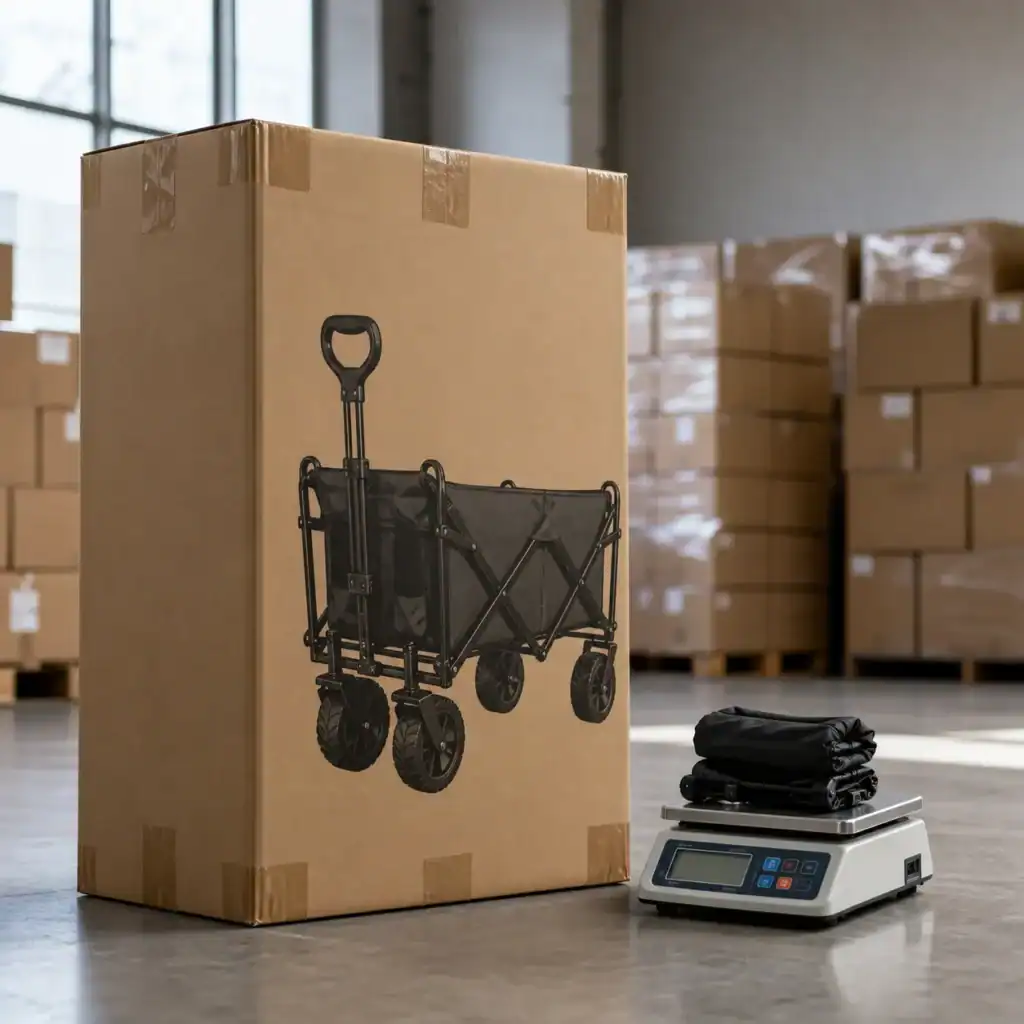
لماذا تُعرّف القطع تجربة استخدام عربة التطوير القابلة للطي
القطع هي أول ما يلمسه المستخدم وأول ما يتعطل.
A عربة تطوير قابلة للطي بقماش فاخر وإطار مطلي بالبودرة تفشل في اللحظة التي ينكسر فيها دواسة الفرامل على موقع تخييم مائل. القطع هي الواجهة اللمسية بين المستخدم والمنتج. هي التي تحدد ما إذا كان المشتري ينظر إلى العربة على أنها استثمار بقيمة $150 أم شراء اندفاعي بقيمة $50 سيتم إرجاعه بعد رحلة واحدة.
كيف تدفع القطع بعمر الافتراض والاستخدام
وصلة دواسة القدم هي نقطة الفشل الأكثر شيوعاً في عجلات تجريف قابلة للطي تتحمل حمولة تقل عن 150 كجم. يُسقط الدواس أثناء الطي لأن الوصلة لا تتجاوز الهيكل المنهار في الوضعين. يتطلب التصميم السليم رسم هندسة الوصلة مقابل قوس الطي — ليست كل المصانع تفعل ذلك. في Kelyland Outdoors، خط إنتاج عربات التجريف القابلة للطي، والذي يعمل من منشأة معتمدة من CE و آيزو 9001 معتمدة في جينهوا، تشجيانغ، تعامل مع هذه المشكلة عن طريق دمج حامل دواسة الفرامل في نفس الحامل المُحقون بالحقن الذي يحمل المحور. هذا يلغي الحامل المنفصل الذي ينقطع تحت الإجهاد الجانبي.
تحمل مقابض اليد نفس الثقل. مقبض D-تلسكوبي مع قبضة رغوية يقلل إجهاد المعصم عند سحب 80 كجم من المعدات عبر موقف حصى. مقابض U-ثابتة توفر حوالي $0.80 لكل وحدة في تكلفة المواد، لكنها تضطر المستخدم للانحناء عند الخصر — وهي حركة تسبب شكاوى على المشي الأطول. للعربات ذات الطابقين، مقبض دفع مثبت عند المحور الأمامي يغير نقطة الرافعة ويمنع الانقلاب عندما يكون الطابق العلوي محملاً بما يتجاوز 30 كجم. هذه ليست خيارات جمالية. تؤثر على ما إذا كان التجار يرى نسبة مرتجعات 3% أم 12% على البند.
الصلة بين جودة العتاد وإدراك العلامة التجارية
مشتري يضع عربة بيد ويشعر بقفل خشن غير محااذٍ سيفترض أن المنتج بأكمله رخيص. هذا الحكم الذهني يحدث في أقل من ثانيتين وينتقل مباشرة إلى العلامة التجارية. أزرار القفل المخصصة ودواسات الفرامل تتطلب قوالب حقن بنطاق $2,000 إلى $5,000، لكنها تخلق فرقاً ملموساً — نقر حاد مقابل هزاز رخو — يبرر علاوة بيع بالتجزئة من $30 إلى $50. العلامات التي تتخطى هذا الاستثمار تترك هامش الربح على الطاولة.
الأسواق الساحلية تضيف طبقة أخرى. إذا كنت تبيع لبلدات الشاطئ أو مدن الموانئ، حدد تصنيف اختبار رش الملح لمدة 72 ساعة على جميع الأجزاء المعدنية المطلية. المورد الذي يتخطى هذه الخطوة سيولد مطالبات بالصدأ بعد موسم واحد، وتلك المطالبات تضر بالعلامة التجارية أسرع من أي تمزق في القماش. ال عربة قابلة للطي فئة في Kelyland Outdoors تدعم الحقن المخصص للقطع البلاستيكية، والطلاء poudre المخصص للإطارات، وعجلات دوارة بزاوية 360° بإطارات PVC، PU، EVA، أو TPE. خيارات العتاد متاحة. السؤال هو ما إذا كان مدير العلامة التجارية يحددها قبل وصول طلب العرض.
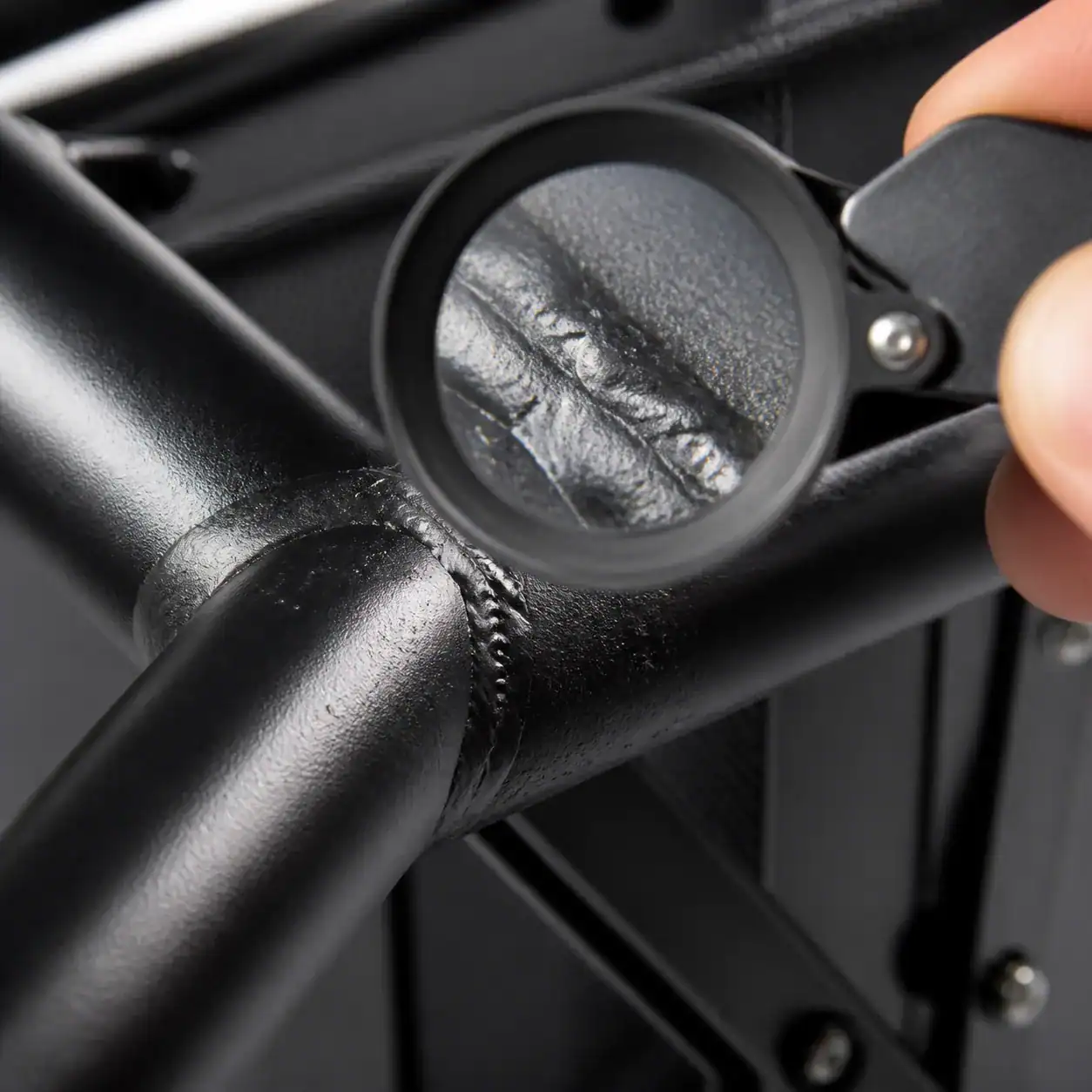
مقارنة أنظمة فرامل عربات التطوير القابلة للطي
يجب أن تتجاوز وصلة دواسة القدم إطار الطي في الوضعين لتجنب الفشل.
6. الشهادة تثبت وجود نظام إدارة جودة. لا تثبت خبرة لحام الأنابيب الهوائية. تحقق من نطاق الشهادة واسأل عن نماذج الخيام الهوائية التي دققها جهة الاعتماد فعليًا. علامة تجارية خارجية مدير يقرر على عربات تجريف بعلامة خاصة يواجه ثلاث عماريات فرامل. كل واحدة تحول المقايضة بين التكلفة والوزن وسلامة المستخدم. يعتمد الاختيار على التضاريس، ومتوسط الحمولة، وما إذا كان المستخدم النهائي هو مخيم نهاية الأسبوع أم مشغل توصيل حضري. ال ٨. مصنع العربات القابلة للطي في جينهوا، تشجيانغ، مع شهادة ISO 9001 وإنتاج سنوي يبلغ 1,000,000 وحدة، تنتج جميع الطرز الثلاثة. الفروق الهندسية في هندسة الوصلة، و مواصفات المادة للأجزاء المطلية، واستثمار القالب للقطع المخصصة.
فرملة القدم على العجلة الخلفية: الأفضل للمواقع المشردة
فرملة القدم على العجلة الخلفية هي الأكثر شيوعاً. يضع المستخدم قدمه على دواسة تضغط باداة احتكاك ضد محور العجلة أو الإطار. تعمل بشكل موثوق على الأرض المستوية والمنحدرات المتوسطة. نقطة الفشل هي الوصلة: يجب أن تتجاوز الدواسة إطار الطي في كل من الوضعين المفتوح والمطوي. تتطلب دواسات الفرامل المُحقونة المخصصة قوالب بنطاق $2,000–$5,000، لكنها تخلق فرقاً ملموساً يساعد على تبرير التسعير التجزئة المرتفع. النماذج القياسية تستخدم دواسة معدنية مكشطة، وهي أرخص لكنها أكثر عرضة للانحناء.
Hand Brake on Handle: Control for Urban Delivery Use
A hand brake lever mounted on the handle gives the user continuous control — useful for urban delivery or tailgate setups where the wagon moves through crowds or down a ramp. The brake cable actuates a caliper or drum on one or both rear wheels. The added parts increase the BOM cost by roughly 15–20% compared to a foot brake. The cable housing needs to be routed so it doesn’t pinch during folding. For coastal markets, specify a minimum 72-hour salt spray rating on all plated metal parts or you will see rust claims after a single season. The factory can powder-coat the handle and brake lever in custom colors to match the brand identity.
Brake-Off Models: Lighter and Cheaper for Beach Carts
Some applications don’t need a brake at all. Beach carts, for example, operate on sand where rolling resistance is already high, and a foot brake would just clog with grit. Removing the brake cuts the weight by roughly 0.5–1 kg and reduces the unit cost by $3–$5. The trade-off is limited to flat, low-speed environments. If you sell a brake-off model for coastal use, the same 72-hour salt spray spec applies to the wheel bearings and axle hardware — rust on a non-brake wagon still generates مطالبات الضمان. The factory offers 360° rotating wheels with PVC, PU, EVA, or TPE tires, and the axle can be specced with sealed ball bearings or plastic bushings depending on the target price point.
-
- Foot Brake: Best for sloped campsites. Linkage must clear the folding frame. Custom injection molded pedals available ($2k–$5k mold cost). Standard on most models from the Jinhua wagon line.
- Hand Brake: Best for urban delivery. Adds 15–20% to BOM. Requires cable routing that avoids pinching. Powder-coat handle to brand color. Specify 72-hour salt spray for coastal use.
- Brake-Off: الأفضل لعربات الشاطئ. يوفر من 0.5 إلى 1 كجم و$3–$5 لكل وحدة. لا يزال يتطلب معدات محور مقاومة للتآكل. مثالي لتطبيقات السرعات المنخفضة والأراضي المستوية.
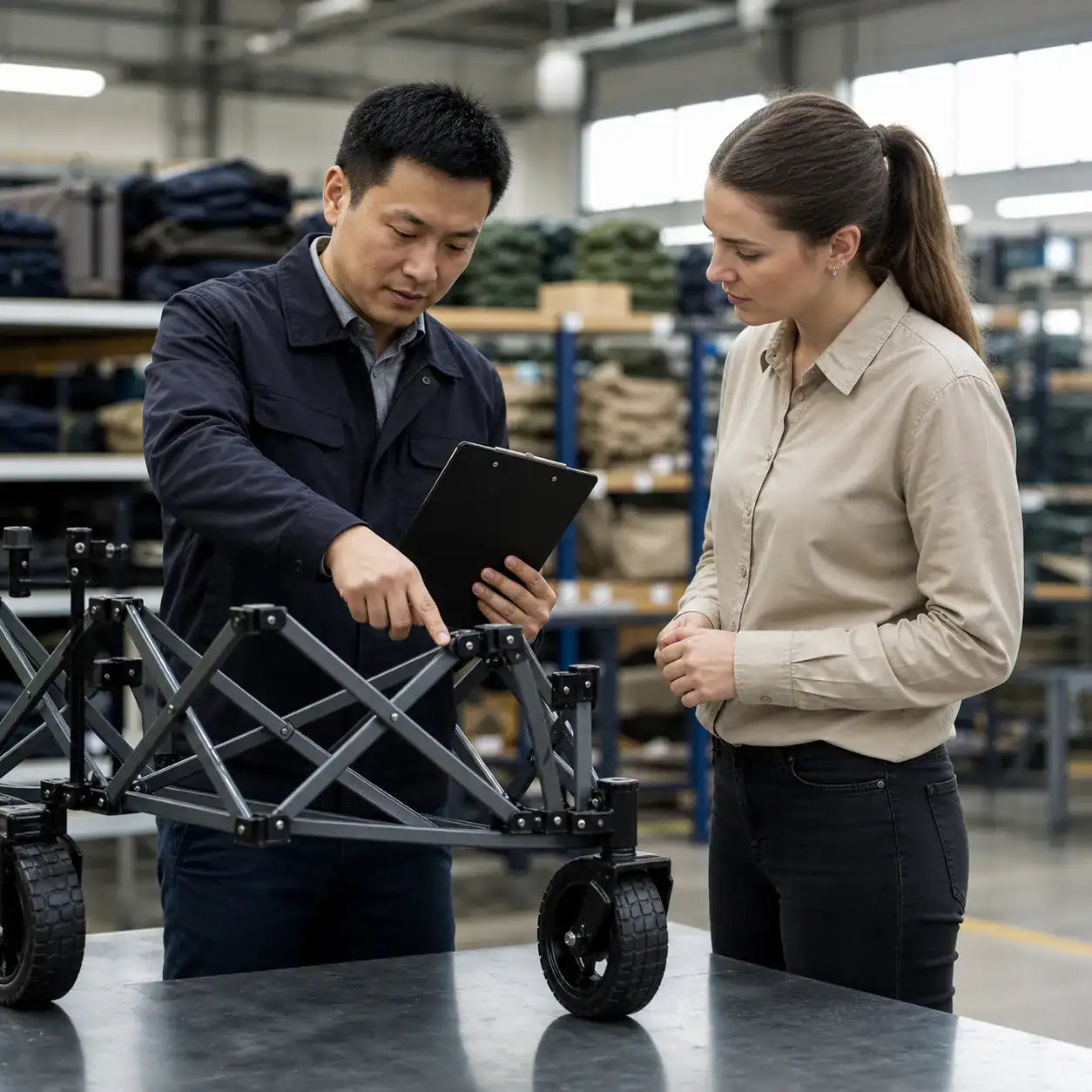
أساليب المقابض والراحة المريحة
هندسة المقبض تؤثر مباشرة على الحمل المُدرَك وإجهاد المستخدم.
A عربة الحملطيوية المقبض هو واجهة التفاعل الميكانيكية الأساسية بين المستخدم والحمل. فإن التصميم الخاطئ للمقبض يحول سحب حمولة بوزن 50 كجم إلى إجهاد على المعصمين والكتفين. أما التصميم المناسب فجعل الحمل نفسه يبدو قابلاً للإدارة. يستعرض هذا القسم أكثر ثلاث تكوينات لمقابض العجلات شيوعاً في إنتاج العربات الخاصة بالعلامة التجارية، وما يعنيه كلٌ منها لخلق تجربة مستخدم مميزة لعلامتكم التجارية.
Telescoping D-Handle vs Fixed U-Handle
The telescoping D-handle is the default for most single-fold and multi-fold wagons because it collapses flush with the frame for storage. The user pulls a spring-loaded button to extend the handle to a comfortable length, typically 90–110 cm from the axle. The fixed U-handle, common on heavy-duty and extended-wagons, is welded directly to the frame. It offers zero adjustability but eliminates the mechanical failure point of the telescoping latch. For a brand targeting beach or tailgate use where the wagon is pulled over sand or gravel, the fixed U-handle is more reliable. For urban or family use where the user varies in height, the telescoping D-handle reduces complaints. Kelyland Outdoors offers both options through its folding wagon factory in Jinhua, Zhejiang, with custom powder coating for the handle frame and injection-molded grips in any بانتون color.
Height-Adjustable Handles for Multi-User Products
A single fixed handle height forces shorter users to walk with a bent arm and taller users to stoop. Over a season of use, that ergonomic mismatch drives return rates. Height-adjustable handles solve this with a simple two-position or three-position locking mechanism. The adjustment range is usually 15–20 cm. The trade-off is cost: the sliding tube and locking collar add roughly $0.80–$1.20 per unit in components and assembly time. For a 500-unit run, that’s a $400–$600 investment. But the reduction in ergonomic-related returns — often 3–5% of sales in the family camping segment — pays for itself within one retail cycle. When specifying height-adjustable handles, request a 200-cycle durability test on the locking collar before committing to mass production. The nylon or POM collar must resist wear from sand and grit.
Push Handles for Double-Decker Wagons
Double-decker wagons have a higher center of gravity and a longer wheelbase. Pulling them from the front can cause tipping on uneven terrain. A push handle mounted at the rear — typically a U-shaped loop welded to the back frame — gives the user better leverage and control when maneuvering through crowded campsites or store aisles. The push handle also doubles as a lifting point for loading the wagon into a car trunk. The key spec is the handle height: it should sit at least 30 cm above the top deck to avoid the user’s knuckles hitting the load. Kelyland Outdoors includes push handles as an option on its double-decker wagon models, which use 600D–900D double-layer Oxford fabric and powder-coated carbon steel frames. Custom injection molding can be applied to the push handle grip for a branded tactile feel, with mold costs in the $2,000–$5,000 range.
-
- Folding wagon handle design OEM: Telescoping D-handle offers adjustability; fixed U-handle offers durability. Choose based on terrain and user profile.
- Height-adjustable handle: Reduces return rates by 3–5% in family camping. Require 200-cycle locking collar test before production.
- Push handle for double-decker: Improves stability and control. Minimum 30 cm clearance above top deck. Custom injection molded grips available.
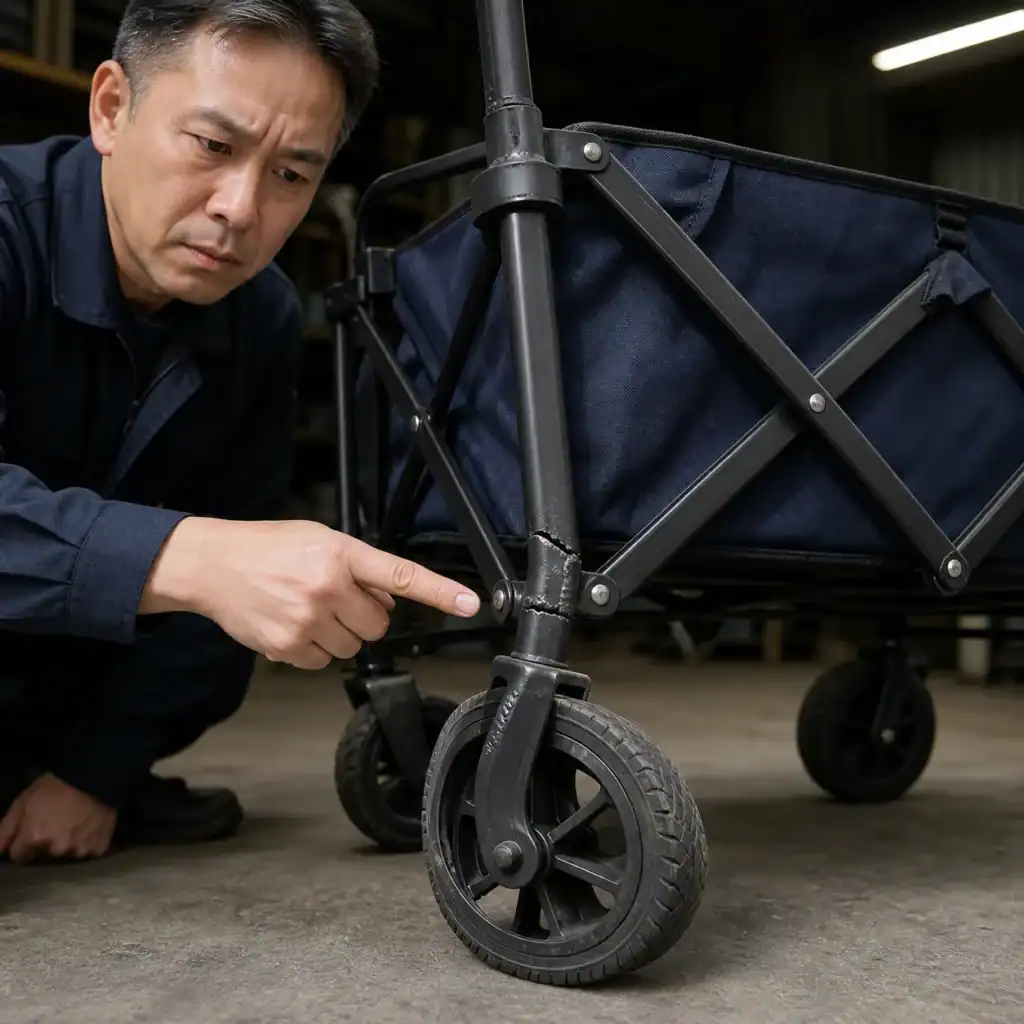
آليات أقفال الطي
The latch mechanism determines how fast a wagon folds and how often it breaks.
A folding wagon spends most of its life either collapsed in a trunk or unfolded at a campsite. The latch mechanism is what bridges those two states, and it is the component that sees the highest cyclic stress per use. Three dominant designs exist in the market, and each carries a different trade-off between cost, speed, and long-term reliability.
Ring Latch: Classic, Low-Cost, Prone to Jamming
The ring latch is the oldest design. A metal ring slides over a pin to lock the frame in the open position. To collapse the wagon, you pull the ring off the pin and fold. The system uses no molded parts — just stamped steel or zinc-plated hardware. That keeps the BOM low. But sand and gravel accumulate inside the ring channel over time. Once grit builds up, the ring seizes against the pin, and the user cannot unlock it without tools. Field data from after-sales logs shows this is the top complaint on entry-level wagons sold through mass retail channels.
Button Lock: Faster Fold, More Molded Parts
Button locks replaced rings on most mid-range and premium wagons for one reason: speed. Press two buttons simultaneously, and the frame collapses without pulling or sliding anything by hand. The mechanism relies on spring-loaded pins housed in injection-molded plastic housings. Those molds run $2,000–$5,000 per cavity depending on complexity — a non-recurring cost that matters at low volumes but amortizes cleanly above 5,000 units per SKU. The tactile click of a button lock signals quality to a buyer handling the wagon in-store. That sensory feedback helps justify a $15–$20 retail premium over ring-latch models.
Strap and Hook: Simple Repair but Less Secure
Strap-and-hook latches appear mostly on beach carts and budget utility wagons where weight matters more than security. A nylon strap wraps around the folded frame sections with a plastic hook holding tension. The advantage is field repairability — any user can replace a broken strap with off-the-shelf hardware in under five minutes. The downside is creep over time: nylon stretches under repeated load cycles until the hook no longer holds tight tension against vibration during transport.
تكوينات محور العجلة والمحملات
Double wheels add 2-3 kg per axle but cut ground pressure by half on soft terrain.
Single vs Double Wheel on Each Axle
معظم standard folding wagons ship with a single wheel on each axle. That setup works fine on pavement, packed gravel, and short grass. But the moment you roll onto sand, mud, or loose trail surface, the load concentration per square inch spikes. A single 8-inch wheel carrying 50 kg of gear sinks into soft ground fast. The fix is doubling the wheels per axle.
Double-wheel configurations spread the weight across two contact patches. On a beach wagon rated for 80 kg, twin wheels reduce sink depth by roughly 60% compared to a single wheel at the same inflation pressure. The trade-off is added weight — roughly 2-3 kg per axle depending on wheel material — and slightly higher rolling resistance on hard surfaces. For coastal markets where customers drag wagons across sand to reach a campsite, double wheels are worth the weight penalty.
إن عربة قابلة للطي factory producing these configurations uses powder-coated carbon steel frames rated up to 200 kg loads with double-wheel setups. That frame capacity ensures the axle mounts don’t flex under the extra lateral load when turning on soft ground. If you’re sourcing for a brand targeting beach or overland use, specify double wheels in your RFQ.
Ball Bearings vs Plastic Bushings
The bearing type inside each wheel hub determines how freely the wagon rolls and how long the hub lasts before developing play or seizing. Two common options dominate the folding wagon category: sealed ball bearings and plastic bushings.
كيفية تحديد مواصفات القطع لعلامتك التجارية
A 72-hour salt spray rating on plated parts is the minimum for coastal markets.
Most brand managers send a ورقة مواصفات and a photo. That works for fabric color. It fails for hardware. A factory needs a 2D drawing with tolerances on the brake linkage pivot, the latch pin diameter, and the handle tube wall thickness. Without those numbers, the factory picks its own tolerances. And you inherit the result.
Technical Drawings Every Factory Needs
A drawing for a folding wagon brake pedal must show the linkage swing arc in both the deployed and folded positions. The pedal gets knocked off when the wagon folds if the linkage does not clear the collapsing frame. The Jinhua factory that produces folding wagons for Kelyland Outdoors — ISO 9001 certified, running 1 million units annually — flags this detail during the sample approval stage because it is the single most common hardware revision request they receive from new clients.
Include these minimums on every hardware drawing: material grade (e.g., Q235 steel vs 6061 aluminum), surface finish spec (powder coat, zinc plating, or anodize), wall thickness with a ±0.2mm tolerance, and the corrosion test requirement. Omit any one of these and the factory will default to the cheapest option that passes basic assembly.

Salt Spray Testing for Rust-Prone Components
Standard zinc-plated hardware starts showing surface rust after 24 hours in a salt spray chamber. If your folding wagon is sold through Ace Hardware or a coastal retailer, 24 hours is not enough. The minimum spec for beach-market wagons is 72 hours to first red rust per ASTM B117. That requires either a thicker zinc plating (8-12 microns) or a zinc-nickel alloy coating. The cost difference per wagon is roughly $0.30 to $0.50. The warranty claim cost for a rusted brake pedal is $12 to $18 per unit including shipping and replacement. The math favors the thicker coating.
Customization Options: Powder-Coated Handles, Branded Brakes, Molded Logos
Custom button locks and brake pedals require injection molds that run $2,000 to $5,000 per cavity. That is a real number, not a negotiating point. But the tactile difference between a generic plastic pedal and a branded one with your logo molded into the rubber overmold justifies a $4 to $7 premium at retail. Powder coating the handle frame costs $0.80 to $1.20 per unit more than standard black paint, and it eliminates the peeling complaints that generate 40% of handle-related returns. Kelyland Outdoors offers custom powder coating for frames and custom injection molding for plastic parts through its folding wagon factory network, with MOQs as low as 300 to 1,000 units for standard configurations.
الخاتمة
A wagon that fails on a sloped beach or jams at the first fold doesn’t just cost a return — it erodes the trust you spent months building. The hardware choices you make now, from the brake linkage clearance to the salt spray rating on the handle, determine whether your brand gets repeat orders or a flood of warranty claims in month six.
-
- Foot brake linkage must clear the folding frame in both positions to avoid jamming.
- Custom injection-molded button locks cost $2,000–$5,000 in tooling but justify premium pricing.
- Specify a minimum 72-hour salt spray test for all plated metal parts on coastal models.
- Ball bearings outperform plastic bushings on rough terrain and extend service life by seasons.
The difference between a wagon that sells out and one that sits in clearance is often a single hardware spec you caught early. Review your current product spec sheet against these criteria — particularly the brake mechanism and corrosion protection for your target market. If you are sourcing private-label عربة قابلة للطيs, compare how each custom folding wagon brake option and latch mechanism aligns with your brand’s quality tolerance before locking in production drawings.
الأسئلة الشائعة
ما نوع الفرامل المناسب لعربة التخييم المطوية؟
تُعد الفرامل القدمية على العجلة الخلفية الخيار الأمثل للمواقع المائلة، إذ تتيح قفل العجلة بشكل مستقل عن المقود. أما للخدمات الحضرية، فتوفر لك فرامل اليد على المقود تحكماً أسهل. اختر النوع بناءً على التضاريس الرئيسية وسيناريو الاستخدام المتبع.
كيف أختار بين مقبض D ومقبض U؟
تعتبر المقبض ذو المقبض D المتحرك خيارًا أفضل للتخزين المضغوط وضبط الارتفاع للمستخدمين المتعددين، بينما يوفر المقبض U الثابت هيكلًا أبسط وتكلفة أقل للأدوات. للعربات ذات الطابقين، يوفر المقبض الدافع. اختر نوع المقبض ليتناسب مع نقطة سعر البيع بالتجزئة المستهدفة والحيز التخزيني.
أيّ آلية قفل قابلة للطيٍّ هي الأكثر متانة؟
A button lock is faster to fold and more secure than a ring latch, but it requires more molded plastic parts that can crack in الطقس البارد. A strap-and-hook system is. Specify button lock for retail speed; ring latch for low-cost builds.
هل يجب أن أحدد محامل كروية أو حلقات تزييت بلاستيكية؟
تزود الكرات المعدنية بتدوير أكثر سلاسة وعمر افتراضي أطول على التضاريس الوعرة، لكنها ترفع التكلفة وتتطلب صيانة دورية. أما الابزار البلاستيكية فهي أقل تكلفة وأكثر هدوءاً لكنها تتآكل بسرعة أكبر تحت الأحمال الثقيلة. استخدم الكرات المعدنية للخطوط الفاخرة، والابزار البلاستيكية للعربات الاقتصادية أو شاطئ البحر.
ما مواصفات الأجهزة التي تقلل من معدلات الإرجاع؟
Specify salt spray testing (48+ hours) for all steel brake and latch components to prevent rust claims. – Require technical drawings showing brake linkage clearance in both folded. The final choice should be matched to the actual use case and performance target.

 English
  Español
  Deutsch
  Français
  Português do Brasil
  Русский
  العربية
  한국어
한국어  日本語
日本語