 تخطي إلى المحتوى
5 Signs of Low-Quality Folding Wagon Frames (2026 Inspection Guide)
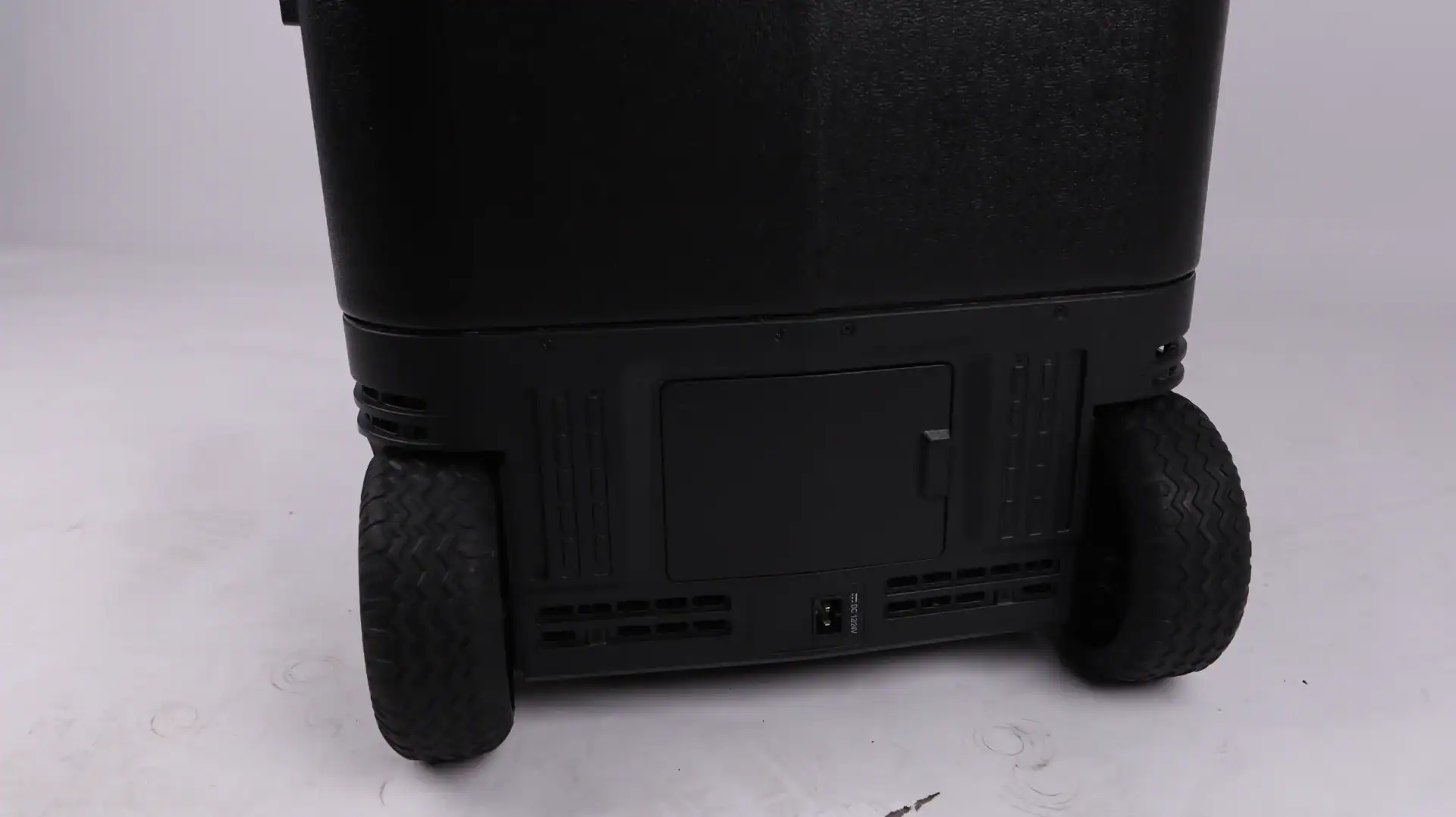
Why Frame Quality Varies More Than You Think
Supplier samples earn trust during initial sourcing. Production runs test that trust. Folding wagon frame quality varies between sample approval and bulk delivery. Sample-grade frames receive careful fixture alignment, skilled welders, and extra inspection time. Production-grade frames follow a faster schedule, and quality drops when factories cut inspection steps or substitute materials.
ISO 9001:2015 certification confirms a factory documents its procedures. The standard does not define acceptable weld porosity, minimum tube wall thickness, or corrosion test requirements for folding wagon frames. Buyers who treat certification as a quality guarantee accept the factory’s internal interpretation of those criteria.
Kelyland Outdoors manages the folding wagon category through a network of 17 core strategic factories and over 200 manufacturing partners, most ISO 9001:2015 certified. The dedicated folding wagon factory in Jinhua, Zhejiang, produces 1,000,000 units annually with CE and ISO 9001 certifications. Minimum order quantities start at 50 to 100 pieces for select items, and standard production lead time runs 30 to 45 days.
Five inspection points separate durable frames from return-prone inventory:
- Weld quality and porosity at tube junctions
- Tube wall thickness consistency against the spec sheet
- Powder coat adhesion and corrosion protection layers
- Hinge slop at X-frame pivot points
- Tube ovality at crimp and bend zones
- Uniform bead width along the full joint, free of pitting and crater cracks
- No dark discoloration or burn-through around the weld toe
Each inspection point has a visual cue, a direct test method, and a rejection threshold. Apply these checks during factory visits or sample teardowns before committing to bulk production. Category managers who skip these steps discover defects after containers arrive at distribution centers.
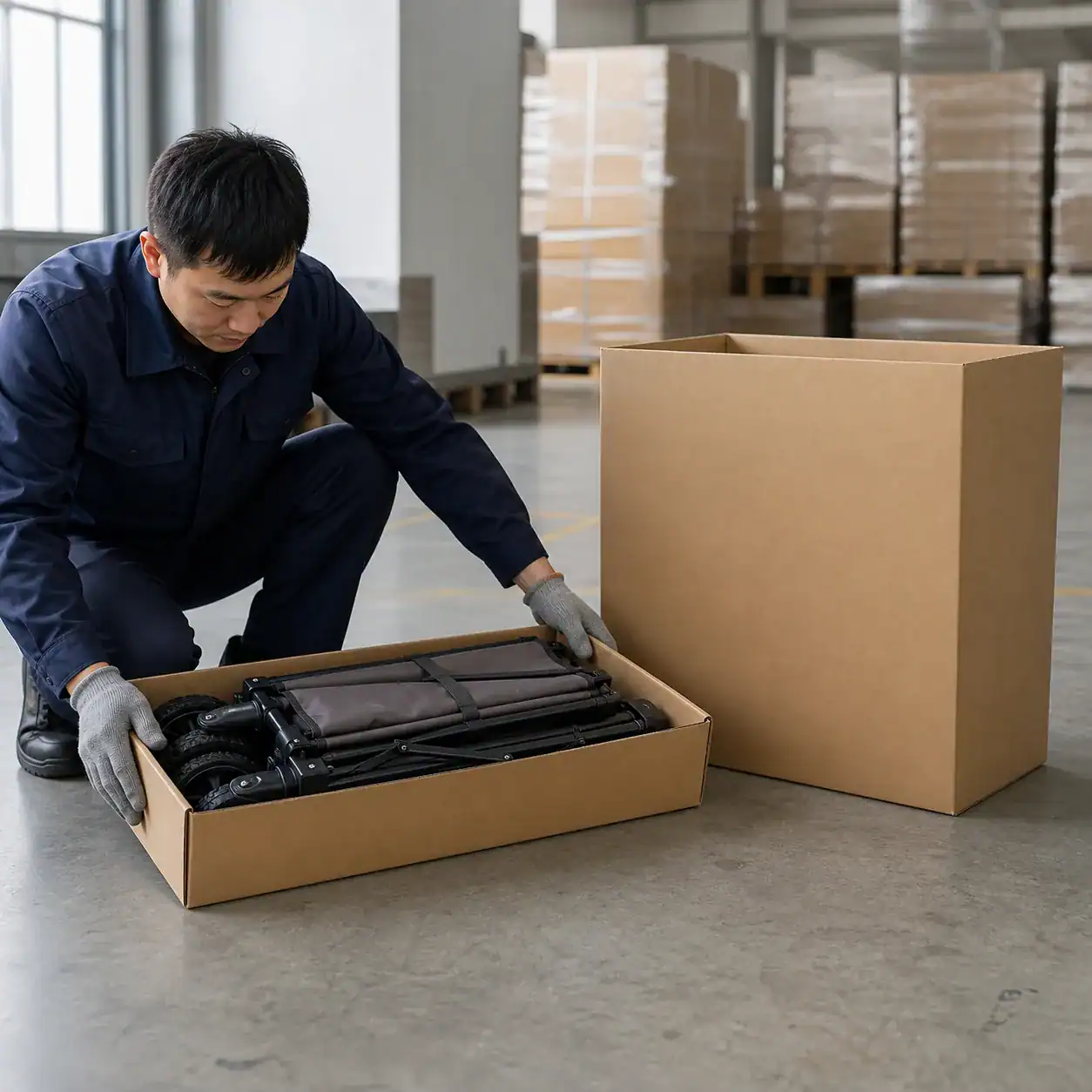
Red Flag #1: Weld Quality & Porosity
Welds carry the structural load at every tube junction. A uniform weld bead indicates consistent heat input and wire feed during MIG welding. Pitted welds, crater cracks, and incomplete fusion at the bead toe point to rushed passes or low shielding gas pressure.
Visual inspection criteria for weld quality:
Static load testing provides the field proof. Load a folding wagon frame with 150 kg for 60 minutes. A sound weld holds without visible deformation. A porous weld develops hairline cracks at the heat-affected zone. Heavy-duty wagons rated above 200 kg demand a matching load test.
Aluminum MIG welds require more operator skill than steel welds. Aluminum conducts heat at a higher rate, needs alternating current, and forms an oxide layer that traps impurities. Many factory-rejected wagon frames fail at the hinge-to-tube crimp joint. Weld quality at that junction deserves the same attention as the main frame tubes.
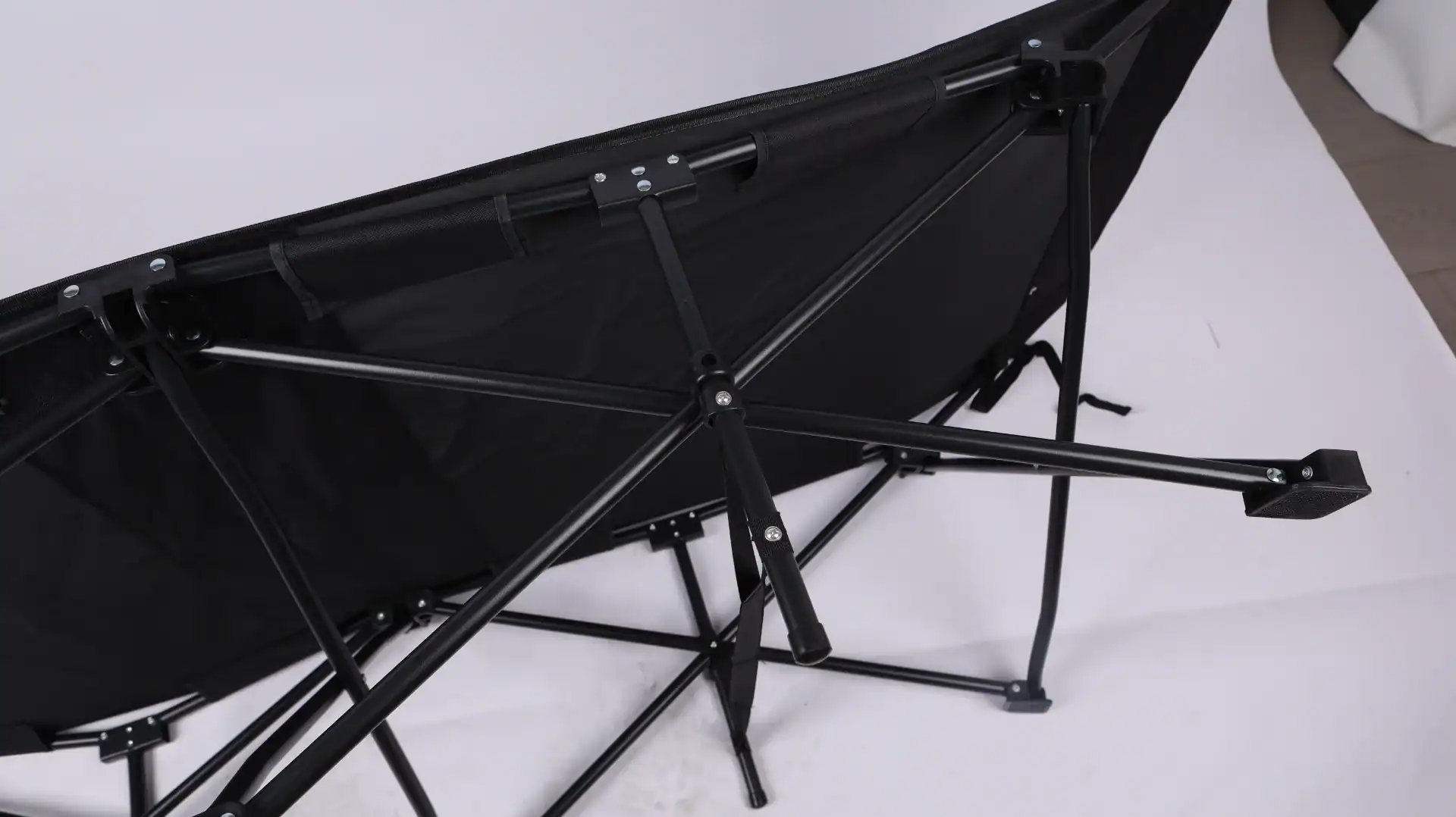
Red Flag #2: Tube Wall Thickness Inconsistency
Advertised specifications list tube wall thickness, but delivered frames sometimes carry thinner steel. A simple digital caliper measures the wall at the tube end before assembly. Read the thickness in three locations around the circumference and average the results.
Common downgrades move from 1.2 mm to 0.8 mm wall thickness. That 0.4 mm reduction cuts material cost and cross-sectional strength. A 0.8 mm tube withstands the same static load once or twice. Fatigue damage accumulates at a higher rate during folding and unfolding cycles.
Frames rated for 150 kg to 200 kg loads need 1.2 mm steel or equivalent aluminum. The “Heavy Duty” label on many wagons refers to 900D Oxford fabric, not the frame gauge. Verify tube thickness on each sample and production batch.
PP and MDF baseboards add load distribution but do not compensate for thin tubes. The frame carries the load, and baseboards support the fabric bed. Measure the tube, confirm the material grade, and record the readings in the inspection report.
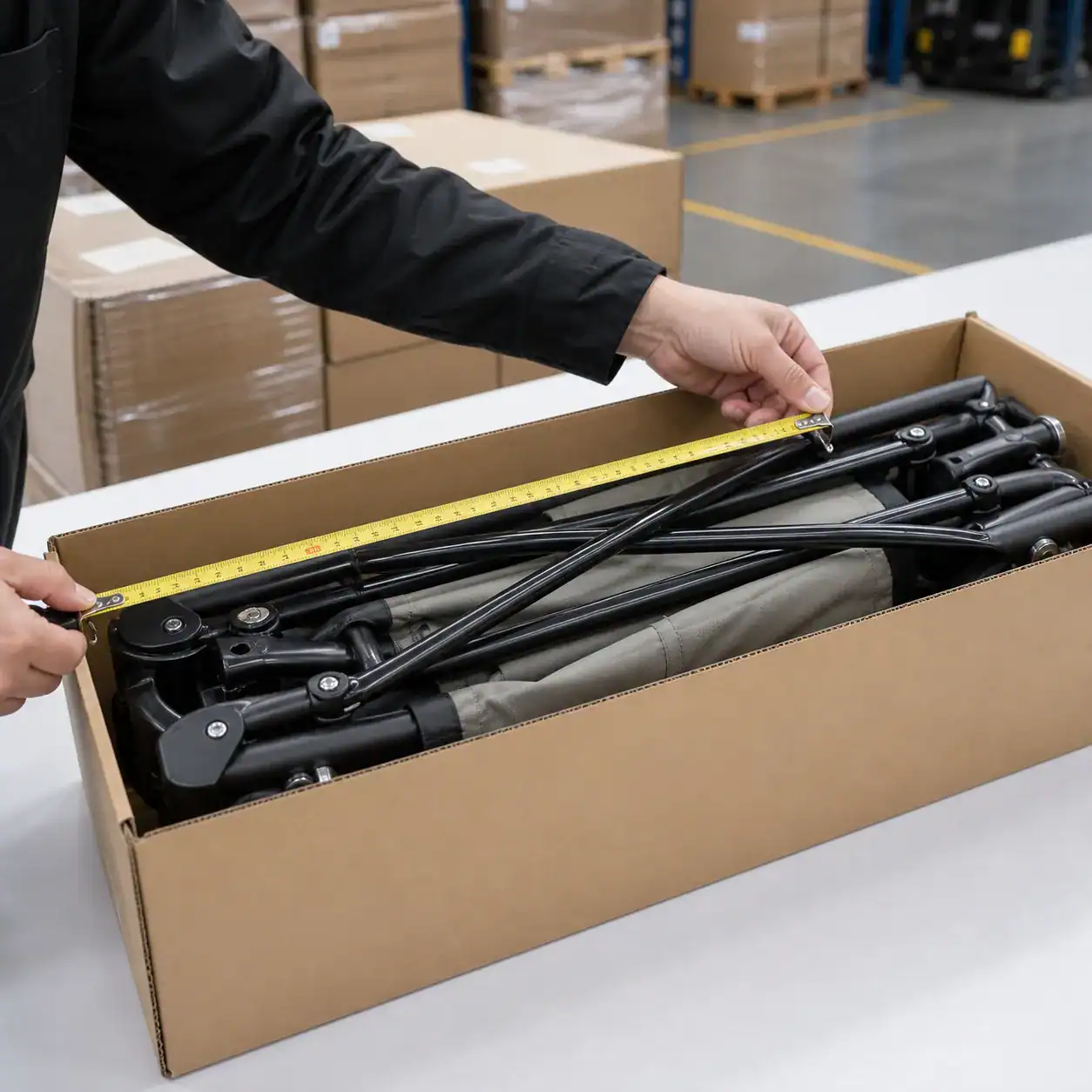
Red Flag #3: Powder Coat & Corrosion Protection Failures
Powder coating provides color and surface hardness. It does not prevent rust when moisture reaches bare steel. Frames exposed to beach sand, rain, or humid storage need an epoxy primer layer between the steel and the polyester topcoat. This primer adds about $0.80 per unit in material cost.
إن اختبار رذاذ الملح exposes coating weaknesses. A 24-hour shortcut uses a 5% salt solution sprayed onto a scratched sample area. Rust creeping under the coating after 24 hours signals poor surface preparation or missing primer.
Aluminum frames also demand protection. Uncoated aluminum corrodes through pitting, and each pit creates a stress concentration point that shortens frame life. Quality aluminum frames receive a chromate conversion coating before the powder layer goes on.
Inspect for coating gaps at tube ends, hinge brackets, and wheel mount plates. These areas see the most abrasion and moisture exposure during normal wagon use. Rust that starts at these points spreads along the tube behind the coating and remains hidden until structural failure.
Red Flag #4: Hinge Slop & Joint Tolerance
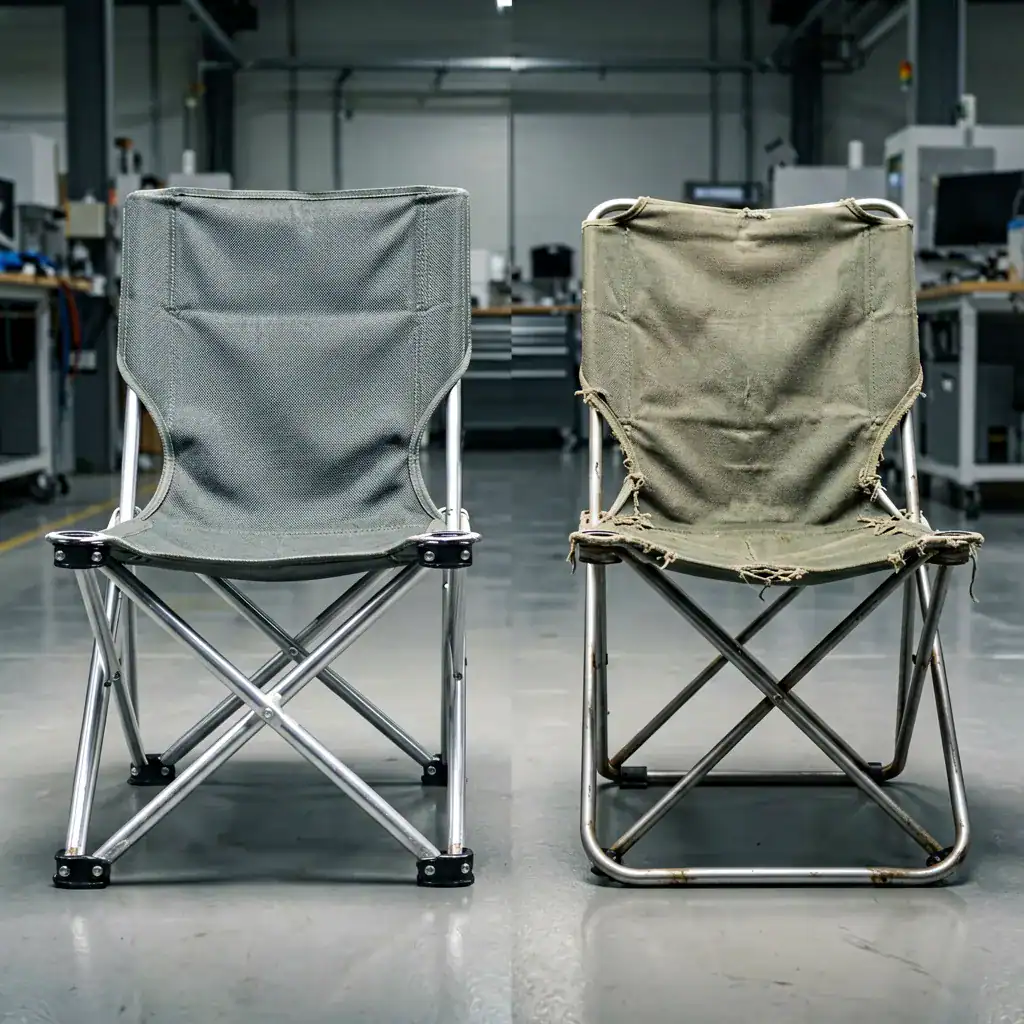
Hinge slop refers to free play between the X-frame arms at their pivot point. Small amounts of play feel acceptable on a sample. After 500 folding cycles, excessive slop accelerates wear on the crimp joint and causes the wagon to wobble under load.
Measure hinge slop by holding one frame arm stationary and moving the other arm perpendicular to its axis. A dial indicator records the free play. Quality frames hold slop under 2 mm at the pivot. Frames with 5 mm or more play fail the tolerance check.
The hinge-to-tube crimp joint fails first on most factory-rejected frames. Crimping flattens a section of tube to create a mechanical lock. Poor crimp pressure or oversize tube tolerance produces a joint that slips under load. Inspect the crimp area for gaps between the tube and the hinge plate.
Red Flag #5: Tube Ovality at Crimp Points
Crimping and bending operations deform round tubes into oval shapes. Ovality reduces the tube’s bending strength because the material spreads away from the load axis. Extreme ovality at the crimp point creates an early failure site.
Measure ovality with a caliper at the crimp zone. Compare the major diameter and the minor diameter of the tube cross-section. A difference above 5% of the nominal diameter indicates excessive deformation. This limit applies to both steel and aluminum frames.
Frame designs with a separate forged hinge bracket avoid crimp deformation. The factory welds or rivets the bracket to a straight tube section. This design carries a higher cost but preserves the tube’s circular profile and structural rating.
Standard QC checklists in the factory omit ovality measurement because the check requires access to the crimp zone. Add this measurement to the inspection protocol and record readings for each production batch. Factories should reject frames that fail the 5% threshold before powder coating.
الخاتمة
Folding wagon frame failures show up in predictable locations. Weld porosity, thin tube walls, missing corrosion protection, hinge slop, and crimp deformation account for the majority of structural returns. Each defect has a test method and a rejection threshold that fits into a factory visit.
Category managers who bring calipers, perform load tests, and verify coating layers protect their brand from warranty claims and customer complaints. The inspection adds about 15 minutes per sample and pays for itself in the first avoided return.
الأسئلة الشائعة
Measuring Tube Wall Thickness on a Folding Wagon Frame?
Use a digital caliper at the open end of the tube before assembly. Take readings at three points around the circumference and average them. Compare the average against the supplier’s specification sheet.
Aluminum versus Steel Frame Durability?
الإطارات الفولاذية بسماكة جدار 1.2 ملم توفر سعة تحميل أعلى وتكلفة أقل. الإطارات المصنوعة من الألومنيوم تزن أقل وتقاوم التآكل عند طلائها بطبقة تحويل الكرومات. يعتمد الاختيار الصحيح على سعر التجزئة المستهدف وحالة استخدام العميل.
Duration of a Powder Coat Adhesion Test?
اختبار رش الملح لمدة 24 ساعة يستخدم محلول ملحي بتركيز 5% على منطقة عينة مخدوشة. يكشف الاختبار عن زحف الصدأ تحت الطلاء. يناسب هذا الاختبار المختصر نافذة مراجعة العينة قبل الإنتاج.
Acceptable Hinge Slop for Heavy-Duty Wagons?
حافظ على خلوص أقل من 2 مم عند نقطة التمحور للعربات التي يتجاوز وزنها 150 كجم. الإطارات التي بها خلوص حر يبلغ 5 مم أو أكثر تفشل في الفحص. الخلوص الزائد في المفصلات فوق الحد المسموح يسرّع تآكل وصلة العقص ويسبب تذبذبًا أثناء الاستخدام.
ISO 9001 Certification and Weld Quality Guarantees?
ISO 9001:2015 certifies process documentation, not weld quality outcomes. A certified factory can produce porous welds if its internal standards allow them. Buyers should verify weld quality through visual inspection and load testing on actual samples.

 English
  Español
  Deutsch
  Français
  Português do Brasil
  Русский
  العربية
  한국어
한국어  日本語
日本語