 تخطي إلى المحتوى
A 1 mm valve flange gap is the difference between a pre-production sample that inflates clean and a $50K order that fails in the field. Factory QC reviews show that exact mismatch trips a pump’s pressure-relief valve at 0.3-0.4 bar — the pressure range where most inflatable tent pump troubleshooting calls begin with the same phrase: “the motor runs but the beam stays flat.” The pump isn’t dead. The adapter never sealed.
The pattern repeats across factory audits in every major manufacturing region. Buyers treat sample approval as a visual check — fabric color, logo placement, zipper pull — and never request the valve flange drawing. The pump gets bundled as a generic 12V air pump; nobody checks whether the hose ID and bayonet lock match the tent’s valve. A $5 adapter issue becomes return freight, and return freight quietly erases the FOB pricing advantage.
Why Your Pump Runs But the Tent Won’t Fill
The pump is rarely dead.
A running motor does not mean air is moving into the beam. Factory QC reviews show the most repeated failure is an adapter that fails to seal against the valve flange. A 1 mm gap is enough to vent through the pressure-relief valve at 0.3-0.4 bar. The pump sounds healthy. The tent stays limp.
Check the Adapter Seal First
Open the valve flap and inspect the rubber flange. Look for cracks, debris, or a bayonet lock that has not clicked into place. If the adapter wiggles, air is escaping before it reaches the beam.
-
- Valve Flap: Tears or a warped edge let pressure bleed out as fast as the pump pushes it in. Replace the flap if the rubber is frayed or the flap no longer sits flat against the flange.
- Rubber Flange: A 1 mm mismatch at the flange trips the pressure-relief valve at 0.3-0.4 bar, the exact range where most dead-pump complaints begin.
- Bayonet Lock: A partial twist looks locked but leaks under load. Seat it fully and listen for the click before starting the pump.
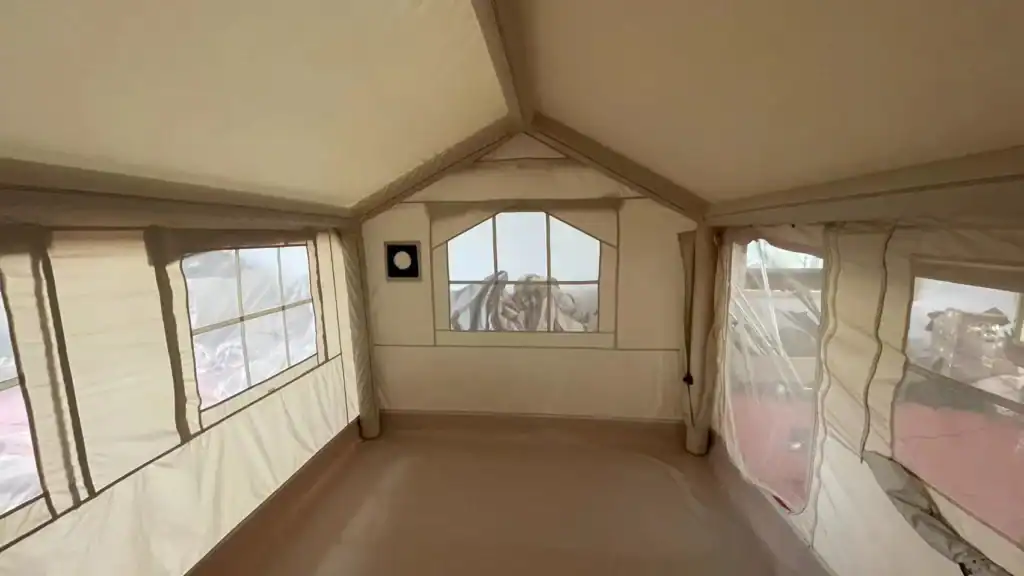
Listen for the Pressure-Relief Valve
Hissing at the valve, hose connector, or beam manifold points to a leak path. If the pump vents through its relief valve, the fault sits in the seal, not the tent. A healthy system holds 0.4-0.8 bar, the standard operating range for PVC/TPU air beams. The relief valve on a 12V pump set opens at the pump head, so a hiss near the tent means the adapter-to-valve interface is the weak point.
Trace the hiss with the back of your hand. Escaping air feels cold and is easy to locate even in daylight. Mark the spot, dry the surface, and re-seat the adapter before you blame the motor. Run this check before you search for inflatable tent pump replacement parts — most calls end here.
During الموافقة على العينة, Kelyland’s QC team tests the pump against the tent’s actual valve flange, not a generic hose fitting. Partner factories hold ISO 9001:2015 certification. The same 0.3-0.4 bar relief check you run in the field is run on the production floor. Custom-molded valve flanges remove the mismatch at the source.
Rule of thumb: if the motor spins and the beam stays soft, suspect the interface before the internals. Most field failures trace back to the adapter seal, not the motor winding. Fix the seal first. The tent usually fills.
How to Test the Valve and Beam Before Blaming the Pump
Never replace a pump before you isolate the fault. A three-stage test separates valve leaks, beam leaks, and pump flow problems in under 15 minutes. The motor spinning tells you nothing about where the air is actually going.
Field Fixes for Dead or Weak Pumps
Most dead pumps are mismatched adapters.
A pump that spins but won’t fill a beam is rarely dead. Factory QC reviews across Kelyland’s partner network point to the same fault: a valve-adapter mismatch that vents pressure before it reaches the tent. Work through these checks before ordering a replacement unit.
12V Socket and Polarity Check
The motor needs clean power. Corroded contacts and reversed polarity starve a 12V air pump for inflatable tent duty, which cuts flow long before the motor stalls. Many weak-pump complaints trace back to a dirty socket.
-
-
- Clean contacts: Disconnect power. Scrape oxidation off the socket pins and plug terminals with a small file or contact cleaner. Reinsert until the plug seats with a firm click.
- Verify polarity: Use a multimeter to confirm positive and negative lines match the pump plug. Reversed polarity makes the impeller spin backward, which produces low flow and no pressure.
-
Valve Flange and O-Ring Fixes
The valve flange is where most inflatable tent valve adapter mismatch cases hide. A 1 mm mismatch in flange diameter is enough to trip the pressure-relief valve at 0.3-0.4 bar, exactly the range where the tent feels half full. In Kelyland’s partner factories, which follow ISO 9001:2015, QC checks include flange fitment before mass production approval.
-
-
- Dry-clean the flange: Wipe the rubber flange and mating surface with a dry cloth. A piece of grit opens a leak path just like a mismatched flange.
- Inspect O-ring and bayonet: Replace any cracked O-ring. If the bayonet lock doesn’t click into the rotated position, the adapter can blow off under pressure.
-
Pressure-Relief Cool-Down
When the pump stops at a third full, the inflatable tent pump pressure relief valve is venting. That is a thermal and back-pressure issue, not a dead motor. Stop, cool, and shorten the hose run.
-
-
- Let it cool: Switch off and wait 10 minutes. A hot pump’s relief valve opens early and bleeds air at low pressure.
- Shorten the hose: Long hoses add resistance that fakes the relief valve into tripping. Connect the pump directly to the valve wherever the layout allows.
-
Manual Pump Fallback
A manual pump with the correct adapter clears the field test every time. Keep the manual pump adapter inside the tent bag so you never mix it up with an electric-only adapter.
-
- Adapter match: The manual adapter is sized to the valve flange drawing. Use it to confirm the tent holds operating pressure instead of guessing at the electric pump’s performance.
- Spare seals: Store a spare O-ring with the manual adapter. It is a low-cost defense against the valve leaks that turn into warranty returns after a full season of use.

What to Specify When Ordering an OEM Air Tent Pump Set
A 1 mm flange mismatch causes most dead-pump returns.
A running motor doesn’t mean the pump fits the tent. Factory QC reviews show a 1 mm valve flange mismatch can trip the pressure-relief valve at 0.3-0.4 bar — exactly the range where most weak-inflation complaints surface. The fix starts on the طلب عرض أسعار (RFQ), not in the field.
Eight specs to put in the RFQ
-
- Valve flange drawing: Send the tent valve’s flange diameter, bayonet lock type, and sealing face profile. Without this, the pump adapter is a guess.
- Hose inner diameter: Match the hose ID to the valve opening. A small mismatch in hose ID can reduce effective flow and cause the relief valve to vent early.
- Target fill time: State the acceptable time to 0.5 bar. For a large air tent, 10-15 minutes with a 350 L/min pump is the benchmark.
- Battery type: Confirm 12V DC or AC, and note socket polarity. Reversed polarity starves the motor and slows inflation.
- Flow rate: A typical pump set moves 350 L/min. Anything lower pushes fill time past the window buyers expect.
- Max pressure: Air tents operate at 0.4-0.8 bar. The pump’s max rated pressure should sit at 0.8-1.0 bar; exceeding that risks beam weld separation.
- IP rating: Specify at least IPX4 for damp campsite use. Rain and morning dew get into pumps faster than most buyers think.
- Cable length: Define how far the pump sits from the valve. Long hose runs add back pressure and can trip the relief valve early.
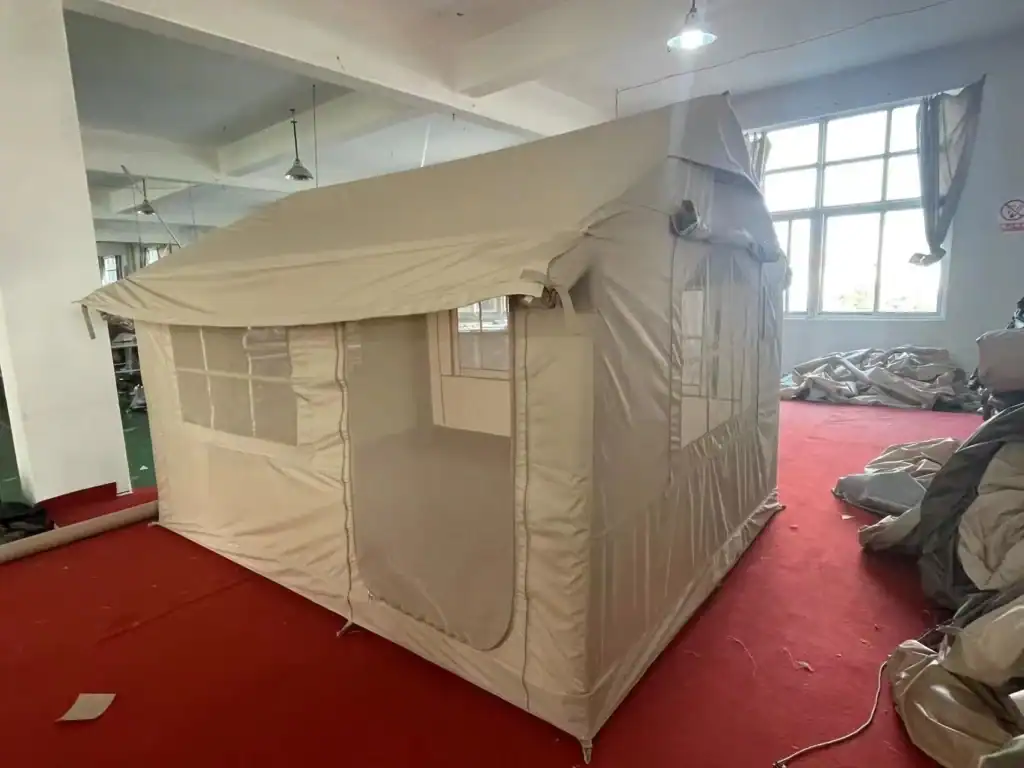
Why a custom valve flange cuts warranty returns
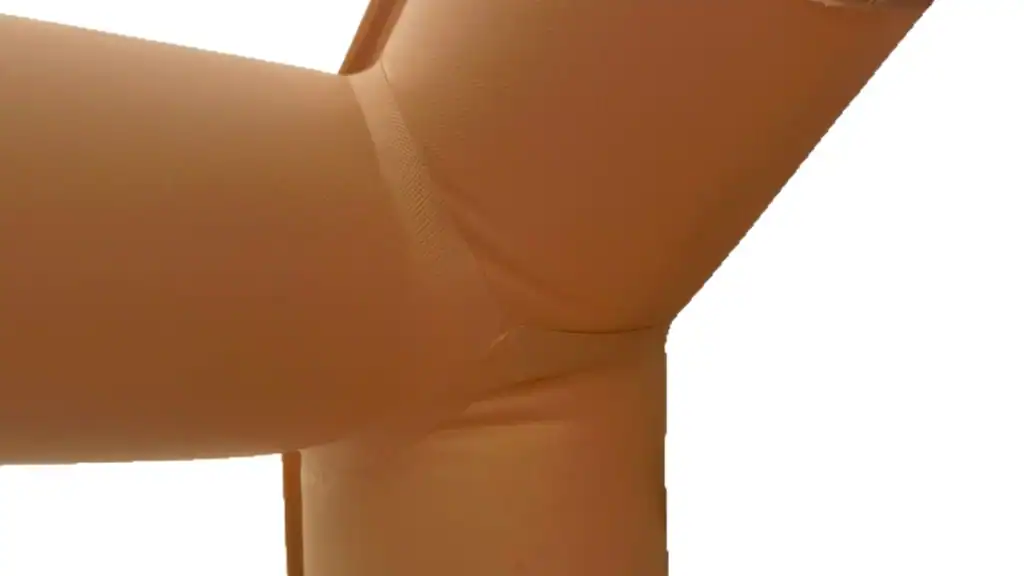
A custom-molded flange removes the adapter mismatch completely. Instead of stacking adapters to fit a generic port, the flange is molded to your tent’s exact valve profile. That single change eliminates the most common cause of inflatable tent pump warranty returns.
The trade-off is lead time. Tooling a valve flange takes roughly 30-45 days before production can start. For a private-label launch, that is a small delay compared with a full season of pumps that spin but never fill the tent.
Kelyland runs this kind of integration across 17 core strategic factories, most ISO 9001:2015 certified, with custom runs on select items starting at 50-100 pieces. The factory network reviews the valve drawing before quoting, so the pump and valve are engineered as one system instead of two mismatched parts.
Send the valve drawing and target runtime to Kelyland’s team before you approve tooling. Then browse Kelyland’s product range to see the same QC standard applied across tents, air mattresses, folding wagons, and camp furniture.
الخاتمة
Treat the pump and valve as one engineered system, not two spare parts. The six field fixes above share a single logic: isolate the leak path before replacing hardware. That discipline turns a $5 adapter issue into a 30-second fix instead of a warranty return.
-
- A 1 mm valve flange mismatch trips the relief valve at 0.3-0.4 bar before the beam reaches firm pressure.
- Specify a low-pressure, high-volume pump rated at 0.8-1.0 bar max; tire compressors risk weld separation.
- Confirm fill time of 10-15 minutes to 0.5 bar using a 350 L/min pump before finalizing your RFQ.
- Custom-molded valve flanges remove the adapter mismatch behind most warranty returns; request the valve drawing.
Before you commit to another pump set, pull the valve flange drawing from your tent supplier and compare it against the adapter spec. Send that drawing plus your target fill time to Kelyland’s team through the private-label inflatable tent page. They will confirm whether a custom-molded flange and a 350 L/min pump at 0.5 bar meets your production timeline.
الأسئلة الشائعة
هل يمكنني استخدام ضاغط هواء عادي على خيمة قابلة للنفخ؟
Only if it is a low-pressure, high-volume pump. A standard 8-10 bar tire compressor is high-pressure and can overinflate the beam, so use a regulator or the tent’s valve. If you use a compressor, set an inline pressure limiter below 1.0 bar.
Why does my pump stop halfway through inflating my tent?
The pressure-relief valve is tripping, usually because the adapter seal is leaking or the pump has overheated. Check the adapter seal, let the pump cool for 10 minutes, then restart and. If it trips again, replace the adapter before replacing the pump.
Are inflatable tent pumps universal?
No, they are not universal. Valve flange diameters, bayonet locks, and hose IDs vary by brand, so match the pump to the tent’s valve drawing rather than the brand name. Send the valve drawing to your supplier when ordering spare pumps.
How long should an inflatable tent take to inflate?
A large air tent should reach 0.5 bar in about 10-15 minutes with a 350 L/min pump. Faster fill times begin to stress the beam welds. If inflation runs past 15 minutes, check the adapter seal first.
What PSI should an inflatable tent be inflated to?
Inflate to 0.4-0.8 bar, which is roughly 6-12 PSI. Never go above 1.0 bar, or the beam welds can separate. Use a gauge on the pump and keep it below 1.0 bar.

 English
  Español
  Deutsch
  Français
  Português do Brasil
  Русский
  العربية
  한국어
한국어  日本語
日本語