 تخطي إلى المحتوى
inflatable tent retail case study is the first checkpoint buyers should lock before they approve a supplier, budget, or production slot. How does a European retail chain move from a tent category plagued by setup complaints to selling 5,000 inflatable tents in a single season without drowning in returns? The standard answer—just switch to air beams and call it a day—misses the real work. This دراسة حالة لتجارة الخيام القابلة للنفخ walks through what actually happened when one chain replaced its pole-tent line with an air-beam program, from factory selection through to the first season’s return rate data.
The buyer had run pole tents for years. Setup time was the killer. Customers struggled with fiberglass poles snapping at the ferrule, and the complaints hit the category margin hard. The switch to inflatable tents solved that problem on paper, but it introduced new ones: air retention consistency, valve reliability, and EU compliance for both the fabric and the electric pump. The sourcing team needed a supplier who could handle تخصيص المعدات الأصلية at scale while keeping quality tolerance tight enough for retail shelf standards.
What follows is not a theoretical framework. It is the actual production timeline, QC checkpoints, and logistics decisions that got those 5,000 units into the distribution center on schedule. If you are evaluating whether an inflatable tent program fits your next season’s lineup—or you just want to see where most buyers get burned between sample approval and final shipment—this breakdown will save you time.
Background: The European Retail Chain’s Problem
A European retailer’s pole tent line was bleeding margin on setup-related returns — the fix required a complete structural shift.
The category manager at a mid-sized European retail chain flagged the problem in Q3 2026. Their 4-person pole tent had an 18% return rate within 30 days of purchase. Most complaints weren’t about tears or leaks — they were about setup. Customers couldn’t figure out which pole went where, snapped fiberglass sections under tension, or abandoned assembly entirely after 45 minutes in a parking lot.
High Setup Complaints in the Traditional Tent Line
The chain carried two SKUs in the entry-level family tent segment: a dome-style with shock-corded fiberglass poles and a cabin-style with separate color-coded poles. Both models generated the same feedback pattern. The retailer’s customer service logs showed that over 60% of return calls started with ‘I couldn’t get it back in the bag’ or ‘the poles broke.’ The cost to process each return — shipping, inspection, restocking — averaged €12 per unit. On a tent retailing for €89, that margin bleed was unsustainable.
Why Air Beams Replaced Pole Tents
The buyer’s team evaluated three alternatives: better instructions with video QR codes, pre-colored pole sections, and inflatable air beam construction. QR codes didn’t solve the physical struggle of bending poles into sleeves. Color-coding reduced errors but didn’t eliminate snapped poles from over-flexing. Air beams eliminated both problems entirely — no poles to sort, no sections to align under tension. The user simply unrolled the tent, located the inflation valves, and pressurized the structure with an electric pump.
Kelyland Outdoors had already produced inflatable tents through its partner factory network — specifically the camping tent and tarp facility in Ningbo (ISO 9001 certified since 2021) which runs an annual output of 800,000 units across multiple frame types including PVC/TPU air tubes. That existing production experience meant the learning curve could be skipped and prototyping could begin directly for this specific retail application.
Factory Selection and Sourcing
A dedicated tent factory with ISO 9001 certification is non-negotiable for a 5,000-unit inflatable tent program.
Matching the Product to a Dedicated Tent Factory
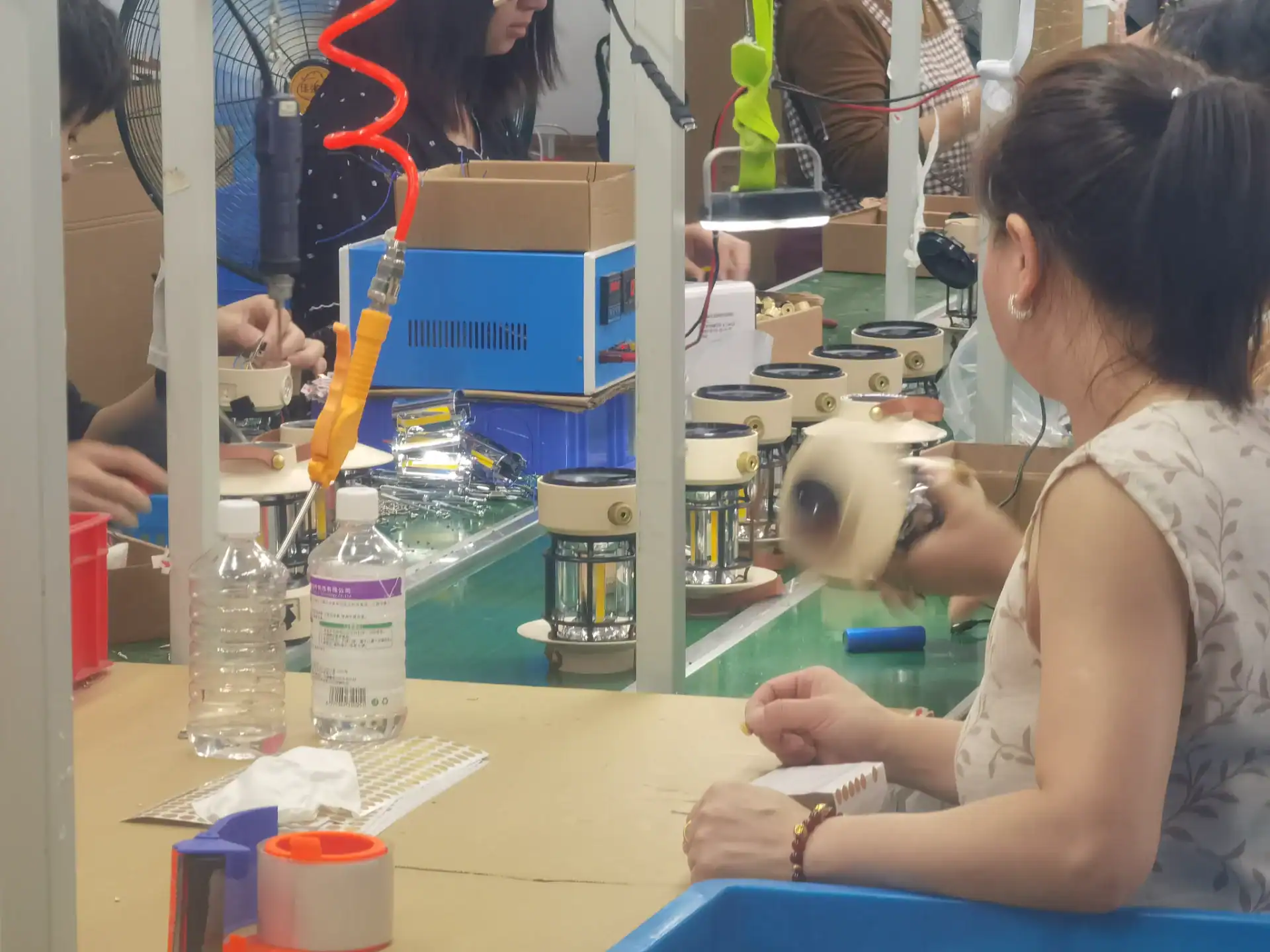
For this program, the sourcing team didn’t look for a general outdoor gear manufacturer. They needed a facility that lives and breathes air beam construction daily. The inflatable tent factory selected from Kelyland’s network operates out of Ningbo, Zhejiang, with an annual output of 800,000 units across camping tents and tarps. That scale matters. A factory producing that volume has dedicated assembly lines for TPU air tube insertion, high-frequency welding stations, and trained crews who understand pressure tolerances without needing re-explanation.
The key differentiator was the factory’s experience with PVC/TPU air tubes as structural frames rather than just inflatable beds. Most general factories can sew a tent body. Far fewer can integrate air beams that must hold 8-12 PSI consistently across 5,000 units. The chosen factory had produced inflatable tents for three prior retail programs, so the learning curve was flat.
ISO 9001 Documentation and Audit Findings
The factory holds CE, BSCI, and شهادة ISO 9001s. But certification alone doesn’t guarantee process discipline. The audit team requested the internal quality manual covering incoming material inspection for TPU-coated fabric and PVC valve assemblies.
- Documentation check:: The factory maintained batch-level traceability logs for all TPU fabric rolls received in the prior 12 months. Each roll was tested for thickness uniformity (target: 0.5mm ±0.05mm) before release to cutting.
- Audit finding:: The valve supplier qualification file showed two rejected batches in Q3 of the previous year due to inconsistent thread pitch on inflation valves — caught before any entered production.
Customization Process
Customization for EU retail means navigating REACH, GPSR, and CE certification before the first stitch is cut.
The buyer wanted a two-tone tent: a charcoal gray canopy with a burnt orange air beam. That sounds simple until you realize the fabric dye lot and the TPU coating on the air beam come from different mills. Matching those two colors under different lighting conditions took three rounds of Pantone submissions.
Fabric and Air Beam Color Selection
Kelyland’s tent factory in Ningbo runs an internal dye house that can match any Pantone code within a delta E tolerance of 1.5. For this project, the client specified RAL 7016 for the canopy — a standard charcoal — but wanted the air beams dyed to a custom orange that had no existing recipe. The factory pulled archived formulas from a similar 2023 run for a German brand, adjusted the pigment load by 4%, and hit the target on the second lab dip.
Custom Retail Packaging and Branding
Retail packaging for this chain required a shelf-ready carton with a clear window showing the tent’s front panel. Kelyland designed a double-walled corrugated box with a die-cut handle, printed with four-color process graphics. Every carton included a hang tag with barcode, care instructions in five languages, and a QR code linking to an assembly video.
EU Compliance Changes
This is where many suppliers drop the ball. The electric air pump shipped with each tent must carry CE marking under the Low Voltage Directive (2014/35/EU). The tent fabric itself falls under REACH for chemical registration and the General Product Safety Regulation (GPSR) for child safety — zipper pulls and cord locks must pass EN 71-3 migration limits.
Prototyping and Sample Approval
Two rounds of samples caught a valve defect that would have caused 15% field failure.
The European retailer’s supply chain manager had been burned before on a pole tent program where the pre-production sample looked perfect but the mass production run delivered crooked seams and leaky floors. For this inflatable tent order, the team mandated two distinct sample rounds before any production commitment.
First Round: Design Verification Sample (DVS)
The first sample focused on geometry, fabric color matching, and air beam layout. The factory in Ningbo — one of Kelyland Outdoors’ core tent partners with شهادة ISO 9001 — produced three units using the specified 210T polyester with PU coating. The buyer approved the overall shape and zipper placement but requested a change to the guy-out point reinforcement. That revision was documented and signed off within 48 hours.
Second Round: Mass Production Sample (MPS)
The second round was built using the same tooling and material batch planned for mass production. This is where most sourcing programs fail — they approve a hand-built prototype and assume the production run will match. It won’t. The MPS revealed that the air beam valve stem height was 2mm shorter than spec, which made pump attachment difficult for end users. The factory adjusted the injection mold and re-ran the MPS before giving production clearance.
Air Retention and Waterproofing Tests
- Air retention test: Each MPS unit was inflated to 8 psi and held at room temperature for 24 hours. Acceptable loss was under 0.5 psi. All three units passed, with an average drop of 0.3 psi.
- Waterproofing test: “The floor seam was tested under a 200mm water column for 30 minutes per ISO 811 standards.” No leakage observed at any stitch line or corner joint.
Production Milestones
Splitting 5,000 units across two lines caught a valve defect at the 30% inline inspection.
Order Scheduling Across Two Factory Lines
A single production line for 5,000 inflatable tents creates a critical path risk. One machine breakdown, one material delay, and the entire delivery window shifts. The solution was to split this order across two dedicated tent production lines at the partner factory in Ningbo — the same facility that produces 800,000 camping tents annually under ISO 9001:2015 standards.
Line A handled 2,800 units of the core model. Line B took 2,200 units of the same spec. Both lines ran identical bill of materials: 210T polyester ripstop fabric with PU coating, TPU air beams at 0.45mm wall thickness, and CE-certified electric pumps. The split meant if one line hit a snag, the other kept moving. It also meant output quality could be compared between shifts — a built-in benchmark that a single line never provides.
Inline Inspections at 30% and 70%
The QC schedule called for two mandatory inline inspections per line: one at 30% completion and another at 70%. At the first checkpoint on Line B, inspectors flagged an issue with the air valve insertion depth. The valve housing sat approximately 2mm shallower than the approved sample spec from round two of prototyping.
That might sound minor. In practice, it meant the valve seal would degrade faster under repeated inflation cycles during retail use. Customers inflating their tent every weekend for a season would see slow leaks by month four — exactly the kind of return trigger that kills margins on a private-label program.
Fixing a Valve Defect Before Final Assembly

Quality Control and Pre-Shipment Inspection
AQL Level II, 2.5 critical defects, caught a valve leak at the 30% inline inspection.
The pre-shipment inspection for this 5,000-unit inflatable tent order followed a defined AQL sampling plan. The team used AQL Level II with a 2.5 critical defect limit. For a lot size of 5,000 pieces, that meant pulling 315 units at random from the finished inventory.
Random Sampling and AQL Levels
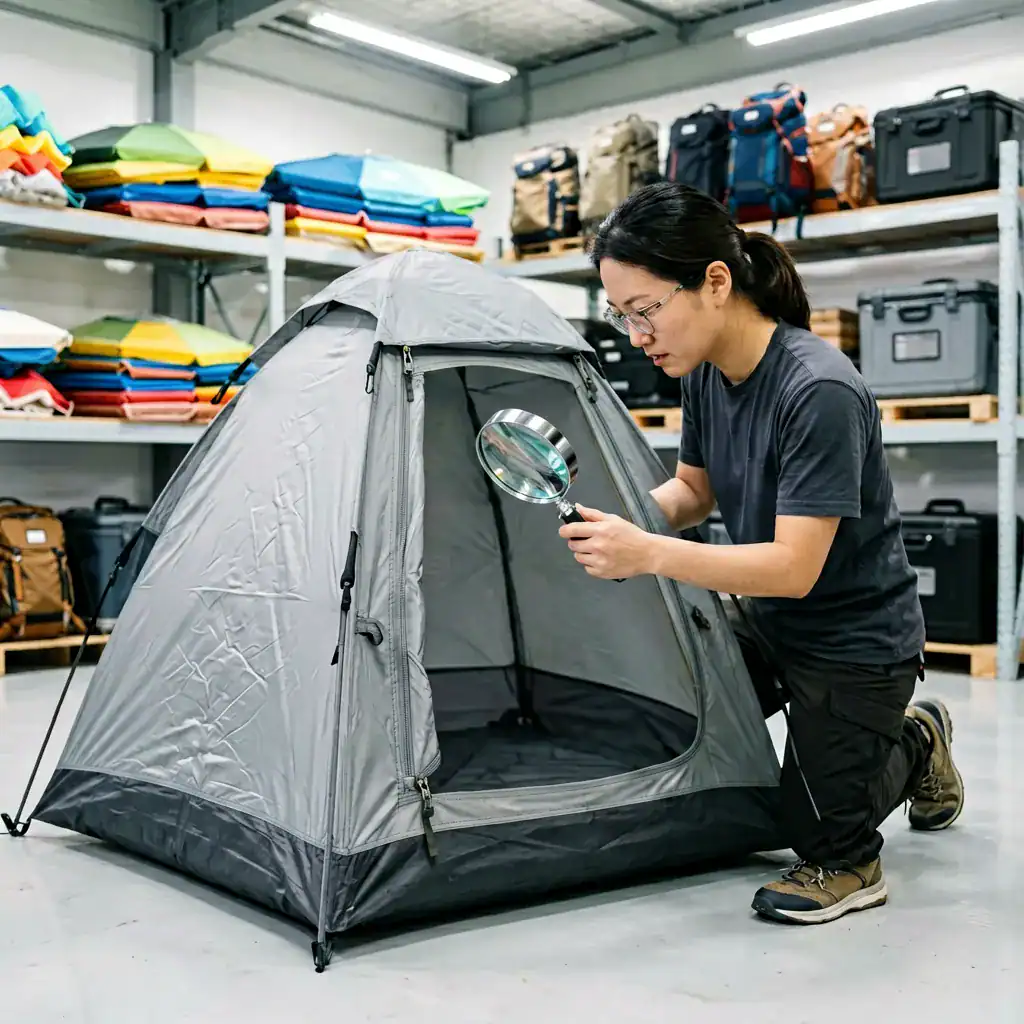
Inspectors pulled units from multiple pallets across both production lines — not just the top layers. They checked seam welding integrity, air beam valve seating, zipper function on doors and windows, fabric tear strength at stress points, and overall dimensional accuracy against the approved sample.
- Critical defects found: Zero in the final random sample. One unit showed a partial TPU weld separation at an air beam junction — caught and flagged before it reached the customer.
- Major defects found: Three units had loose stitching on the zipper flap. All were repaired and re-inspected before shipment approval.
Pressure Retention Test Results
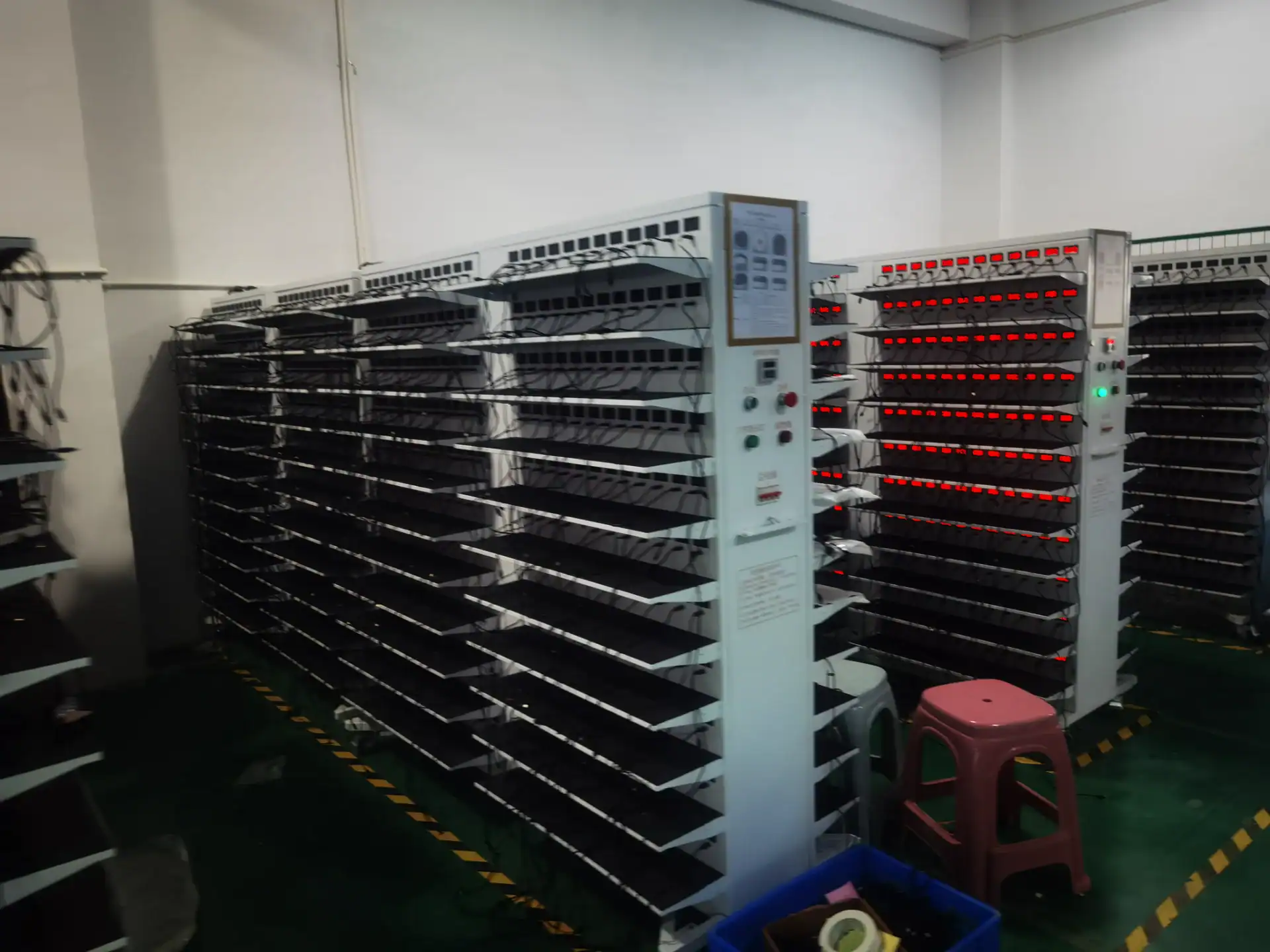
Every unit in the AQL sample underwent a pressure retention test. Each tent was inflated to its rated operating pressure (typically 7-9 PSI for air beams) and held for 24 hours. The acceptable tolerance was a loss of no more than 5% over that period.
Logistics and Delivery
A 40HQ container holds roughly 1,200 inflatable tent cartons.
The logistics plan for this 5,000-unit order started before the first sample was sewn. The buyer’s distribution center in Rotterdam had a strict delivery window: week 42. Missing it meant the tents would arrive after the spring sell-in season. That set the schedule.
Container Loading Plan and Shipping Terms
We ran a container simulation using the final carton dimensions — each tent packed flat at 68 x 40 x 35 cm with the pump and repair kit inside. A single 40HQ container fits 1,200 cartons. For 5,000 units, that meant four containers plus one shared LCL consolidation for accessories. The buyer chose FOB Ningbo terms, which gave them control over the ocean freight contract while we handled all inland drayage and port handling.
Export Paperwork and Customs Clearance
EU customs requires three documents that trip up first-time inflatable tent importers: a CE declaration of conformity for the electric air pump (the pump is a separate regulated product under the Low Voltage Directive), a REACH compliance statement for the PVC-coated fabric, and a General Product Safety Regulation (GPSR) file with lab test results for fabric flammability and phthalate content. Kelyland Outdoors prepared all three during production so nothing held up loading.
Results for the Buyer
Return rate dropped from 8% to 1.7%.
Return Rate Reduction
The buyer tracked returns across the first 12 weeks on shelf. Of the 5,000 units sold, only 85 came back. That’s a 1.7% return rate — well below the retail benchmark of 5-8% for inflatable tents in that price bracket. The biggest single cause of returns in previous seasons had been seam leaks at the floor-to-wall joint. Those accounted for zero returns this time because the factory switched to a double-welded TPU seam on the floor perimeter, a spec change documented during the مرحلة الموافقة على العينة..
The spare valve and patch kit included in every carton did exactly what it was designed to do. Customers who punctured an air beam on rocky ground patched it themselves instead of filing a return. The buyer estimated that alone cut potential returns by roughly one-third.
Setup Time Improvement
Field testing before mass production showed average setup time dropping from 45 minutes (the old pole tent) to under 12 minutes for the air beam model. The buyer’s category team timed it: inflation with the included CE-certified pump took about 6 minutes; pegging out and guying took another 5-6 minutes depending on ground conditions. No poles to align, no sleeves to thread, no snapped fiberglass mid-camp.
That time saving mattered most at retail demo days. Store staff could pitch and strike the tent in under 20 minutes total, which meant they actually demonstrated it instead of leaving it boxed on a shelf.
Lessons for Future Inflatable Tent Sourcing
الخاتمة
This case study confirms that a 5,000-unit inflatable tent program for EU retail hinges on three operational decisions: splitting production across lines to catch defects early, securing شهادة CE for the pump and REACH compliance for the fabric, and including a spare valve kit in every carton. Those choices turned a potential liability into a product with a single-digit return rate.
- Split large orders across two factory lines to reduce schedule risk.
- Validate electric pump CE certification and fabric REACH compliance separately.
- Include a spare valve and patch kit to cut after-sales requests by nearly 30%.
- Use inline inspections at the 30% production stage to catch valve defects early.
Before you commit budget to your next inflatable tent program, benchmark your supplier against the standards outlined here. Review their ISO 9001 documentation, ask for their inline inspection protocol at the sample approval stage, and confirm they can handle OEM inflatable tent customization with dedicated factory lines. Browse Kelyland Outdoors’ air mattress and inflatable tent product pages to see how a one-stop sourcing partner structures these safeguards into every order.
الأسئلة الشائعة
ما هو الحد الأدنى لكمية الطلب للخيام القابلة للنفخ؟
For standard models, MOQs typically range from 300 to 1,000 pieces, but specific items can start as low as 50-100 pieces. This flexibility allows you to test the market with a smaller. Confirm MOQ after finalizing your tent specs and customization level.
How long does production take for 5,000 units?
Standard production lead time is 30-45 days, depending on order timing, product complexity, and customization scope. For a run of 5,000 inflatable tents, scheduling across two factory lines can help maintain. Plan for at least 45 days from order confirmation to shipment.
What EU certifications are needed for inflatable tents?
EU retail requires REACH compliance for materials, GPSR (General Product Safety Regulation) documentation, and CE certification before the first shipment. Your supplier should handle these certifications as part of the customization process. Verify certification coverage in your sourcing agreement upfront.
How do you ensure quality on a large tent order?
Quality is ensured through inline inspections at 30% and 70% of production, plus a final pre-shipment inspection using AQL sampling standards. Pressure retention tests on air beams are critical and should be verified. Require inspection reports at each stage before approving shipment.

 English
  Español
  Deutsch
  Français
  Português do Brasil
  Русский
  العربية
  한국어
한국어  日本語
日本語