 Zum Inhalt springen
Die Vermeidung von Luftträger-Berstungen ist der erste Kontrollpunkt, den Käufer festlegen sollten, bevor sie einen Lieferanten, ein Budget oder einen Produktionsslot genehmigen. Betreff: Freigabe des Vorserienmusters — Aufblasbare Zeltlinie. Die Bestellung über $50K kam im ersten Monat mit drei Berstansprüchen zurück. Das Vorserienmuster sah im Ausstellungsraum gut aus, aber die Serienproduktion wechselte von einem 0,6-mm-TPU-Schlauch auf ein 0,4-mm-PVC-Äquivalent, ohne dass jemand die Änderung meldete. Das ist der Unterschied zwischen einem Zelt, das eine Saison Küstenwinde durchhält, und einem, das beim dritten Familiencampingausflug an der Hülsennaht aufbeult. Der Schutz vor Luftträger-Berstungen beginnt lange bevor der Container Ningbo verlässt – er beginnt damit zu verstehen, welche technischen Spezifikationen tatsächlich ein Versagen verhindern.
Die meisten Sourcing-Gespräche konzentrieren sich auf Stoffdenier und Wasserdichtigkeitswerte, aber diese sprechen die strukturelle Schwachstelle nicht an. Interne Garantiedaten aus mehreren Fabrikprüfungen zeigen, dass etwa 85% der Berstungen auf ein Versagen der Hülsennaht zurückgehen, nicht auf einen Rohrbruch. Der Luftschlauch selbst platzt selten, es sei denn, er wurde durchstochen oder über 15 PSI aufgeblasen. Was versagt, ist die Verbindung zwischen Schlauch und Hülse – die Naht, die alles an Ort und Stelle hält, wenn eine Bö den Träger seitlich ablenkt. Eine Fabrik, die Einzelnadel-Steppung auf Standard-150D-Polyesterhülsen baut eine Versagensart ein, die erst sichtbar wird, wenn Ihr Kunde das Zelt bereits bezahlt und aufgestellt hat.
Warum Luftträger bersten: Die versteckte Schwachstelle der Hülse
85% der Luftträger-Berstungen gehen auf Hülsennahtversagen zurück, nicht auf Rohrdefekte.
Ihr Endkunde gibt dem Wetter die Schuld. Die Daten sagen etwas anderes. Die interne Garantie-Trendanalyse über zurückgesendete aufblasbare Zelte zeigt, dass 85% der Luftträger-Berstungen auf Hülsennahtversagen zurückzuführen sind, nicht auf Materialfehler des Schlauches. Wenn eine 50-mph-Bö das Zelt trifft, biegt sich der Träger nach innen und schnellt zurück. Wenn die innere Hülse mit einer einzelnen Reihe standardmäßigen Polyesterfadens auf 150D-Polyester genäht ist, können diese Stiche innerhalb von Sekunden platzen. Sobald die Hülse reißt, wölbt sich der Schlauch durch den Hauptzeltstoff und platzt schließlich.
Warum einreihige Steppnähte unter Windlast versagen
Die Physik ist einfach: Eine Windbö übt eine seitliche Kraft auf den Luftträger aus, die direkt auf die Nahtlinie übertragen wird, wo die Hülse den Schlauch umschließt. Einreihige Steppnähte konzentrieren diese Kraft auf einen einzigen Fadenweg. Polyesterfaden – in Budgetzelten üblich – hat eine geringere Abriebfestigkeit als Nylon und verliert bei Nässe an Zugfestigkeit. Auf einem feuchten Campingplatz mit intermittierenden Böen erleidet diese einzelne Reihe wiederholte Mikrorisse, bis sie vollständig durchtrennt.
Die Lösung ist nicht kompliziert, erfordert aber eine Spezifikationsänderung auf Fabrikebene. Dreifach vernähte Doppelsteppnähte verteilen die Last auf drei parallele Fadenreihen. Wenn eine Reihe unter Spitzenspannung versagt, halten die anderen beiden, bis sich die Bedingungen stabilisieren. Das Doppelsteppmuster – bei dem sich jeder Stich mit sich selbst verriegelt – verhindert ein Auftrennen, selbst wenn ein einzelner Stich bricht.
Materialwahl: 210D Ripstop-Nylon vs. 150D Polyester
Das Hüllengewebe ist genauso wichtig wie die Naht. Eine 150D-Polyesterhülle hat eine geringere Reißfestigkeit als 210D Ripstop-Nylon. Wenn eine teilweise beschädigte Nahtlinie versucht, Last auf das angrenzende Gewebe zu übertragen, kann Polyester unter Spannung aufreißen, bevor Sie ein hörbares Knacken vom Schlauch selbst hören.
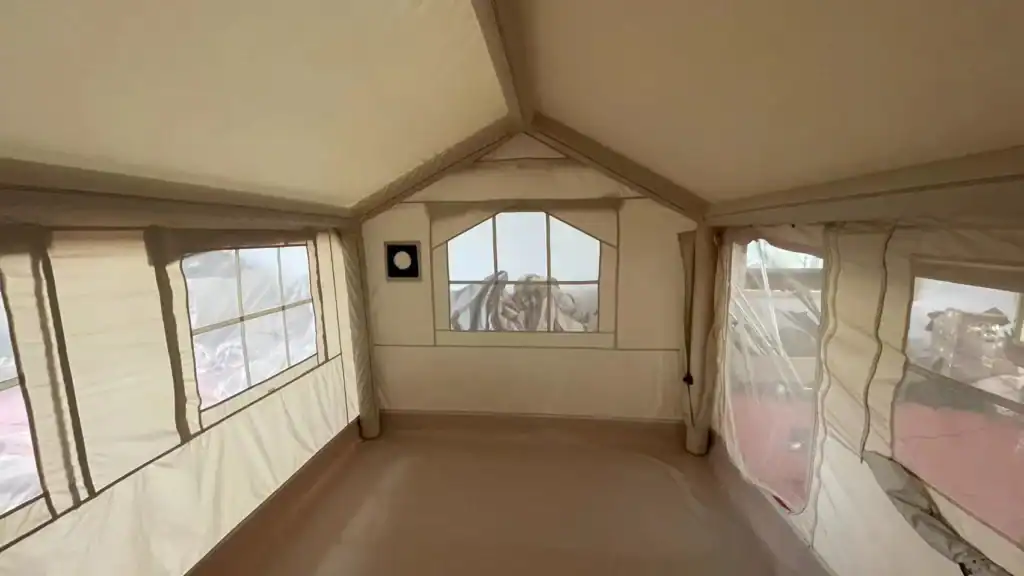
Die wahren Kosten eines Berstens: Garantieansprüche, Markenschäden und Händler-Rückbelastungen
Eine Ausfallrate von 3% bei 500 Zelten verursacht versteckte Garantiekosten von $3,000–$4,000.
Supply-Chain-Manager verfolgen Fehlerquoten. Übersehen wird dabei die Dollarwirkung dieser Fehler. Ein einzelner Platzer kostet nicht nur ein Ersatzzelt. Er löst eine Kaskade aus: Kundendienstzeit, Rücksendeversand, Erstattung oder Ersatz und oft eine negative Bewertung, die das Suchranking Ihrer Marke schädigt. Branchendaten zeigen, dass die Abwicklung eines Garantiefalls 12–15% des Großhandelswerts des Produkts verschlingt.
Die Rechnung für eine 500-Einheiten-Bestellung
Rechnen Sie die Zahlen für einen typischen Container durch. Angenommen, Sie bestellen 500 aufblasbare Zelte zu je $80 im Großhandel. Das ergibt einen Warenbestand von $40,000. Eine Ausfallrate von 3% bedeutet, dass 15 Zelte im Einsatz ausfallen. Bei durchschnittlichen Garantiekosten von 13% pro Anspruch verlieren Sie etwa $156 pro Ausfall. Gesamter versteckter Verlust: ungefähr $3,600. Das ist Geld, das Sie nie wieder sehen – keine Position auf einer Rechnung weist es aus.
Retail-Chargebacks treffen härter
Große Handelsketten akzeptieren Rücksendungen nicht einfach. Sie erheben Rückbelastungen für fehlerhafte Waren, die 5–10% des Rechnungsbetrags erreichen können. Bei derselben Bestellung über $40,000 kommt eine zusätzliche Strafe von $2,000 bis $4,000 zu den Garantiekosten hinzu. Zusammen könnten Sie bei Verlusten von $6,000 oder mehr aus einer einzigen Charge liegen – genug, um Ihre Marge für den gesamten Container aufzuzehren.
Regalplatz hängt von der Zuverlässigkeit ab
Kategoriemanager verfolgen Retourenquoten nach Lieferant und Artikelnummer. Wenn Ihre aufblasbare Zeltlinie eine Retourenquote von über 2% aufweist, beginnen Käufer innerhalb von zwei Saisons nach Alternativmarken zu suchen. Ein zu Platzen neigendes Produkt kostet Sie nicht nur heute Geld – es kostet Sie den Regalplatz für den Katalogzyklus des nächsten Jahres.
-
- Kosten pro Garantiefall: 12–15% des Großhandelswerts pro Einheit.
- Ausfallszenario: 15 ausgefallene Zelte von 500 = ~$3,600 versteckter Verlust.
- Retail-Chargeback-Risiko: 5–10 % des Rechnungsbetrags als zusätzliche Strafe.
- Langfristige Auswirkungen: Rücklaufquoten über 2 % führen zu Käuferbewertungen.
| Kostenkategorie | Finanzielle Auswirkungen | Verstecktes Risiko | Abschwächung durch qualitätsorientierte Beschaffung |
|---|---|---|---|
| Bearbeitung von Garantieansprüchen | 12–15 % des Großhandelswerts pro Anspruch | Untergräbt die Marge bei jedem verkauften fehlerhaften Stück | Verstärkte Hüllen reduzieren Ansprüche um ca. 60 % |
| Rücklaufquote bei 3 % Ausfall (Bestellung über 500 Einheiten) | 3.000–4.000 € an versteckten Verlusten | Direkte Auswirkung auf die Gewinn- und Verlustrechnung, die nicht immer als Produktkosten erfasst wird | Stichproben-Druckprüfung senkt die Ausfallrate unter 0,5 % |
| Rückbelastung für defekte Waren im Einzelhandel | 5–10 % des gesamten Rechnungswerts | Strafen von Großflächenhändlern können die Ersatzkosten übersteigen | ISO-9001-Inline-Inspektionen verhindern Chargeback-Auslöser |
| Markenschädigung & verlorener Regalplatz | Schwer zu quantifizieren; oft das Aus für eine Produktlinie | Negative Bewertungen und Auslistung durch Kategorie-Einkäufer | Dreifach vernähte Hüllen aus 210D-Nylon eliminieren den Hauptausfallvektor |
Aufblasbare Zelte vs. Gestängezelte: Welche sind für den gewerblichen Einsatz langlebiger?
Ein britischer Händler meldet jährlich weniger Austausch von Luftschläuchen als Reparaturen an Glasfiberstangen.
Für einen Supply-Chain-Manager läuft die Haltbarkeitsdebatte zwischen aufblasbaren und Stangenzelten auf eine Zahl hinaus: die Ausfallrate im Feld. Daten von Outdoor World Direct, einem britischen Outdoor-Händler, zeigen, dass sie jährlich weniger Luftschläuche austauschen als Glasfiberstangen aus ihrem Stangenzeltbestand. Das widerspricht der allgemeinen Annahme, dass aufblasbare Träger von Natur aus zerbrechlich seien.
Warum verstärkte Luftträger Stangen bei Windlast überdauern
Der strukturelle Vorteil eines Luftträgers ist die Spannungsverteilung. Wenn Wind auf ein Stangenzelt trifft, konzentriert sich die Stoßbelastung auf die Verbindungsstücke – die Metallverbinder, an denen die Stangensegmente zusammentreffen. Diese Verbinder sind das schwächste Glied. Eine Böe mit 80 km/h kann einen Glasfiberverbinder in unter einer Sekunde knacken lassen, und du hast eine gebrochene Stange und ein zusammengefallenes Zelt.
Ein Luftträger verhält sich anders. Der unter Druck stehende Schlauch biegt sich als Einheit und verteilt die Kraft über seine gesamte Länge. Es gibt keine mechanischen Verbindungen, die Spannung konzentrieren. Der Ausfallpunkt verschiebt sich vom Stangenverbinder zur Hüllennaht – genau deshalb ist die Hüllenkonstruktion wichtiger als das Schlauchmaterial.
Die Hüllennaht-Falle, die diesen Vorteil zunichtemacht
Genau hier scheitern viele aufblasbare Zelte kommerziell: Die Hersteller kalkulieren auf einen Preis hin und verwenden einfach genähte Hüllen aus leichtem 150D-Polyestergewebe. Bei anhaltendem Wind platzen diese Nähte, der Schlauch wölbt sich durch die Haupthülle des Zeltes, und es kommt zu einem Ausbeulen, das wie ein Schlauchdefekt aussieht, aber in Wirklichkeit ein Nähfehler ist.
In der Partnerfabrik von Kelyland in Ningbo – ISO 9001 seit 2021 zertifiziert – verwendet jede Hülle eines aufblasbaren Zeltes dreifach genähte Steppnähte auf 210D Ripstop-Nylon. Diese Spezifikation allein beseitigt, was unsere interne Garantieanalyse als 85% der Hauptursachen für Ausbeulungen identifiziert: Hüllennahtversagen.
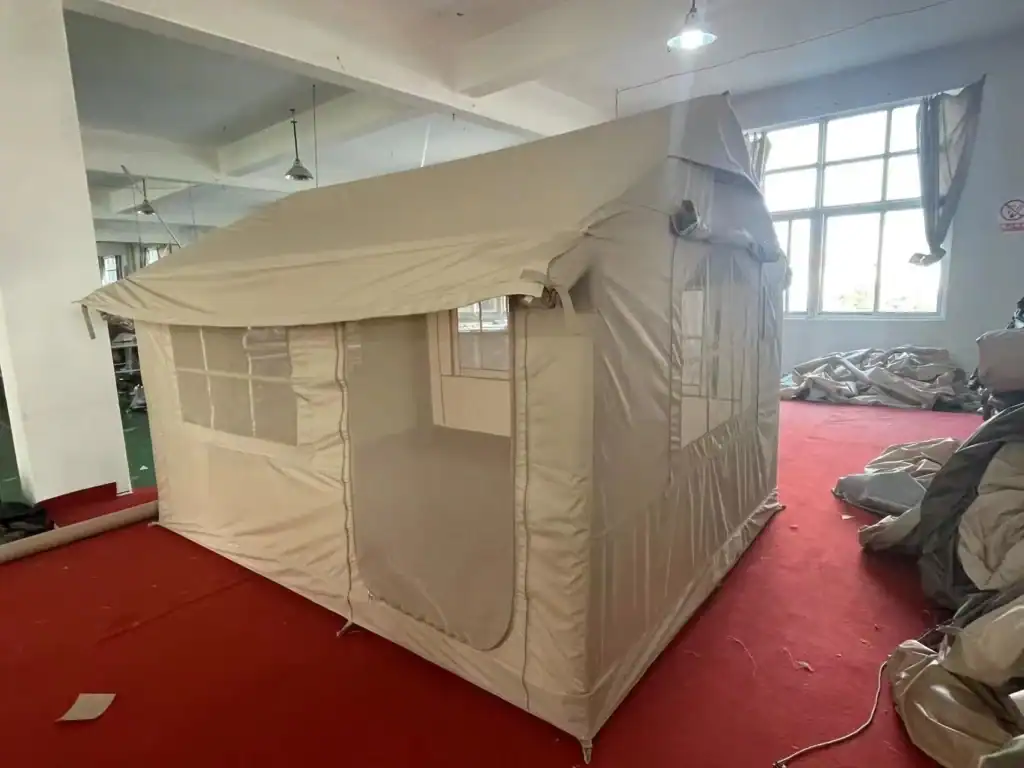
So beschaffen Sie aufblasbare Zelte, die nicht bersten: Eine 5-Punkte-Qualitätscheckliste
85% der Ausbeulungen sind auf Hüllennahtversagen zurückzuführen, nicht auf Schlauchdefekte.
Die meisten Supply-Chain-Manager Angenommen wird, dass ein geplatzter Luftschlauch bedeutet, dass das Material versagt hat. Diese Annahme ist falsch – und teuer. Die interne Garantie-Trendanalyse über Tausende von Rücksendungen aufblasbarer Zelte zeigt, dass 85 % der Platzungen auf Hüllennahtversagen, nicht auf Materialfehler des Schlauchs. Der Schlauch selbst hält den Druck problemlos. Die Hülle, die ihn umgibt, versagt zuerst.
Wie die Hüllenkonstruktion den Versagensvektor erzeugt
Wenn eine Böe ein aufblasbares Zelt trifft, biegt sich der Luftträger nach innen. Wenn der Wind vorbeizieht, schnellt er zurück. Diese wiederholte Biegung belastet die Hüllennaht mit Scherkräften – insbesondere an der Naht, an der die Hülle in den Hauptzeltkörper eingenäht ist. Eine einzelne Reihe Standard-Polyestergarn auf 150D-Gewebe kann unter dieser Belastung innerhalb von Sekunden aufplatzen. Sobald die Hülle reißt, wölbt sich der Schlauch durch die Öffnung und platzt schließlich an einer scharfen Kante oder einem abrasiven Bodenplanenmaterial.
Partnerschaft mit einem in China ansässigen OEM für berstsichere Produktion
Der Berstpunkt ist die Hüllennaht, nicht der Schlauch.
Sobald die technischen Spezifikationen festgelegt sind, beginnt das kommerzielle Gespräch – und genau hier stellen viele Supply-Chain-Manager fest, dass ihr bevorzugter technischer Standard nicht zum MOQ (Mindestbestellmenge) oder zum Lieferzeitfenster der Fabrik passt. Ein mittelgroßer OEM, der in Werkzeuge für aufblasbare Zelte investiert hat, kann Bestellmengen ab 100–300 Einheiten pro Design anbieten. Das ist wichtig, wenn Sie eine neue Eigenmarken-Linie testen oder in einen saisonalen Markt einsteigen, ohne sich auf einen vollen Container festzulegen.
Produktionszeitplan, der auf saisonale Fenster abgestimmt ist
Die standardmäßige Produktionsvorlaufzeit für ein aufblasbares Zelt beträgt 30–45 Tage ab Musterfreigabe. Das ist schnell genug, um Frühlingsstarttermine zu erreichen, wenn Sie im späten Herbst mit der Beschaffung beginnen. Der Zeitplan hängt von der Materialverfügbarkeit ab – TPU-Folie und 210D-Ripstop-Nylon sind bei den meisten Webereien auf Lager, aber individuell nach Pantone gefärbtes Gewebe schlägt etwa zwei Wochen zu. Ein Lieferant, der die gesamte Kette von der TPU-Extrusion bis zur Endmontage verwaltet, bündelt die Qualitätsverantwortung an einer Stelle und vermeidet Übergabeverzögerungen zwischen Subunternehmern.
Drei Prüfschritte, bevor Sie die Bestellung unterschreiben
-
- Video-Audit der Nählinie: Fordern Sie ein Echtzeitvideo der Hüllennaht-Station an. Bestätigen Sie einen Doppelnadel-Doppelsteppstich mit drei Nahtreihen auf 210D-Nylon. Wenn der Bediener eine Einzelnadelmaschine auf 150D-Polyester verwendet, lehnen Sie die Nählinie ab.
- Unterzeichnetes Druckprüfprotokoll: Verlangen Sie einen Chargenbericht, der zeigt, dass jede Produktionseinheit auf 10 PSI aufgeblasen und 24 Stunden lang gehalten wurde, mit einem Verlust von weniger als 0,5 PSI. Kelylands Partnerfabrik in Ningbo führt diesen Test bei jeder Charge durch und archiviert die Protokolle nach Chargennummer.
- Berstdruckzertifikat: Die Schlauch-Hülsen-Baugruppe muss einem Mindestberstdruck von 15 PSI standhalten – dem Doppelten der Endkunden-Spezifikation von 7 PSI. Fordern Sie ein Video des Tests an, das die Versagensart zeigt (Aufplatzen der Hüllennaht vs. Schlauchriss).
Schlussfolgerung
Der 24-Stunden-Druckhalttest bei 10 PSI ist das einzige Kriterium, das die meisten Käufer nie verlangen. Er deckt Mikrolecks und Hüllenkriechen auf, die ein 10-minütiger Werkstest verdeckt. Bestehen Sie in Ihrer Lieferantenvereinbarung darauf – dieses 0,5-PSI-Verlustlimit über einen ganzen Tag ist der Unterschied zwischen einer 0,5%-Ausfallrate und einer 3%-Retourenlawine.
-
- 85% der Platzungen sind Versagen der Hüllennaht, nicht Schlauchrisse.
- Dreifach genähte 210D-Nylonhüllen und 0,6-mm-TPU-Schläuche eliminieren die dominante Versagensart.
- Ein 24-Stunden-Halttest mit 10 PSI und einem Verlust von <0,5 PSI ist der Maßstab, den Sie von der Fabrik fordern sollten.
- Verstärkte Hüllen erhöhen die Stückkosten um <5%, reduzieren aber die Garantieansprüche um etwa 60%.
Häufig gestellte Fragen
Was ist der sichere Luftdruck für einen aufblasbaren Zeltbalken?
Die meisten aufblasbaren Zeltstreben arbeiten sicher zwischen 8 und 12 PSI, wobei 10 PSI der Industriestandard für kommerzielle Modelle ist. Ein Überschreiten von 12 PSI kann die Hüllennaht beanspruchen und. Überprüfen Sie immer den empfohlenen PSI-Bereich der Fabrik auf dem Produktdatenblatt.
Kann heißes Wetter ein Luftträger-Bersten verursachen?
Ja, heißes Wetter kann Luftträger-Platzer verursachen, weil Hitze die Luft im Inneren der Tube ausdehnt und den Innendruck über sichere Grenzen hinaus erhöht. Dies ist besonders riskant, wenn das Zelt aufgeblasen wurde. Verwenden Sie ein Druckentlastungsventil oder lassen Sie während der größten Hitze etwas Luft ab.
Wie teste ich, ob die Luftstreben meines Lieferanten wirklich zuverlässig sind?
Verlangen Sie einen 24-stündigen Druckhaltetest bei 10 PSI – zuverlässige Lieferanten zeigen einen Druckabfall von weniger als 5%. Prüfen Sie außerdem die Ärmelnähte: Verlangen Sie dreifach genähte 210D-Nylon-Ärmel, da einfach genähte Nähte 85% verursachen. Eine Fabrik, die diese Tests verweigert, ist ein Warnsignal.
Was ist der Unterschied zwischen PVC- und TPU-Luftschläuchen?
PVC-Schläuche sind günstiger und schwerer, während TPU-Schläuche leichter, flexibler sind und bei gleicher Dicke eine bessere Widerstandsfähigkeit gegen Durchstiche aufweisen. Für gewerbliche aufblasbare Zelte ist 0,6 mm TPU das bevorzugte Material. PVC ist für Budgetlinien akzeptabel, jedoch ist mit höheren Ausfallraten zu rechnen.
Wie hoch ist die Mindestbestellmenge für maßgeschneiderte aufblasbare Zelte?
Kelyland Outdoors bietet Mindestbestellmengen ab nur 50–100 Stück für ausgewählte aufblasbare Zeltmodelle, wobei Standard-Sonderanfertigungen typischerweise zwischen 300 und 1.000 Stück liegen. Die genaue Mindestbestellmenge hängt vom Umfang ab. Kontaktieren Sie das Team mit Ihrem Spezifikationsblatt, um ein verbindliches Angebot zu erhalten.

 English
  Español
  Deutsch
  Français
  Português do Brasil
  Русский
  العربية
  한국어
한국어  日本語
日本語