
tent fly replacement inflatable tent is the first checkpoint buyers should lock before they approve a supplier, budget, or production slot. Two inflatable tent flys can look identical on a flat table. One costs 30% more. The difference is rarely the fabric cost — it is whether the attachment tabs align with the beam sleeve geometry when the tent is inflated. A buyer lost a $50K order because the pre-production sample passed the visual check but shifted by four centimeters under tension during mass production. That gap choked the vent, and condensation turned the inner tent into a drip zone.
This is why tab-to-tab distances and port positions matter more than floor dimensions when sourcing a tent fly replacement for an inflatable tent. A generic cover cut for a straight-pole frame will not hold its shape over an inflated arc. The stress points pull differently, and what looks like a perfect fit on paper becomes a warranty claim after three nights in wind. If you are evaluating replacement suppliers or ordering a custom rainfly for an inflatable camping tent, skip the floor print. Measure around the beam ports instead.
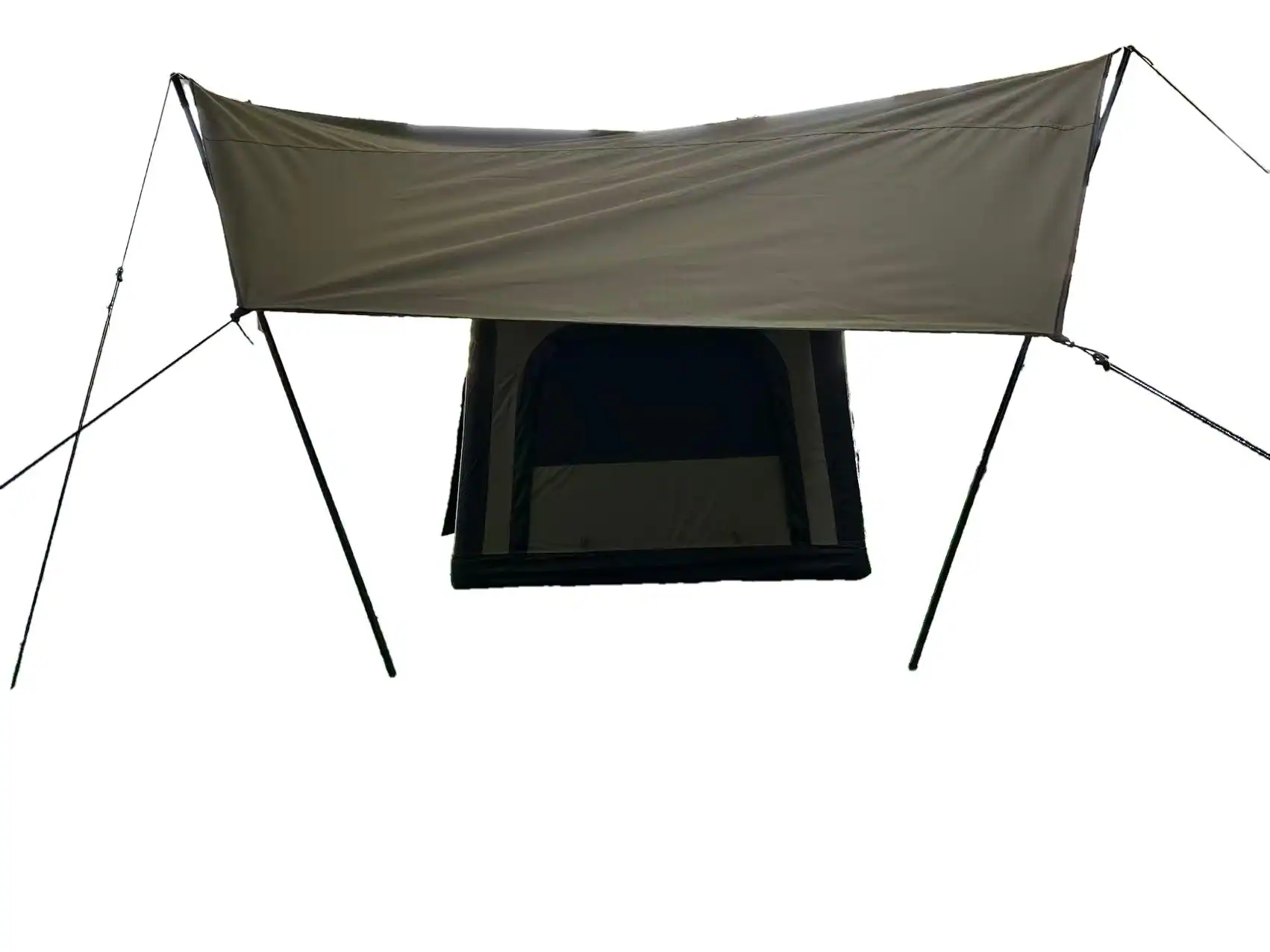
Measure Attachment Points, Not Just Fly Length
Tab-to-tab distance, not fly length, determines fit on inflatable tents.
Most buyers measure the fly length when ordering a replacement. That is the wrong number. On an inflatable tent, the fly pulls against beam arcs, not straight poles. A fly that matches the floor dimensions can still be 8 cm short at the ridge because the inflated beam changes where tension lands.
Tab-to-Tab Distance Drives Fit
Lay your old fly over the inflated tent and measure from hook-and-loop tab to tab. Record every attachment point: around the beam ports, along the ridge line, and across the overhang below the mattress line. These distances in millimeters are what a factory uses to cut a replacement fly that actually tensions correctly.
Skip this step and you risk a fly that looks fine flat but pulls inward when staked out. The result is a choked vent gap and fabric rubbing against the inner tent — two failure modes that generate warranty claims within one season.
Capture Beam Sleeve Geometry
Beam sleeve geometry is the second measurement most buyers miss. You need three numbers: beam sleeve circumference or diameter, port opening width, and distance between ports. Send these with your sample order. They tell the cutter where to place reinforced patches and how much fabric to allocate around each beam port.
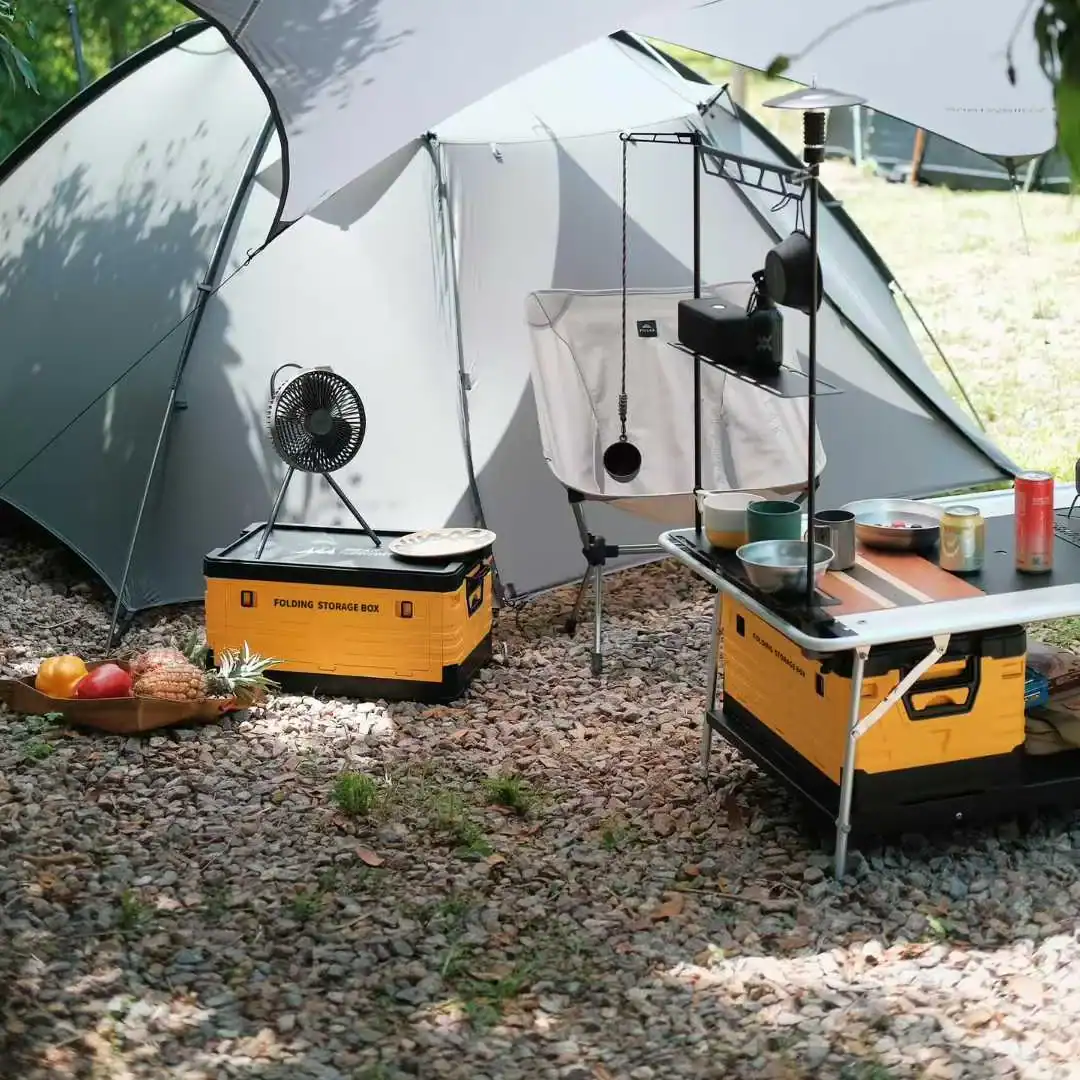
Understand Full-Coverage vs Half Fly Venting
Half flys save weight but leave a tent exposed to wind-driven rain.
Full-Coverage: The 5–10 cm Air Gap Rule
A full-coverage fly must maintain a 5–10 cm gap between the fly fabric and the inner tent at every point along the beam side and ridgeline. That gap is not about airflow alone — it stops the fly from abrading the inner tent’s waterproof coating. Abrasion creates pinhole leaks that show up after 20–30 nights of use, usually during a rain event when replacement is impossible.
The overhang must also reach below the mattress line at both ends. If it stops above the mattress, wind-driven rain hits the inner wall and pools at the seam. A buyer who skips this check ends up with a dry sleeping area on calm nights and wet gear on gusty ones.
Half Fly: Weight vs Protection Trade-Off
Half flys cover only the main body or one end of the tent, leaving the head or foot section exposed. They save roughly 25–40% in material weight and cost, which matters for backpacking models where every gram counts. But they are a fair-weather solution.
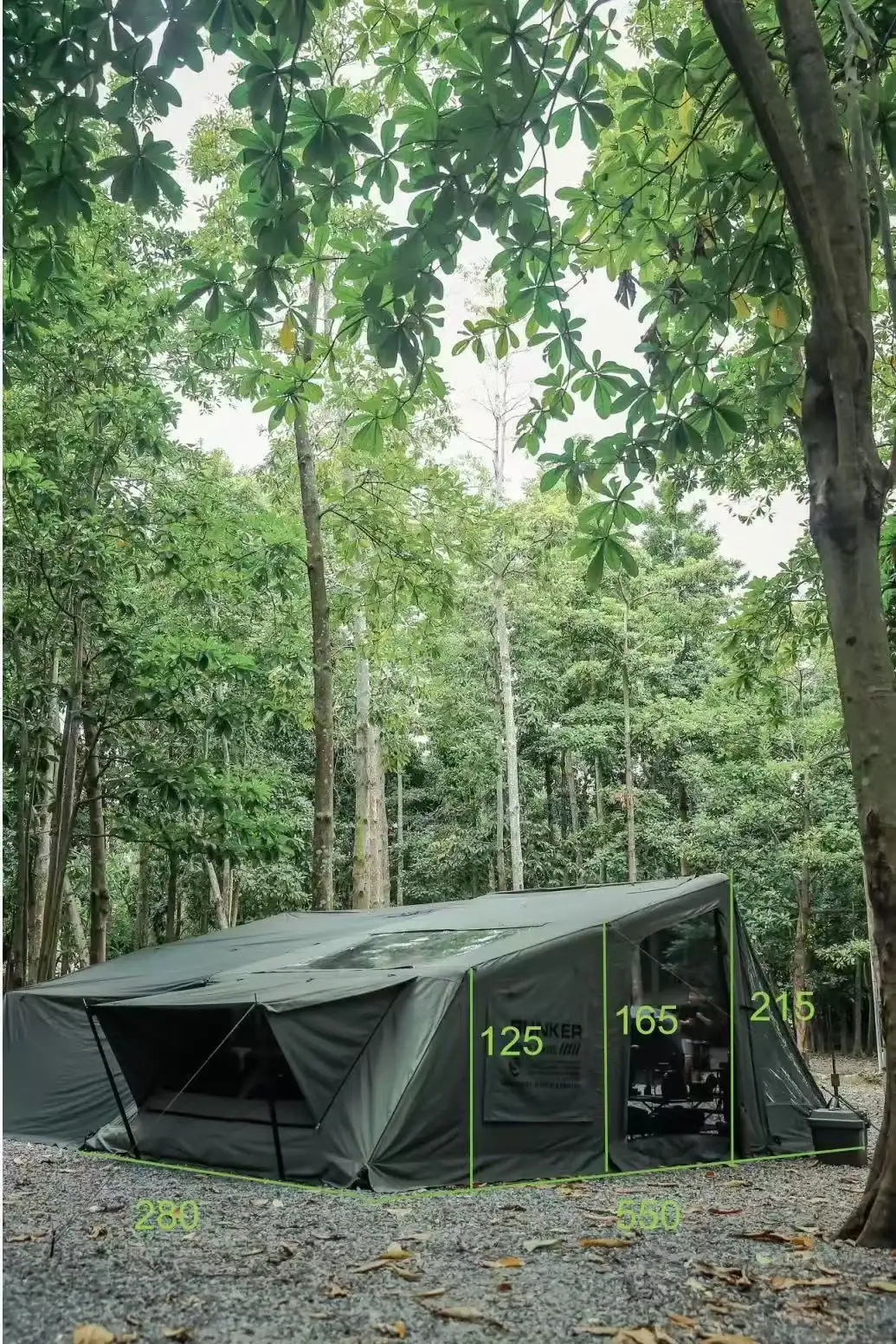
Inspect the Hardware and Strain Points
Bar-tack stitching at webbing loops is the single best predictor of fly durability in wind.
Toggles, velcro tabs, buckles, and bungee loops fail first in wind. A fly with durable fabric but weak hardware creates returns. Evaluate every attachment point as if the end customer is pitching in a storm.
Check Reinforced Patches and Bar-Tack Stitching
Look for reinforced patches at corners, webbing loops attached with bar-tack stitching, and stress points that match the beam port locations. This is where budget flys tear first. The factory network behind Kelyland Outdoors uses ISO 9001:2015-certified processes that specify bar-tack density and stitch count per inch — details that separate a fly lasting three seasons from one that splits mid-season.
- Spezifikation: Bar-tack stitching should appear at every webbing loop, buckle attachment, and corner reinforcement patch. Minimum 12 stitches per inch on nylon webbing.
- Risiko: Single-stitch or zigzag-only attachments fail under cyclic wind loading. A torn corner tab on a $200 tent means a warranty claim and a lost customer.
Plan for Field Repairability
Choose standard buckles and bungee loops that can be replaced on a rainy site. Proprietary molded parts make field repairs impossible and increase after-sales warranty costs for a brand. A broken buckle on a Friday night trip means the fly flaps loose — the camper remembers the brand, not the supplier.

Match Fabric and Coating to the Season
A 3000mm hydrostatic head fly with unsealed beam ports will fail before a 1500mm fly with sealed seams.
Fabric denier and coating determine whether the replacement fly survives repeated packing and wet weather. A 20-40D nylon or polyester fly is a fair-weather product — fine for weekend trips in dry conditions but not for alpine use or monsoon seasons. The winter-grade choice is 40-75D fabric with PU, silicone, or a silicone/PU hybrid coating.
Hydrostatic Head Targets
Use 1500mm+ Wassersäule as the summer baseline. That spec handles moderate rain and wind-driven spray without leaking. For winter or cold-weather inflatable tents, step up to 3000mm+. The difference is not marginal — it determines whether the fly holds up under sustained precipitation at exposed sites.
- Summer baseline: 1500mm+ Wassersäule; suitable for fair-weather camping and occasional rain.
- Winter/cold-weather spec: 3000mm+ hydrostatic head; required for alpine use, snow load, and extended wet exposure.
Sealed Seams and Beam Ports
Schlussfolgerung
A replacement fly that fails the vent gap or attachment alignment isn’t a fit problem — it’s a warranty claim waiting to happen. The five checks above give you a pass/fail framework before you commit to tooling or bulk production. Measure from tab to tab around the beam ports, not the floor print.
- Tab-to-tab distances and beam sleeve geometry control fit, not floor dimensions.
- Full-coverage flys need a 5-10 cm air gap to prevent condensation and coating abrasion.
- Use 1500mm+ hydrostatic head for summer and 3000mm+ for winter-grade flys.
The benchmark for a well-sourced inflatable tent fly is a first-pass fit approval rate above 90% on the initial sample. If your current supplier can’t hit that, send your tab measurements and beam sleeve geometry to Kelyland’s team for a custom OEM quote. They build from your numbers, not generic patterns, and can start production at MOQs as low as 50-100 pieces with a standard lead time of 30-45 days through ISO-certified factories.
Häufig gestellte Fragen
Was ist der Unterschied zwischen einem Zeltaußenzelt und einem Regenverdeck? Sie sind dieselbe Schicht. Zeltaußenzelt ist der allgemeine Begriff für die wasserdichte äußere Abdeckung; Regenverdeck betont?
Die genaue Antwort hängt von der Produktspezifikation, der Menge und dem Bestellaufbau ab. Der sicherste Ansatz ist, die Handelsbedingungen erst zu bestätigen, nachdem das endgültige Anforderungsblatt festgelegt ist.
Wie messe ich ein aufblasbares Zelt für ein Ersatz-Außenzelt? Messe ich von Klettverschluss-Lasche zu Lasche um die Gestängedurchführungen herum, entlang des Firsts und über den Überhang?
Die genaue Antwort hängt von der Produktspezifikation, der Menge und dem Bestellaufbau ab. Der sicherste Ansatz ist, die Handelsbedingungen erst zu bestätigen, nachdem das endgültige Anforderungsblatt festgelegt ist.

 English
  Español
  Deutsch
  Français
  Português do Brasil
  Русский
  العربية
  한국어
한국어  日本語
日本語