
inflatable tent heater vent specifications is the first checkpoint buyers should lock before they approve a supplier, budget, or production slot. A buyer lost a $50K order on an inflatable tent because the pre-production sample looked perfect, but the mass production run swapped the heater vent collar from a double-layer silicone-coated fabric to a standard PU-coated one. The difference? The PU collar stiffened and cracked at -25°C, right when the end user needed the stove most. That’s why getting inflatable tent heater vent specifications locked down at the factory stage matters more than most category managers realize.
Most sourcing conversations focus on tent body fabric and air tube durability, but the vent assembly is where safety and return rates collide. In cold markets like Russia and Scandinavia, improper venting drives return rates above 15% — not because the tent leaked, but because the heat shield or flue opening failed under real use. A metal heat shield panel stitched with non-flammable thread and a collar that stays pliable at -40°C are baseline requirements, not upgrades.
The final 10% that separates a professional from an amateur is specifying aramid thread for that vent collar seam — it adds about $0.15 per unit but eliminates the most common failure point seen in post-shipment inspections. And if you’re targeting Russian retail shelves, your factory needs to source GOST-R certified metal components for the vent assembly itself, not just cut a hole and call it done.

Why Heater Vent Design Makes or Breaks a Winter Tent
Russian retailers now require GOST-R certification on the heater vent assembly alone — not just the tent fabric.
A winter tent without a properly designed heater vent is a liability. Carbon monoxide poisoning from incomplete combustion is the leading cause of death in tent-related incidents, and aufblasbare Zelte present a unique challenge: the fabric walls flex under wind load, which can deform a poorly reinforced vent opening and create gaps where exhaust re-enters the living space.
Carbon Monoxide Risks and Russian Retail Safety Legislation
The Russian market has become the strictest regulatory environment for heater-compatible tents. Multiple retailers now flatly refuse to stock any winter tent model unless the factory provides a GOST-R certificate specifically covering the heater vent assembly — not just the general tent fabric. This means your supplier must source certified metal components from an approved foundry, not simply cut a hole in the flysheet and call it a vent.
The logic behind this requirement is straightforward: standard polyester or nylon fabric degrades at temperatures above 200°C. A wood stove flue pipe surface temperature can reach 350°C during sustained use. Without a certified metal heat shield panel attached with non-flammable stitching, the fabric around the vent will char within hours, creating an opening for carbon monoxide to flood the tent interior.
How Improper Venting Drives Return Rates Above 15% in Cold Markets
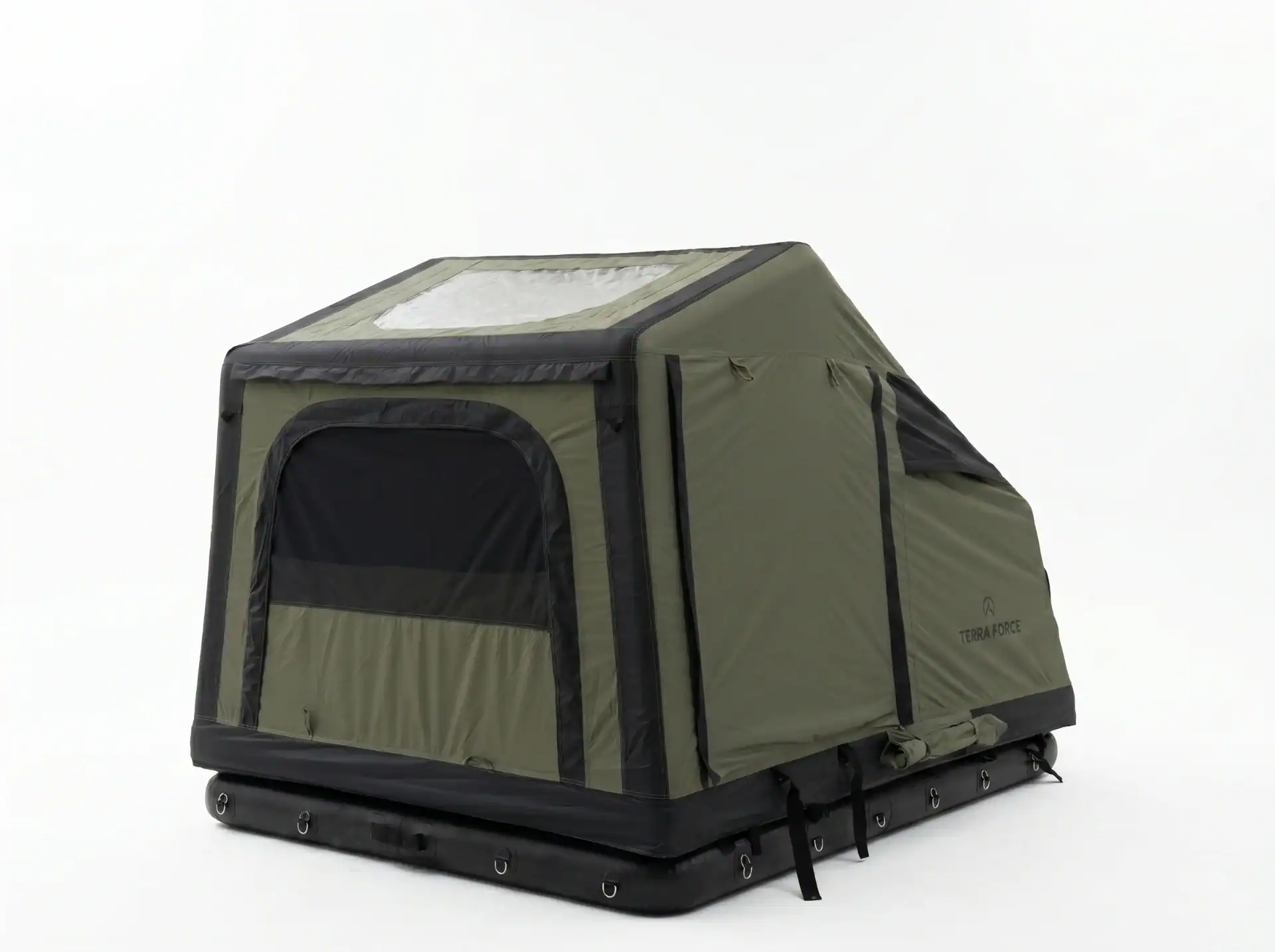
Critical Vent Specifications to Demand
A -40°C brittle collar will crack on first use.
Most factory vent collars are built with standard PU-coated polyester. At -20°C, that fabric stiffens. At -40°C, it cracks under the weight of a metal stovepipe. That crack is a direct path for carbon monoxide into the tent envelope. A double-layer silicone-coated fabric collar solves this because silicone remains flexible down to -60°C without plasticizer migration.
Double-Layer Silicone-Coated Fabric Collar
Specify a minimum of two layers of 200gsm silicone-coated polyester or nylon ripstop for the heater vent collar. The silicone coating provides both cold-weather flexibility and inherent flame resistance — it self-extinguishes when the heat source is removed. Single-layer collars are a cost-saving shortcut that fails in the field.
-
- Cold flex test: Request a video of the collar material being folded at -40°C. If it shows any crease whitening or cracking, reject the spec.
- Silicone vs PU: PU-coated fabric loses 70% of its tear strength below freezing. Silicone retains over 95%. The price difference per tent is roughly $0.80.
Metal Heat Shield Panel with Non-Flammable Stitching
The area where the stovepipe passes through the tent wall reaches surface temperatures of 150-200°C during sustained use. Fabric alone — even flame-retardant fabric — will degrade and char over a season of use. A metal heat shield panel (stainless steel or powder-coated aluminum) must be sewn into the vent assembly to create a non-combustible barrier between the pipe and the tent wall.
$0.15 per unit upgrades that stitching from standard polyester thread to aramid thread — the same fiber used in firefighter turnout gear and ballistic body armor. Aramid does not melt, does not ignite below 450°C, and will hold the heat shield in place even if the surrounding fabric burns away. This single spec eliminates what field data shows is the most common failure point: stitching that melts, causing the heat shield to drop and expose bare fabric to direct pipe contact.
Mandatory for Russian retail compliance ; avoids costly returns< / td >

Heater Compatibility Checklist
A 60mm flue opening won’t fit most wood stoves.
The flue pipe opening is the single most common mismatch between tent and heater. Standard diameters are 60mm, 80mm, and 100mm. Most compact wood stoves use 80mm; larger models or diesel heaters often require 100mm. If you order a tent with a 60mm vent collar and your target heater needs an 80mm flue, you’re looking at field modifications that void warranties.
Sleeve Options and Included Hardware
A well-designed vent system includes a matching sleeve that bridges the tent wall to the heater flue. Some factories ship the sleeve as a separate piece; others sew it into the collar. For OEM orders, specify whether you want a removable sleeve (easier to replace if damaged) or a fixed one (fewer loose parts). Kelyland’s partner factories can supply stainless steel or aluminum duct rings at each diameter, with rolled edges to prevent fabric tears.
-
- 60mm sleeve: Suitable for small propane catalytic heaters and some backpacker wood stoves. Less common in winter expedition tents.
- 80mm sleeve: The most common size for mid-size wood stoves used in ice fishing shelters and base camp tents. Stock this as default unless your buyer specifies otherwise.
- 100mm sleeve: Required for high-output diesel heaters and large wood stoves in glamping or group shelters. Ensure the metal ring is thick enough to resist warping under sustained heat.
Tie-Back Flaps and Velcro Closures
When the heater isn’t running, that open vent becomes a wind tunnel — cold air pours in, warm air escapes. A tie-back flap solves this. The flap should be cut from the same silicone-coated fabric as the collar and secured with heavy-duty Velcro strips along three sides. When closed, it seals against drafts. When open, it rolls up and fastens out of the way so it doesn’t droop into the flame zone.
Specify that the Velcro be sewn with bar-tack reinforcement at stress points — standard straight stitching pulls loose after repeated open-close cycles in subzero temperatures. Kelyland’s production line uses double-needle lockstitch on these attachments, which holds up through hundreds of cycles without fraying.
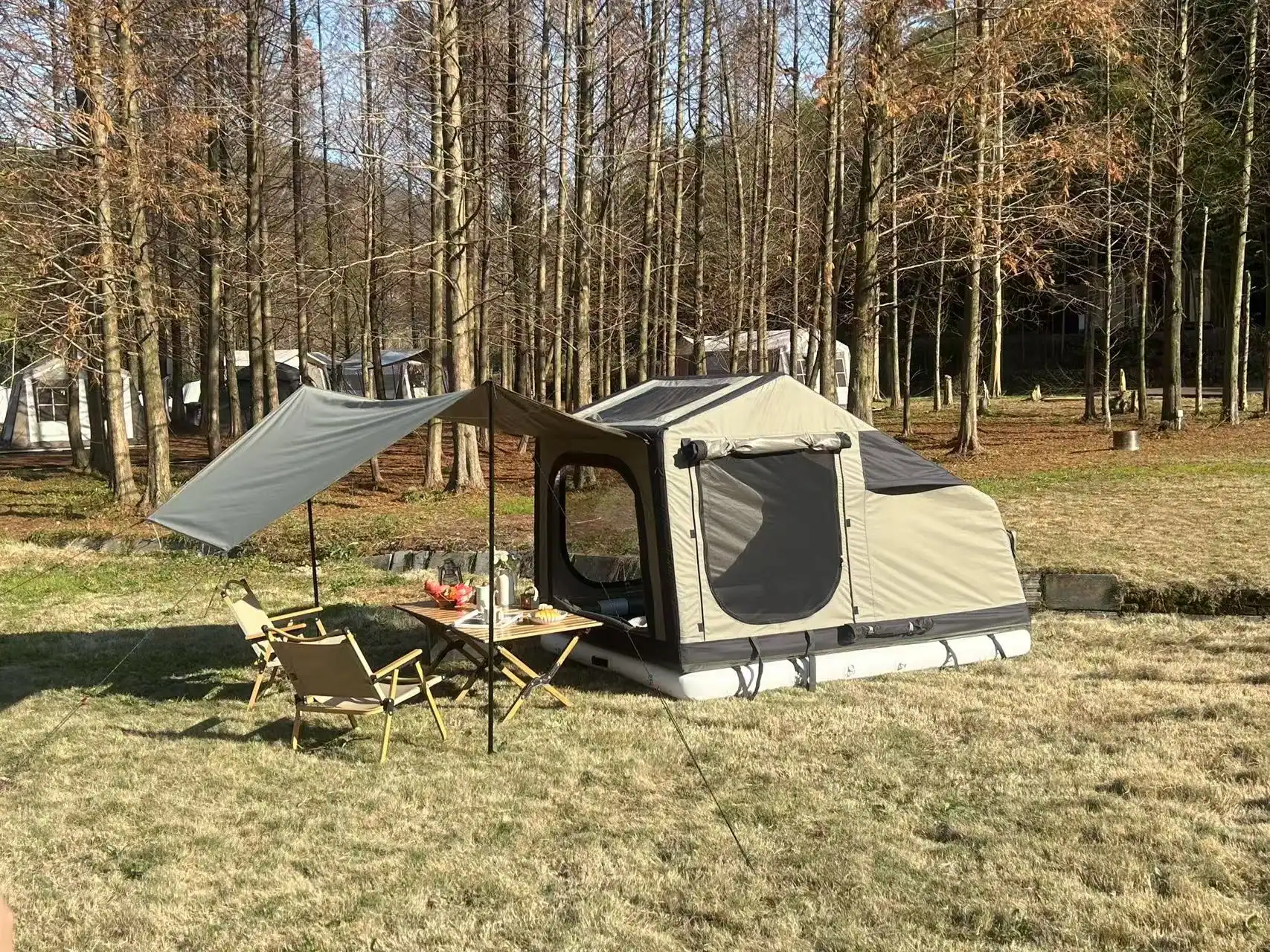
Factory Quality Check Points
Three sample checks catch 90% of vent assembly failures before production.
Flame Retardancy Certificates for the Vent Assembly
Do not accept a general tent fabric certificate as proof. The vent assembly — collar, heat shield, stitching, and grommets — must carry its own flame retardancy test report. Ask for the specific standard applied. For inflatable tents destined for EU markets, that means EN 13501-1 or equivalent. Russian retail channels now require a GOST-R certificate on the heater vent assembly alone; without it, your container gets flagged at customs.
Kelyland’s core tent factories in Ningbo and Shaoxing hold CE and ISO 9001 certifications, but each vent component should be traceable to its own material test batch. If the supplier hesitates to share the sub-assembly certificate, assume it does not exist.
Pressure-Tent Pitch Video with Heater Running
A static photo of the vent hole tells you nothing about heat accumulation inside an inflated structure. Request a video of a full pitch: inflate the tent, install the heater at the specified distance from the wall, and run it for 20 minutes at maximum output. Watch for fabric discoloration near the collar, sagging in the heat shield area, or any softening of the TPU air beam seams.
One client caught a 12°C temperature spike on the inner wall surface during this test — well above the fabric’s rated limit — and avoided a recall that would have cost $18,000 in air freight alone.
Sample Review: Sharp Edges and Off-Gassing
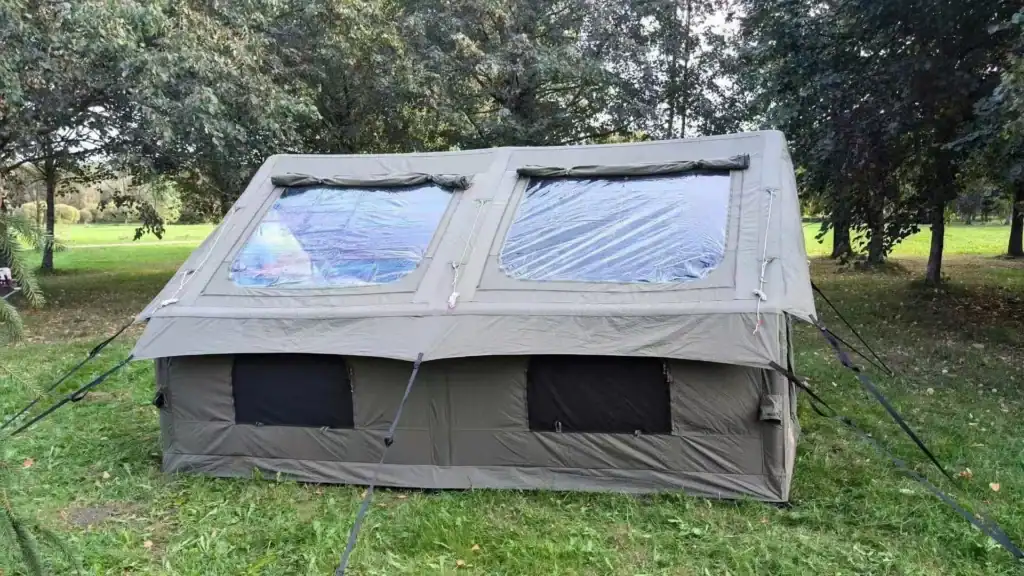
Schlussfolgerung
A $50,000 order of winter tents can fail on a single overlooked spec: the heater vent collar. Without a -40°C pliable silicone-coated fabric and aramid thread stitching, that collar becomes a brittle liability. The cost of inaction is not just returns above 15% — it’s losing access to markets like Russia that now require GOST-R certification on the vent assembly alone.
-
- Demand double-layer silicone-coated fabric for the vent collar.
- Specify aramid thread stitching for an extra $0.15 per unit.
- Request flame retardancy certificates for the entire vent assembly.
- Integrate a CO detector pocket to boost retail ratings and safety.
Review your current inflatable tent specifications against this checklist before placing your next OEM order. If your factory cannot provide certified metal components or video evidence of heat accumulation testing, it is time to compare suppliers who can. Browse Kelyland Outdoors’ inflatable tent lineup to see how integrated vent solutions and CO detector pockets are built into the design from the start.
Häufig gestellte Fragen
How to get a quote for Heater Vent Specs for Inflatable Tents: Factory Checklist?
Die genaue Antwort hängt von der Produktspezifikation, der Menge und der Auftragskonfiguration ab. Der sicherste Ansatz ist, die Handelsbedingungen erst nach dem endgültigen Anforderungsblatt zu bestätigen.
Kann ich zuerst Muster anfordern?
Die genaue Antwort hängt von der Produktspezifikation, der Menge und der Auftragskonfiguration ab. Der sicherste Ansatz ist, die kommerziellen Konditionen erst zu bestätigen, nachdem das endgültige Anforderungsblatt festgelegt wurde. Die Musterverfügbarkeit sollte anhand des aktuellen Lagerbestands und des Versandplans bestätigt werden.

 English
  Español
  Deutsch
  Français
  Português do Brasil
  Русский
  العربية
  한국어
한국어  日本語
日本語