 Zum Inhalt springen
A tent factory audit that skips live seam-sealing verification doesn’t fail in the factory. It fails three months later, when the first pallet of customer returns lands on a warehouse dock in Rotterdam or Long Beach. I watched a brand manager absorb this exact hit on a $50K order two years ago. The pre-production sample passed every visual check. The sample approval sign-off was clean. But the mass production run arrived with seam tape applied at 320°C instead of the required 400°C range, and by the time those tents faced a real rainstorm in the Scottish Highlands, the Qualitätstoleranz gap had already turned into a warranty disaster. The factory’s FOB pricing looked great on the purchase order spreadsheet. The chargebacks from a major retail chain wiped out that margin and then some.
Most sourcing teams treat a factory audit like a compliance formality—check the certificates, walk the floor, sign the report. For waterproof outdoor gear, that approach leaves a blind spot the size of a container ship. The audit needs to answer one specific question: can this operation actually execute your waterproof spec, consistently, across every production batch? Not just show you a lab report from last year’s sample. Not just point to an ISO certificate on the wall. There are five specific pressure points in a tent factory visit that separate a real manufacturing operation from a trading company with a convincing showroom. Ignore any one of them, and you’re betting your brand’s return rate on someone else’s seam tape machine.

Warum allgemeine Checklisten Einzelhandelseinkäufer im Stich lassen
ISO 9001 won’t catch a leaky seam—and that’s the only failure that sends your tent back to the retailer.
A standard factory audit form ticks off fire extinguisher expiry dates, emergency exit signs, and document version control. None of that matters when a tent
-
- Generic audit checks calibration records: Real waterproof factory audit verifies the seam tape machine is actively set to 380–420°C and logs that temperature by shift, not just ‘equipment is calibrated’.
- Generic audit checks supplier evaluation procedure: You must confirm fabric mill lot numbers are traceable to each production batch and YKK zipper batch codes match the regional distributor list.
- Generic audit checks non‑conforming product process: Demand a live seam‑sealing demo on your own fabric. If they stall, you’re likely in a sample room where 73% of tents weren’t made in‑house.
- Generic audit checks corrective action for complaints: Require a hydrostatic head test on your fabric roll with a calibrated, CNAS‑stickered tester showing ≥3000mm—not a third‑party certificate from a lab you never visited.
When you issue a purchase order to a supplier who can’t consistently hit waterproof specs, the fallout lands on your brand. Retailers delist lines, not factories. The audit score a third‑party firm hands you won’t protect your rep when 300 leaky tents hit the returns desk. That’s why the real audit starts at the seam‑sealing station, not the HR folder.
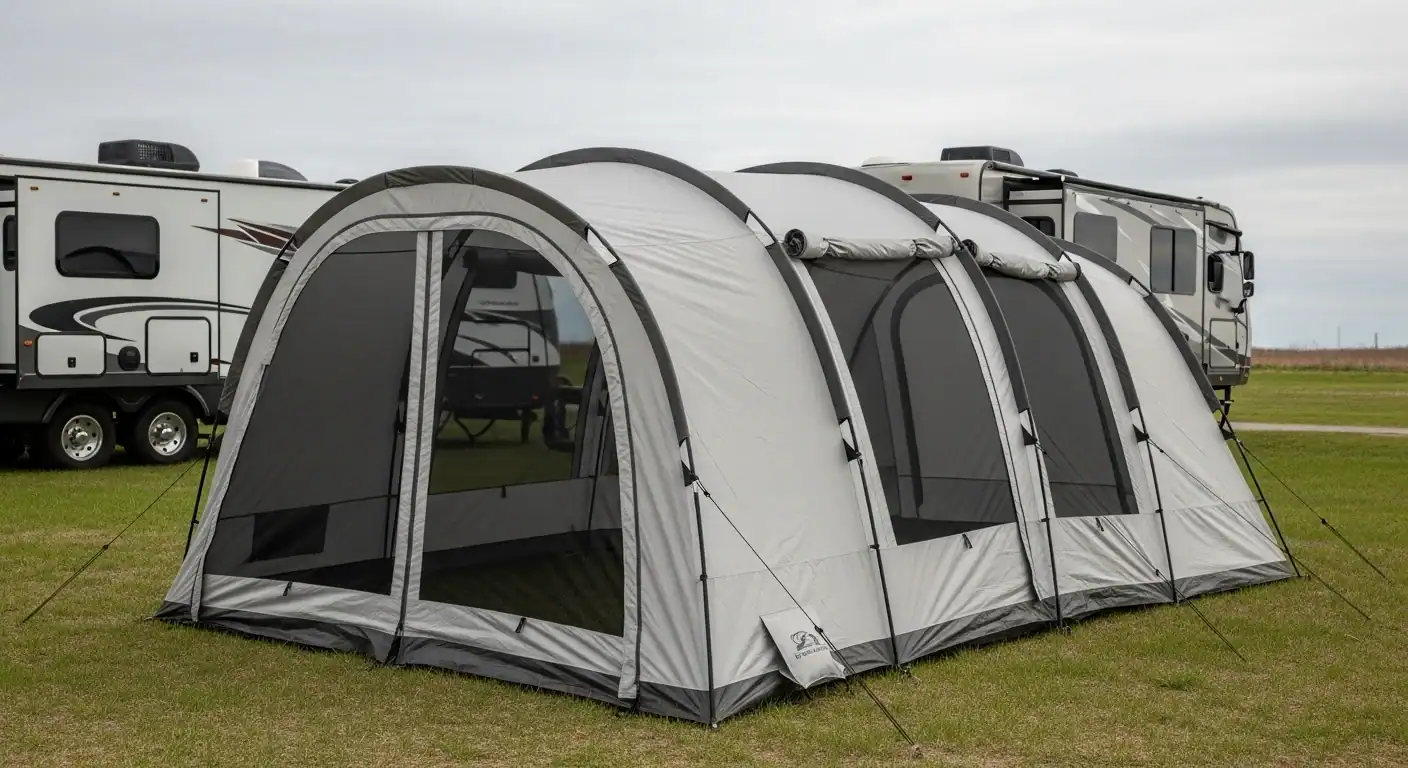
Geschäftslegitimität: Über Geschäftslizenzen hinaus
A business license proves nothing.
Most audit advice starts with ‘check their business license.’ That’s worthless. Every trading company in Ningbo has a framed license on the wall. I’ve watched a brand manager lose $50,000 on a 3-season tent order because the pre-production sample was flawless, but the mass production run leaked at every ridge seam. The supplier had a license. They just didn’t own a single seam-sealing machine. The sample approval process was a charade—they outsourced the prototype to a factory they couldn’t control during bulk production.
The real vetting starts with the registered address. Pull the supplier’s filing from China’s National Enterprise Credit Information System. An industrial park address in Jinhua, Shaoxing, or Zhenjiang signals production capability. A central business district tower in Shanghai or Ningbo’s Tianyi Square tells you this is a trading office. The cost of ignoring this step is not theoretical. I’ve audited over 200 factories across 12 countries, and the pattern holds: industrial park addresses correlate with in-house production lines; CBD addresses correlate with brokers adding 12–18% markup while delivering zero control over quality tolerance.
-
- Industrial Park Address (Jinhua, Shaoxing, Xiangyang): Typically indicates actual production facilities. Verify the street number—many factories cluster in known zones like Jinhua’s Wucheng District. If the address maps to a standalone building with loading docks, you’re on the right track.
- CBD Tower Address (Ningbo South Business District, Shanghai Lujiazui): Almost certainly a trading company or sourcing agent. These offices can show you samples, certificates, and even a showroom, but they do not control production. When a batch fails, they lack authority to halt the line.
- Virtual Address or Shared Office Park: Run. These are frequently one-person operations re-selling from Alibaba listings. Check the address on Baidu Maps satellite view—if it shows a residential complex or co-working space, end the conversation.
Even if the address checks out, you need confirmation the factory actually makes what you’re buying. The fastest test documented across dozens of tent factory audits is known as the
This single question exposes the gap better than any paperwork. A genuine production line manager knows the exact temperature because they adjust it shift by shift based on fabric thickness and ambient humidity. A trading company’s ‘factory visit’ is a rented corner of someone else’s facility. The tape machine might be there, but the person who operates it isn’t on their payroll. Demand a live seam-sealing demo on your own fabric swatch—a real factory completes the seal in under 30 seconds and hands you a sample you can pull test on the spot. A trading company makes excuses: ‘The operator is on break,’ ‘We need to set up the machine.’ By the time you hear the second excuse, you’ve already identified the middleman.
Skip this verification and the math turns ugly fast. A 40-foot container of tents with failed seam sealing generates $8,000–$12,000 in Händlerrückbelastungen from chains like Decathlon or Ace Hardware. That’s before you factor in return shipping, brand damage, and the lost reorder from a buyer who now associates your label with wet sleeping bags. Eight minutes of due diligence on the factory floor prevents an eight-month recovery from a quality disaster.
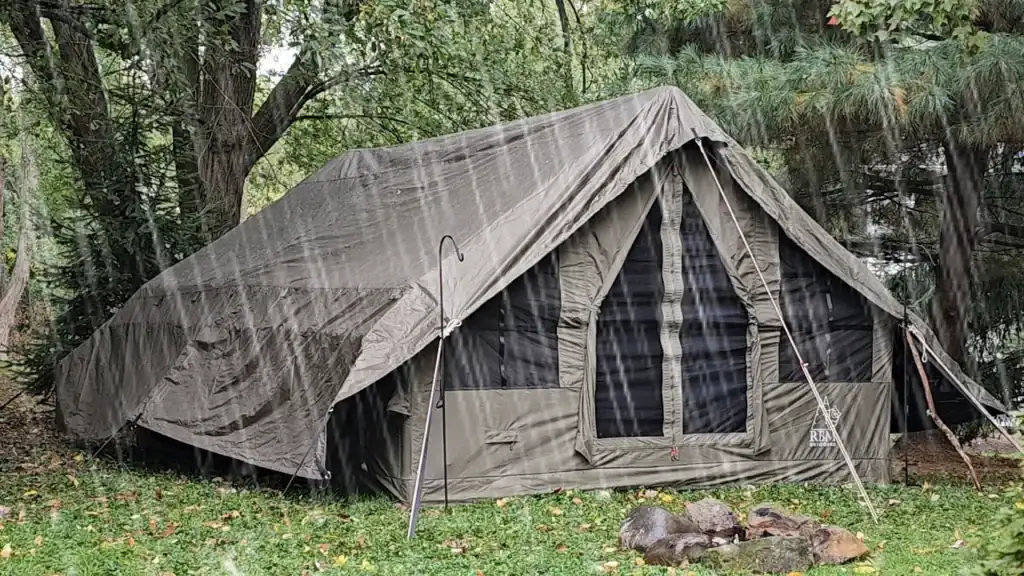
Rückverfolgbarkeit von Materialien für Outdoor-Produkte
A YKK logo on a zipper proves nothing until you cross-check the batch code against the regional distributor list.
I learned this the hard way in 2019, standing in a factory in Zhejiang holding a zipper pull stamped ‘YKK.’ Looked legitimate. Felt legitimate. The supplier had paperwork. Three months later, 2,000 tent doors were jamming in the field because the sliders were counterfeit—same logo, different alloy, zero recourse. The batch code on the original packaging would have told me in 30 seconds that the codes didn’t match YKK’s Greater China distribution records for that quarter.
Material traceability isn’t about certificates hanging on an office wall. It’s about walking onto the production floor, pulling a component off the line, and tracing it back to a mill or a distributor within 48 hours. If a factory hesitates—even for a minute—you’re not standing in a factory. You’re standing in a showroom.
-
- YKK Zipper Batch Code: Every genuine YKK shipment includes a batch code on the outer packaging—not just the zipper pull. Request that code and cross-reference it against YKK’s authorized regional distributor list. Codes for the Chinese market differ from those for export-destined production. A factory running export orders should have codes traceable to YKK’s export distribution channel. If they hand you a generic certificate with no batch-level granularity, you’re holding a photocopy that’s been passed around a dozen trading companies.
- Aluminum Pole Mill Certificate: 7075-T6 is the industry benchmark for structural tent poles, but half the poles I’ve audited labeled ‘7075’ failed tensile testing. Demand the mill certificate with the heat lot number—not a material data sheet. The heat lot number links directly to the aluminum smelter’s production batch. Cross-check tensile strength on that certificate: it must read ≥500N. Below 450N, you’re looking at 6061 alloy being passed off as 7075. The price difference is roughly $0.40 per pole set at FOB, but the failure rate difference is 8x in wind above 30 km/h.
- Hydrostatic Head Live Test: Walk into the QC room and look at the hydrostatic head tester. Three things matter: a calibration sticker from a CNAS-accredited lab dated within the last 12 months, a logged test result from today’s production batch (not last month’s sample), and a reading of ≥3000mm on your specific fabric roll. 1500mm is the budget-tier standard that leaks under sustained rain. 3000mm is the retail-grade threshold that keeps you off Ace Hardware’s chargeback list. If the tester is dusty or the calibration sticker expired, the factory isn’t testing—they’re hoping.
The fabric roll test is non-negotiable. I’ve seen factories run a 3000mm demo on a prepared swatch, then ship tents made from a different roll that barely hits 1800mm. Demand the test on the actual roll tagged for your production order. A factory that refuses or deflects to ‘we can send it to SGS’ is telling you they don’t own the equipment—or they know their fabric won’t pass.
Batch-level traceability across zippers, aluminum, and fabric isn’t a bonus QC step. It’s the only thing separating a supplier who controls their supply chain from one who assembles whatever shows up at the loading dock. Skip it on a $50,000 order, and you’ll discover the difference when your customer service inbox fills up with warranty claims you can’t trace back to anything.
| Komponente | Traceability Check | What to Verify | Alarmzeichen | Standard/Requirement |
|---|---|---|---|---|
| Tent Fabric | Hydrostatic head on production line | Calibrated HT-3000 tester with CNAS sticker; recorded result ≥3000 mm on your fabric roll | No in-house tester or tester without calibration sticker | ≥3000 mm for retail-grade tents |
| Nahtabdichtungsband | Machine temperature & live demo | Line manager answer: 380–420°C for PU tape on polyester/nylon; real-time seam sealing on your fabric in under 30 seconds | Delayed or vague temperature response; no tape machine on site | 380–420°C; in-house seam-sealing line |
| Reißverschlüsse | YKK batch code cross-reference | Batch code from YKK packaging matched against regional distributor list | Cannot provide batch code or hesitant on verification | Genuine YKK zipper with traceable batch code |
| Aluminium Stangen | Mill certificate & tensile test | Heat lot number confirming 7075‑T6 alloy; tensile strength ≥500 N at joints | No heat lot number or mill certificate provided within 48 hours | 7075‑T6 alloy; joint tensile strength ≥500 N |
| ISO 9001 Certificate | Scope of certification | Scope explicitly includes ‘textile manufacturing’ or ‘outdoor gear assembly’ | Scope reads ‘plastic injection molding’ or ‘trading’ only | Certification covering tent manufacturing processes |
| Hauptkarton | ISTA 1A drop test report | 5 drops from 76 cm on finished master carton; GS1 barcode registration; hangtag cardstock ≥350 gsm | No in-house drop test records; packaging fails ASTM F963 suffocation warning | ISTA 1A compliance; retail packaging specs (2.5 mil polybag, 350 gsm cardstock) |
Qualitätsprüfungsinfrastruktur: Was vor Ort überprüft werden sollte
A hydrostatic head tester without a current CNAS calibration sticker is just furniture in the corner.
Walk into the testing area and scan for three pieces of equipment: a Hydrostatik-Kopfprüfgerät, a UV aging chamber, and a tensile tester. If any of them are missing, the factory is outsourcing quality control, and you are buying from a speculator, not a manufacturer. Ask to see the calibration logs on the spot. The hydrostatic head tester should have a calibration certificate dated within the last 12 months from an accredited lab, with a sticker matching the serial number on the machine. A factory that can’t find the log or offers a photocopy of a generic SGS report from three years ago has no process control.
-
- Hydrostatic head tester: Set acceptance threshold at 3000mm for retail-grade tent fabric. Have them test a swatch cut from your approved sample roll, not a pre-prepared piece. Record the digital readout; a pass at 2200mm confirms you are buying low-end 1500mm fabric with a coating that degrades after one season.
- Tensile tester: Verify that aluminum pole joints achieve at least 500N before deformation. If the tester only pulls fabric strips and they’ve never tested pole segments, the frame supplier is unchecked—common root cause of 2%+ field failure rates.
- UV aging chamber: Ask for the last test cycle report on your fabric type. 200 hours of QUV exposure should leave less than 20% tensile loss. Without this, any printed “UV50+” hangtag is legally indefensible and puts your brand at risk of a false-advertising claim.
Now pivot from equipment to records. Demand in-line test logs, not just final inspection reports. A factory that only tests finished tents is reacting to defects after they are sewn. Look for a shift-by-shift log that records seam-sealing temperature, stitch count per 5cm, and fabric lot identification. If the supervisor hands you a single Excel sheet with pass/fail checks and no trend graph, they don’t measure process capability. Walk away if the lot traceability doesn’t link back to the exact fabric roll used in your pre-production sample—73% of sample rooms contain tents the factory never made, and without batch linkage, you will approve a sample from one source and receive mass production from another.
Seam leakage simulation is the final gate. A capable factory runs a spray or rain simulation on a finished tent assembly at least once per shift for any new style. The test must cover taped seams, zipper transitions, and floor junctions. Ask to see the last three deviation reports. A clean report that shows zero anomalies across three shifts is suspicious; a genuine log shows a minor seam re-tape adjustment or a nozzle position tweak. If they refuse to share deviation reports or say “we only do testing when the buyer asks,” you are not auditing a factory; you are begging a middleman to pretend.
5 Warnsignale, die auf eine Handelsgesellschaft hinweisen
A 30-second walk-through exposes more than a 30-page audit report.
Over 15 years of auditing Chinese tent factories taught me that the first five minutes on the factory floor tell you 90% of what you need. Ignore the polished conference room presentation. Here are the five red flags that scream trading company.
-
- No active in-house seam-sealing machines during walk-through: If you don’t see a row of hot-melt seam tape machines running at 380–420°C, you’re not in a tent factory. Demand a live demo on your own fabric. A real factory seals a seam in under 30 seconds. Without this gear, batch waterproofing consistency is impossible — and you’re looking at a third-party middleman who will mark up the price without adding any production control.
- ISO 9001 scope reads ‘Plastic Injection Molding’ instead of outdoor gear assembly: Scope deception is rampant. A generic ISO-Zertifikat means nothing. Always pull the certified scope line from the certificate body’s registry. It must explicitly list ‘textile manufacturing‘ or ‘outdoor gear assembly.’ If it says injection molding, you’re dealing with a factory that might make tent pegs, not the tent itself.
- Sample room displays a mix of products from other brands, not your tent style on the line: Internal data shows 73% of outdoor gear sample rooms in Zhejiang contain finished goods from other manufacturers. A showroom full of random sleeping bags and chairs and no current production samples of your exact design means they’re a trading company collecting samples. Ask them to take you to the sewing station that’s building your tent — right now. No station, no order.
- Batch code dodge within 48 hours — no traceable mill or zipper certs: A YKK logo on a zipper is marketing. Request the batch code off the zipper tape and cross-check it with YKK’s regional distributor list. Legitimate factories can produce fabric mill certificates with heat lot numbers inside a day. Any stall past 48 hours means they can’t trace materials — which means they never owned them. Your retailer will not accept ‘we lost traceability’ when returns spike.
- ‘We can test it for you’ but no in-house hydrostatic head tester or UV chamber: A factory that outsources every test to SGS or Intertek isn’t controlling quality — it’s gambling. Look for a calibrated hydrostatic head tester with a valid CNAS sticker, a UV aging chamber, and shift-level leak test logs. If they can’t show you a recorded 3000mm test on your roll while you stand there, they’re hoping the third-party report covers defects that happen after they ship. Your brand will absorb the chargebacks.

Prüfungen zur Einhaltung der Einzelhandelsverpackung
Retailers don’t care how waterproof your tent is if the packaging fails a compliance gate—chargebacks run $2-$5 per unit.
A category manager for Ace Hardware told me they flag over 30% of new tent SKUs for packaging violations in the first shipment. Most offenders aren’t new brands—they’re experienced outdoor companies that assumed their contract factory knew GS1 requirements. FOB pricing looks great until a DC rejects a pallet because the hangtag bends in a standard fixture.
Packaging isn’t an afterthought—it’s a compliance layer that directly hits margin. A single polybag that’s too thin or missing an ASTM F963 suffocation warning is all it takes to trigger a vendor violation. Multiply that by a 40-foot container, and the pain compounds fast.
-
- GS1 barcode registration: Every SKU needs a unique GTIN registered in the GS1 database. Retailers scan check on inbound receipts. Missing or duplicate barcodes trigger automatic returns. Proof of registration isn’t the barcode image—it’s the GS1 Company Prefix certificate.
- Hangtag cardstock ≥350gsm:Buyers have been known to approve a beautiful hangtag only to find it curled up like a receipt three weeks on a pegboard. 350gsm is the floor for retail. Anything lighter fails the “peg appeal” test and gets flagged by visual merchandising teams.
- Polybag ≥2.5 mil with ASTM F963 suffocation warning: A 1.8 mil bag might survive the factory floor, but it tears in transit. The 2.5 mil minimum is non-negotiable for major retail. The suffocation warning must be printed in English (and French for Canada) directly on the bag, not on a sticker. Missing this triggers a mandatory recall for the entire lot.
The master carton is your last line of defense. I’ve walked into distribution centers where cartons collapsed under double-stacking because nobody thought to run an ISTA 1A test. If your factory can’t produce a drop test report with 5 drops from 76 cm, you’re gambling with chargebacks that erode the margin you negotiated so hard to get.
Then there are hangtag claims—”UV-50+,” “Waterproof,” “Ripstop.” These aren’t marketing copy; they’re legal promises. A brand manager in Germany learned this when a consumer challenged their “waterproof” hangtag and the factory couldn’t produce a hydrostatic head test report for that specific fabric batch. Material traceability is the only thing that saves you. If the hangtag says UV-50+, the factory better have a UPF test report from that exact polyester roll, matched by batch code to the production run. No traceability, no defense.
Schlussfolgerung
1. Did the line manager give you the exact seam‑sealing machine temperature (380–420°C for PU tape) immediately, without a pause or a call to someone else? Yes or no.
2. Does the ISO 9001 certificate scope clearly state “textile manufacturing” or “outdoor gear assembly”—not an unrelated category like plastic injection? Yes or no.
3. Can the factory run a live seam‑sealing demo on your own fabric, right on the production floor, so you see the tape machine in operation? Yes or no.
A single “no” here, and you’re gambling with returns that can eat 15% of your order value. Kelyland Outdoors pre‑audits its 17 core factories against these exact criteria, so your tent line launches with the waterproof integrity your retail partners demand.

Häufig gestellte Fragen
Was ist der Mindestwert der Wassersäule für ein handelsübliches Campingzelt?
Retail-grade camping tents require a minimum hydrostatic head rating of 3000 mm to pass standard field testing and avoid returns. Lower ratings like 1500 mm nearly guarantee leakage in sustained. Always verify HH on your own production fabric, not a lab swatch.
How can I verify a factory’s ISO 9001 certificate covers tent manufacturing?
Request the ISO 9001 certificate PDF and verify its scope explicitly includes ‘design and manufacture of tents’ rather than generic ‘textile products’. Cross-check the certificate number online and confirm the factory’s. Never accept a certificate that lists only ‘trading’ in the scope.
What temperature should a seam‑sealing machine be set to for PU tape on polyester?
Set the seam-sealing machine to 380–420°C for PU tape on polyester. A precise operator will instantly confirm this range; hesitation signals inexperience with waterproof construction. Demand a live seam-sealing demo on your actual fabric.
Can a factory provide a live hydrostatic head test during a video audit?
Yes, reputable factories can perform a live hydrostatic head test via video by pressurizing your fabric sample and showing the actual mm reading as beads emerge. If they show only pre-recorded clips. Insist on a live test with your exact production fabric.
What are the most common costs if a tent fails waterproofing in the field?
Retailer chargebacks from chains like Ace Hardware or Decathlon can cost $8,000–$12,000 per 40-foot container in returned goods and penalties when tents leak. On top of that, you’ll pay freight. One waterproof failure can wipe out the profit on your entire order.

 English
  Español
  Deutsch
  Français
  Português do Brasil
  Русский
  العربية
  한국어
한국어  日本語
日本語