 跳到内容

Why does the emergency shelter power supply that passes 7. approbation de l’échantillon never match the mass production run? Buyers ask that behind closed doors, usually after a $50K order fails at the worst possible time. The standard answer — ‘trust us, it’s identical’ — is a red flag, not a guarantee.
The divergence rarely shows up in photos or packaging. It lives in the quality tolerance nobody locks at sample approval: cable gauge, battery cell grade, and inverter component ratings. Those silent details turn a promising pre-production unit into a field liability.
Buyers compare FOB pricing and lead times, but the real cost difference sits in field behavior — whether the system can carry an air-beam pump startup surge, keep medical devices running all night, and retain enough reserve margin for radios and laptops. Generator vs solar is not a brand decision; it’s a load-planning decision.
Why Most Emergency Power Estimates Fail
Most field tent blackouts are load-calculation failures, not equipment failures.
Emergency field tents run three simultaneous load buckets: air-beam inflation pumps, LED work lighting, and medical or communications equipment. Each bucket behaves differently on the power curve. A mistake in any one of them drags down the other two, and the tent goes dark exactly when the field team needs power most.
The most common error is sizing by tent square footage. A field hospital tent and a command post of the same footprint do not have the same electrical profile. The first may cycle an air-beam pump overnight; the second might only run a laptop charger and a radio repeater. Load inventory must start with connected devices, not shelter dimensions.
Build the Load Table by Device, Not by Tent Size
-
- Air-beam inflation pumps: Draw 800–1,500W at startup. This surge is the first thing to fail on undersized solar kits and small battery stations.
- LED work lighting: Draw 20–60W per fixture, but these are constant loads that run through the night and consume the battery buffer long after inflation is done.
- Medical and comms equipment: CPAP units and vaccine fridges require 100–300W continuous power. They run overnight and tolerate zero interruption, so they define the minimum runtime of the whole system.
Total wattage without runtime is not useful. A 500W load running for 10 hours needs 5,000Wh of usable energy. A 2,000W load running for 30 minutes needs only 1,000Wh. Field planners must build a table with columns for watts, hours, and watt-hours per device before comparing generators to solar kits.
Peak vs Continuous Wattage: The Blind Spot
Generators and solar kits are marketed by continuous wattage, but air pumps and compressors surge at startup. A pump rated at 1,000W running load can pull 1,500W for the first 2–3 seconds. If the source cannot supply that surge, the inverter trips or the generator bogs down, and the tent stays half-inflated.
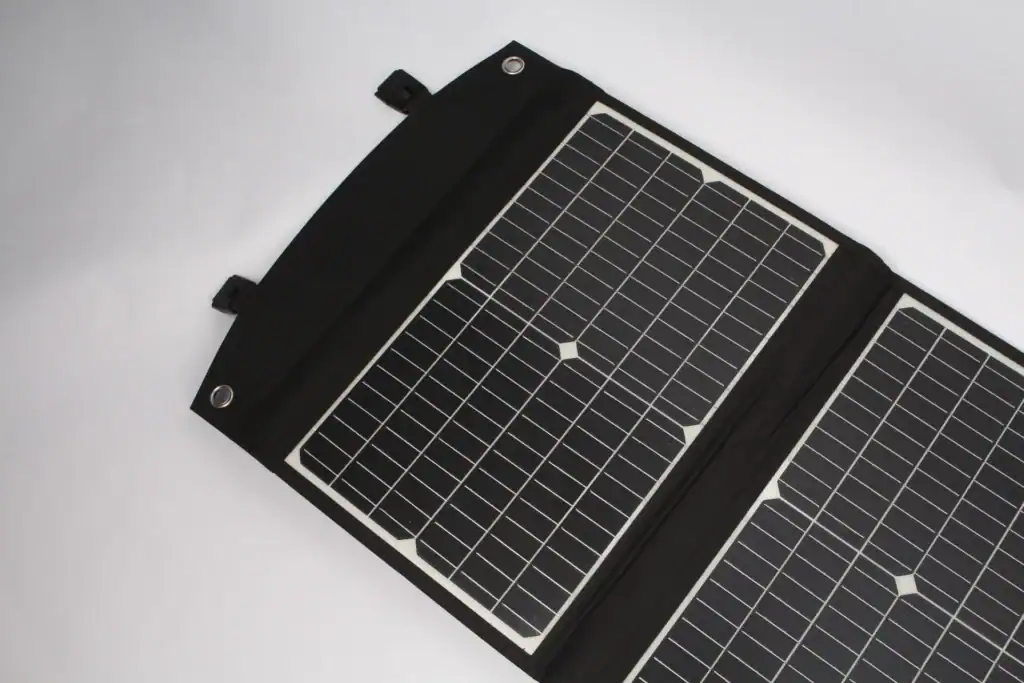
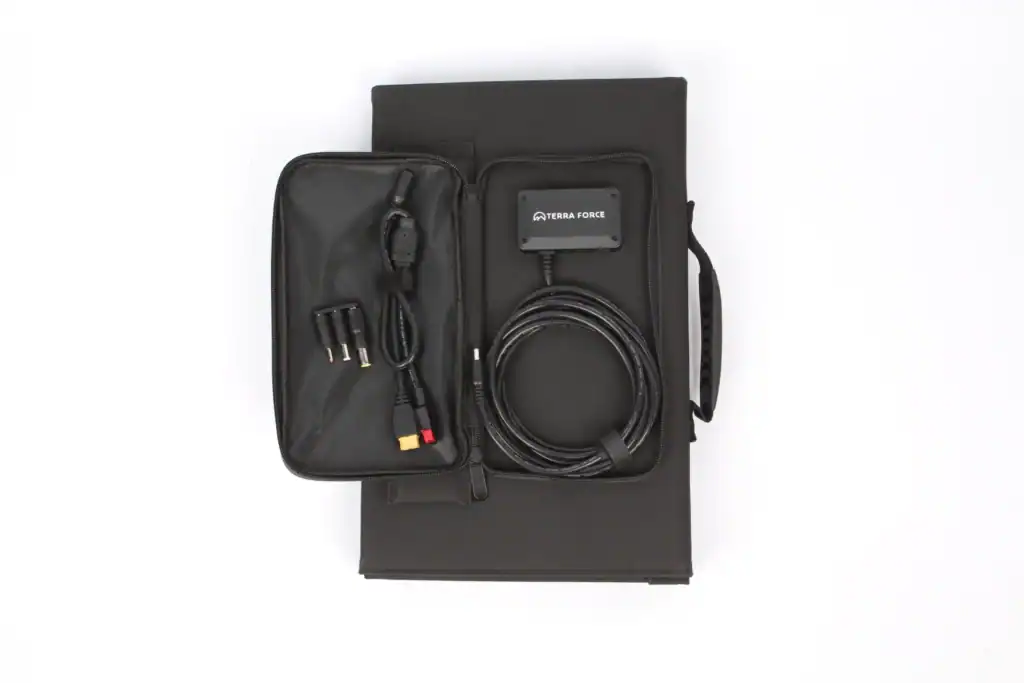
Portable solar panels typically produce 50–400W, which is why a solar-only kit cannot drive an inflatable shelter. Inverter generators with 1,000–3,000W output handle the surge because their engines ramp up under load. The field power plan must specify peak surge capacity, not just the printed running watts on the spec sheet.
The same discipline applies at the factory door. Kelyland’s network includes an air mattress line producing 2,500,000 units per year under CE, ETL, and ISO 9001 certification, and a camping light line rated at 3,000,000 units annually. Asking those factories for the pump’s startup current curve and the LED driver’s actual draw closes the spec gap before mass production starts.
Generator vs Solar Kit: Cost, Runtime, Payload
Fuel logistics, not generator price, is the hidden cost that breaks field power budgets.
The first split is not watts. It’s logistics. A portable solar kit produces 50–400W, runs silent, and needs zero fuel—and the whole setup ships lighter than a generator plus fuel cans. A generator delivers 1,000–3,000W and works through the night, but every hour of runtime depends on diesel or dual-fuel supply chains that relief sites may restrict or ration.
Diesel vs Dual-Fuel vs Inverter
Diesel generators handle loads up to 3,000W and run reliably after dark. The catch is storage. Many relief sites cap or ban on-site diesel, so the generator becomes a paperweight unless fuel delivery is pre-arranged. Dual-fuel inverter models solve part of the problem—they run cleaner power for sensitive electronics—but they still demand a defined fuel run-time budget. Cost per hour must include fuel delivery, not just the generator price.
Solar removes fuel entirely but adds a different constraint: daylight. A 100W panel can take all day to recharge a large power station, and air-beam pump startup or medical device surge loads can hit 800–1,500W—far beyond what a small solar kit can deliver on demand.
Battery Chemistry Decides the Real Runtime
-
- Solar kit (50–400W): Silent, fuel-free, and low-maintenance, but daylight-dependent; output drops to zero at night and in poor weather.
- Inverter generator (1,000–3,000W): Handles surge loads like air-beam pumps and runs at night, but requires fuel delivery, exhaust placement outside, and scheduled maintenance.
- LiFePO4 power station: Safe indoors with no emissions; buffers generator output for silent overnight operation. Rated for 10+ years of daily cycling versus roughly 2 years for NCM.
Mission-critical tents should favor cycle life over weight. LiFePO4 batteries hold up for 10+ years of daily use; NCM chemistries may deliver about 2 years of daily cycling before capacity fades. In a disaster-response deployment, a battery that dies after two seasons is not just a cost line—it’s a mission risk. A LiFePO4 power station can also buffer generator output: charge during generator run hours, then run lights, CPAP units, and communication gear silently at night.
On the sourcing side, these power accessories pair with the same field tents that need them. Kelyland’s camping light factory alone produces 3,000,000 units annually with CE and ISO 9001 certifications, and the network supports minimum order quantities as low as 50–100 pieces for select items with 30–45 day lead times—which matters when a relief tender bundles lights, cables, and power banks into one order.
| Facteur | Generator (1,000–3,000W) | Solar Kit (50–400W) | Hybrid Setup (Recommended) |
|---|---|---|---|
| Upfront Cost | Higher hardware cost; fuel logistics can exceed hardware cost over a 10-day mission | Lower hardware cost, but panels often undersized for field tent loads | Moderate cost; reduces fuel spend with solar input |
| Power Output & Surge | 1,000–3,000W continuous; handles air-beam pump startup (800–1,500W) and medical device loads (100–300W) | 50–400W typical; cannot cover surge loads or high-draw equipment | Inverter generator charges LiFePO4 buffer; battery covers surge and continuous loads |
| Runtime & Fuel | 24/7 if refueled; diesel or dual-fuel supply may be banned or rationed at relief sites | Daylight-dependent; a 100W panel may take all day to recharge a large power station | 24-hr runtime; silent overnight battery power for lights, CPAP, and comms |
| Payload & Portability | Heavy unit plus fuel payload; transport and on-site storage burden | Lightweight panels, but large arrays are needed for meaningful wattage | Balanced payload: fuel for generator plus panel and battery footprint |
| Safety & Certification | Exhaust must stay outside tents; fire-safe placement required | IP-rated cable routing required to avoid voiding NFPA 701, GB/T 44010, or CE shelter compliance | Certified LiFePO4 (10+ yr cycle life) with outdoor-sheathed cables sustains field tent certification |
| Maintenance & Lifecycle | Scheduled maintenance, fuel stability, and moving parts create field downtime risk | Low maintenance; LiFePO4 rated for 10+ years vs NCM at about 2 years of daily cycling | Battery buffers generator runtime, extending generator lifespan and cutting maintenance intervals |
Certification and Field Safety Risks
Cable routing and battery heat can void a shelter’s certification — the power assembly and the fabric share the same inspection.
Certification is not awarded to the tent fabric alone. When a field shelter gets wired for power, inspectors look at the entire assembly — cable pathways, battery placement, heat sources, and the fabric’s fire performance under NFPA 701, GB/T 44010, or CE. Treating the power system as an unrelated purchase is the fastest way to fail a deployment inspection.
Cable Routing and Ignition Points
An air-beam shelter built with PVC or TPU tubes has specific heat vulnerabilities. An unrated cable carrying continuous current and pressed against a TPU air beam can soften the beam surface over hours of operation. The fix is routing discipline, not just component quality. Cables must run along structural seams or anchors, never over air beams or battery housings.
-
- Cable spec: Require IP-rated, outdoor-sheathed cable for every line entering the shelter. Household-grade extension cord construction fails the moisture and abrasion profile of field environments.
- Documentation : Ask the supplier for a written statement that the power routing plan does not compromise the shelter’s GB/T 44010, NFPA 701, or CE fabric classification. This document belongs in the sample approval package.
- Heat clearance: Battery banks need ventilation clearance and must sit on non-combustible surfaces. Routing a power brick inside a zipped pocket against a Poutre d'air TPU is a field failure waiting for an ignition source.
Generators Outside, Batteries Inside
A combustion generator produces carbon monoxide and surface heat. No relief-site protocol allows it inside an occupied tent. Battery power stations eliminate both hazards — no exhaust, no open flame, no ignition point beyond the internal protection circuitry. This is why a low-noise battery power station, not a generator, is the default indoor source for nighttime emergency shelter power supply.
The strongest field setup is a hybrid split. The inverter generator sits outside and recharges the battery during the day; the battery runs lights, CPAP units, and communication gear from dusk to dawn. This removes ignition sources from the shelter envelope, cuts fuel burn, and keeps nighttime noise below the level that disrupts medical recovery or field staff rest.
Buyers can document this split cleanly when one supplier covers both shelter and power accessories. Kelyland’s strategic tent factories hold CE and BSCI certification, while its camping light factory runs 3,000,000 units per year under CE and ISO 9001. That cross-category audit trail is exactly what a relief tender review team wants to see before approving a field power plan.
Hybrid Power for Nighttime Field Operations
A battery-only setup fails when an air-beam pump cycles at 2 a.m.
Nighttime field power works best as a chain, not a single machine. Solar panels and an inverter generator charge a LiFePO4 battery bank; the battery supplies silent power for lights, CPAP machines, and communication gear while people sleep. The generator runs for a few hours to refill the buffer, then shuts off. Portable solar alone, typically 50–400W, cannot handle air-beam pump startup or medical device loads that need 1,000–3,000W.
The common failure is undersizing the night. LED lighting draws only 20–60W, so a small battery looks fine for 8–10 hours. Then an air-beam inflation pump cycles on, its startup surge exceeds the inverter rating, and the tent goes dark. A load plan that ignores overnight surge is not a power plan—it is a prediction of failure.
Battery Buffer: 1.5–2x the Calculated Load
Estimate total watt-hours from dusk to dawn by multiplying each device’s watts by the hours it will actually run. Include CPAP, comms chargers, and any pump that maintains air-beam pressure on a cycle. Then specify 1.5–2 times that number. Inverter loss and cold-weather battery derating consume real capacity; a buffer that looks generous at 20°C shrinks fast below freezing.
-
- Air-pump surge: An inflation pump can spike 800–1,500W at startup. The inverter must survive that peak, not just the steady draw.
- Recharge window: A 100W solar panel may take all day to recharge a large station. Match panel wattage to the daily runtime demand and available sunlight hours.
- Weather fallback: Solar cannot be the primary source in poor weather or high-latitude relief zones. A generator or a larger LiFePO4 buffer must cover the gap.
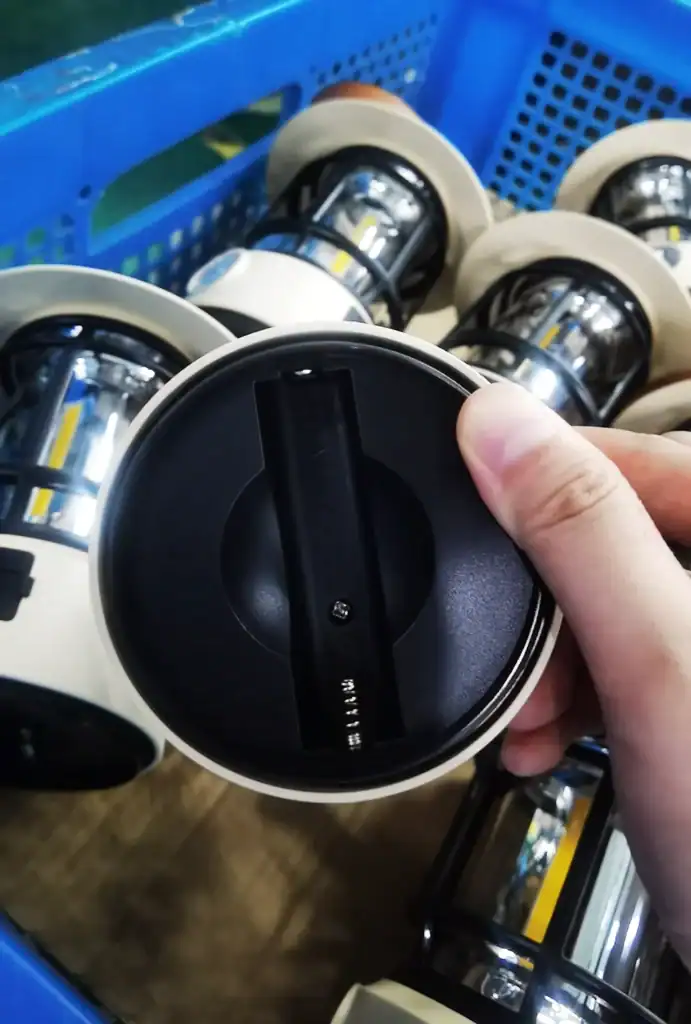
Sourcing this setup as one package reduces field risk. Kelyland Outdoors coordinates 17 core strategic factories and more than 200 manufacturing partners; its camping light factory alone produces 3,000,000 units annually under CE and ISO 9001. The same network can pair a LiFePO4 power station with rechargeable LED camping lights that include solar panel input and power bank functions, so the night load and the recharge path come from one qualified supply chain.
Sourcing Emergency Power Accessories Without Delays
Emergency power orders don’t slip because the cell chemistry fails. They slip because someone approved a quote before asking whether the supplier could produce a CE certificate for the exact model being shipped. The hardware is usually fine. The documentation gap is what stops delivery.
For select power accessories, minimum order quantities start at 50–100 pieces, and the délai de production standard runs 30–45 days. Those are workable numbers for a pilot run, but they assume the paperwork is aligned before production starts.
Qualify the Factory on Three Documents
-
- ISO 9001: 2015 QC reports: Ask for the reports covering your specific production run, not a generic company brochure.
- CE or ETL certificates: Match the certificate to the exact model number and voltage configuration, not the brand family.
- Pre-shipment inspection terms: Get pass/fail thresholds written into the agreement before the deposit, not after mass production.
Certification depth tracks production volume. Kelyland’s camping light core factory in Ningbo produces 3,000,000 units per year and holds both CE and ISO 9001; a factory that has run.
Conclusion
The correct emergency shelter power supply for field tents is not a single device. It is a load-first architecture built around a hybrid inverter generator and a LiFePO4 power station with solar input, matched to the actual startup and continuous wattage of air-beam pumps, medical gear, and lighting. Pair that with documented compliance to NFPA 701, GB/T 44010, or CE, and the setup survives mission conditions instead of failing at 2 a.m.
-
- Hybrid inverter generator plus LiFePO4 power station covers 1,000–3,000W surges and provides silent overnight runtime.
- LiFePO4 batteries support 10+ years of daily cycling; replace NCM models after roughly 2 years.
- Portable solar kits produce only 50–400W and cannot run high-draw equipment as a primary source.
- Compliant power accessories are available with MOQs as low as 50–100 pieces and 30–45 day lead times.
Before you contact a supplier, map every load your field tent must carry from dusk to dawn, then check the certification documentation for the shelter fabric and the power components together. If your sourcing partner can consolidate lighting, battery backup, and cable routing into one order, you cut both lead-time and compliance risk. Browse the rechargeable camping lights with power bank functions on Kelyland’s product page to see how a silent, emission-free component fits into that hybrid plan.
Questions fréquemment posées
What’s the best solar generator for emergencies?
For emergency field tents, choose a LiFePO4 power station with at least 1,000W inverter output and expandable solar input. Portable solar alone (50–400W) cannot handle air-beam pump or medical device loads. Pair it with an inverter generator when site loads exceed 1,000W.
Are battery power stations safe to use indoors?
Yes. Battery power stations produce no exhaust or emissions and are safe inside tents and shelters. Never block ventilation ports or charge unattended in enclosed spaces.
Which is better for emergency preparedness?
Generators handle high-wattage appliances for extended outages; power stations keep lights, phones, and small medical devices running quietly. The hybrid setup—inverter generator plus LiFePO4 station—covers both long runtime and clean. Size the solution from a load inventory, not from a single device.
Solar vs Generator: Which Is Better for Camping?
Solar works best for light loads and sunny daytime charging; generators provide consistent 1,000–3,000W power for heavy equipment. For camping, use solar for overnight lights and device charging, and a generator for pumps. Match the power source to the actual load list.
Portable Power Station vs Generator for Camping: Which Is Better?
If the site needs quiet overnight operation and low-draw devices, start with a power station; choose a generator when you need continuous high wattage. For mixed loads, a hybrid system gives you. Let your quiet hours and wattage demand decide the split.

 English
 Español
 Deutsch
 Français
 Português do Brasil
 Русский
 العربية
 한국어
 日本語