 跳到内容
跳到内容 
camp grill brand scaling is the first checkpoint buyers should lock before they approve a supplier, budget, or production slot. Scaling a camp grill brand across Europe isn’t about finding the cheapest FOB price—it’s about what that 30% difference actually buys you when two identical-looking grills sit side by side on a shipping container. One grill wears a high-temperature powder coat that survives a full season of beachside salt air without rusting. The other starts flaking by month three, and the brand behind it eats a $50,000 chargeback because the pre-production sample passed with flying colors while the mass production run quietly swapped cold-rolled steel specs. That gap between sample approval and bulk delivery is where most quality tolerance failures hide, and it’s the same gap that forced one European supply chain manager to rethink her entire sourcing playbook after burning through two suppliers in 18 months.
Oriana Delgado didn’t need another factory that promised EN1860 compliance on paper. She needed a partner who could hold a 304 stainless steel welding tolerance across 5,000 units, deliver LFGB-certified charcoal grills before the May retail window, and coordinate a matching cooler line that turned seasonal buyers into year-round accounts. The Kelyland Outdoors case study isn’t a story about cost savings—it’s a five-year record of what happens when a grill brand stops managing suppliers and starts owning its supply chain from Jinhua to the last-mile distribution hub.
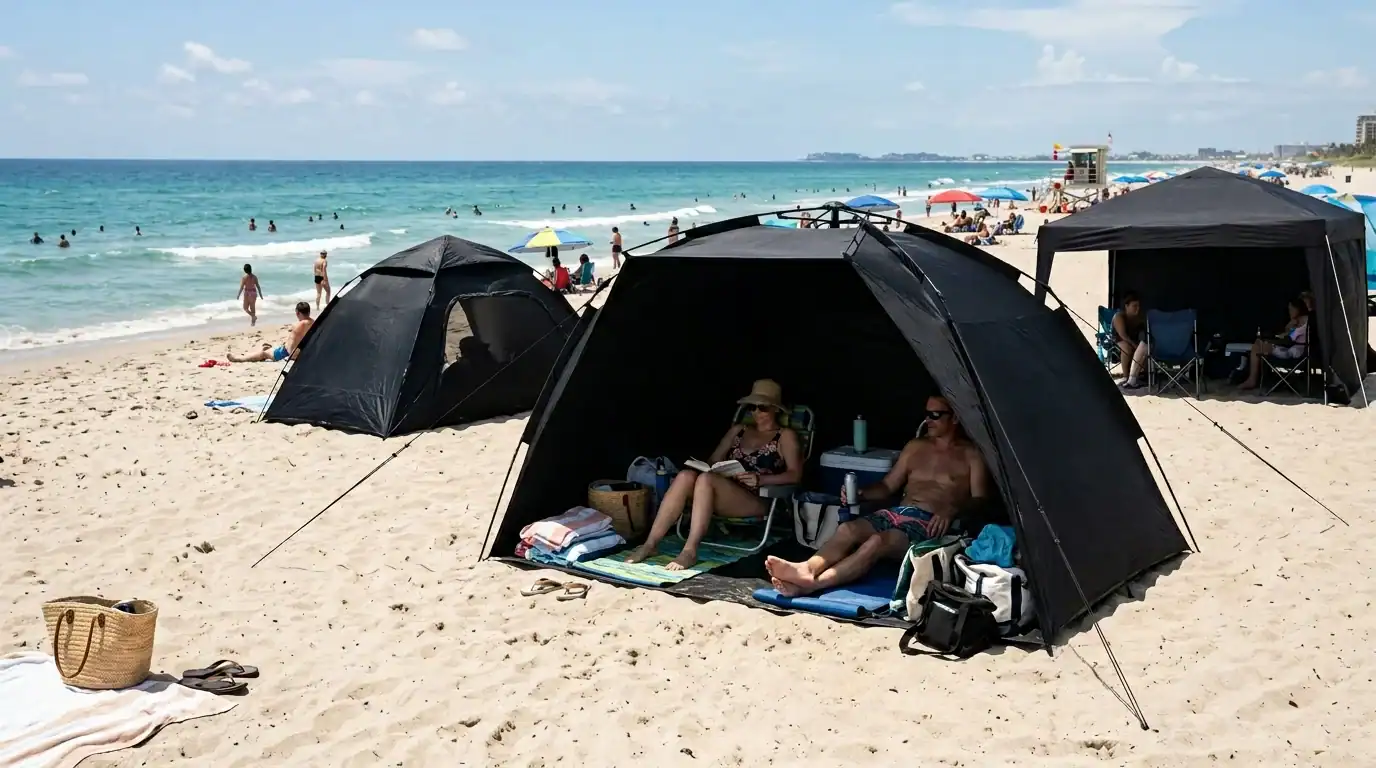
The Challenge: Scaling a Seasonal Grill Brand Across Europe
Three grill SKUs hit a Rotterdam warehouse—none matched the pre-production sample.
A supply chain manager stands in a distribution center outside Lyon, staring at 1,200 charcoal grills fresh off a container from Southeast Asia. The pre-production sample passed inspection six weeks ago. The mass production run? Different steel gauge. Thinner. The grill body warped under first-use heat during internal testing. The brand had already committed to three retailer shelf programs across France, Germany, and the Netherlands. The shipment was dead on arrival.
Initial Product Range and Target Markets
The brand started with a focused lineup: a compact portable charcoal grill, a larger kettle-style model, and a tabletop unit aimed at the urban balcony market. Target markets split into three tiers. Germany drove volume through specialty outdoor chains. France pulled mid-range units through regional sporting goods distributors. The Netherlands and Belgium tested the entry-level SKU through e-commerce channels. Each market demanded different packaging languages, different safety label formats, and different retailer compliance documentation.
The grill category lives and dies by a six-month window. Retailers place orders in January and February. Production wraps by April. Product hits shelves in May. Miss that window and the entire season’s revenue vanishes. The brand’s initial production batches ran 300 to 500 units per SKU—modest volumes for a factory accustomed to 800,000 units annually, which immediately flagged the account as low-priority in most supplier queues.
Logistics Hurdles and Quality Consistency Issues
Previous suppliers treated seasonal grill orders as fill-in work. When a larger client’s order came through, the grill line stopped mid-batch. que le prix FOB swung wildly between production runs because the factory recalculated container rates based on whatever vessel space was left. One shipment arrived with 60 units packed loose because the factory ran out of inner cartons and didn’t notify anyone. The brand absorbed the dent-and-scratch returns.
Quality tolerance was the real killer. The pre-production sample would use cold-rolled steel at 0.8mm thickness. The mass production run would drift to 0.6mm—still technically within some factories’ internal spec, but enough to cause handle brackets to loosen after three uses. Welds that passed visual inspection on the sample showed inconsistent penetration on the production units. Without an EN1860-compliant production line, these grills couldn’t legally enter German retail. The previous factory held a generic ISO certificate but had never tested to EN1860 charcoal grill safety standards or LFGB food-contact material requirements.
-
- Sample-to-production drift: Approved samples used proper gauge steel; production runs substituted thinner stock without client approval, betting the buyer wouldn’t catch it before retail distribution.
- Packaging inconsistency: Three-language packaging required for EU retail was repeatedly printed with missing language panels or outdated safety pictograms, triggering retailer rejection at the distribution center.
- Container optimization failure: Mixed-SKU shipments arrived with disproportionate quantities because the factory loaded what was available rather than what the purchase order specified, leaving best-selling SKUs understocked for peak season.
These failures compound fast in a seasonal category. A single rejected container doesn’t mean a two-week delay. It means missing the entire May-to-August retail window. The brand ate a full season’s margin on one batch and started looking for a sourcing partner that treated 500-unit orders with the same production discipline as 50,000-unit runs.

Partnership Setup: End-to-End Sourcing with Kelyland Outdoors
EN1860 certification isn’t paperwork.
Subject: FW: New grill SKU — demand collection notes before we lose another season. Attached is the brief from Oriana’s team. They got burned last year. A different supplier shipped 2,000 units where the pre-production sample used 0.8mm cold-rolled steel but the mass production run landed at 0.5mm. Grates warped by the third use. Returns ate 40% of the margin on that order. She doesn’t want a repeat.
Demand Collection That Starts With Failure, Not Features
Most sourcing briefs begin with a spec sheet. Oriana Delgado’s brief for a new charcoal grill SKU began with a post-mortem. Her team mapped every return reason from the previous supplier failure — grate warping, flaking powder coating, and inconsistent leg mounting brackets that tilted the cooking surface by 8 degrees. The demand collection call with Kelyland’s team wasn’t about features. It was about process control. The charcoal grill factory in Jinhua had been running since 2009, with 800,000 units annual output and EN1860 plus LFGB certifications already in place. That factory history meant the technical conversation could skip past basic capability questions and land directly on material grade decisions.
Design Collaboration That Gets the Spec Right the First Time
The new SKU needed to hit a specific FOB pricing window while matching the brand’s existing visual identity. Kelyland’s design team pulled from the factory’s existing material library — cold-rolled steel for the body, 304 stainless for the cooking grate, and 430 stainless for secondary components where corrosion resistance mattered less. Sample approval took two rounds, not five. The prototype landed within the agreed quality tolerance on the first pass because the factory already had the tooling calibrated for the steel thickness Oriana’s team required. Fast prototyping meant a 14-day turnaround from design lock to physical sample. That let the brand test the unit at two pre-season trade shows before committing to the production run.
Material Sourcing Where the Failure Chain Actually Starts
The previous supplier’s failure was a sourcing problem disguised as a manufacturing problem. Cutting steel gauge mid-run to protect margin is common — and it’s invisible in a single pre-production sample. Kelyland’s team addressed this by locking the material spec in the production agreement and conducting in-line inspections at the raw material receiving stage, not just at final assembly. The cold-rolled steel arrived with mill certificates matched to the order. The 304 stainless for the grate underwent spark testing to confirm grade before cutting. When the powder coating station ran, adhesion tests happened on the first 50 units off the line, not the last 50.
-
- Material lock-in: Steel gauge and grade specified in the production agreement before any tooling is set. No substitutions without written approval and a revised sample.
- Incoming inspection: Mill certificates verified against physical material. 304 stainless spark-tested at receiving. Cold-rolled steel thickness checked with calipers across the batch.
- In-line coating checks: Powder adhesion tested on the first 50 production units. EN1860 requires coating integrity under heat stress — if it flakes at 200°C, the batch stops.
Pre-Shipment Inspection That Catches What In-Line Misses
In-line inspection catches process drift. Pre-shipment inspection catches assembly drift. Kelyland’s team ran an AQL 2.5 level II check on the finished goods before container loading. Leg brackets got measured for that 8-degree tilt that killed the previous brand’s reviews. Grate fitment was checked across 80 sample units pulled from different production batches. One carton showed scuffing on the powder-coated surface from internal packaging rubbing — caught and corrected before 2,000 units shipped with the same issue. The full inspection report went to Oriana’s team 72 hours before the container sealed. She approved shipment with data, not trust.
If your current supplier sends a pre-shipment inspection report that’s one page with three checkboxes, that’s not an inspection — it’s a goodbye wave. Real pre-shipment reports run 12 to 18 pages and include photos of the specific defect samples flagged during the check. Request that format on your next order. If they can’t produce it, the gap between your sample approval and mass production isn’t being measured. It’s being hidden.
Customization That Drove Differentiation
Differentiation in commoditized grill categories doesn’t live in the product spec — it lives in the finish, the mark, and the unboxing.
Ask most sourcing advisors how to differentiate a charcoal grill brand, and they’ll point you toward grate material, airflow design, or ash management. Those are baseline requirements. The factory in Jinhua producing 800,000 units annually has been refining those mechanics since 2009. Every competent supplier within 50 kilometers can deliver a functional grill. The brands that actually break out of regional status and into multi-market distribution win on three things no one talks about: surface coating longevity, branding that doesn’t peel after two seasons, and packaging that communicates premium before the box is opened.
Surface Treatments That Outlast the Season
Powder spraying on cold-rolled steel isn’t optional for European distribution — it’s the difference between a grill that looks new on the retail shelf in year two and one that shows rust spotting by month six. The EN1860 certification requires it, but the real question is coating adhesion quality. Cheap electrostatic application leaves micro-gaps where moisture creeps in during humid warehouse storage. The approved finishing protocol at the Jinhua facility applies a multi-stage pretreatment before the powder coat touches metal, which eliminates the adhesion failures that plagued the brand’s previous supplier.
Laser-cut branding operates on a different logic. Silk-screen logos fade. Stickers peel. A laser-marked brand plate cut directly into 304-grade stainless steel becomes permanent and unclonable without tooling investment — a quiet anti-counterfeiting measure that matters when a brand scales across multiple EU markets. Paired with custom packaging that uses the same Pantone-matched colorway and consistent typography across the grill box, the cooler carton, and the accessory packaging, the brand identity locks into place at every retailer touchpoint.
Cross-Sell by Design, Not by Accident
The coordinated cooler line didn’t emerge from a separate sourcing project. It was developed in parallel with the grill SKU expansion, sharing the same material sourcing timeline and the same pre-shipment inspection window. Hard coolers from the Ningbo Outdoor Storage factory — producing 2,000,000 units annually — use PU foam insulation rated for 24 to 48 hours of cold retention. That spec matched the target customer profile: weekend campers who buy a grill and need a cooler that keeps food cold for the same trip duration.
Most brands treat coolers as a separate category, sourced from a different supplier, with disconnected branding and incompatible lead times. That fragmented approach creates inventory mismatches — grills arrive in March, coolers land in May, and the cross-sell window at retail closes before the season peaks. Consolidating both categories under a single sourcing partner meant the grill and cooler lines hit the same container, with the same packaging language, on the same delivery schedule. Retail buyers notice that kind of coordination. It turns a single-SKU purchase order into a category commitment.
-
- Material sync: Cold-rolled steel grills and PU foam coolers shared the same quality audit timeline, eliminating the inspection delays that kill seasonal inventory windows.
- Branding lock: Laser-marked logos on grill bodies and embossed branding on cooler lids used the same artwork file, ensuring zero drift between product lines.
- Lead time alignment: Both categories moved through a 30- to 45-day production cycle in parallel, arriving at EU distribution centers ready for simultaneous shelf placement.
- Flexibilité des quantités minimales de commande (MOQ) : Starting at 50 to 100 units for initial market testing kept the upfront cash requirement manageable while validating the cross-sell concept in target regions.

Results: Five Years of Sustainable Growth
One grill SKU, five years, three European markets — and a cooler line that doubled the catalog.
Volume growth didn’t come from chasing new categories. It came from deepening one product line and methodically removing every friction point that made seasonal restocking a gamble. The Jinhua charcoal grill factory — EN1860 and LFGB certified, ISO 9001 since 2009, with an annual capacity of 800,000 units — became the backbone of a multi-market expansion that turned a regional brand into a cross-border player.
Year one started with a single grill SKU targeting two countries. By year three, the line had expanded to four sizes across five European markets. The turning point was a decision most sourcing partners wouldn’t support: running a 500-unit test order with full EN1860 certification and custom laser-cut branding for a new market entry. Standard practice at most factories is to push the MOQ to 1,000 units on certified models and skip the custom tooling on trial runs. This team ran it anyway. The test sold through in six weeks. The reorder came in at 3,000 units before the season ended.
Seasonal inventory risk — the pain point that keeps supply chain managers awake in January — dropped steadily as production lead times stabilized at 30–45 days and pre-shipment inspection caught tolerance drift before containers left Ningbo. When a grill grate spec drifted 1.5mm off in a batch sample, the inspection flagged it, production paused, and the correction happened on the factory floor rather than in a customer return pile three months later. That’s not theory. It’s what kept a German retailer from delisting the line in the second season.
The Cross-Sell That Doubled the Catalog
The coordinated cooler line wasn’t a separate sourcing project. It grew out of the grill partnership organically, using the same factory network’s outdoor storage capability — a facility in Ningbo running 2 million units annually with CCC and ISO 9001 certifications. Hard coolers with PU foam insulation holding 24–48 hours of cold retention sat next to charcoal grills on retail shelves across three countries. Retailers liked the branded consistency. Margins improved because combined container loads reduced per-unit freight.
What the Supply Chain Manager Said
Oriana Delgado, the Global Supply Chain Manager who led this expansion for five years, didn’t frame the success around product features. She pointed to the operating relationship: “Hanke’s supply chain expertise keeps things moving smoothly, and his team’s customization has helped us grow in Europe. Super reliable and easy to work with.” The word “reliable” gets thrown around in testimonials constantly. Here, it carries weight — five consecutive shipping seasons without a major customs hold, five years of EN1860-compliant production without a certification lapse, and a prototyping process fast enough to test a new grill chamber design and still hit the spring retail window.
Decision Checklist for Grill Brand Managers
-
- Certification proof: Does the factory hold current EN1860 and LFGB certificates — not just a PDF from three years ago? Ask for the latest renewal date.
- Sample-to-production gap: Has the supplier demonstrated that échantillon de pré-productions match mass production runs? Request a pre-shipment inspection report from a previous order to verify consistency.
- Cross-category capability: Can the sourcing partner coordinate grills and coolers from a shared logistics pipeline, or will you manage two separate supplier relationships? If the answer is the latter, factor in the coordination cost.
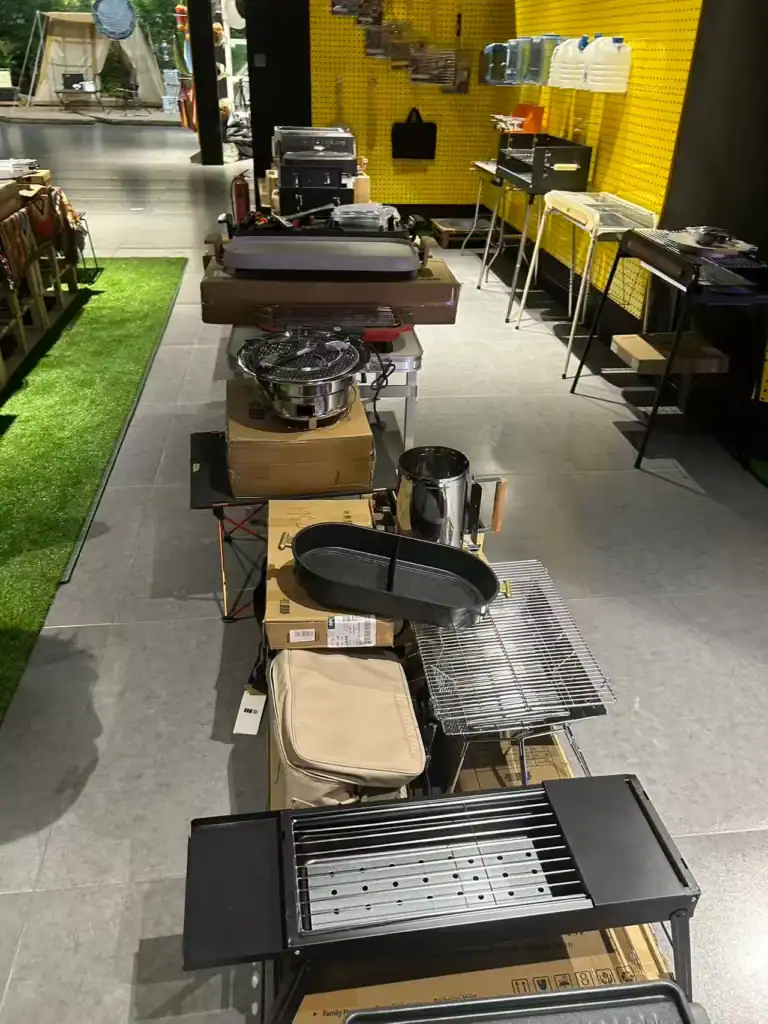
Conclusion
Scaling a seasonal grill brand in Europe isn’t solved by a single large order. It’s solved by a supply partner who keeps EN1860 and LFGB documentation current, manages sample approval for every SKU revision, and locks a 2mm quality tolerance on weld seams so a container never gets rejected at Customs. The Oriana Delgado partnership proves that five years of growth come from a sourcing desk that treats your inventory risk like their own.
-
- Insist on EN1860 and LFGB certifications for any charcoal grill entering Europe—border clearance depends on it.
- Sample approval with a defined quality tolerance prevents the pre-production-to-mass-production mismatch that wipes out margin.
- Cross-category coordination (grill + cooler) raises average basket value and makes shelf-space arguments to retailers.
- Flexible MOQs starting at 50–100 pieces let you market-test a grill in one region before committing a full production run.
Most brand managers stop at vetting a factory’s production capacity. The last 10% is confirming the supplier can handle fluctuating seasonal demand without quality drift. When your partner offers fast prototyping, transparent FOB pricing, and post-sale support that feeds real product feedback back into your next design cycle, you stop running a brand and start operating a platform. Review Kelyland’s charcoal grill and cooler sourcing process to see how quick turnaround and compliance documentation can anchor your EU expansion.
Questions fréquemment posées
La norme EN1860 est-elle requise pour les grills de l'UE ?
Yes, charcoal grills sold in Europe must comply with EN1860 safety and performance standards. Kelyland’s Jinhua factory holds EN1860 and LFGB, eliminating compliance risk. Request a copy of the EN1860 test report before production.
Quel est le MOQ pour les grills à charbon ?
Les MOQ standard pour les grills à charbon commencent généralement à 300 unités. Des séries d'essai plus petites peuvent être négociées pour les tests de marché. Discutez de votre volume cible dès le début pour obtenir des conditions de MOQ flexibles.
Combien de temps faut-il pour la production de grilles personnalisées ?
Le délai de production standard pour les grils à charbon sur mesure est de 30 à 45 jours. Cette durée comprend l'approvisionnement en matériaux, la fabrication et l'inspection avant expédition. Confirmez le délai après l'approbation du design et la passation de commande.
Puis-je faire de la vente croisée de grils avec des glacières ?
Oui, Kelyland a aidé la marque à développer une gamme de glacières coordonnées à vendre en complément des grils. Cette approche groupée a augmenté la valeur moyenne des commandes et la fidélisation au point de vente. Renseignez-vous sur les tarifs OEM groupés pour les combinaisons gril-et-glacière.
Comment Kelyland a-t-il résolu l'incohérence de qualité ?
Kelyland a imposé des inspections strictes avant expédition et un approvisionnement direct en matériaux pour garantir la cohérence des expéditions. Cela a éliminé les écarts entre les unités de production et les échantillons approuvés. Insistez sur un échantillon de confirmation signé et un rapport de contrôle qualité avant l'expédition.

 English
  Español
  Deutsch
  Français
  Português do Brasil
  Русский
  العربية
  한국어
한국어  日本語
日本語