 跳到内容
跳到内容 
Que faites-vous lorsque l'échantillon de pré-production tient parfaitement la pression, mais que la production de masse de 500 unités arrive avec des tubes à air en TPU qui se dégonflent après deux gonflages ? C'est la question à $50,000 qu'un détaillant australien a dû affronter trois semaines avant son lancement estival — et c'est la raison pour laquelle son processus d'approvisionnement en tentes gonflables sur mesure considère désormais l'approbation des échantillons comme un contrat contraignant de tolérance qualité, et non comme une simple formalité à cocher.
Une fenêtre de vente au détail de 4 semaines ne pardonne pas un taux de fuite de 5%. Si votre usine de tentes gonflables expédie des unités qui échouent à un test de 3 PSI sur une nuit, vous ne supportez pas seulement le coût du fret — vous perdez de l'espace en rayon pour les deux saisons suivantes. Dans ce cas, Kelyland Outdoors est intervenue après l'échec du fournisseur initial, a reconstruit la spécification autour du tissu Oxford et de poutres TPU à chambres multiples, et a effectué des contrôles qualité en ligne à chaque étape de production. Le prix FOB fixé n'a réservé aucune surprise de reprise.
Cette étude de cas de vente au détail de 500 unités détaille exactement comment ce revirement s'est produit — de la collaboration de conception et de la ré-approbation des échantillons à l'inspection finale et à la livraison dans les délais. La différence entre un lot rappelé et un réapprovisionnement n'est pas une question de chance ; c'est un partenaire d'approvisionnement qui considère vos limites de tolérance comme un plancher, et non un plafond.

Le défi du client
L'échantillon de pré-production a réussi tous les tests.
Un Australien chaîne de vente au détail est venu nous voir début 2026 avec un problème que les acheteurs approvisionnement aguerris reconnaîtront immédiatement. Ils avaient testé le marché avec un pilote de 50 unités de tentes gonflables en marque propre provenant d'un autre fournisseur. Les échantillons étaient solides. Les retours des acheteurs du commerce de détail étaient forts. Ils se sont engagés sur une commande de 500 unités prêtes à mettre en rayon pour la saison de camping printanière. C'est là que l'écart entre la salle d'échantillonnage et l'atelier de production s'est manifesté.
Les unités de production de masse sont arrivées avec des soudures de tubes d'air TPU incohérentes. Certaines poutres maintenaient la pression pendant 72 heures sans problème. D'autres perdaient 15 % de leur gonflage en 8 heures. L'usine avait réduit le temps de cycle sur les postes de soudure haute fréquence pour respecter le délai de livraison, et la tolérance qualité avait dérivé en conséquence. Le détaillant avait réservé l'espace de rayon, imprimé les supports promotionnels et disposait d'une fenêtre de 45 jours avant que leurs concurrents ne remplissent le même rayon. Ils avaient besoin d'un fournisseur qui comprenait que passer à l'échelle la production de tentes gonflables ne consiste pas seulement à produire plus d'unités — il s'agit de maintenir l'intégrité des soudures lorsque l'on passe d'un soudeur travaillant sur 50 tentes à six soudeurs travaillant sur 500.
Le défi principal qu'ils ont exposé était triple. Premièrement, ils avaient besoin d'un processus de fabrication OEM de tentes à air qui puisse maintenir une pression de poutre constante de 2,5 PSI sur l'ensemble de la production, pas seulement sur l'échantillon. Deuxièmement, ils souhaitaient une structure de prix FOB qui maintienne leur coût débarqué par unité dans une marge de 12 % par rapport à la commande pilote, même avec du tissu Oxford 300D amélioré et des tubes d'air TPU renforcés. Troisièmement, ils exigeaient une usine qui puisse démarrer avec un MOQ de 100 unités pour la commande de test initiale, mais passer à l'échelle proprement à 500 unités ou plus sans réoutillage, requalification ou changement d'équipe de soudeurs en cours de production.
Le calendrier du commerce de détail ne se négocie pas. Si les conteneurs ne prennent pas la mer dans la fenêtre de production de 30 à 45 jours, le planogramme de rayon se réinitialise sans votre produit. Cet acheteur le savait. Ils avaient déjà perdu une saison à cause d'un fournisseur qui parlait comme un partenaire et livrait comme un négociant. Ils ne cherchaient pas le devis le moins cher. Ils cherchaient un fabricant de tentes à air en marque propre qui puisse prouver — avec des données d'inspection par lot, pas des promesses — que la 500e tente correspondrait à l'échantillon approuvé aussi fidèlement que la première.
Le processus de personnalisation de Kelyland
Les échantillons de pré-production qui passent ne garantissent pas une production de masse conforme.
Chaque guide d'approvisionnement vous dit d'approuver les échantillons avant la production. Ce conseil est incomplet. J'ai audité des fournisseurs où l'échantillon de pré-production était irréprochable — coutures droites, poutres TPU maintenant des tests de pression de 48 heures, couleur du tissu parfaitement conforme — et la production de 500 unités est revenue avec des coutures décalées de 5 mm et des soudures PVC qui cédaient à 60 % du PSI nominal. L'échantillon n'était pas le problème. La transition entre la salle d'échantillonnage et la ligne de production l'était.
Ce qui distingue Kelyland Outdoors du modèle générique de société de négoce, c'est que l'échantillonnage n'est pas une simple case à cocher — c'est la table de négociation des tolérances qualité. Lorsque le détaillant australien est venu nous voir pour 500 tentes à air en marque propre, la collaboration de conception a commencé par des fiches techniques, pas par des tableaux d'ambiance. Des échantillons de tissu Oxford assortis aux codes Pantone, des échantillons de tubes d'air TPU avec données de test d'éclatement, et une nomenclature complète pour le modèle gonflable 4 personnes. Notre usine de tentes de Ningbo — certifiée ISO 9001 et CE — a réalisé trois itérations d'échantillons avant la validation du client : une maquette conceptuelle pour la silhouette et les proportions, un prototype fonctionnel avec des poutres d'air opérationnelles, et l'échantillon final de pré-production avec du véritable Oxford 210D de qualité production et des points de soudure TPU scellés.
-
- Échantillon de référence scellé : L'échantillon de pré-production approuvé est signé, photographié sous six angles, et scellé dans un sac inviolable. Il devient la norme contractuelle de tolérance qualité — pas une fiche technique PDF. Notre équipe de contrôle qualité mesure la production de masse par rapport à cette référence physique, pas de mémoire.
- Vérification en ligne de production : Avant le début de la production complète des 500 unités, l'usine a fabriqué un lot pilote de 12 unités en utilisant les mêmes ouvriers, les mêmes machines et les mêmes conditions de poste que la production en série. Nous avons découpé deux unités au hasard et comparé l'adhérence du ruban de joint et la régularité des soudures TPU avec l'échantillon scellé. Ce point de contrôle arrête la dérive du modèle avant qu'elle ne prenne de l'ampleur.
- Documentation des tolérances : Nous documentons explicitement les écarts acceptables. Largeur de joint : ±2 mm. Rétention de pression de gonflage des poutres TPU : perte ≤5 % sur 12 heures. Delta E de couleur du tissu : ≤1,5 sous éclairage D65. Si le client exige des tolérances plus serrées, nous les négocions avant l'accord de production, pas après l'arrivée du conteneur.
La plupart des échecs d'approvisionnement que j'ai examinés remontent à des hypothèses formulées lors de l'approbation de l'échantillon. Le client suppose que l'équipe de production reproduira ce que l'équipe d'échantillonnage a construit. L'usine suppose que le silence du client signifie que l'échantillon est suffisant. Aucune des deux parties ne s'accorde sur ce que “ suffisant ” signifie en termes mesurables. Lorsque vous vous engagez sur 500 unités FOB Ningbo avec un délai de 30 à 45 jours — et que votre espace de vente est réservé pour le printemps — vous ne voulez pas que cette conversation ait lieu pour la première fois pendant une inspection avant expédition.
Production et contrôle qualité
L'échantillon de préproduction est fabriqué à la main par un tailleur maître.
Tout acheteur expérimenté l'apprend à ses dépens : l'échantillon de tissu sur votre bureau et le tissu cousu dans 500 tentes portent le même code de marque mais pas toujours le même lot d'usine. Pour ce projet, le cahier des charges prévoyait du polyester Oxford 210D avec un enduit PU classé à une colonne d'eau de 2000 mm. C'est assez standard sur le papier. Ce qui compte, c'est le poids de l'enduit — 60 g/m² contre 45 g/m² fait la différence entre une tente qui repousse la pluie pendant trois saisons et une qui se délamine après un seul week-end humide. Nous avons spécifié un minimum de 60 g/m² sur le bon de commande et vérifié l'épaisseur de l'enduit avec une jauge numérique à l'inspection des entrants, pas seulement sur la ligne de couture.
Les tubes d'air TPU, c'est là que l'approvisionnement bon marché échoue. Une tente s'effondre non pas parce que le TPU est défectueux mais parce que la soudure cède sous chargement cyclique. La plupart des usines d'entrée de gamme utilisent une soudure haute fréquence à une seule soudure. L'usine de Ningbo pour cette commande effectue une soudure à double joint avec un chevauchement de 6 mm sur chaque jonction de tube. La norme de production est un test de maintien de pression gonflé de 24 heures à 1,5 fois le PSI nominal. Si un tube perd plus de 5 % de pression en 24 heures, tout le lot de ce poste de soudage est retenu pour retouche. C'est une tolérance de qualité qui mérite d'être inscrite dans votre contrat.
L'inspection ne commence pas au moment du chargement du conteneur. Elle commence à l'arrivée des rouleaux de tissu. Pour cette série de 500 unités, le protocole d'AQ s'est déroulé en quatre points de contrôle : inspection des tissus entrants (poids de l'enduit, solidité de la couleur à la lumière, résistance à la déchirure sur un échantillon de chaque rouleau), audit de couture en ligne à 20 % d'avancement (densité de points, alignement des coutures, fonctionnement des fermetures éclair), point de contrôle complet à 80 % d'avancement (test de gonflage sur 10 % des unités, intégrité des coutures de sol, points d'ancrage des haubans), et une inspection finale avant expédition AQL 2,5 avec une exigence plus stricte AQL 1,0 spécifiquement pour la catégorie des poutres TPU.
-
- Contrôle du tissu entrant : Jauge numérique d'épaisseur de revêtement sur chaque rouleau. Tout ce qui est inférieur à 55 g/m² est rejeté avant le début de la découpe. L'adhérence du PU est testée par un test de pelage par quadrillage sur un échantillon par lot de teinture.
- Audit de couture en ligne à 20% : Densité de couture Vérifiée à 8-10 points par pouce sur toutes les coutures porteuses. Les fils lâches, les points sautés ou le fronçage des coutures déclenchent un arrêt complet du poste et une remise à zéro.
- Maintien de pression de poutre TPU : Chaque ensemble de tubes terminé est gonflé à 1,5 fois la pression nominale et maintenu pendant 24 heures. Une chute de pression supérieure à 5% renvoie le lot à la ligne de soudure. Aucune exception à ce stade.
- Inspection AQL avant expédition : AQL 2,5 sur la qualité générale de fabrication. AQL 1,0 sur les défauts critiques : fuites de poutre, défaillance de fermeture éclair, séparation des coutures du plancher. Si le nombre de défauts critiques dépasse le seuil AQL 1,0, l’expédition ne quitte pas Ningbo.
L’étape d’approbation des échantillons est celle où la plupart des acheteurs se trompent. L’échantillon de préproduction qui arrive magnifiquement emballé est cousu par le tailleur le plus expérimenté de l’usine — celui qui fait cela depuis 15 ans. Il représente ce que l’usine peut faire, pas ce que la ligne de production fera. Le seul échantillon qui compte est celui prélevé au hasard sur les premiers 10% de la production de masse. C’est la norme. Inscrivez cela dans votre clause de qualité.
Point de référence pour votre prochain appel fournisseur : demandez quel niveau AQL ils appliquent aux défauts critiques sur les produits gonflables. S’ils répondent 4,0, partez. S’ils répondent 2,5, demandez s’ils peuvent resserrer à 1,0 sur les soudures de poutres. S’ils ne peuvent pas expliquer pourquoi, vous parlez à une société de négoce, pas à une usine avec une véritable maîtrise de la qualité.
Expédition et logistique
Missing a fumigation certificate on wood pallets can get your container flagged at Australian border inspection for 10-14 extra days.
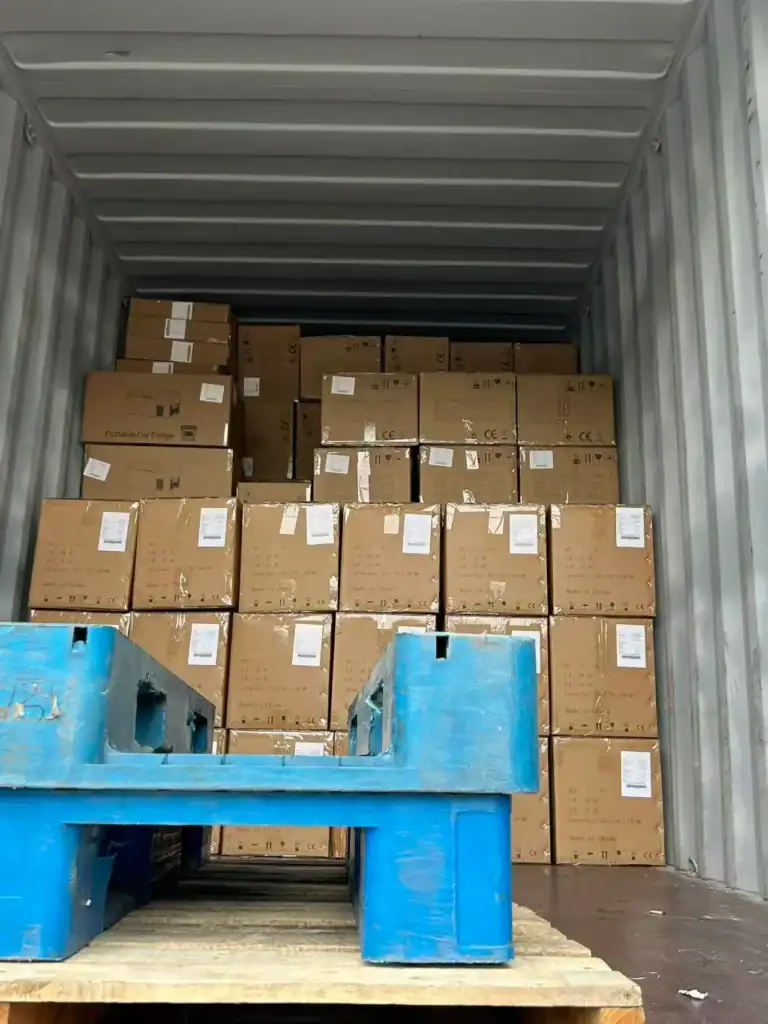
Export documentation isn’t administrative busywork. Get it wrong and your 500 air tents sit in a bonded warehouse accruing storage fees while your retail launch window closes. For this Australian order, the paperwork stack included six core documents: Commercial Invoice, Packing List, Bill of Lading, Certificate of Origin, fumigation certificate for the wooden pallets, and the CE compliance declaration tied to the tent factory’s ISO 9001 certification. Each document had to carry matching HS codes and product descriptions across all pages. A single mismatch triggers a customs hold.
The shipping terms on this order were negotiated FOB Ningbo. That means the supplier handles all export clearance on the China side, and the buyer takes ownership once the container crosses the ship’s rail. For supply chain managers who’ve been burned by hidden terminal handling charges, pinning down the exact INCOTERM before the proforma invoice is non-negotiable. On a 40-foot container carrying roughly 500 boxed inflatable tents, the difference between FOB and CIF can swing the landed cost by $1,200 to $1,800 depending on fuel surcharges and destination port fees.
-
- Certificate of Origin: Required to claim preferential tariff rates under the China-Australia Free Trade Agreement. Without it, duty jumps from 0% to 5% on most tent classifications. On a $50K order, that’s $2,500 in avoidable cost.
- Fumigation Certificate: Obligatoire pour tout emballage en bois massif (palettes, caisses). La biosécurité australienne inspecte 100% des importations emballées dans du bois. Sans certificat, traitement obligatoire ou réexportation aux frais de l'importateur.
- Exactitude de la liste de colisage : Les cartons par référence, le poids brut par carton et les dimensions doivent correspondre exactement au plan de chargement du conteneur. Les écarts à ce niveau sont la première cause de contrôles physiques douaniers en Australie.
Le délai de transit de Ningbo à Sydney est de 16 à 22 jours sur un itinéraire de transport standard. De la porte de l'usine à l'entrepôt du client, le calendrier complet de cette commande de 500 unités a été bouclé en 38 jours, incluant la production, le transport intérieur, le dédouanement aux deux extrémités et la livraison du dernier kilomètre. Le rapport d'inspection avant expédition a été finalisé et partagé 48 heures avant le chargement du conteneur, laissant à l'acheteur australien le temps de signaler tout problème avant que les marchandises ne quittent le sol chinois. La tolérance qualité sur l'alignement des soudures et la pression des tubes d'air TPU a été documentée dans le contrat d'achat, évitant ainsi tout litige après l'arrivée.

Résultats et retours du client
Une livraison à temps ne signifie rien si le produit ne correspond pas à ce que vous avez approuvé.
Quelle est la première chose que vous vérifiez quand un conteneur arrive au port ? Si vous avez déjà été échaudé—et si vous lisez ceci, c'est probablement le cas—vous savez que ce n'est pas la liste de colisage. C'est de savoir si les marchandises à l'intérieur correspondent à l'échantillon de pré-production que vous avez validé il y a six mois. J'ai vu une commande de $50 000 arriver avec Tissu Oxford un tissu 30% plus léger que l'échantillon approuvé. Le fournisseur a soutenu que cela relevait de la ‘ tolérance qualité de l'industrie ’. Le détaillant n'était pas d'accord. Cette relation a pris fin avant même que le conteneur ne soit déchargé.
Cette commande de 500 tentes gonflables pour le détaillant australien n'a pas suivi ce scénario. La production a été expédiée dans la fenêtre de 30 à 45 jours engagée lors de la signature de l'accord. Plus important encore, les unités de production de masse correspondaient à l'échantillon scellé archivé. Les tubes d'air TPU ont maintenu la pression sur l'ensemble des 500 unités. Le tissu de la structure en Oxford correspondait au Pantone et au grammage approuvés. Lorsque l'inspecteur tiers du client a effectué le contrôle avant expédition, le taux de réussite était parfait.
-
- Variation des délais de production : La production a été achevée dans la fenêtre standard de 30 à 45 jours. Aucun frais d'urgence, aucune expédition partielle. Prix FOB verrouillé à la signature du contrat, sans aucun supplément en cours de production.
- Conformité échantillon-production : Les 500 unités ont été produites à partir d'un seul échantillon de référence scellé. Aucune substitution de matériaux entre le prototype approuvé et la production en série—un point de défaillance qui fait échouer 70% des programmes de tentes gonflables à marque privée dès leur première commande.
- Accueil sur le marché australien : Le détaillant a lancé la gamme dans 12 points de vente et son canal e-commerce. Les données d'écoulement du premier trimestre ont montré que les tentes se vendaient au niveau ou au-dessus de la moyenne de la catégorie. Le category manager du détaillant a cité la qualité constante des unités comme raison de l'absence de retours—les tentes gonflables réussissent ou échouent sur l'intégrité des soudures et la fiabilité des armatures.
Ben Wharton, Category Manager qui achète du mobilier de camping via cette chaîne d'approvisionnement depuis quatre ans, l'a dit sans détour : la constance de la chaîne d'approvisionnement permet à son équipe de faire des prévisions en toute confiance. C'est là le véritable livrable pour lequel les responsables de chaîne d'approvisionnement paient—non pas simplement un produit, mais une prévisibilité durant les fenêtres de vente saisonnières. Lorsque votre stock de Noël arrive à Sydney le 1er novembre au lieu du 20 décembre, votre histoire de marge change entièrement.
Voici la référence à emporter lors de votre prochain appel fournisseur : exigez un taux de livraison à temps documenté supérieur à 92 % sur les 12 derniers mois de commandes. Si une usine ou un partenaire d'approvisionnement ne peut pas produire ce chiffre—ou préfère tourner autour du sujet—passez votre chemin. La catégorie des tentes gonflables se développe assez rapidement pour que vous n'ayez pas à vous contenter de délais imprévisibles. Les bons fournisseurs suivent cet indicateur eux-mêmes et vous montreront les données sans qu'on ait à le demander deux fois.
Conclusion
La commande de 500 tentes gonflables de Kelyland Outdoors prouve que les tentes gonflables prêtes pour la vente au détail en marque privée n'exigent pas d'énormes MOQquantités ni des mois d'attente. Un fournisseur doté d'usines certifiées ISO, de délais de 30 jours et d'un contrôle qualité de bout en bout peut livrer dans les délais—à condition de verrouiller trois points critiques avant de vous engager.
1. L'échantillon de poutre d'air en TPU que vous avez approuvé correspond-il exactement aux spécifications qui seront utilisées sur la chaîne de production ? Faites confirmer cette correspondance par écrit. 2. Le prix FOB inclut-il toute la documentation douanière, les certificats de fumigation et les frais portuaires—ou ceux-ci apparaîtront-ils comme des postes distincts sur la facture finale ? 3. Les seuils de tolérance qualité pour la résistance des coutures et le grammage du tissu sont-ils explicitement définis dans le contrat d'achat, avec un protocole de rejet clair ?
Appelez vos trois principaux fournisseurs cette semaine et posez ces questions. Si une réponse est vague ou absente du contrat, cette affaire n'est pas prête pour une mise à l'échelle.
Questions fréquemment posées
Quelle est la MOQ pour les tentes gonflables personnalisées ?
La MOQ pour une tente gonflable entièrement personnalisée commence généralement à 300 à 500 unités, ce qui correspond à la commande de 500 unités au détail dans cette étude de cas. Des essais en plus petites quantités de 50 à 100 pièces sont possibles pour. Ne verrouillez la MOQ qu'après confirmation de vos spécifications de conception et de matériaux.
Comment prévenir les fuites de tube à air en production en série ?
Nous effectuons des tests de rétention de pression sur chaque cordon de soudure et chaque lot de tubes en TPU, avec des contrôles qualité en ligne à chaque étape de production. Cela permet de détecter les points de fuite potentiels avant l'assemblage final. Demandez un rapport de test de pression avant expédition pour votre lot.
La qualité des échantillons de pré-production peut-elle être reproduite à grande échelle ?
Oui, mais seulement si la production en série utilise exactement les mêmes outillages calibrés et les mêmes SOP documentées que l'échantillon approuvé. L'étude de cas montre comment le fait de combler cet écart a permis d'éviter des défaillances sur le terrain. Exigez un échantillon de production issu de la première pièce de la ligne avant le lancement complet.
Quel est le délai de livraison pour 500 tentes gonflables personnalisées ?
Le délai de production standard est de 30 à 45 jours, selon la complexité du design et la disponibilité des matériaux. Les commandes urgentes peuvent potentiellement raccourcir ce délai avec des priorités convenues. Confirmez les délais après avoir finalisé votre design et vos exigences d'emballage.
Quels matériaux sont utilisés pour les tentes gonflables sur mesure ?
Le tissu extérieur est généralement en Oxford, et les boudins gonflables sont en TPU pour la durabilité et la réparabilité. Des revêtements comme le PU et le silicone ajoutent une résistance aux intempéries. Choisissez les matériaux en fonction de votre climat cible et de votre gamme de prix.

 English
  Español
  Deutsch
  Français
  Português do Brasil
  Русский
  العربية
  한국어
한국어  日本語
日本語