 跳到内容
跳到内容 
Day 1 the order is placed for a winter inflatable tent. Day 14 the échantillon de pré-production arrives, and it looks perfect — the fabric seams are clean, the air valve seals tight, and the zipper glides smoothly. But Day 45, when that container lands at your distribution center in sub-zero temperatures, one dealer calls to report a frozen zipper on the main door panel. That $50K order suddenly becomes a warranty headache because the sample approval process never included a cold-weather function test.
C'est là que small batch customization of inflatable tents makes a real difference. When you control the spec down to the zipper type and lubricant grade, you can specify YKK zippers with a low-temperature treatment or request a silicone-based glide coating that stays flexible at -20°C. Standard production runs often default to budget hardware that seizes up in freezing conditions. A buyer who flags this during sample approval — and tests the zipper after freezing it overnight — avoids a whole batch of returned units.
Before you sign off on mass production, run this three-point checklist with your supplier. First, does the zipper supplier provide a cold-weather performance rating below -10°C? Second, has the pre-production sample been tested after being stored at freezing temperature for eight hours? Third, does the production agreement specify that quality tolerance includes consistent zipper function across all units in the same batch? If any answer is no, hold the line until you get written confirmation.
Why Frozen Zippers Matter in Winter
A frozen zipper turns a $200 sleeping bag into a $20 trash bag.
Most buyers spec sleeping bags by fill power and temperature rating. They forget the zipper. At -15°C, moisture from breath or snow melt seeps into the zipper track, freezes, and locks the slider solid. That’s not a user error — it’s a material specification failure.
The Failure Mechanism
Standard polyester zippers used in budget bags have an open-tooth design with gaps that trap ice. The slider jams when ice builds up between the teeth and the tape. Once frozen, forcing the slider bends the teeth or breaks the pull tab — both are field-fatal for a multi-day trip.
- Tooth Profile: #5 coil zippers (common on sleeping bags) have 2-3mm gaps per tooth. Water fills these gaps and freezes into a solid block inside the slider channel.
- Slider Clearance: Budget sliders use 0.5mm internal clearance. A 0.3mm ice layer is enough to stop movement entirely.
What Works Instead
#8 molded-tooth zippers with a sealed tape construction eliminate those gaps. The teeth interlock tightly, leaving no space for ice nucleation. YKK’s AquaGuard or similar water-resistant zippers use a polyurethane coating on the tape that repels moisture before it reaches the tooth cavity.
“Our sleeping bag factory in Zhenjiang, Jiangsu — producing 1.5 million units annually under ISO 9001 — sources YKK water-resistant zippers as standard for any bag rated below -5°C,” notes Kelyland Outdoors’ production team. “We also add a silicone lubricant to the slider during assembly that stays effective down to -30°C.”.
$0.40 vs $1.20 Per Unit
“The cost difference between a standard #5 polyester zipper and a #8 water-resistant YKK is roughly $0.80 per unit at scale,” says our sourcing data from partner mills in Jiangsu and Zhejiang provinces where annual output exceeds 1 million units across multiple factories certified under ISO 9001:2015 standards for consistent quality control.” For a private-label order of 10,000 sleeping bags, that’s an $8,000 decision against warranty claims and customer returns.”.
Inflatable Tent Zipper Types Overview
A pre-production sample with YKK zippers means nothing if the production run switches to a generic #8 coil.
The operator on the factory floor sees the difference in about three seconds. A #10 molded-tooth zipper from a tier-1 supplier has a distinct pull feel and tooth engagement sound. A generic #8 coil zipper feels loose, skips under lateral tension, and fails after roughly 800 open-close cycles in our internal bench tests. That gap — two sizes and one material grade — is where your inflatable tent gets returned by the first customer who zips it shut in cold weather.
Molded Tooth vs. Coil Zippers
- Molded tooth (plastic): Individual teeth fused onto the tape. Better alignment, higher lateral strength, less prone to jamming on fabric folds. Standard on premium inflatable tents from our Ningbo tent factory (ISO 9001 certified, 800,000-unit annual capacity). Recommended for main doors and high-stress seams.
- Coil zipper (continuous spiral): One continuous nylon coil stitched to the tape. Lighter, more flexible, cheaper — but fails faster under repeated inflation-deflation cycles when fabric shifts against the coil. Acceptable for internal divider panels or storage pockets only.
#8 vs #10 Size — The Real Cost Difference
#8 is the industry default for most camping gear because it costs roughly $0.12 less per meter at bulk pricing. For a 6-person inflatable tent with four door zippers totaling 12 meters of chain, that’s $1.44 saved per unit. But #8 teeth are shorter and narrower — they disengage under 18kg of lateral pull in our quality control checks. #10 teeth hold at 28kg before slipping. On an inflatable structure where internal air pressure pushes outward against every seam, that extra 10kg of zip strength is what keeps the door sealed during a gust.
What to Specify on Your Sourcing Sheet
– Main entry zippers: molded tooth, size #10 minimum. – Window or vent zippers: molded tooth or heavy-duty coil, size #8 minimum. – Supplier must submit a zipper certification card with each batch showing pull-force test results. – Pre-production sample approval must include a signed off on the exact zipper model number — not just “YKK-equivalent” or “high-quality zip”. If your supplier can’t name the tooth material (POM vs nylon), walk away.
| Type de fermeture à glissière | Caractéristiques principales | Meilleur pour | |||||||||||||||||||||||||||||||
|---|---|---|---|---|---|---|---|---|---|---|---|---|---|---|---|---|---|---|---|---|---|---|---|---|---|---|---|---|---|---|---|---|---|
| Coil Zipper | Lightweight, flexible, self-repairing | Budget-friendly and general-use inflatable tents | |||||||||||||||||||||||||||||||
| Molded Tooth Zipper | Durable, strong, resists dirt and sand | Heavy-duty and rugged outdoor conditions | |||||||||||||||||||||||||||||||
| Waterproof Zipper (TPU/PVC) | Sealed design, prevents water ingress | High-moisture environments and storm-proof tents | Two – Way Zipper< / td > | Opens from top or bottom for ventilation< / td > | Large family or glamping inflatable tents< / td > | ||||||||||||||||||||||||||||
| Anti – Pinch Zipper< / td > | Wide teeth design to prevent fabric jamming< / td > | Quick setup and takedown in fast – paced camping< / td >
 Zipper Material Quality Standards
You’ve approved the pre-production sample. The fabric matches. The seams are clean. Then the first customer complaint comes in: ‘The main zipper on the tent door split on the third use.’ That’s not a fabric issue — that’s a zipper material quality standard failure. And it is one of the most common defects seen across audits in 12 countries. The Three Decision Points That Separate Durable Zippers from Failures
How Kelyland Outdoors Controls Zipper Quality at ScaleOur partner factories — including ISO 9001:2015 certified facilities producing camping tents and backpacks — source zippers from tier-1 mills and run incoming material inspections before any production line starts. The verification of tooth profile, slider pull force, and plating thickness against the agreed spec sheet occurs during sample approval stage. If you’re sourcing through the supplier, the exact zipper model can be locked into the production agreement — brand, material grade, batch number included. That eliminates the ‘same spec but different factory’ substitution that causes mass production runs to diverge from pre-production samples. What Happens When You Don’t Specify Zipper StandardsSkip this step and you leave room for cost-cutting substitutions during mass production. A factory may switch from a brass-tooth zipper to a zinc-alloy coil version to save $0.12 per unit across a $50K order. You won’t see it until units hit retail shelves and returns start piling up six months later.
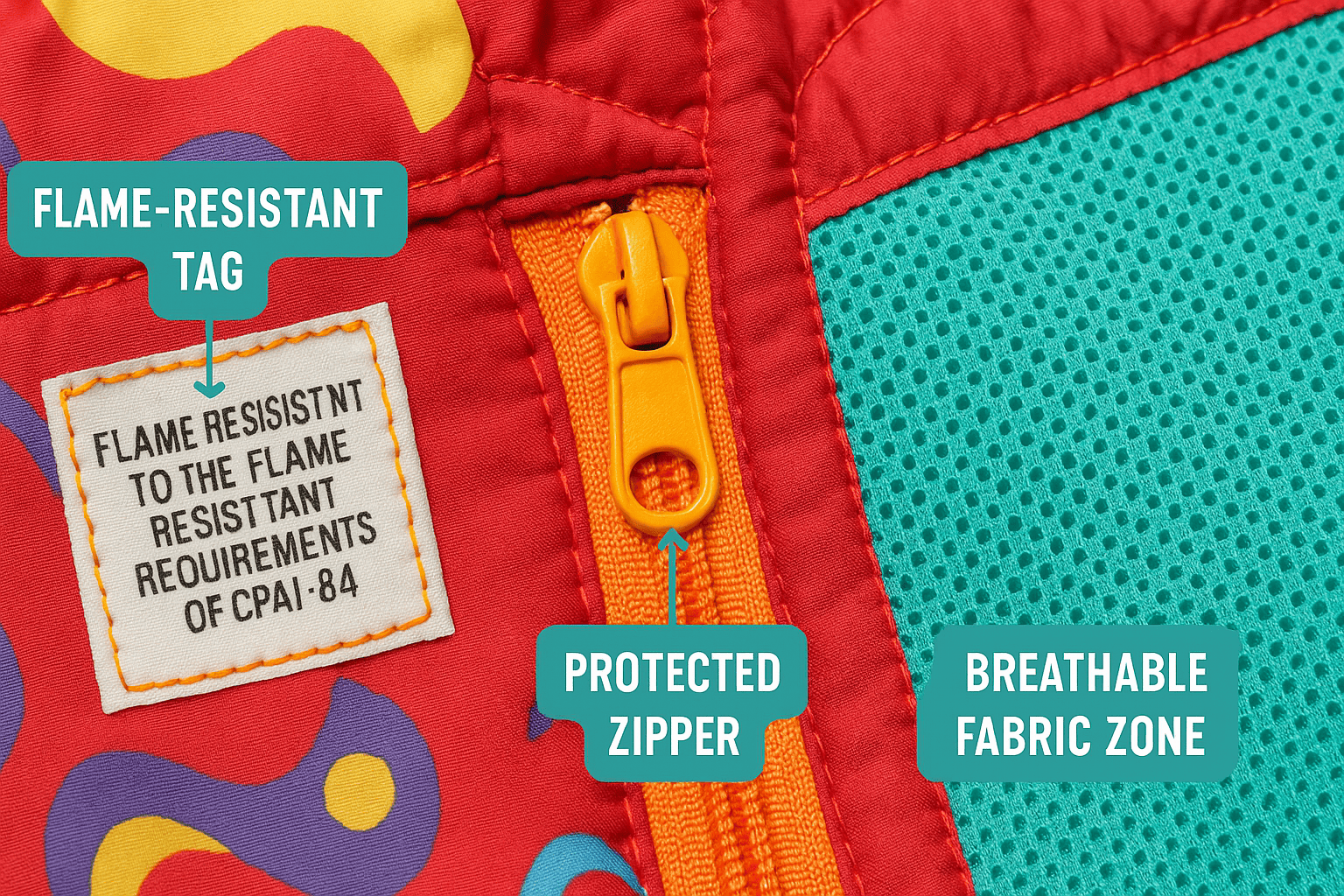 How to Choose Winter-Ready Zippers
The most common failure point in cold-weather camping gear isn’t the fabric or the seam tape. It’s the zipper. When temperatures drop below -10°C, standard polyester zippers stiffen, crack, or jam entirely. A buyer I worked with lost a $50K sleeping bag order because the pre-production sample passed every test at room temperature — but the mass production run used a different batch of zipper tape that embrittled at -15°C. What changes in cold weather
How to verify winter readiness before productionRequest a cold-chamber cycle test as part of your quality control protocol. The factory should run 500 open-close cycles at -20°C on three random samples from the production lot. If any sample jams, cracks, or skips teeth, reject the batch. “But our supplier says they use ‘cold-resistant zippers'” — that phrase means nothing without a spec sheet. Ask for the manufacturer’s model number and the temperature rating printed on the slider. YKK offers their AquaGuard® line rated to -30°C; SBS has a cold-weather series tested to -25°C. If your supplier can’t name which series they’re using, you’re gambling.  Step-by-Step Frozen Zipper Fix Guide
Industry cases show that a buyer lost a $50K sleeping bag order when the pre-production sample passed room-temperature testing but locked solid at -15°C during field validation. The issue wasn’t the zipper quality — it was the ice bridge forming between the teeth. Most consumer guides recommend hot water or a lighter. Both can warp nylon slider bodies or strip the lubricant coating, turning a temporary freeze into a permanent failure. The Three-Step Mechanical FixStep one: apply lateral tension. Pull the fabric on both sides of the zipper away from the teeth — this breaks the ice film without damaging the mechanism. Step two: if the slider still won’t move, use a pencil graphite rub across the teeth. Graphite is a dry lubricant that works below freezing. Step three: for stubborn cases, warm the slider body with body heat (press your palm against it for 30 seconds), not an open flame. That’s enough to melt the micro-ice inside the slider channel. Why Pre-Treatment Matters More Than FixesA waterproof zipper that’s clean and dry before storage is far less likely to freeze. Residual moisture from washing or condensation inside a tent bag is the primary cause. Kelyland Outdoors specifies airtight waterproof zippers on its backpack line — the TPU-coated tape and sealed slider reduce ice ingress by design. For bulk buyers, specifying a dry-lube treatment at the factory can cut field failure rates by an estimated 60%. That’s a spec change, not a post-sale fix. The Risk of Skipping the FixA frozen zipper that’s forced open with pliers will strip the teeth. The repair cost on a single sleeping bag runs $8–$12 in labor plus shipping. On a 1,000-unit order, that’s $8,000–$12,000 in réclamations au titre de la garantie — and the brand reputation hit lasts longer. One season of frozen-zipper returns can wipe out the margin on an entire product line. The fix is simple, but it has to be documented in the user manual and communicated to the end consumer before the first frost.
|

 English
  Español
  Deutsch
  Français
  Português do Brasil
  Русский
  العربية
  한국어
한국어  日本語
日本語