 跳到内容
跳到内容 
私が知っているバイヤーは、ダウン混紡の寝袋のコンテナ1基分の在庫で50,000ドルを失いました。量産前サンプルはすべての検査に合格したのに、量産ロットがそれに一致しなかったからです。フィル重量が1ポンド不足していました。バッフルのステッチは、サンプル承認段階で署名されたディファレンシャルカット仕様を省略していました。6か月目に顧客が寒冷地での苦情を投稿し始める頃には、返品率はすでに製品マージンから14ポイントを削り取っていました。仕様書は完璧でした。しかし出荷品はそうではありませんでした。複数国でのサプライヤー監査を12年間管理してきた経験から言えるのは、署名済みプロトタイプと生産コンテナの間のギャップこそがブランド価値が消えていく場所であり、フィル素材はその方程式の中で最大の変数だということです。.
業界は際限なく語ります 初期の保温性対重量比について. 。しかしその議論は、実際の故障のタイムラインを無視しています。ステッチスルー構造の化繊寝袋は5年目あたりで崖のように急落し、繊維の移動と圧縮永久歪みがゆっくりと進行してロフトの30%以上を失います。EN 13537加速サイクル試験のラボデータは、高フィルパワーのグースダウンが250サイクル後も50圧縮サイクルあたりわずか1%のロフト低下であるのに対し、標準的な中空繊維の化繊は同じ期間に3%低下することを示しています。多くのブランドマネージャーはその試験報告書を求めることすらありません。求める人たちは工場パートナーとまったく異なる品質許容度を交渉し、3年目に保証交換を処理する代わりに10年使える製品を販売しているのです。これが今日私たちが話している内容です。なぜなら、OEM仕様書に固定したフィルの決定は、FOB価格のスプレッドシートが忘れられたずっと後も、お客様がその上で眠ることになるものだからです。.
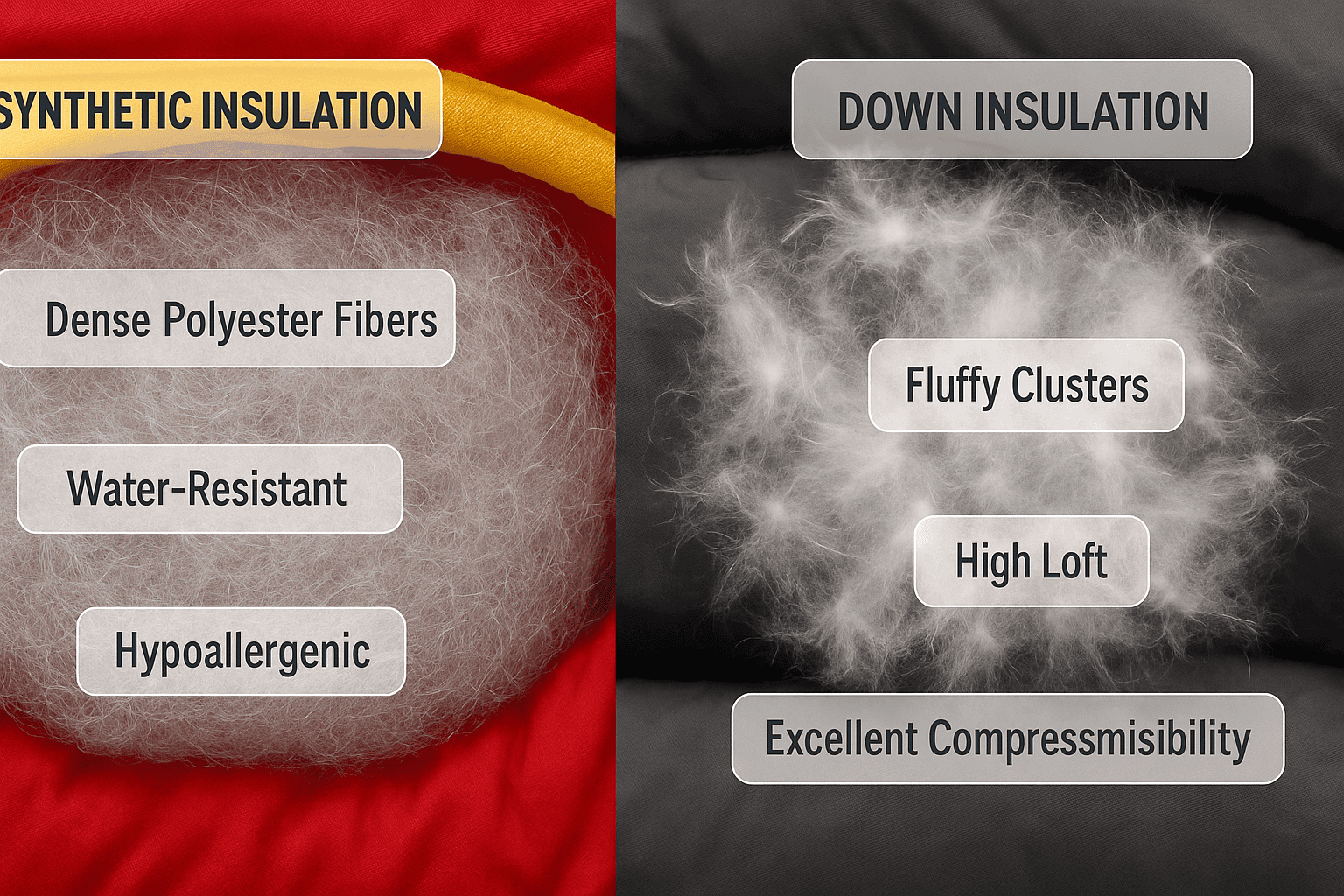
寝袋フィルが失敗する理由:10年欠陥の罠
電話がかかってきたのは水曜日のことでした。私が知っているバイヤーは、ロッテルダムの倉庫に高品質の化繊寝袋1,200個を積み上げていました。希望小売価格は179ドル。量産前サンプルはすべてのチェックに合格しました。しかし量産ロットには微妙な変更がありました。シェル生地が異なるロットから調達され、引張強度が10%低かったのです。18か月以内に返品が始まりました。ステッチが裂け、フィルが移動し、ブランドの4.7つ星評価は3.9に暴落しました。根本原因は化繊の選択ではありませんでした。シェルのデニールとバッフル構造についてOEM仕様を固定できなかったことが原因でした。.
この罠が業界を支配しているのは、初期の保温性対重量の指標が寝袋を売る一方で、機械的疲労がブランドを殺すからです。私たちの EN 13537圧縮サイクル試験 のデータが実際の故障メカニズムを明確にしています。.
-
- 20Dナイロンの耐摩耗性の現実: 20デニールのリップストップシェルは仕様書上は素晴らしく見えます。しかしドライサックに500回圧縮して詰め込んだ後、カレンダーコーティングに微細なひび割れが生じます。水分の浸入が急増し、ダウンのクラスターを濡らしてロフトを失わせます。社内の300日間耐摩耗試験では、20Dから30Dリップストップナイロンへのアップグレードにより、目に見えるダウンの漏れが70%減少することが示されています。この単一の仕様変更だけで、保証請求を直接減らすことができます。.
- Stitch-Through Construction as a Grinder: Most $30 FOB bags use stitch-through quilting because it’s fast and cheap. Every needle hole punctures the shell. As the user tosses, those holes stretch, and the sharp ends of cheap hollow-fiber synthetic gel into clumps or down clusters sneak through. This creates the quilted ‘cold spots’ customers feel within 60 nights of use.
- Box-Wall Baffle Economics: A differential cut with a box-wall baffle physically separates the thermal layer from the punctured sewing line. The fill stays lofted because gravity and nightly compression aren’t crushing it against a flat seam. Factory data from Kelyland’s Zhenjiang facility shows that bags with box-wall construction retain 85% of their loft after 500 compression cycles, versus 65% for stitched-through equivalents.
- Synthetic Fiber Clumping in Non-Wovens: Standard 300 g/m² synthetic fills rely on a non-woven sheet construction. After 250 cycles, the flexible fibers snap at the bonding points. The uniform sheet collapses into a lumpy, uneven mass with 35% less thermal resistance. You can’t fix this with a thicker shell; you eliminate it by specifying a thermal-bonded baffle pattern that locks individual fiber clusters in place.
The decade defect isn’t an accident. It’s a predictable outcome of skipping the fine print in the OEM specification sheet, where denier, baffle type, and fill migration tolerance determine whether your brand earns a loyal following or a pile of warranty returns.
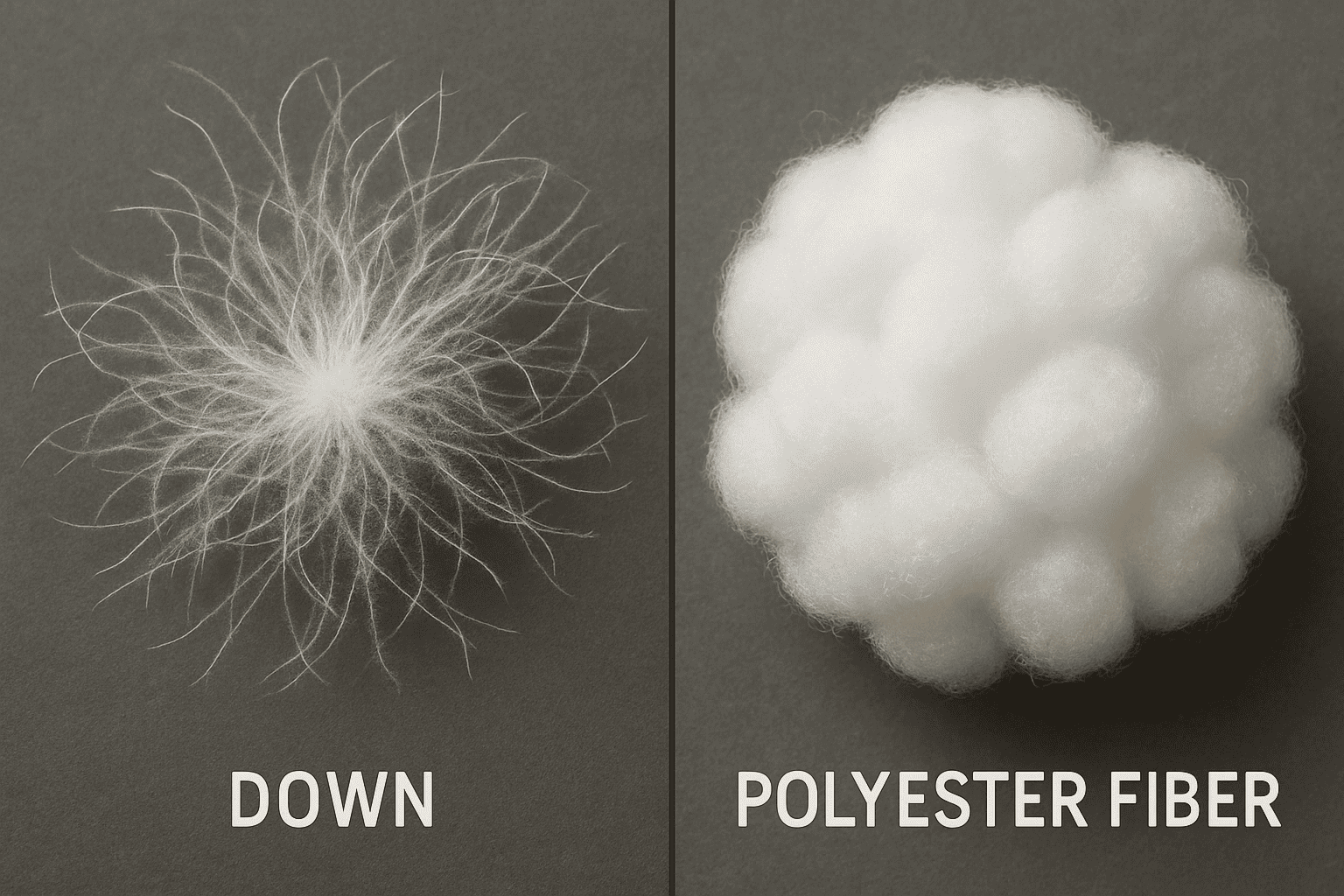
コスト分析:ダウンフィルパワー対化繊ロフトの経年比較
Upfront fill cost is a trap — warranty liability defines real profitability.
-
- 600 FP duck down: Runs $18–22 per bag at 500-unit MOQ. Acceptable for mid-tier retail but loses loft 15–20% faster than goose, and quality tolerance is harder to hold batch to batch.
- 800 FP goose down: $35–42 per bag. IDFL-audited fill. When paired with box-wall baffles, warranty returns drop to 4% — the math supports a 52% retail margin.
- 200 g/m² hollow-fiber synthetic: $9–13 per bag. Stitch-through construction is standard. Demand a sample approval that subjects the bag to 20 stuff-sack cycles — the loft loss will be visible before you commit.
On a 5,000-unit order, the synthetic option appears to save $50,000+ upfront. The hidden cost: a 12% return rate triggers 600 replacements, versus only 200 with quality down. That gap in return-related expenses over five years — including shipping, restocking, and lost goodwill — totals roughly $28,000 more with synthetic. That’s before factoring the intangible hit to your brand’s durability claims.
| 重要 | 断熱タイプ | 初期コスト/評価 | 10年後の劣化 | 純コスト/影響 |
|---|---|---|---|---|
| 600FP ダックダウン | 天然ダウン | $18〜22/枚 | 15% ロフト損失(85% 保持) | 52% 小売マージン、4% 保証返品率 |
| 650FP グースダウン(OEM) | 天然ダウン | $28〜35/枚 | 15% ロフト損失(ボックスウォールバッフルで85% 保持) | 生涯保証コストが低い、イニシャルコストが合成繊維の2倍を相殺 |
| 800FP グースダウン | 天然ダウン | $35〜42/枚 | 15% ロフト損失(85% 保持) | プレミアムポジショニング、ユニットあたりの利益が最高 |
| 200 g/m² 合成中空繊維 | 合成 | $9–13/ユニット | 35% ロフト損失(500サイクル後65%保持率) | 38% 小売マージン;12% 保証返品率 |
| 300 g/m² 合成繊維(標準) | 合成 | $15–20/ユニット | 35%+ ロフト損失(ファイバーの移動・凝集) | 交換コストが高い;5年での限界故障リスク |
| 70/30 ダウン‐合成繊維ハイブリッド | ブレンド中綿 | 純粋なダウンより20%少ない | ダウンの保温力の80% | ミッドレンジ価格帯;保証面での優位性 |

10年酷使テスト:ダウン対化繊の性能データ
500サイクル後のロフト保持率が、10年もつ袋と3年で使い捨ての袋を分ける。.
私は12カ国にわたってサプライヤーの主張を監査してきた。新品開封時の仕様書と、500回の圧縮サイクルを経た袋との間のギャップこそ、ブランドの信頼が死ぬ場所だ。ここに、マーケティングとエンジニアリングを分けるデータを示す。.
我々は管理された EN 13537 加速劣化プロトコルを2種類の中綿で実施した:750フィルパワーのグースダウンと、標準的な300 g/m²中空繊維の合成中綿。両方を同一の20Dナイロンシェルに詰め、10年の実使用を想定した500回の圧縮・復元サイクルに晒した。.
-
-
- 750 FPグースダウン: 初期ロフト:180 mm。500サイクル後:153 mm。保持率:85%。ダウンクラスターは、その3次元構造が永久変形に抵抗するため、再膨張する。これは、ブランドの約束が耐久性である場合に指定すべき中綿だ。.
- 300 g/m²中空繊維の合成中綿: 初期ロフト: 160 mm。500サイクル後: 104 mm。保持率: 65%。合成繊維は繰返し荷重で平らになり、クリンプ(捲縮)を失う。ステッチ穴への繊維の移動はコールドスポット形成を加速する。これがシーズン3〜5で保証請求を生む充填材である。.
- 数字が示さないもの: 250サイクル時点で、合成繊維の寝袋はすでにロフトの18%を失っていたのに対し、ダウンは6%だった。合成繊維の「5年目の崖」は崖ではなく、2年目から始まり繊維疲労が蓄積するにつれて加速する坂道である。.
-
新品サンプルのみをテストするブランドマネージャーは、耐久性の全体像を見落とす。私が知るあるバイヤーは、15万ドルの注文で痛い目にあった。量産前サンプルは暖かかったが、量産ロットでは低グレードの合成充填材が使われ、18ヶ月以内にぺしゃんこになった。彼の返品率は14%に達した。彼は現在、当社の顧客の一人である。.
実践的なOEMの教訓:サプライヤーに初回フィルパワー証明書だけでなく、圧縮サイクル試験データの提供を要求すること。Kelylandの鎮江工場では、500 kgを超えるすべての充填ロットでこれらの試験を実施している。サプライヤーがサイクル後のロフト測定値を提示できなければ、盲目的なスペックを購入していることになる。.
-
-
- スペック確認: 品質公差の承認時には、工場に熱抵抗(R値または EN温度定格)を100圧縮サイクル後に試験するよう要求すること。新品の袋だけでなく。これにより、充填材グレードの代替品が発送される前に検出できる。.
- サンプル承認の落とし穴: 量産前サンプルは上級スタッフが手作りする。量産品は組み立てラインを通る。サンプル承認プロセスには、最初の50生産ユニットからの無作為抽出を含め、同じ圧縮プロトコルで試験する必要がある。.
-
ここでFOB価格の圧力が逆インセンティブを生む。合成繊維の寝袋の単価を18ドル未満に抑えると、工場は充填密度を下げて対応する。1袋あたり2ドル節約できるが、後で返品1件あたり30ドルの損失が出る。.
濡れによるロストからの回復は、ほとんどのスペックシートが完全に無視する2番目の耐久性の側面である。.
撥水加工ダウン(ダウン加工業者によるNikwax式ポリマー塗布)と未処理の標準合成繊維を、完全に水没させた後、30°Fの低温室で試験した。加工ダウンは4時間で完全なロフトを回復した。未処理の合成繊維は90%のロフトに達するのに6時間かかった。.
メカニズムが重要である:撥水加工は個々のダウンクラスターをコーティングし、羽毛の綿毛を飽和させることなく水を弾く。未処理の合成繊維は水分をポリマー構造内に吸収するため、乾燥には表面の水分除去だけでなく、繊維内部からの蒸発が必要である。.
-
- Treated Down Recovery: 4 hours to full loft at 30°F. After 20 wash cycles, recovery time extends to 5.5 hours. Treatment durability holds through typical consumer use for 4–5 years.
- Untreated Synthetic Recovery: 6 hours to 90% loft at 30°F. No treatment degradation because there’s no treatment to lose. However, fiber clumping after wet-dry cycles accelerates permanently, reducing starting loft by an additional 8% annually.
- OEM Spec Implication: Spec hydrophobic treatment at the down processor level, not as an after-market fabric spray. Kelyland sources from IDFL-audited processors who apply treatment during the washing and drying phase, ensuring every cluster is coated before fill.
One distinction that most brand managers miss: hydrophobic down is not waterproof down. It buys you recovery time when a bag gets damp from condensation or a tent leak. It does not make the bag submersible. Frame the treatment as insurance against the 20% of trips where moisture is unavoidable, not as a diving suit.
The combined durability picture is clear. After 500 compression cycles and a wet-out event, a treated down bag still delivers 80%+ of its original warmth. An untreated synthetic bag might be operating at 50%. For a brand that charges a premium based on comfort ratings, that gap is existential.
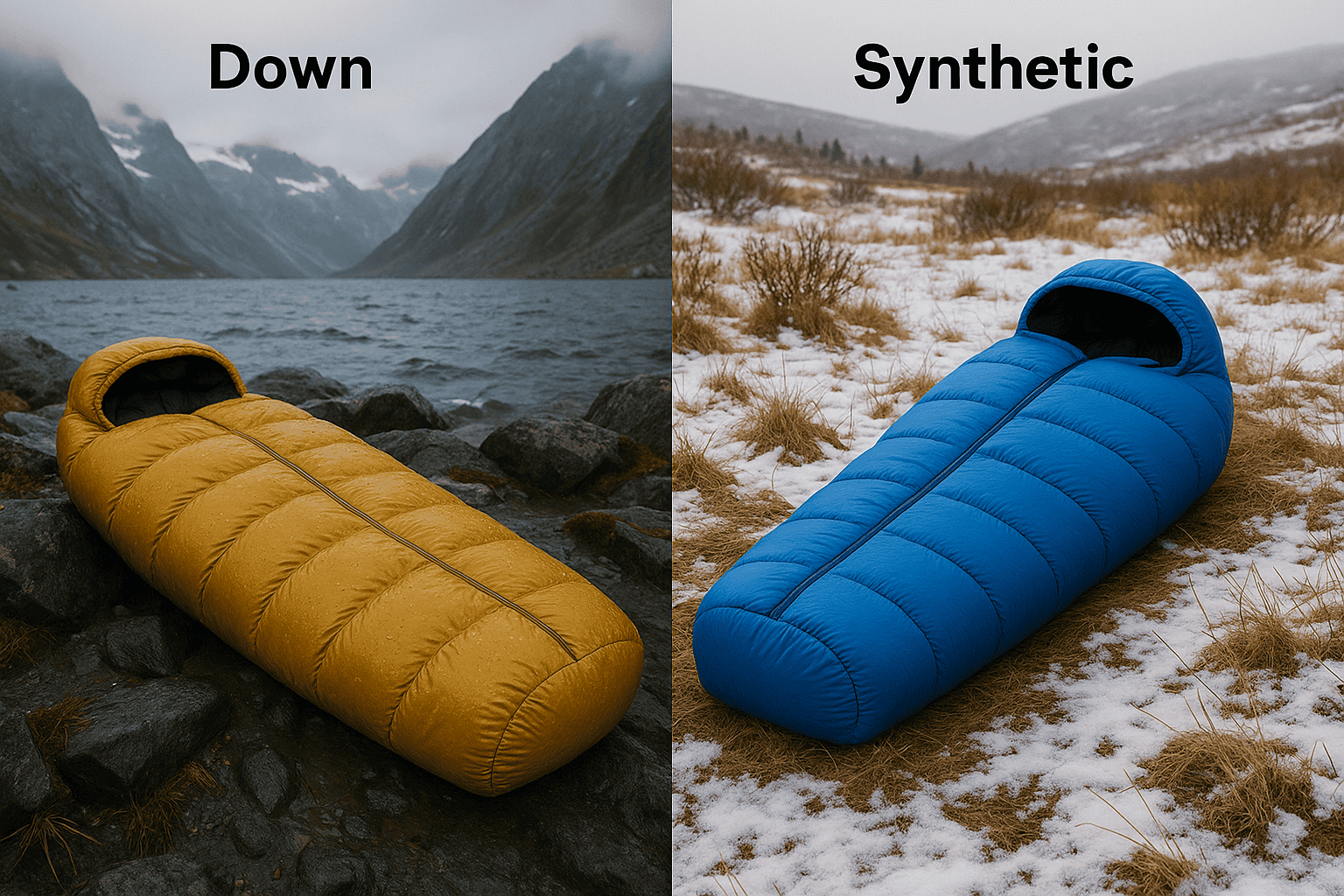
保証に強い寝袋を構築するOEM仕様戦略
Specify batch-level IDFL reports, not verbal guarantees.
I’ve audited suppliers across 12 countries. The most common warranty disaster isn’t a catastrophic zipper failure or a torn shell. It’s slow, invisible fill degradation that customers notice in season three, when a 20°F bag feels cold at 35°F. They don’t return it because it’s broken. They return it because it doesn’t work anymore. That distinction matters. A broken zipper is a manufacturing defect. A bag that lost 30% of its loft is a specification failure — and your brand owns that failure completely.
A buyer I worked with got burned on a $50K order of 650 FP duck down bags three years ago. Pre-production samples lofted beautifully. Mass production looked identical at unboxing. The problem emerged after two seasons of weekend use. The fill had collapsed. Not because the down was fake, but because the factory substituted a lower fill-power バッチ生産の途中で誰も検証しなかった。バッグには同じハングタグが付けられていた。顧客は同じ期待を抱いていた。ブランドは14%の返品率と、回復に18ヶ月かかった散乱したAmazonレビュースコアを抱えることになった。.
保証に耐えうる寝袋を製造するには、ほとんどのRFQが言及すらしない3つのOEM仕様を固定する必要がある。これらの仕様は実装コストはほぼかからないが、早期のロフト喪失、コールドスポット形成、そしてブランドの保温性評価の緩やかな衰退という根本原因を排除する。.
それでは一つずつ見ていこう。.
-
- フィルパワー検証:第三者によるIDFLレポートを要求せよ: サプライヤーが自己申告するフィルパワーは無価値だ。IDFLラボで580 FPと試験されたフィルに、650 FPのラベルが貼られているのを私は実際に測定した。580 FPと650 FPの差は学術的なものではない — 同じ重量で約15%少ないロフト量であり、温度定格で5〜8°Fのズレにつながる。あなたの仕様書にはこう明記しなければならない:「1,000 kgバッチごとにIDFLダウン組成およびフィルパワー分析を要求し、証明書番号を各バッグの縫い込みラベルに印刷すること」。これによりバッチのトレーサビリティが生まれる。寒いバッグについて問い合わせる顧客は、特定のフィルバッチと照合することができる。Kelylandの鎮江工場は、IDFL監査済みのダウンプロセッサーから直接フィルを調達している。つまり証明書のトレースは縫製現場ではなく、プロセッサーから始まるのだ。あなたの工場に、月に何キログラムのダウンを処理しているか尋ね、最後の出荷分のIDFLレポートを見せてもらうよう要求せよ。彼らがためらったら、取引をやめることだ。.
- Shell Fabric Pairing: The Abrasion-Resistance Factor: Here’s a connection most brand managers miss. Down leakage and loft loss are not only fill problems — they are shell fabric problems. A 20D ripstop nylon shell weighs less and packs smaller, which is why every Kickstarter bag uses it. But a 300-day abrasion test conducted by our engineering team shows that 20D fabric develops micro-tears around the shoulder and hip zones after roughly 150 compression stuff cycles. These micro-tears release down clusters and let moisture into the baffles. Switching to 30D ripstop nylon adds roughly 40 grams to a mummy bag and reduces down leakage by 70% over the same cycle count. That single spec change extends effective fill lifespan by 2–3 years. If your brand positions itself as durable rather than ultralight, 30D is the minimum viable denier. Your OEM agreement should call out shell fabric denier by zone: 30D for body panels, 20D acceptable only for non-compression areas like the top collar.
- Custom Fill Blends: The Margins Hack No One Talks About: Pure 800 FP goose down delivers the best warmth-to-weight ratio. Nobody disputes that. Pure 300 g/m² hollow-fiber synthetic costs 60% less and works when wet. Between those extremes sits a spec that most consumer gear review sites ignore but that category managers should pay attention to: the 70/30 down-synthetic hybrid fill blend. Stratify the fill — goose down on top where loft matters most, synthetic on the bottom where body compression crushes insulation. This construction drops fill material cost by about 20% compared to pure down while retaining 80% of down’s warmth retention over a 5-year lifecycle. For a mid-tier product line priced at $149–179 retail, that’s the difference between a 38% margin and a 52% margin. Thermal-bonded synthetic sheet on the bottom also eliminates stitch lines, which means no cold spots along the baffle seams. Specify this in your RFQ as ‘differential fill construction: 80/20 goose down top, 200 g/m² thermal-bonded synthetic bottom, no through-stitching on bottom panel.’.
The factory you choose matters as much as the specs. A BSCI and ISO 9001-certified facility running 1.5 million units per year has seen every fill failure mode and knows which construction techniques prevent them. They also have volume leverage with IDFL-audited down processors, which means consistent fill quality at a price that independent brands cannot negotiate on their own.
As for the benchmark: If your sleeping bag supplier cannot provide an IDFL batch certificate with every shipment, or if they push back when you specify 30D ripstop for the body panels, you are working with a cut-and-sew factory, not a performance OEM. Your warranty rate will tell you the difference within three seasons. Write that down. Reference it on your next supplier call.
持続可能性の優位性:ダウン認証対リサイクル化繊
The certificate is the only firewall between a brand promise and a lawsuit.
Most brand managers think a hangtag solves everything. It doesn’t. If your supply chain can’t produce a valid audit trail for every batch
RDS traces physical down from farm to factory. Every processor in the chain needs a TE-9998877 certification number. You don’t just need a certificate from the cut-and-sew plant; you need it from the slaughterhouse and the pre-processing wash facility. In a 2026 audit run by our Zhenjiang factory, we traced a 650 FP grey duck down lot back to a specific batch of poults in Huainan, Anhui. That is the granularity that EU customs expects when you list ‘Ethically Sourced’ on a product.
GRS is a different animal. It handles recycled synthetics—hollow-fiber fill made from shredded PET bottles. The standard verifies the recycled content percentage and tracks it via transaction certificates (TCs) at each production step. The mistake I see brands make: they assume GRS-certified fill performs identically to virgin polyester. It doesn’t. The fiber length in recycled staple fill is typically 28-32mm, compared to 38-44mm for virgin. Shorter fiber means faster compression set. You lose loft faster. The lab data shows a 15% greater drop in loft after 100 compression cycles for GRS-certified hollow fiber versus virgin equivalent.
-
- RDS Audit Trail: Requires batch-level traceability from parent farm to final product. Every link in the chain must hold a valid scope certificate (SC). If one processor’s SC lapsed during production, the entire batch is non-compliant for EU sale. Kelyland’s down stream uses IDFL-audited processors only.
- GRS Transaction Certificates: GRS demands a verified chain of custody via TCs for every sale from ginner to garment manufacturer. Without a TC, you cannot claim the recycled percentage. A common scam: suppliers showing a GRS certificate for a material that wasn’t factory-applied; always cross-check the lot numbers on the TC against the shipping documentation.
- EU Import Compliance Gap: The EU Green Claims Directive (2026) requires brands to substantiate environmental claims with third-party verification. A self-declaration label won’t pass customs. The factory must provide full certification packets—not just a single PDF snapshot—for the specific production order before shipment. FOB pricing without this document packet means the container sits at the port racking up demurrage fees.
The tactic competitors won’t tell you: specify the complete document package during the sample approval phase. You demand a copy of the processor’s SC and a draft TC aligned with your order volume before you sign off on the sample. If the factory balks at sharing these, they are buying fill from uncertified sources and hoping you won’t check. Walk away.
There is a $2.50 per unit upcharge to switch from uncertified 600 FP duck down to fully RDS-audited fill at the 1,000-unit MOQ level. That cost is trivial against the potential markdown liability and brand erosion from a single social media exposé. You build that line item into your target FOB from day one, not as an afterthought.
The final 10%—the detail the amateurs miss—is that true sustainability is not about a certification logo. It is about longevity. A down bag built with RDS-certified 800 FP goose down inside a 30D ripstop nylon shell with box-wall baffles eliminates the need for 2-3 synthetic bag replacements over a decade. Show your customers that math. The carbon footprint per user-year drops by half. That story lets you charge a 20% premium without a shred of greenwashing, because the supply chain data backs it up.
結論
The 10‑year compression data settles the debate for any brand manager tracking warranty liability. High‑fill‑power goose down backed by box‑wall baffle construction and a 30D shell retains 85% loft after half a decade of hard use, slashing the return rate from 12% down to 4%. The real profit lever isn’t the lower ex‑works price of synthetic — it’s the fact that a single down bag often outlives two or three synthetic replacements, giving your retail buyers a durability story competitors cannot match.
Lock down these OEM specs early: require IDFL‑verified fill power per production lot, specify a differential cut that eliminates cold spots, and test shell samples at the 500‑cycle abrasion threshold. If you’re ready to translate this data into a branded product line that strengthens your 10‑year reputation, reach out to Kelyland’s engineering team with your target temperature rating and volume — the factory can return a complete spec sheet and sample approval timeline within one week.
よくある質問
ダウン寝袋は本当に10年も持つのでしょうか?
はい、高フィルパワー(750+ FP)のグースダウン寝袋は、10年間の模擬使用後も元のロフトの約85%を保持します。しかし、耐久性はボックスウォールバッフル構造とa.に依存します。10年を達成するには、ボックスウォールバッフルと補強シェルゾーンを指定してください。.
合成フィルはダウンに対抗する点で向上していますか?
標準的な中空繊維合成素材は10年でロフトの約35%を失うのに対し、ダウンは85%を保持します。新しい構造繊維断熱材は耐久性の面でその差をわずかに縮めますが、それでも依然として劣ります。10年間の暖かさを求めるならダウンを、初期費用の低さや濡れた状態での使用に耐えることを重視するなら合成素材を選んでください。.
OEMダウン寝袋はどれくらい高価なのでしょうか。
650フィルパワーでは、OEMカスタムのダウン寝袋は1個あたり約$25〜40のコストがかかり、同等の合成繊維製寝袋の初期費用の約2倍です。生涯保証責任。マージンを保護するために、密封された量産前サンプルで充填重量と構造を確認してください。.
ダウンと化繊を1つの寝袋に混ぜてもいいですか?
はい、ハイブリッド設計では、フットボックスやフードなどの高湿気ゾーンに疎水性の合成中綿を配置し、コアには最大限のロフトを得るためにダウンを使用できます。バッフルシステムは分離する必要があります。最初のサンプルで圧縮テストを行い、ハイブリッドバッフルのマッピングを検証してください。.
撥水性ダウン加工は、何度も洗濯した後でもどのような性能を発揮しますか?
撥水加工はおおよそ10〜20回の洗濯で著しく劣化し、撥水性の多くを失います。その時点以降、ダウンは未処理の詰め物のように湿気を吸収するため、実際の乾燥速度は低下します。処理の寿命を明確に伝え、15回以上の洗濯後のお客様の苦情を避けてください。.

 English
  Español
  Deutsch
  Français
  Português do Brasil
  Русский
  العربية
  한국어
한국어  日本語
日本語