 跳到内容
跳到内容 
プライベートブランドのインフレータブルテントは、バイヤーがサプライヤー、予算、生産枠を承認する前に最初にチェックすべき関門です。プライベートブランドのインフレータブルテントの発注にとって正念場となるのは、量産前サンプルが届いたときではありません。3ヶ月後、最初のロットがAmazonに到着し、顧客レビューで「ロゴが2回の使用で剥がれた」とか「エアビームの継ぎ目がバルブで漏れた」と書かれるときです。その正確な$50K注文が失敗に終わったのは、生地の染料ロットが承認済みのパントンカラーと一致しておらず、製品が流通に乗るまで誰も気づかなかったからです。完璧なサンプルと欠陥のある量産ロットの間にあるこのギャップこそ、ほとんどのEコマース起業家が利益率を失う場所です。.
解決策は検査を増やすことではありません。重要なのは、どのカスタマイズのレバーが実際に単価を変え、どのレバーが単に見た目を変えるだけかを知ることです。エアビーム用のパントン染色TPU生地は、標準的な透明TPUより20-30%高い最小発注量が必要ですが、すべてのチューブであなたのブランドカラーを固定します。. PVCエアチューブへのシリコーンスクリーン印刷 は、剥がれ始めるまで50回以上の膨張サイクルに耐えます — 溶剤系インクは約15サイクルで失敗します。そしてロゴをエンボス加工したカスタム射出成形バルブキャップが必要な場合、 upfrontで$1,500〜$3,000の金型費を見込んでください。ただし、5,000個を超えると単価は大幅に下がります。.
したがって、その大量注文を承認する前に、サプライヤーと次の3点チェックリストを実施してください。彼らは私の パントン指定 を生地とエアビーム素材の両方で1シェードの許容差内で合わせられますか?印刷方法は、剥がれずに少なくとも50回の膨張サイクルに耐える評価がありますか?そしてパッケージには、バーコードの配置とコンプライアンスラベルが提示されたFOB価格に含まれていますか、それとも別途項目ですか?いずれかの答えがノーなら、生産にコミットする前に押し返してください。.

ステージ1:ベースとなるインフレータブルテントモデルの選定
実績のあるベースモデルは、初日から$1,500〜$3,000の金型費を節約します。.
プライベートブランドのインフレータブルテントで利益率を最も早く潰す方法は、すでに存在する工具にお金を払うことです。カスタム射出成形バルブキャップやエンドプラグはそれぞれ$1,500〜$3,000の金型費がかかります。5,000個ならそのコストはきれいに償却されます。500個なら粗利益を吹き飛ばします。解決策は簡単です:工場がすでに量産しているベースフレームデザインから始めることです。.
実績のあるフレームデザインを選んで金型費を回避する
インフレータブルテントは、シングルビームアーチまたはマルチビームジオデシックフレームのいずれかを使用します。ISO 9001認定パートナーネットワークであるKelyland Outdoorsが提携する中国のほとんどの工場では、両方の形状に対応する既存の金型を保有しています。特注品を依頼する前に、サプライヤーに標準フレームカタログを確認してください。アーチ半径とビーム径が目標サイズに合えば、金型費はゼロです。.
- 既存の金型があるフレーム形状: シングルアーチ(2〜3人用)、クロスアーチ(4〜6人用)、ジオデシックドーム(6人以上用)が一般的な標準フレームです。特定の設置面積が必要でない限り、これらに従ってください。.
- 金型費が発生するポイント: ビームと床の角度を5度以上変更するか、3つ目のバルブポートを追加する場合、通常は新しいアルミ押出ダイスが必要になります。ここで1,500ドル以上の費用が発生します。.
ステージ2:カスタム生地の染色と印刷
パントン染めのTPUファブリックは、最小発注量(MOQ)を20〜30%引き上げますが、テント本体全体にブランドに正確な色を提供します。.
ここが、インフレータブルテントが一般的なAmazonの出品物に見えなくなり、あなたのブランドらしく見え始めるポイントです。コントロールできる2つの主要な表面は、テントのキャノピー生地とエアビームチューブです。それぞれ色と印刷に関して異なるアプローチが必要であり、間違った選択をすると、3か月以内にロゴが色あせるか、出荷前検査でバッチが不合格になるかのどちらかになります。.
ポリエステルキャノピー生地のパントンマッチング
ポリエステルは染料をよく吸収するため、1回の生産ロットでほとんどのパントン参照色を実現できます。工場はグレージュ生地(漂白・染色なし)から始め、130°Cの高温ジェット染色機に通します。染料は表面に留まるのではなく繊維に結合するため、UV曝露や繰り返しの梱包後も色が保たれます。Kelyland Outdoorsは、ISO 9001認定のパートナー工場ネットワークを通じてこれを調整し、これらの工場は生地染色を社内で行い、パントンチップに対してΔE ≤ 1.0以内の許容差を維持しています。.
ほとんどのEコマース起業家が見落としがちな点:ポリエステルは仕上げによって反応染料または分散染料を使用します。ファブリックにPUコーティング(防水加工で一般的)がある場合、コーティングは染色後(染色前ではなく)に施されます。サンプル承認時にこの順序をサプライヤーと確認してください。確認しないと、後々コーティングの密着不良が発生するリスクがあります。.
TPUエアビームのカラーマッチング
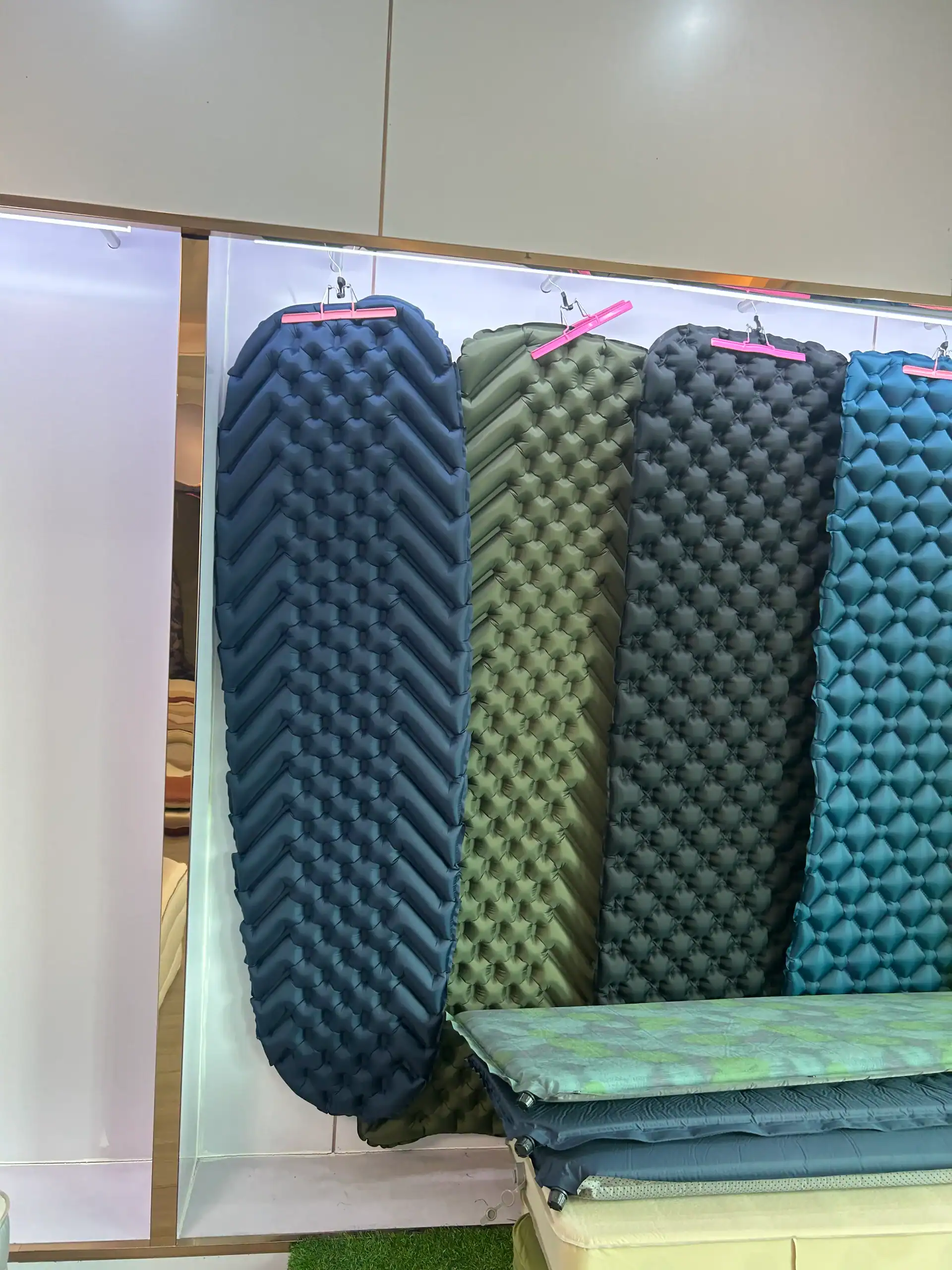
TPUは本質的に半透明であるため、ポリエステルよりも扱いが難しいです。不透明な色を得るには、押し出し前に顔料をTPUペレットにコンパウンドする必要があります。これには色ごとに専用のマスターバッチ配合が必要であり、MOQが高くなります。Kelyland Outdoorsの湖北省襄陽にあるエアマットレス工場(年間生産量250万台)の内部生産データによると、通常、標準的な透明TPUの最小注文量より20〜30%高くなります。.
ステージ3:エアビームの色とバルブのカスタマイズ
パントン染色されたTPUビームは、20-30%の最小発注量を追加しますが、完全なブランドカラーマッチングを可能にします。.
ほとんどのEコマースセラーは、まず 透明なTPUエアビーム から始めます。なぜなら、それらはより安価で、工場が大量に在庫しているからです。価格だけで販売しているなら、それで問題ありません。しかし、ブランドのアイデンティティが特定の色に依存している場合—例えば、パントン19-4052クラシックブルー—透明なチューブでは、テント本体とフレームの間の視覚的な一体感が損なわれます。.
溶接部を弱めずに透明なTPUチューブを染色する方法
TPUを染色する際のリスクは、熱劣化です。標準的な透明TPUは、ポリマー鎖の強度を維持する特定の温度範囲で押し出し成形されます。染料浴または染色後の乾燥サイクルがその範囲を超えると、溶接ゾーンは剥離強度の最大15%を失います。30 PSIに耐えるべきテントが、50回の膨張サイクル後に25 PSIで故障する可能性があります。.
その回避策は、80°C未満で処理される低温分散染料と、それに続く制御された風乾です。Kelyland Outdoorsが協力しているパートナー工場には、標準生産とは別に稼働する着色TPU用の専用染色ラインがあり、残留顔料や過熱による相互汚染がありません。.
エンドキャップのエンボスロゴ vs 印刷ラベル
エンボス加工は、剥離するインク層がないため、この問題を解決します。ロゴは射出成形前に金型キャビティに押し込まれ、プラスチック自体の一部になります。トレードオフは金型コストです。カスタム射出成形バルブキャップまたはエンドプラグは、通常、デザインごとに$1,500〜$3,000の金型費がかかります。.
ステージ4:小売向けパッケージデザイン
小売用パッケージングは、製品が棚や玄関先に届く前の最終チェックポイントです。.
ほとんどのEコマース起業家は、テントの生地、エアビームの色、ロゴの配置を完璧にするために数週間を費やします。そして、パッケージングを後回しにします。それは間違いです。よくデザインされた段ボール箱とキャリーバッグは、輸送中の製品を保護し、ブランドアイデンティティを伝え、小売店やマーケットプレイスの要件に準拠し続けることを可能にします。.
外装箱のアートワークとキャリーバッグ
マスターカートンは、あなたの倉庫または配送センターに届くものです。積み重ね、湿気、乱暴な取り扱いに耐える必要があります。空気注入式テントの場合、, 二重壁段ボール 破裂強度が1平方インチあたり少なくとも200ポンドであることが基準です。カートンのアートワークには通常、ブランドロゴ、製品名、寸法、重量、取り扱いアイコン(防湿、この面を上)が含まれます。.
そのカートンの中に入っているリテール用キャリーバッグは、エンドカスタマーが最初に目にするものです。これは開封体験の一部です。ほとんどのプライベートラベルのインフレータブルテントは、ドローストリング式またはジッパー付きのカスタムプリントされたオックスフォード生地バッグに梱包されます。バッグの素材はテントの品質層に合わせるべきです—ミッドレンジモデルには600Dオックスフォード、プレミアムラインには900Dです。バッグへのロゴ印刷は、シルクスクリーン(大胆なロゴに最適)または熱転写(グラデーションや細かいテキストに最適)を使用できます。.
Kelyland Outdoorsは、パッケージデザインをエンドツーエンドサービスの一部として取り扱っています—10段階のプロセスのステップ7には、ブランドに合わせたラベル、洗濯表示、タグを備えたカスタマイズパッケージの開発が含まれます。.
取扱説明書—省略しないでください
インフレータブルテントは、ポールテントよりも習得が難しい部分があります。説明書が欠落していたり、翻訳が不十分だったりすると、返品や悪いレビューにつながります。説明書には、明確な図によるセットアップ手順(テキストだけでなく)、各ビームの膨張圧力範囲(例:8〜12 PSI)、隅に空気が閉じ込められないようにするための収縮手順、小さなパンクの修理方法を記載する必要があります。.
Print the manual on water-resistant paper or include it as a QR code linking to a video guide. Retail buyers like Ace Hardware expect printed manuals inside every unit — no exceptions.
ステージ5:サンプリングと品質承認
A signed pre-production sample is your only legal leverage against off-spec bulk production.
You approved a Pantone swatch, the factory sent photos of one tent looking right, and you gave the green light for 2,000 units. Then the container lands and every air beam is a half-shade off your brand color. That gap between sample approval and mass production is where most private-label inflatable tent projects go wrong. The fix isn’t more trust — it’s a tighter checklist on the pre-production sample itself.
What to check on your pre-production sample
について 量産前サンプル (often called the PP or gold seal sample) is not the same as the development prototype. The PP comes from the actual production tooling and material batch that will run your bulk order. That distinction matters because fabric dye lots shift slightly between mill runs, and TPU film thickness can vary by 0.05mm within a single roll.
- Color match under daylight and LED: Hold the PP fabric next to your original Pantone chip in natural light, then under a 4000K LED. Many TPU fabrics look correct in one light source but shift green or yellow under another. If you sell on Amazon, that color shift triggers return flags.
- Air beam weld integrity: Inflate the PP to full working pressure (typically 8-12 PSI for PVC air beams) and let it sit for 24 hours. Measure pressure drop with a digital gauge. A loss above 15% indicates micro-leaks at weld seams — a problem that multiplies across hundreds of units.
- Logo placement tolerance: Mark the exact distance from each logo edge to the nearest seam or zipper track using a ruler. Acceptable tolerance is ±3mm on screen-printed logos and ±1mm on embossed end caps. Beyond that, branding looks misaligned in product photos.
Tightening QC specs before bulk order
結論
The gap between a pre-production sample and the final bulk shipment usually comes down to three specific decisions you make before the line starts. A missed spec on TPU dyeing or a valve mold that wasn’t tested at full pressure can turn a $50K order into a return headache.
- Does your supplier offer Pantone-matched TPU fabric for colored air beams?
- Can they provide silicone screen printing that survives 50+ inflation cycles?
- Is your packaging designed with barcode and compliance label placement included?
- Have you reviewed the sample approval checklist for weld strength and color tolerance?
Before you lock in a production agreement, run through those four questions with your manufacturing partner. If they hesitate on any of them, it’s worth requesting a revised quote or sample from a supplier with proven experience in inflatable tent customization. Review current product specs and custom options on the air mattress page to compare how different materials and mold fees affect your per-unit cost at scale.
よくある質問
プライベートブランドのインフレータブルテントの最小発注数量(MOQ)はいくらですか?
カスタムインフレータブルテントの最小注文数量(MOQ)は、特定のアイテムでは50〜100個から始められる場合がありますが、標準モデルは通常300〜1,000個の範囲です。この柔軟性により、新しい商品をテストすることができます。テントのモデルとカスタマイズレベルを確定した後、正確なMOQを確認してください。.
ファブリックの色とプリントをカスタマイズできますか?
はい、TPU とポリエステルの生地染めをパントーンに合わせることができ、ロゴはシルクスクリーン印刷またはデジタル転写のどちらかを選択できます。パントーン染めの TPU 生地は最小注文数量 (MOQ) が 20〜30% 増加しますが、ブランドの正確な色を保証します。本格的な生産に入る前に、パントーン見本をリクエストしてください。.
エアビームの色とバルブはどのようにカスタマイズしますか?
透明TPUチューブをブランドカラーに合わせて染色することは可能ですが、溶接部を弱めないように慎重な工程管理が必要です。エンドキャップにエンボスロゴを追加することも別の方法です。染色したビームの溶接強度試験レポートをサプライヤーに依頼してください。.
小売向けにはどのようなパッケージオプションがありますか?
カートンのアートワーク、手提げ袋、取扱説明書をお客様のブランドでカスタマイズでき、さらにバーコードやコンプライアンスラベルも追加できます。Kelyland Outdoorsは、10ステップのサービスプロセスの一環としてパッケージデザインを手がけています。対象とする小売チャネルを指定して、ラベルが規制に準拠していることを確認してください。.
量産前サンプルでは何を確認すべきですか?
承認された仕様書に照らして、生地の色の正確さ、プリントの密着性、エアビームの溶接の完全性、バルブの機能を確認してください。大量発注前にQC仕様を厳格にすることで、ロゴのような問題を回避できます。完全な膨張テストと漏れテストの後にのみ、サンプルを承認してください。.

 English
  Español
  Deutsch
  Français
  Português do Brasil
  Русский
  العربية
  한국어
한국어  日本語
日本語