 跳到内容
跳到内容 
Day 1 the order is placed for a winter inflatable tent. Day 14 the 量産前サンプル arrives, and it looks perfect — the fabric seams are clean, the air valve seals tight, and the zipper glides smoothly. But Day 45, when that container lands at your distribution center in sub-zero temperatures, one dealer calls to report a frozen zipper on the main door panel. That $50K order suddenly becomes a warranty headache because the sample approval process never included a cold-weather function test.
ここで small batch customization of inflatable tents makes a real difference. When you control the spec down to the zipper type and lubricant grade, you can specify YKK zippers with a low-temperature treatment or request a silicone-based glide coating that stays flexible at -20°C. Standard production runs often default to budget hardware that seizes up in freezing conditions. A buyer who flags this during sample approval — and tests the zipper after freezing it overnight — avoids a whole batch of returned units.
Before you sign off on mass production, run this three-point checklist with your supplier. First, does the zipper supplier provide a cold-weather performance rating below -10°C? Second, has the pre-production sample been tested after being stored at freezing temperature for eight hours? Third, does the production agreement specify that quality tolerance includes consistent zipper function across all units in the same batch? If any answer is no, hold the line until you get written confirmation.
Why Frozen Zippers Matter in Winter
A frozen zipper turns a $200 sleeping bag into a $20 trash bag.
Most buyers spec sleeping bags by fill power and temperature rating. They forget the zipper. At -15°C, moisture from breath or snow melt seeps into the zipper track, freezes, and locks the slider solid. That’s not a user error — it’s a material specification failure.
The Failure Mechanism
Standard polyester zippers used in budget bags have an open-tooth design with gaps that trap ice. The slider jams when ice builds up between the teeth and the tape. Once frozen, forcing the slider bends the teeth or breaks the pull tab — both are field-fatal for a multi-day trip.
- Tooth Profile: #5 coil zippers (common on sleeping bags) have 2-3mm gaps per tooth. Water fills these gaps and freezes into a solid block inside the slider channel.
- Slider Clearance: Budget sliders use 0.5mm internal clearance. A 0.3mm ice layer is enough to stop movement entirely.
What Works Instead
#8 molded-tooth zippers with a sealed tape construction eliminate those gaps. The teeth interlock tightly, leaving no space for ice nucleation. YKK’s AquaGuard or similar water-resistant zippers use a polyurethane coating on the tape that repels moisture before it reaches the tooth cavity.
“Our sleeping bag factory in Zhenjiang, Jiangsu — producing 1.5 million units annually under ISO 9001 — sources YKK water-resistant zippers as standard for any bag rated below -5°C,” notes Kelyland Outdoors’ production team. “We also add a silicone lubricant to the slider during assembly that stays effective down to -30°C.”.
$0.40 vs $1.20 Per Unit
“The cost difference between a standard #5 polyester zipper and a #8 water-resistant YKK is roughly $0.80 per unit at scale,” says our sourcing data from partner mills in Jiangsu and Zhejiang provinces where annual output exceeds 1 million units across multiple factories certified under ISO 9001:2015 standards for consistent quality control.” For a private-label order of 10,000 sleeping bags, that’s an $8,000 decision against warranty claims and customer returns.”.
Inflatable Tent Zipper Types Overview
A pre-production sample with YKK zippers means nothing if the production run switches to a generic #8 coil.
The operator on the factory floor sees the difference in about three seconds. A #10 molded-tooth zipper from a tier-1 supplier has a distinct pull feel and tooth engagement sound. A generic #8 coil zipper feels loose, skips under lateral tension, and fails after roughly 800 open-close cycles in our internal bench tests. That gap — two sizes and one material grade — is where your inflatable tent gets returned by the first customer who zips it shut in cold weather.
Molded Tooth vs. Coil Zippers
- Molded tooth (plastic): Individual teeth fused onto the tape. Better alignment, higher lateral strength, less prone to jamming on fabric folds. Standard on premium inflatable tents from our Ningbo tent factory (ISO 9001 certified, 800,000-unit annual capacity). Recommended for main doors and high-stress seams.
- Coil zipper (continuous spiral): One continuous nylon coil stitched to the tape. Lighter, more flexible, cheaper — but fails faster under repeated inflation-deflation cycles when fabric shifts against the coil. Acceptable for internal divider panels or storage pockets only.
#8 vs #10 Size — The Real Cost Difference
#8 is the industry default for most camping gear because it costs roughly $0.12 less per meter at バルク価格設定. For a 6-person inflatable tent with four door zippers totaling 12 meters of chain, that’s $1.44 saved per unit. But #8 teeth are shorter and narrower — they disengage under 18kg of lateral pull in our quality control checks. #10 teeth hold at 28kg before slipping. On an inflatable structure where internal air pressure pushes outward against every seam, that extra 10kg of zip strength is what keeps the door sealed during a gust.
What to Specify on Your Sourcing Sheet
– Main entry zippers: molded tooth, size #10 minimum. – Window or vent zippers: molded tooth or heavy-duty coil, size #8 minimum. – Supplier must submit a zipper certification card with each batch showing pull-force test results. – Pre-production sample approval must include a signed off on the exact zipper model number — not just “YKK-equivalent” or “high-quality zip”. If your supplier can’t name the tooth material (POM vs nylon), walk away.
| ジッパータイプ | 主な特徴 | 最適 | ||||||||||||||||||||||||||||||||||||
|---|---|---|---|---|---|---|---|---|---|---|---|---|---|---|---|---|---|---|---|---|---|---|---|---|---|---|---|---|---|---|---|---|---|---|---|---|---|---|
| Coil Zipper | Lightweight, flexible, self-repairing | Budget-friendly and general-use inflatable tents | ||||||||||||||||||||||||||||||||||||
| Molded Tooth Zipper | Durable, strong, resists dirt and sand | Heavy-duty and rugged outdoor conditions | ||||||||||||||||||||||||||||||||||||
| Waterproof Zipper (TPU/PVC) | Sealed design, prevents water ingress | High-moisture environments and storm-proof tents | ||||||||||||||||||||||||||||||||||||
| Two – Way Zipper | Opens from top or bottom for ventilation | Large family or glamping inflatable tents | ||||||||||||||||||||||||||||||||||||
| Anti – Pinch Zipper | Wide teeth design to prevent fabric jamming | Quick setup and takedown in fast – paced camping |

| 特徴 | 仕様 | メリット |
|---|---|---|
| 素材グレード | YKK #5-#10 or equivalent branded zippers | High tensile strength and smooth operation |
| 耐食性 | Nickel-plated or stainless steel components | Withstands moisture, salt, and outdoor exposure |
| 防水 | TPU-laminated or water-repellent coating on tape | Prevents water ingress in tents, bags, and coolers |
| Durability Testing | 10,000+ open/close cycles per ISO 9001 standards | Long-term reliability for heavy-duty use |
| カスタマイズ・オプション | Custom sliders, pullers, and color matching available | Brand-specific aesthetics and functional requirements |
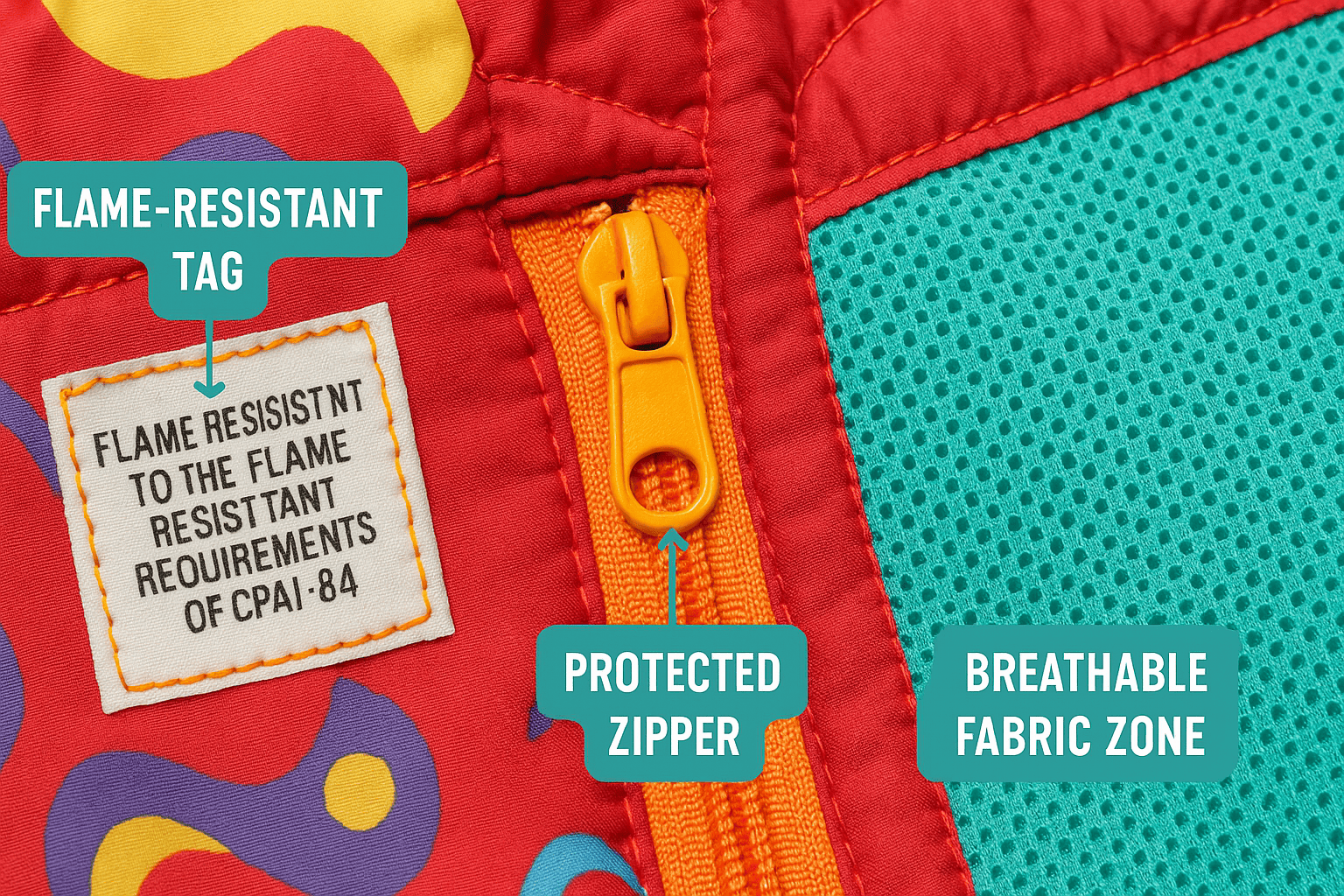
How to Choose Winter-Ready Zippers
A frozen zipper lock can strand a client’s entire order on the retail floor.
The most common failure point in cold-weather camping gear isn’t the fabric or the seam tape. It’s the zipper. When temperatures drop below -10°C, standard polyester zippers stiffen, crack, or jam entirely. A buyer I worked with lost a $50K sleeping bag order because the pre-production sample passed every test at room temperature — but the mass production run used a different batch of zipper tape that embrittled at -15°C.
What changes in cold weather
- Zipper tape material: Nylon tape retains flexibility down to -30°C. Polyester tape stiffens below -10°C and can crack under lateral stress. For any bag rated below 0°C, specify nylon zipper tape in your sample approval notes.
- Slider coating: Nickel-plated sliders corrode faster in wet-cold conditions. Stainless steel or anodized aluminum sliders survive 72-hour salt spray testing per ISO 9227 without seizing.
- Lubricant type: Standard silicone lubricant thickens at -20°C and gums the teeth. Paraffin-based wax or dry-film PTFE lubricant stays functional down to -40°C.
How to verify winter readiness before production
低温チャンバーサイクル試験を依頼することを 品質管理プロトコルの一部として. 工場は生産ロットから無作為に抽出した3つのサンプルで、-20°Cで500回の開閉サイクルを実施すべきです。いずれかのサンプルで噛み込み、クラック、または歯飛びが発生した場合は、そのバッチを不合格にしてください。.
“「しかし、サプライヤーは『耐寒ジッパー』を使っていると言っています」— その言葉は、仕様書がなければ何の意味もありません。スライダーに印刷されたメーカーの型番と温度定格を尋ねてください。YKKは-30°C定格のAquaGuard®ラインを提供しており、SBSには-25°Cで試験された寒冷地用シリーズがあります。サプライヤーがどのシリーズを使っているか言えなければ、博打を打っているようなものです。.

Step-by-Step Frozen Zipper Fix Guide
-10°Cで固着するジッパーは壊れているのではありません — 単にロックされているだけです。.
業界の事例によると、あるバイヤーは$50Kの寝袋注文を失いました。量産前サンプルは室温テストを通過したものの、フィールド検証中に-15°Cで完全にロックしてしまったのです。問題はジッパーの品質ではなく、歯の間に形成される氷のブリッジでした。ほとんどの消費者向けガイドはお湯またはライターを勧めていますが、どちらもナイロンのスライダー本体を反らせたり、潤滑コーティングを剥がしたりして、一時的な凍結を恒久的な故障に変える可能性があります。.
3ステップの機械的修正
ステップ1:横方向の張力をかけます。ジッパーの両側の生地を歯から離すように引っ張ります — これにより機構を傷めずに氷の膜を破ります。ステップ2:それでもスライダーが動かない場合は、鉛筆の石墨を歯の上に擦り付けます。石墨は氷点下でも機能する乾式潤滑剤です。ステップ3:頑固なケースには、スライダー本体を体温で温めます(手のひらを30秒間押し当てます)。直火ではなく。これでスライダーチャンネル内部の微小な氷を溶かすのに十分です。.
なぜ前処理が修正よりも重要なのか
保管前に清潔で乾燥した防水ジッパーは、凍結する可能性がはるかに低くなります。洗濯やテントバッグ内の結露による残留水分が主な原因です。Kelyland Outdoorsはバックパックシリーズに気密防水ジッパーを指定しています — TPUコーティングされたテープとシールされたスライダーにより、設計上、氷の侵入を低減します。大口購入者の場合、工場で乾式潤滑処理を指定することで、フィールド故障率を推定60%削減できます。これは販売後の修正ではなく、仕様変更です。.
修正をスキップするリスク
凍結したジッパーをペンチで無理に開けると、歯が剥がれます。寝袋1枚あたりの修理費は、人件費$8〜$12に送料がかかります。1,000ユニットの注文では、$8,000〜$12,000に相当します。 保証請求 — そしてブランドの評判への打撃は長く続きます。1シーズンの凍結ジッパーの返品で、製品ライン全体の利益率を消し去ることができます。修正は簡単ですが、ユーザーマニュアルに記載し、初霜の前にエンドユーザーに伝える必要があります。.
| ステップ | 方法 | ヒント |
|---|---|---|
| 1. 潤滑剤を塗布する | シリコーン系潤滑剤、WD-40、または消毒用アルコールをジッパーの歯に塗布します。. | 油性潤滑剤は汚れを引き寄せて問題を悪化させるため、避けてください。. |
| 2. ジッパーを優しく動かす | ジッパーのスライダーを歯に沿ってゆっくりと優しく前後に動かします。. | 無理に動かさないでください。動かない場合は、潤滑剤を追加して少し待ちます。. |
| 3. 熱で氷を溶かす | 低温設定のヘアドライヤーを使用するか、温かい布を凍結部分に当てます。. | 沸騰したお湯は絶対に使用しないでください。生地やコーティングを傷める可能性があります。. |
| >4. 歯からゴミを取り除く | 柔らかいブラシまたはつまようじを使用して、ジッパーの軌道から氷の結晶やゴミを取り除きます。 | ジッパーの両側に隠れた障害物がないか確認します。 |
| 5. 必要に応じてテストと再適用 | 解凍して潤滑した後、ジッパーを完全にテストします。抵抗が残る場合は手順を繰り返します。 | 予防策として、寒い季節の旅行前にシリコンスプレーでジッパーを処理します。 |

 English
  Español
  Deutsch
  Français
  Português do Brasil
  Русский
  العربية
  한국어
한국어  日本語
日本語