 跳到内容
跳到内容 
折りたたみワゴンの耐荷重制限 is the first checkpoint buyers should lock before they approve a supplier, budget, or production slot. A buyer placed a $50,000 order for folding wagons based on a pre-production sample that looked perfect. The mass production run arrived with baskets sagging at half the rated load — the fabric denier had been swapped from 900D to 600D without anyone catching it in the approval stage. That gap between what is approved and what ships is where folding wagon weight limits become a real sourcing problem, not just a number on a spec sheet.
Most suppliers advertise static load ratings — the weight a wagon can hold while sitting still on a concrete floor. But your retail customers will drag these things over gravel, grass, and uneven campsite paths. A wagon rated for 200kg static can drop to an effective dynamic capacity of 80-100kg when you actually pull it across rough ground with the same load inside. That distinction matters more than any other single spec when you are positioning SKUs for different price tiers and use cases.
The frame geometry and baseboard material determine whether your return rate stays under control or spikes after the first humid season. MDF baseboards warp after repeated damp loads — PP honeycomb or aluminum inserts add cost but eliminate that failure mode entirely. Steel tube wall thickness below 0.8mm on a heavy duty folding wagon frame will buckle before the fabric basket tears, so ask for that spec directly rather than relying on marketing claims about overall capacity.
How Folding Wagon Load Ratings Are Calculated
A 200kg static rating can drop to 80-100kg dynamic over rough ground.
Most folding wagon spec sheets list one number: the load capacity. What that number actually means depends on whether it was measured with the wagon sitting still or being dragged across a gravel campsite. That distinction determines whether your retail customers get a product that works or one that fails mid-season.
Static vs Dynamic Load: What Sellers Don’t Tell You
Static load testing places weight on a parked wagon — typically with sandbags or steel plates stacked in the basket, measuring how much the frame and fabric hold before failure. The wagon doesn’t move. No bumps, no turns, no uneven ground. This is the easy test, and it produces the highest number.
Dynamic load testing drags or rolls the loaded wagon over a standardized obstacle course — gravel, curbs, grass ruts. The frame twists, the fabric basket stretches against its stitching, and the wheels absorb lateral forces. A wagon that holds 200kg static often fails between 80-100kg dynamic because the stress distribution changes completely.
Frame Specs Behind 50kg, 120kg, and 200kg Wagons
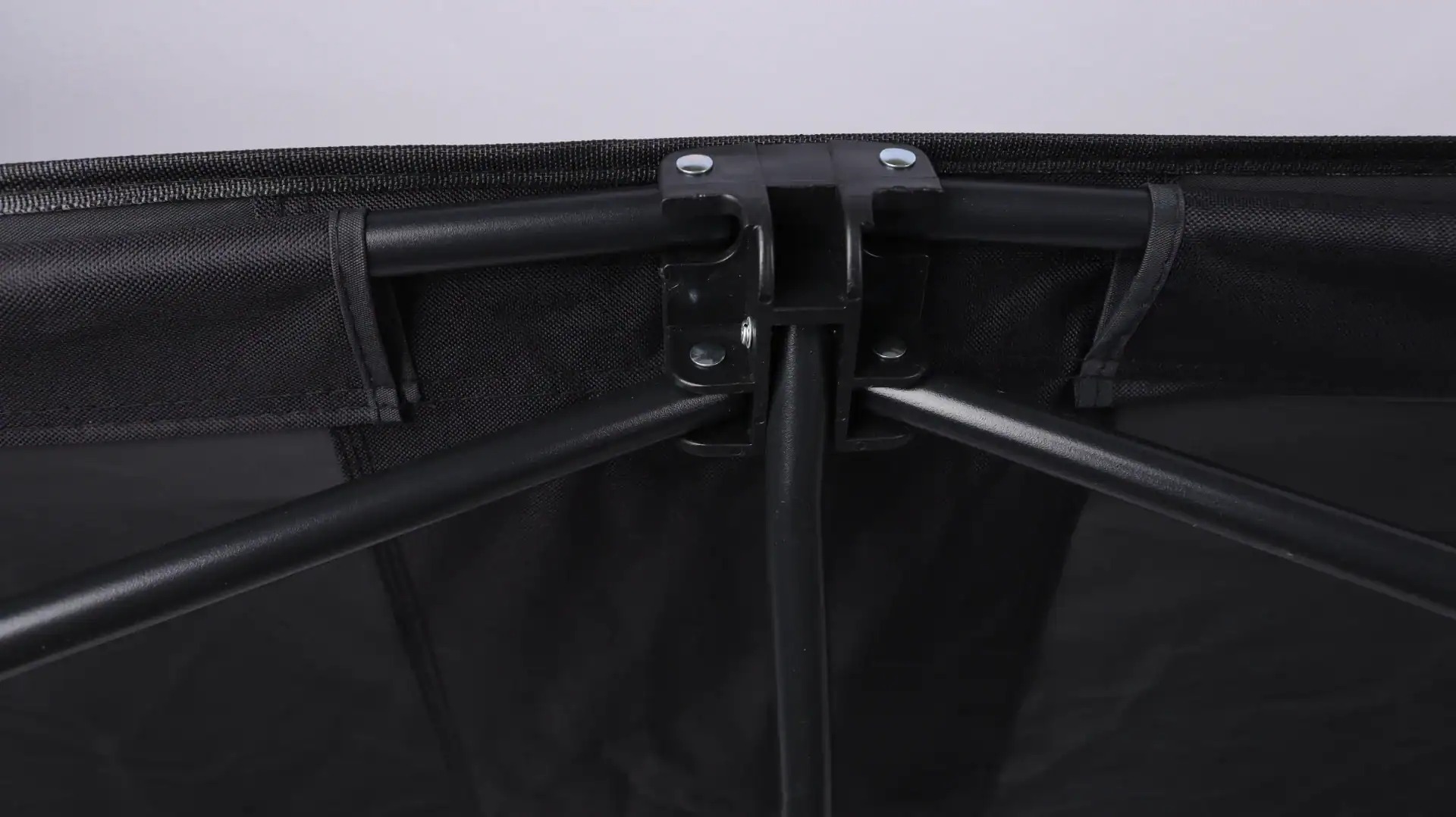
フレームジオメトリは、どの単一の材料仕様よりも、実際の耐荷重を決定づける。.
製品写真では同一に見えるワゴンフレームでも、実際の強度は40%も異なることがある。その差は、スチールチューブの肉厚と折りたたみ機構のジオメトリという2つの要素に集約される。.
スチールチューブの肉厚とフレームジオメトリ
ほとんどの50kg用ワゴンは、肉厚0.6mm〜0.8mmの炭素鋼チューブを使用している。120kg用になると、1.0mm〜1.2mmに跳ね上がる。200kg定格の真のヘビーデューティ折りたたみワゴンには、チューブ肉厚が少なくとも1.5mm必要で、一部のサプライヤーはメインレールを1.5mmに保ちながらクロスバーを1.2mmに落とすこともある。.
ジオメトリも同様に重要だ。標準的なXフレームは2つのピボットポイントに荷重を分散するが、動的荷重が100kgを超えると、これらのピボットが応力集中部となる。補強型Xフレームは、3本目のクロスブレースを追加するか、ヒンジジョイントにガセットプレートを使用する。この変更だけで、重量をあまり増やさずに横方向の剛性を約30%高めることができる。.
粉体塗装された炭素鋼フレームは、コストと強度のバランスが良いため、このカテゴリの標準となっている。軽量ポジショニング(通常ワゴン重量15kg未満)にはアルミニウムフレームも存在するが、耐荷重の上限を犠牲にしている。ほとんどのアルミワゴンは、チューブゲージに関係なく、約80〜100kgが上限である。.
荷重を支える補強型Xフレームとベースボード素材
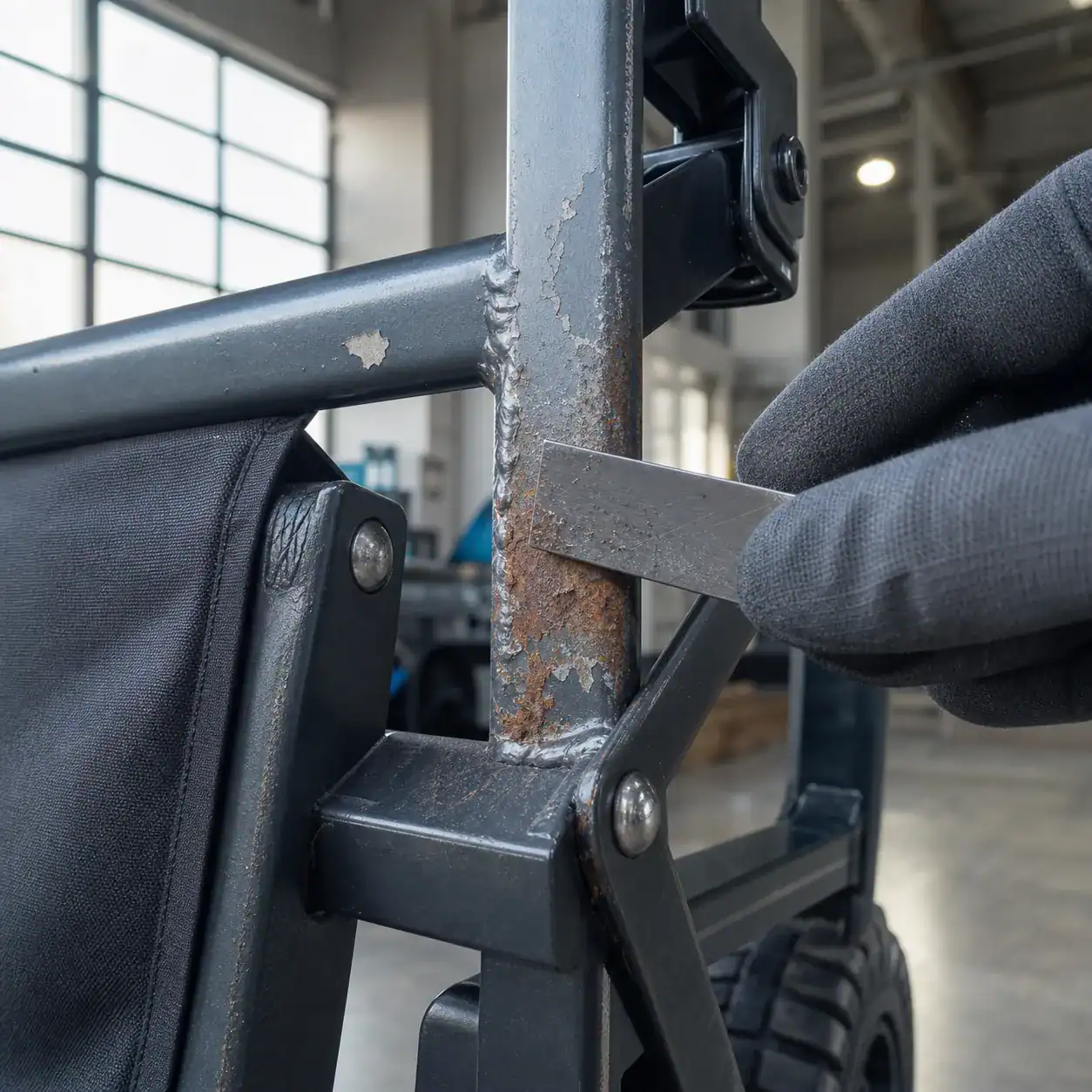
多くのワゴンは、フレームよりも先にベースボードで故障する。MDFボードは、湿った荷物に繰り返しさらされると反る。濡れた砂やアイスパックを3回使用しただけで、ボードは平面構造を失い、不均一な応力をファブリックバスケットの壁に伝える。.
Verifying Load Claims Before You Order Samples
A 200kg static rating can drop to 80-100kg dynamic over rough ground.
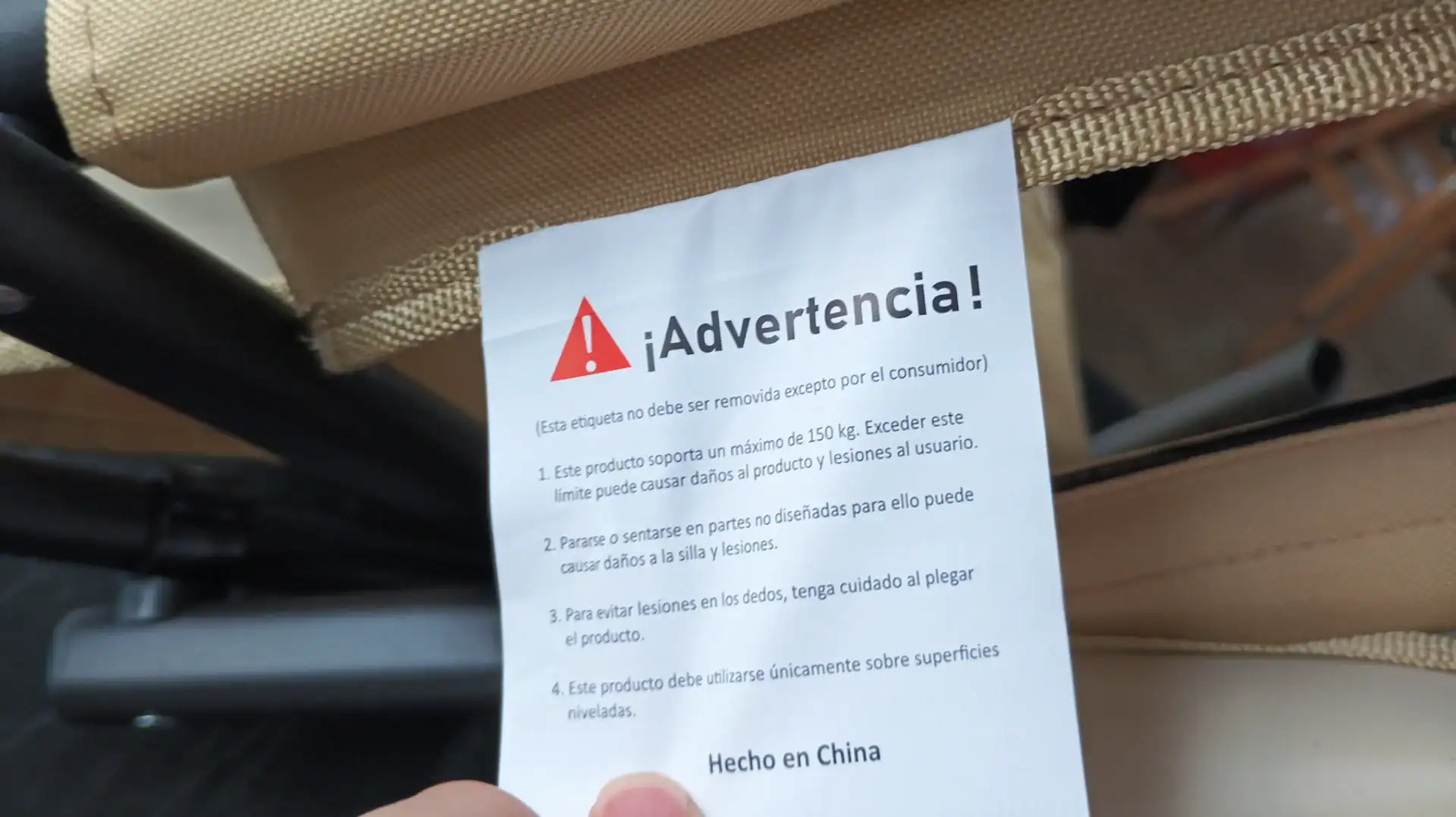
小売りのほとんどの購入者は、 印刷された耐荷重を 絶対的な数値として扱う。しかし実際はそうではない。折りたたみワゴンの側面にある150kgのステッカーは、通常、静的試験によるものだ。コンクリート床の上にワゴンを置き、バスケットに土嚢を載せる試験である。実際の使用では、その荷重を砂利、芝生、起伏のあるキャンプ場の地形で引っ張ることになる。返品率が上昇し始めるのは、この静的荷重と動的荷重の差が原因である。.
依頼すべき破壊試験のしきい値
サプライヤーを評価する際には、 プライベートラベルプログラムのために, 、カタログの仕様書を証拠として受け入れないでください。サンプル承認を確定する前に、具体的なテスト結果を3つ要求してください。.
- 模擬地形での動的荷重テスト: 定格容量まで積載したワゴンを、砂利や凹凸のある路面で500メートル牽引する様子を示す動画または第三者機関のレポートを要求してください。静的状態で150kgに耐えるワゴンは、静的セットアップには存在しない横方向の応力がフレーム継手にかかるため、動的状態では90〜100kgで故障することがよくあります。.
- フレーム継手の疲労サイクル数: 重要な故障箇所はチューブ自体ではなく、接続ポイント——Xフレームのクロスバーが交わる箇所——です。次のものを要求してください: サイクルテストデータ:フレームが定格フル荷重下で何回の開閉サイクルに耐えるか。最低基準は、目に見える変形なしで3,000サイクルであるべきです。.
- ファブリックバスケットの引き裂き強度: “「600D vs 900Dワゴンファブリックの耐久性」は、ファブリックがフレームにどのように取り付けられるかほど重要ではありません。バスケットがフレームレールに接する縫い目ラインでの引き抜きテスト測定を要求してください。引き裂き抵抗が50kgf(キログラム力)未満の場合、顧客が片隅に過積載すると返品が急増することを意味します。.
- <100kgワゴン(エントリーレベル): :食料品やビーチ用品などの軽い荷物を運ぶ価格重視の買い物客をターゲットにしてください。肉厚約0.8mmの粉体塗装炭素鋼フレームと MDFベースボード. を使用してください。MDFは湿った荷物を繰り返し載せた後に反る可能性があることを受け入れてください——しかしこの価格帯では、ほとんどの顧客は構造的破損が発生する前に買い替えます。.
- >150kgワゴン(中級): :MDFの代わりにPPハニカムまたはアルミニウムインサート底板を使用し、たわみを起こさずに重い荷物に対応する必要があります。フレーム肉厚は少なくとも1.0mmのスチールに増やすか、強度を損なわずに軽量化するためアルミニウムに切り替えるべきです。.
- >200kgワゴン(ヘビーデューティー): :これらは商業グレードのSKU、または荒れた地形でクーラーや薪、装備を運ぶ本格的なキャンパー向けに確保してください。補強されたX-フレーム形状 with gusseted joints, double-layer Oxford fabric (900D minimum), and wheels with TPE tires rated for off-road use.
小売SKUポジショニングへの耐荷重の整合
“「小売SKUポジショニング折りたたみワゴンの耐荷重」は、箱に大きな数字を印刷するだけの問題ではありません。それは保証リスクと返品率予算を直接決定します。.
結論
The gap between a 200kg static load rating and what happens when that wagon hits a gravel path is where returns live. Dynamic testing with weighted loads over rough ground reveals the real capacity, which can drop by half. Frame geometry, tube wall thickness, and baseboard material determine whether your SKU survives the first season or generates a warranty claim.
- Dynamic load ratings are often half of advertised static limits.
- MDF baseboards warp under damp loads; PP honeycomb or aluminum hold up.
- 900D double-layer Oxford fabric outlasts 600D in basket failure tests.
Before you place your next sample order for folding wagons, run through the three-point checklist above with your supplier. Ask for their dynamic test protocol, confirm the baseboard material, and verify the steel tube wall thickness on heavy duty folding wagon models rated at 200kg frame specs. Compare those answers against your retail SKU positioning to match capacity claims with real-world use. A quick audit now saves the cost of replacing a batch that fails on delivery.
よくある質問
折りたたみワゴンの耐荷重50kgから200kgまでの見積もりを取得する方法について説明しますか?
正確な回答は、製品仕様、数量、および注文条件によって異なります。最も安全な方法は、最終要件シートが確定した後にのみ商業条件を確認することです。.
最初にサンプルを依頼できますか?
正確な回答は、製品仕様、数量、注文設定によって異なります。最も安全な方法は、最終的な要件シートが確定した後にのみ、商取引条件を確認することです。.

 English
  Español
  Deutsch
  Français
  Português do Brasil
  Русский
  العربية
  한국어
한국어  日本語
日本語