 跳到内容

The real difference between tarpaulin vs PVC coated fabric usually surfaces weeks after the container ships, not during sample approval. A $50,000 inflatable tent order can clear 出荷前検査 and still come back wrong. The approved prototype matched. The mass production run didn’t. The walls feel stiffer, the welded air beams resist flexing, and material that looked identical on a spec sheet behaves differently on a cold campsite.
The construction difference explains most of what goes wrong. PVC tarpaulin typically sandwiches a polyester scrim between two PVC layers, which gives the material its dimensional stability and tear resistance. PVC coated fabric often skips the scrim entirely to save weight and cost. That’s where quality tolerance gets dangerous — a supplier can hold a 0.5mm spec exactly while quietly changing what’s inside the laminate. Experienced buyers request a tear strength test under EN ISO 13934 instead of trusting the caliper alone.
In the Zhejiang factory network, FOB pricing shows exactly where that scrim matters. A 0.5mm PVC tarpaulin usually costs 15-20% more per square meter than same-thickness coated fabric. It also delivers roughly twice the cold crack resistance below -10°C. For an inflatable tent headed to winter festivals or alpine campgrounds, that premium is cheap insurance. For a summer beach shelter, paying it is simple over-engineering.
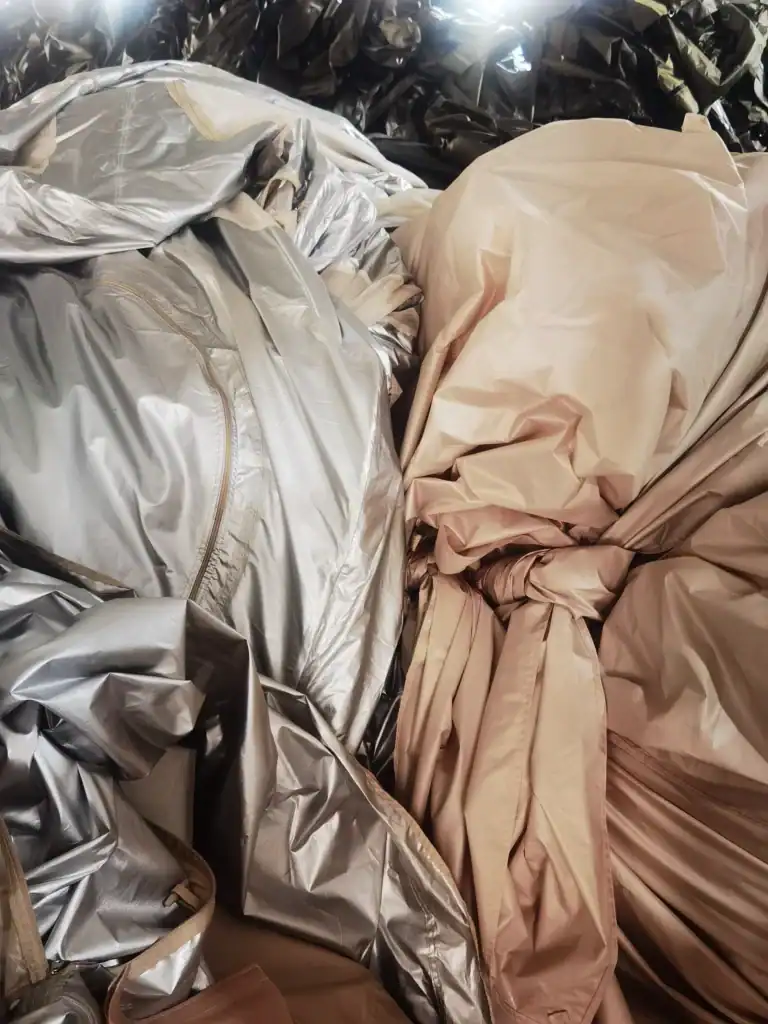
PVC Tarpaulin vs PVC Coated Fabric: Construction Differences
0.5mm PVC tarpaulin costs 15-20% more than coated fabric but survives cold snaps roughly 2x better.
For inflatable tents, PVC tarpaulin wins on weld strength and cold-weather durability. PVC coated fabric wins on weight and unit price. The entire difference traces back to one layer: a woven polyester scrim that tarpaulin sandwiches between PVC coatings—and that many coated fabrics simply skip.
Layer structure and coating process
Tarpaulin is a laminated composite: a polyester scrim carries the load, while the PVC layers outside provide waterproofing and a weldable surface. Coated fabric starts with a lighter base textile and adds a PVC coating, often on one side only. That makes it flexible and cheap, but it also means there is no internal reinforcement to hold a seam together under repeated tension.
Production methods reinforce the difference. PVC tarpaulin is typically built by calendering or spreading molten PVC onto the scrim, creating a dense, uniform cross-section. Coated fabric runs through a quicker coating line, which keeps roll weight down. Two rolls can both be labeled 0.5mm, but the tarpaulin has a scrim inside while the coated fabric does not. That invisible structural difference is why thickness alone is a weak specification for inflatable tent fabric.
How thickness from 0.4mm to 0.6mm changes weld behavior
High-frequency welding melts the PVC layers together to form air columns. At 0.4mm, the weld pool is thin; even minor machine variations can cause pinholes. At 0.6mm, more PVC mass means the weld absorbs inconsistencies and produces more reliable seals. For mass production, 0.5mm is a practical floor for an inflatable tent that will be inflated and deflated for years, not weeks.
The scrim changes the failure mode. A tarpaulin’s weld fuses the coated surfaces, leaving the scrim embedded like rebar. If the heat is tuned correctly, that embedded reinforcement keeps the seam stable when the PVC softens under stress. Overheat it, and the scrim can char undetected beneath the surface. Coated fabric without scrim is easier to weld but more likely to stretch or tear adjacent to the seam line.
In the Zhejiang factory network Kelyland Outdoors works with, a 0.5mm PVC tarpaulin typically carries a 15-20% cost premium over same-thickness coated fabric. Most of those partner facilities are ISO 9001:2015 certified, but certification alone won’t tell you whether the roll has a scrim inside. The cost and cold-crack gap comes from the material construction, not the cert.
When evaluating suppliers, skip the thickness chant. Ask for tear strength data measured to EN ISO 13934 on the exact roll they plan to use. Two fabrics can both measure 0.5mm, but one will tear along the scrim lines while the other tears through the coating like wet paper. That test result, not the caliper reading, separates a real tarpaulin from a cheap coated fabric.
-
- Weld strength comparison: Tarpaulin: weld fuses PVC and anchors to embedded scrim | Coated fabric: melt-only seam, more stretch potential.
- Cold crack below -10°C (0.5mm): Tarpaulin: about 2x better | Coated fabric: higher crack risk.
- Cost per square meter: Tarpaulin: +15-20% over coated fabric | Coated fabric: cheaper entry, lower margin pressure.
- Recommended application: Tarpaulin: 4-season inflatable tents, alpine/ice fishing | Coated fabric: warm-season glamping, air tents.
Run the decision from the claimed operating temperature. If your spec sheet says the tent survives -5°C or lower, choose PVC tarpaulin and require a cold-crack weld test on the final fabric roll. If the product never leaves warm-weather campgrounds, coated fabric is the sharper call for your margins.
Performance Specs That Matter for Inflatable Tents
For inflatable tents, the PVC tarpaulin vs PVC coated fabric decision comes down to tear strength and cold crack — not just.
A stitching line operator can feel the difference between a 0.5mm PVC tarpaulin and a PVC coated fabric before the roll hits the cutter. The tarpaulin has more body. The coated fabric folds lighter. That physical difference shows up later in tear propagation and cold weather behavior — not on the sales quote.
Tear Strength and Puncture Resistance
Buyers compare thickness first: 0.4mm, 0.5mm, 0.6mm. Thickness tells you how much PVC is on the roll, but it does not tell you whether a membrane will hold a seam at operating pressure on a cold morning. Construction does. PVC tarpaulin is built with a polyester scrim sandwiched between PVC layers. PVC coated fabric often skips the scrim to save weight and cost. Without that scrim, a small puncture can grow into a complete panel tear.
Ask for PVC coated fabric tear strength data under EN ISO test methods instead of accepting a thickness spec. The report will show whether the material stops at the scrim or rips to the next weld. For an inflatable tent, the air beam is a pressure vessel. A tear that crosses an air beam seam ends the product’s life on the spot.
-
-
- Tear propagation: Tarpaulin’s scrim grid halts a tear at the next thread. Coated fabric without scrim allows the rip to continue across the panel.
- Weld strength: Tarpaulin’s scrim adds a layer at the weld joint, so welding parameters must be adjusted. Coated fabric welds easier and gives a flatter seam.
- Puncture resistance: Tarpaulin at 0.5mm resists sharper impact better than coated fabric at the same thickness. Trade-off is weight and pack volume.
- 品質管理: The ISO 9001:2015-certified partner factories in Kelyland’s network run stage-by-stage inspections, so a material substitution gets caught before mass production, not after a container lands.
-
UV Stability and Cold Crack Performance
UV and cold are where these two materials separate most. PVC relies on plasticizers for flexibility. UV radiation breaks those plasticizers down over time, which is why inflatable tent fabrics use a black coating or silver coating on the inner surface. Black coating provides the strongest UV block in the production range. Tarpaulin’s thicker structure gives it more margin before UV degradation reaches the scrim.
Cold crack is the failure that shows up at -10°C, halfway through inflation. In the Zhejiang factory network where Kelyland’s tent and tarpaulin partners are based, a 0.5mm PVC tarpaulin typically costs 15-20% more than a same-thickness coated fabric but delivers roughly 2x better cold crack resistance below -10°C. A brand selling early spring or late autumn camping in northern Europe should treat that as a product decision, not a price negotiation.
-
- Cold weather: Tarpaulin flexes at -10°C. Coated fabric stiffens and is more likely to crack along a weld or fold line.
- 重量: Coated fabric saves grams per square meter. Tarpaulin adds weight that matters for backpacking models, less for glamping or roof top tents.
- UV life: Tarpaulin with black coating survives longer in direct sun. Coated fabric without a UV barrier risks surface chalking and plasticizer loss over time.
Choose tarpaulin if you’re building a four-season inflatable tent, a roof top tent, or a structure that stays inflated for days at a time. Choose coated fabric if you’re launching a lightweight seasonal event tent with a strict target weight and a shorter expected service life. The material you pick determines warranty claims two winters from now.
Cost and OEM Trade-Offs
0.5mm PVC tarpaulin costs 15-20% more per square meter than coated fabric — the polyester scrim is what you’re paying for.
The cost verdict for inflatable tents is straightforward. In Zhejiang factory networks, a 0.5mm PVC tarpaulin runs 15-20% higher per square meter than same-thickness PVC coated fabric. That premium buys one structural upgrade: a polyester scrim layer embedded between the PVC layers. Most coated fabric rolls skip the scrim to stay light and cheap. Tarpaulin keeps it, and the performance gap shows up below -10°C, where tarpaulin holds roughly 2x better cold crack resistance.
That 15-20% material delta is not a rounding error. At production scale, it shifts the landed cost of a tent line before you account for cutting waste, welding scrap, and sample rounds. For a brand manager pricing a seasonal SKU, this is a gross margin decision, not a materials trivia question.
Material cost per square meter and MOQ impact
The price gap traces back to lamination. Coated fabric applies PVC directly onto a textile base. Tarpaulin adds a woven polyester scrim as a middle layer, then fuses PVC on both sides — an extra material pass, a heavier roll, a longer production cycle. MOQ follows the same logic. Factories that cut coated fabric rolls can run smaller batches without tying up expensive scrim stock.
Kelyland’s tent and tarp partner factory in Ningbo produces 800,000 units annually under CE, BSCI, and ISO 9001:2015 certifications. That scale matters for pilot orders. Some custom items can start at 50-100 pieces, while standard models typically run 300-1,000. If you’re validating a new inflatable tent concept with a 50-piece pilot, coated fabric keeps that first batch lean. If you’re committing to a full production line, the tarpaulin premium spreads across a larger run and the per-unit MOQ penalty shrinks.
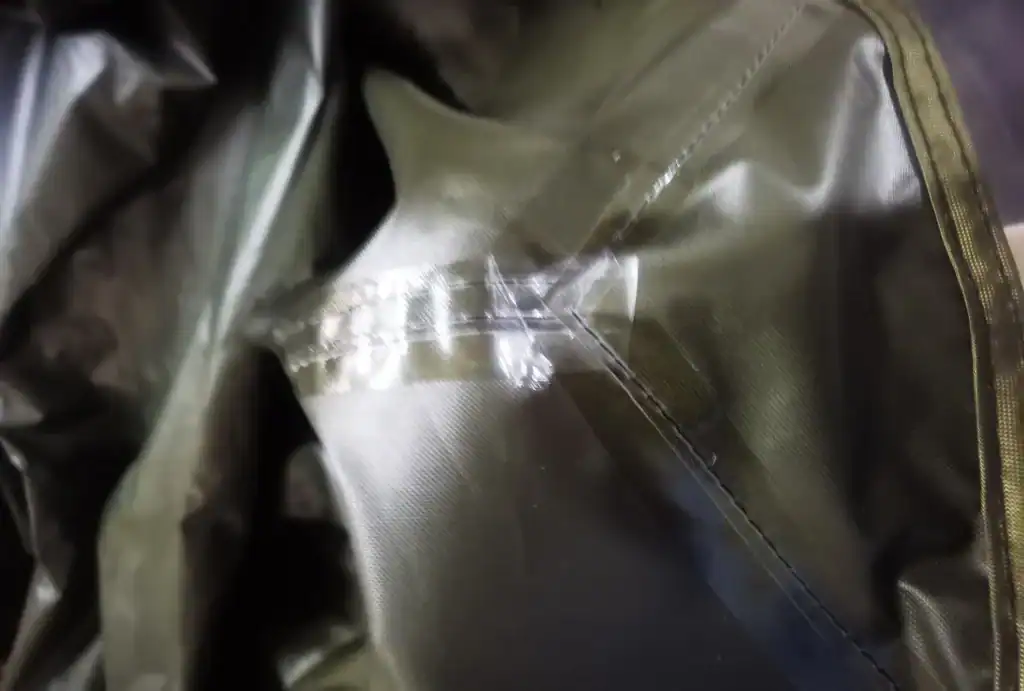
When to choose PVC coated fabric over tarpaulin
Coated fabric wins for price-sensitive summer products, festival shelters, and beach tents where freezing temperatures never enter the picture. Tarpaulin earns its premium for alpine camping, winter expeditions, and rental fleets that get used hard in rough conditions. The dividing line is whether your end user will ever inflate the tent below freezing.
-
-
- Material cost: Coated fabric: base price, 15-20% below tarpaulin at 0.5mm thickness. Tarpaulin: premium price with scrim reinforcement.
- Cold crack: 0.5mm PVC tarpaulin offers roughly 2x better cold crack resistance below -10°C than same-thickness coated fabric.
- Tear data: Request EN ISO 13934 test reports instead of trusting thickness specs alone. Two rolls at 0.5mm can perform very differently.
- MOQ fit: Coated fabric suits 50-100 piece pilot runs. Tarpaulin makes sense for 300-1,000 piece standard production where the 15-20% cost spreads across volume.
-
One warning for the sourcing stage: don’t compare materials only on thickness. A 0.5mm coated fabric and a 0.5mm tarpaulin look identical on a spec sheet and behave differently in a seam weld. Ask the factory for the EN ISO 13934 test report before 。. If they can’t produce one, that’s a signal — not just about the roll, but about how much they actually know about their own material.
-
- Choose coated fabric if: Your tent line targets mild-season camping, needs an aggressive price point, or starts with a small pilot order under 100 units.
- Choose tarpaulin if: Your product ships to cold-winter markets, faces rental fleet abuse, or the brand promise depends on long-term field durability.
| ファクター | PVCターポリン | PVC Coated Fabric | OEM Impact |
|---|---|---|---|
| Cost per Square Meter | 15–20% higher at equal 0.5mm thickness | Lower baseline material cost | Bigger budget impact on large inflatable tent runs |
| MOQの柔軟性 | From 50–100 pcs for select items | From 50–100 pcs for select items | Low-risk pilot orders before scale-up |
| Cold Crack Performance | Roughly 2x better below -10°C | May crack earlier in freezing temperatures | Critical for winter and glamping tent lines |
| Weld Strength | Stronger due to internal polyester scrim | Adequate for low-pressure seams | Determines inflatable chamber reliability |
| Validation Standard | EN ISO 13934 tear strength test | EN ISO 13934 tear strength test | Prevents overpaying for unnecessary coating thickness |
| 生産リードタイム | 30–45 days standard | 30–45 days standard | Aligns with seasonal product launch planning |
| ベスト・ユースケース | Durable inflatable tents for harsh climates | Light-duty, cost-sensitive or indoor products | Right-sized material for target market price point |
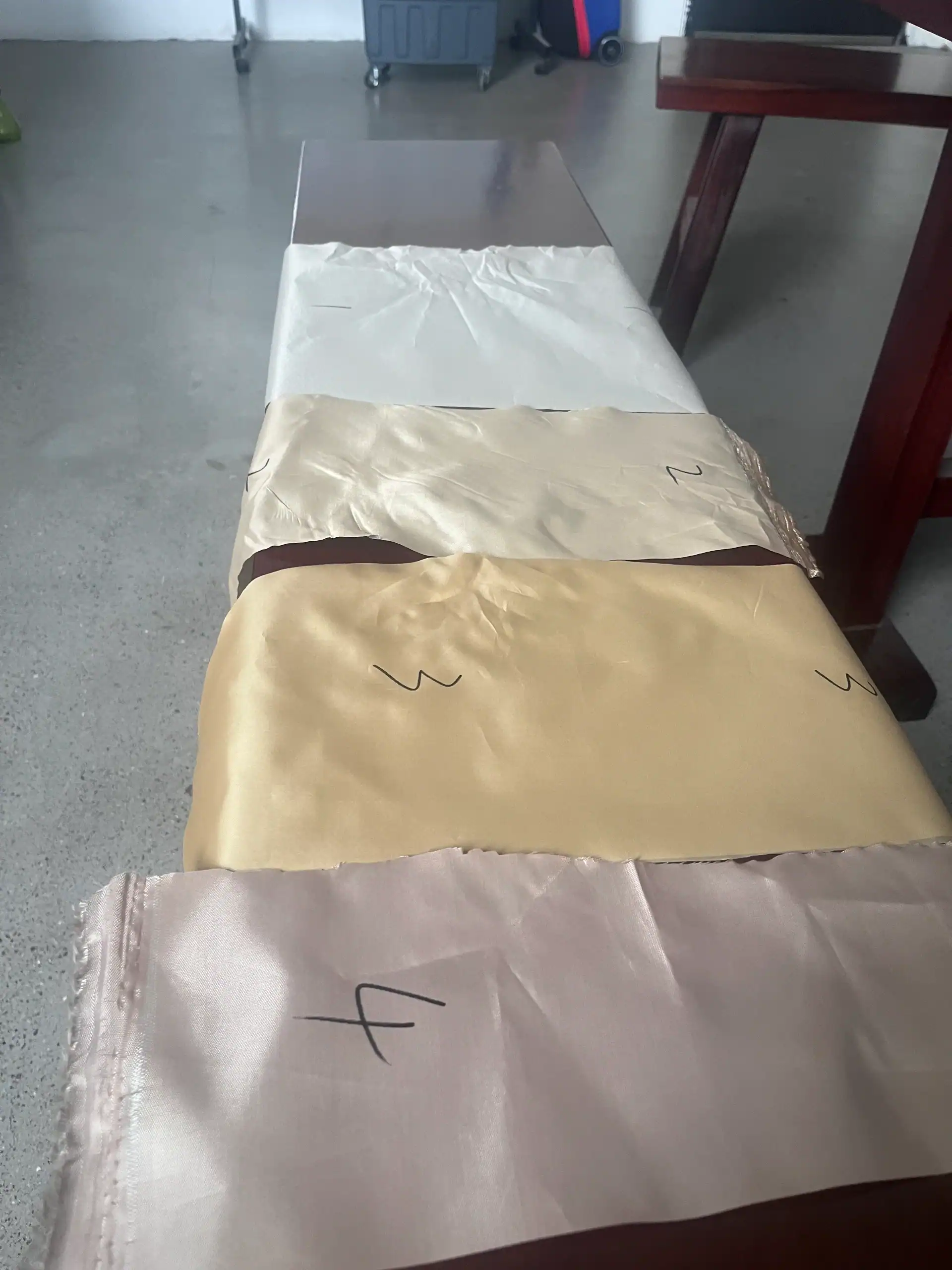
結論
The difference between these two materials shows up in construction before it shows up in the field. A 0.5mm thickness spec says little about tear strength unless you request EN ISO 13934 test data. That request is the detail that separates a professional sourcing decision from a guess.
-
- PVC tarpaulin layers a polyester scrim between PVC plies; coated fabric often skips the scrim to save weight.
- Request EN ISO 13934 tear strength test data before approval; thickness alone won’t predict field failure.
- At 0.5mm, tarpaulin costs 15-20% more than coated fabric but delivers about 2x better cold crack resistance below -10°C.
- Weld strength shifts across the 0.4mm to 0.6mm range, so match thickness to air pressure and seam stress.
Before you lock the material spec for your next inflatable tent order, request the EN ISO 13934 tear strength report and the per-square-meter price for both fabrics from your shortlisted factories. Compare the cold crack data against the lowest temperatures your target market actually camps in. The air mattress product page at Kelyland Outdoors documents PVC specifications at 0.4mm to 0.6mm, which gives you a practical reference point for how the same material family gets specified in production.
よくある質問
What is the difference between tarpaulin and PVC coated fabric?
PVC tarpaulin has a woven polyester scrim between PVC layers; PVC coated fabric has a PVC coating on a textile base. The scrim gives tarpaulin higher tear and puncture resistance for structural inflatables. Match material choice to the product’s load-bearing role.
Which is better for inflatable tents?
For inflatable tents, PVC tarpaulin is generally the better choice because its scrim construction improves tear strength at welded seams. Coated fabric can work for lighter or temporary structures, but it is. Specify tarpaulin for load-bearing inflatables and test weld strength first.
How much more does PVC tarpaulin cost than coated fabric?
0.5mm PVC tarpaulin typically costs 15-20% more per square meter than PVC coated fabric. The extra cost buys better cold-crack performance and weld durability, which reduces field failures on inflatable tents. Get a per-square-meter quote only after finalizing thickness and scrim spec.
What thickness should be used for inflatable tents?
For inflatable tents, thickness typically falls between 0.4mm and 0.6mm, with 0.5mm as the cost-performance midpoint. Higher thickness increases weld strength and puncture resistance but also adds weight and cost. Test the actual gauge against your inflation pressure and pack size limits.
How does PVC tarpaulin perform in cold weather?
PVC tarpaulin generally handles cold snaps better than coated fabric, with roughly twice the cold-crack survival in low temperatures. If your target market has winter camping, spec tarpaulin and request cold-crack test. Request cold-crack test data before committing to a material spec.

 English
 Español
 Deutsch
 Français
 Português do Brasil
 Русский
 العربية
 한국어
 日本語