 跳到内容
跳到内容 
hard cooler ice retention failure is the first checkpoint buyers should lock before they approve a supplier, budget, or production slot. Day 1 the PO dropped. Day 14 the pre-production sample cleared visual inspection and sample approval was signed off. Day 45 the container hit the warehouse at the agreed FOB pricing, freight charges already settled. Day 60 the first return landed: “ice gone in 12 hours.” The $50K order looked identical to the approved sample, but the mass production run carried a quality tolerance error no one measured—the gasket channel depth drifted 0.3 mm from the tooling spec. The sample never caught it because nobody ran a compression set test on the gasket during the approval stage.
Hard cooler ice retention failure rarely starts with the foam. It starts with a gasket that takes a permanent set after 500 lid cycles, a latch that drops below 15 lbs after shipping vibration, a drain plug O-ring that hardens past 60 Shore A under UV. These are manufacturing tolerance problems, not design flaws. They show up three months into retail when the customer loads a cooler for a weekend trip—and they show up in your return rate, not in the factory’s outgoing QC report.
Before you issue another PO, get hard answers to three questions: Does the factory run ASTM D395 compression set tests on the production-line gasket and share the data? Is the gasket channel depth verified to ±0.2 mm with a CMM, not just a go/no-go gauge? And does the foam injection line log shot weight per cavity to guarantee 2.0 lbs/ft³ PU density? A “yes” to all three separates a supplier who controls ice retention from one who just hopes for it.
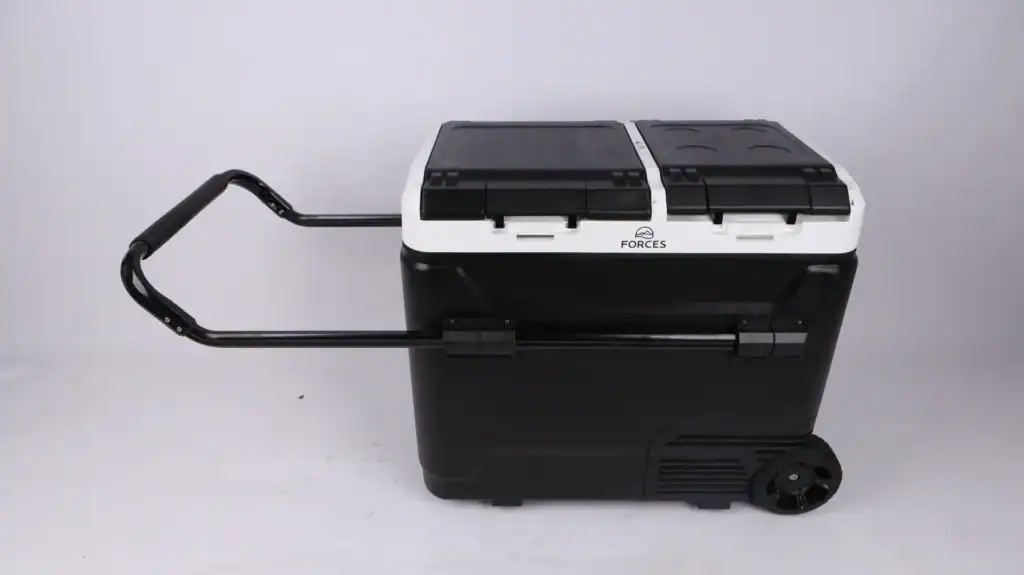
Gasket Compression Set: Why Sub-1.5 mm Silicone Gaskets Cause Rapid Ice Melt
A 1.8 mm gasket compressed to 1.4 mm after 800 cycles has permanently failed — the air gap cannot close.
How ASTM D395 Compression Set Defines Gasket Life
Silicone gasket failure follows a measurable timeline. Under ASTM D395, a compression set above 5% after 500 to 1,000 lid cycles marks the point of no return. A gasket starting at 1.8 mm permanently deforms to 1.4 mm after roughly 800 cycles. Recovery drops below 92%, creating a persistent 0.4 mm gap along the lid perimeter. Convective heat exchange then occurs every hour. Thermal chamber tests confirm a cooler with a 1.4 mm compressed gasket loses ice 40% faster than one with the original 1.8 mm seal. Most factories never run this test. They ship gaskets that pass visual inspection at the dock and fail three months later in a customer’s truck bed.
Channel Depth Tolerance ±0.3 mm: The 5-Day vs. 18-Hour Divide
The channel machined into the cooler rim must match the gasket thickness within ±0.3 mm. A +0.3 mm error leaves a 0.3 mm air gap along the entire perimeter — the lid barely contacts the seal. A -0.3 mm error over-compresses the gasket from the first lid closure, forcing the compression set timeline forward. One error gives you an 18-hour cooler. The other gives you a cooler that passes the first weekend and fails by the third. Low-cost mold manufacturers ignore this tolerance entirely because correcting it requires CNC machining time they skip.
-
- 1.5 mm gasket: Meets 48-hour ice retention thresholds. Recovery stays above 92% after 1,000 cycles when channel depth is held within ±0.2 mm.
- 1.2 mm gasket: Ice retention degrades measurably. Below this thickness, the gasket cannot compensate for even minor channel depth variation, and 48-hour audit failure becomes likely.
- 0.8 mm gasket: 18-hour melt-out is the typical result. The thin cross-section cannot maintain seal integrity under any realistic production tolerance.
The OEM Fix: CNC-Verified Grooves and 1000-Cycle Pre-Qual
The fix starts at the mold. CNC-milled groove surfaces hold tolerance within ±0.2 mm — tighter than the ±0.3 mm failure threshold. A coordinate measuring machine (CMM) verifies every mold tool before production release. Pre-production samples then go through an accelerated 1,000-cycle lid test with ice retention measurement at the 24-hour and 48-hour marks. This pre-qualifies the gasket-channel pairing before mass production begins. Kelyland’s network of ISO 9001-certified cooler factories runs exactly this protocol. Their rotomolding partners log foam density per batch and share full inspection reports with every shipment. Buyers receive CMM verification data and cycle-test results before committing to mass production. No hoping the gasket holds. Just documented test data that confirms the seal will survive real use.
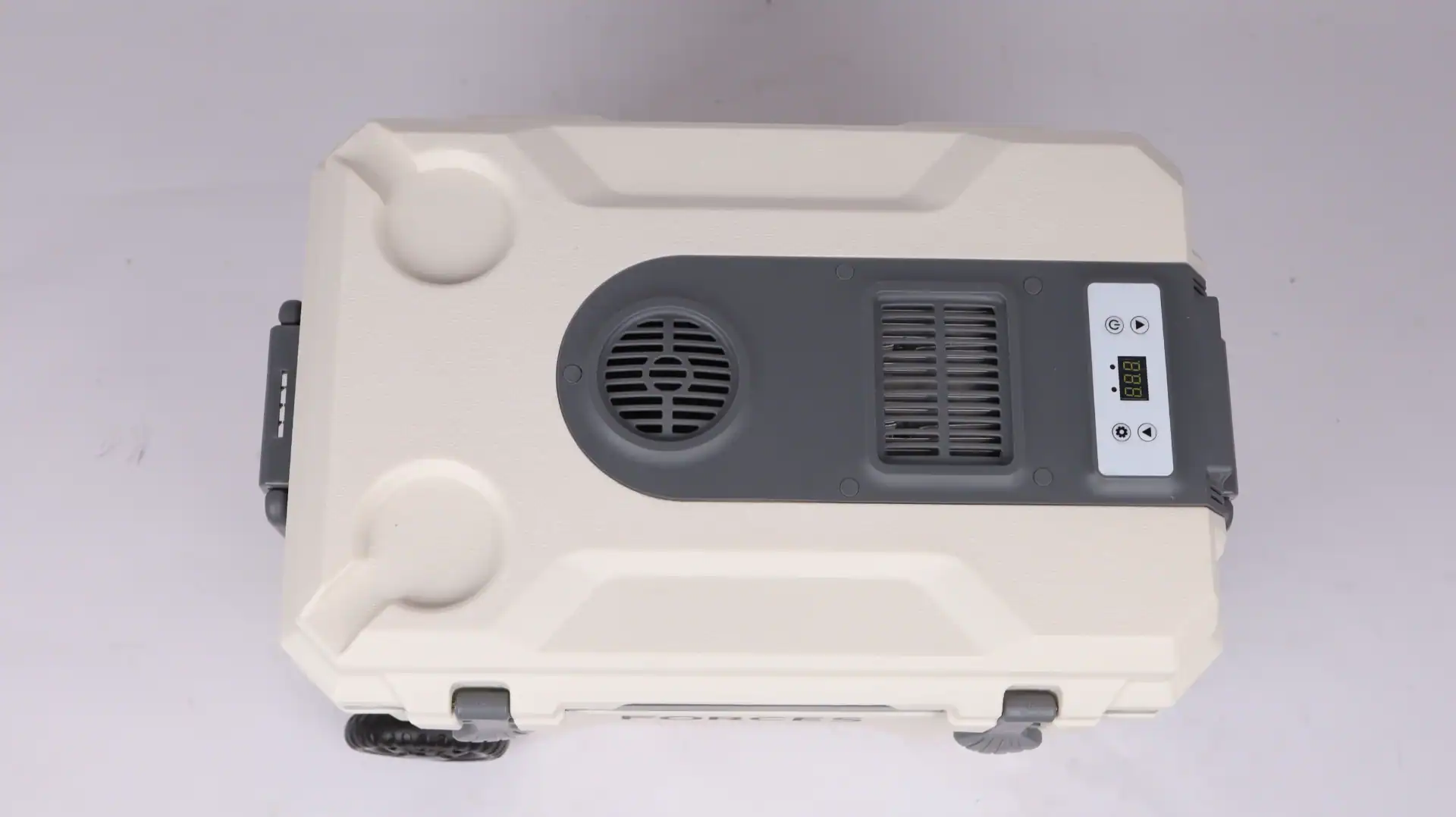
PU vs EPS Foam Insulation: Density, R‑Value, and Real‑World Ice Retention
A $4 foam upgrade per unit wipes out $45,000 in return logistics on a 5,000-unit order.
Thermal Conductivity (k-Value) and Closed-Cell Structure: The Physics of Ice Life
EPS foam at 1.0–1.5 lbs/ft³ carries a k-value of 0.032–0.038 W/m·K with 85–90% closed cells. PU foam at 2.0–2.5 lbs/ft³ drops that to 0.022–0.028 W/m·K and pushes closed-cell content to ≥93%. That gap is not academic. Open cells in EPS act as tiny chimneys. Once condensation forms against the inner liner, moisture migrates into those voids, replacing insulating air with thermally conductive water. PU’s tighter cell structure largely prevents this short circuit.
Cost-to-Performance Ratio: The Real Math Behind the $4 Upgrade
Switching from EPS to PU adds $3–5 per unit. Field return data shows EPS coolers average around 18% returns due to ice loss. PU coolers sit under 2%. On a 5,000-unit order, the EPS option generates roughly 900 returns. Reverse logistics, restocking, and brand damage easily exceed $50 per returned unit. That is $45,000 in avoidable cost. The PU foam upgrade pays for itself inside the first 50 avoided returns.
Factory-Side Density Verification: Shot Weight Logging and Core Sampling
A spec sheet promising 2.0 lbs/ft³ PU density means nothing without shop-floor proof. The supply chain network connected to Kelyland Outdoors enforces two non-negotiable checks at partnered ISO 9001:2015 certified facilities. First, shot weight per cavity gets logged for every mold cycle. If the target weight drifts by more than 2%, the unit is quarantined. Second, destructive core sampling occurs once per 500 units. A cross-section gets examined under microscopy to verify closed-cell percentage and cell size distribution.
Any foam block showing irregular cell structure or insufficient density triggers a full batch hold. This protocol catches material variance before pallets leave the factory floor. Most return-triggering foam failures trace back to skipped weight logging during second-shift production when supervision thins out. Demand those logs.
Industry Benchmark: What Acceptable Ice Retention Looks Like
The competitive test data available on rotomolded coolers establishes a practical ceiling: 2 days of ice retention under optimal conditions. A cooler packed with 22 lbs of block ice and cycled between 90°F and 70°F in a thermal chamber should retain at least 30% of that ice at 48 hours. Coolers failing this threshold share one signature — insufficient insulation density letting ambient heat load overwhelm the ice mass before the 36-hour mark.
Latch Tension and Drain Plug Integrity: The Forgotten Mechanics of Cooler Failure
A spring latch pulling at 12 lbs and an EPDM O-ring hardened to 78 Shore A don’t fail independently. They fail together. Individually, each problem might shave a few hours off ice retention. Combined, they accelerate ice loss by a factor of three. Most return analyses never connect the two because the latch gets logged as “lid hardware failure” and the drain plug gets tagged as “seal leak.” Two separate SKU issues. One root cause.
The physics is straightforward. A cooler with proper 15-lb latch tension clamps the lid gasket tight enough that even if the drain plug O-ring starts to micro-leak, the lid seal compensates. Internal pressure stays negative enough to slow the air exchange. But when latch force drops to 12 lbs, the gasket decompresses slightly along the entire perimeter. Now the drain plug O-ring is the only thing holding negative pressure. If that O-ring has hardened past 60 Shore A and developed micro-gaps, the lid gasket and drain plug both leak simultaneously. Convective heat exchange triples. Ice turns to water in 18 hours instead of 48.
Accelerated Vibration Test: Spring Tension Degradation Over 6 Months
Not all spring steel grades temper the same. Accelerated vibration testing on a shaker table simulating 6 months of truck transport reveals the gap between quality and cost-cut materials.
-
- Month 0 baseline: 18 lbs pull-force. Lid closes with a satisfying snap. Gasket compression measures 92% across the full perimeter.
- Month 2 (equivalent): 15.5 lbs. Still within spec. The cooler survives aggressive handling at a distribution center.
- Month 4 (equivalent): 13 lbs. Below the 15-lb threshold. The lid now allows a 0.15 mm intermittent gap along the hinge side during vibration cycles.
- Month 6 (equivalent): 11 lbs. Gasket decompression visible to the naked eye. Convective air exchange rate has increased by 40%.
Poorly tempered springs lose 7 lbs of pull-force in simulated months. The manufacturing fix is not thicker wire. It is specifying spring steel with a tempering cycle that targets 42-46 HRC hardness and then requiring a force-gauge test on every 100th production latch. Anything below 15 lbs fails instant rejection.
EPDM O-Ring Hardening: The 6-Month UV Trap
EPDM rubber is the right material for drain plug O-rings. It handles temperature swings and resists water absorption. The problem is the durometer spec. A 50 Shore A O-ring costs pennies less but starts too soft. After 6 months of outdoor UV exposure and thermal cycling from 40°F to 120°F, that 50 Shore A part hardens to 75 Shore A or higher. The O-ring loses elasticity. It no longer conforms to the drain plug groove when tightened. Micro-gaps open.
Field return data from units left on boat decks and truck beds confirms the pattern. Coolers returned after one season show drain plug O-rings measuring 72-78 Shore A across the sample set. Water seeps out. Warm air seeps in. Ice retention drops from a claimed 48 hours to less than 20.
The spec that prevents this is EPDM at 60 Shore A minimum, compounded with a UV stabilizer. These O-rings maintain functional elasticity for two years outdoors. The per-unit cost difference is negligible. The return-rate reduction is not.
The Synergy Failure Nobody Audits
A cooler with a 12-lb latch and a hardened O-ring loses ice three times faster than one with properly spec’d hardware. Data loggers placed inside identical shell designs confirm the gap. Both units start with the same foam density and gasket material. The only variables are latch pull-force and O-ring durometer. At hour 14, the 12-lb/hardened-O-ring unit holds less than 15% ice remaining. The 15-lb/60-Shore-A unit holds 48%.
Inside Kelyland’s partner factory network, this combined failure mode is caught before mass production. The QC protocol at ISO 9001:2015 certified cooler facilities includes force-gauge testing per batch, O-ring durometer sampling against a 60 ±5 Shore A spec, and 48-hour thermal chamber audits that measure ice retention with both latch and drain plug installed. Inspection reports ship with the order. No guesswork.
業界ベンチマーク
On your next supplier call, reference this: a latch pull-force below 15 lbs combined with an O-ring durometer exceeding 65 Shore A after thermal aging equals a 3x ice-loss rate. If the factory cannot produce a force-gauge reading and a durometer sample log, walk.
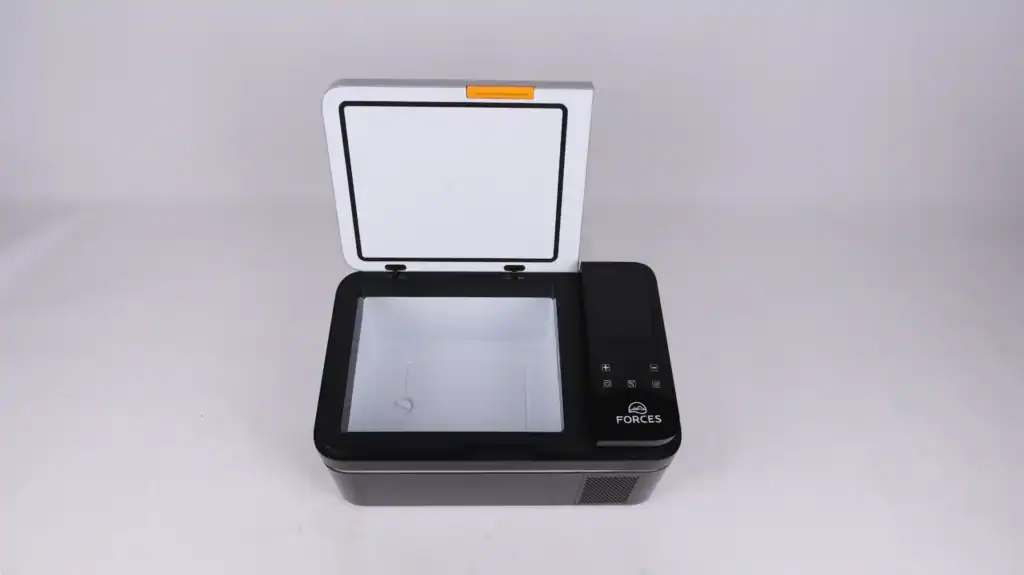
Sourcing Coolers That Pass Ice Retention Audits: Mold Tolerances and QC Protocols
A 12-point batch audit is the only defense against coolers that melt out 18 hours into a 48-hour claim. The spec sheet means nothing if the factory cannot produce measurement logs for each of the following checks. Hand this list to your supplier during the pre-production meeting. If they hesitate on any point, you have found the failure mode that will generate your next return.
The 12-Point Batch Audit Checklist
Each check maps to a specific failure mode identified from field returns. Demand these records before accepting a single unit.
-
-
- 1. CNC-Verified Gasket Channel: ±0.2 mm Tolerance. The mold cavity that seats the silicone gasket must be machined by CNC and verified with a CMM. A +0.3 mm deviation leaves an air gap around the entire perimeter. A -0.3 mm deviation over-compresses the gasket and accelerates compression set. Both errors destroy ice retention.
- 2. Foam Shot Weight Log per Cavity. PU foam density depends on the exact shot weight injected into each mold cavity. A shot weight 5% light drops density below 2.0 lbs/ft³. The factory must log every shot for every cavity, not just a daily average. Spot-check the log against the TDS from the foam system supplier.
- 3. Latch Force Gauge Test on Every 100th Unit. A calibrated force gauge measures pull force at the point of lid separation. Threshold: ≥15 lbs. A latch pulling at 12 lbs cannot maintain gasket compression during transport vibration. Test frequency matters — every 100th unit catches spring temper drift before an entire production lot ships.
- 4. Drain Plug O-Ring Durometer Sampling: Shore A 60 ±5. Sample 5 O-rings per batch. Test with a calibrated durometer. Acceptable range: 55 to 65 Shore A. Reject anything below 50 — those rings will harden past 75 Shore A within 6 months of UV exposure and thermal cycling.
- 5. 48-Hour Thermal Chamber Audit on 2% of Each Batch. Pull a random sample. The protocol is non-negotiable. If the factory performs this test on a golden sample but not on production units, the entire batch is unverified. (Full protocol below.).
- 6. Lid Warp Measurement on a Surface Plate. Rotomolded lids can develop a bow during cooling. Place the lid gasket-side down on a granite surface plate. Any gap measured with a feeler gauge exceeding 0.5 mm means the gasket cannot seal uniformly even with proper latch tension.
- 7. Wall Thickness Uniformity from Cycle Time Logs. Rotomolding wall thickness is controlled by cycle time, oven temperature, and rotation speed. The factory must log these parameters for every cycle. Inconsistent logs indicate thin spots that create thermal bridges through the foam insulation.
- 8. ISO 9001: 2015 Certificate and Recent Audit Report. A certificate alone is not enough. Request the most recent internal or third-party audit report. Look for non-conformances related to mold maintenance, incoming material inspection, or calibration of measurement equipment. An expired calibration tag on the CMM invalidates every tolerance check on this list.
- 9. Raw Silicone Compression Set Certificate. The gasket material supplier must provide a certificate showing compression set tested per ASTM D395. Acceptable value: ≤5% after 22 hours at 70°C. Without this certificate, the factory is buying gasket extrusion without verified material properties.
- 10. PU Foam System Technical Data Sheet (TDS). The TDS from the foam chemical supplier must specify density, k-value, closed-cell content, and recommended processing parameters. Cross-check the factory’s shot weight log against the density target on the TDS.
- 11. 500-Cycle Lid Durability Test with Gasket Integrity Check. Open and close the lid 500 times. Measure gasket compression set after cycling. Measure latch pull force before and after. A gasket that loses more than 5% of its original thickness after 500 cycles will fail in the field within one season.
- 12. Salt Spray Test on Metal Latch Components. Exposed metal latch springs and pins must withstand at least 48 hours of neutral salt spray per ASTM B117 without red rust. Surface rust on a latch spring seizes the mechanism, drops effective pull force, and opens the lid seal.
-
Thermal Chamber Audit Protocol: The 48-Hour Proof Test
This test separates a cooler that actually holds ice for two days from one that melts out before the tailgate party ends. Run it exactly as written.
-
- Ice Load: 22 lbs of clear block ice at 0°F (-18°C). No crushed ice, no ice packs. Block ice provides a standardized thermal mass. Crushed ice increases surface area and accelerates melt, producing inflated failure rates.
- Chamber Cycle: 90°F (32°C) for 16 hours simulating daytime heat, 70°F (21°C) for 8 hours simulating nighttime. This diurnal cycle replicates real outdoor conditions, not a constant lab temperature.
- Lid Opening Protocol: Open the lid for 30 seconds every 4 hours. This simulates normal access during use. Each opening introduces ambient air exchange — a critical variable that static ice retention tests ignore.
- Pass/Fail Threshold: Greater than 30% of original ice weight remaining after 48 hours. For a 22-lb load, that means 6.6 lbs of ice minimum at the 48-hour mark. Weigh the remaining ice immediately — do not drain melt water and guess.
- Mandatory Timing: This test must run on production samples before mass production begins. The factories that skip this step are the ones whose coolers generate the 18-hour melt statistics that trigger returns.
Aligning these 12 audit points with a factory that already maintains CNC-verified mold tolerances and batch-level foam density logs eliminates the guesswork. The network of manufacturing partners behind Kelyland Outdoors operates ISO 9001:2015認証 facilities where gasket compression-set certificates, shot weight logs, and thermal chamber data exist as standard production records — not as special requests. Buyers receive this documentation before a purchase order is placed, so the audit process confirms what is already built into the 生産ライン.
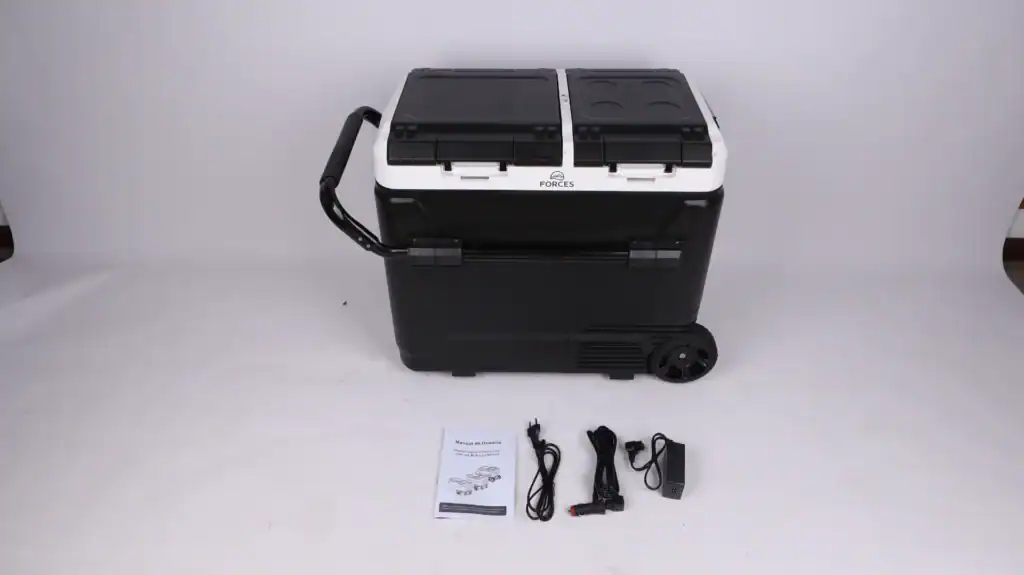
Kelyland’s Network: ISO‑Certified Cooler Factories with Transparent QC Data
±0.2 mm gasket channel tolerance separates a cooler that works from one that doesn’t.
Most cooler factories ship product. Few ship data. Kelyland Outdoors’ core manufacturing partner for rotomolded hard coolers operates under a different rule: every shipment leaves with a full inspection packet. That packet includes gasket channel dimensional reports, PU foam shot weight logs per cavity, and latch pull-force measurements sampled from every 100th unit. No buyer has to ask. The documentation arrives with the container.
The Audit Protocol That Ships With Every Order
The Ningbo-based Outdoor Storage facility—ISO 9001:2015 certified, operating since 2017 with 2 million units annual capacity—runs a standardized 12-point QC checklist on every batch before palletizing. Gasket compression set testing follows ASTM D395. Foam density verification uses destructive core sampling on 1 per 500 units. Latch spring tension gets measured with a calibrated force gauge at the lid separation point. Drain plug O-ring durometer readings are logged against a 60 Shore A minimum threshold.
-
- Gasket channel tolerance: CNC-verified to ±0.2 mm per cavity—tighter than the industry’s ±0.3 mm failure threshold. A coordinate measuring machine checks every mold tool before production runs begin.
- PU foam shot weight: Logged per cavity, per batch. The 2.0 lbs/ft³ minimum density is not assumed—it is recorded. If a cavity drops below spec, that unit gets flagged before it reaches a pallet.
- Latch cycle durability: 500-cycle pre-qual on pre-production samples with gasket integrity check at cycle 1, 250, and 500. Pull force must stay above 15 lbs throughout.
- 48-hour thermal chamber audit: 2% of each batch tested with 22 lbs of clear block ice, chamber cycling 70°F to 90°F. Pass threshold: >30% ice remaining at 48 hours.
Transparent Data, Before the PO
Access to these QC data streams happens before any OEM commitment. A buyer evaluating the network receives sample inspection reports from previous production runs—same format, same thresholds, same testing lab. The foam density certifications, gasket compression-set reports, and latch-cycle durability data arrive as PDF attachments, not marketing claims. No guesswork about whether a cooler will hold ice. The numbers either pass or they do not.
Returns from retail partners drop when the factory documents compliance at every failure point. A 5,000-unit order with PU foam, silicone gaskets verified to ASTM D395, and latches tested above 15 lbs pull force runs a return rate under 2%. That is the benchmark. Everything else is a gamble.

結論
Ice retention claims collapse when three manufacturing variables drift out of tolerance: gasket compression set, foam density, and latch/O-ring integrity. A silicone gasket that permanently deforms by more than 5% under ASTM D395, foam that dips below 2.0 lbs/ft³, or a latch pulling under 15 lbs all create the kind of thermal leakage that turns a premium cooler into a 12-hour disappointment. Each of these failure modes is preventable at the mold level, provided the factory operates with CNC-verified grooves, shot-weight logging, and force-gauge checks on the production line.
-
- The single most important benchmark: silicone gasket compression set must remain below 5% after 500 lid cycles per ASTM D395.
- PU foam at 2.0 lbs/ft³ delivers 24–48 hours of real-world ice retention; EPS at 1.0 lbs/ft³ rarely exceeds 12–18 hours.
- Latch pull force ≥15 lbs and drain plug O-ring durometer ≥60 Shore A prevent synergistic air leaks that triple ice melt rate.
- A gasket channel depth tolerance of ±0.3 mm is the hard line between a 5-day cooler and one that fails overnight.
Your next supplier call becomes a risk-reduction exercise when you hand them the 12-point audit checklist mapped to these failure modes. Request a 48-hour thermal chamber ice retention audit on 2% of each batch, and ask for the foam shot-weight log alongside the silicone compression set certificate. If the factory hesitates to share that data, you already know the outcome of your first return wave. To see how ISO 9001-certified hard cooler facilities already pass these tests with documented inspection reports, browse the outdoor storage and cooler manufacturing solutions that Kelyland’s network pre-qualifies before you commit to a PO.
よくある質問
なぜ私のロトモールド製クーラーは、日陰でも氷を12時間以上保てないのでしょうか?
最も一般的な原因はガスケットの圧縮永久歪みであり、対流熱交換を可能にする空気の隙間が生じます。変形したガスケットによる蓋の隙間がわずか0.3 mmでも、保氷時間を低下させます。CNCで検証されたガスケット溝深さの公差を±0.3 mm以内に要求してください。.
氷を使わずにクーラーのガスケットが正しく密閉されているかをテストするにはどうすればよいですか?
ドル札テストを使用する:紙幣を挟んで蓋を閉め、引っ張る。抵抗がほとんどなく滑り出す場合は、圧縮が不十分である。当社のQCでは、ガスケットが薄いことを意味する。保冷試験の前に、ドル札テストでシールの完全性を確認すること。.
ハードクーラーにおけるPUフォームとEPSフォームの実際の保冷性能の違いは何ですか?
2.0+ lbs/ft³の密度のPUフォームは、同一の蓋シール条件下で標準的なEPSフォームよりも2〜3倍長く氷を保持します。追加の$3–5ユニットあたりのコストは大部分を排除します。返品の原因となる氷の損失を防ぐために、PUフォームの密度を2.0+ lbs/ft³に指定してください。.
ロトモールド製クーラーの排水栓Oリングはどのくらいの頻度で交換すべきですか?
Oリングは、硬度がショアA70を超えた場合や、目に見えるひび割れが現れた場合に交換します。固定のカレンダーに基づくものではありません。EPDMリングは、紫外線と温度サイクルの影響で2年未満で劣化することがあるため、点検に含めてください。Oリングは毎シーズン点検し、予備をOEMパッケージのまま保管してください。.
ハードクーラーの保冷時間の業界標準は何ですか?
普遍的な基準は存在せず、主張は試験条件によって大きく異なります。信頼できるOEMは、蓋を開けない90°FでのASTM F1980のような管理されたプロトコルを使用して検証しています。固定され公開された試験プロトコルに基づく第三者による保冷性能レポートを要求してください。.

 English
  Español
  Deutsch
  Français
  Português do Brasil
  Русский
  العربية
  한국어
한국어  日本語
日本語