 跳到内容

en 13573 en 14960 inflatable is the first checkpoint buyers should lock before they approve a supplier, budget, or production slot. When a supplier tells you their inflatable tent is CE certified, the first question should be: certified to which standard? EN 13573 and EN 14960 are not interchangeable, but I still see RFQs where they get treated that way. The wrong choice can stall customs clearance or trigger a recall notice from a European retailer six months into the season.
The difference comes down to how the structure is classified. EN 13573 covers camping tents designed for sleeping and shelter — think family dome tents or glamping bell tents with inflatable beams. EN 14960 applies to inflatable amusement equipment meant for play and bouncing, which includes large event domes and party shelters. A glamping tent with inflatable frame members sits right in the gray zone between them. Some European buyers now request both standards for those hybrid products, especially when floor area exceeds 50 square meters.
The practical cost of getting this wrong is time. Re-testing under the correct standard adds four to six weeks to your lead time and eats into your margin if FOB pricing was already locked in. A pre-assessment with a notified body before sample approval stage can flag which standard applies — and whether your material choice, particularly PVC-TPU hybrid fabrics, will pass the stricter air retention requirements of EN 14960.
EN 13573:2012 – Camping tents
EN 13573 is the standard for camping shelters; EN 14960 governs inflatable play equipment.
A supply chain manager at a European outdoor retailer once rejected a full container of glamping tents because the CE certificate referenced EN 14960 instead of EN 13573. The supplier had tested to the wrong standard. That container sat at Rotterdam port for six weeks while re-testing was arranged. The cost: €12,000 in storage and demurrage, plus a three-month delay to the retail season.
適用範囲: スリーピングおよびシェルター用
EN 13573:2012は、キャンプ活動中の人間居住用に設計されたテントに適用されます。この規格は、家族用のドームテント、トンネルテント、ベルテント、インフレータブルビームフレームを持つグラミング構造物など、人が寝泊まりするか避難するために使用されるすべてのテント構造をカバーします。これには、ビバックバッグ、トレーラートент、または遊具は含まれません。
主要テスト: 耐風性、防水性、シーム強度
この規格では3つの主要な機械的テストが実施されます。耐風性は、テントをテストrigに固定し、最大28 m/s(風力等級10)の突風を模擬した横方向力を加えることで評価されます。防水性は、生地に対して毎分1 L/m²で5分間散水し、内側に水滴ができないかどうかで測定されます。シーム強度については、メインのシーム對於50mm幅あたり最小200 Nの引張力が必要です。これらの閾値は、この規格に基づくCEマーキングには必須条件です。
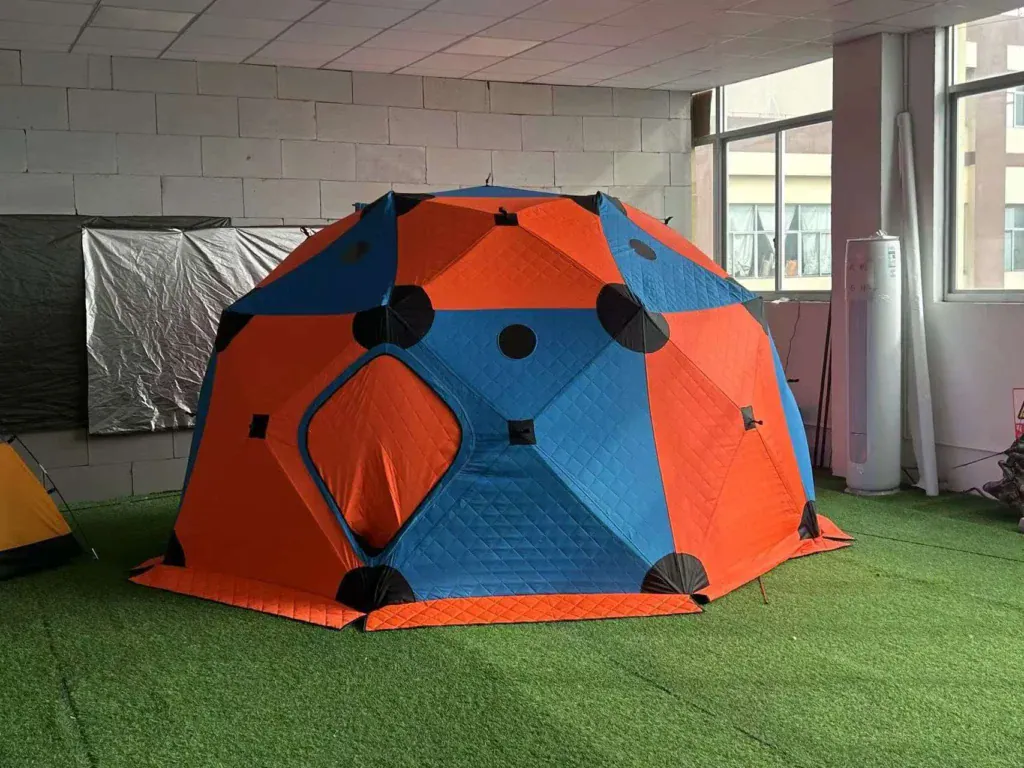
一般的な使用例: ファミリーテント、グラミングテント
Kelyland Outdoorsの寧波および紹興の提携工場から提供されるファミリーキャンピングテントは、EU購入者への出荷前にEN 13573への適合試験を定期的に受けています。2019年に設立され年間生産能力30万件を誇る紹興のグラミングテント工場では、ベルテントやユルトスタイルのシェルターが生産されており、CE認証を取得する前にこれらの耐風・防水テストに合格する必要があります。特にインフレータブルビームモデルについては、フレーム素材(PVCまたはTPUコーティング生地)が、規格の附属書で定義された最低期間以上の気密保持性能を示すことも求められます。
EN 14960:2019 – Inflatable amusement equipment
EN 14960:2019はキャンプテント向けに策定されたものではなく、跳んでいる家の規格ですが、小売業者は今や大型インフレータブルシェラーにもこれを要求しています。
もしサプライヤーがグラミングテントに対するEN 14960適合証明書を提示した場合、その理由を問いただしてください。この規格はインフレータブルアミューズメント機器、つまりフェアやフェスティバルで子供たちが跳ねる遊具を対象に作成されました。その適用範囲は、衝撃緩和と児童安全がテストの中心となる遊具施設を対象としています。しかし、それがテントにとって無関係であるということではありません。
EN 14960が実際にテストする項目とは
The core tests are static load (the structure must hold 4x the manufacturer’s recommended user weight without collapse), air retention (pressure drop must stay under 15% over a set period), and impact attenuation (the surface must cushion a fall from defined heights). These make sense for a bouncy castle. For a glamping tent with inflatable beams, the air retention requirement is the one that matters — and it is stricter than what EN 13573 demands.
-
- Static load test: EN 14960 requires the inflated structure to support 4x the rated user weight without rupture or collapse. For a party dome rated at 20 people, that means holding roughly 2,400 kg distributed across the floor area.
- Air retention test: Pressure loss must not exceed 15% after a defined period (typically 30 minutes). PVC/TPU hybrid fabrics struggle here if seam welding is inconsistent — this is where many Chinese-made inflatables fail notified body testing.
- Impact attenuation: “Head injury criterion” (HIC) values must stay below a threshold. This applies to bouncing surfaces, not tent floors, so it rarely affects camping shelters unless they double as play spaces.
Where EN 14960 gets misapplied
“CE marking requirements inflatable camping tent” searches often return EN 14960 because testing labs offer it as a catch-all for any inflatable structure. The problem: EN 14960 does not test wind resistance, water penetration, or seam strength — three things that matter when your client sleeps inside that tent overnight. A bell tent with inflatable beams that passes EN 14960 could still fail catastrophically in a gust because the standard never checks lateral wind loads.
“Notified body testing inflatable structure EU” — what to expect
“Notified body testing inflatable structure EU” searches typically lead buyers to TÜV Rheinland, SGS, or Bureau Veritas. These labs will test per EN 14960 if you specify it, but they will also flag gaps if your product clearly functions as shelter rather than amusement equipment. Some notified bodies now offer combined assessments covering both standards in one session — this saves weeks of back-and-forth when your product sits in the gray zone.
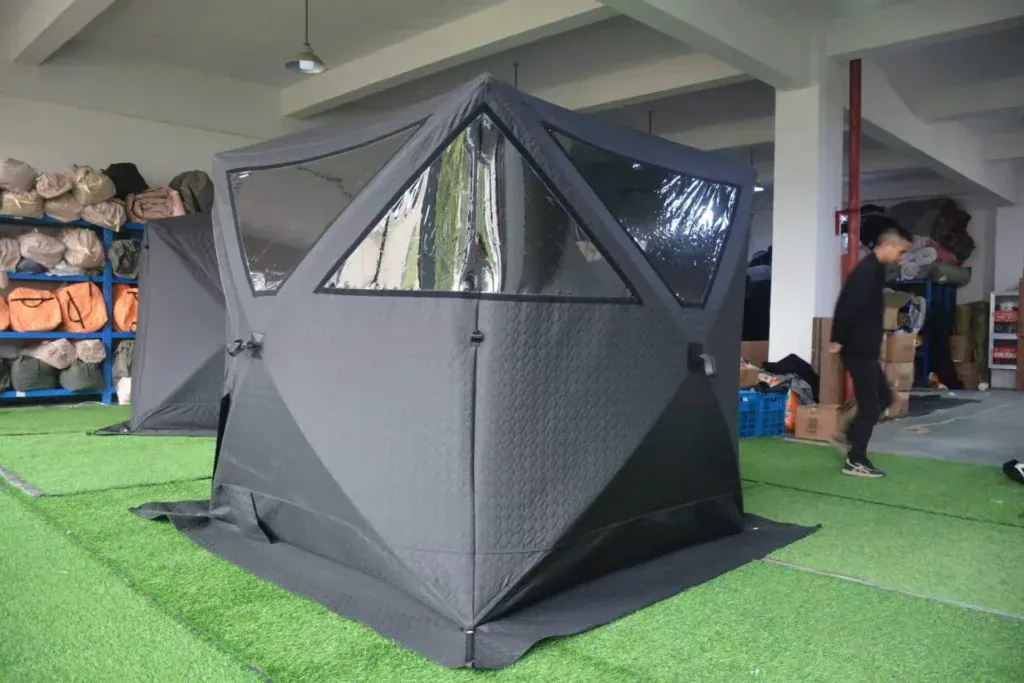
Side-by-side comparison table
EN 13573 tests for shelter safety; EN 14960 tests for structural air integrity.
Most supply chain managers assume one CE standard covers all inflatable tents. That assumption costs time and money. EN 13573:2012 applies to camping tents used for sleeping and shelter — think family dome tents or glamping bell tents with inflatable beams. EN 14960:2019 covers inflatable amusement equipment — bouncy castles, event domes, and large party shelters where occupants are active rather than resting.
Test parameters that separate the two standards
-
- Wind resistance: EN 13573 requires a static wind load test simulating forces up to Force 8 on the Beaufort scale (approximately 62–74 km/h). EN 14960 does not mandate wind testing as a primary pass criterion.
- 縫製強度: EN 13573 specifies a minimum seam tensile strength of 150 N per 50 mm width for main structural seams. EN 14960 focuses on welded joint integrity under continuous inflation pressure rather than fabric seam pull.
- Air retention: EN 14960 enforces a strict air retention test: after reaching working pressure, the structure must hold above 80% of that pressure for at least one hour without pump intervention. EN 13573 has no equivalent air-retention requirement — it assumes constant inflation from an attached blower.
- Static load (occupant simulation): EN 14960 applies a distributed static load of up to three times the maximum user weight per anchoring point. EN 13573 tests only the floor structure for a uniform load of approximately 1.5 kN/m², reflecting sleeping occupants rather than jumping or bouncing.
Pass criteria and notified body involvement
Gray areas: glamping tents and large shelters
A 6-meter glamping bell tent with inflatable beams can legally fall under either standard — the notified body decides based on intended.
This is where the certification process gets messy. A glamping tent with inflatable beams sits at the intersection of two standards. EN 13573 treats it as shelter for sleeping. EN 14960 treats it as an inflatable structure subject to amusement-equipment loads. The notified body makes the final call based on the declared use, and different bodies in different EU member states sometimes reach opposite conclusions.When both standards may applyThe gray zone opens when a product exceeds roughly 20 square meters of floor area or uses inflatable columns as primary structural supports rather than traditional poles. A shipment was held at Rotterdam because the buyer’s legal team decided the product was an ‘inflatable structure’ under local building codes — even though the same model had cleared customs six months earlier under EN 13573. Some European retailers now require both standards for large inflatable shelters, citing liability concerns.The air retention test is the main friction point. EN 14960 demands a stricter pressure-hold threshold than EN 13573, which becomes a real challenge for PVC-TPU hybrid fabrics where seam welding consistency varies across production batches. One supplier audited by a third party lost six weeks re-engineering their heat-seal parameters because their initial samples bled pressure below the EN 14960 threshold.How to get a single assessment covering bothThe smart play is a pre-compliance gap analysis before you commit to mass production tooling. Send your design drawings and material specs to a notified body that handles both standards — TÜV Rheinland and SGS both offer combined assessments. They will identify which tests overlap (wind resistance, seam strength) and which ones are unique to each standard.A single assessment covering both standards typically adds about three weeks to the timeline but saves four to six weeks versus running separate tests after discovering a gap mid-production. Kelyland Outdoors coordinates this step through its partner factories in Shaoxing and Ningbo, where CE-certified glamping tent lines already carry ISO 9001:2015 protocols that align with both EN frameworks.
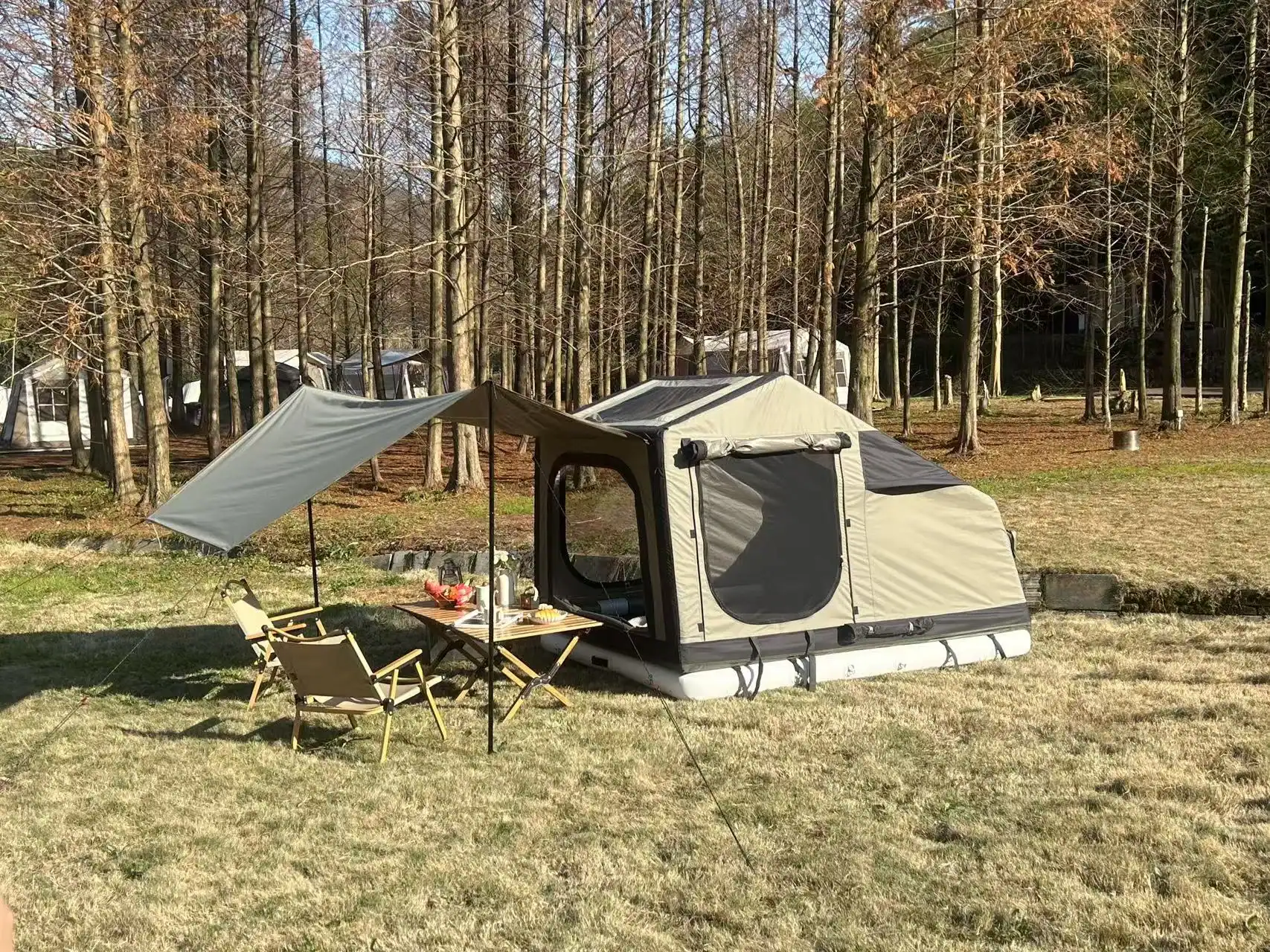
Practical advice for buyers
A certificate without a test report is just a piece of paper.
Most suppliers will send you a PDF of their CE certificate when you ask about compliance. That certificate tells you the product was tested against a standard — but it doesn’t tell you the results. A certificate is a summary. A full test report is the evidence. For EN 13573 and EN 14960, the difference matters because each standard has multiple sub-tests, and passing one does not guarantee passing all.Questions to ask before accepting any certificate
- Which standard was tested?: Ask for the exact standard number and year — EN 13573:2012 or EN 14960:2019. Some suppliers list “CE certified” without specifying which standard applies to your product type.
- Was it tested by a notified body?: EN 14960 requires testing by an EU-notified body (e.g., TÜV, SGS, Bureau Veritas). EN 13573 can be self-declared or third-party. If your retailer demands notified body involvement, confirm the lab’s status.
- Which specific tests were passed?: “CE certified for inflatable tents” is vague. Ask whether wind resistance, air retention, seam strength, and static load were all tested individually. For glamping tents with inflatable beams, request the air retention test data specifically.
- What were the actual pass/fail values?: A full report includes measured pressure drop over time (EN 14960 requires less than 25% loss over 30 minutes), seam tensile strength in Newtons, and wind speed thresholds. Without these numbers, you cannot verify if the design margin meets your market requirements.
Certificate vs. full test report: what to requestA CE certificate typically shows the product name, model number, standard reference, and issue date. A full test report runs 10-30 pages and includes photographs of the setup, raw data tables, pass/fail criteria for each clause, and the laboratory’s scope of accreditation. When evaluating a supplier for inflatable tent certification under EN 13573 or EN 14960, always request both documents.The factory network that Kelyland Outdoors works with holds ISO 9001:2015 certification across its core partner facilities — including those producing camping tents in Ningbo (800,000 units annually) and glamping tents in Shaoxing (300,000 units annually). When we evaluate an inflatable tent project for European market entry, we coordinate directly with these factories to obtain pre-compliance test data from their internal quality labs before sending samples to an EU-notified body.One practical benchmark: if a supplier cannot produce a full test report within two weeks of your request — or if they offer only a photocopy of someone else’s certificate — that is a red flag. The cost of re-testing after production can delay your launch by six weeks or more. Pre-assessment with a notified body before mass production saves that timeline.How Kelyland Outdoors handles standard selection
A pre-assessment with a notified body can save 4-6 weeks of re-testing for hybrid structures.
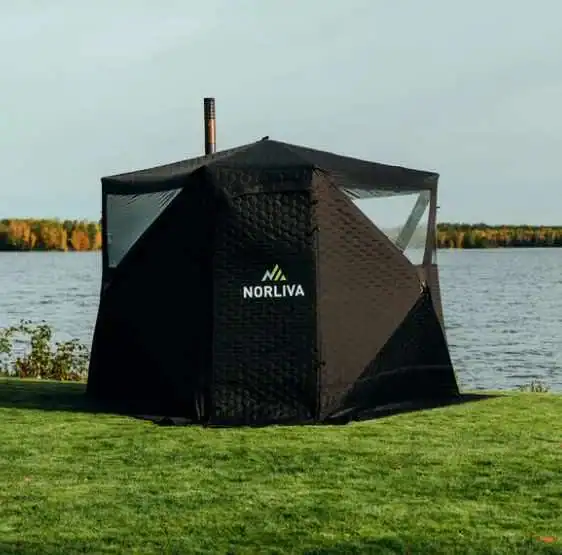
inflatable boom(エアビーム)式のグランプングテント—ベル型のテント、ユルト、または大型サファリタイプのシェルターなど—は、規制上のグレーゾーンに位置します。EN 13573ではこれらを「キャンピングテント」として扱いますが、EN 14960では「遊興設備」として分類されます。いずれの規格もこのハイブリッドカテゴリーのために作成されたものではなく、間違った規格を選択すると、小売業者が試験レポートを求めた際にCEマーキングが有効でなくなるリスクがあります。**両方の規格が適用されるケース**睡眠・シェルターとして販売されるテントはEN 13573の対象となります。ただし、構造体が一定サイズを超えている場合や、内部で立位・移動・跳跃などが行われるイベント用途でマーケティングされる場合は、欧州の一部の小売業者がEN 14960適合も要求しています。EN 14960の空気保持試験はより厳格で、EN 13573の規定よりも高い初期圧力で時間経過に伴う減圧を測定します。PVC-TPUハイブリッド素材は、長期間の負荷下で溶接部から漏れが生じるため、この試験で不合格となることがあります。**両規格を網羅する単一の評価を得る方法**最も効率的な方法は、両規格に対応する1つの通知機関による統合評価です。Kelyland Outdoorsはこのプロセスを提携工場と直接調整しています—ISO 9001認証を取得した紹興のグランプングテント工場では、EUの試験实验室へサンプルを送付する前に、空気保持特性およびシーム強度の適合性検査を実施し、溶接不良を早期に発見します。これにより、修正コストが数週間かかる代わりに数日で済みます。**結論**EN 13573とEN 14960の差は単なる書類上の区別ではありません。これは、エアinflatableテントが通過しなければならない試験—キャンピング用なら風速28m/sへの耐風性、遊興構造物なら1平方メートルあたり500kgの静止荷重耐力—を決定します。間違った規格を選定すると、製品は税関で差し止められたり、小売業者から却下されたりします。
- EN 13573は、睡眠およびシェルター(日帰りキャンプ)用テントに適用されます。
- EN 14960は、遊びまたはイベント用のinflatable構造物をカバーします。
- inflatable boom式グランプングテントは、しばしば規制のグレーゾーンに該当します。
- 通知機関による事前評価を実施することで、4〜6週間の時短が実現できます。
サプライチェーンマネージャーにとって、これは最後の10%のデューデリジェンスが、スムーズなローンチと多額の再試験コストを招くサイクルを分けるところです。上記の試験パラメータに基づき、現在の製品仕様書をレビューしてください—特に PVC-TPUハイブリッド素材を使用している大型シェルターをお調達の際は、空気保持要件について確認してください。サプライヤーが EU通知機関発行の試験レポート をお出しできない場合、生産治具が確定する前にサンプル承認前に反論してください。よくあるご質問
Inflatableテントに適用されるCE規格はどれですか?
睡眠およびシェルター用のinflatableキャンピングテントには、EN 13573が適切な規格です。EN 14960は、バウンスハウスなどのinflatable遊興設備に適用され、テント用ではありません。発注前に、サプライヤーがどの規格で試験を実施しているか必ず確認してください。
EN 13573ではどのような試験が行われますか?
EN 13573は、キャンピングシェルター向けの耐風性、防水浸透性、そしてシーム強度を測定します。これは、テントが睡眠および天候暴露に対して安全であることを保証するものです。証明書のみならず、完全な試験レポートを請求してください。
Can EN 14960 be used for glamping tents?
EN 14960 is designed for play equipment, but some retailers may request it for large event domes. For glamping tents used as shelters, EN 13573 is the appropriate standard. Confirm intended use with your buyer before selecting a standard.
How do I confirm my supplier’s CE certification?
Ask for the specific standard number (EN 13573 or EN 14960) and a full test report from a notified body. A generic CE certificate without the standard reference may not cover. Insist on seeing the test parameters that match your tent design.

 English
 Español
 Deutsch
 Français
 Português do Brasil
 Русский
 العربية
 한국어
 日本語