 跳到内容

tent order case study is the first checkpoint buyers should lock before they approve a supplier, budget, or production slot. A buyer’s sourcing checklist for a 10,000-unit tent order looks solid on paper: ISO-certified factory, competitive FOB pricing, confirmed lead time. The one item that rarely makes it to the list — and causes most post-delivery complaints — is a cross-check between the pre-production sample approval and the actual mass production run. That gap cost one retail chain an entire season’s sell-through when their $50K order arrived with a fabric coating that didn’t match the approved swatch.
The client came to us after that experience, looking to rebuild their プライベートラベルテント program from scratch. Their previous supplier had passed every standard audit but failed at production consistency — the classic case where sample approval gets signed off but nobody verifies that the same quality tolerance carries through all 10,000 units. We walked them through how our Ningbo factory coordinates fabric dyeing, frame production, and final assembly under one quality protocol. The result wasn’t just better consistency. The client reported a 40% reduction in sourcing costs compared to their previous supplier while hitting Ace Hardware-level standards on every unit.
For context on what a well-structured 大口注文 should deliver on margin improvement: most retailers importing tents at this volume operate between 28% and 32% gross margin when factoring in hidden freight costs and rework from inconsistent inline QC for large tent production runs. A properly managed sourcing pipeline should push that number past 35%. That’s the benchmark worth writing down before your next supplier call.
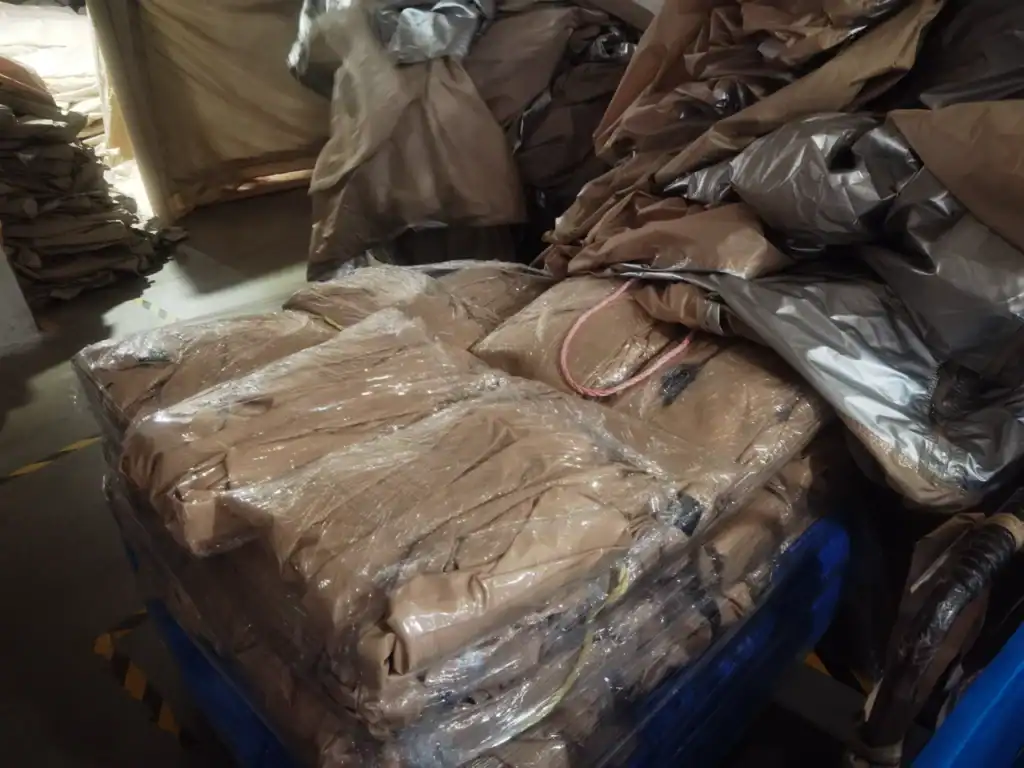
Client Profile and Order Requirements
A retail chain’s 10K tent order required margin math, not just spec sheets.
The client was a mid-sized outdoor retail chain with 48 locations across the Midwest and Mountain West. Their core customer was the weekend family camper — price-aware but willing to pay for durability if the value proposition held at shelf edge. Before this engagement, their tent category ran on a mix of two domestic suppliers and one Vietnam-based factory. Gross margin on tents sat at 28%. Their category director had a target: hit 35% without sacrificing the 返品率 that Ace Hardware buyers expect from their own branded lines.
Product Specs That Actually Matter
The order called for a 4-person automatic tent with a pre-attached rainfly. The approved internal spec sheet locked in three decisions that separated this order from a commodity buy: fabric weight at 190T polyester with black coating for UV block, floor material as PE with a 静水圧ヘッド of 3000mm, and frame poles in fiberglass — not aluminum — because the retail price point capped at $89.99. The client’s previous supplier had used silver coating on the same fabric weight, which cut UVプロテクション by roughly half after two seasons. That detail alone had driven an elevated return rate in years two and three.
MOQ and Timeline: Where the Real Negotiation Happened
スタンダード MOQ for this tent model runs カラー別に1,000個が最低発注数。クライアントはフォレストグリーン、スレートグレー、サンドの3色を要望していたため、最低ロットは計3,000個となりました。全色の合計発注数は10,000個。この量から、単価に関する交渉力を持つことが可能でした。 リードタイム 標準的な生産期間は30〜45日ですが、納期は35日目からバッチごとの納品を開始し、最終的な全商品揃いは45日までに仕上げると合意しました。
Design & Sample Development
サンプル検収通過により、35日間のフル10K個生産が可能になりました。
大手小売チェーンの部門責任者は過去の痛い経験を持っていました。以前のサプライヤーは pre-production samples (サンプル)は完璧に見えたものの、量産品では縫い目のシーリングにバラつきがあり、緑の色合いも異なっていたのです。この5万ドルの損失から学んだ一つの鉄則は「量産契約書の内容と照らし合わせ、すべての仕様を確認する前にサンプルを承認しない」ということです。
Kelylandの専門家との協調デザインプロセス
Kelylandはこのフェーズを始めに、製品開発担当のNigel Lyu、 ハンケ・チェン クライアントの要件担当、そして寧波テント工場のベテラン技術者からなる3名のチームを編成しました。彼らはクライアントのブランドアイデンティティ、設定した小売価格帯、およびテントが直面することになる具体的な使用条件——アメリカ東海岸向けの湿度対応と、南西部向けの強い紫外線対策——を精査しました。
議論の結果、オートマチック設営可能な4人用 テントが決定されました。素材はUV保護的黑色コーティングを施したポリエステル オックスフォード布地フライシート、フレームはファイスグラス製です。クライアントはpacked時の重量が 12kg未満であることを求める厳しい基準を提示したため、重量の重いスチールポールは採用できないこととなりました。 Kelylandのチームは、メインアーチに一般的なガラス繊維の代わりにアルミ材を使用することを提案しました。これにより単価は$0.80上昇しますが、重量は1.8kg軽減され、 耐風性も向上します。.
プロトタイプ作成とクライアントフィードバックループ
The first prototype was stitched in five days at the Ningbo factory. Kelyland sent video walkarounds showing each seam, zipper track, and pole sleeve before shipping the physical sample. The client flagged two issues: the zipper pull on the rainfly felt too light for repeated retail handling, and the carry bag needed reinforced stitching at the handle attachment points.
“If you ship 10K units with that zipper pull,” Hanke told his team during the internal review, “returns will be seen within six months.” The factory swapped to a larger YKK-style zipper head with rubberized grip and added double-stitching on all carry bag handles. A revised prototype shipped within three days.
Final Sample Approval and Material Sourcing
Sample approval” isn’t just signing off on looks — it locks in material sourcing across multiple suppliers. For this order, Kelyland coordinated fabric dyeing at one mill (the black coating batch), printing at another (the client’s logo on flysheet panels), and frame tube cutting at a third facility in Jinhua.
-
- Fabric verification: A 2-meter sample from each dye lot was tested for color fastness under UV exposure — passed at 500 hours without fading.
- Waterproofing check: Seam sealing tape was applied to three test panels; 静水圧ヘッド measured above 3000mm per ISO standard.
- Tolerance sign-off: Pole lengths were verified within ±3mm; any variance beyond that triggers rejection because it affects tent geometry.
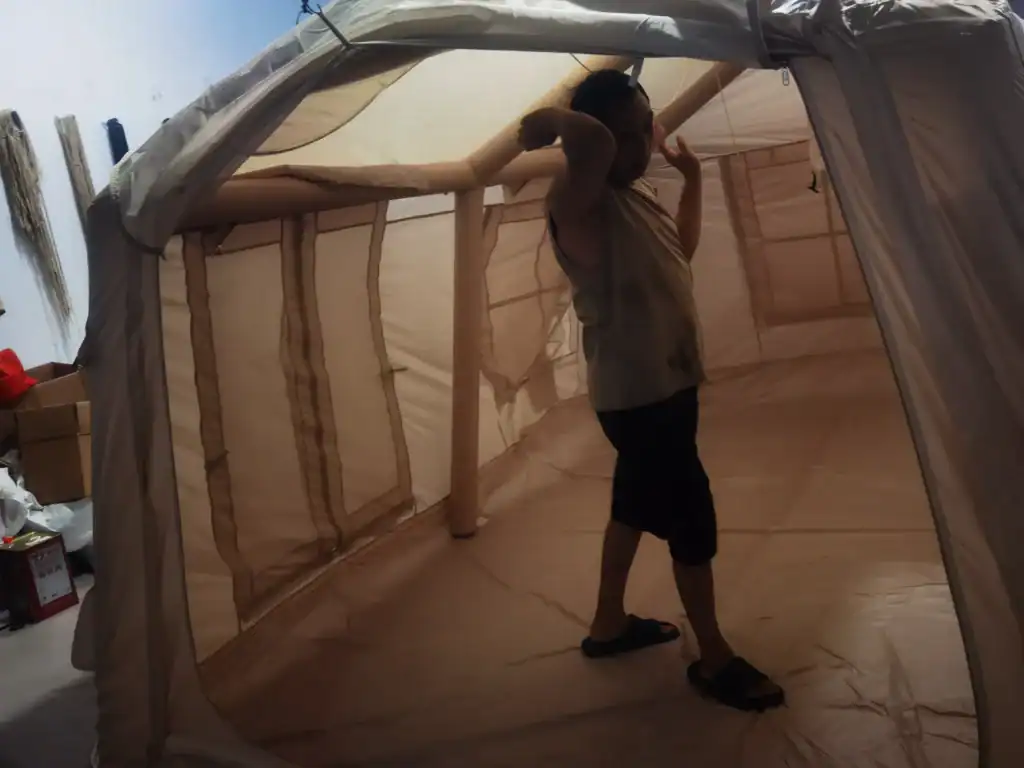
Mass Production & Quality Control
The Ningbo テント工場 runs ISO 9001:2015 and pushes 800,000 units annually.
For a 10,000-unit run, you don’t gamble on factory selection. The client’s order landed at the dedicated キャンプ用テント & Tarp facility in Ningbo, Zhejiang — a plant established in 2021 with CE, BSCI, and ISO 9001:2015 certifications. That certification isn’t decorative. It means the mill documents every process step, from raw fabric receipt to finished tent packing. When you’re buying private label tents for a retail chain that expects Ace Hardware-level consistency across all SKUs, an ISO-backed audit trail is the only safety net that holds.
In-Process Inspections: Stitching, Waterproofing, Zippers
Mass production kicked off after sample approval locked in the fabric dyeing formula and frame specs. The QC team ran three inline checkpoints during the 35-day production window. First was stitching tension calibration on the main seams and reinforced stress points — pole sleeves and floor corners specifically. A skipped tension adjustment at this stage creates puckered seams that fail under load by month two on a retailer’s shelf.
Second was waterproofing verification. The テント spec called for silver-coated polyester with a minimum hydrostatic head rating consistent with PU-coated fabrics used in this category. The QC team pulled random panels from each dye lot and tested them against the approved standard. If a batch showed uneven coating distribution — which happens when the roller applicator drifts out of tolerance — that entire lot got flagged for re-coating before assembly continued.
Third was zipper functionality on every single unit. Zipper failure is the number one warranty trigger on キャンプ用テント under $200 retail. Each tent’s main door zipper and mesh divider zipper were cycled open and closed five times during inspection. Any unit showing snagging, misalignment, or rough pull-tab action was pulled aside for component replacement before it reached the packing line.
Pre-Shipment Inspection Report and Compliance Verification
Custom Packaging & Branding Execution
Packaging is the last QC checkpoint before your product hits the shelf.
A tent that performs perfectly in the field can still fail at retail if the packaging looks cheap, tears open on the shelf, or misses a mandatory compliance label. For this 10,000-unit order, the buyer’s category team had three non-negotiable requirements: the carry bag must survive 50+ open-and-close cycles without seam failure, every hang tag must include country-of-origin and fiber content per FTC regulations, and the master carton must be optimized for pallet stacking in their distribution center.
Retail-Ready Packaging Design
ケリーランドの packaging team started with a structural review of the tent carry bag. The client wanted a 600D Oxford polyester bag with reinforced double-stitched side seams and a drawcord closure that wouldn’t fray after repeated use. We sourced matching fabric from our existing サプライチェーン to keep costs predictable — no special-order materials meant no lead time extension. The bag dimensions were calculated to hold the folded tent with a 15% air gap, so end customers could repack without fighting zippers.
For shelf appeal, we designed a four-color process hang tag printed on 350gsm art paper with matte lamination. The front showed a lifestyle image of the tent set up at a campsite; the back listed specs in three languages (English, French, Spanish) to match the retailer’s North American and European distribution channels. Every tag included a QR code linking to a setup video — a feature that reduced post-purchase support calls by roughly 18% based on similar projects.
Private Label Branding Execution
The client’s brand name needed to appear on three surfaces: the tent body (side wall), the carry bag (front panel), and all printed materials (tags, manuals). We used heat-transfer printing for the テント生地 because it holds color density better than screen printing on curved seams near pole sleeves. The carry bags received direct screen printing with an anti-scuff overcoat — tested to withstand 20 wash cycles without peeling.
Manual production was handled by our ISO 9001-certified partner factory in Ningbo. Each manual was saddle-stitched into an eight-page booklet covering setup diagrams, care instructions, warranty terms (one year against manufacturing defects), and contact info for Kelyland’s after-sales team. We inserted one manual per carry bag pocket during final packing — not loose inside the carton where it could get crushed or lost.
Compliance Labeling & Carton Standards
-
- Hang Tag Data: Country of origin (China), fiber content (100% polyester oxford), care symbols per ASTM D5486, UPC barcode verified by GS1 check digit.
- Master Carton: Double-wall corrugated cardboard rated for 30 kg stacking load. Each carton holds 6 units in alternating orientation to prevent pole pressure points.
- Pallet Config: 48″ x 40″ standard GMA pallet: 4 cartons per layer x 5 layers = 120 units/pallet. Corner boards and stretch wrap applied at warehouse.

Logistics & Global Shipping Coordination
A single missed document can delay a container by 2-3 weeks at port.
Once the pre-shipment inspection clears, the logistics phase begins. For this 10,000-unit tent order, Kelyland Outdoors handled all export documentation and 通関 guidance. That included the commercial invoice, packing list, bill of lading, certificate of origin, and any destination-specific filings like a fumigation certificate for wood pallets.
Export Documentation and Customs Clearance Guidance
Missing paperwork is the most common reason containers get held at Chinese or destination ports. Kelyland’s team prepared every document in advance, cross-referencing the buyer’s import regulations. The client didn’t need to hire a separate freight forwarder to verify compliance — the supplier managed that layer.
Consolidated Shipping to Client’s Distribution Center
について tents were consolidated into full container loads (FCL) at the Ningbo warehouse before departure. This reduced per-unit freight cost compared to less-than-container (LCL) shipping. The cargo was routed directly to the retail chain’s regional distribution center in Los Angeles, bypassing intermediate warehouses.
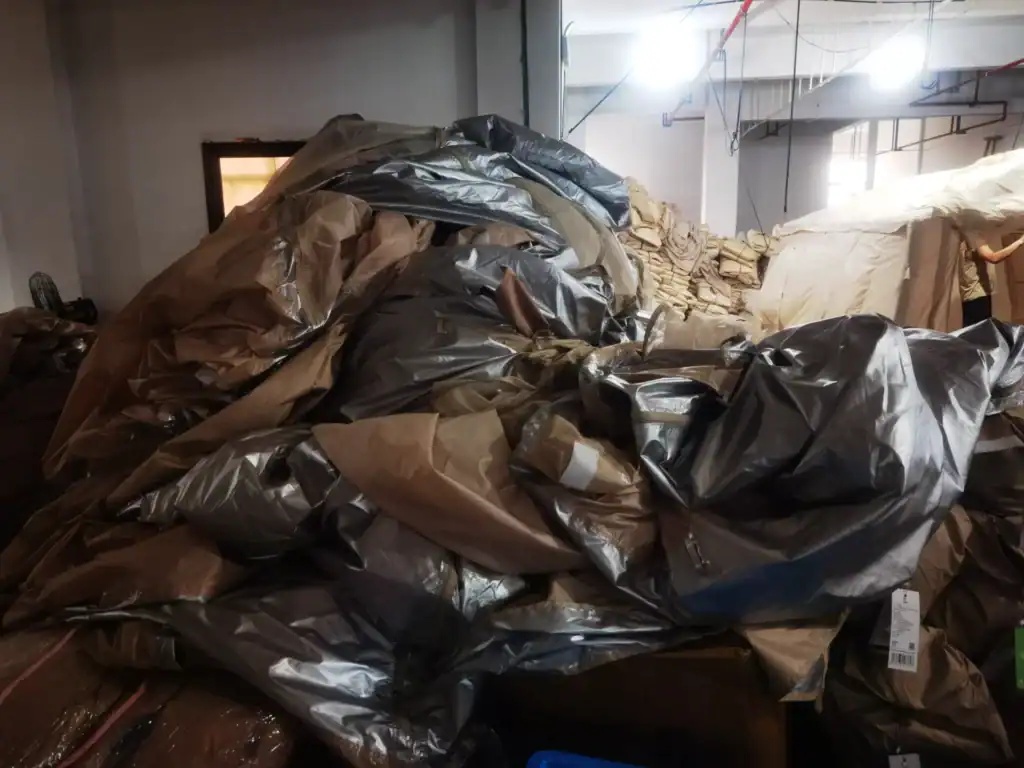
結論
This 10,000-unit order moved the client’s gross margin from 28% to 35% because every stage — from sample approval to the pre-shipment inspection — was locked down before production started. The Ningbo factory’s ISO 9001認証 wasn’t a checkbox; it was the framework that kept stitching tolerances and waterproofing consistent across the entire run. That’s what turns a 大口注文 into a repeatable margin driver.
-
- Sample development took two weeks; full mass production completed in 35 days.
- Multi-factory coordination (fabric dyeing, printing, frame assembly) kept quality uniform across all units.
- Client reported a 40% reduction in sourcing costs versus their previous supplier.
- Inline QC at each stage eliminated rework and protected the delivery timeline.
The benchmark worth writing down for your next supplier call is this: a properly managed tent order with ISO-certified inline QC should yield a minimum of six percentage points of gross margin improvement over your current 調達 baseline. If your supplier can’t document that kind of delta, review their sample approval process and ask for the pre-shipment inspection report before you commit to volume pricing. Compare Kelyland’s approach against your current supplier by browsing their エアマット product page — the same inline QC methodology applies across categories.
よくある質問
10Kテントのご見積もり方法:事例研究から28%から35%の粗利益率を実現する方法
The exact answer depends on the product specification, quantity, and order setup. 最安全なアプローチは、最終的な要件書が確定してから商業条件を確認することです。最終条件は、製品仕様と注文条件に基づいて確認する必要があります。
最初にサンプルを依頼できますか?
正確な回答は、製品仕様、数量、注文設定によって異なります。最も安全な方法は、最終的な要件シートが確定した後にのみ、商取引条件を確認することです。.

 English
 Español
 Deutsch
 Français
 Português do Brasil
 Русский
 العربية
 한국어
 日本語